- Automation & ControlView all 2,792 products
- Automation Accessories
- AC Drives
- PLC & I/O Cards
- Industrial Communications
- Vibration Monitoring
- Controllers & Data Acquisition
- Isolator & Barrier
- Safety Switches & Guard Locking
- Motor Soft Starters
- CCTV & Security
- Encoders
- Pneumatic Cylinders
- HMI Displays
- Servo Drives
- Industrial Computers
- Machine Vision
- Automation Software
- Robotics
Brand: Honeywell
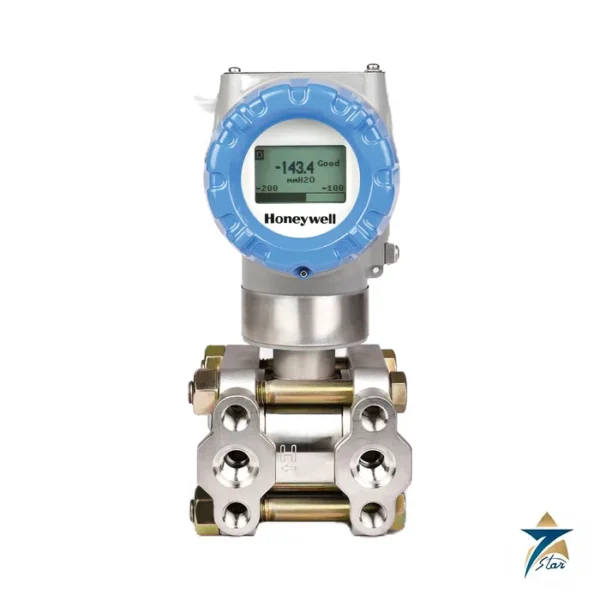
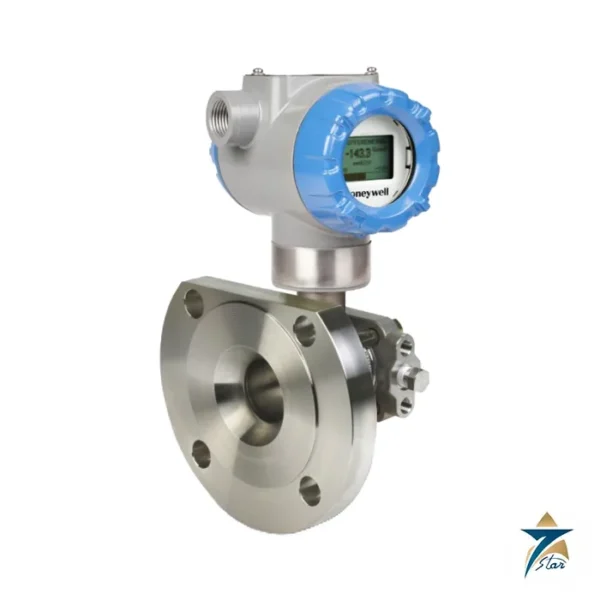
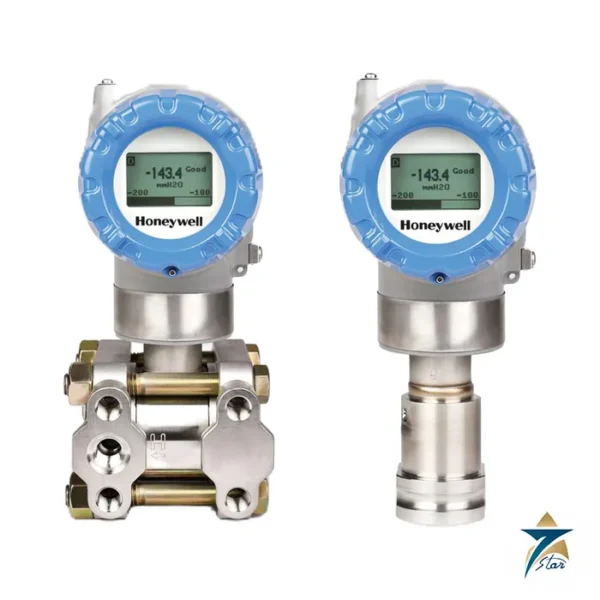
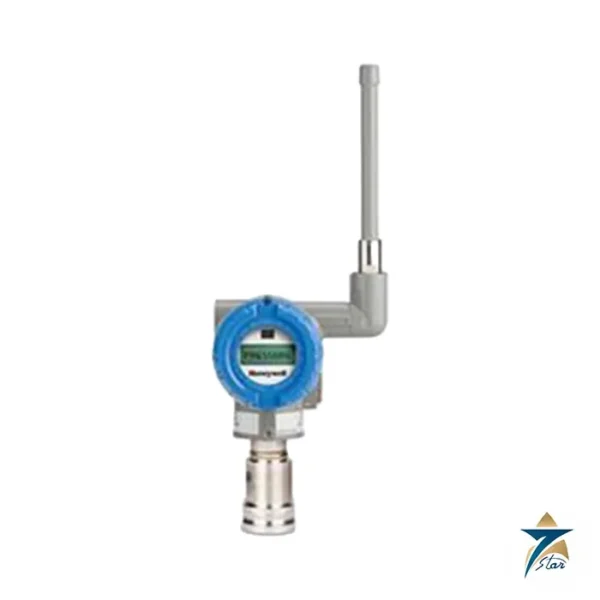
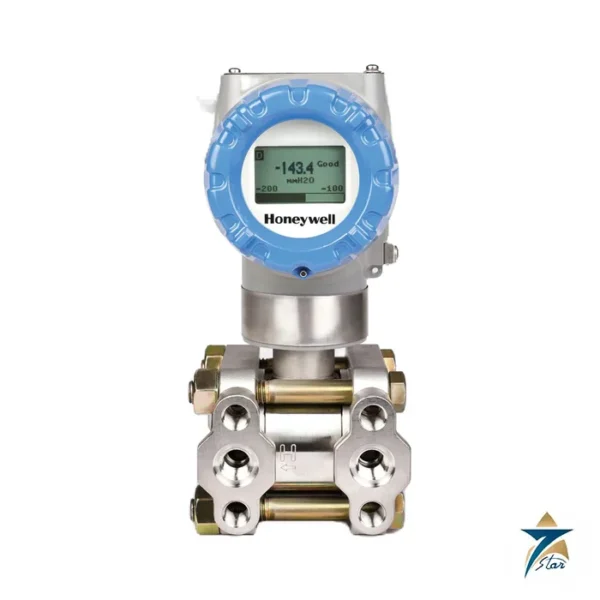
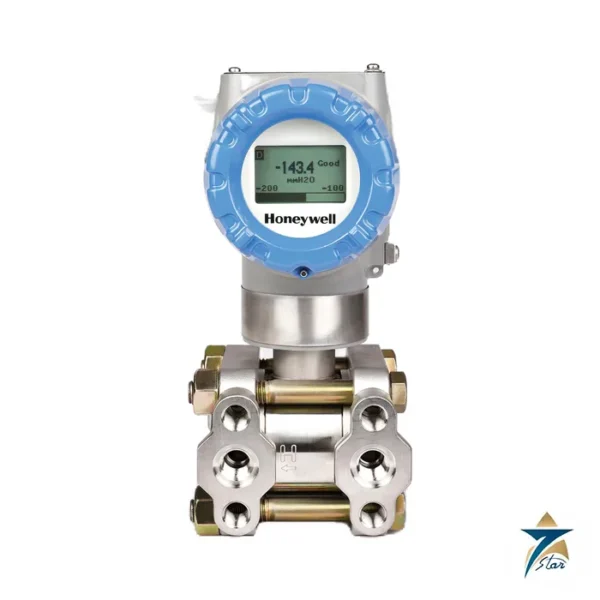
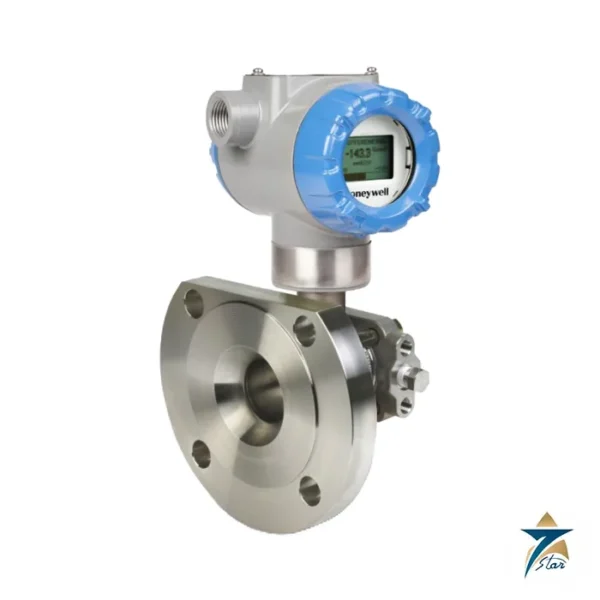
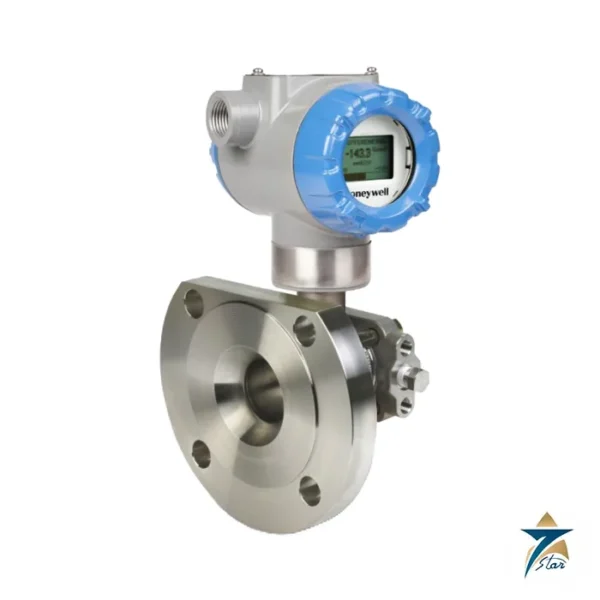
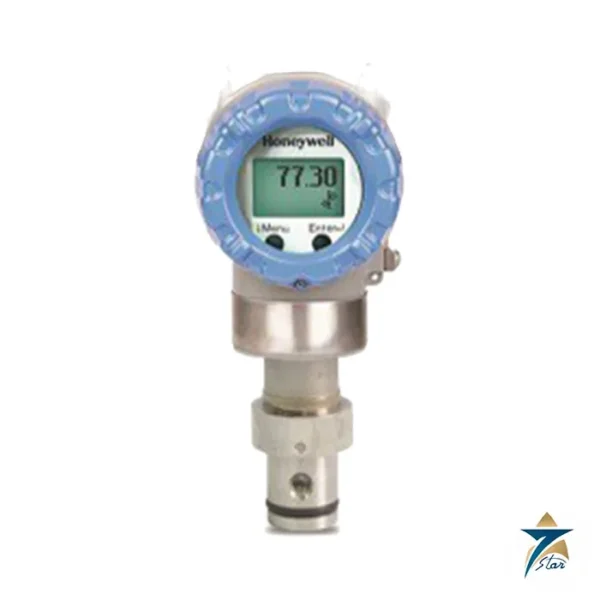
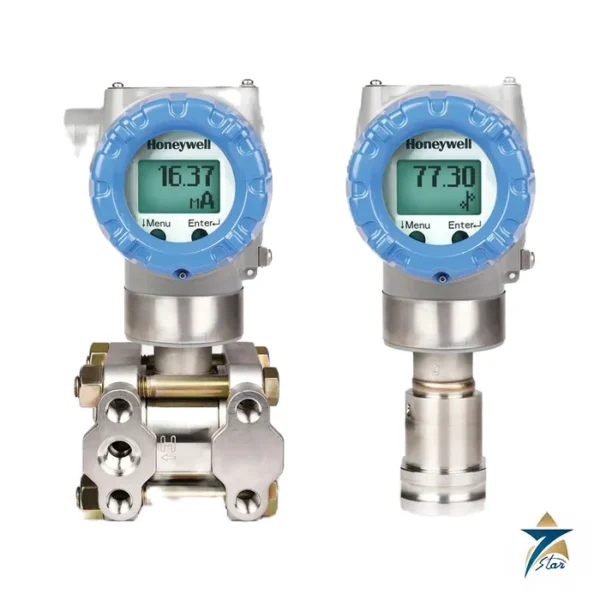
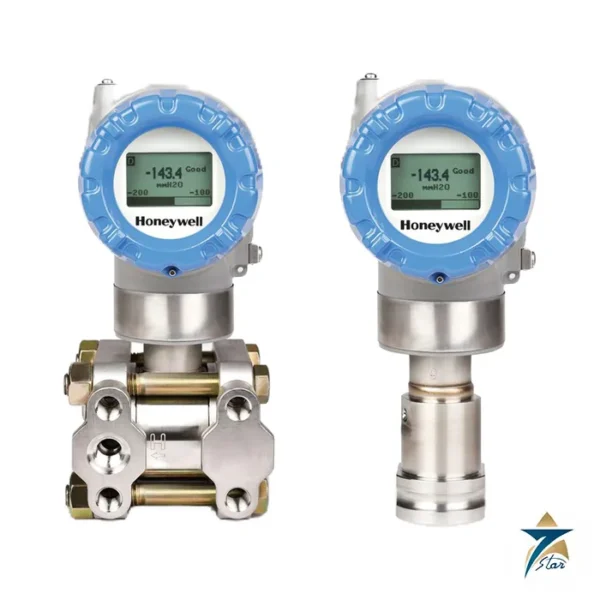
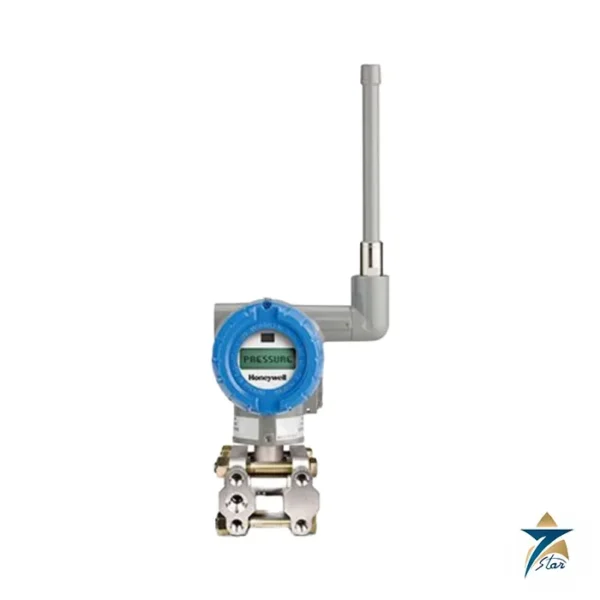
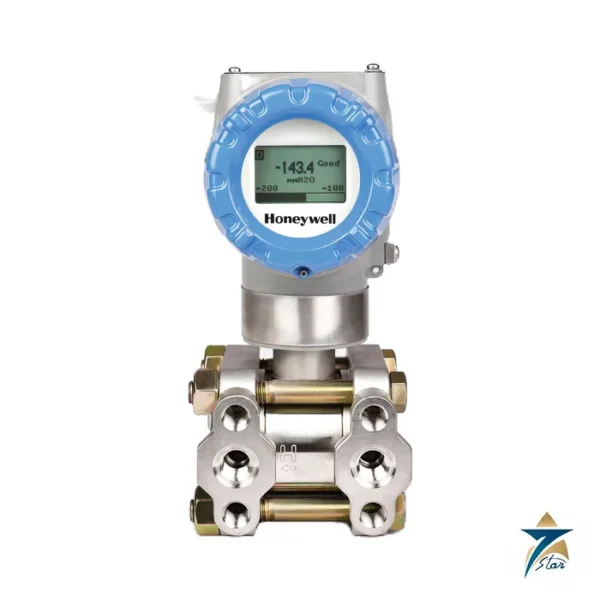
Honeywell STR82D SmartLine Remote Seal Differential Transmitter
Description
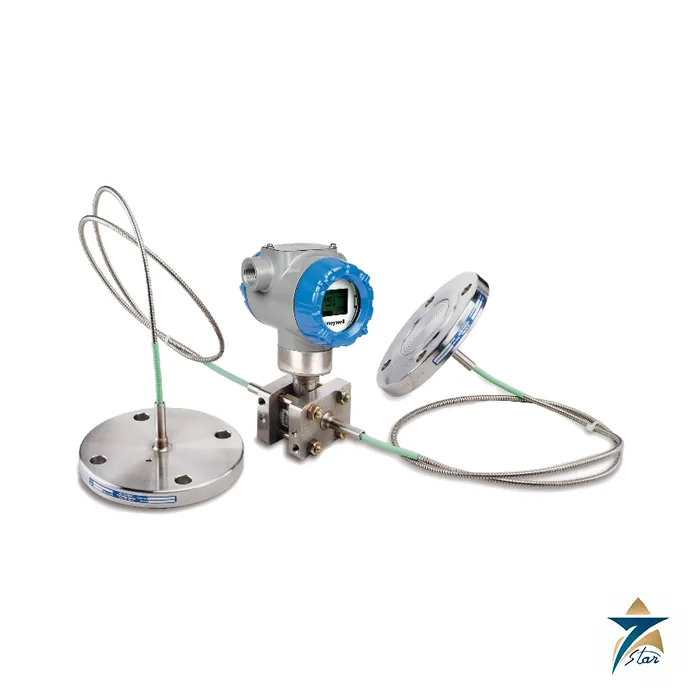
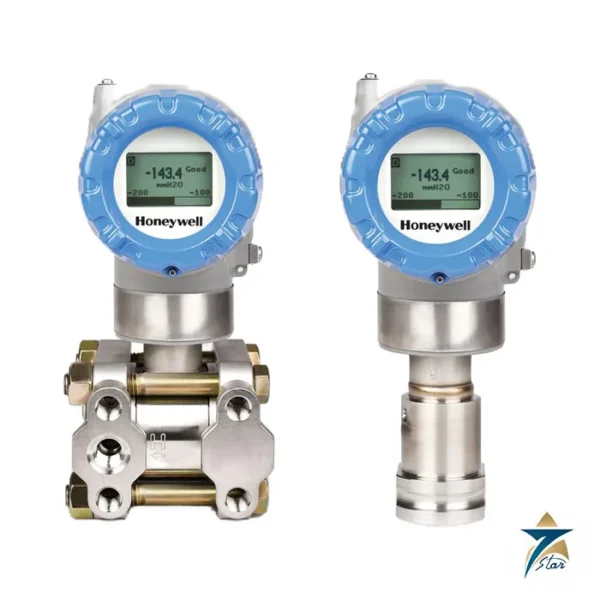
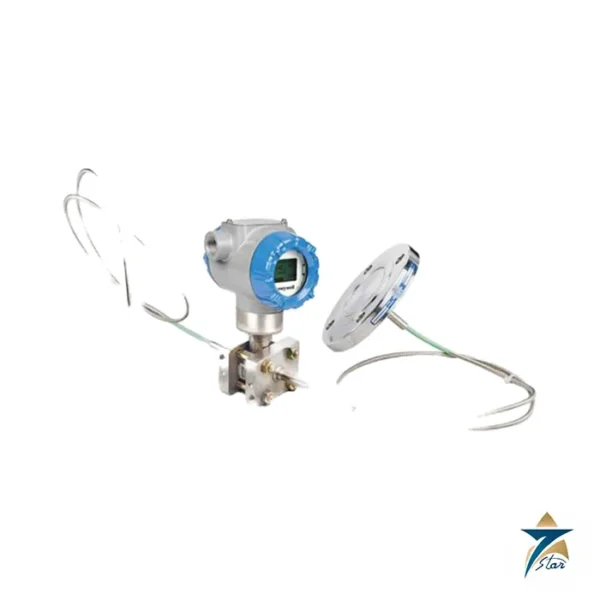
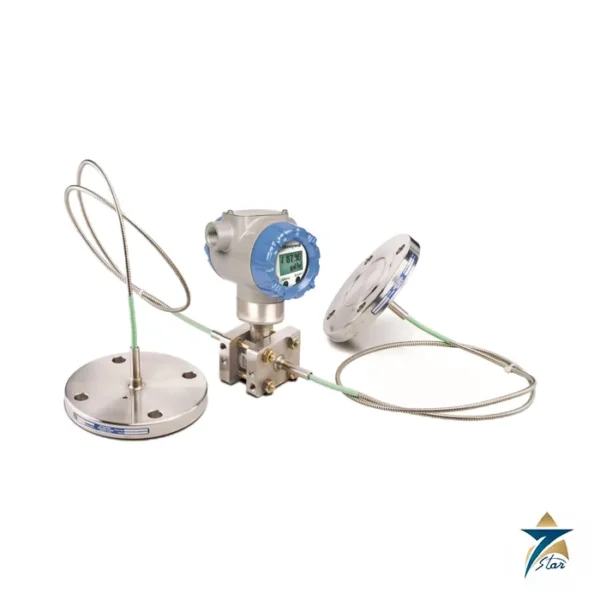
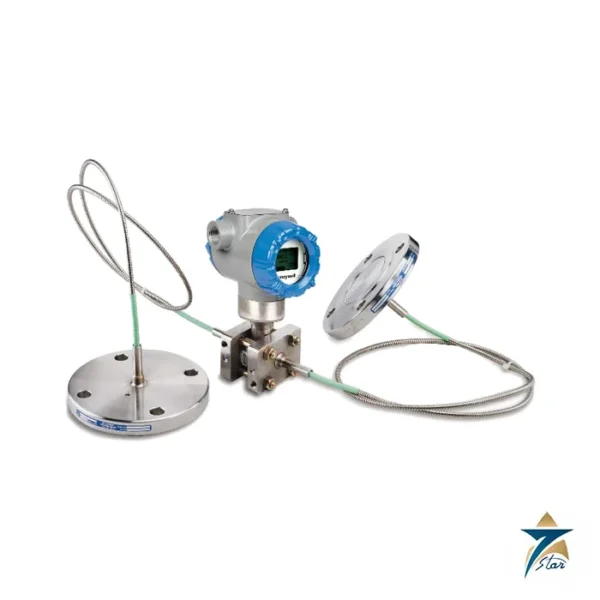
Honeywell STR82D: differential pressure transmitter with two remote seals
The Honeywell STR82D is the differential-pressure member of the SmartLine STR800 family, a transmitter hydraulically matched to a pair of remote diaphragm seals joined by armoured capillary. The underlying instrument is the STD820, so the range is plus and minus 400 inH2O (plus and minus 1000 mbar) with a 4 inH2O (10 mbar) minimum span. Where a normal differential transmitter would see a hot, viscous, corrosive or solids-laden fluid directly, the STR82D keeps that fluid on the outside of a thin diaphragm and transfers pressure through a sealed oil-filled system.
This makes the STR82D the usual choice for tank level and interface work on vessels where wet legs are a maintenance problem: heated bitumen tanks, polymer reactors, crude and slop tanks, and any vessel whose process connections foul. With two remote seals one sits at the bottom tap and the other at the upper tap, and the transmitter, mounted at a convenient height, reads the difference.
STR82D reference data
| Parameter | Value |
|---|---|
| Model / base transmitter | STR82D on STD820 differential body |
| Upper range limit | 400 inH2O (1000 mbar) |
| Lower range limit | -400 inH2O (-1000 mbar) |
| Minimum span of the transmitter | 4 inH2O (10 mbar) |
| Reference accuracy | 0.0375 percent of span |
| Stability (base transmitter only) | 0.01 percent of URL per year over 15 years |
| Reference turndown | 8:1 |
| Total performance example | 2.68 percent of span at 80 inH2O |
| MAWP, bolted process heads | 2,500 psig (172 bar) |
| MAWP, all-welded process | 1,450 psig (100 bar) |
| Seal diaphragm materials | 316L stainless steel, Monel, Hastelloy C, tantalum |
| Capillary | Armoured stainless steel, optionally PVC-coated; 5, 10, 15, 20, 25 or 35 ft (1.5 to 10.7 m) |
| Storage temperature | -55 to 90 degC |
| Transmitter weight, aluminium housing | 8.3 lb (3.8 kg) without seals |
What the 2.68 percent figure means for STR82D
The datasheet total-performance number for the STR82D is far larger than for ordinary ST 800 transmitters. At 80 inH2O it is 2.68 percent of span. The reason is the remote-seal system: the capillary oil expands and contracts with temperature, and on a small span a few millibar of expansion pressure are a large share of the signal. This is not a defect of the STR82D; it is the physics of any remote-seal measurement, and Honeywell publishes the number openly so that engineers can size the span properly.
To keep error low, widen the calibrated span. The datasheet gives minimum recommended spans that depend on seal diameter and capillary length. With two seals, a 3.5 inch diaphragm on 5 ft capillaries needs at least 0.6 psi, and with 35 ft capillaries 1.4 psi. A 4.1 inch diaphragm needs 0.4 psi at 5 ft and 1.1 psi at 35 ft. A 2.9 inch seal needs 3.6 psi at 5 ft and 6.3 psi at 20 ft, which is also its maximum capillary length. A 2.4 inch seal is limited to 5 ft and needs 7.2 psi. Larger diaphragms are therefore the key to low spans.
How STR82D differs from the other STR800 transmitters
The STR800 family has five models: two differential units, the STR82D and the STR83D (plus and minus 100 psi), which use two seals, and three single-seal units, the STR84G (gauge, 500 psi), STR87G (gauge, 3000 psi) and STR84A (absolute, 500 psia), which use one seal on the high side only. The STR82D has the finest range of the group and so the biggest sensitivity to capillary effects, while the STR83D handles pressurised tanks and column differentials.
In single-seal use a differential unit can also be ordered with one remote seal and one direct mount; the datasheet provides a separate table of minimum recommended span for that case, for instance 20 psi for a direct mount with a 2.4 inch seal and 1.4 psi for a direct mount with a 4.1 inch seal.
Fill fluids and temperature planning for STR82D
Meter-body fill fluid can be Silicone 200, CTFE, Silicone 704 or NEOBEE M-20. The secondary fill fluid in the seal system can be Silicone Oil 200 (specific gravity 0.94 at 25 degC), CTFE (1.89), Silicone Oil 704 (1.07), Syltherm 800 (0.90) or NEOBEE M-20 (0.93). Choose from process temperature and vacuum: the fill fluid specific gravity also sets the head correction when the two seals are at different elevations, and CTFE with its density of 1.89 will give the largest offset.
Ambient temperature limits for the STR82D depend on the process interface temperature and the fill fluid, so the datasheet refers to an operating-limits chart for pressure versus temperature. LCD display ambient temperature is limited to -30 to 70 degC.
Commissioning the STR82D
- Route the capillaries so they are supported, kept clear of hot surfaces and not kinked; do not cut or shorten them.
- Mount both seals and the transmitter at the elevations assumed in the order, then enter the elevation difference as a zero offset.
- Zero the transmitter with both seals at the same level, or with the tank at a known level.
- Verify the span against the minimum recommended span table for the seal diameter and capillary length.
- Set damping to suit noisy process conditions.
- Keep the capillaries shaded and insulated equally; unequal heating of the two legs creates an offset.
Service notes for STR82D
Seal diaphragms are delicate. Never poke the diaphragm or remove the flange bolts while the system is pressurised. The base transmitter has the usual SmartLine diagnostics, modular electronics and meter-body replacement, but capillary and seal assemblies are a filled system and are not field repairable.
Ordering the STR82D
Seven Star LLC is an independent supplier serving Oman and the GCC and is not affiliated with the manufacturer. For the STR82D we need the seal type, diaphragm size and material, capillary length, fill fluids, flange or connection standard, protocol and approvals.
Documents and quotation
Honeywell specification 34-ST-03-88 is attached as the datasheet covering the STR82D. Send an RFQ with the part number STR82D, the quantity and your delivery location, and we will respond with availability and lead time.
Other Models in the Honeywell Str800 Range
Seven Star LLC supplies models from the Honeywell Str800 range in Oman and the GCC. Compare the related models below and request a quote for the one that matches your application.
| Model | Category | |
|---|---|---|
| Honeywell STR84G SmartLine Remote Seal Gauge Pressure Transmitter | Pressure Transmitters | View details |
| Honeywell STR82D SmartLine Remote Seal Differential Transmitter | Pressure Transmitters | You are viewing this model |
Datasheets & Documents
- Datasheet Honeywell STR82D SmartLine Remote Seal Differential Transmitter Datasheet Download
Reviews (0)
How would you rate this product? Cancel reply
About brand
Honeywell is the American industrial technology group whose products on this site cover gas and flame detection, pressure transmitters, flow measurement, gas metering, fire alarm systems and helicopter rotor balancing equipment. Its roots go back to a thermostat business in Minneapolis in 1885 and to Mark Honeywell's heating company, which merged with it in 1927. Several brands we list have joined Honeywell over the years: Gent fire systems of Leicester (part of Honeywell since 2005), Chadwick-Helmuth (a Honeywell business unit from 2002) and Elster gas metering (acquired around the end of 2015).
Seven Star LLC is an independent supplier in Muscat. We list Honeywell gas detectors and sensors, transmitters, Elster gas meters and flow computers, Gent fire alarm equipment and Chadwick-Helmuth balancers, and supply them and their spares in Oman and the GCC by part number.
Honeywell company profile
| Origins | 1885, Minneapolis (Butz thermostat business); merged with Mark Honeywell's company in 1927 |
|---|---|
| Brands in our range | Honeywell Analytics gas detection, SmartLine transmitters, Elster gas metering, Gent fire detection, Chadwick-Helmuth rotor track and balance |
| Gent | Founded in Leicester, UK, around 1872 by John Thomas Gent; part of Honeywell since 2005 |
| Elster | Gas, water and electricity metering; bought by Honeywell from Melrose, deal completed around the end of 2015 |
Milestones
- 1885: The Butz thermostat business starts in Minneapolis.
- 1927: It merges with Mark Honeywell's company.
- 2005: Gent fire detection (Leicester, UK) becomes part of Honeywell.
- 2015: Honeywell completes the purchase of Elster from Melrose around the end of the year.
Honeywell products we list
| Family | Models | Typical use |
|---|---|---|
| Fixed gas detectors | Searchline Excel, Searchline Excel Plus, 02104-N-XSSA, Sensepoint XCD RTD, Sensepoint XCD IR, XCD H2, Sensepoint XCL, Sensepoint XRL, OmniPoint, RAEGuard 2 PID | Flammable, toxic and VOC gas detection in process areas |
| Sensors, flame detection and control | SR-W-MP75C LEL sensor, SR-X2V O2 sensor, FS24X Plus flame detector, R4343E flame switch, System 57 card, 5704FS panel | Replacement sensors, fire detection and gas detection control panels |
| Transmitters and flow | SmartLine STG700, STG800, STR82D remote seal, VersaFlow Coriolis | Process pressure and mass flow measurement |
| Elster gas metering | Q.Sonic plus, TRZ2, Quantometer, RABO, IRM-3 DUO, EK280, EC 350, enCore FC1, enCore ZM1, gas-net F1, gas-net D2, GasLab Q2, USM display | Gas meters, volume correction and fiscal flow computing |
| Gent fire alarm systems | Vigilon Plus, Vigilon Compact Plus, Nano, Xenex, S-Quad detector, S-Cubed, ALD302 base, S4-34420 interfaces, loop card, repeat panel, mimic panel, XENS-850 call point, 74430 bell | Addressable and conventional fire alarm systems in buildings and plants |
| Chadwick-Helmuth rotor track and balance | 8500C, 8500C Plus, Vibrex 2000, Model 11, photocell system, printer, bracket, protractor | Helicopter rotor track and balance and propeller balancing |
Gas detection uses two basic approaches. Point detectors such as the Sensepoint XCD measure the gas at one location, with a catalytic or infrared sensor for flammable gas and an electrochemical cell for toxic gas such as H2S. Open path detectors such as the Searchline Excel send an infrared beam across an area up to a few hundred metres long and detect a gas cloud anywhere along it. Infrared sensors cannot be poisoned the way catalytic beads can, which matters on sites with silicones or H2S.
Where Honeywell products are used
In Oman and the GCC, Honeywell gas detectors protect wellheads, gas plants, refineries and tank farms. Elster meters and flow computers measure gas at city gate stations and in industry. Gent systems are installed in commercial buildings, hospitals and hotels, and Chadwick-Helmuth balancers are used by helicopter operators.
Ordering Honeywell products: what we need
Send the part number from the label (for example 02104-N-XSSA or SPXCDASMTXF). For gas detectors, add the gas, range, output and certification. For gas meters, add size (DN), flow range and pressure rating. For Gent equipment, add the panel type and loop protocol.
Facts checked against Honeywell press releases and SEC filings, and published histories of Gent and Chadwick-Helmuth, October 2026.
Browse Honeywell products by category: Fire & Gas Detector, Vibration, Flowmeters, Pressure Instrumentation, Temperature Instrumentation.
FAQ
Questions about the Honeywell STR82D SmartLine Remote Seal Differential
Answers from our engineering team on installation, compatibility and integration.
01What range does the Honeywell STR82D cover?
The STR82D covers plus and minus 400 inH2O (plus and minus 1000 mbar) with a minimum transmitter span of 4 inH2O (10 mbar); it is built on the STD820 body.
02Why is the total performance of the STR82D 2.68 percent at 80 inH2O?
Remote-seal systems have a large temperature effect because capillary oil expands, and on a small span that effect is large, so Honeywell publishes the figure and recommends wider spans.
03What capillary lengths are available for the STR82D?
5, 10, 15, 20, 25 and 35 feet (1.5 to 10.7 m), in armoured stainless steel or PVC-coated armoured stainless steel, depending on seal diameter.
04What is the MAWP of the STR82D?
2,500 psig (172 bar) with bolted process heads and 1,450 psig (100 bar) with an all-welded process connection.
05How does the STR82D differ from the STR83D?
Both are two-seal differential models; the STR82D covers plus and minus 400 inH2O while the STR83D covers plus and minus 100 psi and is built on the STD830.


Reviews
There are no reviews yet.