Honeywell STR800 SmartLine remote diaphragm seal pressure transmitter
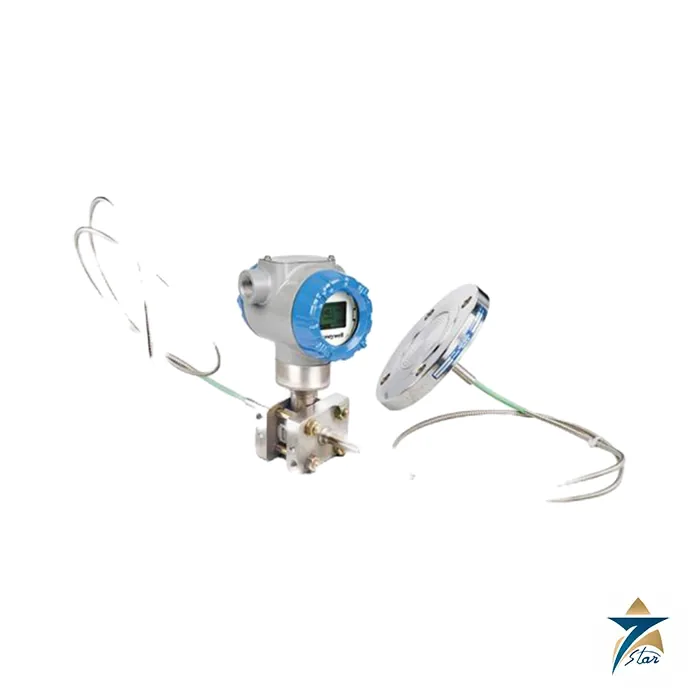
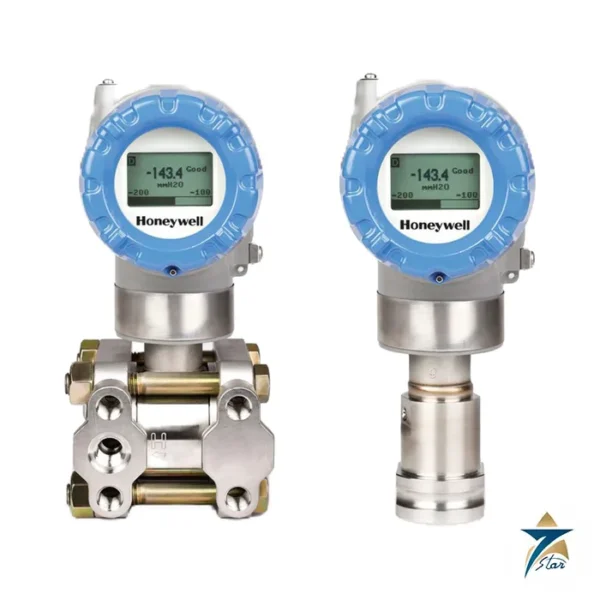
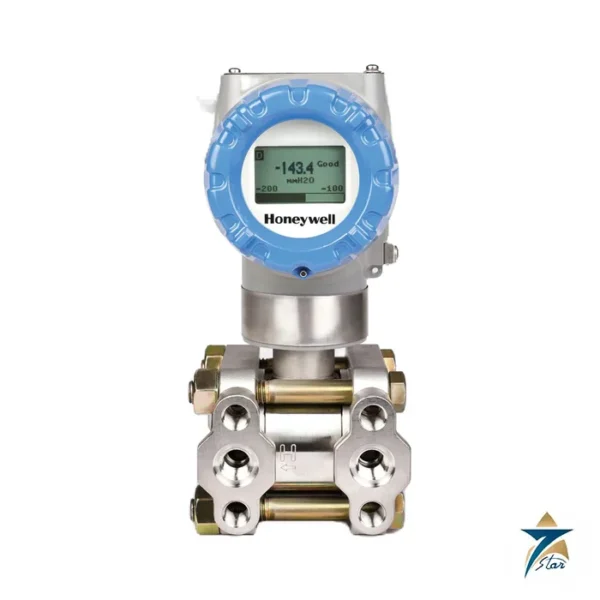
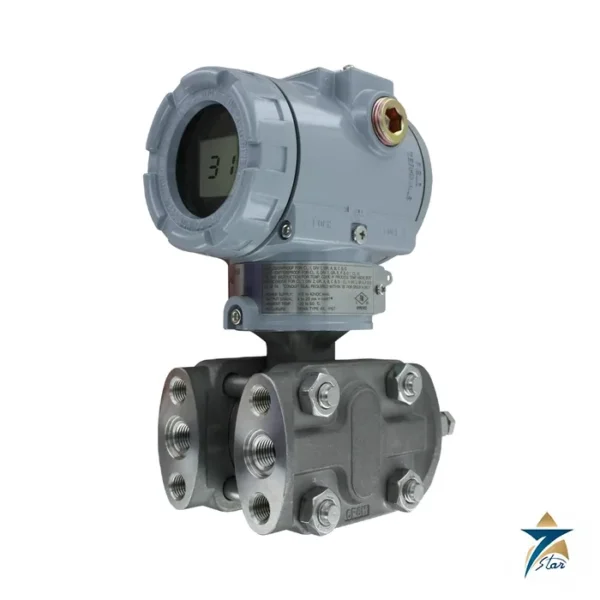
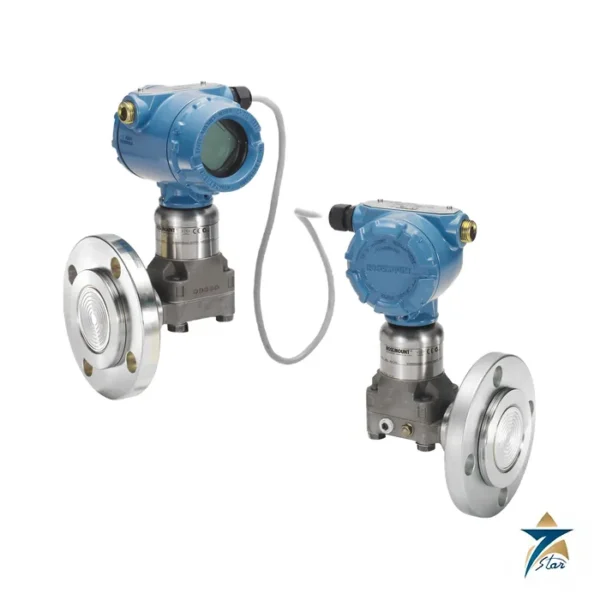
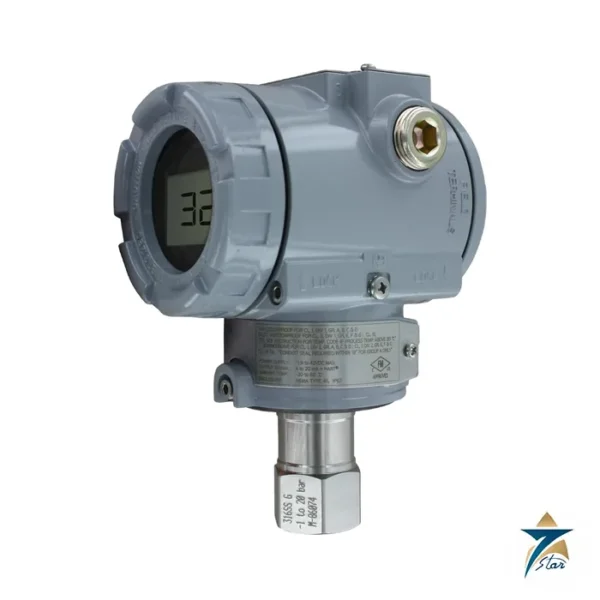
The Honeywell STR800 is a SmartLine pressure transmitter that is supplied already matched to one or two remote diaphragm seals joined by filled capillary. Instead of piping the process into the transmitter, the diaphragm of the seal sits at the tapping point and the transmitter is mounted where it is easy to reach, which suits hot, viscous, corrosive, sticky or hygienic media. Seven Star LLC supplies the STR800 in Oman and the GCC as an independent supplier based in Muscat.
The STR800 sits on the ST 800 sensor platform, which is the higher-performance branch of the SmartLine family. The datasheet quotes accuracy up to 0.0375% of span, base-transmitter stability of 0.01% of URL per year over 15 years, automatic static pressure and temperature compensation and rangeability up to 100:1. Output options are Honeywell DE, HART 7 and FOUNDATION Fieldbus.
How the STR800 model code is built
STR800 is the family name. The five base models are STR82D, STR83D, STR84G, STR87G and STR84A, where the digits after STR8 give the pressure range class and the final letter gives the measurement type: D is differential, G is gauge and A is absolute. The ordering string then adds the number of seals, the transmitter fill fluid, the head construction, bolting, capillary fill and length, the seal type and its materials, the approval code, electronics, display and protocol, configuration, calibration and accessories, in the tables of the selection guide.
STR800 technical specifications
| Parameter |
Specification |
| Manufacturer / part number |
Honeywell / STR800 (SmartLine remote diaphragm seal transmitter family) |
| Base models and ranges |
STR82D: ±400 inH2O (±1,000 mbar), min span 4 inH2O; STR83D: ±100 psi (±7 bar), min span 1 psi; STR84G: 500 psi (35 bar), LRL −14.7 psi, min span 5 psi; STR87G: 3,000 psi (210 bar), min span 30 psi; STR84A: 500 psia (35 bara), min span 5 psia |
| Reference accuracy |
Up to 0.0375% of span (STR84G, STR87G, STR84A); rangeability up to 100:1 on the gauge and absolute models |
| Stability (base transmitter only) |
0.01% of URL per year for 15 years; seal system stability depends on flange, diaphragm, capillary and fill fluid |
| Output and protocols |
4-20 mA with HART 7 or Honeywell DE; FOUNDATION Fieldbus ITK 6.0.1 compliant; polarity-insensitive wiring |
| Supply and loop |
HART: 10.8 to 42.4 VDC at terminals, 0 to 1,440 ohm; DE: 15 to 49.3 VDC, 0 to 1,200 ohm; FOUNDATION Fieldbus: 9.0 to 32.0 VDC, 17.6 mA steady state |
| Body MAWP |
STR82D/STR83D: 2,500 psig (172 bar) bolted heads, 1,450 psig (100 bar) all-welded; STR84G: 500 psig; STR87G: 3,000 psig; STR84A: 500 psia; system MAWP is the lower of body and seal rating |
| Overpressure |
1.5 x MAWP of the model |
| Storage and transport temperature |
−55 to 90 °C; operating ambient depends on seal process temperature and fill fluid |
| Seal diaphragm materials |
316L stainless steel, Monel, Hastelloy C, tantalum; gaskets Viton, graphite or PTFE |
| Fill fluids |
Meter body: Silicone 200, CTFE, Silicone 704, NEOBEE M-20; secondary (capillary and seal) also Syltherm 800 |
| Capillary |
Armored stainless or PVC-coated armored stainless, 5, 10, 15, 20, 25 or 35 ft (1.5 to 10.7 m); 2 inch close-coupled nipple available |
| Housing |
Polyester powder coated low-copper aluminum, Type 4X / IP66 / IP67; dual-certified 316/316L stainless optional |
| Transmitter weight |
8.3 lb (3.8 kg) with aluminum housing; total weight depends on the seals |
| Safety |
IEC 61508 SIL 2 (single) / SIL 3 (redundant); NAMUR NE 43 output limits and NE-107 diagnostics (HART, FF) |
How a remote seal system measures pressure
A remote seal replaces the impulse line with a closed hydraulic circuit. The process presses on a thin metal diaphragm in the seal, the diaphragm pushes the fill fluid along the capillary, and the sensor in the transmitter reads that pressure. Because the process never enters the transmitter, plugging, freezing, crystallization and corrosion of the meter body are avoided, and the transmitter stays outside the hot or aggressive zone.
The price of this arrangement is temperature sensitivity of the fill fluid. Honeywell addresses it by matching the transmitter and seal as a system and by using the sensor’s own temperature compensation. The datasheet gives the temperature effect for two balanced seals and asks for a 1.5 factor when capillary is longer than 10 ft. For gauge and absolute models the capillary is on the high side only, so the datasheet does not publish a temperature-effect figure for them and refers to the base transmitter data.
Seal size and capillary length also set the smallest usable span. A larger diaphragm and a shorter capillary allow a lower span, while a small seal on a long capillary needs a much higher minimum span. Always check the minimum recommended span table for the exact seal diameter and length before fixing the calibrated range.
STR800 seal types and where the transmitter fits
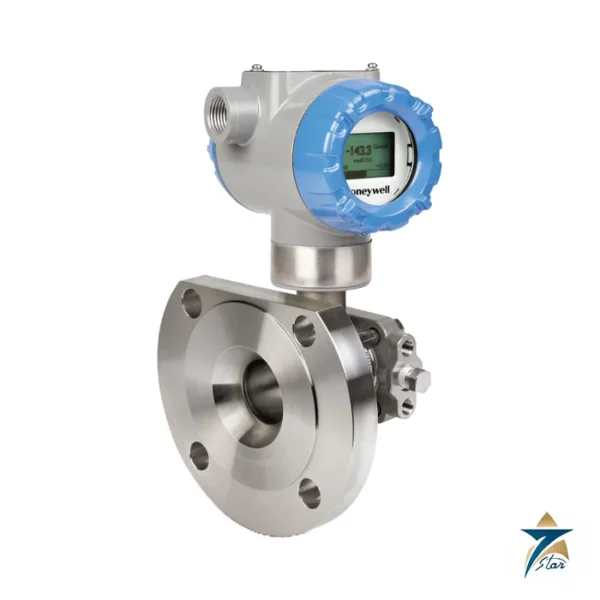
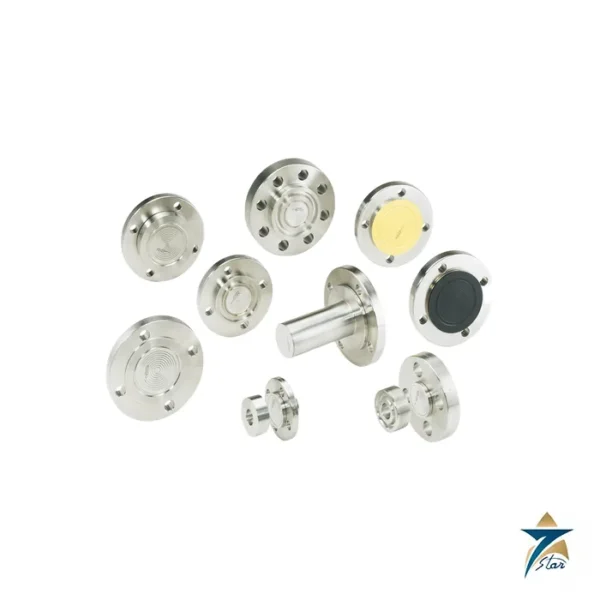
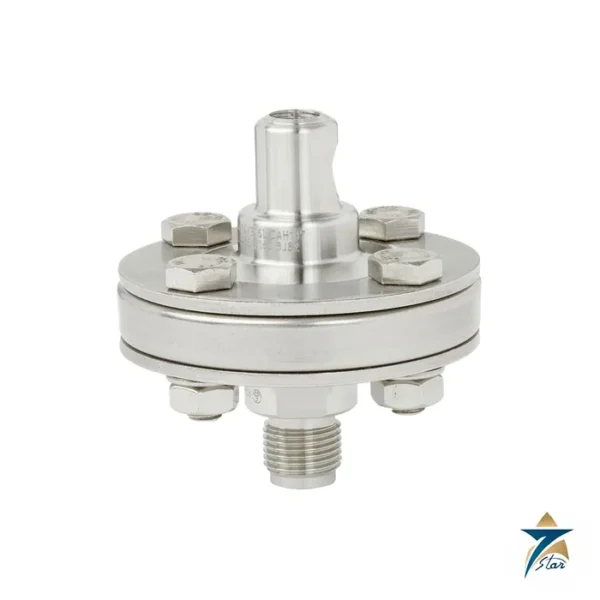
The STR800 is configured around one of several seal styles, all described in the selection guide. Choosing the seal is usually the most important decision on the order.
| Seal style |
Process connection per datasheet |
Typical use |
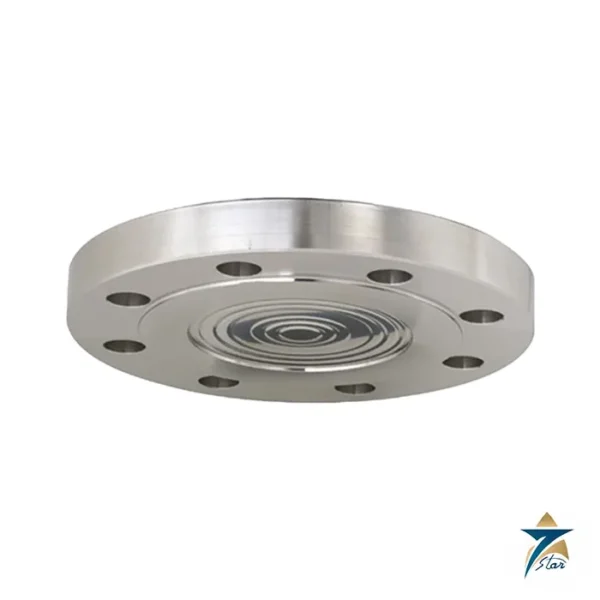
| Flush flanged |
3 inch ANSI Class 150 or 300, DIN DN80-PN40; optional lower ring with flushing ports |
Vessel and line nozzles where a flush face prevents pockets |
| Flange with extended diaphragm |
3 or 4 inch ANSI 150/300, DN80 or DN100 PN40; 2, 4 or 6 inch extension |
Thick-walled or lined tanks where the diaphragm must reach the process |
| Pancake |
3 inch ANSI Class 150, 300 or 600 |
Sandwich mounting between pipe flanges |
| Chemical tee (Taylor wedge) |
5 inch OD |
Differential service on pipelines and slurries |
| Threaded |
1/2, 3/4 or 1 inch NPT female |
Small connections and compact installations |
| Sanitary |
3 or 4 inch Tri-Clover / Tri-Clamp |
Food, pharma and hygienic duty |
| Saddle |
3 or 4 inch, 6 or 8 bolt |
Tank wall and process clamping |
Within the SmartLine family the STR800 is the seal-equipped option for the ST 800 sensor; the datasheet lists the direct-mount base transmitters it is derived from as STD820, STD830, STG84L, STG87L and STA84L. The STR700 offers a similar remote seal arrangement on the ST 700 platform. Like the rest of the SmartLine range, the STR800 is tested for compatibility with Honeywell Experion PKS, and it also works with any standards-compliant HART or FOUNDATION Fieldbus host.
Selection and ordering checklist for the STR800
- Measurement type and range: pick STR82D, STR83D, STR84G, STR87G or STR84A and confirm the calibrated span is above the minimum for the chosen seal and capillary.
- Number of seals: one on the high side, one on the low side or two seals on differential models.
- Seal style, size, rating and wetted materials, including diaphragm and upper insert, matched to the line or nozzle and to the corrosivity of the media.
- Capillary: armor type, length and secondary fill fluid chosen for the process temperature band and ambient range, with a close-coupled nipple if the transmitter can sit at the nozzle.
- Meter body fill fluid and bolting (carbon steel, 316 SS, NACE options) and vent or drain arrangement.
- Hazardous area approval code and housing: aluminum or stainless, conduit thread, lightning protection.
- Output protocol (HART, DE or FOUNDATION Fieldbus), display type and external zero/span buttons.
- Seal options such as gold plating of the diaphragm or PTFE coating for anti-sticking, and any material certificates or tests.
Installation, commissioning and maintenance of STR800 systems
Never handle the seal by the capillary and do not bend it below the minimum radius. Support the capillary along its run so that vibration does not fatigue the armor, keep the diaphragm face free of marks, and keep both seals of a differential pair at similar temperature wherever possible. Remember that the capillary fill fluid has its own weight, so level and density duties need the elevation of the transmitter relative to each seal in the calculation; the datasheet gives the specific gravity of every fill fluid for exactly this purpose.
Commission with the loop powered and the display in a known engineering unit. Use the external buttons or a HART or DE configurator to set zero and span, trim for the actual elevation of the transmitter relative to the seals, and then verify the output against a reference. Because the sensor reports static pressure and temperature for compensation, diagnostics highlight a meter body over-temperature or a fault in the electronics early.
Honeywell lists recommended calibration verification every four years for remote seal models. Electronics, display and terminal modules are modular and replaceable in the field except where flameproof rules prevent opening the housing, so site spares can be limited to modules instead of whole transmitters. The seal and capillary assembly is a matched system and should not be disassembled on site.
Typical STR800 applications in Oman and the GCC
Remote seal transmitters are common wherever the process is too hot, thick or aggressive to be brought into an impulse line. In Oman and the GCC this includes crude and condensate service with wax or sand, amine and glycol units, bitumen and heavy fuel lines, caustic and acid tanks in desalination and water treatment, sulfur and fertilizer plants, and petrochemical reactors. Level on pressurized vessels with a wet leg that needs constant maintenance is another frequent use.
High ambient temperatures, direct sun and dust affect both housing and capillary. Specify the stainless housing in coastal plants for salt-laden air, plan capillary routing out of the sun where possible, and select the fill fluid for the maximum process and ambient combination instead of the average. Marine certificates and the NACE option listed in the datasheet are useful on offshore platforms and sour service.
STR800 model summary
| Model |
Measurement |
Range |
Body MAWP |
| STR82D |
Differential |
±400 inH2O (±1,000 mbar) |
2,500 psig bolted / 1,450 psig welded |
| STR83D |
Differential |
±100 psi (±7 bar) |
2,500 psig bolted / 1,450 psig welded |
| STR84G |
Gauge |
500 psi (35 bar), vacuum to −14.7 psi |
500 psig |
| STR87G |
Gauge |
3,000 psi (210 bar), vacuum to −14.7 psi |
3,000 psig |
| STR84A |
Absolute |
500 psia (35 bara) |
500 psia |
Information to send with an STR800 RFQ
- Full model string or at least model, range, number of seals and seal style with size and rating.
- Process fluid, minimum, normal and maximum pressure and temperature, plus vacuum duty if any.
- Ambient range at the transmitter and along the capillary, and required capillary length.
- Output protocol, hazardous area classification and any marine, SIL or NACE requirement.
- Quantity, delivery location in Oman or the GCC, required documents and tag numbers.
Documents and quotation
The manufacturer technical information sheet for the STR800 is attached on this page. It includes the complete model selection guide, seal dimensions and minimum span tables and should be read together with your process data sheet.
Send the model string, seal details and process conditions and Seven Star LLC will quote against them. Delivery time and available certificates are confirmed in the quotation.




















Reviews
There are no reviews yet.