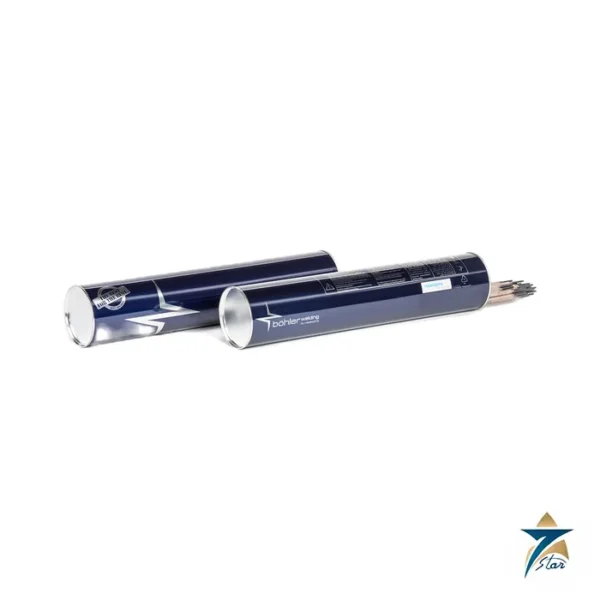
Brand:

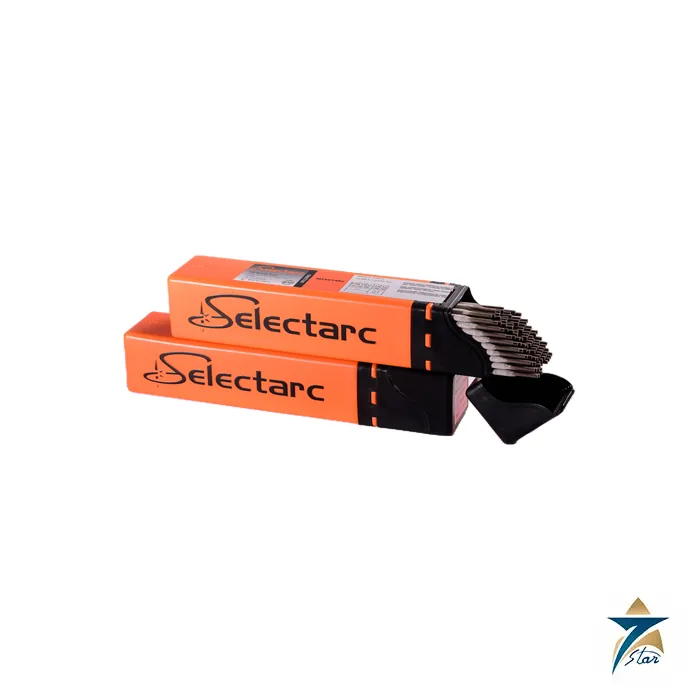
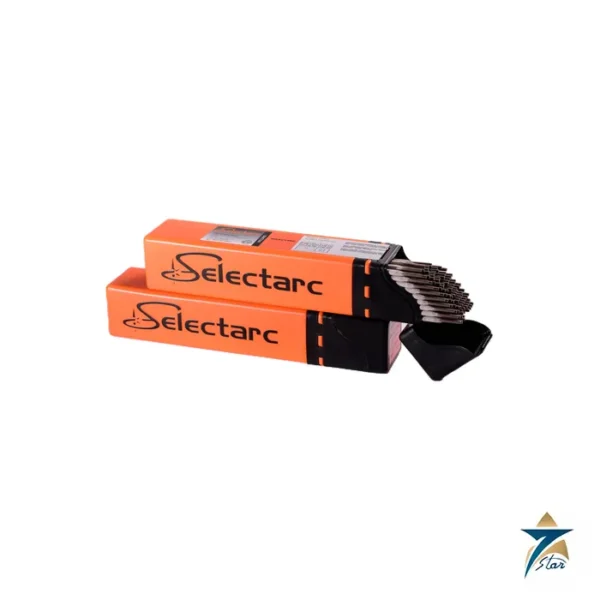
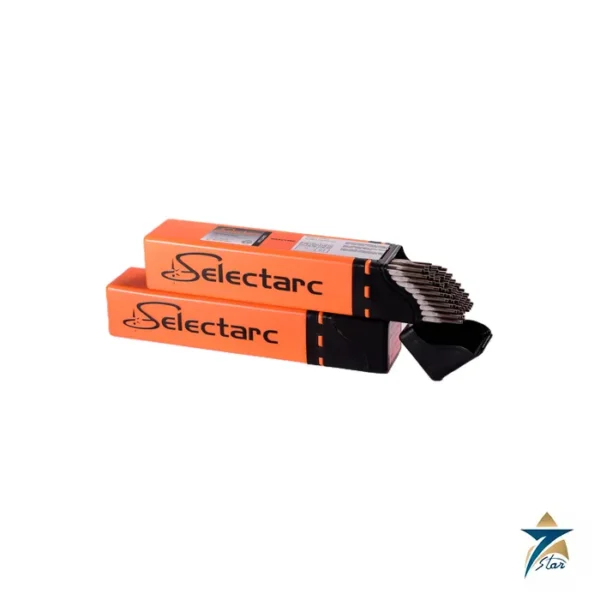
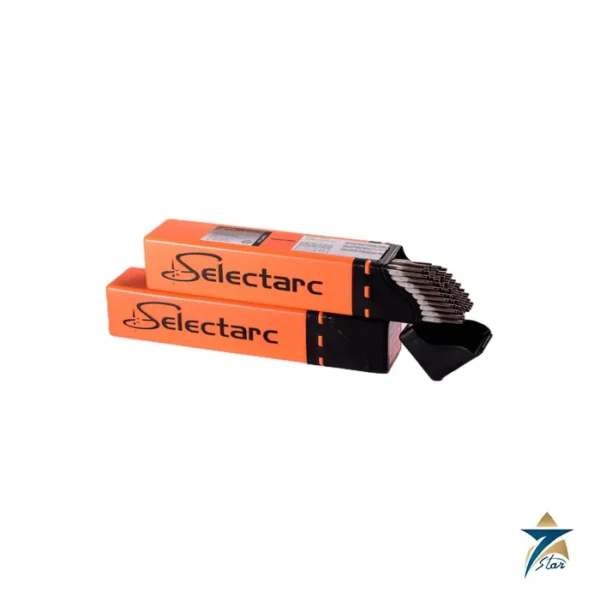
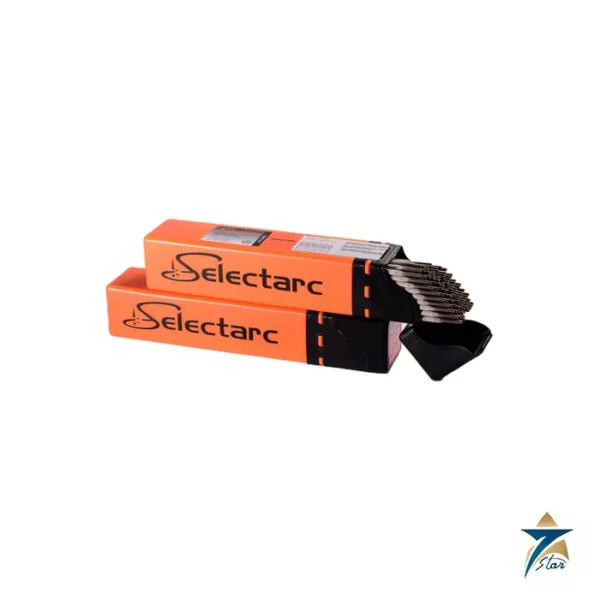
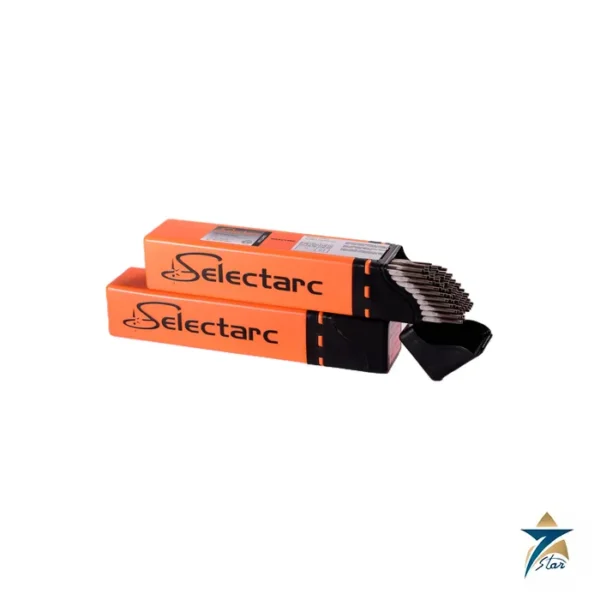
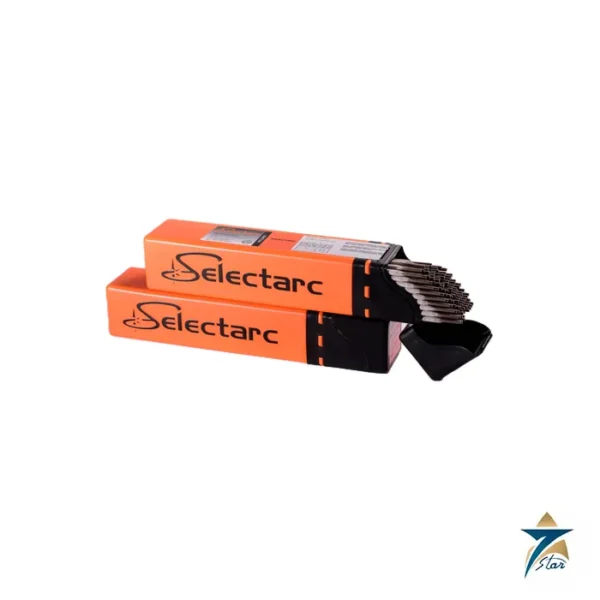
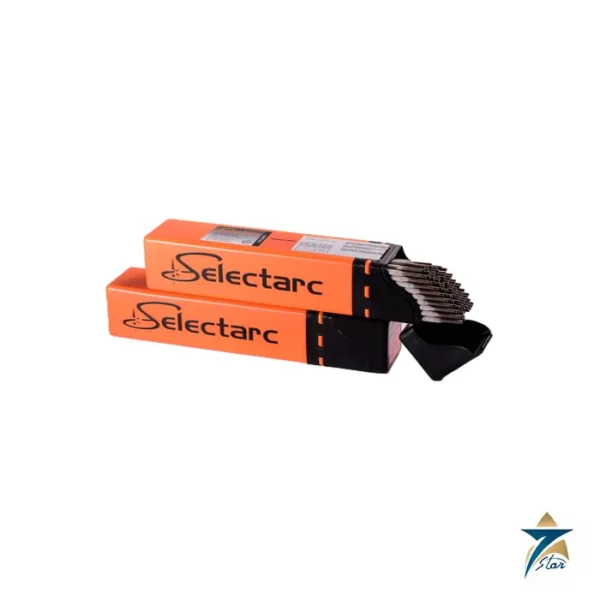
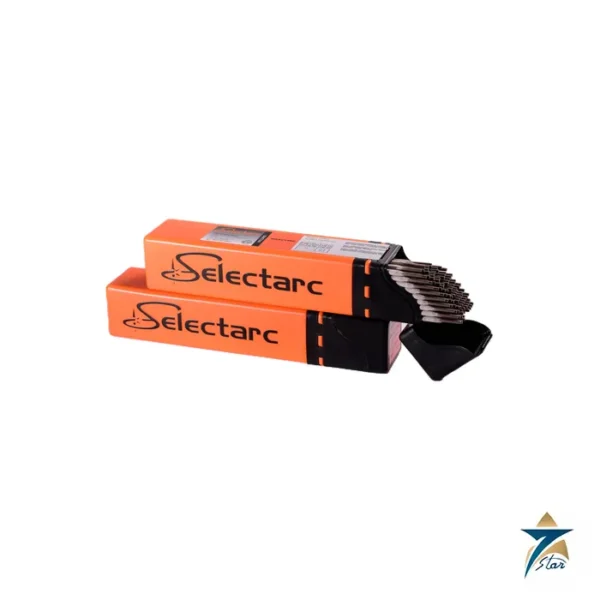
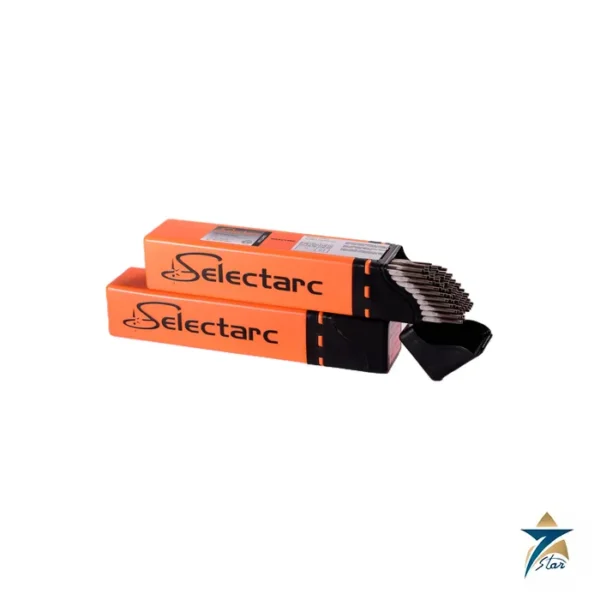
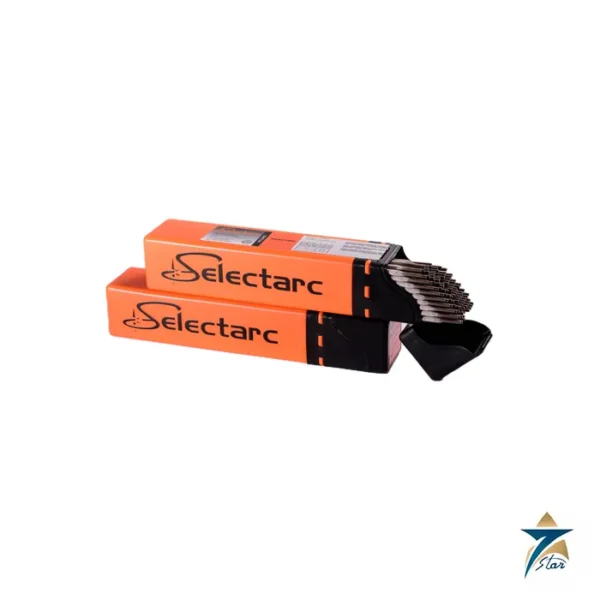
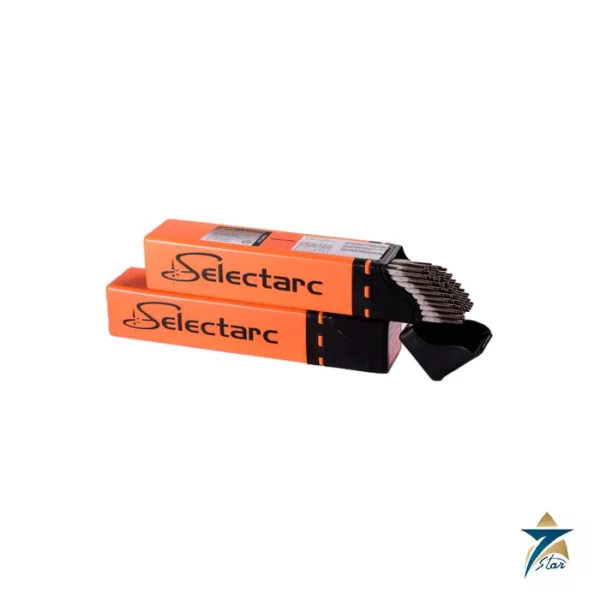
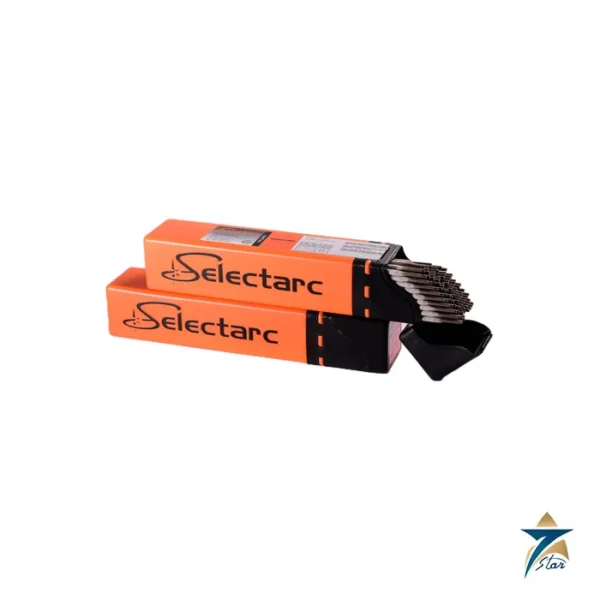
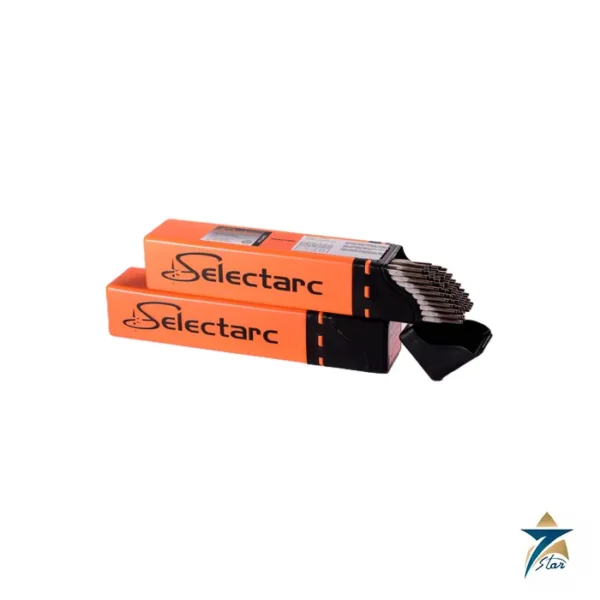
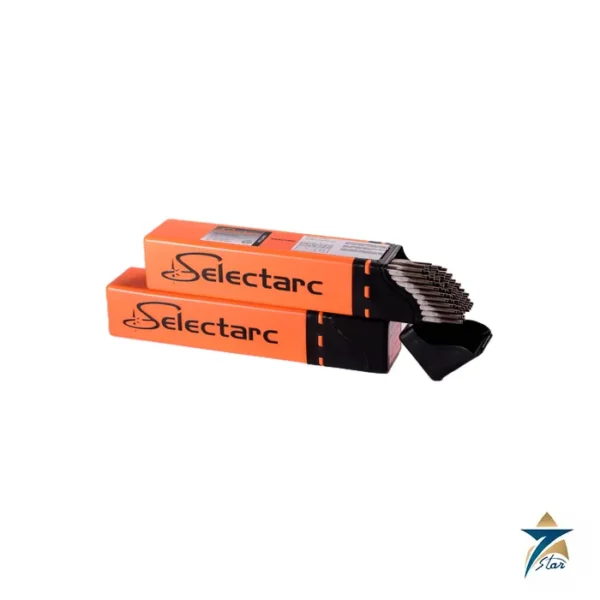
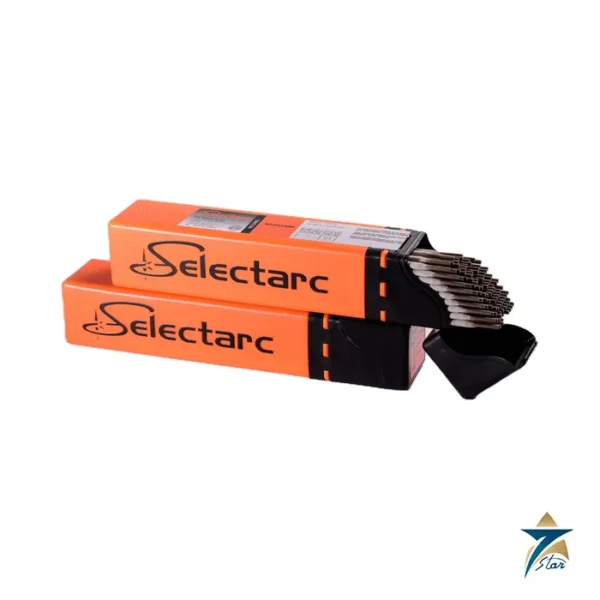
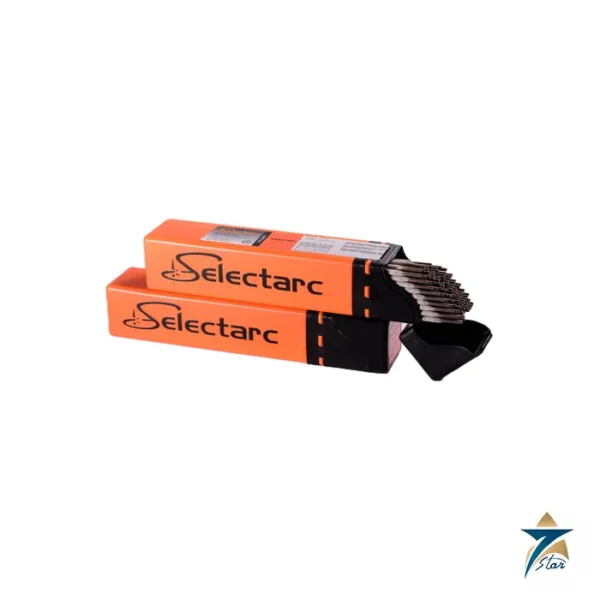
Selectarc HB60 Hardfacing Electrode 55-60 HRC

Description

Air-hardening surfacing electrode for abrasion and impact

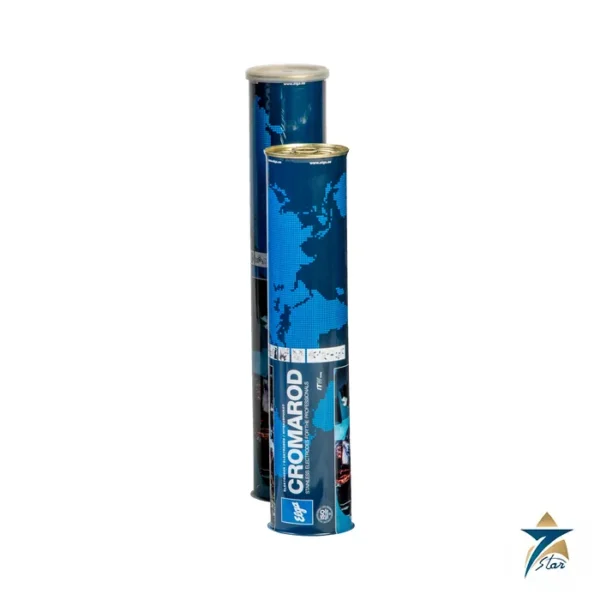
The Selectarc HB60 is a rutile-basic coated electrode for hardfacing machine and construction parts, and tools made of low-alloy and cast steels. Its air-hardening deposit reaches about 600 HB (55 to 60 HRC) and is designed as a compromise between resistance to medium abrasion and resistance to shock and pressure.

Selectarc notes that the electrode runs easily even on small welding sets with a low open circuit voltage, with soft flow, almost no spatter, self-releasing slag and a smooth bead. The deposit is sound and crack-free, and it is finished by grinding rather than machining.

Technical specifications

Parameter Specification
Manufacturer / product Selectarc / HB60
Process SMAW hardfacing
Coating Rutile-basic
Deposit hardness About 600 HB; 55–60 HRC (pure weld metal, 2–3 layers)
Finishing Grinding
Sizes (diameter × length) and current 2.5 × 350 mm, 90 A; 3.2 × 450 mm, 115 A; 4.0 × 450 mm, 160 A; 5.0 × 450 mm, 230 A
Current type DC electrode negative or AC (open circuit voltage about 45 V)
Redrying 1 h at 150 °C, if necessary
Preheat for high-carbon tool steels 250–400 °C depending on composition and thickness
Cooling Slow, in still air

Typical parts

The manufacturer lists moulds, scrapers, buckets and bucket teeth, excavator parts, chisels, conveyor screws, track links, cutting tools and crusher cones. These are parts where wear comes from a mix of sliding abrasion and moderate impact, rather than pure fine-particle abrasion, for which a carbide-rich chromium alloy would usually be chosen.

Build-up, buffer layers and preheat

Hardness is quoted for 2 to 3 layers of undiluted weld metal; the first layer on a carbon steel part is softer because of dilution. For heavy build-up on highly alloyed steels such as tool steels, Selectarc recommends a cushion layer with its 29/9 or 18/8Mn electrodes before the hard layers. High-carbon and low-alloy tool steels need preheating to 250–400 °C depending on composition and thickness, followed by slow cooling in still air.

Restore badly worn parts to near size with a tough build-up alloy first, then apply HB60 as the wearing surface. Redry electrodes for 1 hour at 150 °C if needed.

Selectarc describes the HB60 deposit as sound and crack-free. To keep it that way, follow the preheat and slow cooling advice on hardenable base metals, and limit the total number of hard layers to what the part needs. Where the original base metal is unknown, test a small area first and check the result before surfacing the whole part.

Documents and quotation

The official datasheet link is given below. Browse our Welding Electrodes category for other electrodes.

For a quotation, send the diameter, quantity and a short description of the part and its wear mechanism.

Selectarc HB60 technical summary

Property Value (manufacturer data)
Type Rutile-basic coated hardfacing electrode
Hardness, pure weld metal (2–3 layers) approx. 600 HB / 55–60 HRC
Deposit Air-hardening, crack-free, machinable by grinding only
Redrying 1 h at 150 °C if necessary

Sizes and welding currents

Diameter × length (mm) Current (A)
2.5 × 350 90
3.2 × 450 115
4.0 × 450 160
5.0 × 450 230

How the HB60 hardfacing deposit works

The HB60 electrode deposits an air-hardening alloy that transforms to a hard martensitic structure as it cools in still air. This gives a surface that resists abrasion from soil, sand, rock and metal-to-metal wear, while keeping enough toughness to accept moderate impact. That balance makes it a general-purpose choice when a part sees both sliding abrasion and shock loads, rather than a very high-carbide alloy that would chip under impact. Selectarc states that the electrode runs well on welding sets with a low open-circuit voltage, so it can be used with many common site power sources.

Selection and application guide for HB60

  • Typical parts: moulds, scrapers, buckets and bucket teeth, excavator parts, chisels, conveyor screws, track links, cutting tools and crusher cones.
  • Number of layers: the listed hardness is reached in pure weld metal after 2–3 layers. A single layer on carbon steel will be diluted and softer.
  • Related processes: Selectarc also lists HB60 variants as flux-cored, MIG and TIG fillers for automated or larger-area hardfacing.
  • Diameter choice: 2.5 and 3.2 mm for edges and small parts; 4.0 and 5.0 mm for larger wear surfaces.

Preparation and welding procedure

  • Remove worn, cracked or fatigued material and clean the surface back to sound metal.
  • On highly alloyed steels or tool steels, lay a cushion layer first with Selectarc 29/9 or 18/8Mn, as advised by the manufacturer.
  • Preheat high-carbon tool steels to 250–400 °C, depending on composition and section size.
  • Keep interpass temperature controlled and allow the part to cool slowly in still air after welding.
  • Finish by grinding, as the deposit is too hard for normal machining.

Typical applications in Oman and the GCC

Quarries, cement plants, mining operations, earthmoving contractors and ports across Oman and the GCC rely on hardfacing to extend the life of buckets, teeth, crusher parts and conveyor screws. Rebuilding these parts with Selectarc HB60 during planned maintenance can reduce unplanned downtime and the cost of replacing complete components, particularly where sand and rock abrasion is severe.

Why source from Seven Star LLC

Seven Star LLC supplies hardfacing and welding consumables to maintenance workshops and contractors across Oman and the GCC. Tell us the diameter, quantity and the part you plan to rebuild to request a quote; our team can help confirm the correct ordering code.

Practical tips for hardfacing with HB60

Plan the bead pattern according to the wear direction. On parts that handle fine abrasive material such as sand, beads laid parallel to the material flow reduce scouring between beads. On parts that handle large rocks, a dot or waffle pattern can trap fines and form a protective layer of the material itself. Avoid building up excessive thickness in a single area, because thick hard deposits are more likely to spall under impact. Where a large dimensional rebuild is needed, restore the base dimensions first with a tougher buildup filler, then finish with two or three layers of HB60. Check the surface for cracks after cooling, and inspect hardfaced parts at each maintenance stop so that the hard layer is renewed before the base metal starts to wear.

Datasheets & Documents
  • PDF Datasheet Selectarc HB60 technical data sheet (EN) Download
Reviews (0)

Reviews

There are no reviews yet.

How would you rate this product?

It takes about 10 seconds — just tap a star. Your email is never published.

About brand

Selectarc is the French maker of welding and brazing filler metals: covered electrodes, TIG rods, MIG and flux-cored wires, submerged arc wires and brazing alloys. Its welding business began in 1952, when Selectarc Industrie started producing covered electrodes, and it is headquartered in Grandvillars in the Territoire de Belfort. Selectarc belongs to Viellard Migeon & Compagnie, a family industrial group whose origins go back to 1796, and since June 2025 the nuclear company Framatome has held a 40% stake.

Seven Star LLC is an independent supplier in Muscat. We list Selectarc electrodes and wires for fabricators and maintenance workshops in Oman and the GCC.

Selectarc company profile

Welding business founded 1952, Grandvillars, France, as Selectarc Industrie, a covered electrode plant
Parent group Viellard Migeon & Compagnie (VMC), a family-controlled industrial group with roots in the Morvillars forges, 1796
Shareholders VMC as majority shareholder; Framatome acquired 40% in June 2025 to secure filler metal supply for nuclear reactor primary circuits
Headquarters Grandvillars, Territoire de Belfort, France
Product families Nickel alloy, stainless, duplex and super duplex, low-alloy and carbon steel electrodes, TIG rods, flux-cored and submerged arc wires, hardfacing electrodes, brazing alloys

Milestones

  • 1796: The Viellard family's metalworking activity starts at Morvillars, the origin of today's VMC group.
  • 1952: Selectarc Industrie begins producing covered welding electrodes in Grandvillars.
  • 2025: Framatome takes a 40% stake in Selectarc on 11 June, alongside majority shareholder VMC.

Selectarc product series

Covered electrodes are the largest group here. Nickel alloy electrodes include Ni625 (ENiCrMo-3), Ni182 (ENiCrFe-3), Ni276 (ENiCrMo-4), Ni59 (ENiCrMo-13) and Ni617 (ENiCrCoMo-1). Stainless and duplex grades include Inox 308B, 316L, 317L, 347, 2209, 2209B and the super duplex Inox 2509MoB. For carbon and low-temperature steels there are the B7018S (E7018-1) and the nickel-alloyed B81, B82 and B84 electrodes, and HB60 is a hardfacing electrode for 55 to 60 HRC.

The range also includes submerged arc wires such as UP 2209 and flux-cored wires, while brazing alloys are made at the former Reboud-Roche foundry.

Where Selectarc filler metals are used

Corrosion-resistant overlays and dissimilar joints in oil and gas and petrochemical plants, duplex and super duplex piping, cryogenic and low-temperature steels, high-temperature alloys and wear-resistant hardfacing. Selectarc names the nuclear, defence and aerospace industries among its key markets.

Selectarc products we list

Family Examples
Welding Electrodes B7018S E7018-1 Basic Low-Hydrogen Electrode, B81 E8018-C3 1% Ni Low-Temperature Electrode, B82 E8018-C1 2.5% Ni Low-Temperature Electrode, B84 E8018-C2 3.5% Ni Cryogenic Steel Electrode, HB60 Hardfacing Electrode 55-60 HRC, Inox 2209 E2209-17 Duplex Stainless Electrode, Inox 2209B E2209-15 Basic Duplex Electrode, Inox 2509MoB E2594-15 Super Duplex Electrode and 12 more
Flux-Cored Welding Wire FCW 2209P E2209T1 All-Position Duplex, FCW 2509MOP E2594T1 Super Duplex Flux-Cored, FCW 309LP E309LT1-1/-4 All-Position, FCW 316LP E316LT1-1/-4 All-Position, FCW NI182 ENiCrFe3T0-4 Nickel Flux-Cored Wire, FCW NI625 ENiCrMo3T0-4 Nickel Flux-Cored Wire
Submerged Arc Welding Wire UP 2209 ER2209 Duplex Submerged Arc Wire, UP 2509 ER2594 Super Duplex Submerged Arc Wire, UP EB3 EB3R 2.25Cr-1Mo Submerged Arc Wire, UP NI625 ERNiCrMo-3 Nickel Submerged Arc Wire, UP P91 EB91 9Cr-1Mo Submerged Arc Wire, UP S2Mo EA2 0.5% Mo Submerged Arc Wire

Ordering Selectarc filler metals: what we need

Give the product name, for example Selectarc Ni625, and the AWS or ISO classification in your welding procedure, the diameter and length, and the quantity. Seven Star LLC checks the grade against the Selectarc technical data sheet and can provide the data sheet and the certificates issued with the order on request.

Facts checked against Framatome's June 2025 announcement and published histories of Viellard Migeon & Cie, October 2026.

FAQ

Questions about the Selectarc HB60 Hardfacing Electrode 55-60 HRC

Answers from our engineering team on installation, compatibility and integration.

01What hardness does Selectarc HB60 give?
About 600 HB, or 55 to 60 HRC, in 2 to 3 layers of pure weld metal.
02Can the deposit be machined?
No, Selectarc states it is machinable by grinding.
03Which current is used?
DC with the electrode negative, or AC with about 45 V open circuit voltage.
04Is preheating required?
High-carbon and low-alloy tool steels need 250–400 °C depending on composition and thickness.
05What buffer layer is recommended on tool steels?
A cushion layer with Selectarc 29/9 or 18/8Mn.