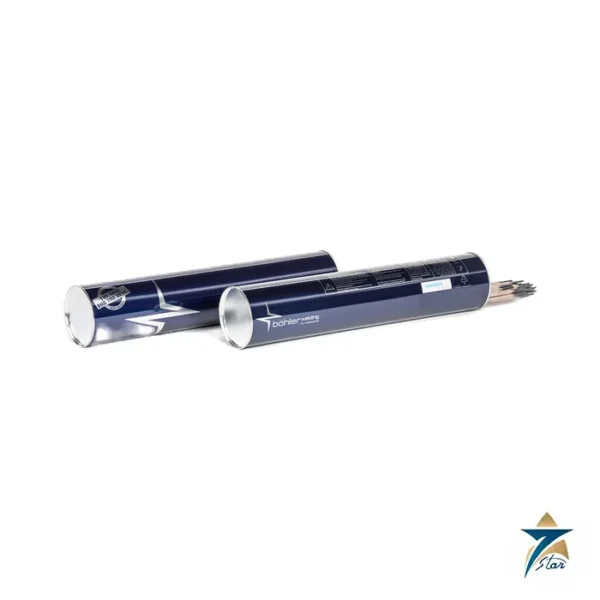
Brand:

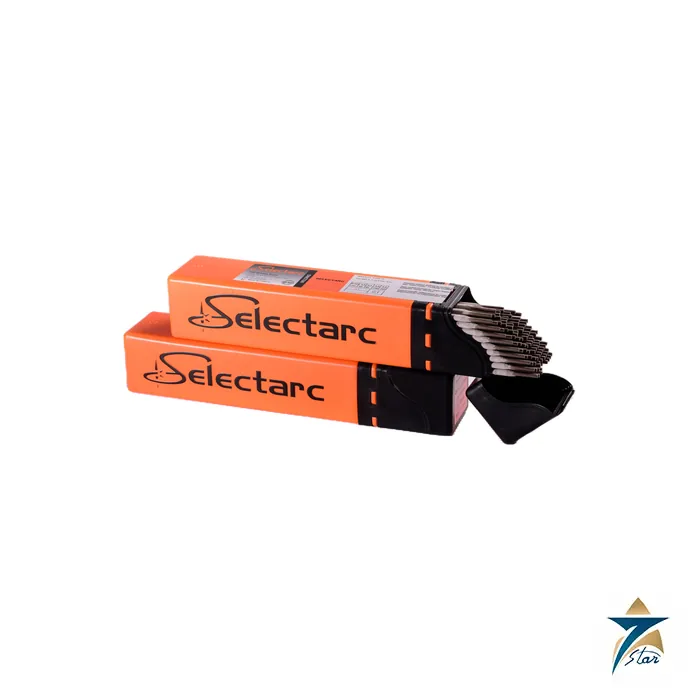
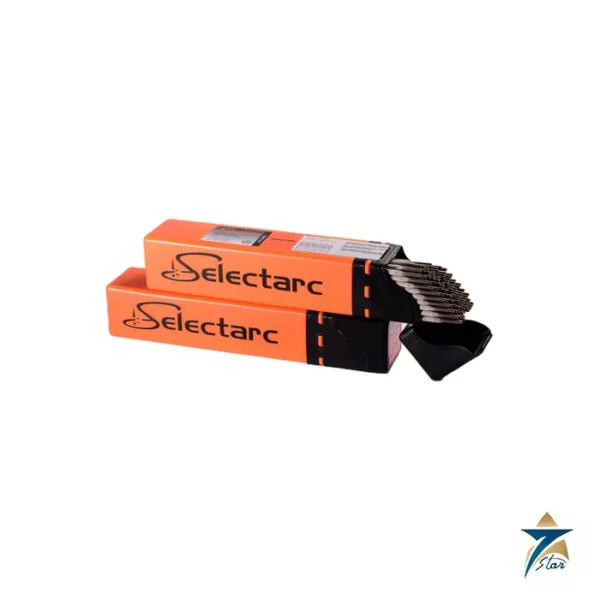
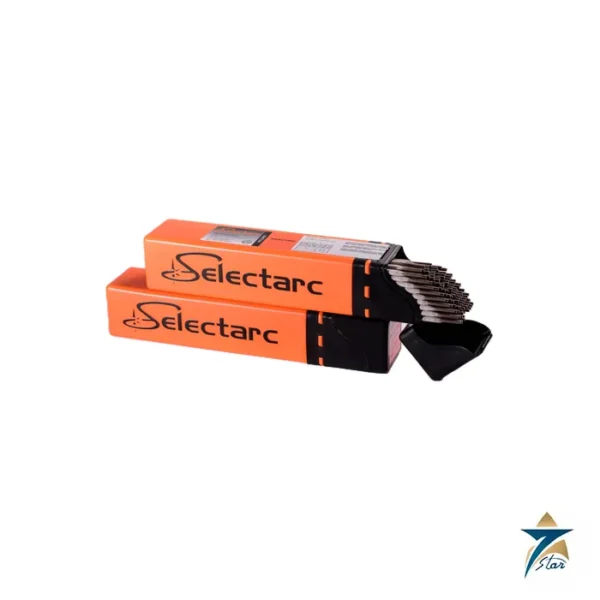
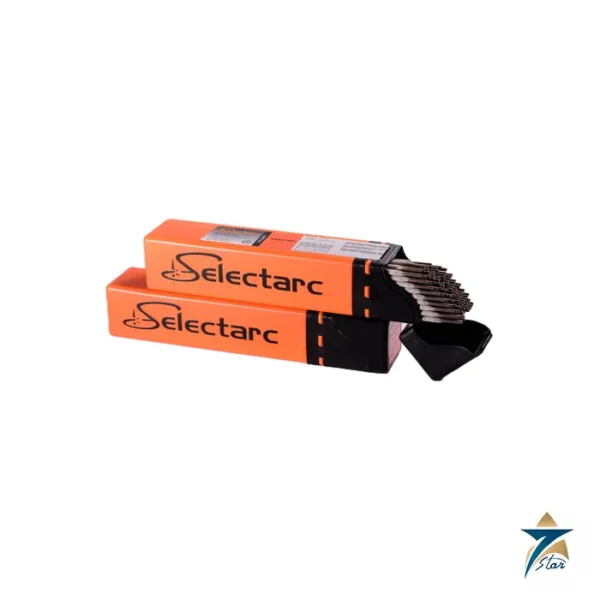
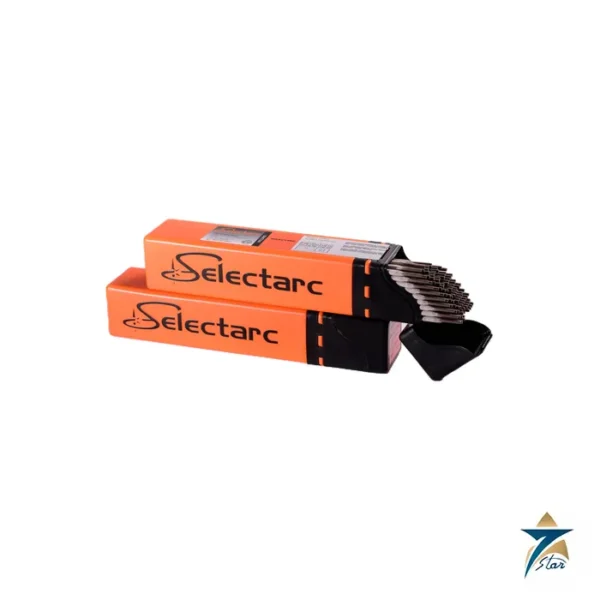
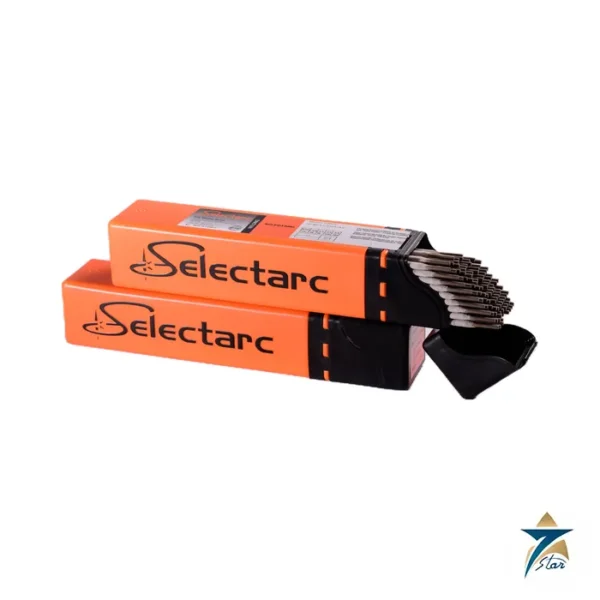
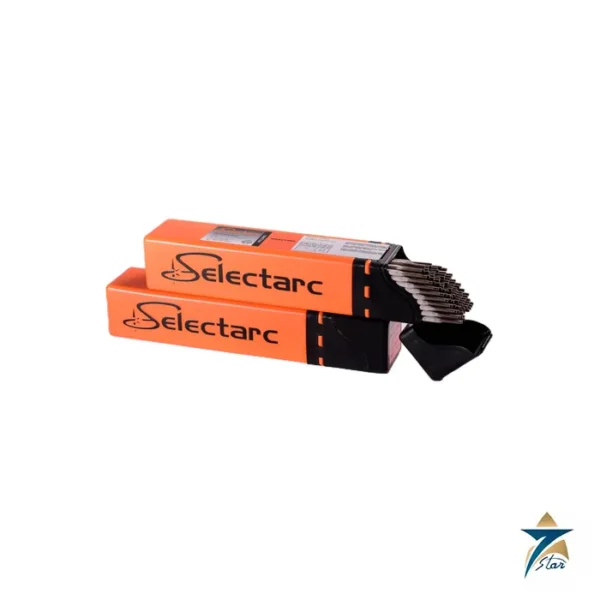
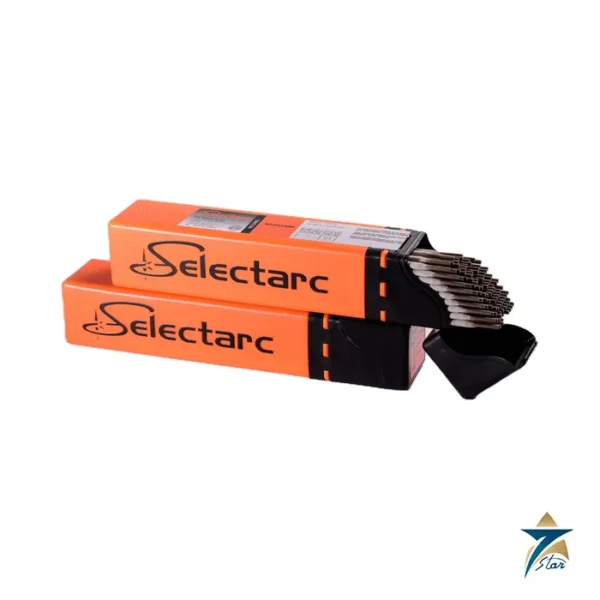
Selectarc Inox 347 E347-17 Stabilised Stainless Electrode

Description

Niobium-stabilised 19 9 electrode for 321 and 347 steels

The Selectarc Inox 347 is a rutile-basic coated stick electrode that deposits 18% Cr – 8% Ni stainless weld metal stabilised with niobium (columbium). It is classified AWS A5.4 E347-17 and ISO 3581-A / EN 1600 E 19 9 Nb R 3 2, and is intended for welding titanium- or niobium-stabilised austenitic stainless steels.

The deposit contains about 8% delta ferrite, which helps resist hot cracking, and according to Selectarc it is resistant to intercrystalline corrosion at service temperatures up to 400 °C. The electrode is described as having soft fusion without spatter, easy striking and restriking, and very easy slag removal.

Technical specifications

Parameter Specification
Manufacturer / product Selectarc / Inox 347
Process SMAW (manual metal arc)
AWS classification A5.4 E347-17
ISO / EN classification ISO 3581-A and EN 1600 E 19 9 Nb R 3 2
Coating Rutile-basic
Typical weld metal, % C 0.03, Si 0.8, Mn 0.7, Cr 19.0, Ni 9.5, Nb 0.3, Fe remainder
Delta ferrite About 8%
Yield strength Rp0.2 Above 350 MPa
Tensile strength Rm Above 550 MPa
Elongation A5 Above 30%
Impact energy KV Above 60 J at +20 °C
Sizes and typical current 2.0 × 300 mm, 45 A; 2.5 × 350 mm, 70 A; 3.2 × 350 mm, 100 A; 4.0 × 350 mm, 135 A; 5.0 × 450 mm, 180 A
Current type DC electrode positive or AC (open circuit voltage about 70 V)
Redrying 1 h at 250 °C
Interpass temperature Below 200 °C

Base materials and typical uses

The data sheet lists UNS S30400 (304, 1.4301), S30403 (304L, 1.4306), S32100 (321, 1.4541) and S34700 (347, 1.4550). In refineries and petrochemical plants these stabilised grades are common in heater tubes, hydroprocessing piping, heat exchangers and other equipment that operates in the sensitisation range, where an unstabilised high-carbon deposit could lose corrosion resistance through chromium carbide precipitation at the grain boundaries.

Niobium ties up carbon as stable carbides, so a 347 deposit keeps its resistance to intergranular attack after exposure to elevated temperature. Note that 321 base metal is titanium-stabilised, but titanium does not transfer well across the arc, which is why a niobium-stabilised filler such as E347 is the conventional choice for both 321 and 347 steels.

Using the electrode

Inox 347 runs on DC positive or on AC with an open circuit voltage of about 70 V. Redry for 1 hour at 250 °C if the electrodes have picked up moisture, and keep the interpass temperature below 200 °C. Five diameters from 2.0 to 5.0 mm cover thin sheet through to heavier plate, with typical currents ranging from 45 A to 180 A.

Clean the joint thoroughly, use stainless-only brushes and grinding discs, and remove all slag between passes. For components that will undergo post-weld heat treatment or long service at high temperature, discuss the expected ferrite level and any requirement for stabilising heat treatment with your welding engineer before production starts.

For low-carbon 304L or 316L components that will never see the sensitisation range, a standard L-grade filler is usually adequate; the stabilised 347 deposit is mainly worth specifying where elevated-temperature service or post-weld heat treatment is part of the design. When joining stabilised stainless steel to carbon steel, a more highly alloyed 309 type filler is normally used instead.

Documents and quotation

The Selectarc Inox 347 data sheet is attached for download. Find more stainless grades in our Welding Electrodes category.

Send the diameters, quantities and certificate needs for a quotation.

How the Selectarc Inox 347 deposit performs

The Selectarc catalogue describes the Inox 347 as a rutile-basic electrode depositing a niobium-stabilised 18% Cr / 8% Ni austenitic stainless steel with an average ferrite content of about 8%. The typical deposit contains below 0.03% C, 0.7% Mn, 0.8% Si, 9.5% Ni, 19.0% Cr and 0.3% Nb. The coating is resistant to moisture pick-up, and the weld metal shows very good resistance in corrosive media and to intercrystalline corrosion. The manufacturer lists sizes from 2.0 × 300 mm up to 5.0 × 450 mm, including 2.5 × 350 mm.

Welding technique for austenitic stainless electrodes

Keep a short arc and a slight drag angle, and avoid wide weaving, which increases heat input and the risk of distortion and sensitisation. Stainless steel has lower thermal conductivity and higher expansion than carbon steel, so tack more frequently and balance welding sequences on long seams. Remove slag fully between passes and finish by pickling and passivating, or by mechanical cleaning with stainless-only tools, so that heat tint and iron contamination do not reduce corrosion resistance in service.

Selection and ordering guide for Selectarc Inox 347

  • Use Inox 347 (E347-17) for titanium- or niobium-stabilised steels such as 321 and 347, and for 304 type steels in service where stabilised weld metal is specified.
  • For unstabilised 316L, choose a Mo-bearing grade instead; for 317L, use the Selectarc Inox 317L.
  • Order a mix of diameters to cover root, fill and cap passes on the wall thicknesses involved.

Storage, handling and redrying

  • Store electrodes in their original packaging in a dry, heated store, away from condensation and direct contact with floors or walls.
  • Once a packet is open, keep the electrodes in a heated quiver on site and return unused electrodes to the holding oven at the end of the shift.
  • Redry according to the parameters on the Selectarc data sheet and avoid repeated redrying cycles beyond what the manufacturer allows.
  • Discard electrodes with damaged, cracked or contaminated coating.

Typical applications in Oman and the GCC

Stabilised stainless steels are found in refinery heater and furnace components, hydroprocessing units, heat exchangers, exhaust systems and chemical plant equipment operating at elevated temperatures.

Why source from Seven Star LLC

Seven Star LLC supplies Selectarc welding consumables across Oman and the GCC. Request a quote with the grade, diameters, quantities and certificate type (for example EN 10204 3.1), and our team can help confirm the correct ordering code.

Why niobium stabilisation matters

When an unstabilised austenitic stainless steel is held in the sensitisation range, chromium carbides can form at the grain boundaries and deplete the adjacent metal of chromium, making it vulnerable to intergranular attack. Niobium in the Inox 347 deposit combines preferentially with carbon, leaving chromium in solution and preserving corrosion resistance after welding or during service at elevated temperature.

Datasheets & Documents
  • PDF Datasheet Selectarc Inox 347 technical data sheet (EN) Download
Reviews (0)

Reviews

There are no reviews yet.

How would you rate this product?

It takes about 10 seconds — just tap a star. Your email is never published.

About brand

Selectarc is the French maker of welding and brazing filler metals: covered electrodes, TIG rods, MIG and flux-cored wires, submerged arc wires and brazing alloys. Its welding business began in 1952, when Selectarc Industrie started producing covered electrodes, and it is headquartered in Grandvillars in the Territoire de Belfort. Selectarc belongs to Viellard Migeon & Compagnie, a family industrial group whose origins go back to 1796, and since June 2025 the nuclear company Framatome has held a 40% stake.

Seven Star LLC is an independent supplier in Muscat. We list Selectarc electrodes and wires for fabricators and maintenance workshops in Oman and the GCC.

Selectarc company profile

Welding business founded 1952, Grandvillars, France, as Selectarc Industrie, a covered electrode plant
Parent group Viellard Migeon & Compagnie (VMC), a family-controlled industrial group with roots in the Morvillars forges, 1796
Shareholders VMC as majority shareholder; Framatome acquired 40% in June 2025 to secure filler metal supply for nuclear reactor primary circuits
Headquarters Grandvillars, Territoire de Belfort, France
Product families Nickel alloy, stainless, duplex and super duplex, low-alloy and carbon steel electrodes, TIG rods, flux-cored and submerged arc wires, hardfacing electrodes, brazing alloys

Milestones

  • 1796: The Viellard family's metalworking activity starts at Morvillars, the origin of today's VMC group.
  • 1952: Selectarc Industrie begins producing covered welding electrodes in Grandvillars.
  • 2025: Framatome takes a 40% stake in Selectarc on 11 June, alongside majority shareholder VMC.

Selectarc product series

Covered electrodes are the largest group here. Nickel alloy electrodes include Ni625 (ENiCrMo-3), Ni182 (ENiCrFe-3), Ni276 (ENiCrMo-4), Ni59 (ENiCrMo-13) and Ni617 (ENiCrCoMo-1). Stainless and duplex grades include Inox 308B, 316L, 317L, 347, 2209, 2209B and the super duplex Inox 2509MoB. For carbon and low-temperature steels there are the B7018S (E7018-1) and the nickel-alloyed B81, B82 and B84 electrodes, and HB60 is a hardfacing electrode for 55 to 60 HRC.

The range also includes submerged arc wires such as UP 2209 and flux-cored wires, while brazing alloys are made at the former Reboud-Roche foundry.

Where Selectarc filler metals are used

Corrosion-resistant overlays and dissimilar joints in oil and gas and petrochemical plants, duplex and super duplex piping, cryogenic and low-temperature steels, high-temperature alloys and wear-resistant hardfacing. Selectarc names the nuclear, defence and aerospace industries among its key markets.

Selectarc products we list

Family Examples
Welding Electrodes B7018S E7018-1 Basic Low-Hydrogen Electrode, B81 E8018-C3 1% Ni Low-Temperature Electrode, B82 E8018-C1 2.5% Ni Low-Temperature Electrode, B84 E8018-C2 3.5% Ni Cryogenic Steel Electrode, HB60 Hardfacing Electrode 55-60 HRC, Inox 2209 E2209-17 Duplex Stainless Electrode, Inox 2209B E2209-15 Basic Duplex Electrode, Inox 2509MoB E2594-15 Super Duplex Electrode and 12 more
Flux-Cored Welding Wire FCW 2209P E2209T1 All-Position Duplex, FCW 2509MOP E2594T1 Super Duplex Flux-Cored, FCW 309LP E309LT1-1/-4 All-Position, FCW 316LP E316LT1-1/-4 All-Position, FCW NI182 ENiCrFe3T0-4 Nickel Flux-Cored Wire, FCW NI625 ENiCrMo3T0-4 Nickel Flux-Cored Wire
Submerged Arc Welding Wire UP 2209 ER2209 Duplex Submerged Arc Wire, UP 2509 ER2594 Super Duplex Submerged Arc Wire, UP EB3 EB3R 2.25Cr-1Mo Submerged Arc Wire, UP NI625 ERNiCrMo-3 Nickel Submerged Arc Wire, UP P91 EB91 9Cr-1Mo Submerged Arc Wire, UP S2Mo EA2 0.5% Mo Submerged Arc Wire

Ordering Selectarc filler metals: what we need

Give the product name, for example Selectarc Ni625, and the AWS or ISO classification in your welding procedure, the diameter and length, and the quantity. Seven Star LLC checks the grade against the Selectarc technical data sheet and can provide the data sheet and the certificates issued with the order on request.

Facts checked against Framatome's June 2025 announcement and published histories of Viellard Migeon & Cie, October 2026.

FAQ

Questions about the Selectarc Inox 347 E347-17 Stabilised Stainless

Answers from our engineering team on installation, compatibility and integration.

01What is the classification of Selectarc Inox 347?
AWS A5.4 E347-17 and ISO 3581-A / EN 1600 E 19 9 Nb R 3 2.
02Which steels is it designed for?
Ti- or Nb-stabilised stainless steels such as 321 (1.4541) and 347 (1.4550), and also 304 and 304L.
03Up to what temperature does it resist intergranular corrosion?
Selectarc states resistance to intercrystalline corrosion for service temperatures up to 400 °C.
04How much ferrite does the deposit contain?
About 8% delta ferrite.
05What is the redrying and interpass recommendation?
Redry 1 h at 250 °C; interpass temperature below 200 °C.