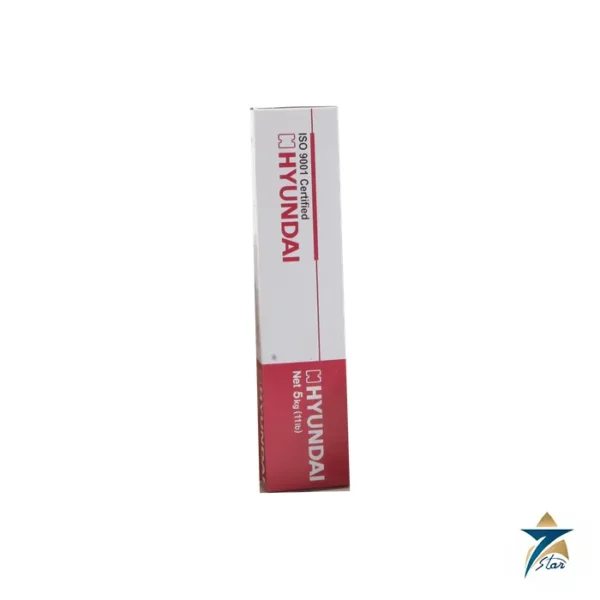
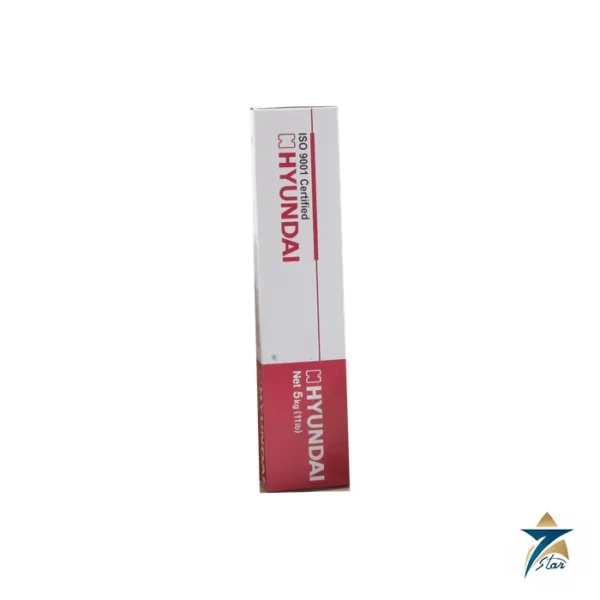
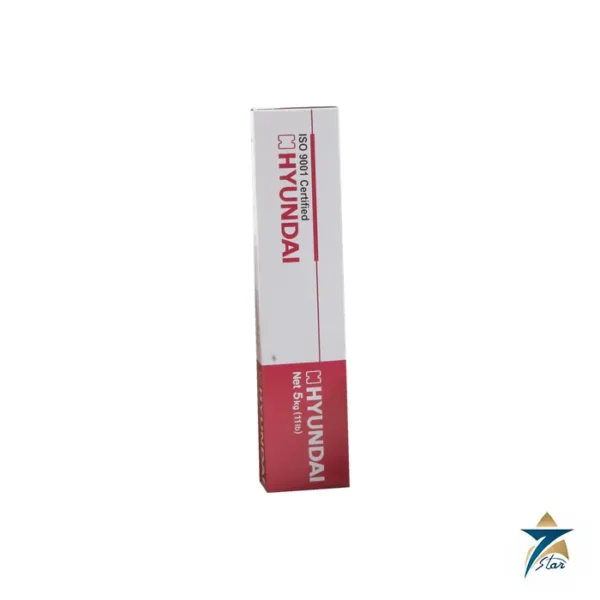
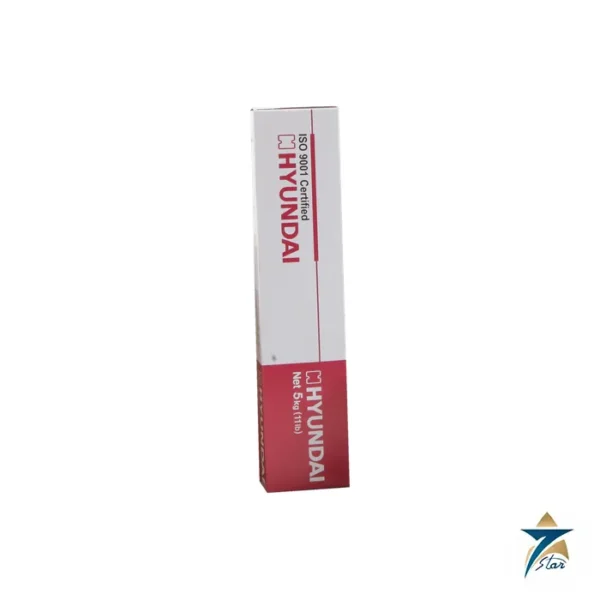
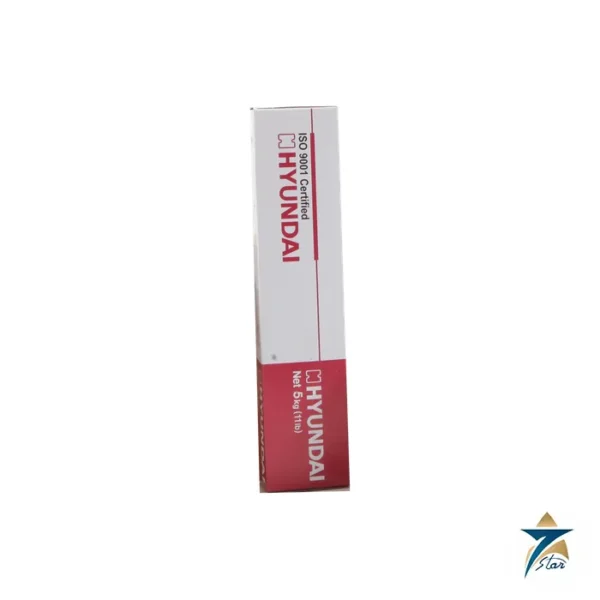
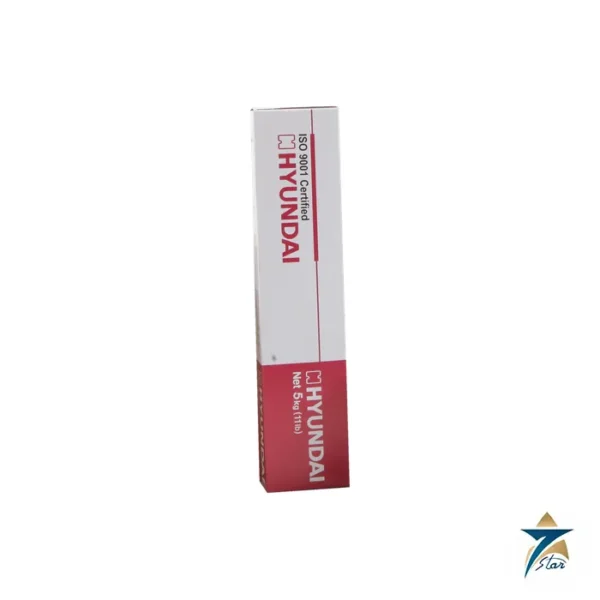
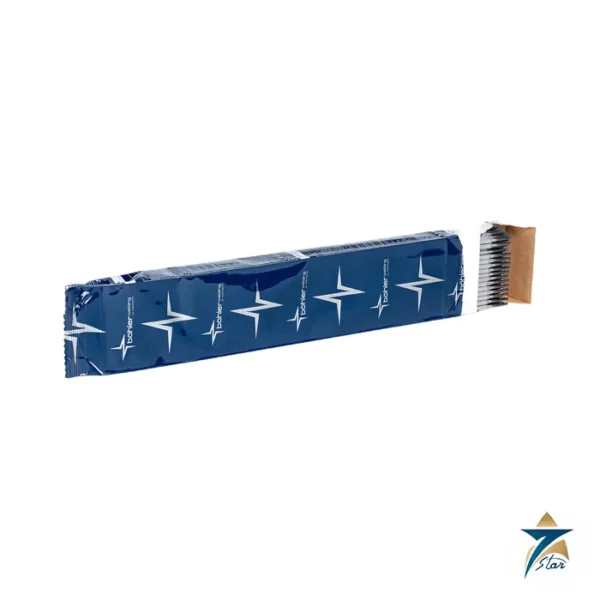
Hyundai SR-625 ENiCrMo-3 Nickel Alloy 625 Welding Electrode

Description

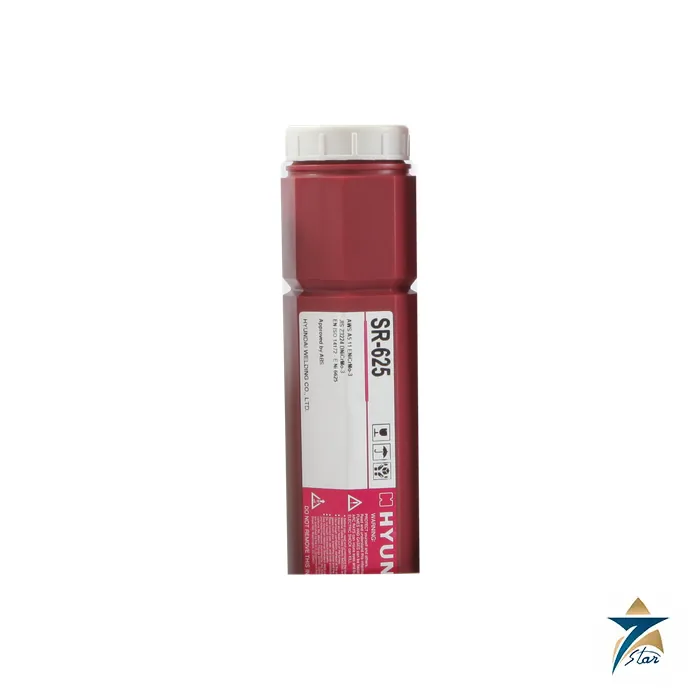
The Hyundai SR-625 is a nickel-chromium-molybdenum covered electrode for SMAW, classified to AWS A5.11 / ASME SFA-5.11 ENiCrMo-3, JIS Z 3224 DNiCrMo-3 and EN ISO 14172 Ni 6625. It deposits an alloy 625 type weld metal with typically 63.4% nickel, 21.7% chromium, 9.0% molybdenum and 3.3% niobium. Hyundai Welding highlights good corrosion resistance to crevice corrosion, pitting and stress corrosion cracking, good tensile strength at high temperature and good impact values at cryogenic temperature, with 48 J measured at -196 °C. The electrode is approved by ABS according to the datasheet. Seven Star LLC supplies the Hyundai SR-625 to Oman and the GCC with the official datasheet attached.

Introduction to the Hyundai SR-625

Alloy 625 filler metals are among the most versatile consumables in industrial welding. Their high nickel content and molybdenum-niobium strengthening give a weld deposit that resists chlorides, acids and high temperatures, and stays tough down to liquid nitrogen temperature. This is why ENiCrMo-3 electrodes appear in very different industries, from LNG storage to flue gas desulfurisation to chemical tankers.

The Hyundai SR-625 brings these properties to manual metal arc welding. It welds on DC+ or AC in the 1G, 2F, 3G and 4G positions, so it can be used on site for repairs, overlays and tie-ins where wire processes are impractical.

Features Listed by Hyundai Welding

  • Good corrosion resistance to crevice corrosion, pitting and SCC.
  • Good tensile strength at high temperature.
  • Good impact values at cryogenic temperature.
  • DC+ or AC polarity.
  • All-position: 1G, 2F, 3G and 4G.
  • Redrying at 350 to 400 °C (662 to 752 °F) for 1 hour.
  • ABS approval shown on the datasheet.

Application Areas from the Datasheet

The manufacturer lists the following application areas for the Hyundai SR-625:

  • Inconel 600 and 625 type alloys, and joints between steel and nickel alloys.
  • Hardfacing (overlay) of steel.
  • 9% nickel steel.
  • LNG storage tank manufacture.
  • Desulfurisation equipment.
  • Heat exchangers.
  • Building of chemical carriers.

Typical All-Weld Metal Composition (wt%)

C Si Mn P S Ni Cr Mo Nb Fe
0.06 0.40 0.1 0.001 0.004 63.4 21.7 9.0 3.3 1.5

Typical Mechanical Properties

Property Typical value
Tensile strength 770 MPa (112 ksi)
Elongation 36%
Impact toughness at -196 °C (-320 °F) 48 J (35 ft-lbs)

Sizes, Currents and Packaging

Diameter Length F and HF (A) V-up and OH (A)
2.6 mm (3/32 in) 300 mm 60 to 90 60 to 90
3.2 mm (1/8 in) 350 mm 70 to 110 70 to 110
4.0 mm (5/32 in) 350 mm 110 to 140 100 to 130
5.0 mm (3/16 in) 350 mm 120 to 150 110 to 140

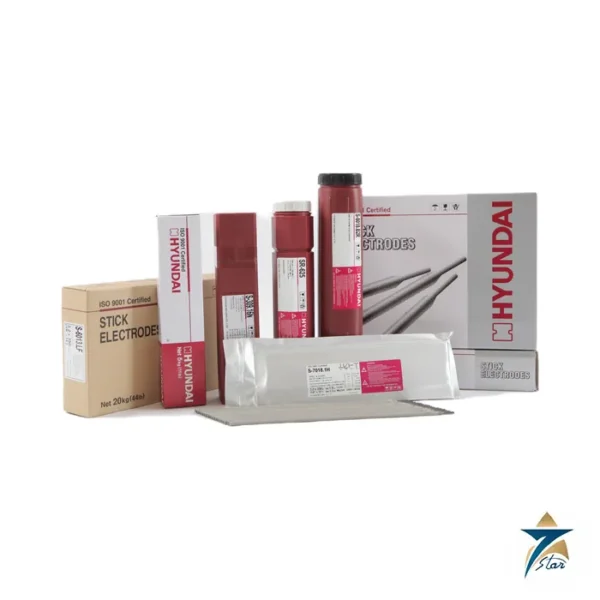
The Hyundai SR-625 is supplied in 2.5 kg (5.5 lbs) PVC packets and 10 kg (22 lbs) cartons. Note that nickel alloy electrodes generally run at lower currents than stainless electrodes of the same diameter, as the table reflects.

Uses in Oman’s Energy and Process Industries

Oman’s LNG trains in Sur, refinery and petrochemical complexes in Sohar and Duqm, and power and desalination plants along the coast all contain equipment where an ENiCrMo-3 electrode is a natural choice. Typical jobs for the Hyundai SR-625 include:

  • Welding of 9% nickel steel for cryogenic LNG storage tanks, where toughness at -196 °C is required.
  • Dissimilar joints between carbon or low alloy steel and stainless or nickel alloys.
  • Corrosion-resistant overlays on valve bodies, seats, pump parts and vessel nozzles.
  • Repair of alloy 625 and alloy 600 components in heat exchangers and furnaces.
  • Flue gas desulfurisation ducts, absorbers and stacks in power plants.
  • Seawater and brine service where pitting and crevice resistance is critical.

General Guidance for Welding Nickel Alloys

This section summarises general welding knowledge and is not taken from the Hyundai datasheet. Nickel alloy weld pools are sluggish and do not wet out as readily as steel, so joint designs often use wider bevel angles and smaller root faces. Cleanliness is essential: sulphur, lead and other low-melting contaminants from markers, oils or shop dirt can cause cracking, so surfaces should be degreased and ground bright before welding. Stringer beads with modest weave and short arc length are usually preferred, and interpass temperatures are kept low. For overlays, dilution from the base metal is controlled through current and bead overlap so that the required iron content limit at the surface can be met. Electrodes should be redried according to the manufacturer’s stated conditions and protected from moisture pick-up between redrying and use.

Why 9% Nickel Steel Uses Nickel-Base Fillers

The following is general background, not manufacturer data. Ferritic 9% nickel steel is widely used for the inner tanks of large LNG storage tanks because it keeps high strength and toughness at about -196 °C. Matching ferritic fillers are difficult to use, so the industry normally welds it with high-nickel austenitic consumables such as ENiCrMo-3 electrodes. These deposits remain tough at cryogenic temperature and have a thermal expansion closer to that of 9% nickel steel than ordinary stainless fillers. The datasheet value of 48 J at -196 °C for the Hyundai SR-625 is the key property here. Another general consideration is magnetic arc blow, since 9% nickel plate can become magnetised; AC welding is often preferred to reduce it, and the Hyundai SR-625 can run on AC as well as DC+. Tank builders typically qualify the electrode in all positions used on the shell, including vertical and overhead joints.

Why the Hyundai SR-625

A single ENiCrMo-3 electrode can replace several specialised consumables in a maintenance store, because the Hyundai SR-625 handles 9% nickel steel, alloy 625, many dissimilar joints and corrosion-resistant overlays. Its four diameters, all-position use and AC or DC+ operation make it practical for both shop work and on-site repair, and its ABS approval is relevant for marine and chemical carrier work.

Related Welding Products

See also the Lincoln Electric SuperArc L-59 ER70S-6 Solid MIG Welding Wire, the LongTeng EL8 Carbon Steel Submerged Arc Welding Wire and the Lincoln Electric Power Wave S500. Additional electrodes are listed in our Welding Electrodes category, which brings together stainless, duplex and nickel alloy stick electrodes for maintenance stores and fabrication shops.

Request the Hyundai SR-625

To get a quotation for the Hyundai SR-625, send Seven Star LLC your required diameters, quantities and any certificate or inspection requirements. Our team in Muscat will share the manufacturer datasheet, confirm the order details with you, and arrange delivery anywhere in Oman and the GCC.

Datasheets & Documents
  • PDF datasheet Hyundai Welding SR-625 datasheet Download
Reviews (0)

Reviews

There are no reviews yet.

How would you rate this product?

It takes about 10 seconds — just tap a star. Your email is never published.

About brand

Hyundai Welding is a South Korean manufacturer of welding consumables and welding equipment, incorporated on 3 September 1975 as Seohan Development Co., Ltd. It was set up to supply the Korean shipbuilding industry and now serves fabrication, offshore, power and petrochemical work. The company is headquartered in Seoul, describes itself as a privately owned family business, and works closely with other companies of the Hyundai business group.

Seven Star LLC lists Hyundai Welding electrodes and wires for carbon steel, chrome-moly, stainless, duplex and nickel alloy work and supplies them to fabricators and maintenance teams in Oman, matched to the classification written in the welding procedure.

Hyundai Welding company profile

Founded 3 September 1975, as Seohan Development Co., Ltd.
Headquarters Seoul, South Korea
Original market Welding consumables for Korean shipbuilding
Ownership Privately owned family business, linked to the Hyundai business group
Classification system Electrodes and wires sold under AWS classifications (for example E7024, E71T-1C, E2209-16, ENiCrMo-3)
Product families Carbon steel, low-hydrogen and cellulosic pipe electrodes, chrome-moly and stainless electrodes, duplex and super duplex electrodes, nickel alloy electrodes and MIG wires, flux-cored and solid wires, submerged arc wires and fluxes

Milestones

  • 1975: The company is incorporated as Seohan Development Co., Ltd.
  • 1970s: Its first market is welding consumables for Korean shipyards.

Hyundai Welding grades listed on this page

The product names follow a simple pattern: the letters show the consumable type and the number echoes the AWS class.

  • S- covered electrodes: S-7018.1 (E7018-1), S-7018.W for weathering steel, S-7010.P1 and S-8010.P1 cellulosic pipeline grades
  • Chrome-moly: S-8018.B2, S-9018.B3 and S-9015.B9 for P91, plus SC-91B3 flux-cored wire
  • Stainless and duplex: S-308L.17, S-309L.17, S-2209.16 and S-2594.16
  • Alloy 625: SR-625 electrode and SMT-625 MIG wire

Where these consumables are used

The mix above maps closely to process plant and pipeline work. Cellulosic E7010-P1 and E8010-P1 electrodes are for root and fill passes on line pipe. The B2, B3 and B91 grades serve steam piping, headers and heaters that run hot. E309L joins stainless to carbon steel, E2209 and E2594 cover duplex and super duplex piping, and the 625 fillers are used for overlay and for joining nickel alloys.

Hyundai Welding products we list

Family Examples
Welding Electrodes Hyundai S-2209.16 E2209-16 Duplex Stainl…, Hyundai S-2594.16 E2594-16 Super Duplex…, Hyundai S-308L.17 E308L-17 Stainless Ste…, Hyundai S-309L.17 E309L-17 Dissimilar St…, Hyundai SR-625 ENiCrMo-3 Nickel Alloy 62…, S-7018.1 E7018-1 Low Hydrogen Electrode, S-7018.W E7018-W1 Weathering Steel Elect…, S-7024.F E7024 High-Recovery Electrode and 3 more
Cellulosic Pipeline Electrodes S-6010.D E6010 Cellulosic Pipeline Elect…, S-7010.P1 E7010-P1 Cellulosic Pipe Elect…, S-8010.P1 E8010-P1 Cellulosic Pipeline E…
Flux-Cored Welding Wire Hyundai SC-91B3 E91T1-B3C Chrome-Moly Fl…, SF-71 E71T-1C Flux-Cored Wire
Solid Welding Wire Hyundai SMT-625 ERNiCrMo-3 Nickel Alloy…

Ordering Hyundai Welding consumables: what we need

State the Hyundai product name and the AWS classification together, since the procedure qualification record is written against the class. Add the diameter, the quantity in kilograms, the packing you prefer, and the shielding gas for wires. Tell us which test certificate your quality plan asks for, and note any impact temperature, hardness or post-weld heat treatment condition. GCC project specifications often add client approval lists, so mention those as well.

Facts checked against Hyundai Welding's company brochure and Korean company registry profiles, October 2026.

FAQ

Questions about the Hyundai SR-625 ENiCrMo-3 Nickel Alloy 625 Welding

Answers from our engineering team on installation, compatibility and integration.

01What is the Hyundai SR-625?
It is an AWS A5.11 ENiCrMo-3 covered electrode that deposits an alloy 625 type nickel-chromium-molybdenum weld metal.
02Is the Hyundai SR-625 suitable for 9% nickel steel?
Yes. The datasheet lists 9% nickel steel and LNG storage tank manufacture among its application areas, with typical toughness of 48 J at -196 C.
03Which polarity and positions can be used?
The electrode runs on DC+ or AC in the 1G, 2F, 3G and 4G positions.
04What are the redrying conditions?
Hyundai Welding specifies redrying at 350 to 400 C (662 to 752 F) for 1 hour.
05Does Seven Star LLC supply the Hyundai SR-625 in Oman?
Yes. Seven Star LLC supplies the Hyundai SR-625 in 2.6, 3.2, 4.0 and 5.0 mm diameters to Oman and the GCC with the official datasheet.