- Automation & ControlView all 2,895 products
- Automation Accessories
- AC Drives
- PLC & I/O Cards
- Industrial Communications
- Vibration Monitoring
- Controllers & Data Acquisition
- Isolator & Barrier
- Safety Switches & Guard Locking
- Motor Soft Starters
- CCTV & Security
- Encoders
- Pneumatic Cylinders
- HMI Displays
- Servo Drives
- Industrial Computers
- Machine Vision
- Automation Software
- Robotics
Brand: Endress+Hauser (E & H)
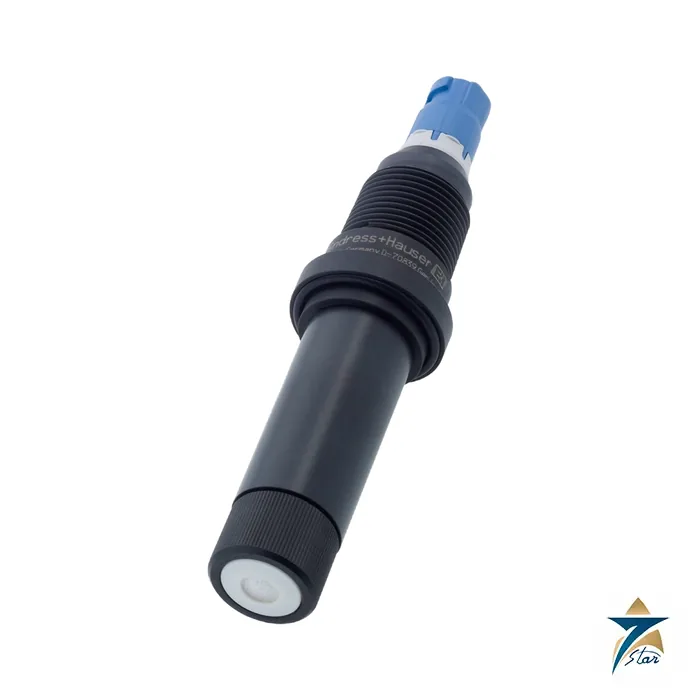
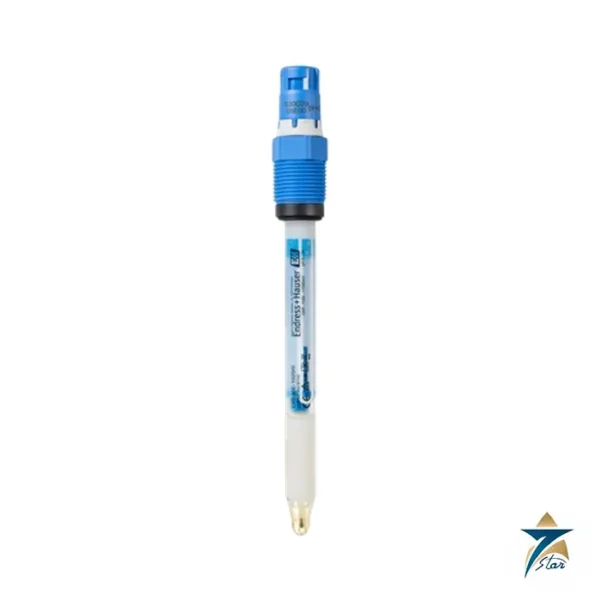
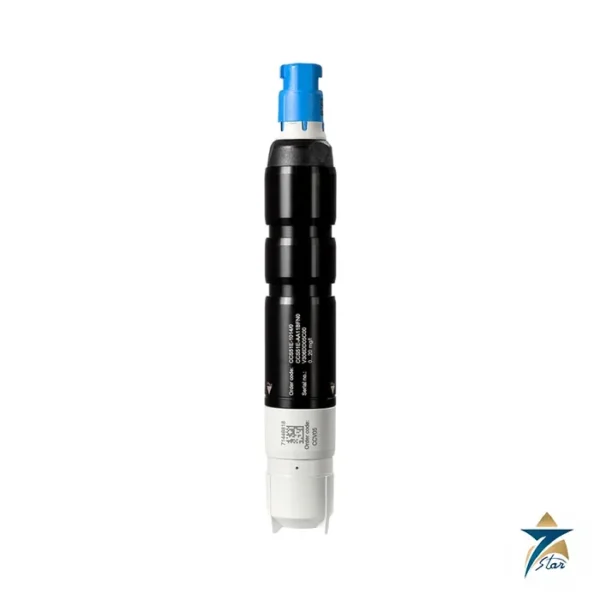
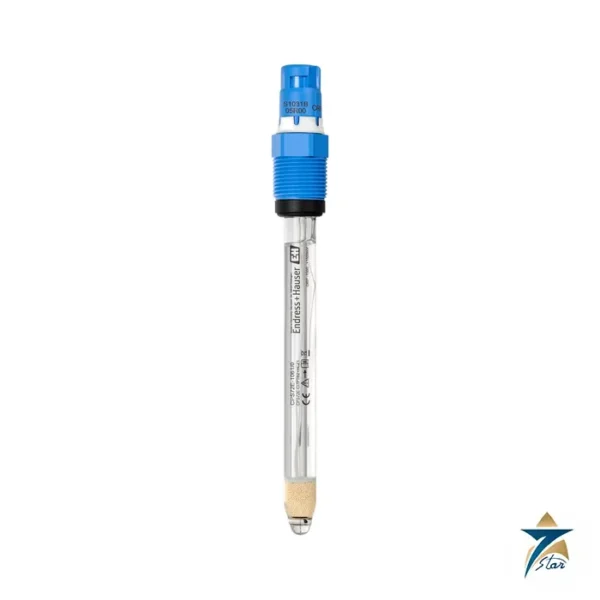
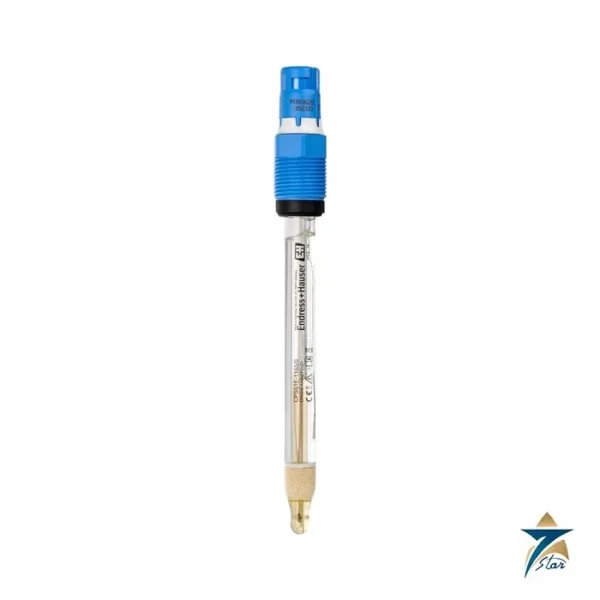
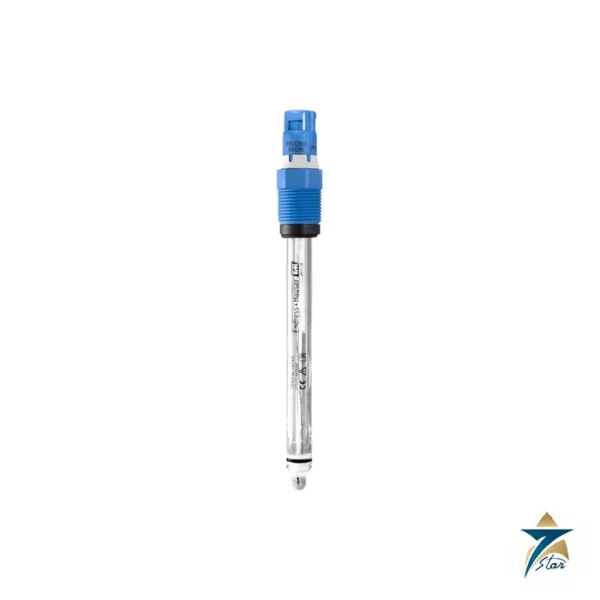
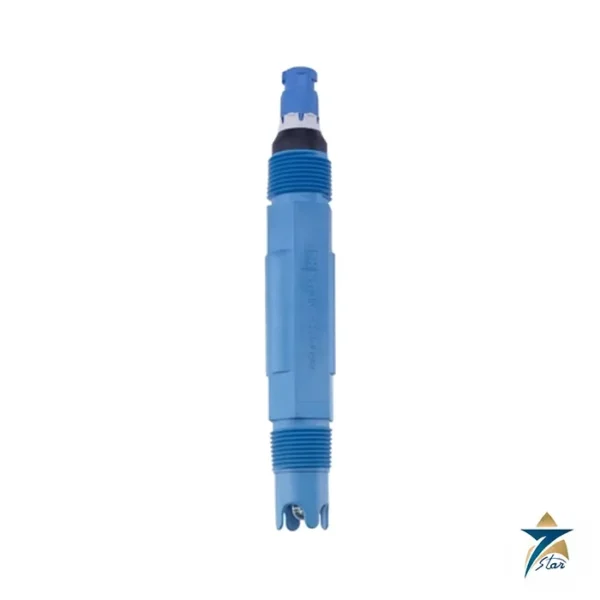
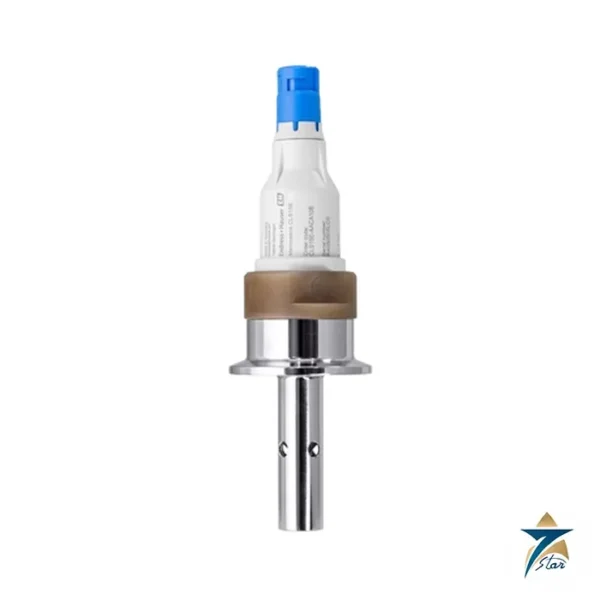
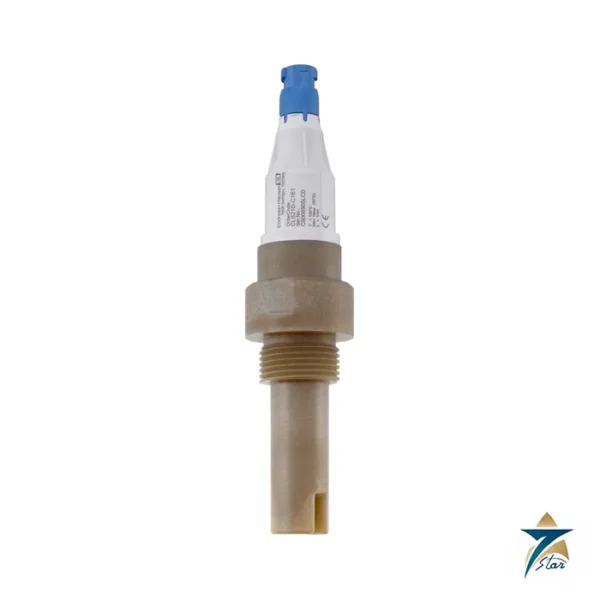
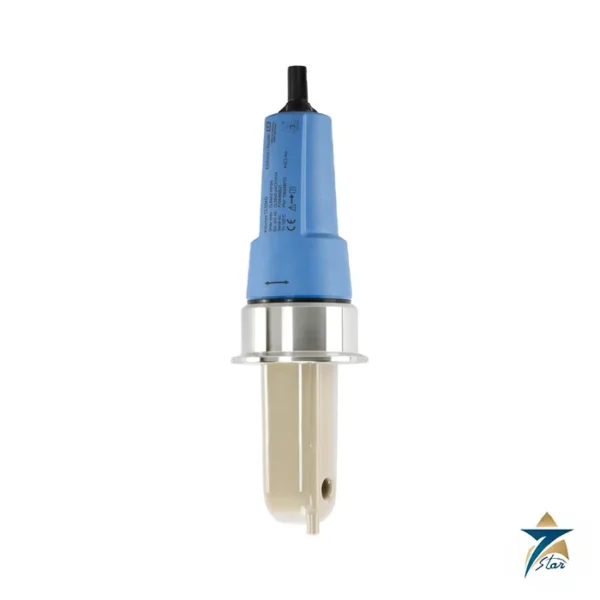
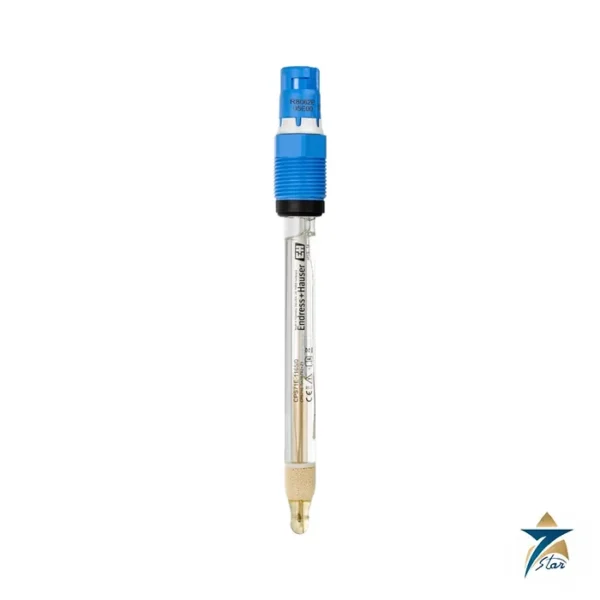
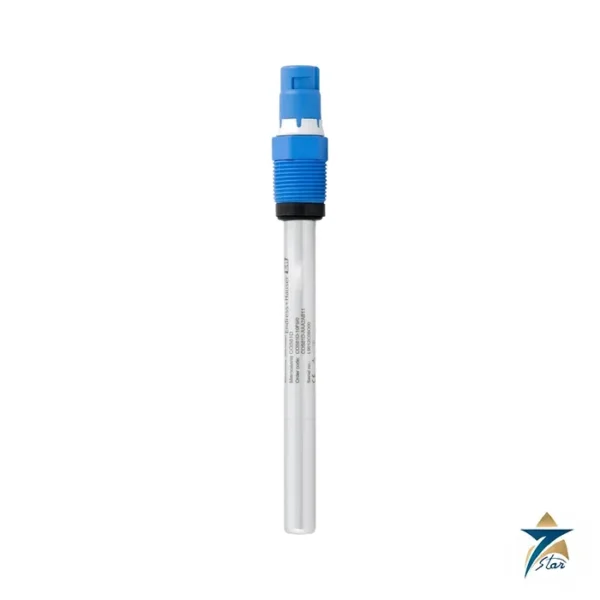
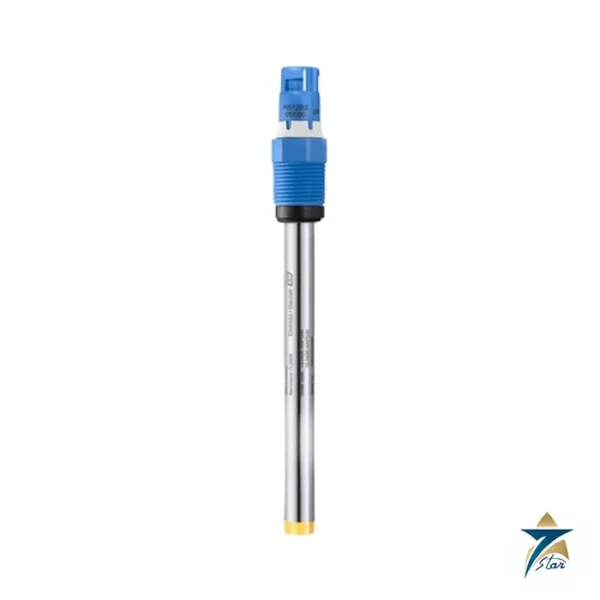
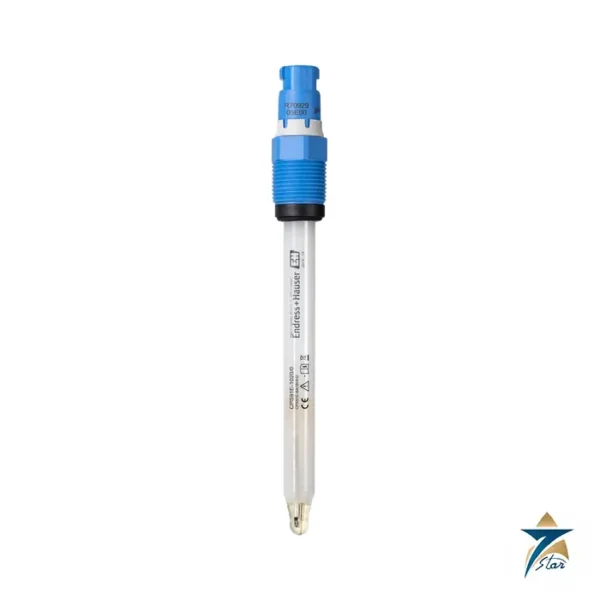
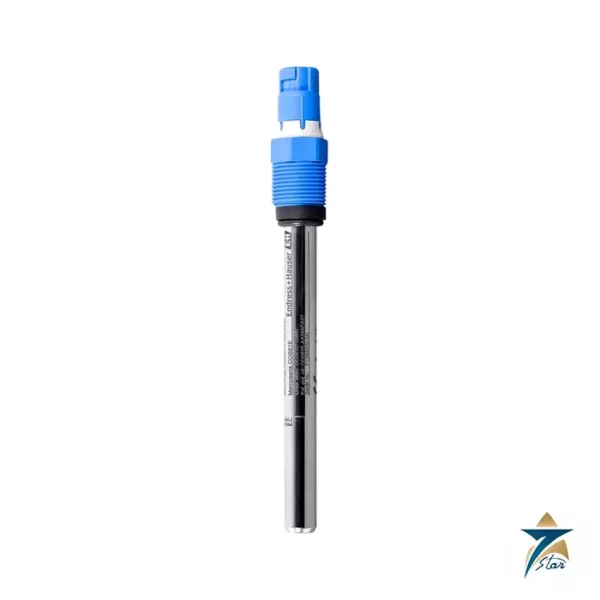
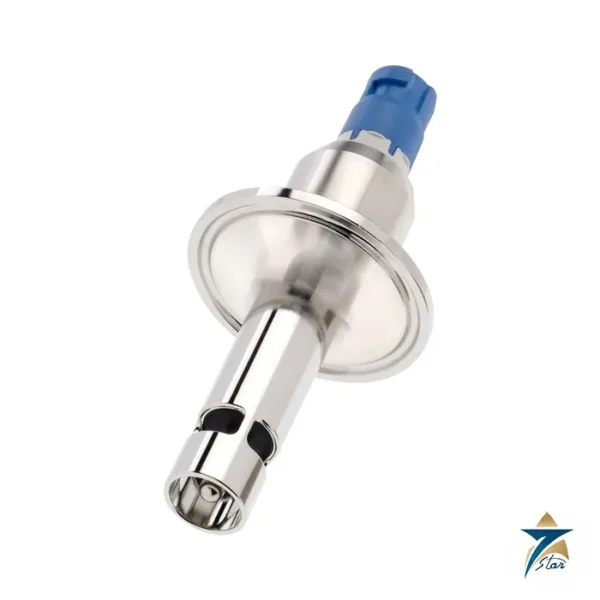
Endress+Hauser CCS142D Chloromax Free Chlorine Sensor
Description
Endress+Hauser CCS142D Chloromax free chlorine sensor overview
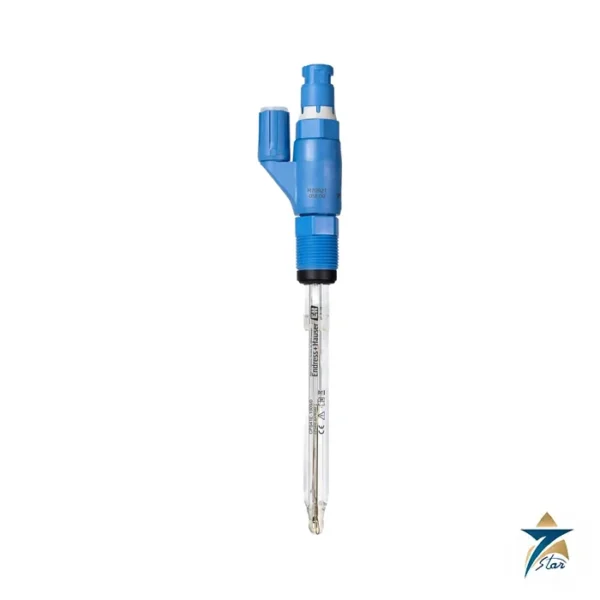
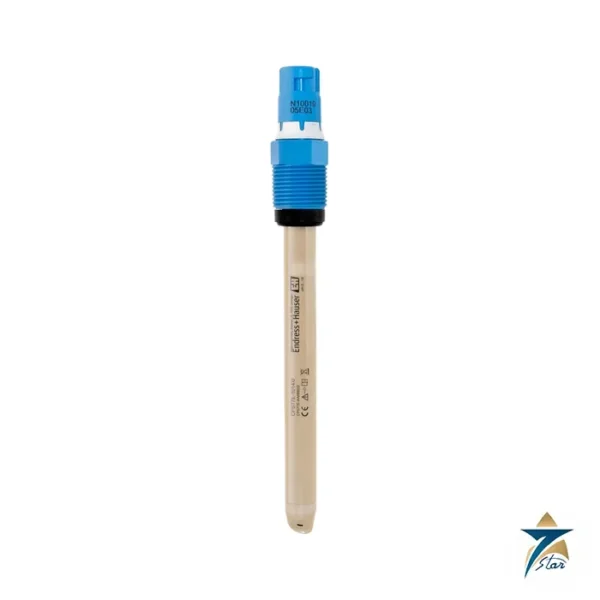
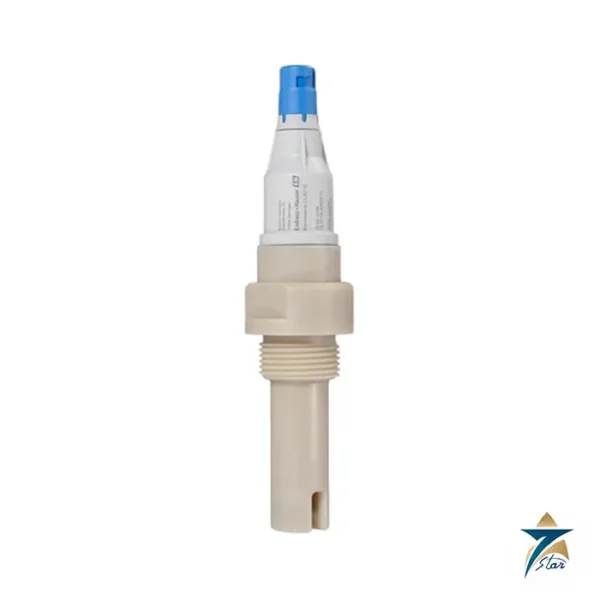
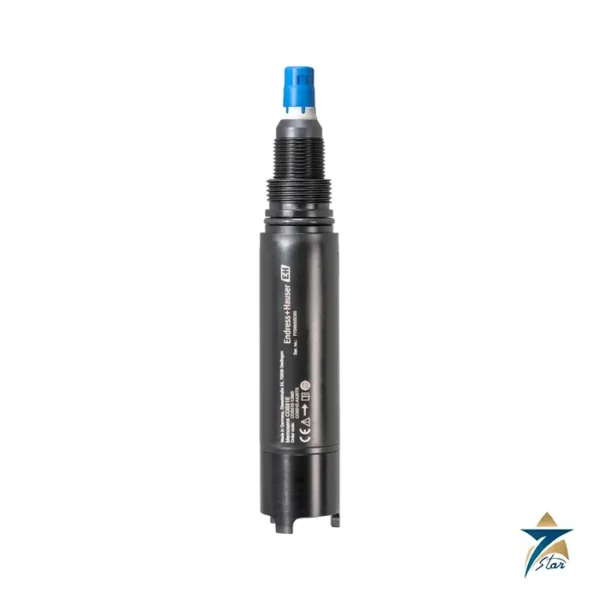
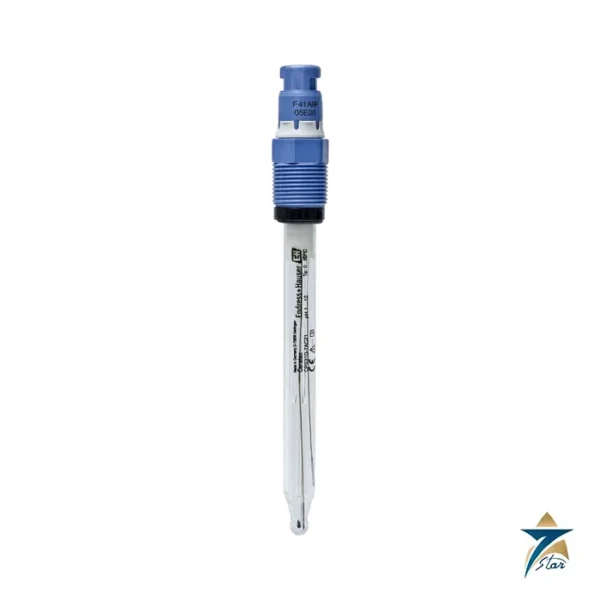
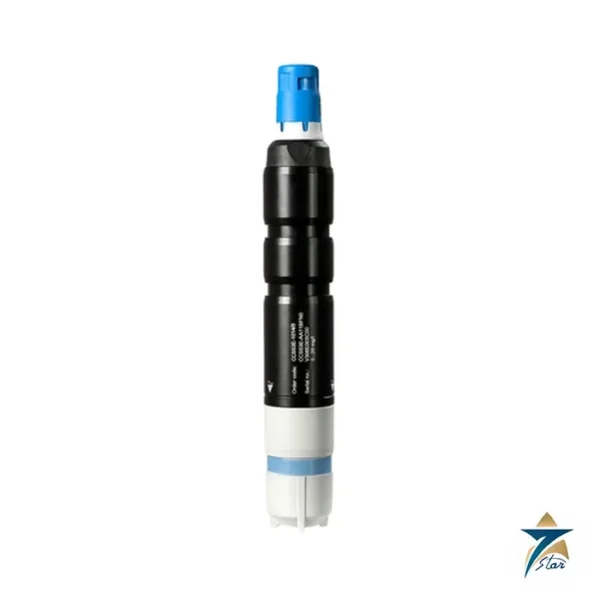
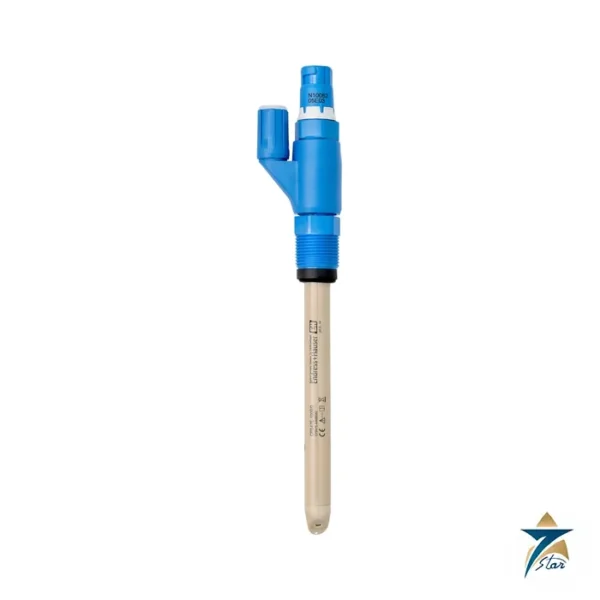
Endress+Hauser CCS142D measures free chlorine in water with a membrane-covered amperometric cell. A gold cathode and a silver and silver chloride anode sit behind a PTFE membrane in a PVC shaft; free chlorine diffuses through, is reduced, and the resulting current is read. The datasheet explains why it matters: oxidants disinfect water, too little endangers disinfection, too much causes corrosion, skin irritation and taste problems.
The digital Memosens head stores calibration, so the sensor can be calibrated at any transmitter or location and fitted later. Measurement is practically independent of flow above 15 cm/s, and does not change with conductivity fluctuations. Seven Star LLC is an independent supplier serving Oman and the GCC and is not affiliated with the manufacturer.
CCS142D technical specifications
| Parameter | Value |
|---|---|
| Version A range | 0.05 to 20 mg/l Cl2 (25 C, pH 7.2) |
| Version G range | 0.01 to 5 mg/l Cl2 (25 C, pH 7.2) |
| Slope (nominal) | minus 25 nA per mg/l (A); minus 80 nA per mg/l (G) |
| Resolution | approx. 15 ug/l (A); approx. 5 ug/l (G) |
| Maximum measured error | 1 % of measured value |
| Response | t90 under 2 min |
| Drift | under 1.5 % per month |
| Polarization | 60 min / 30 min (A); 90 min / 45 min (G) |
| Electrolyte operating time | over 5 years (A); over 3 years (G) |
| Process temperature | 0 to 45 C, non-freezing |
| Process pressure | maximum 1 bar in CCA250 assembly |
| Calibration pH | 4 to 8 (A); 4 to 8.2 (G) |
| Minimum flow | 30 l/h in CCA250 |
| Weight | approx. 0.1 kg |
| Materials | PVC shaft, PTFE membrane, PBT GF30 / PVDF cap, gold cathode, Ag/AgCl anode |
| Head | NPT 3/4 thread, Memosens plug-in head |
| Cable length | 100 m including extension |
How CCS142D differs from the other water sensors here
The two versions of CCS142D separate by range and by service life: version A for 0.05 to 20 mg/l and an electrolyte life of over 5 years, version G for 0.01 to 5 mg/l and over 3 years. CCS142D also differs from the optical COS61D and photometric CAS51D by being a consumable-membrane sensor with an electrolyte bottle; process temperature is limited to 0 to 45 C, which is much narrower than COS22E.
Its intrinsic chlorine consumption is 25 ng per hour in version A and 100 ng per hour in version G at 1 mg/l.
CCS142D use in Oman and the GCC
Chlorination is the main disinfection step in Gulf drinking-water networks, in desalination remineralisation and in cooling and process water. CCS142D keeps dosing pumps on target in distribution reservoirs, pump stations and treatment plants, and supports compliance with residual limits.
Installing and operating CCS142D
Mount in a Flowfit CCA250 flow assembly, where a needle valve sets 30 to 120 l/h, and where a pH and an ORP sensor can sit alongside. An inductive proximity switch can trigger an alarm and lock dosing pumps if flow stops. Back pressure must stay constant and at or below 1 bar, and negative pressure must be avoided. Alternatively use an immersion assembly such as CYA112 with an NPT 3/4 thread.
Amperometric free-chlorine principle and what the numbers mean
The sensor measures the depolarization current produced when hypochlorous acid reaches the gold cathode through a PTFE membrane. At 25 C and pH 7.2 the current is about 25 nA per mg/l in version A and about 80 nA per mg/l in version G, which is why version G resolves down to 5 ug/l while version A resolves to 15 ug/l. Because HOCl is the species measured, pH matters: the datasheet calibrates at pH 4 to 8 for A and 4 to 8.2 for G, and allows measurement up to pH 9 with limited accuracy.
Quoted accuracy is 1 percent of measured value, sensor repeatability plus or minus 1 percent, drift under 1.5 percent per month and response t90 under 2 minutes in applications with mainly active chlorination. Hold constant flow: measurement is practically independent of flow above 15 cm/s.
Quick answers about CCS142D
Can it handle changing conductivity? Yes, there is no change in the measured value if conductivity fluctuates. What is in the box? A sensor, 50 ml electrolyte, a spare membrane cartridge and English operating instructions. What is the cable limit? 100 m including extension. What is the order structure? Measuring range A or G, non-hazardous approval A, sensor head type S (NPT 3/4 thread with Memosens plug-in head), cable length 8 (without cable) and accessories 0. What approvals does it have? Non-hazardous area only.
Maintenance of CCS142D
Replace electrolyte and the membrane cartridge at service intervals, and wait for the polarisation time before calibrating. Calibration standards do not have long-term stability, so verify against a reference method. When you send an RFQ for CCS142D, state the range version (A for 0.05 to 20 mg/l or G for 0.01 to 5 mg/l), because the electrolyte life, polarization time and resolution differ between them, and add the assembly you plan to use, for example Flowfit CCA250 or an immersion assembly with NPT 3/4 thread. Spare membrane cartridges and electrolyte follow the sensor code, so quote the nameplate data of the installed sensor. Related water-analysis sensors CAS51D, COS61D and CUS71D are listed separately and can be quoted together for a treatment-plant instrument package. Because free chlorine is read as a current, keep the electrolyte bottle sealed and in its carton until the day of service, and note the date of each membrane change on the maintenance record so that drift can be traced.
Documents and quotation
The Technical Information datasheet for CCS142D is attached to this page as a PDF. To request a quotation, send your RFQ with the exact CCS142D order code and the quantity you need, and we will reply with availability and lead time.
Other Models in the Water Analysis Range
Seven Star LLC supplies models from the Water Analysis range in Oman and the GCC. Compare the related models below and request a quote for the one that matches your application.
| Model | Category | |
|---|---|---|
| Endress+Hauser CUS71D Turbimax Ultrasonic Interface Sensor | Liquid Analysis Sensors | View details |
| Endress+Hauser CCS142D Chloromax Free Chlorine Sensor | Liquid Analysis Sensors | You are viewing this model |
| Endress+Hauser CAS51D Viomax SAC and Nitrate Sensor | Liquid Analysis Sensors | View details |
Datasheets & Documents
- Datasheet Endress+Hauser CCS142D Chloromax Free Chlorine Sensor Datasheet Download
Reviews (0)
How would you rate this product? Cancel reply
About brand
Endress+Hauser makes process measurement instruments for flow, level, pressure, temperature and liquid analysis. Georg H. Endress and Ludwig Hauser started the business in Lörrach, Germany, on 1 February 1953, first selling level meters, and the Endress+Hauser name has been used since 1957. The group is headquartered in Reinach, Switzerland, and has been wholly owned by the Endress family since 1975.
Seven Star LLC is an independent supplier listing Endress+Hauser flowmeters, level and pressure transmitters, temperature assemblies and liquid analysis products for buyers in Oman and the GCC. Instruments are matched from the full order code on the nameplate.
Endress+Hauser company profile
| Origin | Founded in Lörrach, Germany, on 1 February 1953 by the Swiss engineer Georg H. Endress and Ludwig Hauser |
|---|---|
| Headquarters | Endress+Hauser AG, Reinach (Basel-Landschaft), Switzerland |
| Ownership | Family owned; the Endress family has been the sole shareholder since 1975, and a family charter commits the company to stay family owned |
| Size | About 16,500 employees and sales of about EUR 3.7 billion (2023, as reported by the company) |
| Product families | Proline flowmeters, Micropilot and Levelflex radar, Liquiphant switches, Cerabar and Deltabar pressure, iTEMP and iTHERM temperature, Liquiline and Memosens liquid analysis |
Milestones
- 1953: Georg H. Endress and Ludwig Hauser start the business in Lörrach on 1 February, first selling level meters.
- 1957: The Endress+Hauser name comes into use.
- 1975: The Endress family becomes sole shareholder.
- 2023: About 16,500 employees and sales of about EUR 3.7 billion, as reported by the company.
Endress+Hauser product lines
| Line | Measuring principle | Typical use |
|---|---|---|
| Promass F 300, Promass 80F, 83F/84F | Coriolis mass flow | Direct mass flow and density of liquids and gases, hydrocarbon transfer and chemical dosing |
| Promag P 300, P 500, H 300, W 400, W 10, 50P | Electromagnetic flow | Water, wastewater, slurries and other conductive liquids |
| Prowirl F 200, 72F | Vortex flow | Steam, gas and low-viscosity liquids |
| Prosonic Flow 92F, t-mass 65F | Ultrasonic and thermal mass flow | Water lines; compressed air and industrial gases |
| Micropilot FMR62, FMR67, FMR60, FMR10B, FMR20, FMR50, FMR52 | Free-space radar level, 80 GHz and 26 GHz | Tanks, process vessels, silos and open water channels |
| Levelflex FMP51, FMP50, FMP54, FMP55 | Guided wave radar level | Level and interface in vessels, separators and bypass chambers |
| Liquiphant FTL51, Prosonic S FMU90 | Vibronic point level; ultrasonic level | High and low level alarms, pump protection, open channel flow |
| Cerabar PMC71B, PMP51B, PMP71, Deltabar PMD78B, PMD75 | Pressure and differential pressure | Process pressure, hydrostatic level and DP flow |
| iTEMP TMT82, TMT162, iTHERM TM101, TR66, TR10 | Temperature transmitters and thermometers | RTD and thermocouple points with thermowells |
| Liquiline CM444, CM442, Memosens CPS11E, Stamolys reagents | Liquid analysis | pH, ORP, conductivity, dissolved oxygen and nutrient analysis in water treatment and process |
Where Endress+Hauser instruments are used
In Oman and the GCC, Endress+Hauser instruments are common in oil and gas production and processing, refineries and petrochemicals, desalination and water networks, wastewater treatment, power plants and food and beverage plants. Coriolis meters measure hydrocarbon and chemical flows, electromagnetic meters cover water and wastewater, radar transmitters handle tank and silo level, and Liquiline analysers monitor water quality. Proline 300 and 500 flowmeters include Heartbeat Technology for in-situ verification, which reduces the need to remove a meter for checks.
Ordering Endress+Hauser instruments: what we need
The order code on the nameplate (for example PMP71-1QA1S11RDADU) defines every option: measuring range, process connection, materials, output, approvals and display. Send it with the serial number; Endress+Hauser can retrieve the original configuration from the serial number. For a new instrument add the medium, operating and design pressure and temperature, range, line size or tank geometry, process connection, wetted materials, output or protocol (4-20 mA HART, PROFIBUS, FOUNDATION Fieldbus, Modbus) and the hazardous-area approval required. Older models such as Promass 80/83 or Micropilot M are replaced by current Proline or 80 GHz Micropilot devices.
Facts checked against Endress+Hauser company history and product information, October 2026.
Browse Endress+Hauser products by category: Flowmeters, Level Transmitter, Pressure Instrumentation, Temperature, Liquid Analysis Sensors, Liquid Analytical Systems.
FAQ
Questions about the Endress+Hauser CCS142D Chloromax Free Chlorine
Answers from our engineering team on installation, compatibility and integration.
01What does Endress+Hauser CCS142D measure?
Free chlorine, as hypochlorous acid and hypochlorite, in drinking water, process water and industrial water treatment, with a membrane-covered amperometric cell.
02What are the CCS142D range options?
Version A measures 0.05 to 20 mg/l Cl2 and version G measures 0.01 to 5 mg/l Cl2 at 25 C and pH 7.2.
03What flow and pH conditions does CCS142D need?
Minimum flow of 30 l/h in the CCA250 assembly, or above 15 cm/s past the sensor, and pH 4 to 8 for calibration; measurement is possible to pH 9 with limited accuracy.
04How long does CCS142D take to polarize?
Version A needs 60 minutes at commissioning and 30 minutes after reoperation; version G needs 90 and 45 minutes.
05What is delivered with CCS142D?
One chlorine sensor, a 50 ml bottle of electrolyte, one replacement cartridge with pretensioned membrane and English operating instructions.


Reviews
There are no reviews yet.