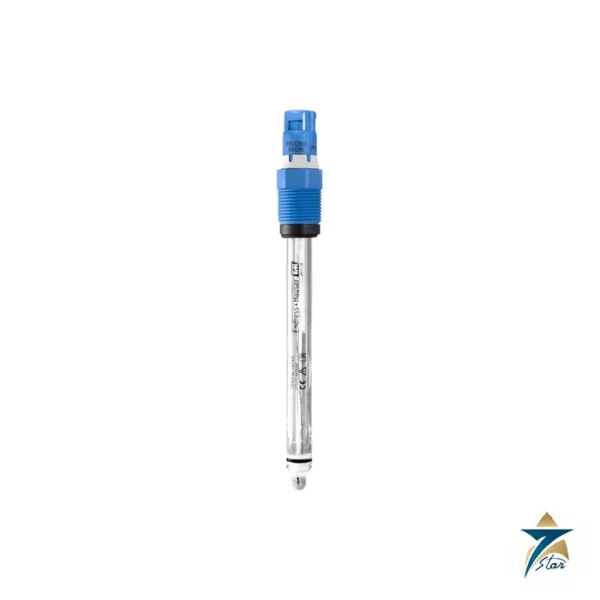
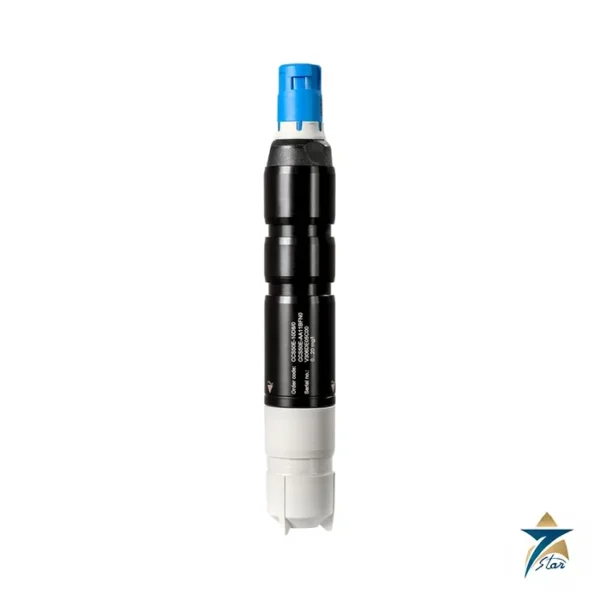
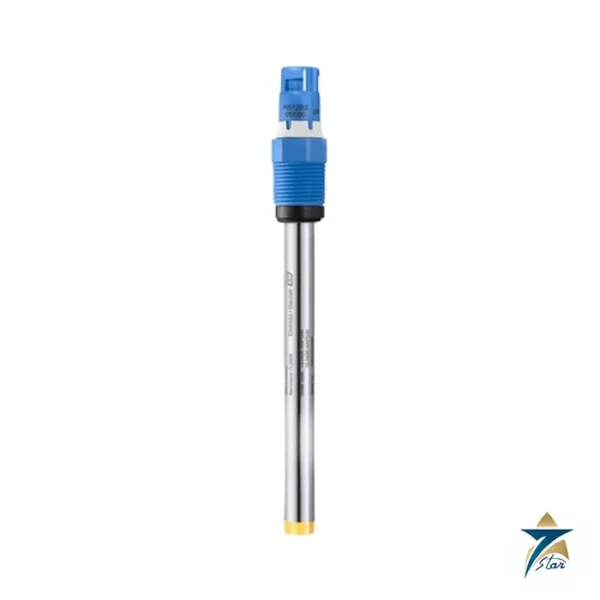
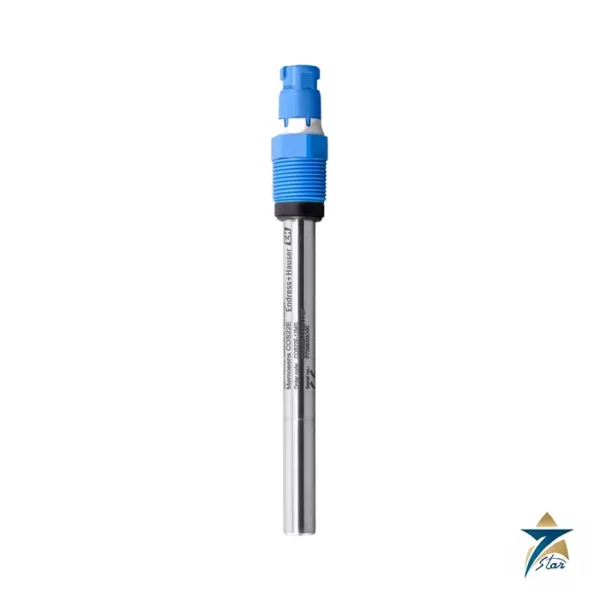
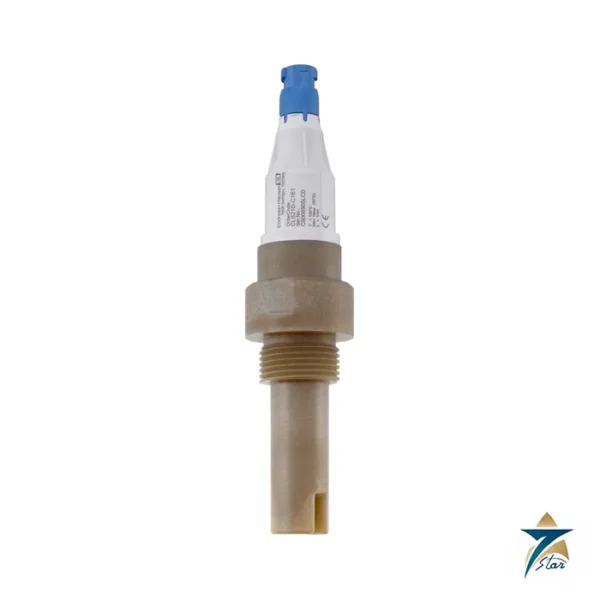
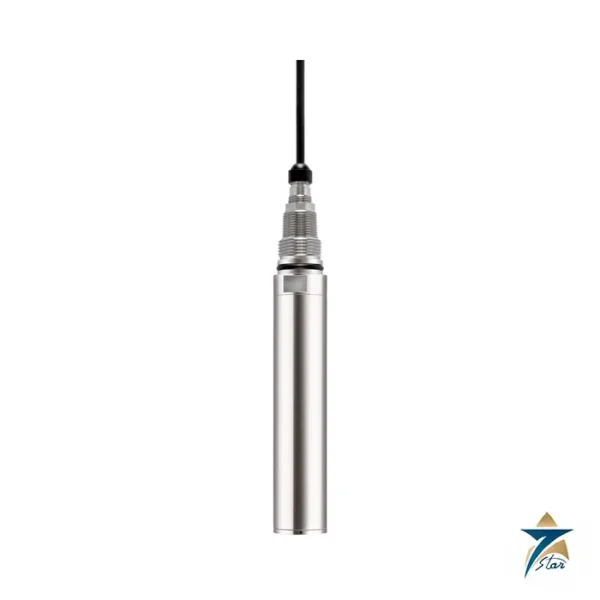
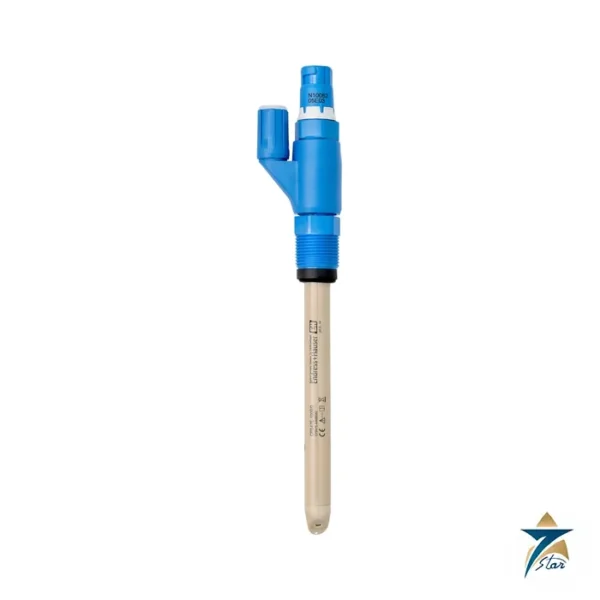
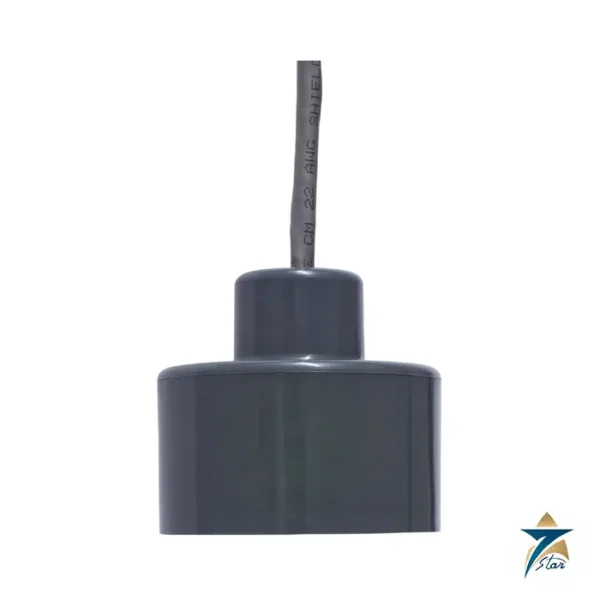
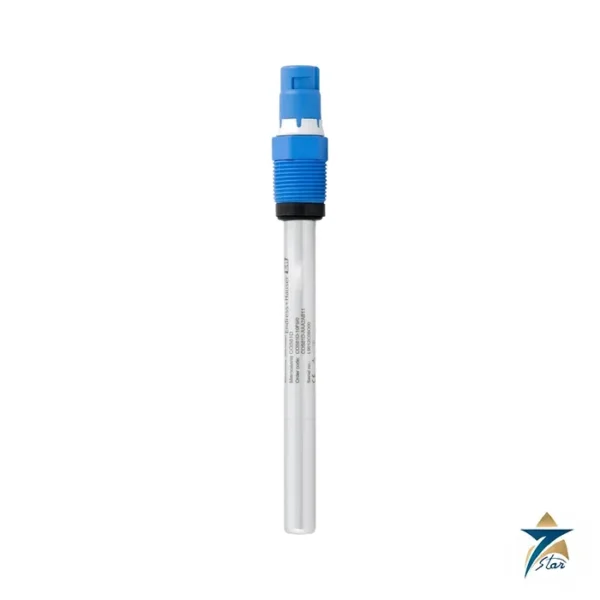
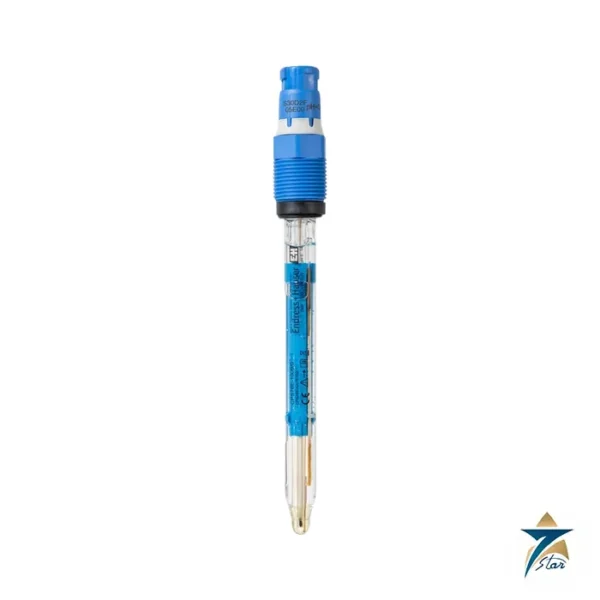
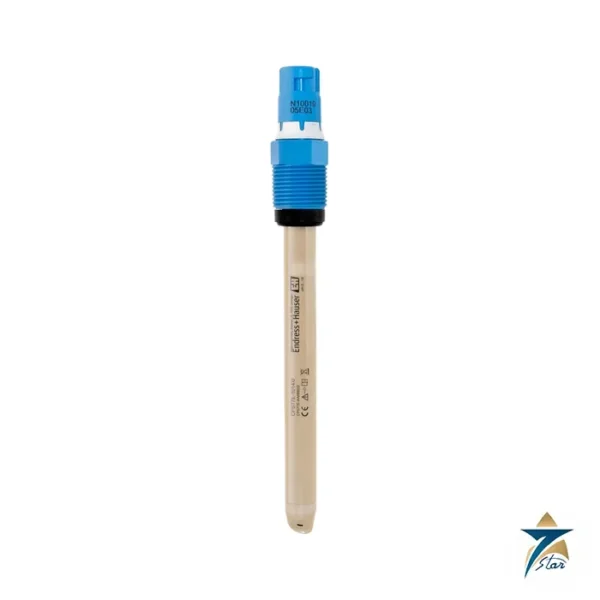
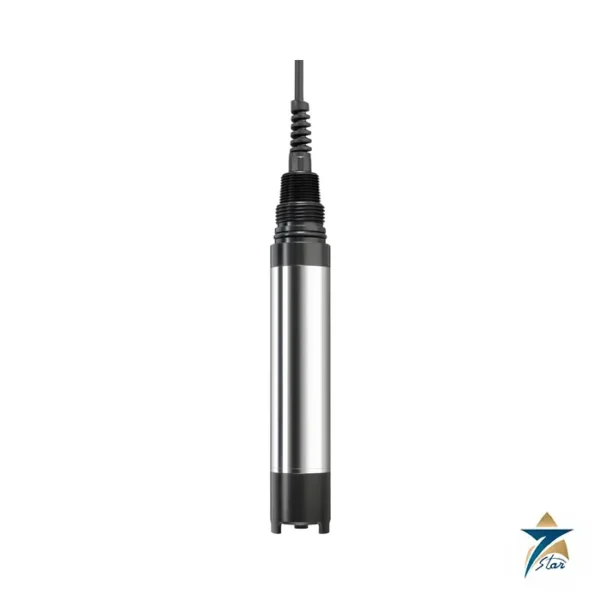
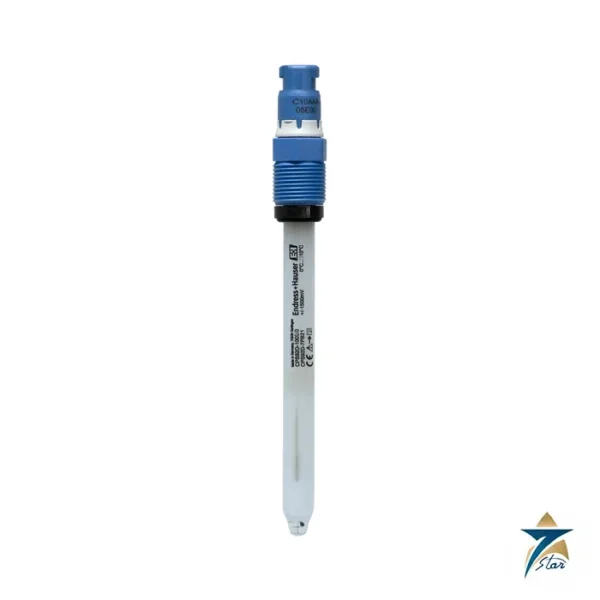
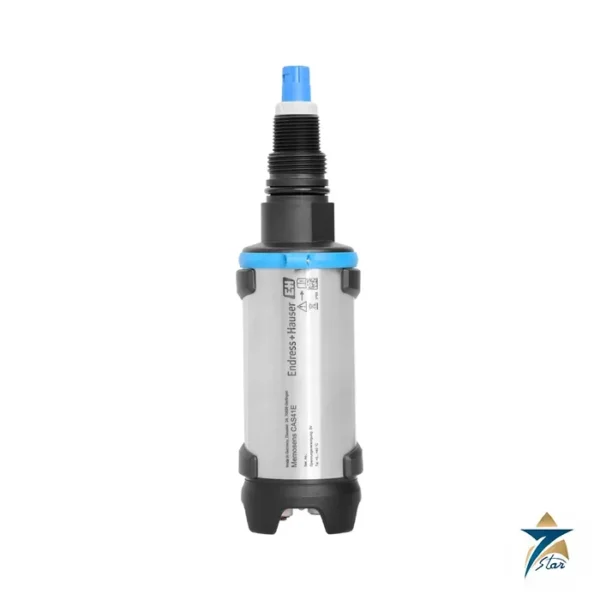
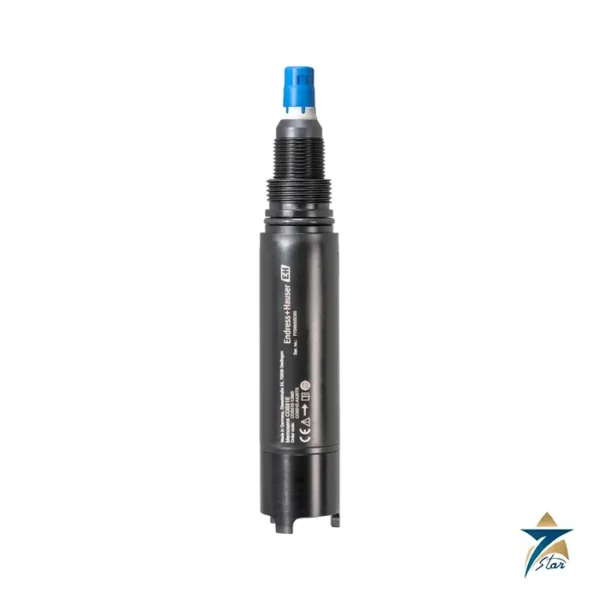
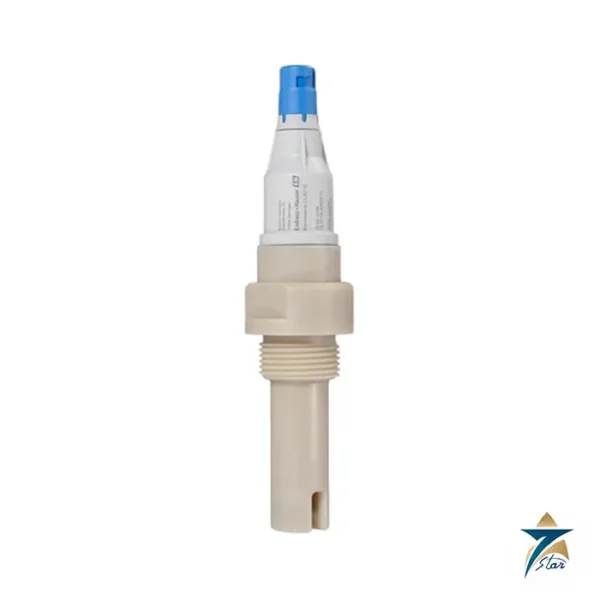
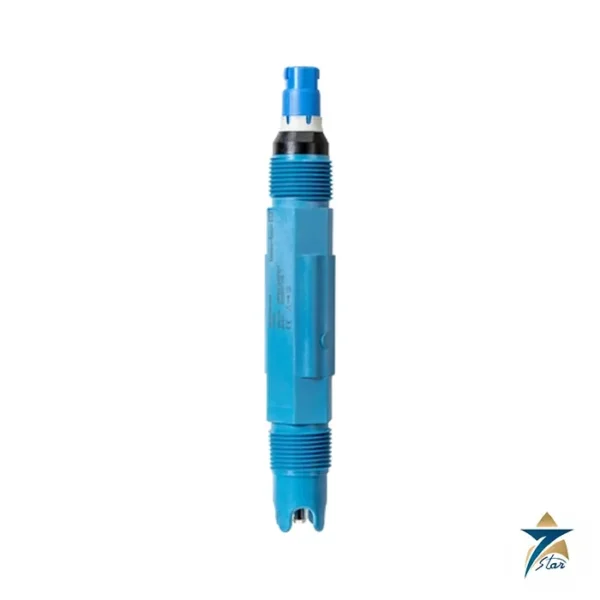
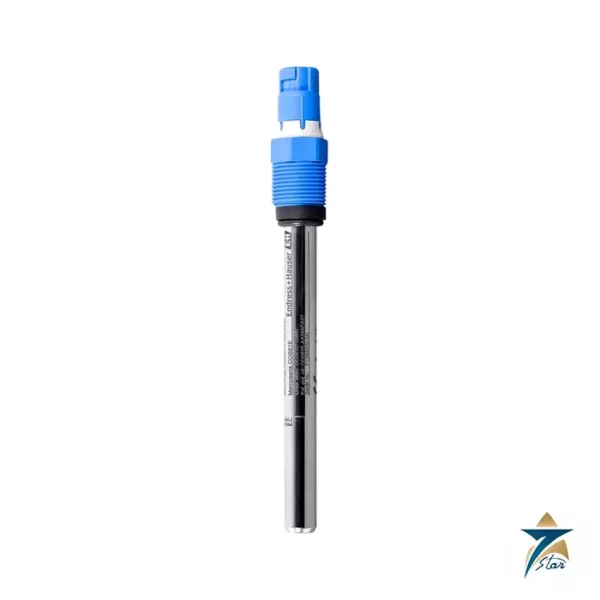
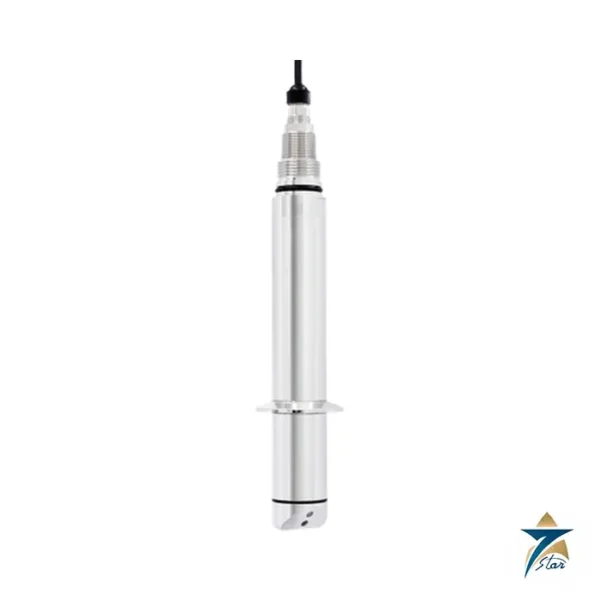
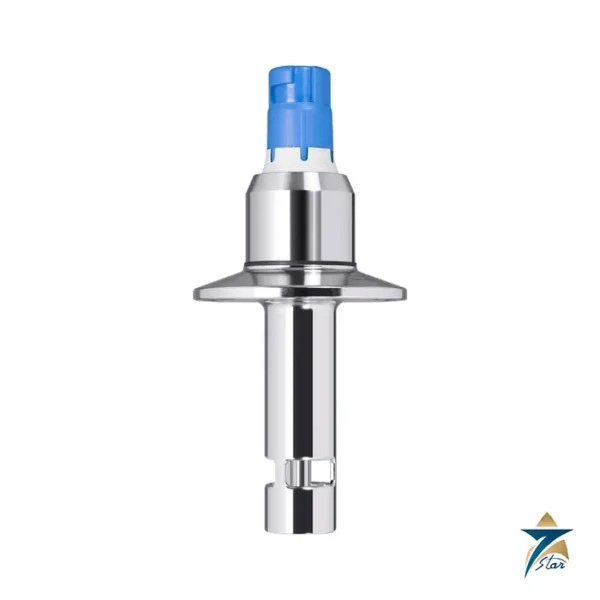
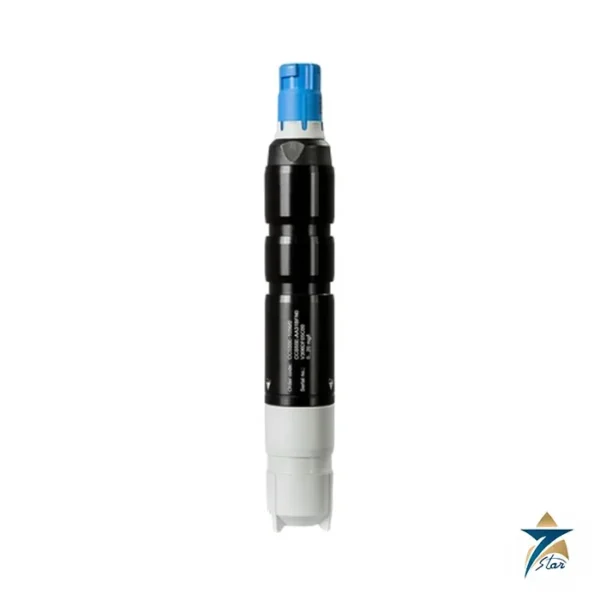
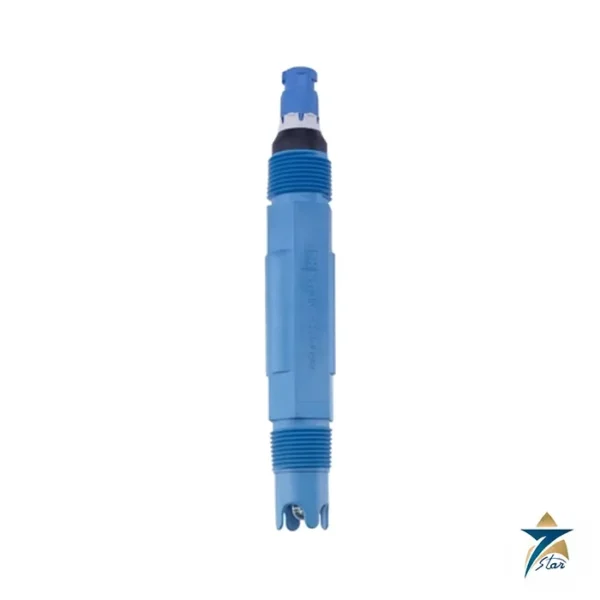
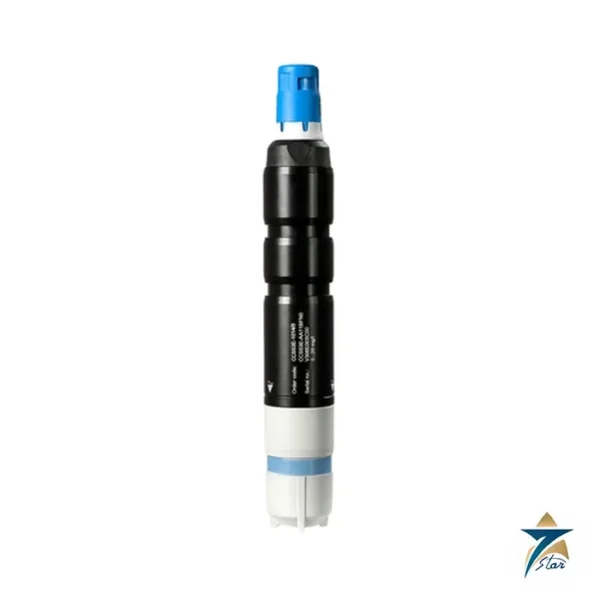
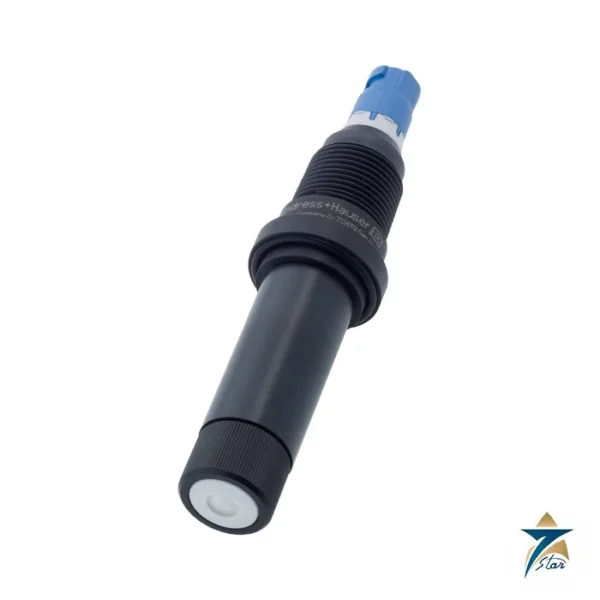
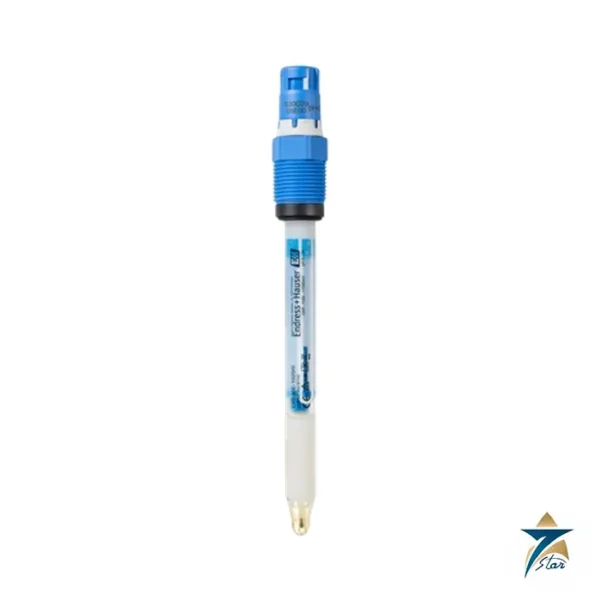
Endress+Hauser CLS16D Condumax Hygienic Conductivity Sensor

Description

Endress+Hauser CLS16D Condumax for pure and ultrapure water

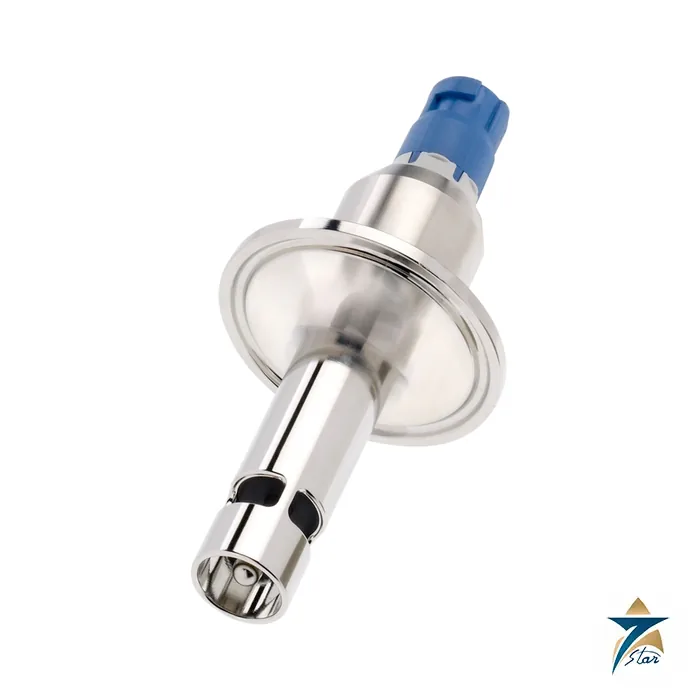
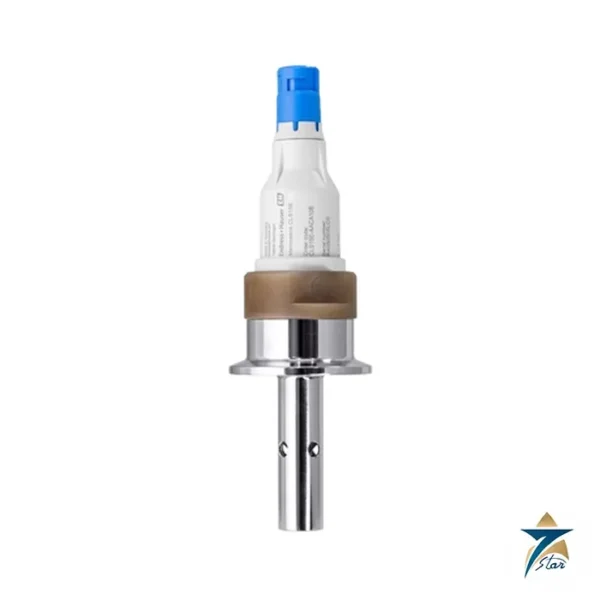
Endress+Hauser CLS16D is a contacting conductivity cell with coaxial electrodes of electropolished stainless steel 1.4435 (AISI 316L). With a cell constant of 0.1 per cm it is built for the low end of the scale, from 0.04 to 500 microsiemens per cm, where ordinary cells with k equal to 1 lose resolution. The datasheet lists ion-exchanger monitoring, reverse osmosis, distillation, electrodeionization and water for injection as typical applications.

Each sensor ships with a quality certificate stating its own measured cell constant, which is how the datasheet justifies the high accuracy. The digital CLS16D uses an NTC 30K temperature element for automatic compensation, and the analog CLS16 uses a Pt100 class A or optionally a Pt1000. Seven Star LLC is an independent supplier serving Oman and the GCC and is not affiliated with the manufacturer.

CLS16D technical specifications

Parameter Value
Conductivity range 0.04 to 500 microsiemens per cm (water at 25 C)
Cell constant k = 0.1 per cm, individually measured
Cell constant uncertainty 1.0 %
Maximum measured error 2 % of reading up to 200 microsiemens per cm; 3 % from 200 to 500
Repeatability 0.2 % of reading
Response time t95 of 3 s or less; temperature t90 of 13 s or less
Temperature compensation NTC 30K (digital)
Process temperature minus 5 to 120 C
Sterilization max. 150 C at 5 bar, 45 min
Process pressure 13 bar abs at 20 C; 9 bar abs at 120 C; 0.1 bar abs vacuum
Wetted materials Electropolished stainless steel 1.4435 (316L); ISOLAST (FFKM) FDA-compliant seal
Surface roughness Ra 0.8 micrometre or better, optionally 0.38
Weight approx. 0.13 to 0.75 kg
Ambient / storage minus 20 to 60 C / minus 25 to 80 C
Humidity 5 to 95 %
Ex approvals ATEX / IECEx Ex ia IIC T3/T4/T6 Ga (version G); FM/CSA IS/NI (version O); ATEX Zone 2 (version V)

How CLS16D differs from CLS21D and the inductive sensors

CLS16D and CLS21D are both Condumax contacting cells and share a family datasheet layout, but they serve opposite ends of the scale. CLS16D has k equal to 0.1 per cm and measures up to 500 microsiemens per cm with accuracy of 2 to 3 percent of reading; CLS21D has k equal to 1.0 per cm, covers 10 microsiemens per cm to 20 mS/cm with 5 percent error and uses graphite electrodes. CLS16D is stainless and hygienic, where CLS21D is polymer. Compared with inductive CLS54D and CLS50D, CLS16D cannot read concentrated acids or caustic, but it is far more precise in pure water.

Where CLS16D is used in Oman and the GCC

Desalination post-treatment, boiler make-up demineralisers, power station condensate polishing and pharmaceutical water loops all need a pure-water reading. The sensor monitors the ion exchanger outlet to catch breakthrough, watches reverse osmosis permeate, and verifies WFI and distillate quality. In Gulf power plants it sits in make-up lines feeding steam generators.

Choosing between the CLS16D variants

Pick the coupling that matches the line: Clamp, Varivent or BioControl. Pick plug-in head (IP 68) for flexibility or fixed cable (IP 67). Decide on roughness, 0.8 or 0.38 micrometre, and on certificates such as USP Class VI or EN 10204 3.1. For hazardous areas select the G, O or V version and the matching transmitter, such as Liquiline M CM42.

Why a cell constant of 0.1 per cm suits pure water

In a contacting cell the measured conductance is the conductivity divided by the cell constant, so a small constant raises the signal in very low-conductivity water, where the current would otherwise be tiny. At k equal to 0.1 per cm the coaxial stainless electrodes produce ten times the conductance of a k equal to 1 cell for the same liquid. Because the geometry is fixed by an inner and outer electrode, the constant is stable, and the factory measurement in a solution of about 5 microsiemens per cm sets the exact value on the certificate.

The datasheet adds that resistivity in megohm centimetres can be shown by Liquiline CM442, CM444 and CM448 or CM14 for the digital sensor, and by CM42 for either type. Older analog readers such as Liquisys CLM223 and CLM253 and Mycom CLM153 are mentioned only for CLS16.

Hygiene, materials and certificates for CLS16D

The wetted electrodes and the process connection are electropolished 1.4435 (AISI 316L), with an ISOLAST (FFKM) gasket that is FDA compliant. The sensor is certified in accordance with EHEDG Document 8. Optional paperwork includes United States Pharmacopeia Class VI certificates for Parts 87 and 88 and an EN 10204 3.1 inspection certificate. Surface roughness is Ra 0.8 micrometre or better, with 0.38 micrometre as an option. Weight ranges from 0.13 to 0.75 kg depending on the version, since Clamp, Varivent and BioControl bodies differ in size.

Installing, commissioning and maintaining CLS16D

Install through the process connection and respect the permitted flow direction shown in the datasheet. Cable runs use CYK10 for the digital sensor. Because the electropolished stainless surface is easy to clean, maintenance is rinsing and periodic verification against the quality certificate; sterilisation is allowed up to 150 C for 45 minutes. For replacement work, send the nameplate code of the sensor you are replacing and we will compare the coupling, plug-in head and Ex version against CLS16D, since each is fixed in the order code. Related Condumax and Indumax sensors such as CLS21D, CLS50D and CLS54D are listed separately on this site.

Documents and quotation

The Technical Information datasheet for CLS16D is attached to this page as a PDF. To request a quotation, send your RFQ with the exact CLS16D order code and the quantity you need, and we will reply with availability and lead time.

Delivery to Sites in Oman and the GCC

Delivery of the Endress+Hauser CLS16D is arranged to suit the site, whether that is a plant in Sohar or Duqm, an oilfield location in the interior, or a project elsewhere in the GCC. Tell us the delivery point, any site access or gate-pass requirements, and the person who will receive the goods. Goods are packed to protect sensitive liquid analysis sensors equipment during road or air transport, and shipping details are shared once the order is dispatched so that your stores team can plan receipt and inspection.

Other Models in the Conductivity Sensors Range

Seven Star LLC supplies models from the Conductivity Sensors range in Oman and the GCC. Compare the related models below and request a quote for the one that matches your application.

ModelCategory
Endress+Hauser CLS50D Indumax Inductive Conductivity SensorLiquid Analysis SensorsView details
Endress+Hauser CLS21D Condumax Conductivity Sensor, k 1.0Liquid Analysis SensorsView details
Endress+Hauser CLS54D Indumax Hygienic Conductivity SensorLiquid Analysis SensorsView details
Endress+Hauser CLS16D Condumax Hygienic Conductivity SensorLiquid Analysis SensorsYou are viewing this model
Datasheets & Documents
  • PDF Datasheet Endress+Hauser CLS16D Condumax Hygienic Conductivity Sensor Datasheet Download
Reviews (0)

Reviews

There are no reviews yet.

How would you rate this product?

It takes about 10 seconds — just tap a star. Your email is never published.

About brand

Endress+Hauser makes process measurement instruments for flow, level, pressure, temperature and liquid analysis. Georg H. Endress and Ludwig Hauser started the business in Lörrach, Germany, on 1 February 1953, first selling level meters, and the Endress+Hauser name has been used since 1957. The group is headquartered in Reinach, Switzerland, and has been wholly owned by the Endress family since 1975.

Seven Star LLC is an independent supplier listing Endress+Hauser flowmeters, level and pressure transmitters, temperature assemblies and liquid analysis products for buyers in Oman and the GCC. Instruments are matched from the full order code on the nameplate.

Endress+Hauser company profile

Origin Founded in Lörrach, Germany, on 1 February 1953 by the Swiss engineer Georg H. Endress and Ludwig Hauser
Headquarters Endress+Hauser AG, Reinach (Basel-Landschaft), Switzerland
Ownership Family owned; the Endress family has been the sole shareholder since 1975, and a family charter commits the company to stay family owned
Size About 16,500 employees and sales of about EUR 3.7 billion (2023, as reported by the company)
Product families Proline flowmeters, Micropilot and Levelflex radar, Liquiphant switches, Cerabar and Deltabar pressure, iTEMP and iTHERM temperature, Liquiline and Memosens liquid analysis

Milestones

  • 1953: Georg H. Endress and Ludwig Hauser start the business in Lörrach on 1 February, first selling level meters.
  • 1957: The Endress+Hauser name comes into use.
  • 1975: The Endress family becomes sole shareholder.
  • 2023: About 16,500 employees and sales of about EUR 3.7 billion, as reported by the company.

Endress+Hauser product lines

Line Measuring principle Typical use
Promass F 300, Promass 80F, 83F/84F Coriolis mass flow Direct mass flow and density of liquids and gases, hydrocarbon transfer and chemical dosing
Promag P 300, P 500, H 300, W 400, W 10, 50P Electromagnetic flow Water, wastewater, slurries and other conductive liquids
Prowirl F 200, 72F Vortex flow Steam, gas and low-viscosity liquids
Prosonic Flow 92F, t-mass 65F Ultrasonic and thermal mass flow Water lines; compressed air and industrial gases
Micropilot FMR62, FMR67, FMR60, FMR10B, FMR20, FMR50, FMR52 Free-space radar level, 80 GHz and 26 GHz Tanks, process vessels, silos and open water channels
Levelflex FMP51, FMP50, FMP54, FMP55 Guided wave radar level Level and interface in vessels, separators and bypass chambers
Liquiphant FTL51, Prosonic S FMU90 Vibronic point level; ultrasonic level High and low level alarms, pump protection, open channel flow
Cerabar PMC71B, PMP51B, PMP71, Deltabar PMD78B, PMD75 Pressure and differential pressure Process pressure, hydrostatic level and DP flow
iTEMP TMT82, TMT162, iTHERM TM101, TR66, TR10 Temperature transmitters and thermometers RTD and thermocouple points with thermowells
Liquiline CM444, CM442, Memosens CPS11E, Stamolys reagents Liquid analysis pH, ORP, conductivity, dissolved oxygen and nutrient analysis in water treatment and process

Where Endress+Hauser instruments are used

In Oman and the GCC, Endress+Hauser instruments are common in oil and gas production and processing, refineries and petrochemicals, desalination and water networks, wastewater treatment, power plants and food and beverage plants. Coriolis meters measure hydrocarbon and chemical flows, electromagnetic meters cover water and wastewater, radar transmitters handle tank and silo level, and Liquiline analysers monitor water quality. Proline 300 and 500 flowmeters include Heartbeat Technology for in-situ verification, which reduces the need to remove a meter for checks.

Ordering Endress+Hauser instruments: what we need

The order code on the nameplate (for example PMP71-1QA1S11RDADU) defines every option: measuring range, process connection, materials, output, approvals and display. Send it with the serial number; Endress+Hauser can retrieve the original configuration from the serial number. For a new instrument add the medium, operating and design pressure and temperature, range, line size or tank geometry, process connection, wetted materials, output or protocol (4-20 mA HART, PROFIBUS, FOUNDATION Fieldbus, Modbus) and the hazardous-area approval required. Older models such as Promass 80/83 or Micropilot M are replaced by current Proline or 80 GHz Micropilot devices.

Facts checked against Endress+Hauser company history and product information, October 2026.

FAQ

Questions about the Endress+Hauser CLS16D Condumax Hygienic

Answers from our engineering team on installation, compatibility and integration.

01What is cell constant of Endress+Hauser CLS16D?
k equals 0.1 per cm, individually measured at the factory in a solution of about 5 microsiemens per cm against a NIST or PTB traceable reference, with 1.0 percent uncertainty.
02What range does CLS16D measure?
0.04 to 500 microsiemens per cm relative to water at 25 C, which covers ultrapure and pure water; resistivity in megohm centimetres can also be shown.
03Can CLS16D be sterilized?
Yes, up to 150 C at 5 bar for a maximum of 45 minutes; normal operation is minus 5 to 120 C, and Memosens communication works up to 130 C.
04What certificates can be ordered with CLS16D?
The sensor is certified to EHEDG Document 8, and optional certificates include USP Class VI Parts 87 and 88 and an EN 10204 3.1 inspection certificate.
05Which process connections does CLS16D use?
Clamp 1, 1.5 and 2 inch to ISO 2852, Tuchenhagen Varivent N DN 50 to 125 and NEUMO BioControl D50.