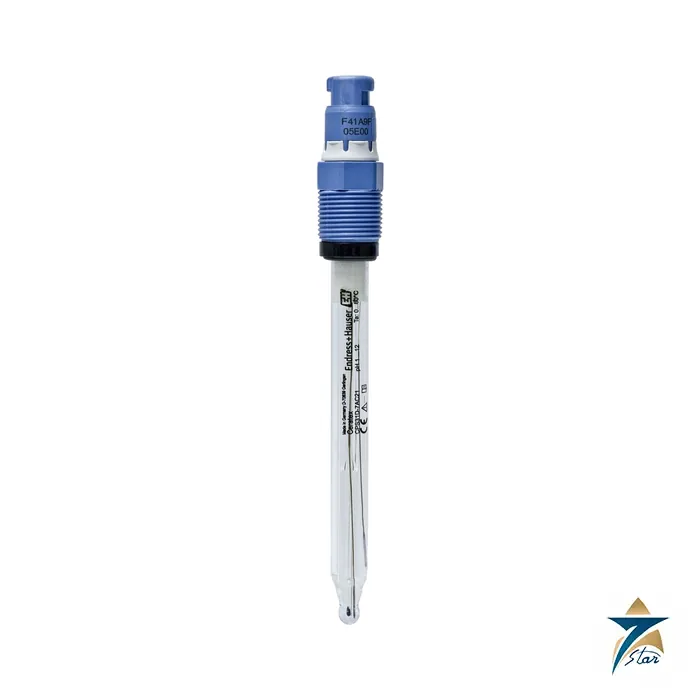
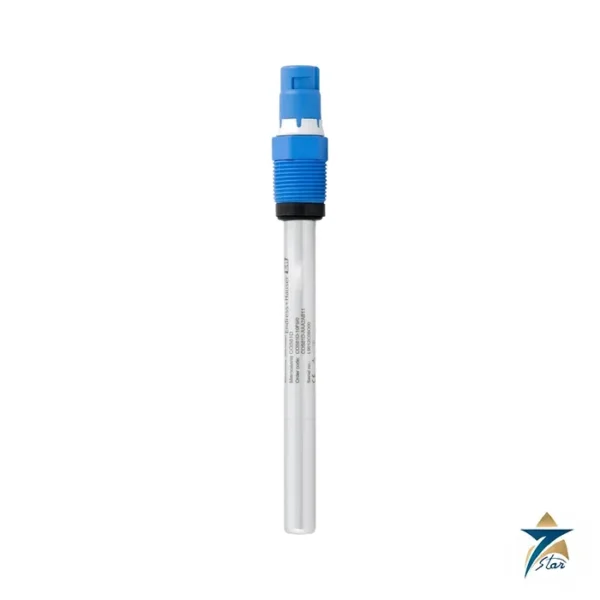
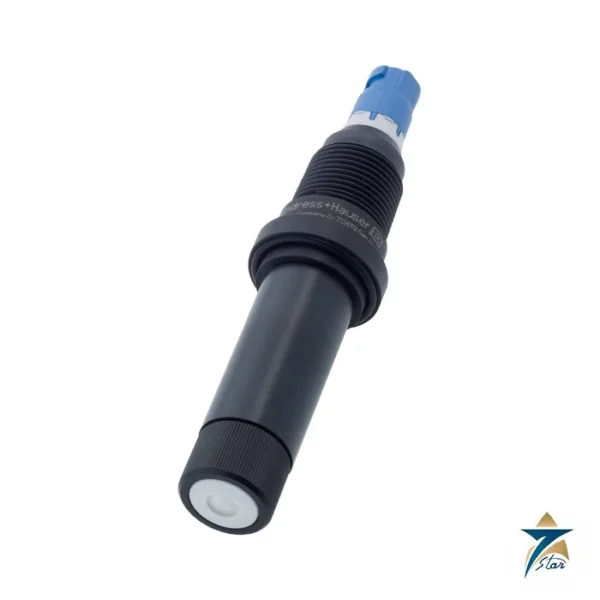
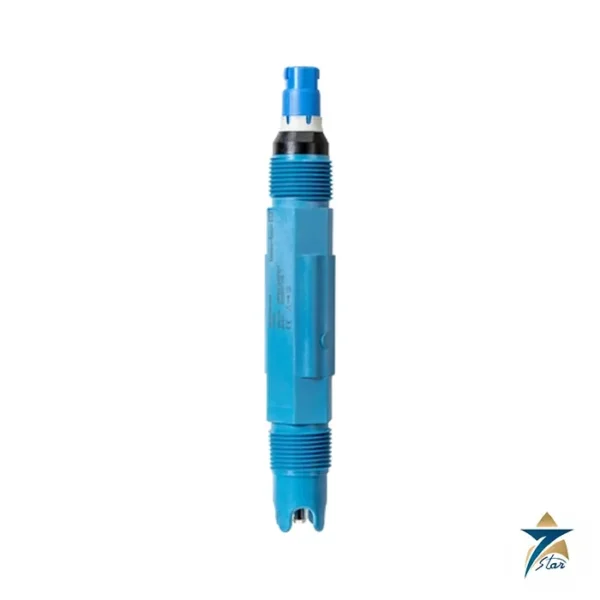
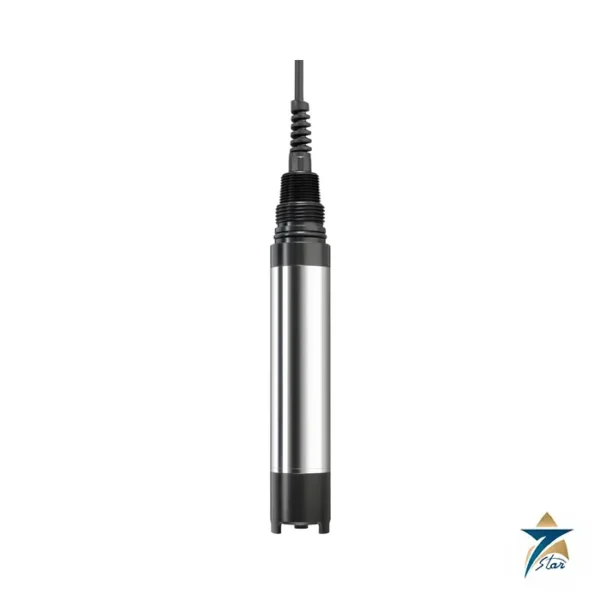
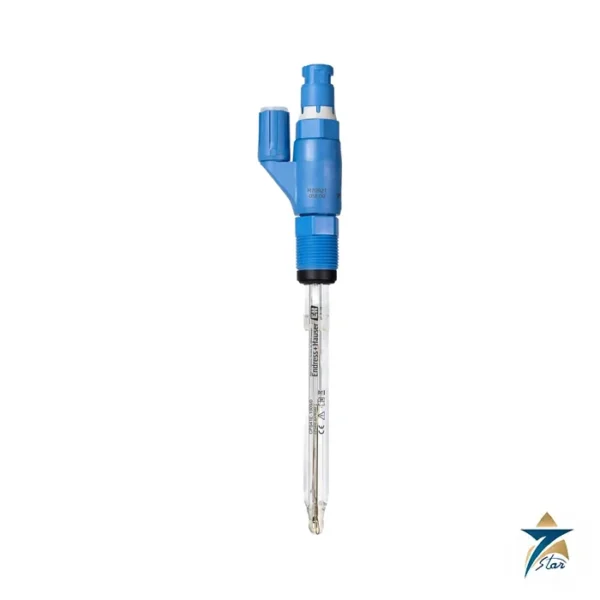
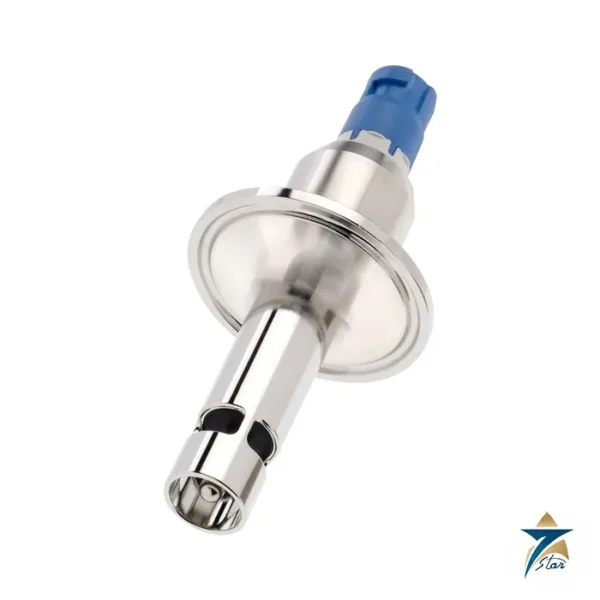
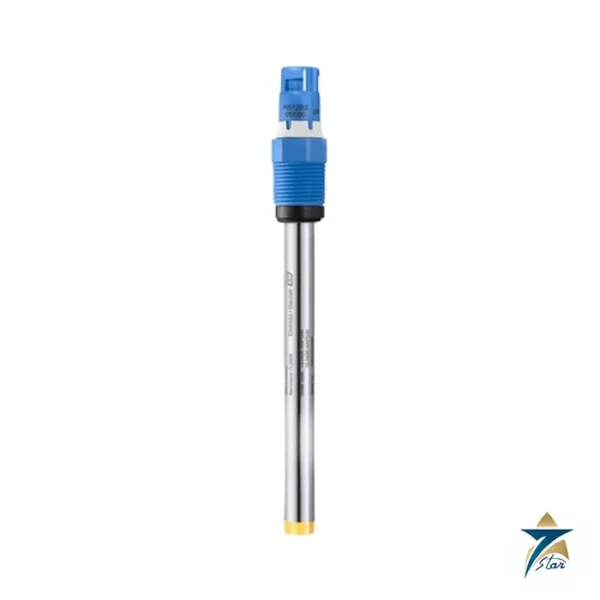
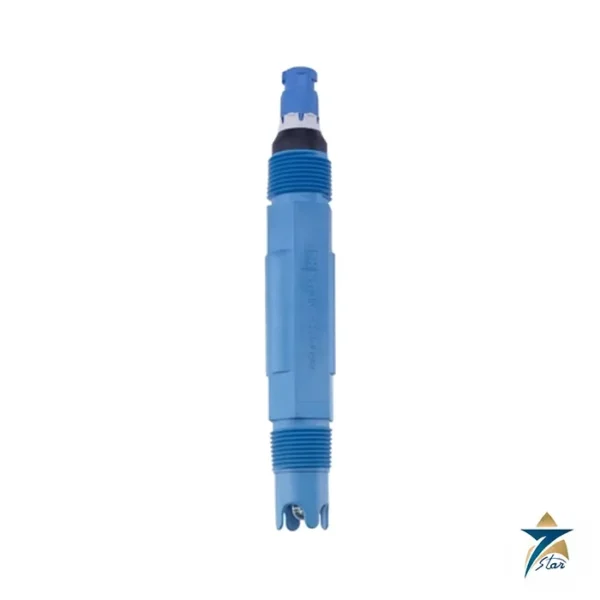
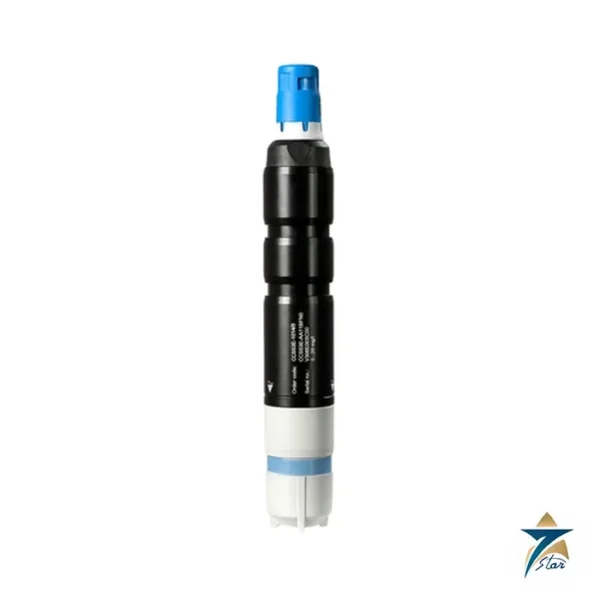
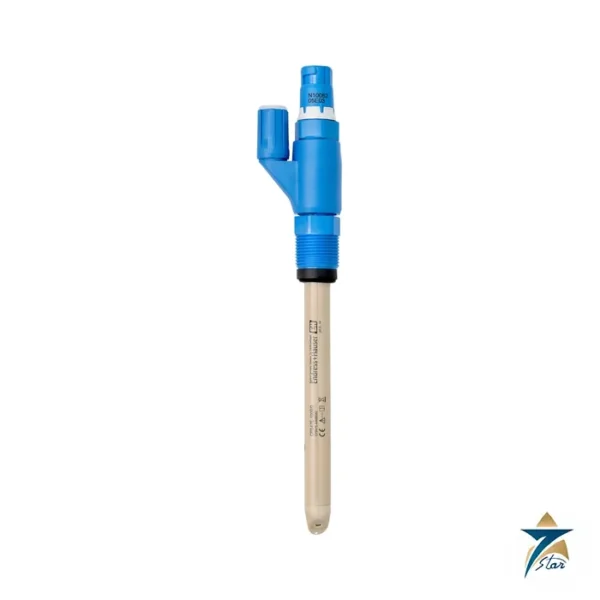
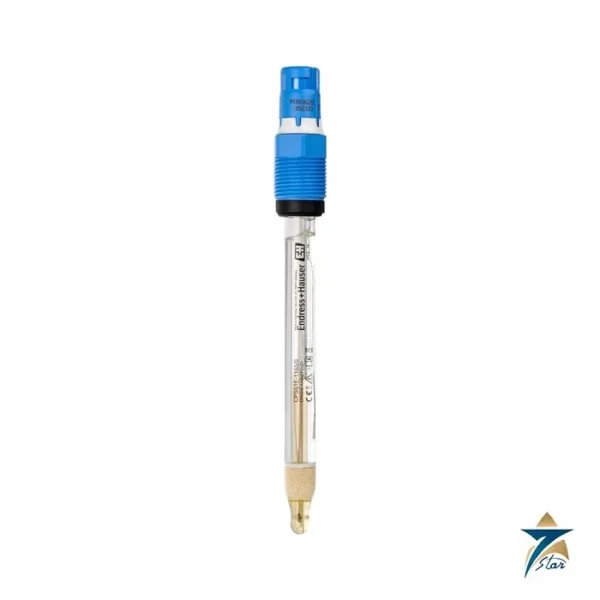
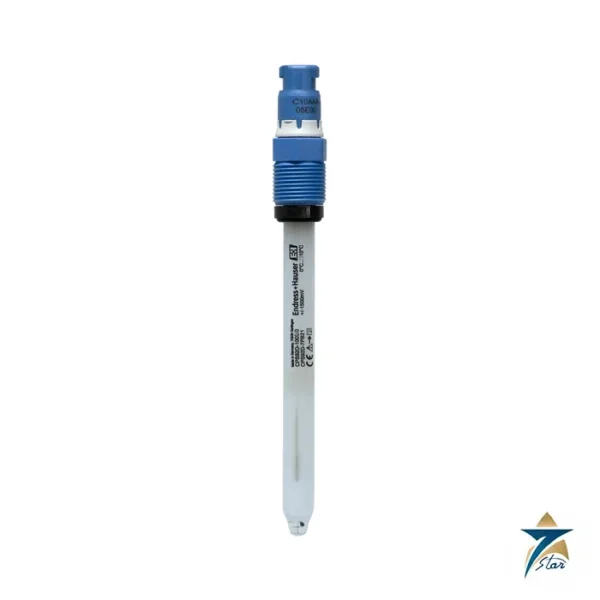
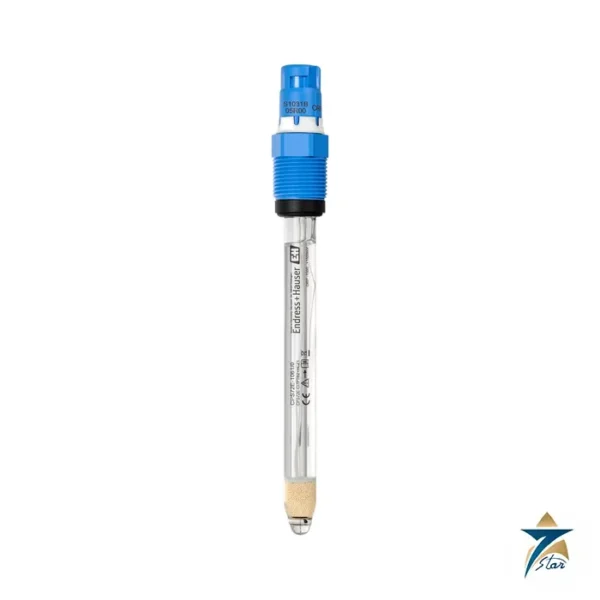
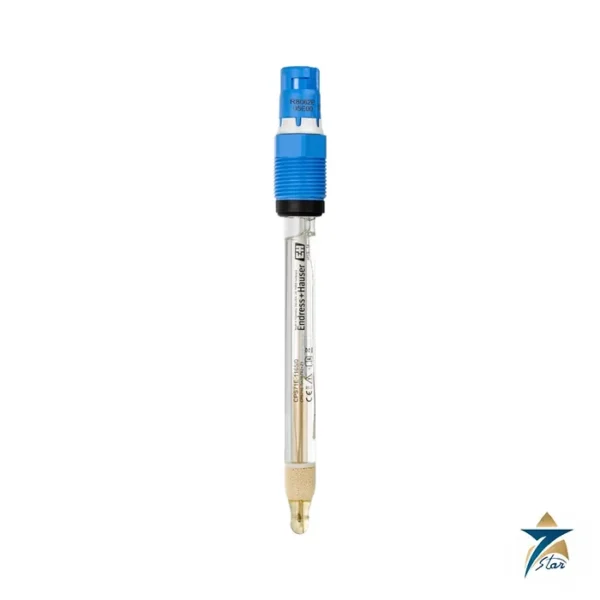
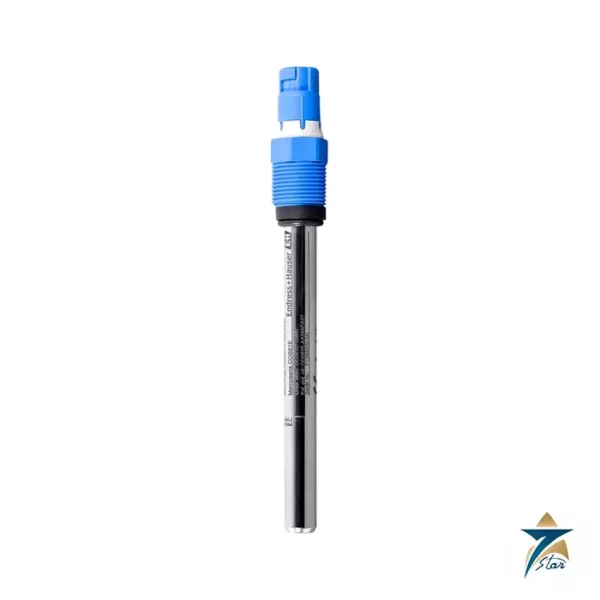
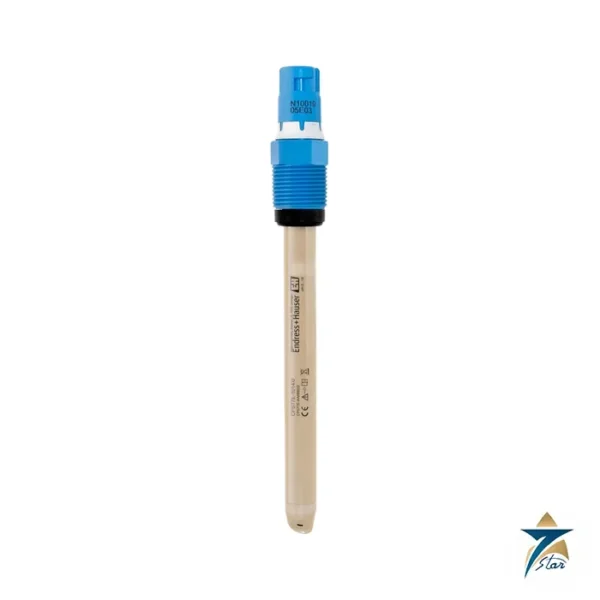
Endress+Hauser CPS31D Memosens pH Sensor, Drinking Water

Description

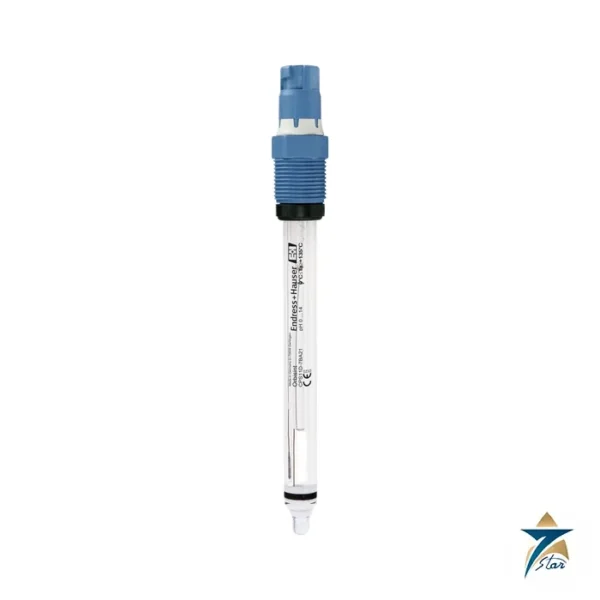
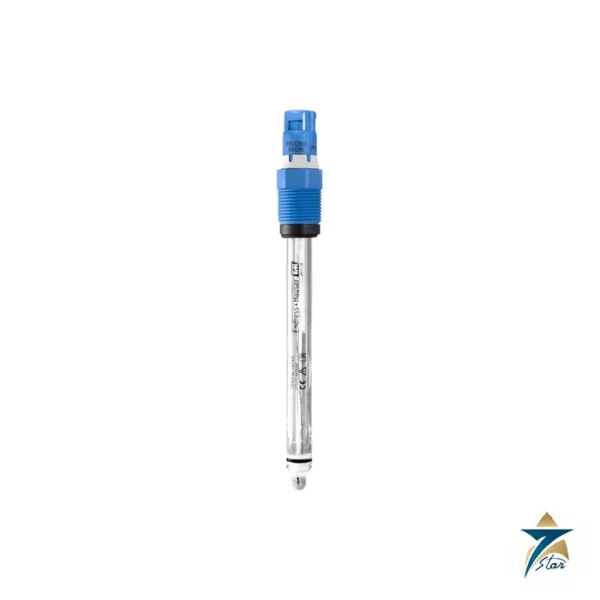
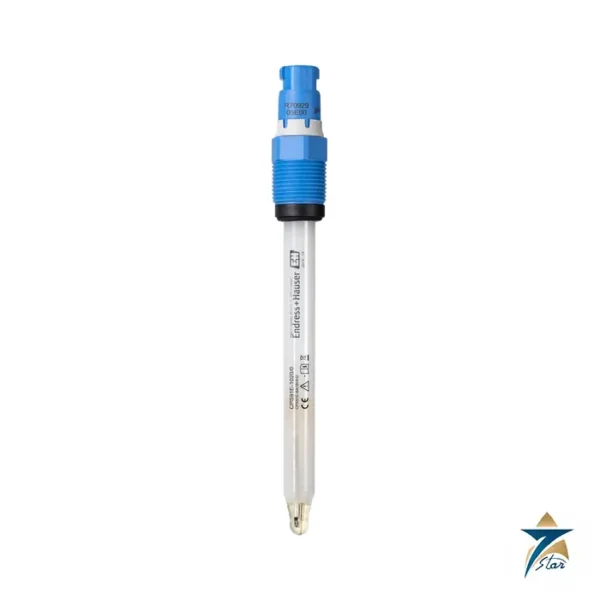
Endress+Hauser CPS31D Memosens pH sensor for clean-water duty

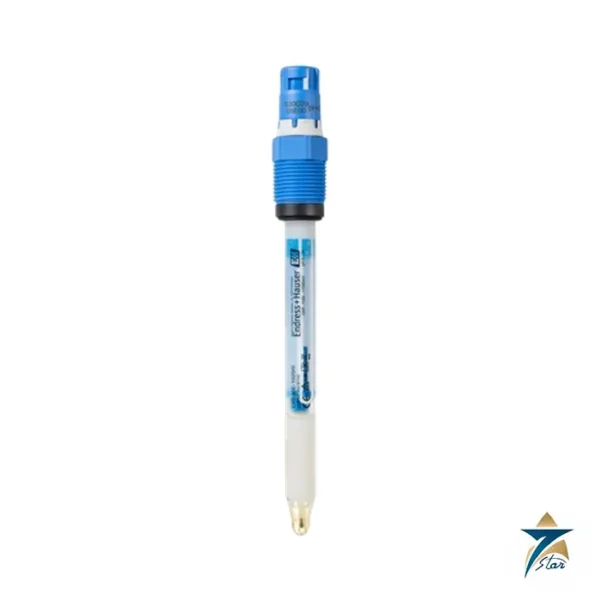
Endress+Hauser CPS31D is the gel-filled, low-maintenance pH sensor aimed at water that people drink or swim in. The datasheet lists exactly three uses: drinking water, swimming pool water and pH compensation during free-chlorine measurement. In those waters there are no solvents, solids or sulphides to worry about, so the design priority shifts to stability, low ion depletion and no electrolyte refilling.

The shaft carries one or three ceramic junctions, a gel-filled Ag/AgCl reference in 3 M KCl and an NTC 30K element. A Memosens plug-in head makes it digital; the same datasheet also covers the analog Ceratex CPS31 in ESA or GSA heads for older loops. Seven Star LLC is an independent supplier serving Oman and the GCC and is not affiliated with the manufacturer.

CPS31D technical specifications

Parameter Value
pH range 1 to 12
Temperature 0 to 80 C (32 to 176 F)
Process pressure 1 to 4 bar absolute (14.5 to 58 psi)
Minimum conductivity 100 microsiemens per cm; 50 microsiemens per cm for AC version with three junctions
Reference Ag/AgCl, gel, 3 M KCl; optional KCl-saturated salt ring
Junction Ceramic, one or three
Temperature sensor NTC 30K (CPS31D); Pt 100 (CPS31)
Glass membrane Type A
Installed length 120 mm (4.70 in)
Shaft diameter 12 mm
Weight 0.1 kg (0.2 lb)
Plug-in heads Memosens, ESA, GSA
Process connection Pg 13.5
Ingress protection Memosens IP 68; ESA IP 68; GSA IP 67
Storage temperature 0 to 50 C

How CPS31D differs from other Memosens pH sensors

CPS31D is the mild-duty member of the family. Its process envelope of 80 C and 4 bar sits far below the 110 C and 14 bar of CPS91E and the 135 C and 11 bar of CPS41E, and it comes in a single 120 mm length rather than four lengths. It has no Ex approval listed in the datasheet. In exchange it has the lowest bar for conductivity among the gel-filled sensors discussed here, at 100 microsiemens per cm or 50 with three junctions, plus the optional salt ring that CPS91E does not offer.

Choose it when the medium is clean, cool and low-pressure; choose a different family member when temperature, pressure or fouling go beyond that.

Typical CPS31D applications in Oman and the GCC

Oman relies heavily on desalinated and groundwater supply, and CPS31D belongs in the final stages: post-treatment pH correction, remineralisation, reservoir outlets and distribution monitoring. Hotels, resorts and municipal pools use it to keep pH in the window where chlorine disinfects effectively. Combined with an amperometric sensor in a flow cell, it provides the pH value used to compensate free-chlorine readings.

Because many of these sites are unattended, a gel sensor that needs no refilling and has a salt ring option reduces visits.

Selection and compatibility

For the digital version connect a Memosens transmitter with cable CYK10 or CYK20. The analog CPS31 wires through TOP68 head with cable CPK9, or GSA head with cable CPK1. Specify the three-junction AC version if the water is soft, and the salt ring if you want longer operating life. Ceratex CPS31 variants share the same electrode but lack the stored history.

Installing and commissioning CPS31D

Mount at least 15 degrees from horizontal, never upside down; a shallower angle allows an air bubble in the glass bulb and leaves the membrane without full inner electrolyte coverage. Hand-tighten at 3 Nm in Endress+Hauser assemblies after checking thread, O-rings and sealing surface. Do not expose to temperatures below minus 15 C.

Maintenance of CPS31D

Calibrate in the laboratory and install a pre-calibrated sensor. Store at 0 to 50 C. Because pressure, temperature and glass can combine to cause a sudden rupture after prolonged use under increased pressure and rapid heating, wear goggles and gloves when handling the sensor.

Understanding the CPS31D reference and junction design

The reference lead in CPS31D is a Ag/AgCl element in 3 M KCl gel, led through an internal pipe to ceramic junctions in the shaft. The datasheet stresses very low ion depletion of the electrolyte, and offers salt rings saturated with KCl as an option so the gel is continuously recharged. With one junction the sensor needs at least 100 microsiemens per cm of conductivity; with the three-junction AC version, 50 microsiemens per cm is enough. Those two numbers are the first thing to check against the analysis of your water.

The pH membrane is glass type A, and the temperature element is an NTC 30K in the digital version, or a Pt 100 in the analog CPS31. An external reference lead and a capillary appear in the dimension drawings, along with the thrust collar and O-ring that seal the sensor in its assembly. The Memosens head hands data across without galvanic contact, so wet connectors in pool plant rooms or pump pits stop being a failure point.

Quick answers about CPS31D

Can it go in hot water? No: the limit is 80 C. Can it handle pressurised lines? Only up to 4 bar absolute. Does it have hazardous-area approvals? None are given in the datasheet, so use it in non-hazardous water treatment. What does the head contain? Calibration data, serial number and operating history, accessible through the transmitter. What do the ESA and GSA variants mean? They are analog plug-in heads for the Ceratex CPS31 sensor, rated IP 68 and IP 67 respectively, and wired with cables CPK9 or CPK1.

Ordering notes for CPS31D

Provide the complete order code, including junction count, salt ring option and head type, when requesting a quote.

Documents and quotation

The Technical Information datasheet for CPS31D is attached to this page as a PDF. To request a quotation, send your RFQ with the exact CPS31D order code and the quantity you need, and we will reply with availability and lead time.

Other Models in the Memosens Ph Range

Seven Star LLC supplies models from the Memosens Ph range in Oman and the GCC. Compare the related models below and request a quote for the one that matches your application.

ModelCategory
Endress+Hauser CPF81E Memosens Compact pH SensorLiquid Analysis SensorsView details
Endress+Hauser CPS96E Memosens pH/ORP Sensor, Open JunctionLiquid Analysis SensorsView details
Endress+Hauser CPS47E Memosens ISFET pH SensorLiquid Analysis SensorsView details
Endress+Hauser CPS31D Memosens pH Sensor, Drinking WaterLiquid Analysis SensorsYou are viewing this model
Endress+Hauser CPS91E Memosens pH Sensor, Open ApertureLiquid Analysis SensorsView details
Endress+Hauser CPS41E Memosens pH Sensor, Liquid KClLiquid Analysis SensorsView details
Datasheets & Documents
  • PDF Datasheet Endress+Hauser CPS31D Memosens pH Sensor, Drinking Water Datasheet Download
Reviews (0)

Reviews

There are no reviews yet.

How would you rate this product?

It takes about 10 seconds — just tap a star. Your email is never published.

About brand

Endress+Hauser makes process measurement instruments for flow, level, pressure, temperature and liquid analysis. Georg H. Endress and Ludwig Hauser started the business in Lörrach, Germany, on 1 February 1953, first selling level meters, and the Endress+Hauser name has been used since 1957. The group is headquartered in Reinach, Switzerland, and has been wholly owned by the Endress family since 1975.

Seven Star LLC is an independent supplier listing Endress+Hauser flowmeters, level and pressure transmitters, temperature assemblies and liquid analysis products for buyers in Oman and the GCC. Instruments are matched from the full order code on the nameplate.

Endress+Hauser company profile

Origin Founded in Lörrach, Germany, on 1 February 1953 by the Swiss engineer Georg H. Endress and Ludwig Hauser
Headquarters Endress+Hauser AG, Reinach (Basel-Landschaft), Switzerland
Ownership Family owned; the Endress family has been the sole shareholder since 1975, and a family charter commits the company to stay family owned
Size About 16,500 employees and sales of about EUR 3.7 billion (2023, as reported by the company)
Product families Proline flowmeters, Micropilot and Levelflex radar, Liquiphant switches, Cerabar and Deltabar pressure, iTEMP and iTHERM temperature, Liquiline and Memosens liquid analysis

Milestones

  • 1953: Georg H. Endress and Ludwig Hauser start the business in Lörrach on 1 February, first selling level meters.
  • 1957: The Endress+Hauser name comes into use.
  • 1975: The Endress family becomes sole shareholder.
  • 2023: About 16,500 employees and sales of about EUR 3.7 billion, as reported by the company.

Endress+Hauser product lines

Line Measuring principle Typical use
Promass F 300, Promass 80F, 83F/84F Coriolis mass flow Direct mass flow and density of liquids and gases, hydrocarbon transfer and chemical dosing
Promag P 300, P 500, H 300, W 400, W 10, 50P Electromagnetic flow Water, wastewater, slurries and other conductive liquids
Prowirl F 200, 72F Vortex flow Steam, gas and low-viscosity liquids
Prosonic Flow 92F, t-mass 65F Ultrasonic and thermal mass flow Water lines; compressed air and industrial gases
Micropilot FMR62, FMR67, FMR60, FMR10B, FMR20, FMR50, FMR52 Free-space radar level, 80 GHz and 26 GHz Tanks, process vessels, silos and open water channels
Levelflex FMP51, FMP50, FMP54, FMP55 Guided wave radar level Level and interface in vessels, separators and bypass chambers
Liquiphant FTL51, Prosonic S FMU90 Vibronic point level; ultrasonic level High and low level alarms, pump protection, open channel flow
Cerabar PMC71B, PMP51B, PMP71, Deltabar PMD78B, PMD75 Pressure and differential pressure Process pressure, hydrostatic level and DP flow
iTEMP TMT82, TMT162, iTHERM TM101, TR66, TR10 Temperature transmitters and thermometers RTD and thermocouple points with thermowells
Liquiline CM444, CM442, Memosens CPS11E, Stamolys reagents Liquid analysis pH, ORP, conductivity, dissolved oxygen and nutrient analysis in water treatment and process

Where Endress+Hauser instruments are used

In Oman and the GCC, Endress+Hauser instruments are common in oil and gas production and processing, refineries and petrochemicals, desalination and water networks, wastewater treatment, power plants and food and beverage plants. Coriolis meters measure hydrocarbon and chemical flows, electromagnetic meters cover water and wastewater, radar transmitters handle tank and silo level, and Liquiline analysers monitor water quality. Proline 300 and 500 flowmeters include Heartbeat Technology for in-situ verification, which reduces the need to remove a meter for checks.

Ordering Endress+Hauser instruments: what we need

The order code on the nameplate (for example PMP71-1QA1S11RDADU) defines every option: measuring range, process connection, materials, output, approvals and display. Send it with the serial number; Endress+Hauser can retrieve the original configuration from the serial number. For a new instrument add the medium, operating and design pressure and temperature, range, line size or tank geometry, process connection, wetted materials, output or protocol (4-20 mA HART, PROFIBUS, FOUNDATION Fieldbus, Modbus) and the hazardous-area approval required. Older models such as Promass 80/83 or Micropilot M are replaced by current Proline or 80 GHz Micropilot devices.

Facts checked against Endress+Hauser company history and product information, October 2026.

FAQ

Questions about the Endress+Hauser CPS31D Memosens pH Sensor, Drinking

Answers from our engineering team on installation, compatibility and integration.

01What is Endress+Hauser CPS31D designed to measure?
pH in drinking water and swimming pool water, including pH compensation when free chlorine is measured with an amperometric sensor.
02Why does CPS31D have a three-junction option?
The AC version with three ceramic junctions lowers the minimum conductivity from 100 to 50 microsiemens per cm, helping in soft or low-mineral water.
03What are the CPS31D pressure and temperature limits?
0 to 80 C and 1 to 4 bar absolute, with a pH range of 1 to 12. The sensor is not intended for hot or high-pressure process lines.
04What is the optional salt ring on CPS31D?
A KCl-saturated salt ring in the shaft that replenishes the gel electrolyte, extending operating life; the datasheet lists it as an optional feature.
05Is CPS31D digital only?
No. The datasheet covers Memosens CPS31D and the analog Ceratex CPS31, which comes with ESA or GSA heads and a Pt 100 temperature probe.