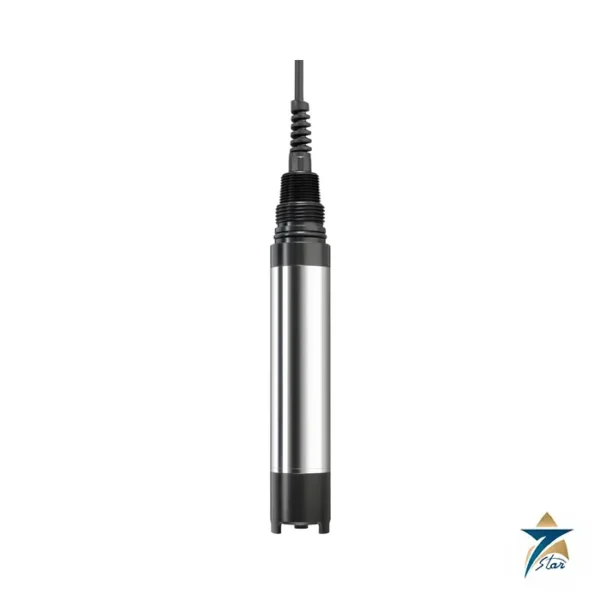
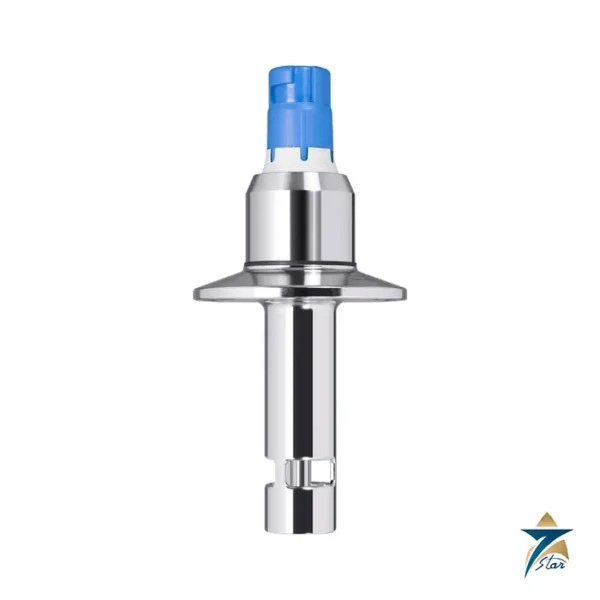
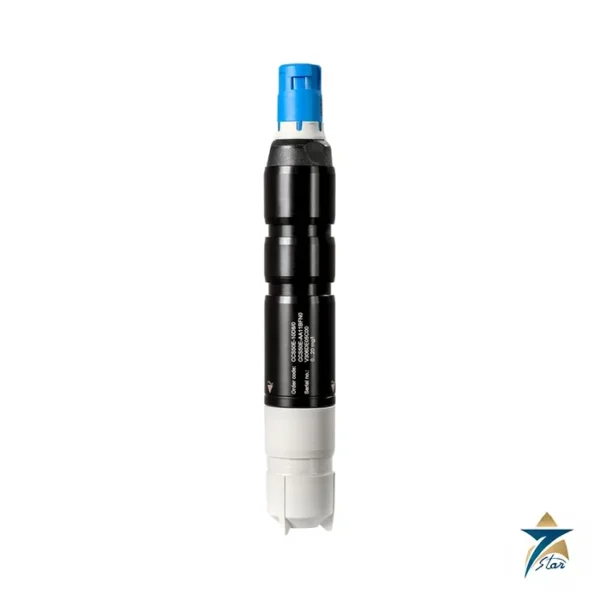
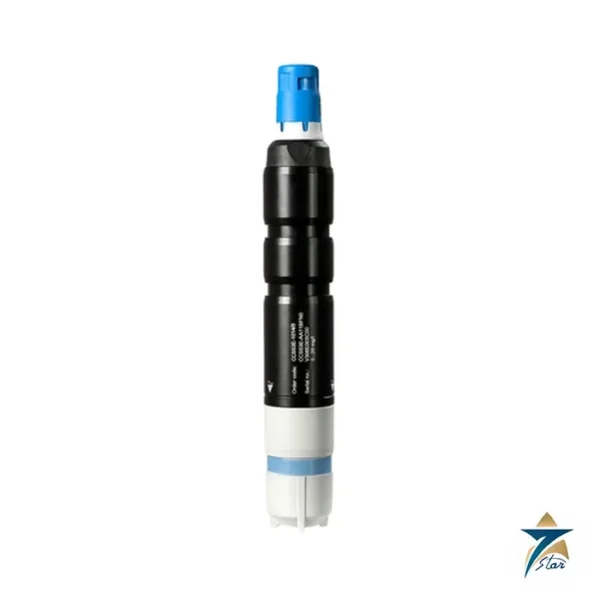
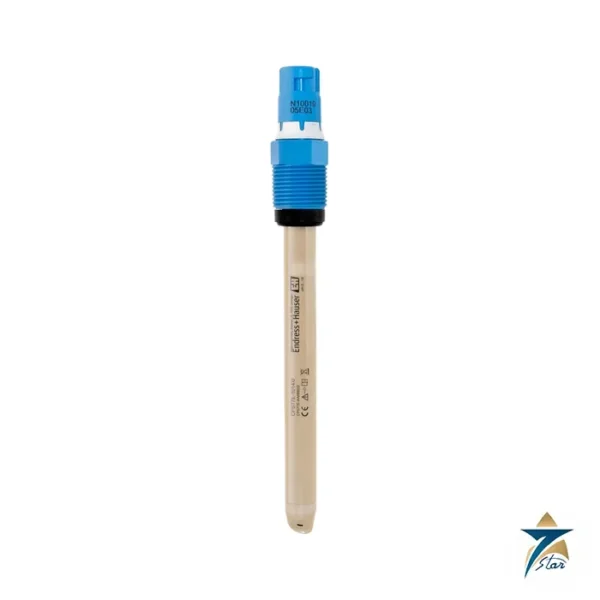
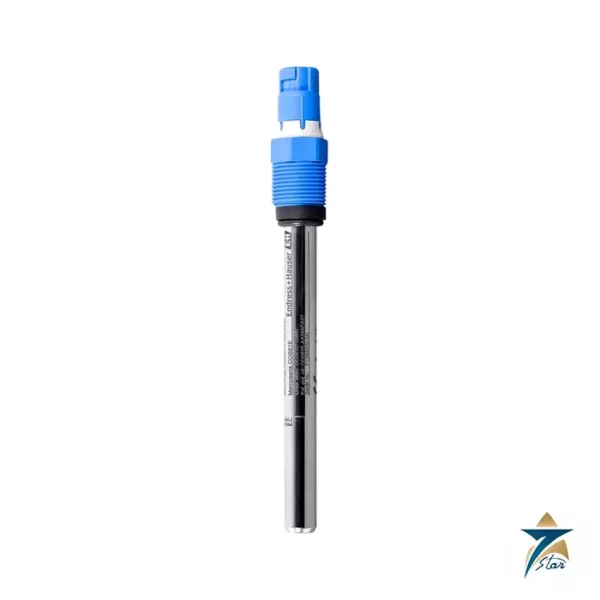
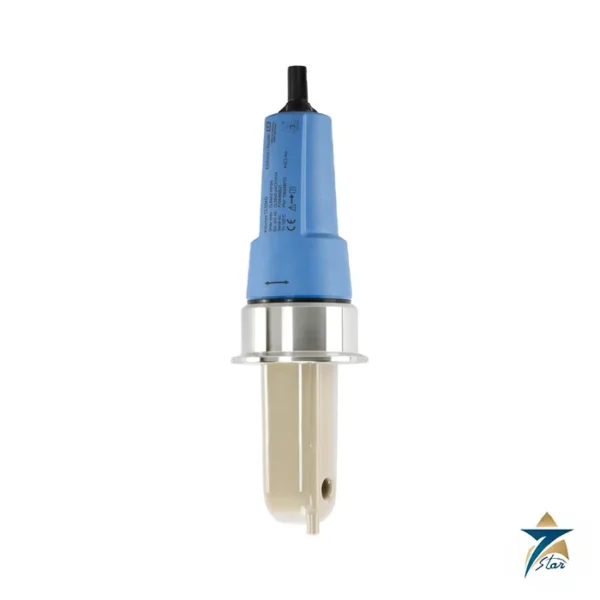
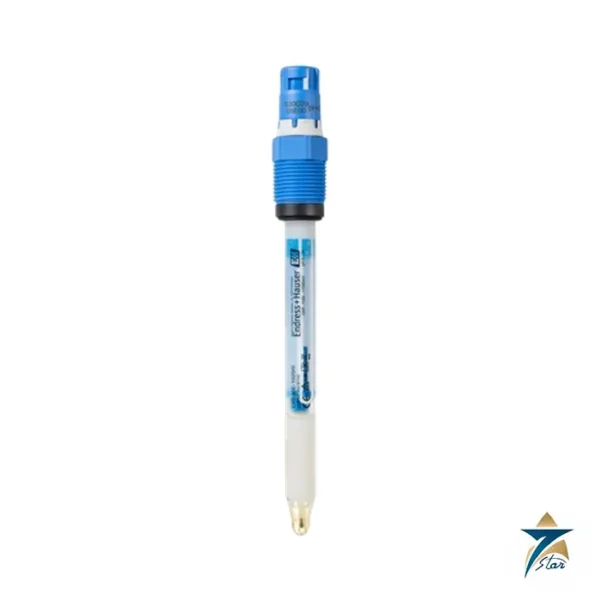
Endress+Hauser CAS51D Viomax SAC and Nitrate Sensor

Description

Endress+Hauser CAS51D Viomax: chemical-free organic load and nitrate

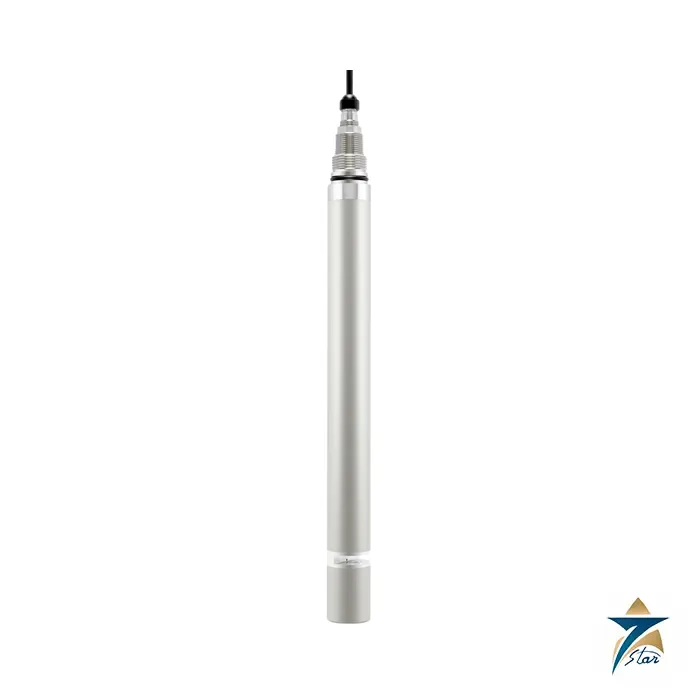
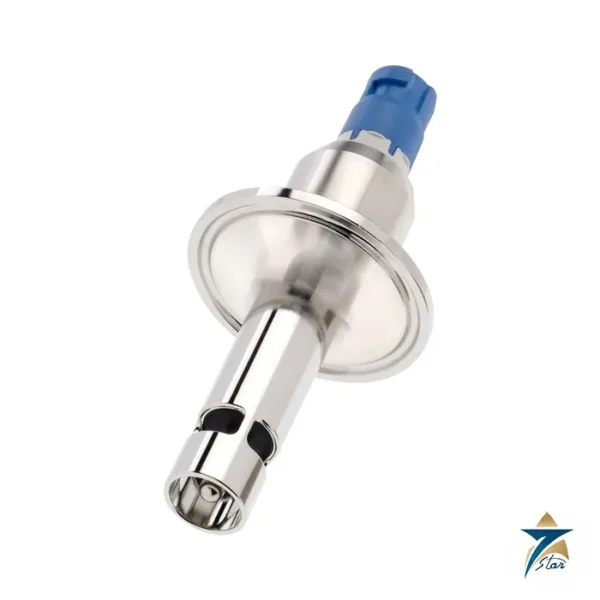
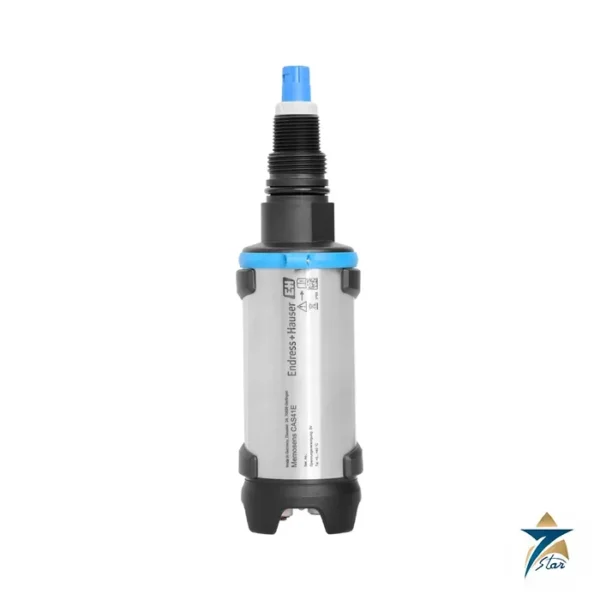
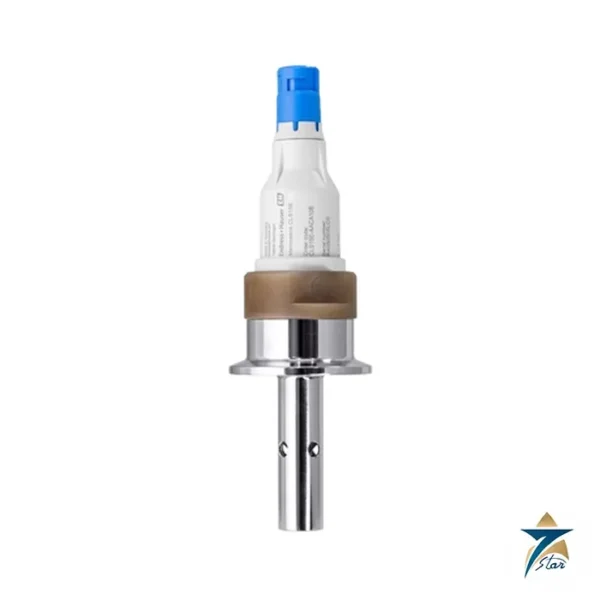
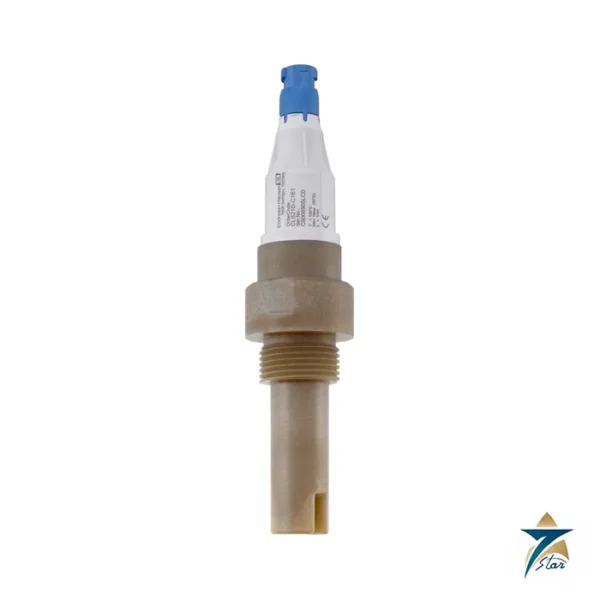
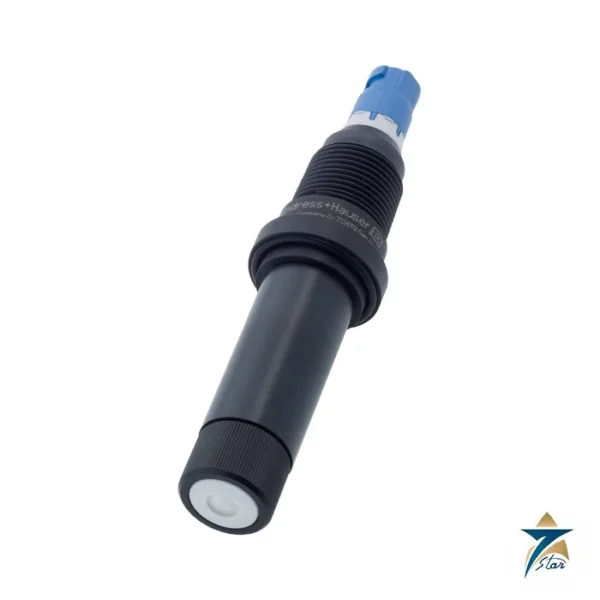
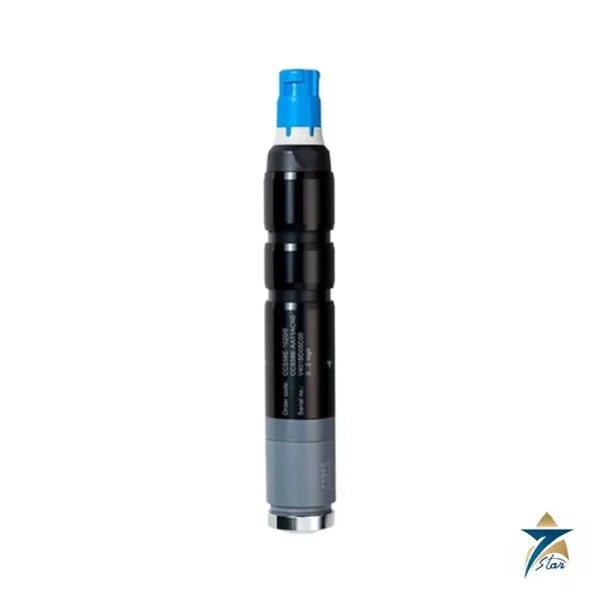
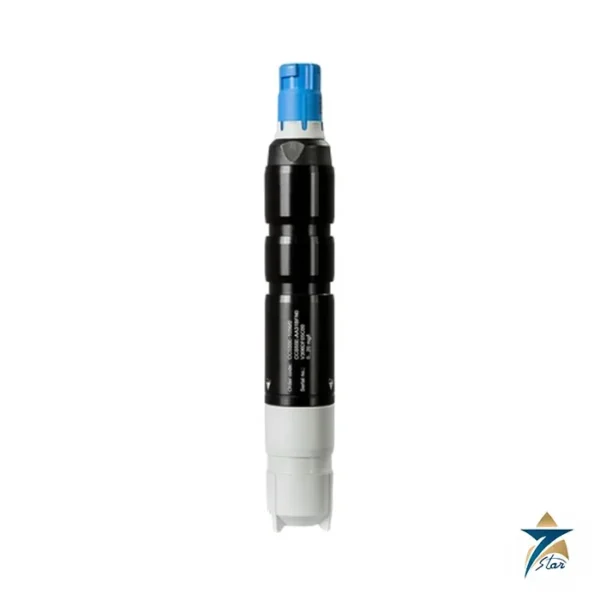
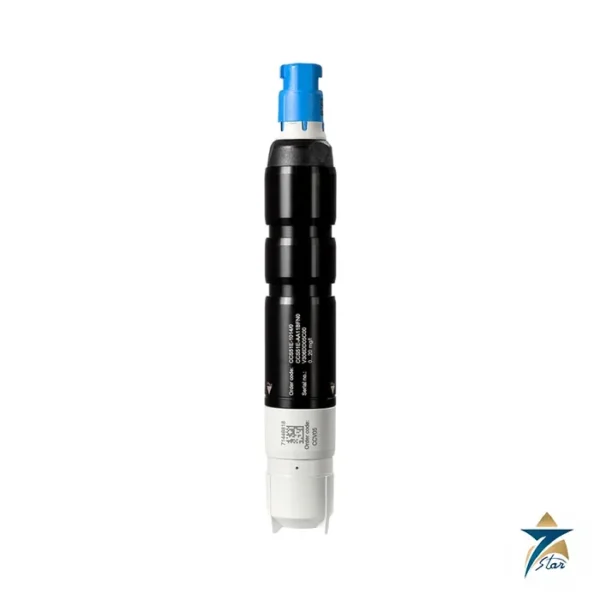
Endress+Hauser CAS51D is a photometric sensor that measures UV absorption in the liquid itself, with no reagents and no sampling. The same housing can be ordered for nitrate or for SAC, the spectral absorption coefficient, an organic-load measurement that stands in for COD, TOC, BOD and DOC. It is Memosens, so conditioning and factory calibration live in the sensor and customers may add calibrations of 1 to 5 points.

SAC applications named in the datasheet are organic load at the inlet and outlet of treatment plants, discharger monitoring and drinking water; nitrate applications are natural waters, plant outlet, aeration basins and denitrification control. Seven Star LLC is an independent supplier serving Oman and the GCC and is not affiliated with the manufacturer.

CAS51D technical specifications

Parameter Value
A2: 2 mm gap, nitrate 0.1 to 50 mg/l NO3-N; 0.4 to 200 mg/l NO3; clear water and sludge activation
A1: 8 mm gap, nitrate 0.01 to 20 mg/l NO3-N; 0.04 to 80 mg/l NO3; clear water
C1: 40 mm gap, SAC 0 to 50 per m; COD/BOD 0 to 75 mg/l; TOC/DOC 0 to 30 mg/l
C2: 8 mm gap, SAC 0 to 250 per m; COD/BOD 0 to 375 mg/l; TOC/DOC 0 to 150 mg/l
C3: 2 mm gap, SAC 0 to 1000 per m; COD/BOD 0 to 1500 mg/l; TOC/DOC 0 to 600 mg/l
Nitrate error (2 mm) 2 % of full scale above 10 mg/l; 0.4 % below 10 mg/l
Nitrate error (8 mm) 2 % of full scale above 2 mg/l; 0.2 % below 2 mg/l
Repeatability nitrate at least 0.2 mg/l NO3-N; SAC 0.5 % of end of range
Process temperature 5 to 50 C
Process pressure 0.5 to 10 bar absolute
Ambient / storage minus 20 to 60 C / minus 20 to 70 C
Ingress protection IP 68 (1 m, 24 h, 1 mol/l KCl)
Weight approx. 1.6 kg without cable
Materials Stainless steel 1.4404 (316L), quartz glass windows, EPDM O-rings
Connections G1, NPT 3/4 inch, Clamp 2 inch to DIN 32676 depending on version
Cable length 100 m maximum

How CAS51D differs from CUS71D and other water sensors

CAS51D is the only photometric sensor in this set and is ordered by measurement gap, not by cap or seal. Where CUS71D reads a distance and COS61D a gas partial pressure, CAS51D reads light absorption across a gap of 2, 8 or 40 mm. That gap is the key choice: narrow gaps for dirty, high-load water, wide gaps for clear water. A clear 40 mm gap reaches the lowest SAC range of 0 to 50 per m, and the 2 mm gap the highest at 0 to 1000 per m.

CAS51D at wastewater and water plants in Oman and the GCC

Aeration basins use the nitrate reading to run denitrification phases efficiently; plant inlet SAC gives early warning of load peaks, and outlet SAC supports discharge compliance. Desalination and drinking-water sites watch organic load in intake water. Empirical COD ranges in the datasheet include 0 to 4000 mg/l for municipal inlet and 0 to 10 000 mg/l for dairy or chemical influent.

Selecting a CAS51D version

Decide the measurand first (nitrate or SAC), then the gap by the expected range. The measuring range depends strongly on the properties of the medium, so use the datasheet values as a starting point. Pick connection G1, NPT 3/4 inch or clamp, and plug type: M12 or end sleeves.

Measuring principle and the choice of gap in CAS51D

A photometric sensor passes ultraviolet light through a gap of liquid and measures how much is absorbed. Organic compounds absorb strongly, so absorption relates to load; nitrate has its own absorption signature that the sensor separates. The advantage the datasheet lists is that no sampling or treatment is needed, no chemicals are consumed, and data are conditioned in the sensor with minimum sensitivity to interference during signal transmission.

Gap width sets the range. For nitrate, the 2 mm gap covers 0.1 to 50 mg/l NO3-N for clear water and sludge activation, and the 8 mm gap covers 0.01 to 20 mg/l NO3-N for clear water with COD (KHP) up to 125 mg/l and turbidity up to 50 FNU. For SAC the 40 mm gap measures 0 to 50 per m, the 8 mm gap 0 to 250 per m and the 2 mm gap 0 to 1000 per m. Footnotes explain that COD, BOD, TOC and DOC are derived values, so calibrate them against laboratory results from your own water.

Quick answers about CAS51D

How is it cleaned? Compressed air blows the optical windows free at 1.5 to 2 bar, which gives very long intervals. How is it connected? Fixed cable with M12 plug or end sleeves, up to 100 m. What is the repeatability? At least plus or minus 0.2 mg/l NO3-N for nitrate and 0.5 percent of end of range for SAC in homogeneous media. What certificates does the datasheet list? The EAC mark and the product-page downloads. How heavy is it? About 1.6 kg without cable, in stainless steel 1.4404 with quartz windows and EPDM O-rings.

Installing and maintaining CAS51D

No minimum flow is needed, but for solids that form deposits, ensure good mixing. Connect compressed air at 1.5 to 2 bar through 6 mm or 6.35 mm hose adapters for the cleaning nozzle. Check the quartz windows at service.

Documents and quotation

The Technical Information datasheet for CAS51D is attached to this page as a PDF. To request a quotation, send your RFQ with the exact CAS51D order code and the quantity you need, and we will reply with availability and lead time.

Delivery to Sites in Oman and the GCC

Delivery of the Endress+Hauser CAS51D is arranged to suit the site, whether that is a plant in Sohar or Duqm, an oilfield location in the interior, or a project elsewhere in the GCC. Tell us the delivery point, any site access or gate-pass requirements, and the person who will receive the goods. Goods are packed to protect sensitive liquid analysis sensors equipment during road or air transport, and shipping details are shared once the order is dispatched so that your stores team can plan receipt and inspection.

Other Models in the Water Analysis Range

Seven Star LLC supplies models from the Water Analysis range in Oman and the GCC. Compare the related models below and request a quote for the one that matches your application.

ModelCategory
Endress+Hauser CUS71D Turbimax Ultrasonic Interface SensorLiquid Analysis SensorsView details
Endress+Hauser CCS142D Chloromax Free Chlorine SensorLiquid Analysis SensorsView details
Endress+Hauser CAS51D Viomax SAC and Nitrate SensorLiquid Analysis SensorsYou are viewing this model
Datasheets & Documents
  • PDF Datasheet Endress+Hauser CAS51D Viomax SAC and Nitrate Sensor Datasheet Download
Reviews (0)

Reviews

There are no reviews yet.

How would you rate this product?

It takes about 10 seconds — just tap a star. Your email is never published.

About brand

Endress+Hauser makes process measurement instruments for flow, level, pressure, temperature and liquid analysis. Georg H. Endress and Ludwig Hauser started the business in Lörrach, Germany, on 1 February 1953, first selling level meters, and the Endress+Hauser name has been used since 1957. The group is headquartered in Reinach, Switzerland, and has been wholly owned by the Endress family since 1975.

Seven Star LLC is an independent supplier listing Endress+Hauser flowmeters, level and pressure transmitters, temperature assemblies and liquid analysis products for buyers in Oman and the GCC. Instruments are matched from the full order code on the nameplate.

Endress+Hauser company profile

Origin Founded in Lörrach, Germany, on 1 February 1953 by the Swiss engineer Georg H. Endress and Ludwig Hauser
Headquarters Endress+Hauser AG, Reinach (Basel-Landschaft), Switzerland
Ownership Family owned; the Endress family has been the sole shareholder since 1975, and a family charter commits the company to stay family owned
Size About 16,500 employees and sales of about EUR 3.7 billion (2023, as reported by the company)
Product families Proline flowmeters, Micropilot and Levelflex radar, Liquiphant switches, Cerabar and Deltabar pressure, iTEMP and iTHERM temperature, Liquiline and Memosens liquid analysis

Milestones

  • 1953: Georg H. Endress and Ludwig Hauser start the business in Lörrach on 1 February, first selling level meters.
  • 1957: The Endress+Hauser name comes into use.
  • 1975: The Endress family becomes sole shareholder.
  • 2023: About 16,500 employees and sales of about EUR 3.7 billion, as reported by the company.

Endress+Hauser product lines

Line Measuring principle Typical use
Promass F 300, Promass 80F, 83F/84F Coriolis mass flow Direct mass flow and density of liquids and gases, hydrocarbon transfer and chemical dosing
Promag P 300, P 500, H 300, W 400, W 10, 50P Electromagnetic flow Water, wastewater, slurries and other conductive liquids
Prowirl F 200, 72F Vortex flow Steam, gas and low-viscosity liquids
Prosonic Flow 92F, t-mass 65F Ultrasonic and thermal mass flow Water lines; compressed air and industrial gases
Micropilot FMR62, FMR67, FMR60, FMR10B, FMR20, FMR50, FMR52 Free-space radar level, 80 GHz and 26 GHz Tanks, process vessels, silos and open water channels
Levelflex FMP51, FMP50, FMP54, FMP55 Guided wave radar level Level and interface in vessels, separators and bypass chambers
Liquiphant FTL51, Prosonic S FMU90 Vibronic point level; ultrasonic level High and low level alarms, pump protection, open channel flow
Cerabar PMC71B, PMP51B, PMP71, Deltabar PMD78B, PMD75 Pressure and differential pressure Process pressure, hydrostatic level and DP flow
iTEMP TMT82, TMT162, iTHERM TM101, TR66, TR10 Temperature transmitters and thermometers RTD and thermocouple points with thermowells
Liquiline CM444, CM442, Memosens CPS11E, Stamolys reagents Liquid analysis pH, ORP, conductivity, dissolved oxygen and nutrient analysis in water treatment and process

Where Endress+Hauser instruments are used

In Oman and the GCC, Endress+Hauser instruments are common in oil and gas production and processing, refineries and petrochemicals, desalination and water networks, wastewater treatment, power plants and food and beverage plants. Coriolis meters measure hydrocarbon and chemical flows, electromagnetic meters cover water and wastewater, radar transmitters handle tank and silo level, and Liquiline analysers monitor water quality. Proline 300 and 500 flowmeters include Heartbeat Technology for in-situ verification, which reduces the need to remove a meter for checks.

Ordering Endress+Hauser instruments: what we need

The order code on the nameplate (for example PMP71-1QA1S11RDADU) defines every option: measuring range, process connection, materials, output, approvals and display. Send it with the serial number; Endress+Hauser can retrieve the original configuration from the serial number. For a new instrument add the medium, operating and design pressure and temperature, range, line size or tank geometry, process connection, wetted materials, output or protocol (4-20 mA HART, PROFIBUS, FOUNDATION Fieldbus, Modbus) and the hazardous-area approval required. Older models such as Promass 80/83 or Micropilot M are replaced by current Proline or 80 GHz Micropilot devices.

Facts checked against Endress+Hauser company history and product information, October 2026.

FAQ

Questions about the Endress+Hauser CAS51D Viomax SAC and Nitrate Sensor

Answers from our engineering team on installation, compatibility and integration.

01What does Endress+Hauser CAS51D measure?
It measures nitrate as NO3-N or NO3 and spectral absorption coefficient SAC, from which COD, TOC, BOD, DOC and transmission can be derived.
02What do the gap options on CAS51D mean?
A 2 mm gap suits high loads, an 8 mm gap gives mid ranges and a 40 mm gap gives the lowest SAC range for clear and drinking water; the codes are A2, A1, C1, C2 and C3.
03How does CAS51D stay clean?
It has a compressed air cleaning system, which the datasheet credits for very long maintenance intervals, with air at 1.5 to 2 bar.
04What process limits does CAS51D have?
5 to 50 C and 0.5 to 10 bar absolute, with no minimum flow.
05Is CAS51D digital?
Yes, it uses Memosens technology with data conditioning in the sensor and customer calibration from 1 to 5 points.