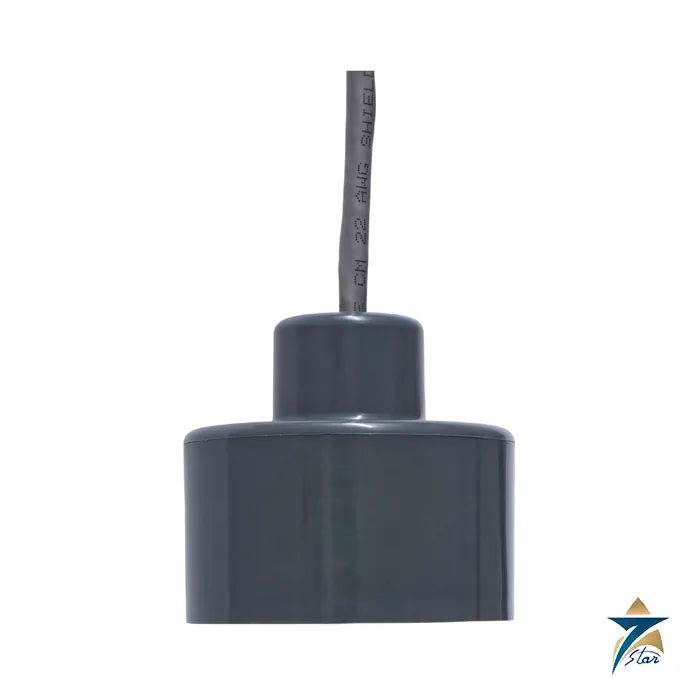
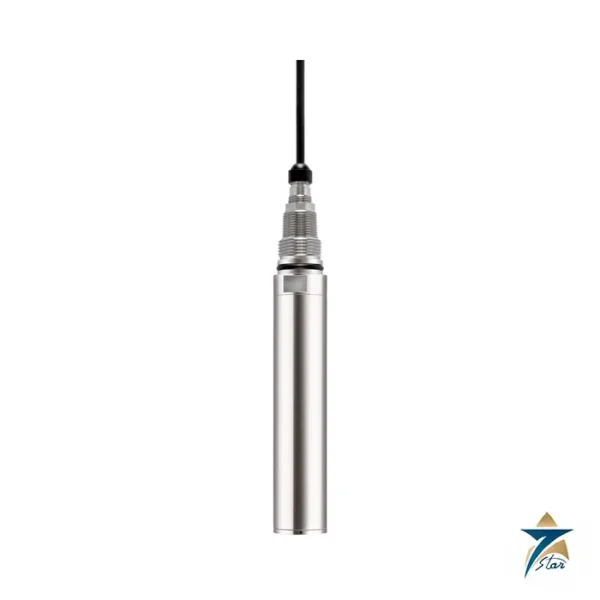
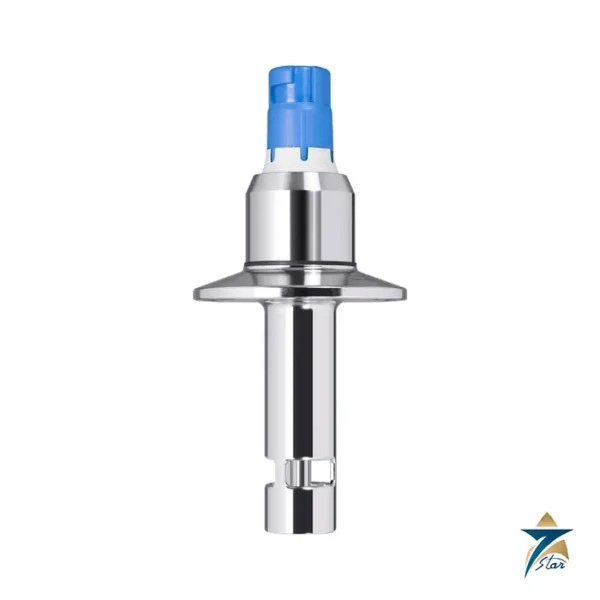
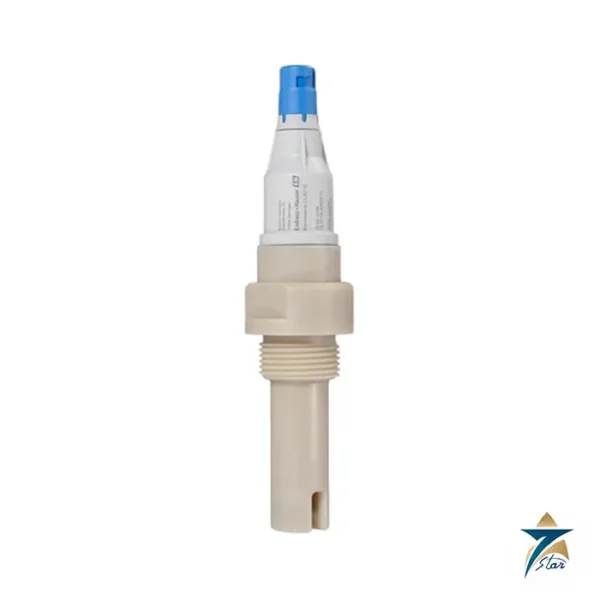
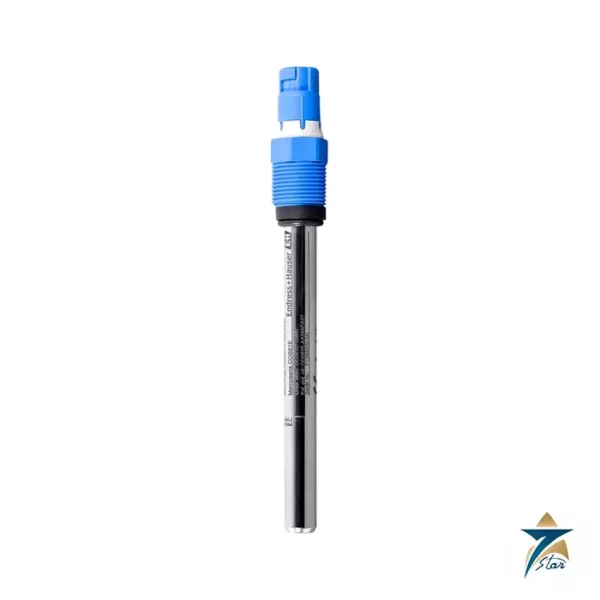
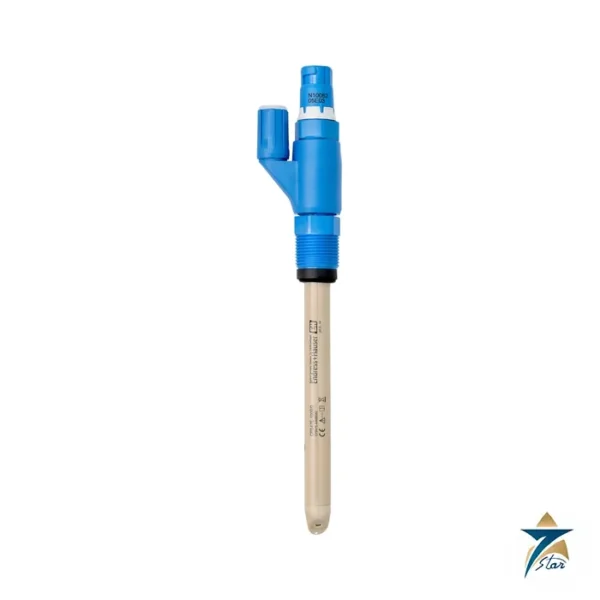
Endress+Hauser CUS71D Turbimax Ultrasonic Interface Sensor

Description

Endress+Hauser CUS71D Turbimax: locating the sludge blanket

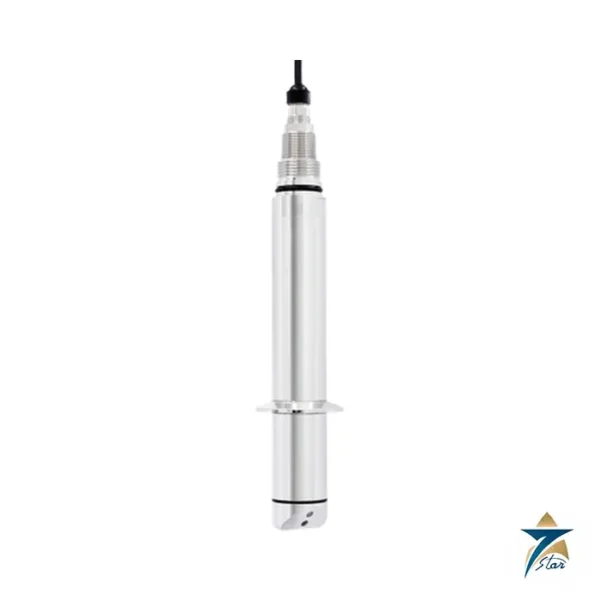
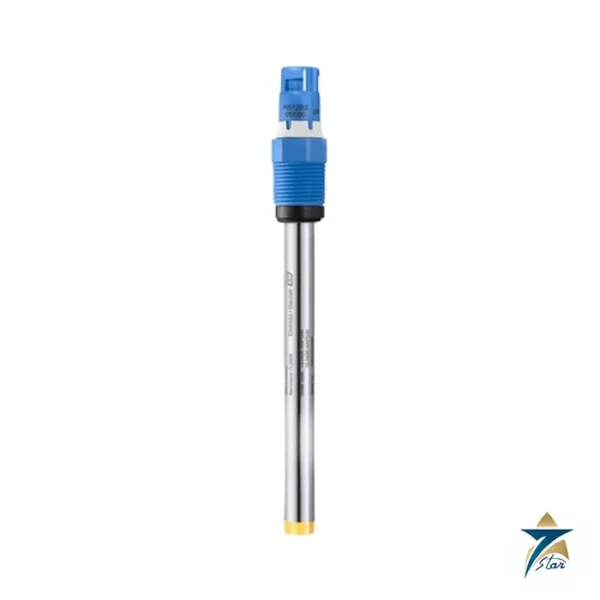
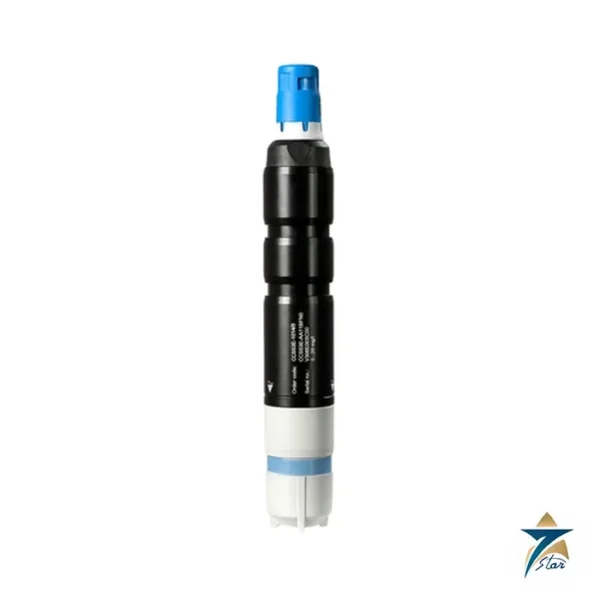
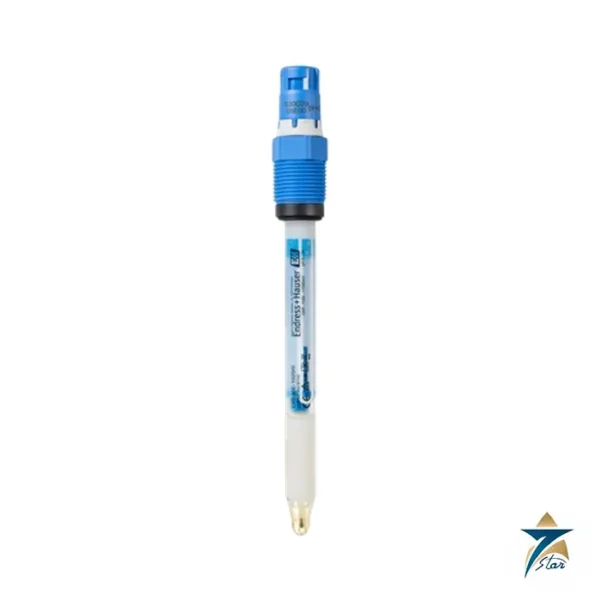
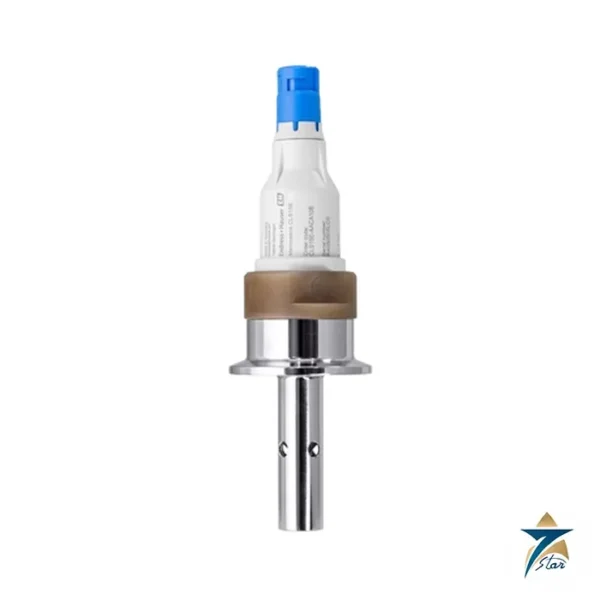
Endress+Hauser CUS71D is an ultrasonic sensor made for one job: finding the interface between clarified water and sludge in a basin. It sends a 6 degree cone of ultrasound downward, reads the reflection from the sludge layer and reports interface level or range from the sensor between 0.3 and 10 m. Real-time interface data lets operators open and close valves and drive actuators quickly, and the datasheet adds that predefined calculation models make commissioning simple.

Calibration and sensor data are stored in the sensor, and it is configured at the factory. Seven Star LLC is an independent supplier serving Oman and the GCC and is not affiliated with the manufacturer.

CUS71D technical specifications

Parameter Value
Measured variable Interface level / range
Measuring range 0.3 to 10 m (1 to 32 ft)
Resolution plus or minus 0.3 % of end of range up to 3 m; plus or minus 0.15 % from 3 m
Maximum measured error plus or minus 2 % of end of measuring range
Ultrasonic cone angle 6 degrees
Measuring interval 12 s sensor to transmitter; sensor-internal interval configurable
Process temperature 1 to 50 C (34 to 122 F)
Process pressure, standard 0 to 6 bar (87 psi)
Process pressure, with wiper 0 to 0.3 bar (4.4 psi)
Ingress protection IP 68 (1 m, 60 days, 1 mol/l KCl)
Weight 1.02 kg standard; 1.25 kg with wiper
Materials Sensor ABS and epoxy resin; wiper EPDM; housing polyamide
Process connections G1 and NPT 3/4 inch
Maximum cable length 100 m including extension

How CUS71D differs from other Memosens sensors on this site

CUS71D is not a chemistry sensor. It has no electrolyte, membrane or reference; the thing it measures is distance. It is also the only item in this lot that is rated for a pressure as low as 0.3 bar with its wiper, since it hangs in open basins. In the same Liquiline CM44x ecosystem as CAS51D and COS61D, it adds level-type information: where those sensors tell you what is dissolved, CUS71D tells you where the sludge is.

Choose the wiper version for sludge thickeners and secondary clarifiers where film builds up on the transducer; the standard version is for cleaner basins.

Applications for CUS71D in Oman and the GCC

Sewage treatment plants across the Gulf use primary clarifiers, sludge thickeners and secondary clarifiers; CUS71D tracks the sludge blanket so return and waste sludge pumps run only when needed. Water treatment plants use it in sedimentation tanks after flocculant dosing and in contact sludge processes to read sludge height. It also suits static separation processes with or without slow stirring, but not where air is introduced.

Selection and mounting notes

Find a position where there are no conduits or basin-wall protrusions in the beam, no air bubbles, no turbulence and no foam, such as at an inlet. Keep at least 50 cm from the rim and mount straight and parallel to the wall. Use a dip pipe where needed. Mounting hardware is offered to suit different clarifier designs.

How the CUS71D echo measurement works

The transducer emits ultrasonic pulses in a conical beam with an opening angle of 6 degrees. Where the clear zone ends and the sludge begins, a density step reflects part of the energy back, and the sensor converts the travel time into a distance. The datasheet gives the measuring range as 0.3 to 10 m and describes resolution as plus or minus 0.3 percent of the end of the measuring range up to 3 m and plus or minus 0.15 percent from 3 m, with a maximum error of plus or minus 2 percent of end of range. Reference conditions are 20 C and 1013 hPa.

The sensor sends a value to the transmitter every 12 seconds, while its own internal measuring interval is configurable. A basin geometry with a sensor offset, the basin depth and a fixed reference point such as the water surface, rim or walkway are the three numbers that turn the range into an interface level, and the predefined calculation models in the transmitter handle that conversion.

Quick answers about CUS71D

Can it sit in foam or air bubbles? No: avoid zones with air bubbles, turbulence, high concentrations of turbid material and suspended matter, or foam, for example at an inlet. How many sensors per transmitter? One on CM442 and up to four on CM444 or CM448. How is the cable shield handled? Use shielded cables only, terminated, with the grounding clip. What is the wiper made of? EPDM. How heavy is it? 1.02 kg standard and 1.25 kg with wiper, in ABS, epoxy resin and polyamide, with G1 or NPT 3/4 inch thread for mounting.

Installing and maintaining CUS71D

Connect the fixed cable to the Liquiline CM44x terminals and ground the shield with the clip and 2 Nm screw. Extend with CYK11 and a junction box only if required. Wiper versions should have their EPDM blade inspected at service intervals; calibration is not needed by the user. When you send an RFQ for CUS71D, say whether you need the standard or the wiper version, because the wiper version has a different pressure rating and weight, and give the basin depth and cable length so the mounting hardware can be matched. If you are extending an existing Liquiline CM44x installation, tell us which model you have, as that decides how many interface sensors can be connected.

Documents and quotation

The Technical Information datasheet for CUS71D is attached to this page as a PDF. To request a quotation, send your RFQ with the exact CUS71D order code and the quantity you need, and we will reply with availability and lead time.

Datasheets & Documents
  • PDF Datasheet Endress+Hauser CUS71D Turbimax Ultrasonic Interface Sensor Datasheet Download
Reviews (0)

Reviews

There are no reviews yet.

How would you rate this product?

It takes about 10 seconds — just tap a star. Your email is never published.

About brand

Endress+Hauser makes process measurement instruments for flow, level, pressure, temperature and liquid analysis. Georg H. Endress and Ludwig Hauser started the business in Lörrach, Germany, on 1 February 1953, first selling level meters, and the Endress+Hauser name has been used since 1957. The group is headquartered in Reinach, Switzerland, and has been wholly owned by the Endress family since 1975.

Seven Star LLC is an independent supplier listing Endress+Hauser flowmeters, level and pressure transmitters, temperature assemblies and liquid analysis products for buyers in Oman and the GCC. Instruments are matched from the full order code on the nameplate.

Endress+Hauser company profile

Origin Founded in Lörrach, Germany, on 1 February 1953 by the Swiss engineer Georg H. Endress and Ludwig Hauser
Headquarters Endress+Hauser AG, Reinach (Basel-Landschaft), Switzerland
Ownership Family owned; the Endress family has been the sole shareholder since 1975, and a family charter commits the company to stay family owned
Size About 16,500 employees and sales of about EUR 3.7 billion (2023, as reported by the company)
Product families Proline flowmeters, Micropilot and Levelflex radar, Liquiphant switches, Cerabar and Deltabar pressure, iTEMP and iTHERM temperature, Liquiline and Memosens liquid analysis

Milestones

  • 1953: Georg H. Endress and Ludwig Hauser start the business in Lörrach on 1 February, first selling level meters.
  • 1957: The Endress+Hauser name comes into use.
  • 1975: The Endress family becomes sole shareholder.
  • 2023: About 16,500 employees and sales of about EUR 3.7 billion, as reported by the company.

Endress+Hauser product lines

Line Measuring principle Typical use
Promass F 300, Promass 80F, 83F/84F Coriolis mass flow Direct mass flow and density of liquids and gases, hydrocarbon transfer and chemical dosing
Promag P 300, P 500, H 300, W 400, W 10, 50P Electromagnetic flow Water, wastewater, slurries and other conductive liquids
Prowirl F 200, 72F Vortex flow Steam, gas and low-viscosity liquids
Prosonic Flow 92F, t-mass 65F Ultrasonic and thermal mass flow Water lines; compressed air and industrial gases
Micropilot FMR62, FMR67, FMR60, FMR10B, FMR20, FMR50, FMR52 Free-space radar level, 80 GHz and 26 GHz Tanks, process vessels, silos and open water channels
Levelflex FMP51, FMP50, FMP54, FMP55 Guided wave radar level Level and interface in vessels, separators and bypass chambers
Liquiphant FTL51, Prosonic S FMU90 Vibronic point level; ultrasonic level High and low level alarms, pump protection, open channel flow
Cerabar PMC71B, PMP51B, PMP71, Deltabar PMD78B, PMD75 Pressure and differential pressure Process pressure, hydrostatic level and DP flow
iTEMP TMT82, TMT162, iTHERM TM101, TR66, TR10 Temperature transmitters and thermometers RTD and thermocouple points with thermowells
Liquiline CM444, CM442, Memosens CPS11E, Stamolys reagents Liquid analysis pH, ORP, conductivity, dissolved oxygen and nutrient analysis in water treatment and process

Where Endress+Hauser instruments are used

In Oman and the GCC, Endress+Hauser instruments are common in oil and gas production and processing, refineries and petrochemicals, desalination and water networks, wastewater treatment, power plants and food and beverage plants. Coriolis meters measure hydrocarbon and chemical flows, electromagnetic meters cover water and wastewater, radar transmitters handle tank and silo level, and Liquiline analysers monitor water quality. Proline 300 and 500 flowmeters include Heartbeat Technology for in-situ verification, which reduces the need to remove a meter for checks.

Ordering Endress+Hauser instruments: what we need

The order code on the nameplate (for example PMP71-1QA1S11RDADU) defines every option: measuring range, process connection, materials, output, approvals and display. Send it with the serial number; Endress+Hauser can retrieve the original configuration from the serial number. For a new instrument add the medium, operating and design pressure and temperature, range, line size or tank geometry, process connection, wetted materials, output or protocol (4-20 mA HART, PROFIBUS, FOUNDATION Fieldbus, Modbus) and the hazardous-area approval required. Older models such as Promass 80/83 or Micropilot M are replaced by current Proline or 80 GHz Micropilot devices.

Facts checked against Endress+Hauser company history and product information, October 2026.

FAQ

Questions about the Endress+Hauser CUS71D Turbimax Ultrasonic Interface

Answers from our engineering team on installation, compatibility and integration.

01What does Endress+Hauser CUS71D measure?
The interface level between clear liquid and sludge, or the range to it, in water and wastewater clarifiers, using an ultrasonic cone with a 6 degree opening angle.
02What is the measuring range of CUS71D?
0.3 to 10 m, with a maximum measured error of plus or minus 2 percent of end of measuring range.
03Why is there a wiper version of CUS71D?
An automatic wiper cleans the transducer face for long-term maintenance-free operation; the wiper version weighs 1.25 kg against 1.02 kg and is rated 0 to 0.3 bar.
04Which transmitters connect to CUS71D?
Liquiline CM442 takes one sensor; Liquiline CM444 and CM448 take up to four.
05What distance from the basin wall does CUS71D need?
At least 50 cm to the basin rim, because the sensor emits ultrasonic waves in a cone, and no conduits or protrusions in the measuring range.