- Automation & ControlView all 2,895 products
- Automation Accessories
- AC Drives
- PLC & I/O Cards
- Industrial Communications
- Vibration Monitoring
- Controllers & Data Acquisition
- Isolator & Barrier
- Safety Switches & Guard Locking
- Motor Soft Starters
- CCTV & Security
- Encoders
- Pneumatic Cylinders
- HMI Displays
- Servo Drives
- Industrial Computers
- Machine Vision
- Automation Software
- Robotics
Brand: Endress+Hauser (E & H)
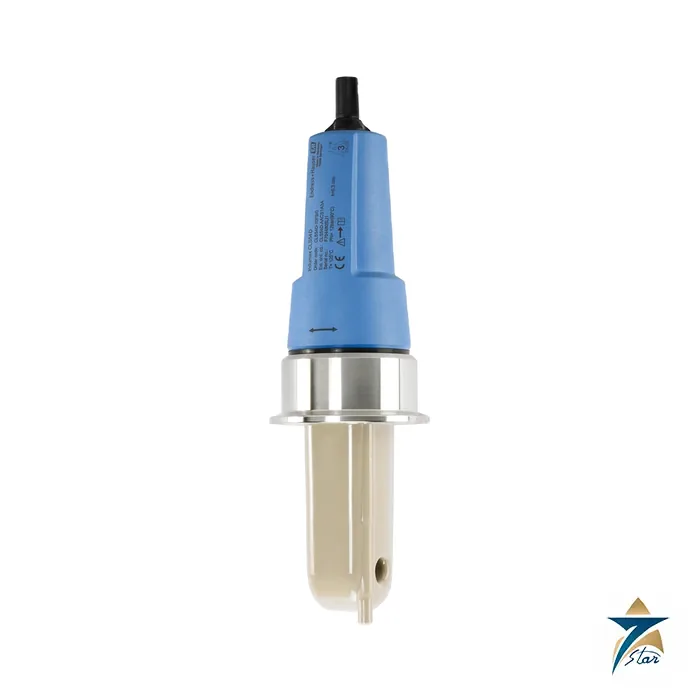
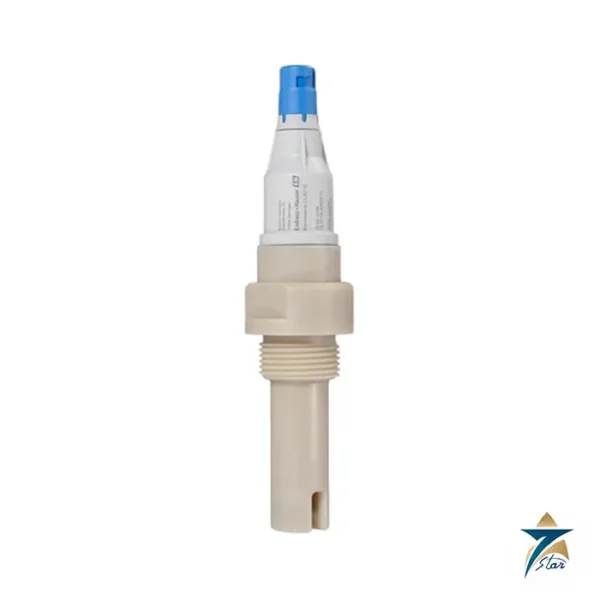
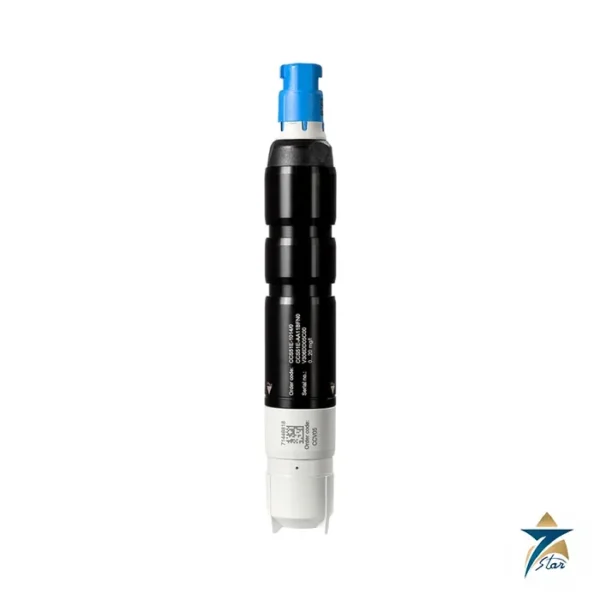
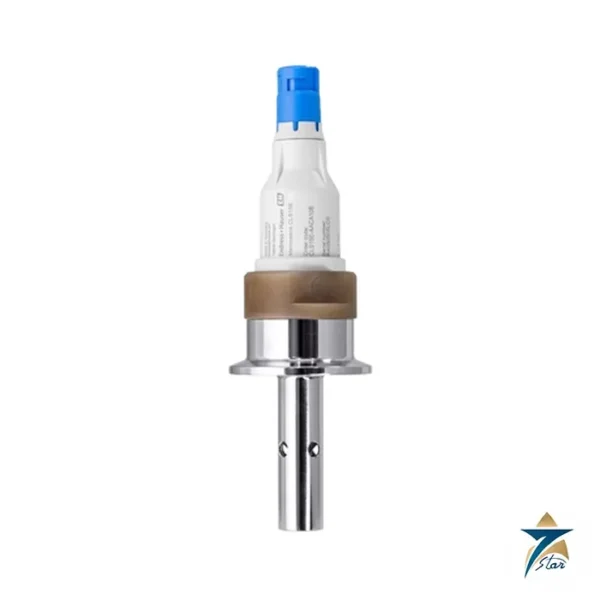
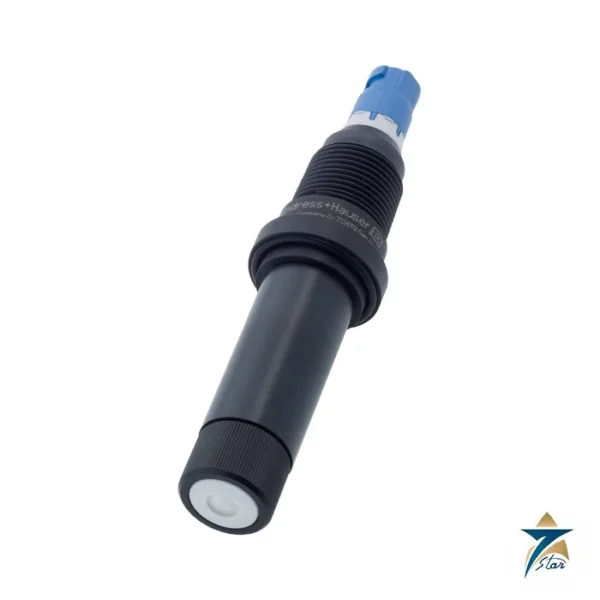
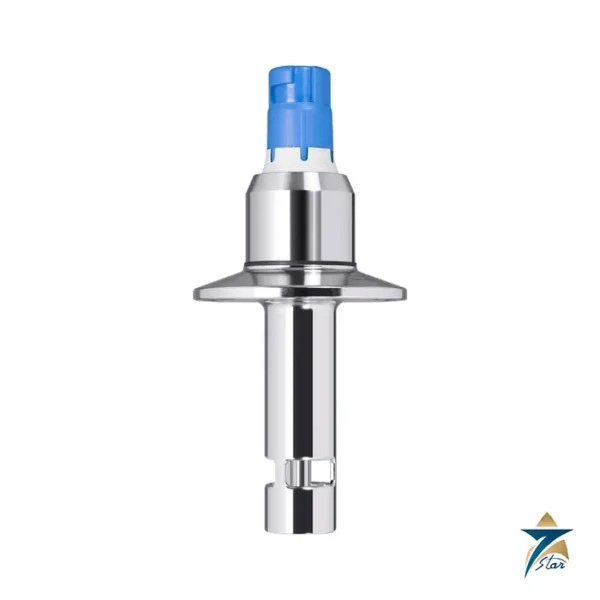
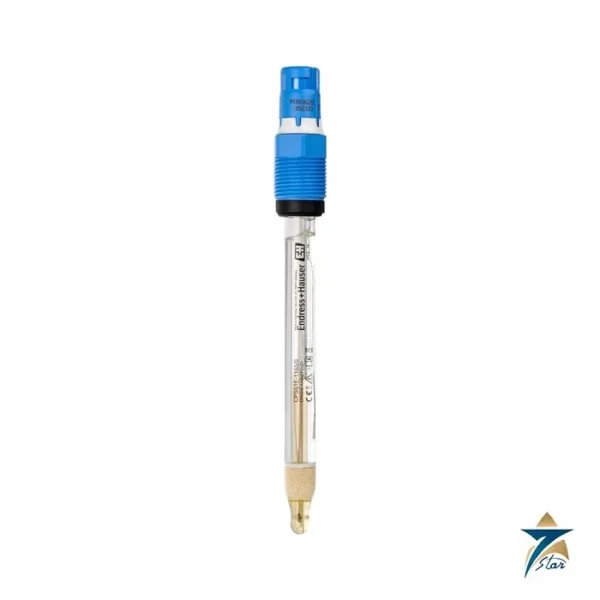
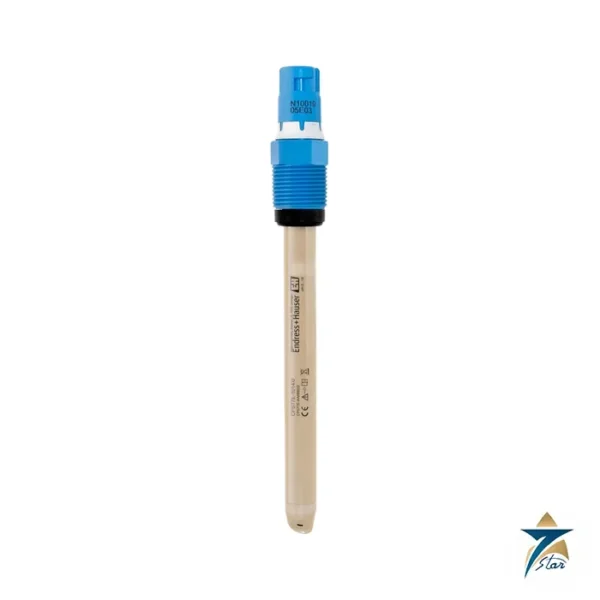
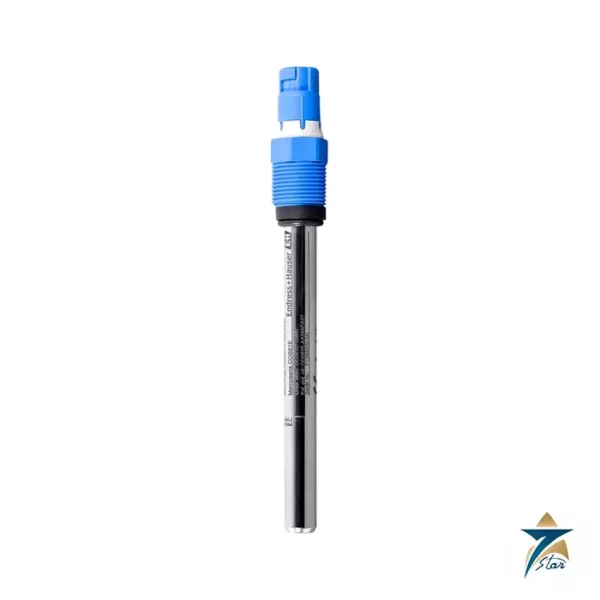
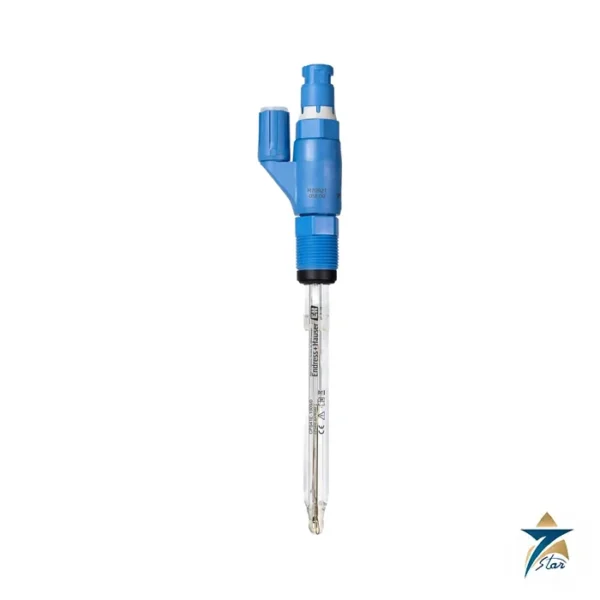
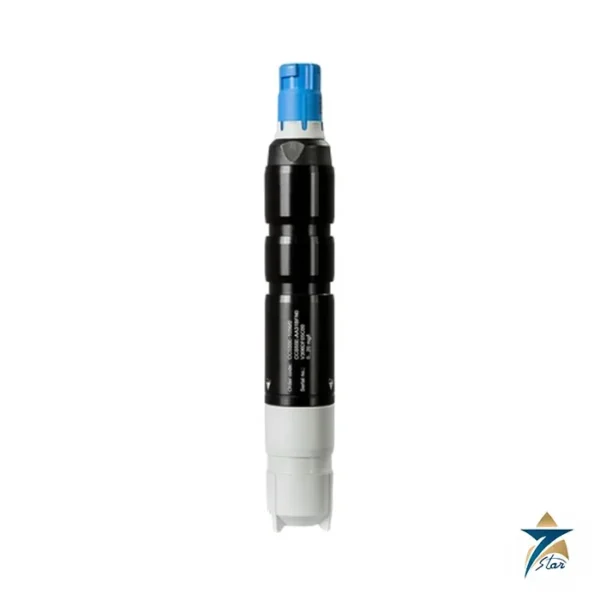
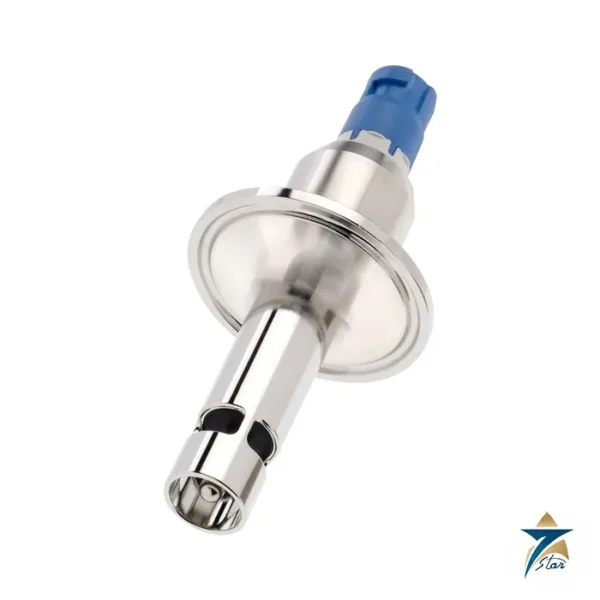
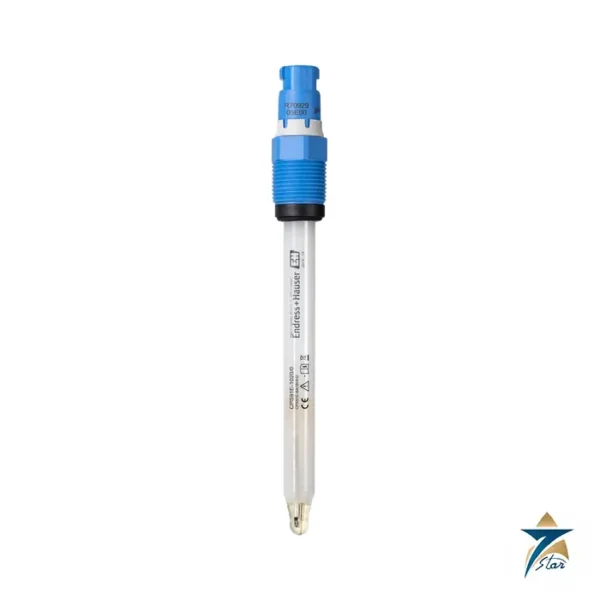
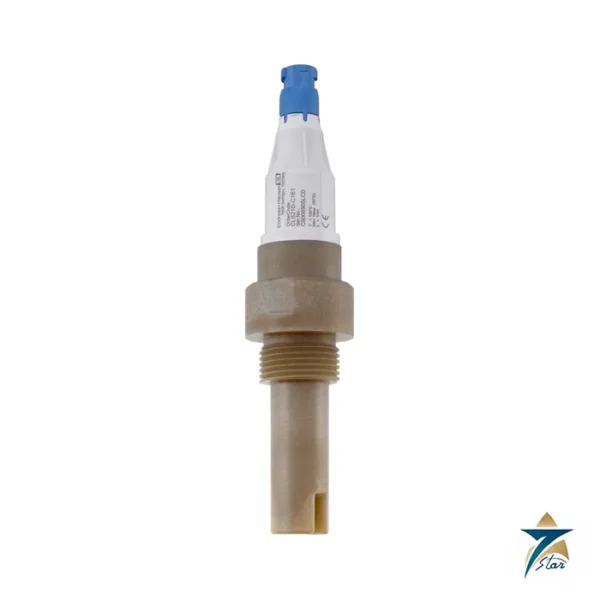
Endress+Hauser CLS54D Indumax Hygienic Conductivity Sensor
Description
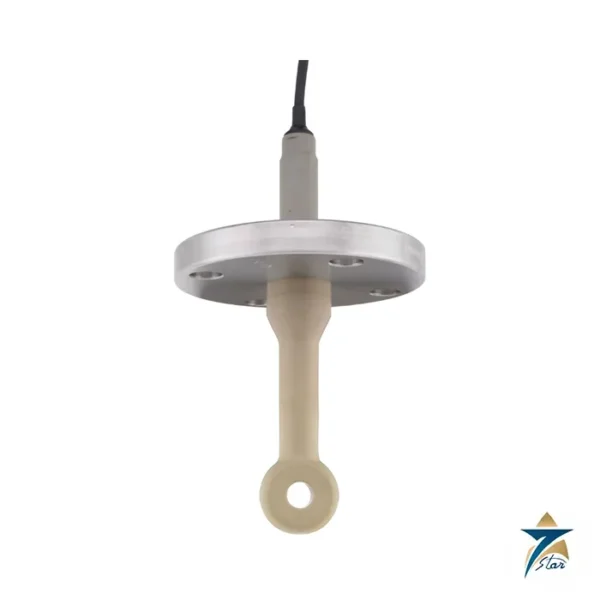
Endress+Hauser CLS54D Indumax inductive sensor built for hygienic lines
Endress+Hauser CLS54D is an inductive, electrode-free conductivity sensor. Two coils around a flow opening induce a current in the liquid loop and read it back, so no metal touches the medium and polarisation or electrode fouling cannot occur. The datasheet designs it for food, beverage, pharmaceutical and biotech duty, using virgin food-safe PEEK in a joint-free, crevice-free body so there is no risk of recontamination.
CLS54D connects to Liquiline CM42, CM44x and CM14 transmitters. It is the digital Memosens version, so calibration data and load history stay in the sensor, and it ships with a fixed cable, optionally ending in an M12 plug. Seven Star LLC is an independent supplier serving Oman and the GCC and is not affiliated with the manufacturer.
CLS54D technical specifications
| Parameter | Value |
|---|---|
| Recommended conductivity range | 100 microsiemens per cm to 2000 mS/cm, uncompensated |
| Cell constant | k = 6.3 per cm |
| Temperature element | Pt1000 class A (IEC 60751) |
| Conductivity response | t95 of 2 s or less |
| Temperature response | t90 of 26 s or less |
| Measurement error below 100 C | plus or minus (10 microsiemens per cm + 0.5 % of reading) |
| Measurement error above 100 C | plus or minus (25 microsiemens per cm + 0.5 % of reading) |
| Repeatability | 0.2 % of reading + 3 microsiemens per cm |
| Process temperature | minus 10 to 125 C |
| Sterilization | 150 C at 6 bar absolute, 60 min maximum |
| Process pressure | 13 bar abs up to 90 C; 9 bar abs at 125 C |
| Wetted material | Virgin PEEK, surface Ra 0.8 micrometre or finer |
| Housing | PPS-GF40 |
| Seals / cable | FKM / TPE |
| Weight | 0.3 to 0.5 kg plus cable |
| Ingress protection | IP 68 / NEMA 6P, 1 m, 25 C, 168 h |
| Ambient / storage | minus 20 to 60 C / minus 25 to 80 C |
How CLS54D differs from other Indumax and Condumax sensors
Compared with CLS50D, the chemical-duty Indumax in PFA or PEEK with a 1.98 per cm cell constant, CLS54D has a larger constant of 6.3 per cm and a hygienic coupling range instead of flanges and threads. Its ceiling is 125 C process against the 180 C of CLS50D, and its lower recommended limit of 100 microsiemens per cm contrasts with 2 microsiemens per cm for CLS50D. Compared with the conductive Condumax CLS16D, it is not meant for ultrapure water: CLS16D reads 0.04 to 500 microsiemens per cm.
Where CLS54D is used in Oman and the GCC
Dairies, juice and bottled-water plants, breweries and pharmaceutical sites across the Gulf all run CIP loops. The sensor sits in the CIP return line to detect when caustic or acid arrives and when rinse water is clean, and it separates product from water at changeovers. It also controls cleaning-agent make-up concentration and can watch for leaks.
Selecting a CLS54D process connection and orientation
Choose the coupling that matches the plant: AA5 aseptic, MV5 DIN 11851, SMS, CS1 clamp, BC5 BioControl or VA4 Varivent. The datasheet notes that DIN 11851 is not generally considered hygienic, and that it does not meet EHEDG requirements unless used with a suitable adapter. Mount at least 1 m downstream of a bend and let the medium flow along the sensor hole; the symmetric channel works in either direction.
Installing and commissioning CLS54D
The sensor must be completely immersed and free of air bubbles. In confined pipework the pipe wall disturbs the induced current, and the installation factor corrects that; it can be ignored (f equals 1.00) when the wall distance exceeds 15 mm from DN 65. Enter the factor in the transmitter if the distance is smaller.
Inductive measuring principle and why it suits CIP
In an inductive sensor, one toroidal coil generates an alternating field that drives a current loop through the liquid in the flow opening, and a second coil measures that current. The current is proportional to conductivity, with the cell constant of 6.3 per cm converting between the two. As the datasheet puts it, the symmetrical measuring channel works for flow in both directions. There are no electrodes to scale or polarise, which is why inductive sensors keep their accuracy in high-conductivity cleaning agents where conductive cells saturate.
The 2000 mS/cm upper limit comfortably covers hot caustic and nitric-acid CIP solutions, and the lower recommended limit of 100 microsiemens per cm covers rinse water that is not yet ultrapure. Temperature response of 26 seconds or less is slower than conductivity response of 2 seconds or less, so the transmitter compensates for the thermal lag during fast temperature transients.
Hygienic design details of CLS54D
The body is injection-molded virgin PEEK with surface roughness of 0.8 micrometre or better in contact with the medium, and the datasheet states that the design has no joints or crevices. Seals are FKM, the cable is TPE and the cable gland is PEEK. SMS couplings are stainless steel 1.4301 (AISI 304) or 1.4307 (AISI 304L), while sanitary couplings are 1.4404 (AISI 316L). Weight depends on version and runs from 0.3 to 0.5 kg plus cable, and both a long and a short body are available. Hygiene certificates are cited, and the MAWP is given according to ASME-BPVC Section VIII, Division 1 for CRN registration.
Maintenance of CLS54D
Because the wetted surface is smooth injection-molded PEEK, routine cleaning is rinsing or the plant CIP cycle. Sterilization is permitted for up to 60 minutes. Extend the cable with CYK11 via a junction box if needed.
Documents and quotation
The Technical Information datasheet for CLS54D is attached to this page as a PDF. To request a quotation, send your RFQ with the exact CLS54D order code and the quantity you need, and we will reply with availability and lead time.
Typical Questions From Maintenance Teams
Maintenance engineers replacing a Endress+Hauser CLS54D usually ask whether the new unit is a direct fit, whether settings can be copied from the old one, and whether any accessories must be ordered separately. The answer depends on the exact order code and the generation of the installed liquid analysis sensors, so the nameplate details are the best starting point. Send them with your request and we will check the match, point out any differences in connections or options, and list the parts needed so that the job can be finished in one visit.
Other Models in the Conductivity Sensors Range
Seven Star LLC supplies models from the Conductivity Sensors range in Oman and the GCC. Compare the related models below and request a quote for the one that matches your application.
| Model | Category | |
|---|---|---|
| Endress+Hauser CLS50D Indumax Inductive Conductivity Sensor | Liquid Analysis Sensors | View details |
| Endress+Hauser CLS21D Condumax Conductivity Sensor, k 1.0 | Liquid Analysis Sensors | View details |
| Endress+Hauser CLS54D Indumax Hygienic Conductivity Sensor | Liquid Analysis Sensors | You are viewing this model |
| Endress+Hauser CLS16D Condumax Hygienic Conductivity Sensor | Liquid Analysis Sensors | View details |
Datasheets & Documents
- Datasheet Endress+Hauser CLS54D Indumax Hygienic Conductivity Sensor Datasheet Download
Reviews (0)
How would you rate this product? Cancel reply
About brand
Endress+Hauser makes process measurement instruments for flow, level, pressure, temperature and liquid analysis. Georg H. Endress and Ludwig Hauser started the business in Lörrach, Germany, on 1 February 1953, first selling level meters, and the Endress+Hauser name has been used since 1957. The group is headquartered in Reinach, Switzerland, and has been wholly owned by the Endress family since 1975.
Seven Star LLC is an independent supplier listing Endress+Hauser flowmeters, level and pressure transmitters, temperature assemblies and liquid analysis products for buyers in Oman and the GCC. Instruments are matched from the full order code on the nameplate.
Endress+Hauser company profile
| Origin | Founded in Lörrach, Germany, on 1 February 1953 by the Swiss engineer Georg H. Endress and Ludwig Hauser |
|---|---|
| Headquarters | Endress+Hauser AG, Reinach (Basel-Landschaft), Switzerland |
| Ownership | Family owned; the Endress family has been the sole shareholder since 1975, and a family charter commits the company to stay family owned |
| Size | About 16,500 employees and sales of about EUR 3.7 billion (2023, as reported by the company) |
| Product families | Proline flowmeters, Micropilot and Levelflex radar, Liquiphant switches, Cerabar and Deltabar pressure, iTEMP and iTHERM temperature, Liquiline and Memosens liquid analysis |
Milestones
- 1953: Georg H. Endress and Ludwig Hauser start the business in Lörrach on 1 February, first selling level meters.
- 1957: The Endress+Hauser name comes into use.
- 1975: The Endress family becomes sole shareholder.
- 2023: About 16,500 employees and sales of about EUR 3.7 billion, as reported by the company.
Endress+Hauser product lines
| Line | Measuring principle | Typical use |
|---|---|---|
| Promass F 300, Promass 80F, 83F/84F | Coriolis mass flow | Direct mass flow and density of liquids and gases, hydrocarbon transfer and chemical dosing |
| Promag P 300, P 500, H 300, W 400, W 10, 50P | Electromagnetic flow | Water, wastewater, slurries and other conductive liquids |
| Prowirl F 200, 72F | Vortex flow | Steam, gas and low-viscosity liquids |
| Prosonic Flow 92F, t-mass 65F | Ultrasonic and thermal mass flow | Water lines; compressed air and industrial gases |
| Micropilot FMR62, FMR67, FMR60, FMR10B, FMR20, FMR50, FMR52 | Free-space radar level, 80 GHz and 26 GHz | Tanks, process vessels, silos and open water channels |
| Levelflex FMP51, FMP50, FMP54, FMP55 | Guided wave radar level | Level and interface in vessels, separators and bypass chambers |
| Liquiphant FTL51, Prosonic S FMU90 | Vibronic point level; ultrasonic level | High and low level alarms, pump protection, open channel flow |
| Cerabar PMC71B, PMP51B, PMP71, Deltabar PMD78B, PMD75 | Pressure and differential pressure | Process pressure, hydrostatic level and DP flow |
| iTEMP TMT82, TMT162, iTHERM TM101, TR66, TR10 | Temperature transmitters and thermometers | RTD and thermocouple points with thermowells |
| Liquiline CM444, CM442, Memosens CPS11E, Stamolys reagents | Liquid analysis | pH, ORP, conductivity, dissolved oxygen and nutrient analysis in water treatment and process |
Where Endress+Hauser instruments are used
In Oman and the GCC, Endress+Hauser instruments are common in oil and gas production and processing, refineries and petrochemicals, desalination and water networks, wastewater treatment, power plants and food and beverage plants. Coriolis meters measure hydrocarbon and chemical flows, electromagnetic meters cover water and wastewater, radar transmitters handle tank and silo level, and Liquiline analysers monitor water quality. Proline 300 and 500 flowmeters include Heartbeat Technology for in-situ verification, which reduces the need to remove a meter for checks.
Ordering Endress+Hauser instruments: what we need
The order code on the nameplate (for example PMP71-1QA1S11RDADU) defines every option: measuring range, process connection, materials, output, approvals and display. Send it with the serial number; Endress+Hauser can retrieve the original configuration from the serial number. For a new instrument add the medium, operating and design pressure and temperature, range, line size or tank geometry, process connection, wetted materials, output or protocol (4-20 mA HART, PROFIBUS, FOUNDATION Fieldbus, Modbus) and the hazardous-area approval required. Older models such as Promass 80/83 or Micropilot M are replaced by current Proline or 80 GHz Micropilot devices.
Facts checked against Endress+Hauser company history and product information, October 2026.
Browse Endress+Hauser products by category: Flowmeters, Level Transmitter, Pressure Instrumentation, Temperature, Liquid Analysis Sensors, Liquid Analytical Systems.
FAQ
Questions about the Endress+Hauser CLS54D Indumax Hygienic Conductivity
Answers from our engineering team on installation, compatibility and integration.
01What is Endress+Hauser CLS54D used for?
Hygienic conductivity measurement in dairies, breweries, beverage and pharmaceutical plants: phase separation, CIP return monitoring, cleaning agent concentration and leakage detection.
02What range and cell constant does CLS54D have?
The recommended range is 100 microsiemens per cm to 2000 mS/cm uncompensated, with cell constant k equal to 6.3 per cm and a Pt1000 class A temperature element.
03How fast is CLS54D?
Conductivity response t95 is 2 seconds or less and temperature response t90 is 26 seconds or less, which supports sharp product-to-water phase changes.
04What process connections does CLS54D offer?
Aseptic DIN 11864-1 form A DN50, DIN 11851 DN50, SMS 2 inch, clamp ISO 2852 2 inch, NEUMO BioControl D50 and Varivent N DN 40 to 125.
05What temperature and pressure can CLS54D take?
Process minus 10 to 125 C with 13 bar absolute up to 90 C and 9 bar at 125 C, and sterilization at 150 C and 6 bar absolute for up to 60 minutes.


Reviews
There are no reviews yet.