- Automation & ControlView all 2,895 products
- Automation Accessories
- AC Drives
- PLC & I/O Cards
- Industrial Communications
- Vibration Monitoring
- Controllers & Data Acquisition
- Isolator & Barrier
- Safety Switches & Guard Locking
- Motor Soft Starters
- CCTV & Security
- Encoders
- Pneumatic Cylinders
- HMI Displays
- Servo Drives
- Industrial Computers
- Machine Vision
- Automation Software
- Robotics
Brand: Endress+Hauser (E & H)
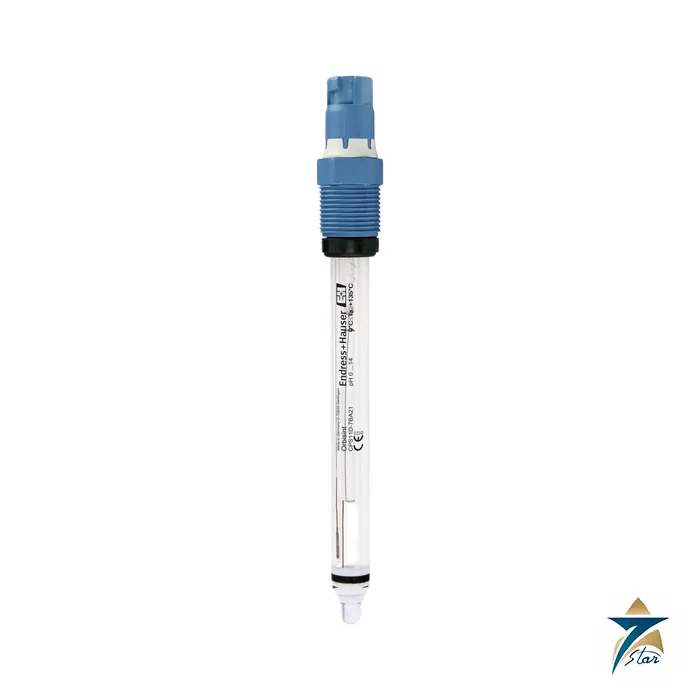
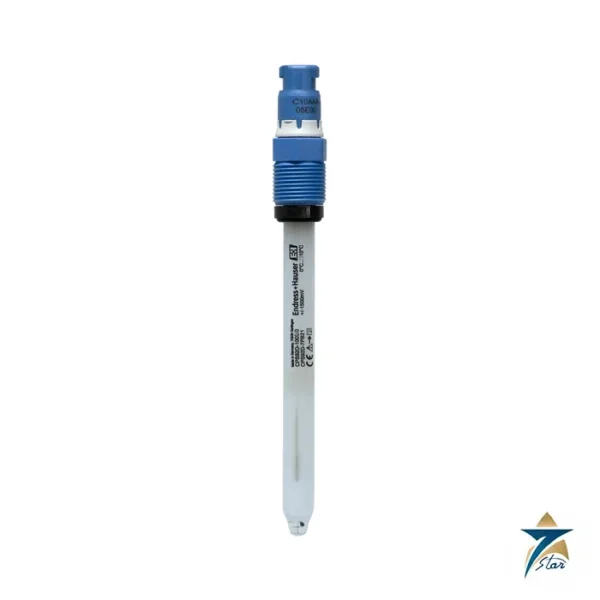
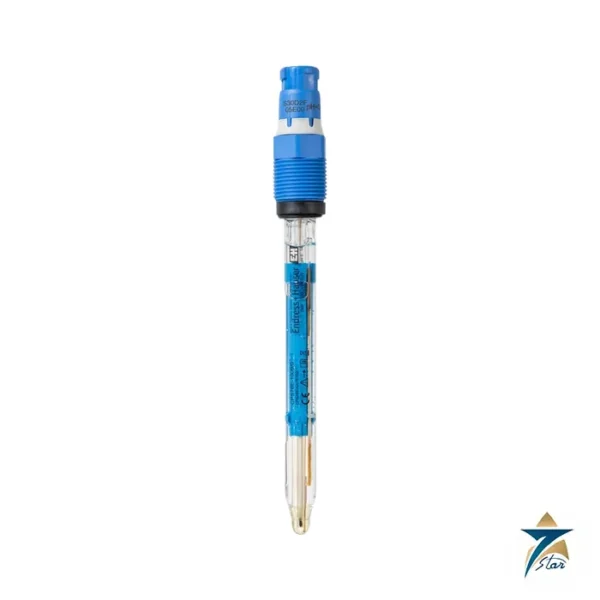
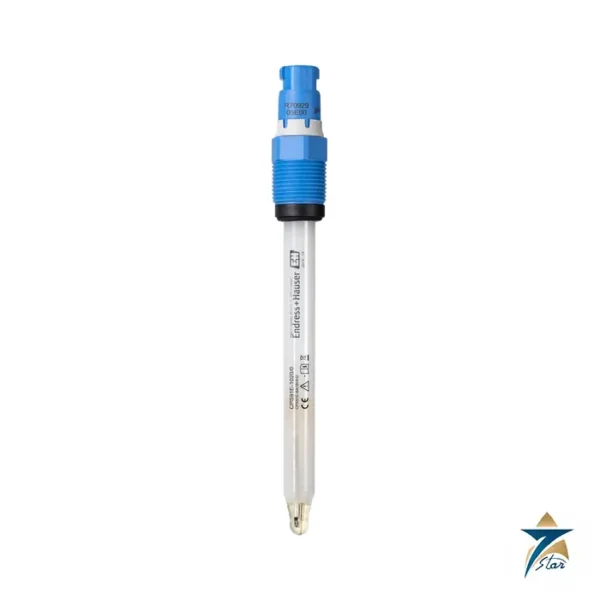
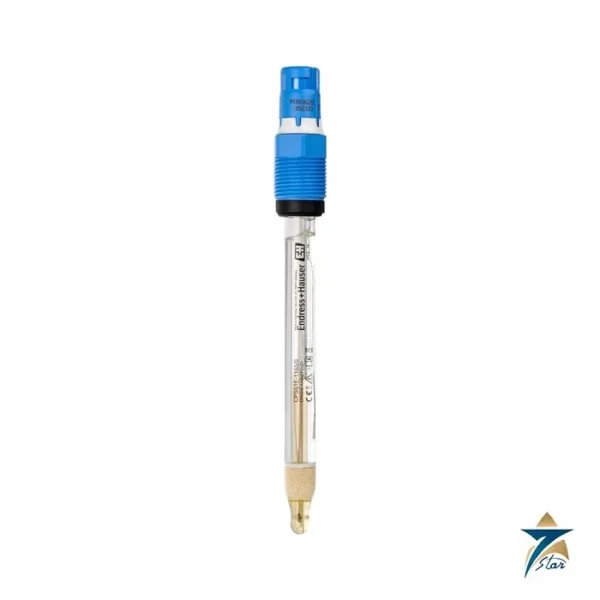
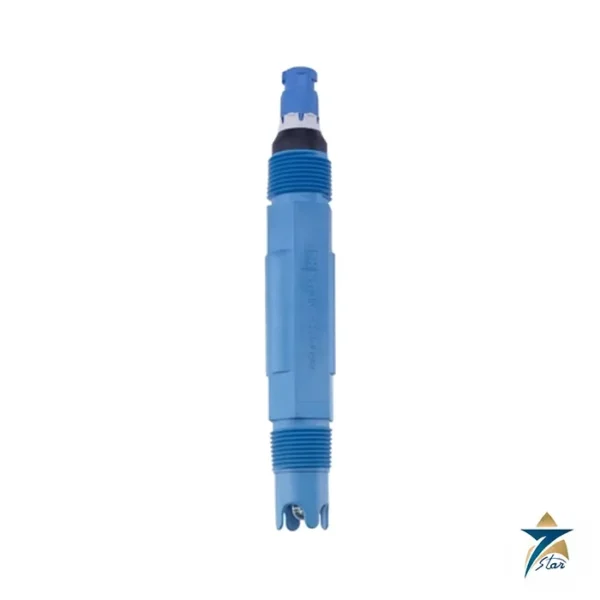
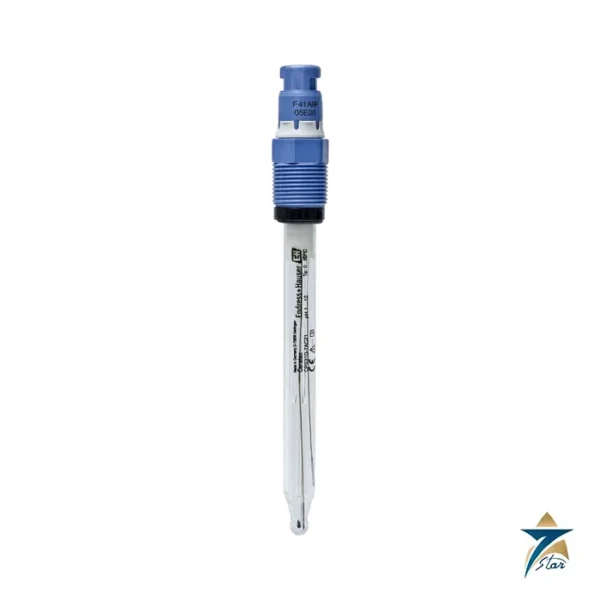
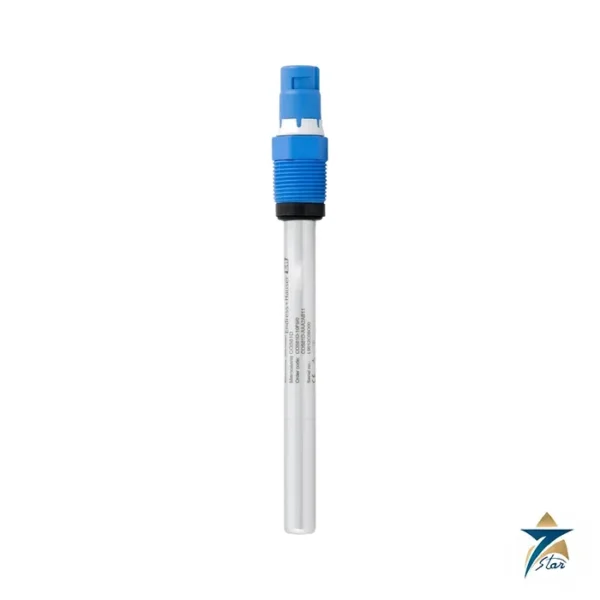
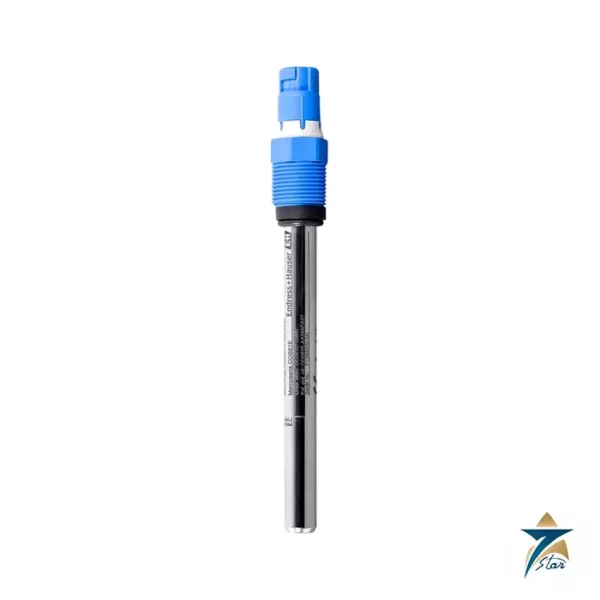
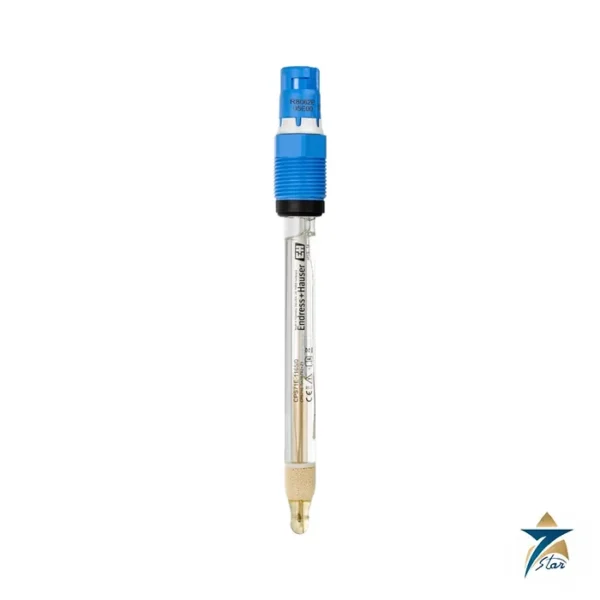
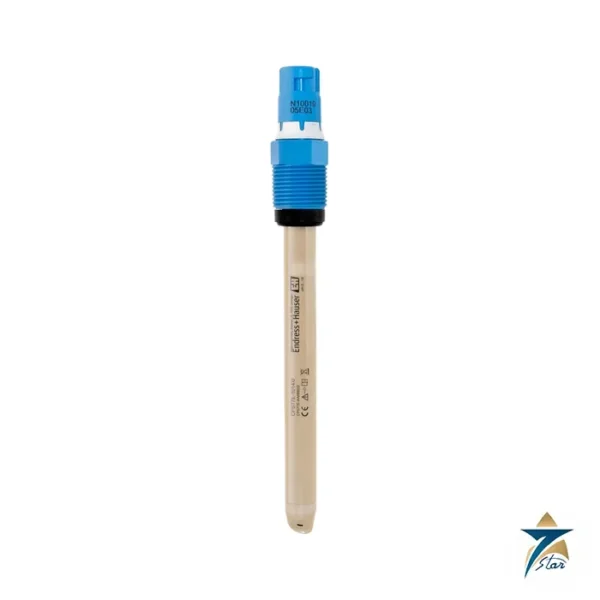
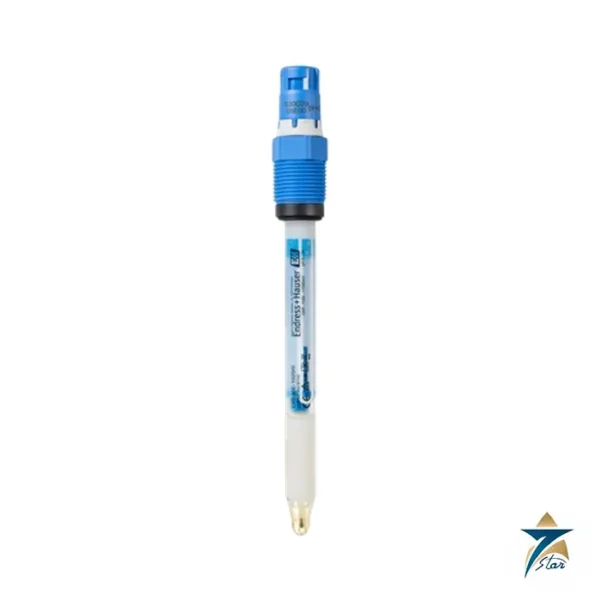
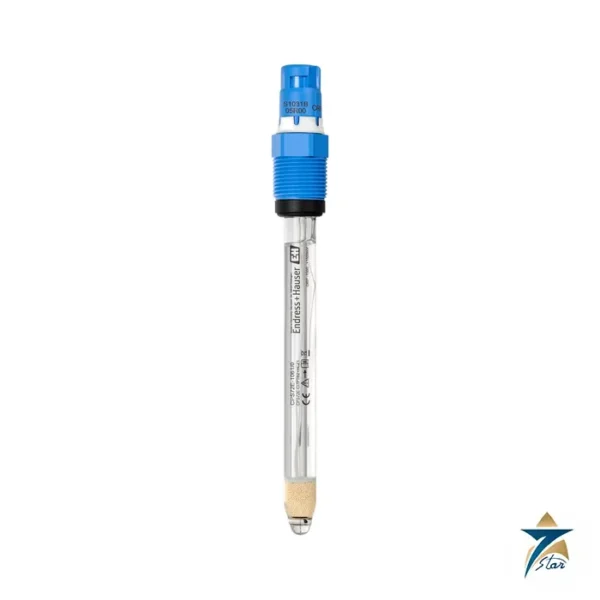
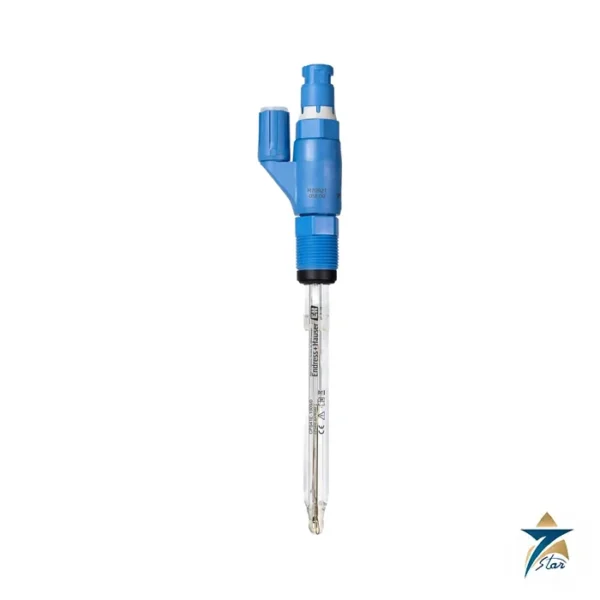
Endress+Hauser CPS11D Orbisint Analog pH Sensor, PTFE Junction
Description
Endress+Hauser CPS11D Orbisint: a rugged analog pH electrode
Endress+Hauser CPS11D is the analog Orbisint pH sensor with a large, dirt-repellent ring-shaped PTFE junction. The technical information describes it as an electrode for standard applications in process technology and environmental engineering, aimed at long-term monitoring and limit control where process conditions are stable. Because the signal is analog, the sensor is wired through a measuring cable and read by a transmitter, rather than through inductive Memosens coupling.
Buyers in Oman usually meet CPS11D as a replacement electrode on older Liquiline M or Mycom measuring points, or as a spare for plants that standardised on analog loops. Seven Star LLC is an independent supplier serving Oman and the GCC and is not affiliated with the manufacturer; the notes here are paraphrased from the manufacturer datasheet so that you can check the part against your tag list.
CPS11D technical specifications
| Parameter | Value |
|---|---|
| Measuring principle | Glass-membrane pH measurement with integrated Ag/AgCl reference; Nernst conversion in the transmitter |
| Measured variables | pH value and temperature |
| AA, AS, AT versions | pH 1 to 12, temperature -15 to 80 degrees C |
| BA, BT versions | pH 0 to 14, temperature 0 to 135 degrees C |
| FA version | pH 0 to 10, temperature 0 to 70 degrees C |
| Process pressure | AA, AS, AT, FA: 1 to 7 bar abs; BA, BT: 1 to 17 bar abs |
| Reference system | AA, BA, FA: Ag/AgCl, advanced gel 3M KCl, AgCl-free; AT, BT: with ion trap; AS: saturated KCl with salt rings |
| Minimum conductivity | 50 uS/cm (AS version 0.1 uS/cm with grounded stainless steel flow assembly) |
| Junction | Ring-shaped PTFE, sterilizable |
| Plug-in head | TOP68 (IP 68, autoclavable to 135 degrees C) or GSA (IP 67), thread Pg 13.5 |
| Temperature sensor | Pt100 or Pt1000 |
| Length options | 120 / 225 / 360 / 425 mm, diameter 12 mm |
| Weight | 0.1 kg |
| Storage | 0 to 50 degrees C |
| Ex approvals (TOP68) | ATEX II 1G Ex ia IIC T3/T4/T6 Ga; UKCA; FM Class I Div. 2 and CSA Class I Div. 1 with CM42, CM42B, CPM153 |
Where CPS11D is typically installed
The manufacturer names chemical plants with strong acids and bases, plastics, pulp and paper, flue gas cleaning in power plants, oil and gas, incinerators, boiler feedwater and cooling water, well and drinking water, and municipal or industrial treatment plants. In the GCC this maps well to desalination post-treatment, effluent neutralisation pits, cooling tower blowdown and caustic wash systems at refineries. In all of these the wide PTFE ring makes the sensor tolerant of oily or sticky films that would block a ceramic pin junction.
How CPS11D differs from other pH sensor variants
Inside the CPS11D family the suffix pair after the part number sets the behaviour. AA is the standard glass for pH 1 to 12 up to 80 degrees C and 7 bar. BA moves to a high-alkaline glass that reaches pH 14, 135 degrees C and 17 bar absolute, so it is the choice for hot caustic. BT adds a poison-resistant reference with an ion trap for media that would attack a plain silver lead. AS trades the PTFE ring plus gel for a salt-ring supply, allowing measurement down to 0.1 uS/cm, and FA uses glass resistant to hydrofluoric acid with only pH 0 to 10 and 70 degrees C.
Compared with the digital Memosens CPS11E, CPS11D has no electronics in the sensor head: calibration data stay in the transmitter, and a cable swap means recalibrating at the transmitter.
Installing CPS11D and what the datasheet warns about
- Do not mount the electrode upside down; keep at least 15 degrees from horizontal, otherwise an air bubble separates the glass from the reference lead.
- Before threading, check that the assembly thread, O-rings and sealing surface are clean and undamaged, then tighten by hand to 3 Nm in Endress+Hauser assemblies.
- Do not use below -15 degrees C; frost can destroy the glass.
- Pressurised sensors can rupture and throw glass splinters if heated quickly at reduced pressure, so wear goggles and gloves.
- Yellowish milky discolouration in the electrolyte does not affect measuring performance.
A continuous upward drift of the pH value and a downward trend of the zero point after adjustment are the datasheet signs that the salt rings of the AS version are used up.
Compatible electronics and assemblies for CPS11D
The system the manufacturer shows pairs CPS11D with a Liquiline CM42B or Liquisys M CPM2x3 transmitter, a CPK9 cable for the TOP68 head or a CPK1 for GSA heads, and an assembly. Listed assemblies include Dipfit CPA111 immersion, Flowfit CPA25 flow, Cleanfit CPA871 retractable and Unifit CPA842 for hygienic installation; CPA473, CPA474 and CPA875 retractable types and the flanged Dipfit CPA140 are also listed. The scope of delivery is the sensor as ordered, operating instructions, Ex safety instructions where relevant and a supplement for optional certificates.
Care and replacement of CPS11D
The datasheet stresses a clean, undamaged thread and O-ring on every re-installation and a hand-tight torque of 3 Nm. Keep spare electrodes in the 0 to 50 degrees C storage range, never in frost, and replace the sensor when the zero point drifts as described above.
Ordering Endress+Hauser CPS11D
CPS11D is configured by length, glass, reference, head and approval, so a complete order code is needed for an exact match. Please quote the code from the nameplate of the sensor being replaced so that the version, such as BA or AS, can be confirmed against the datasheet.
CPS11D questions answered briefly
What is the difference between Endress+Hauser CPS11D and the Memosens CPS11E? CPS11D is the analog Orbisint version that needs a CPK9 or CPK1 measuring cable and a transmitter such as Liquiline CM42B, while the E version is digital Memosens.
Which process glass should I pick for CPS11D in strongly alkaline media? The datasheet lists the BA and BT versions for very alkaline applications, with a pH range of 0 to 14 and a temperature range of 0 to 135 degrees C.
What pressure can the CPS11D take? The BA and BT versions are rated 1 to 17 bar absolute, while AA, AS, AT and FA are rated 1 to 7 bar absolute.
Can CPS11D measure hydrofluoric acid media? Yes, the FA version carries a glass intended for media containing hydrofluoric acid, limited to pH 0 to 10 and 0 to 70 degrees C.
How must CPS11D be oriented when installed? It must not be installed upside down and the angle from horizontal must be at least 15 degrees so the electrolyte keeps contact with the membrane glass.
Documents and quotation
The official datasheet for CPS11D is attached to this page for checking ranges and ratings. To obtain a quotation, send an RFQ with the part number CPS11D, the full order code or nameplate photo, and the quantity required, and our team will respond with availability and lead time.
Datasheets & Documents
- Datasheet Endress+Hauser CPS11D Orbisint Analog pH Sensor, PTFE Junction Datasheet Download
Reviews (0)
How would you rate this product? Cancel reply
About brand
Endress+Hauser makes process measurement instruments for flow, level, pressure, temperature and liquid analysis. Georg H. Endress and Ludwig Hauser started the business in Lörrach, Germany, on 1 February 1953, first selling level meters, and the Endress+Hauser name has been used since 1957. The group is headquartered in Reinach, Switzerland, and has been wholly owned by the Endress family since 1975.
Seven Star LLC is an independent supplier listing Endress+Hauser flowmeters, level and pressure transmitters, temperature assemblies and liquid analysis products for buyers in Oman and the GCC. Instruments are matched from the full order code on the nameplate.
Endress+Hauser company profile
| Origin | Founded in Lörrach, Germany, on 1 February 1953 by the Swiss engineer Georg H. Endress and Ludwig Hauser |
|---|---|
| Headquarters | Endress+Hauser AG, Reinach (Basel-Landschaft), Switzerland |
| Ownership | Family owned; the Endress family has been the sole shareholder since 1975, and a family charter commits the company to stay family owned |
| Size | About 16,500 employees and sales of about EUR 3.7 billion (2023, as reported by the company) |
| Product families | Proline flowmeters, Micropilot and Levelflex radar, Liquiphant switches, Cerabar and Deltabar pressure, iTEMP and iTHERM temperature, Liquiline and Memosens liquid analysis |
Milestones
- 1953: Georg H. Endress and Ludwig Hauser start the business in Lörrach on 1 February, first selling level meters.
- 1957: The Endress+Hauser name comes into use.
- 1975: The Endress family becomes sole shareholder.
- 2023: About 16,500 employees and sales of about EUR 3.7 billion, as reported by the company.
Endress+Hauser product lines
| Line | Measuring principle | Typical use |
|---|---|---|
| Promass F 300, Promass 80F, 83F/84F | Coriolis mass flow | Direct mass flow and density of liquids and gases, hydrocarbon transfer and chemical dosing |
| Promag P 300, P 500, H 300, W 400, W 10, 50P | Electromagnetic flow | Water, wastewater, slurries and other conductive liquids |
| Prowirl F 200, 72F | Vortex flow | Steam, gas and low-viscosity liquids |
| Prosonic Flow 92F, t-mass 65F | Ultrasonic and thermal mass flow | Water lines; compressed air and industrial gases |
| Micropilot FMR62, FMR67, FMR60, FMR10B, FMR20, FMR50, FMR52 | Free-space radar level, 80 GHz and 26 GHz | Tanks, process vessels, silos and open water channels |
| Levelflex FMP51, FMP50, FMP54, FMP55 | Guided wave radar level | Level and interface in vessels, separators and bypass chambers |
| Liquiphant FTL51, Prosonic S FMU90 | Vibronic point level; ultrasonic level | High and low level alarms, pump protection, open channel flow |
| Cerabar PMC71B, PMP51B, PMP71, Deltabar PMD78B, PMD75 | Pressure and differential pressure | Process pressure, hydrostatic level and DP flow |
| iTEMP TMT82, TMT162, iTHERM TM101, TR66, TR10 | Temperature transmitters and thermometers | RTD and thermocouple points with thermowells |
| Liquiline CM444, CM442, Memosens CPS11E, Stamolys reagents | Liquid analysis | pH, ORP, conductivity, dissolved oxygen and nutrient analysis in water treatment and process |
Where Endress+Hauser instruments are used
In Oman and the GCC, Endress+Hauser instruments are common in oil and gas production and processing, refineries and petrochemicals, desalination and water networks, wastewater treatment, power plants and food and beverage plants. Coriolis meters measure hydrocarbon and chemical flows, electromagnetic meters cover water and wastewater, radar transmitters handle tank and silo level, and Liquiline analysers monitor water quality. Proline 300 and 500 flowmeters include Heartbeat Technology for in-situ verification, which reduces the need to remove a meter for checks.
Ordering Endress+Hauser instruments: what we need
The order code on the nameplate (for example PMP71-1QA1S11RDADU) defines every option: measuring range, process connection, materials, output, approvals and display. Send it with the serial number; Endress+Hauser can retrieve the original configuration from the serial number. For a new instrument add the medium, operating and design pressure and temperature, range, line size or tank geometry, process connection, wetted materials, output or protocol (4-20 mA HART, PROFIBUS, FOUNDATION Fieldbus, Modbus) and the hazardous-area approval required. Older models such as Promass 80/83 or Micropilot M are replaced by current Proline or 80 GHz Micropilot devices.
Facts checked against Endress+Hauser company history and product information, October 2026.
Browse Endress+Hauser products by category: Flowmeters, Level Transmitter, Pressure Instrumentation, Temperature, Liquid Analysis Sensors, Liquid Analytical Systems.
FAQ
Questions about the Endress+Hauser CPS11D Orbisint Analog pH Sensor,
Answers from our engineering team on installation, compatibility and integration.
01What is the difference between Endress+Hauser CPS11D and the Memosens CPS11E?
CPS11D is the analog Orbisint version that needs a CPK9 or CPK1 measuring cable and a transmitter such as Liquiline CM42B, while the E version is digital Memosens.
02Which process glass should I pick for CPS11D in strongly alkaline media?
The datasheet lists the BA and BT versions for very alkaline applications, with a pH range of 0 to 14 and a temperature range of 0 to 135 degrees C.
03What pressure can the CPS11D take?
The BA and BT versions are rated 1 to 17 bar absolute, while AA, AS, AT and FA are rated 1 to 7 bar absolute.
04Can CPS11D measure hydrofluoric acid media?
Yes, the FA version carries a glass intended for media containing hydrofluoric acid, limited to pH 0 to 10 and 0 to 70 degrees C.
05How must CPS11D be oriented when installed?
It must not be installed upside down and the angle from horizontal must be at least 15 degrees so the electrolyte keeps contact with the membrane glass.


Reviews
There are no reviews yet.