- Automation & ControlView all 2,916 products
- Automation Accessories
- AC Drives
- PLC & I/O Cards
- Industrial Communications
- Vibration Monitoring
- Controllers & Data Acquisition
- Isolator & Barrier
- Safety Switches & Guard Locking
- Motor Soft Starters
- CCTV & Security
- Encoders
- Pneumatic Cylinders
- HMI Displays
- Servo Drives
- Industrial Computers
- Machine Vision
- Automation Software
- Robotics
Brand: Yokogawa
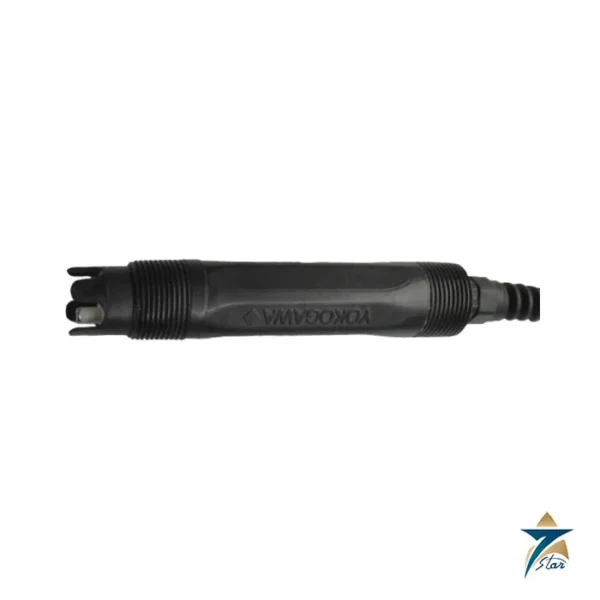
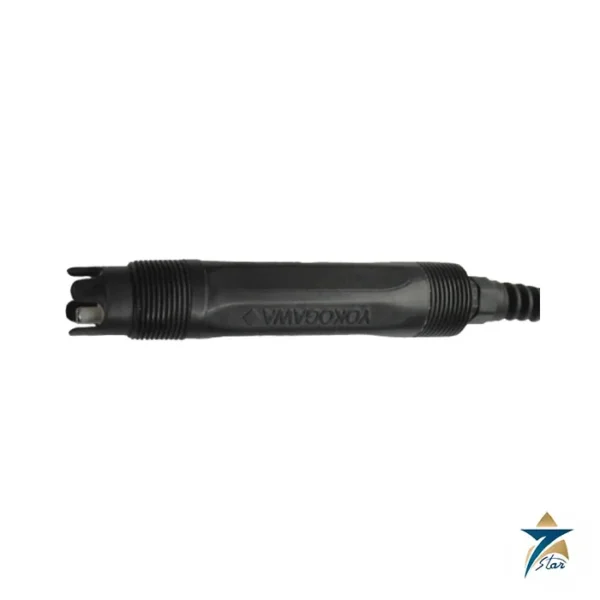
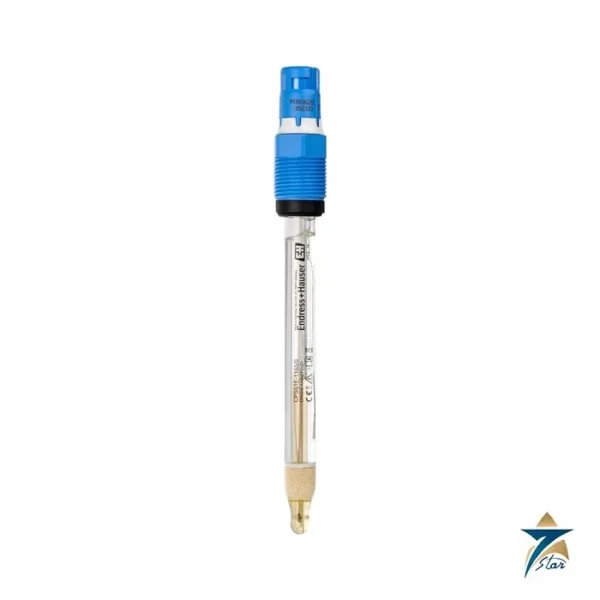
Yokogawa PH8EFP-05-TN-TT1-N-E KCl Filling pH Sensor
Description
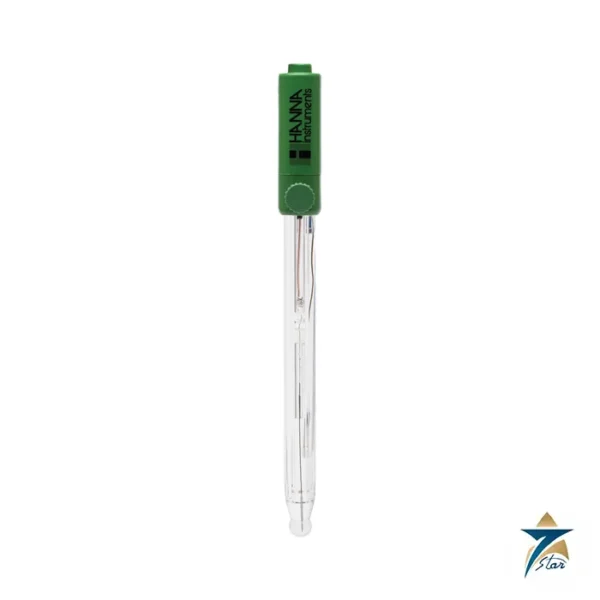
Yokogawa PH8EFP-05-TN-TT1-N-E: a refillable-by-tank process pH sensor
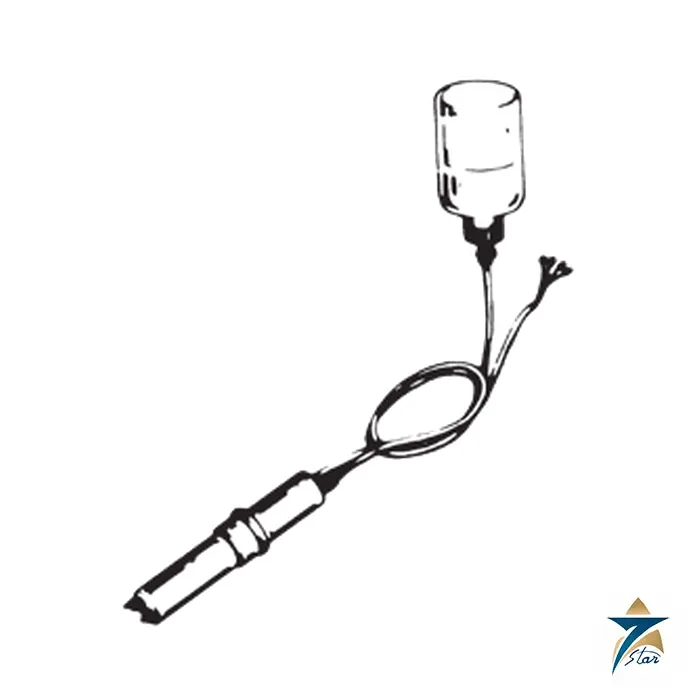
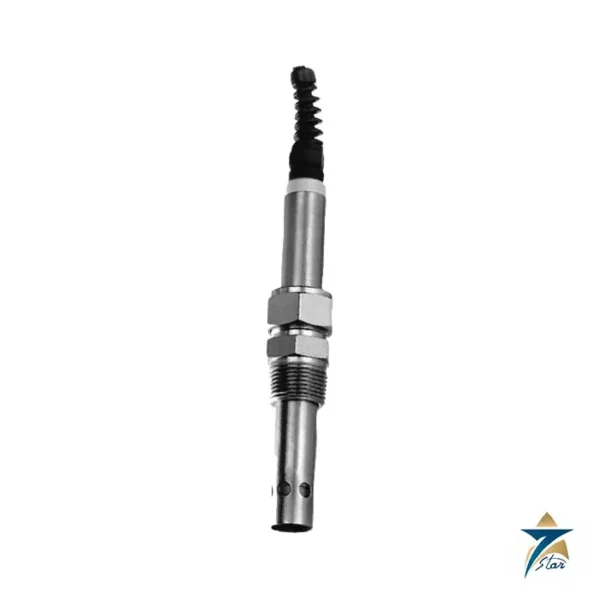
The PH8EFP is the KCl filling type of Yokogawa’s PPS-bodied process pH sensor. Unlike the sealed combination types, it is fed with KCl from a reserve tank through a tube, so the reference junction is continually flushed with fresh electrolyte. Yokogawa PH8EFP-05-TN-TT1-N-E is a specific configuration: 5 m cable with KCl tube, titanium solution ground, the general purpose tank and the E measuring system for the FLXA series analysers.
Seven Star LLC is an independent supplier serving Oman and the GCC and is not affiliated with the manufacturer.
Body and materials
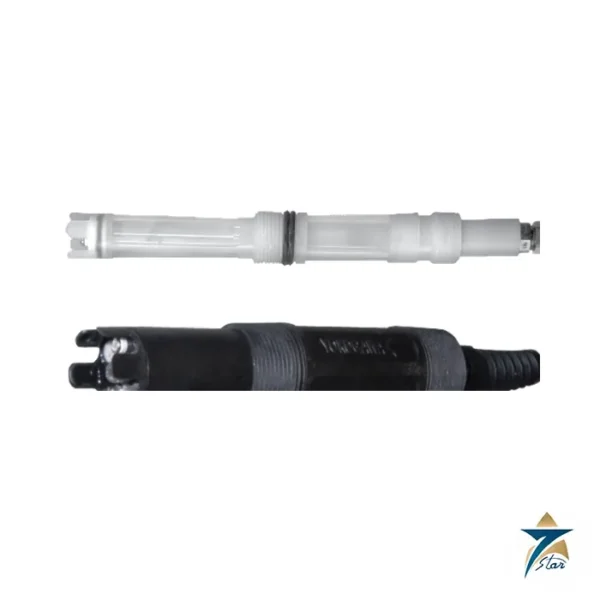
The body is made of reinforced PPS resin, an engineering plastic that is comparable to PTFE in corrosion and heat resistance. Wetted parts include glass, titanium or Hastelloy C, ceramics or PTFE, and fluoro rubber or perfluoroelastomer. The cable sheath is chlorinated polyethylene rubber. The KCl tube is heat-resistant soft PVC for the general purpose or big-volume tank, polyethylene for the medium-pressure tank and fluororesin with /FEP. A single sensor type serves with or without holder or cleaner, and the glass electrode and junction can be replaced individually.
PH8EFP-05-TN-TT1-N-E specifications
| Parameter | Value |
|---|---|
| Measuring range | pH 0 to 14 |
| Temperature | -5 to 105 C (80 C with guide-pipe holder) |
| Pressure (TT1) | Atmospheric to 10 kPa |
| Temperature compensation | Pt1000 |
| Cable and KCl tube | 5 m |
| Solution ground | Titanium (TN) |
| Tank | General purpose TT1, about 0.3 kg, 250 mL KCl bottle supplied |
| Measuring system | E: FLXA402, FLXA402T, PH202, FLXA202, FLXA21 |
| Sensor weight | About 0.4 kg with 3 m cable |
| Style | A |
Why choose a KCl filling type sensor
A reference electrode works only while its electrolyte stays concentrated and clean. In a sealed sensor the KCl slowly leaks out and process ions diffuse in, which limits life. A KCl filling type replaces this slow loss with a continuous, controlled supply: the reserve tank feeds electrolyte through the tube to the junction, so the reference stays stable for long periods in dirty or high-temperature liquids. That is why PH8EFP reaches 105 C and operates across the full pH 0 to 14 range, whereas the refillable PH8ERP is limited to pH 2 to 12 and 80 C.
For maintenance teams the key difference is routine. The sensor does not need to be taken out to refill the reference; topping up the tank is a one-minute job done at the tank, which can be mounted at an accessible height. The big-volume tank of 500 mL stretches the interval further, while the medium-pressure tank, which needs an air pressure regulator prepared separately, keeps electrolyte flowing in liquids up to 500 kPa. The TT1 tank in PH8EFP-05-TN-TT1-N-E is the simplest and is designed for open or low-pressure tanks, with process pressure up to 10 kPa.
A further practical benefit is the individual replacement of the glass electrode and junction. When the glass ages, you replace the glass, not the whole sensor, which lowers the cost per year of ownership. Together these features make the PH8EFP family a common choice for plants that value a long service life over the lowest initial price.
How PH8EFP-05-TN-TT1-N-E differs from PH8ERP and other PH8EFP codes
The PH8ERP is the KCl refillable type with a range of pH 2 to 12, -5 to 80 C and pressure up to 50 kPa, so PH8EFP gives a wider pH window (0 to 14) and a higher temperature (105 C). Within the PH8EFP list, cable 03 to 20 m, solution ground TN or HC, tank TT1 (general), TT2 (medium pressure, up to 500 kPa), TT3 (big volume, 500 mL, 0.8 kg), maintenance tanks TN1 and TN2, and the measuring system E, F, G, T, B or V all change the order string.
Applications in the Gulf
The sensor suits wastewater treatment, production processes and general pH control that the datasheet describes, including medium-sized wastewater plants, and typical Omani duties such as neutralisation, cooling water and process water. Sulphate and chloride-laden waters at industrial areas are within the capability of the PPS body.
Holders and system
Holders in the datasheet include the guide pipe PH8HG, submersion PH8HS, flow-through PH8HF, suspension HH350G and float types PB350G and PB360G, with or without cleaning. The converters are the FLXA202 or FLXA21 two-wire units and the FLXA402 four-wire unit. Terminal boxes WTB10-PH1, PH3 and PH5 are available when the analyser is remote.
Installation and KCl supply
Mount the tank above the sensor so gravity feeds the tube, keep the tube free of kinks and avoid direct sunlight on it. Fill the tank with the supplied KCl solution, confirm a slow drip at the junction, then calibrate in two buffers. When the sensor ships with the /CAL option, the calibration data on the sensor body are valid for 6 months after manufacture, and storage at room temperature in this period can still cause roughly 0.2 pH calibration shift, so the first on-site calibration should not be skipped. For PH8EFP-05-TN-TT1-N-E the 5 m cable and tube run together, so route them as a pair, keep the tube from kinking and support both at the holder.
Maintenance
Refill the KCl tank on a schedule that depends on consumption, clean the junction and electrode, and replace the glass electrode or junction individually when worn. Using a polyethylene tube is advised when contact with oily or fatty foods is possible. Keep a log of the KCl level, because a dry tank leaves the junction without electrolyte flow and the reading will drift. Inspect the tube connection each shutdown, and have a spare tube length on hand.
Documents and quotation
The datasheet for PH8EFP-05-TN-TT1-N-E is attached. Send your RFQ to Seven Star LLC with the part number PH8EFP-05-TN-TT1-N-E, the quantity and the style and option codes you need.
Datasheets & Documents
- Datasheet Yokogawa PH8EFP-05-TN-TT1-N-E KCl Filling pH Sensor Datasheet Download
Reviews (0)
How would you rate this product? Cancel reply
About brand
Yokogawa is the Japanese measurement and industrial automation company behind the DPharp EJA and EJX pressure transmitters, CENTUM distributed control systems and ProSafe-RS safety systems. Tamisuke Yokogawa set it up in 1915 as an electric meter research institute in Shibuya, Tokyo. It began selling electric meters in 1917, was incorporated as Yokogawa Electric Works in 1920, and has been Yokogawa Electric Corporation since 1986. In 1975 it released CENTUM, which it describes as the world's first distributed control system.
Seven Star LLC is an independent supplier in Muscat. We list Yokogawa transmitters, flowmeters, analysers, controllers, recorders and CENTUM and ProSafe spare modules, and supply them to oil and gas, power, water and process plants in Oman and the GCC by model code.
Yokogawa at a glance
| Established | 1915, Shibuya, Tokyo, by Tamisuke Yokogawa with Ichiro Yokogawa and Shin Aoki |
|---|---|
| Milestones | Electric meters from 1917; incorporated in 1920; CENTUM DCS in 1975; renamed Yokogawa Electric Corporation in 1986 |
| Headquarters | Tokyo, Japan |
| Product families | Pressure and temperature transmitters, magnetic, vortex and Coriolis flowmeters, liquid and gas analysers, controllers and recorders, CENTUM VP DCS, ProSafe-RS safety systems and STARDOM controllers |
Yokogawa products we list
| Family | Models | Typical use |
|---|---|---|
| Pressure and DP transmitters | EJA110E, EJA430E, EJA530E, EJX110A, EJX530A, EJX910A multivariable | Pressure, level and DP flow measurement in process plants |
| Temperature transmitters | YTA610, YTA710 | RTD and thermocouple signals converted to 4-20 mA, HART or fieldbus |
| Flowmeters | ADMAG AXG, ADMAG AXW, ROTAMASS TI, VY vortex, VF701 | Water and conductive liquids, mass flow of hydrocarbons, steam and gas |
| Analysers | TDLS8000 laser gas analyser, FLXA402, FLXA21 DO, E7042UD zirconia cell, K9471DS cover | Combustion O2, in-situ gas analysis, pH, conductivity and dissolved oxygen |
| Controllers and recorders | UT35A/UT32A, UT32A-D, UT55A/UT52A, UT75A, UP35A/UP32A, UP55A, YS1700, GX10/GX20, GP10/GP20, GM10, µR20000 | Single-loop control, furnace programs and data recording |
| Control and safety systems | CP451-10 processor, ADV161, ADV551, node interface unit, ProSafe-RS, ProSafe-RS Lite, ProSafe-SLS, FCN-500 | Spares and expansions for CENTUM DCS, safety systems and STARDOM |
| Battery packs | S9129FA, S9185FA, S9548FA | Memory backup batteries for DCS and controller modules |
The EJA and EJX transmitters use Yokogawa's DPharp sensor: two silicon resonators whose vibration frequency changes with pressure, so the output is a digital frequency rather than an analogue strain signal. The model code describes the instrument completely. In EJA110E, "110" is a differential pressure transmitter, and the letters after the dash set the span, wetted materials, process connection, electrical output and approvals. When you replace a transmitter, sending the full code from the nameplate avoids a mismatch in range or materials.
Where Yokogawa products are used
In Oman and the GCC, Yokogawa transmitters, analysers and control systems are found in oil and gas production, gas processing and LNG, refineries and petrochemical plants, power and desalination stations, and water treatment. Many plants still run CENTUM CS 3000 and CENTUM VP systems that need spare I/O modules and batteries.
Ordering Yokogawa products: what we need
Send the full model and suffix code from the nameplate (for example EJA110E-JMS5J-912NN/KF22) and the style code. For DCS modules, add the module type and system version. For analysers, send the sensor type, measuring range and process conditions.
Facts checked against Yokogawa's corporate history, October 2026.
Browse Yokogawa products by category: PLC & I/O Cards, Flowmeters, Pressure Instrumentation, Automation Accessories, Temperature Instrumentation.
FAQ
Questions about the Yokogawa PH8EFP-05-TN-TT1-N-E KCl Filling pH Sensor
Answers from our engineering team on installation, compatibility and integration.
01What does each part of PH8EFP-05-TN-TT1-N-E mean?
PH8EFP is the KCl filling type pH sensor, 05 is a 5 m cable and KCl tube, TN is a titanium solution ground, TT1 is the general purpose KCl reserve tank, N is the type code and E is the measuring system for FLXA402, FLXA402T, PH202, FLXA202 and FLXA21. The style code A completes the order string.
02What pH and temperature range does PH8EFP-05-TN-TT1-N-E cover?
pH 0 to 14 and a measuring temperature of -5 to 105 C, limited to -5 to 80 C when the guide-pipe holder is used.
03What pressure can PH8EFP-05-TN-TT1-N-E take?
Atmospheric pressure to 10 kPa with the general purpose or big-volume tank. A medium-pressure tank (TT2) raises this to 500 kPa, but that is a different code.
04Why choose a titanium ground tip?
Titanium (TN) is the standard solution ground for most aqueous processes. Hastelloy C (HC) is the alternative in the datasheet for liquids where titanium is attacked.
05What is the KCl reserve tank for?
It feeds fresh KCl through a tube to the reference junction. TT1 is the general purpose tank (about 0.3 kg) supplied with one 250 mL bottle of KCl solution.


Reviews
There are no reviews yet.