Brand:

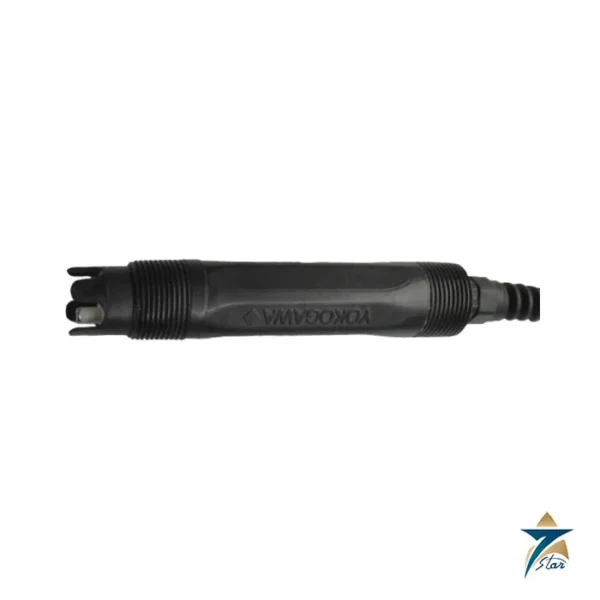
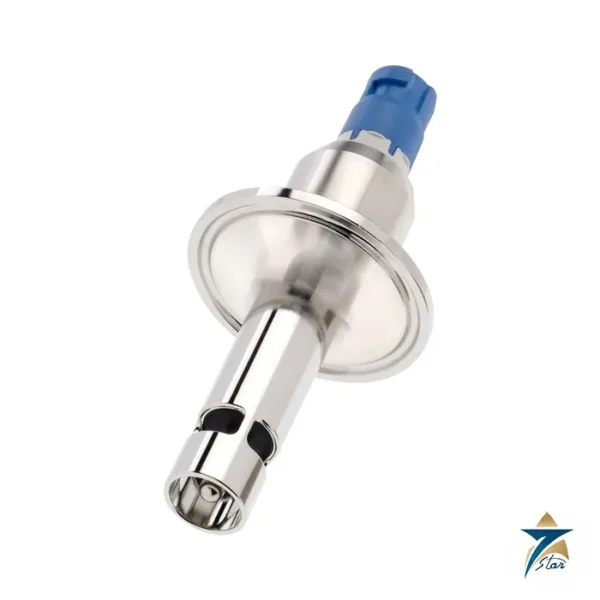
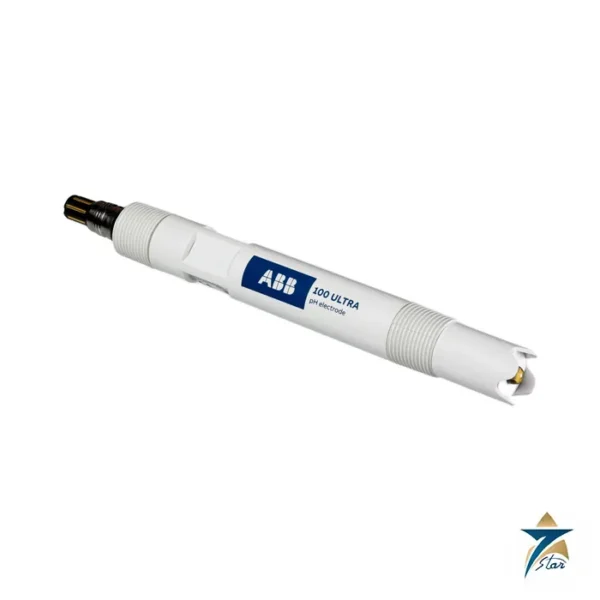
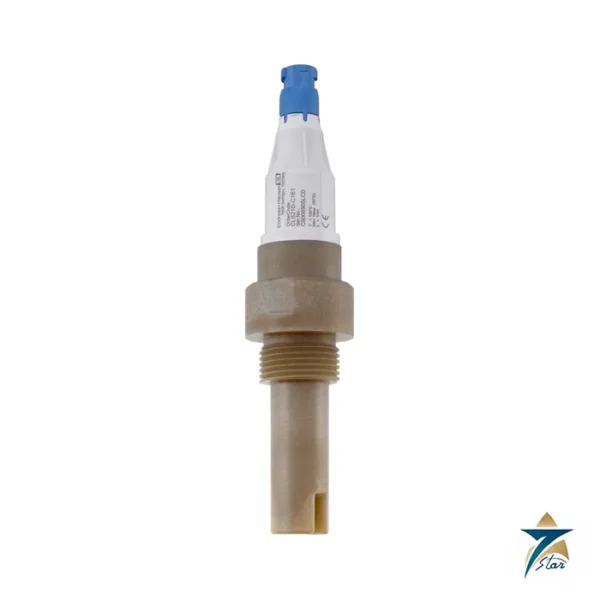
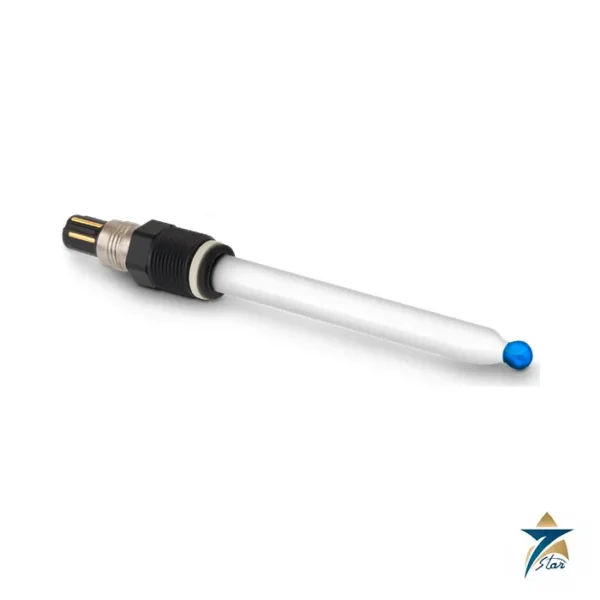
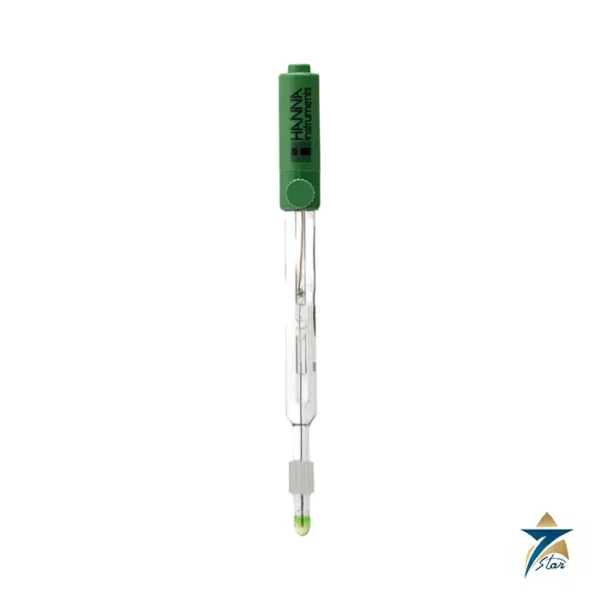
Yokogawa FU24-05-T1-FSM-N Bellows Pressure-Compensated pH Sensor

Description

Why Yokogawa FU24-05-T1-FSM-N exists

A pH sensor drifts when its reference electrolyte is diluted or desalted. In hot, pulsating or pressurised lines, process liquid is pushed into the sensor each time pressure or temperature swings, and the reference potential walks away. Yokogawa FU24-05-T1-FSM-N tackles the cause with a built-in bellows that equalises interior pressure with the outside, making the sensor, in the words of its datasheet, virtually insensitive to external pressure variations. The code gives a 5 m fixed cable, Pt1000, a flat self-cleaning tip and a non-flowing reference.

Seven Star LLC is an independent supplier serving Oman and the GCC and is not affiliated with the manufacturer.

How the bellows works

The bellows is a flexible element inside the electrode that responds immediately to pressure change. As pressure rises, the bellows compresses the electrolyte slightly instead of letting the process liquid force its way through the junction; when pressure falls, it springs back without sucking liquid in. The tension also keeps a slight overpressure on the reference electrolyte, so a positive flow of ions leaves the sensor and fluid cannot enter. That is why the datasheet highlights pure water applications, where junction contamination would otherwise cause large errors.

FU24-05-T1-FSM-N data table

Parameter Value
Body PPS 40GF
O-ring Viton
Earth pin Solid platinum
Reference Double junction Ag/AgCl, saturated KCl with Ag+ ion trap, porous PTFE
Measuring glass G-glass
Glass impedance Nominal 700 megohm, flat surface
Junction resistance 1 to 15 kilohm
Isothermal point pH 7
Asymmetry / slope 8 plus or minus 15 mV / above 96 percent
Response pH step under 15 s for 90 percent; temperature step under 1.5 min (flat)
Stabilisation Under 2 minutes
Range pH 0 to 14; -10 to 105 C; 0 to 10 bar
Storage -15 to 50 C
Cable 5 m fixed, Pt1000 element

How FU24-05-T1-FSM-N differs from the FU20 and PH20

Against FU20-10-T1-FSM the FU24 adds the bellows, a double junction with Ag+ trap and a Viton O-ring, while the FU20 has no O-ring. Junction resistance is 1 to 15 kilohm against 1 to 10 kilohm. Storage temperature starts at -15 C rather than -10 C. Against the PH20, whose body is PVDF, the FU24 body is PPS and the pressure compensation is a bellows rather than the flexing panels of the PH20. Within the FU24 ordering list the variants are the cable (05, 10 or VP connector), tip (FSM or NPT) and reference.

Applications in Oman and the GCC

Duties suitable for the FU24 include boiler and steam condensate pH, high-pressure rinse lines, pulsed dosing lines, heating loops and desalination post-treatment, where the reference of a normal sensor poisons quickly. The flat FSM tip supports use where light fouling occurs. For clean, cold water, the cheaper FU20 may be enough. A typical case is a hot-water or condensate sample line where the sensor sees an on-off sample valve: each time the valve closes, pressure and temperature drop and a conventional sensor inhales sample, but FU24-05-T1-FSM-N holds the reference steady. Another case is a dosing loop with a pulsating pump, where pressure peaks reach the sensor several times a minute. In power and desalination plants of the region, where water is warm for most of the year and temperature swings follow start-ups and shutdowns, this stability reduces the number of unplanned recalibrations and the number of replaced sensors per year.

Mounting and accessories

Accessories listed in the datasheet include K1521JA, an adapter for F*20 assemblies in 316 stainless steel, and K1521JB in PVDF. The body can also fit F*40 style fittings through the FU20 adapter family. Use the cleaning system option where appropriate for the process.

Installation guidance

Mount the sensor with the tip fully immersed and keep the cable outlet above the liquid. Avoid mounting in a position where air accumulates over the glass. Connect to a converter that matches the 5 m cable and the Pt1000 signal. Calibrate with two buffers; the datasheet slope above 96 percent should be seen on a new sensor.

Operation and maintenance

The reference system is polymerised, so there is no refilling. Clean the glass with a soft brush or dilute acid, rinse and recalibrate. Replace the sensor when the slope or response degrades. Because the pressure is compensated, drift is usually a sign of glass ageing or a coated junction, not of pressure swings. Keep a calibration record per tag with date, buffer temperature, offset and slope; a sensor whose slope falls steadily over months is ageing normally, while an abrupt change usually means mechanical damage or a coated junction. Because FU24-05-T1-FSM-N has a flat self-cleaning tip, a periodic water jet or brush clean is usually sufficient, and aggressive chemical cleaning should be limited to what the process requires. Spare sensors should be stored upright with the tip kept wet and the cable coiled loosely.

Ordering notes

Give us the converter model, the pipe or tank fitting, and whether a Variopin connector is preferred to the fixed 5 m cable. A Quality Certificate is delivered with the sensor, as with the other models in this datasheet. If your plant already uses FU20 sensors in the same area, tell us which tag the FU24-05-T1-FSM-N will replace, so we can compare the cable length, the thread adapter and the converter input before the quotation is issued. Please also state the expected operating temperature and pressure range, because those two values are what decide whether the bellows version is worth its place in the loop or whether a simpler wide-body sensor is enough.

Documents and quotation

The datasheet for FU24-05-T1-FSM-N is attached. Send your RFQ to Seven Star LLC with the part number FU24-05-T1-FSM-N, quantity and delivery location.

Datasheets & Documents
  • PDF Datasheet Yokogawa FU24-05-T1-FSM-N Bellows Pressure-Compensated pH Sensor Datasheet Download
Reviews (0)

Reviews

There are no reviews yet.

How would you rate this product?

It takes about 10 seconds — just tap a star. Your email is never published.

About brand

Yokogawa is the Japanese measurement and industrial automation company behind the DPharp EJA and EJX pressure transmitters, CENTUM distributed control systems and ProSafe-RS safety systems. Tamisuke Yokogawa set it up in 1915 as an electric meter research institute in Shibuya, Tokyo. It began selling electric meters in 1917, was incorporated as Yokogawa Electric Works in 1920, and has been Yokogawa Electric Corporation since 1986. In 1975 it released CENTUM, which it describes as the world's first distributed control system.

Seven Star LLC is an independent supplier in Muscat. We list Yokogawa transmitters, flowmeters, analysers, controllers, recorders and CENTUM and ProSafe spare modules, and supply them to oil and gas, power, water and process plants in Oman and the GCC by model code.

Yokogawa at a glance

Established 1915, Shibuya, Tokyo, by Tamisuke Yokogawa with Ichiro Yokogawa and Shin Aoki
Milestones Electric meters from 1917; incorporated in 1920; CENTUM DCS in 1975; renamed Yokogawa Electric Corporation in 1986
Headquarters Tokyo, Japan
Product families Pressure and temperature transmitters, magnetic, vortex and Coriolis flowmeters, liquid and gas analysers, controllers and recorders, CENTUM VP DCS, ProSafe-RS safety systems and STARDOM controllers

Yokogawa products we list

Family Models Typical use
Pressure and DP transmitters EJA110E, EJA430E, EJA530E, EJX110A, EJX530A, EJX910A multivariable Pressure, level and DP flow measurement in process plants
Temperature transmitters YTA610, YTA710 RTD and thermocouple signals converted to 4-20 mA, HART or fieldbus
Flowmeters ADMAG AXG, ADMAG AXW, ROTAMASS TI, VY vortex, VF701 Water and conductive liquids, mass flow of hydrocarbons, steam and gas
Analysers TDLS8000 laser gas analyser, FLXA402, FLXA21 DO, E7042UD zirconia cell, K9471DS cover Combustion O2, in-situ gas analysis, pH, conductivity and dissolved oxygen
Controllers and recorders UT35A/UT32A, UT32A-D, UT55A/UT52A, UT75A, UP35A/UP32A, UP55A, YS1700, GX10/GX20, GP10/GP20, GM10, µR20000 Single-loop control, furnace programs and data recording
Control and safety systems CP451-10 processor, ADV161, ADV551, node interface unit, ProSafe-RS, ProSafe-RS Lite, ProSafe-SLS, FCN-500 Spares and expansions for CENTUM DCS, safety systems and STARDOM
Battery packs S9129FA, S9185FA, S9548FA Memory backup batteries for DCS and controller modules

The EJA and EJX transmitters use Yokogawa's DPharp sensor: two silicon resonators whose vibration frequency changes with pressure, so the output is a digital frequency rather than an analogue strain signal. The model code describes the instrument completely. In EJA110E, "110" is a differential pressure transmitter, and the letters after the dash set the span, wetted materials, process connection, electrical output and approvals. When you replace a transmitter, sending the full code from the nameplate avoids a mismatch in range or materials.

Where Yokogawa products are used

In Oman and the GCC, Yokogawa transmitters, analysers and control systems are found in oil and gas production, gas processing and LNG, refineries and petrochemical plants, power and desalination stations, and water treatment. Many plants still run CENTUM CS 3000 and CENTUM VP systems that need spare I/O modules and batteries.

Ordering Yokogawa products: what we need

Send the full model and suffix code from the nameplate (for example EJA110E-JMS5J-912NN/KF22) and the style code. For DCS modules, add the module type and system version. For analysers, send the sensor type, measuring range and process conditions.

Facts checked against Yokogawa's corporate history, October 2026.

FAQ

Questions about the Yokogawa FU24-05-T1-FSM-N Bellows

Answers from our engineering team on installation, compatibility and integration.

01What makes FU24-05-T1-FSM-N different from the FU20?
The FU24 has a patented bellows system that equalises interior and exterior pressure, a double junction reference with Ag+ ion trap, and a Viton O-ring, making it suited to fluctuating pressure and temperature.
02What do the suffixes in FU24-05-T1-FSM-N mean?
05 is a 5 m fixed cable, T1 is the Pt1000 element, FSM is the self-cleaning flat surface tip, and N is a non-flowing reference system.
03Is FU24-05-T1-FSM-N suitable for pure water?
The datasheet states the FU24 is suitable for pure water applications, helped by the slight overpressure from the bellows tension that prevents fluid ingress.
04What is the junction resistance of FU24-05-T1-FSM-N?
1 to 15 kilohm, with a nominal glass impedance of 700 megohm for the flat surface tip, slope above 96 percent and asymmetry potential of 8 plus or minus 15 mV.
05Can the FU24 temperature element control the process?
No. The datasheet notes the Pt1000 is for indication and cell compensation, and its construction has not been tested to pressure vessel standards for plant temperature control.