Brand:

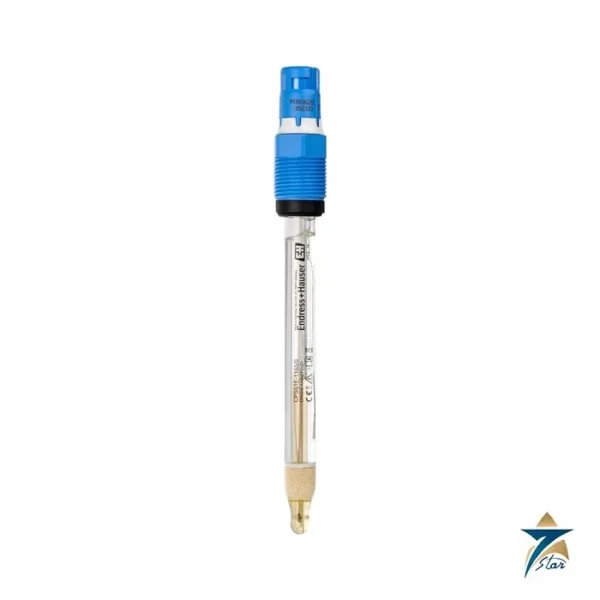
Yokogawa PH20-F-G-05-T1-N-A PVDF 4-in-1 pH Sensor

Description

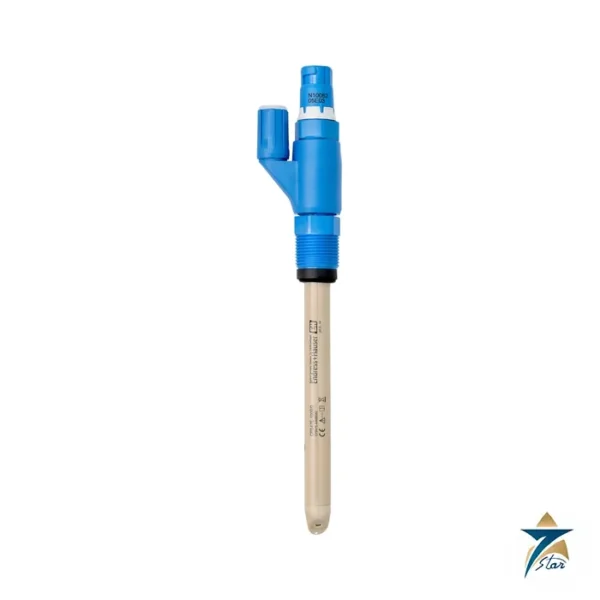
PH20-F-G-05-T1-N-A: pH sensor for chemical resistance

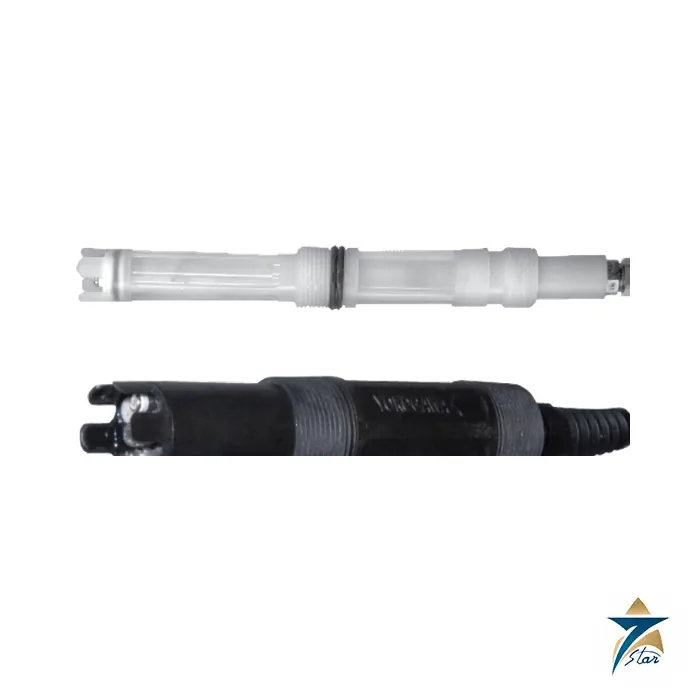
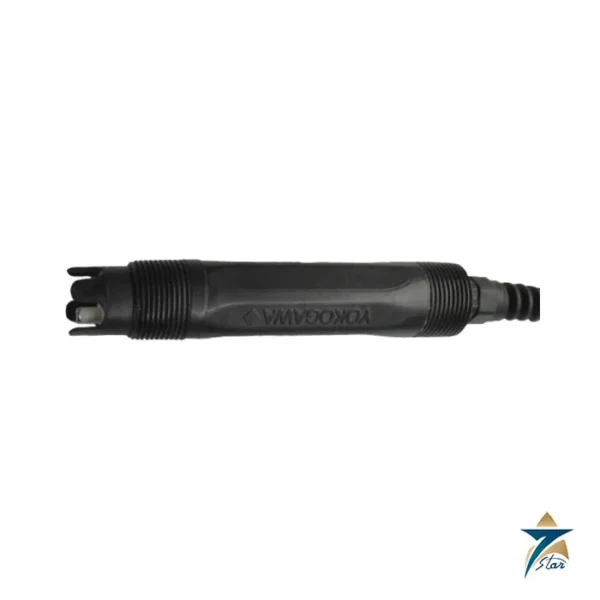
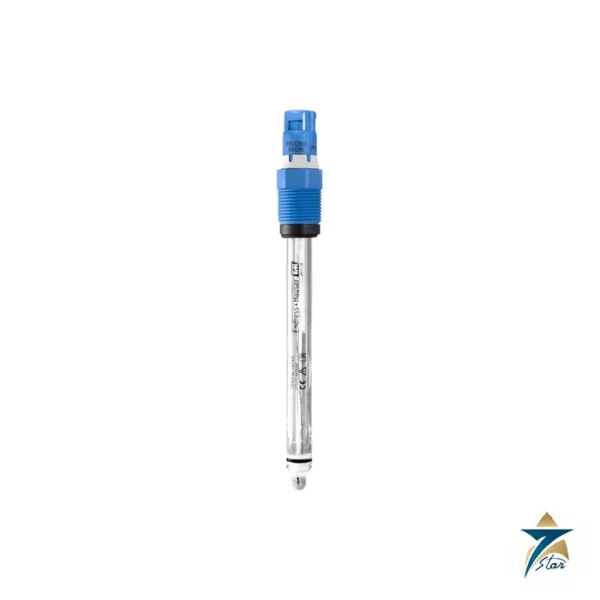
When chemical resistance decides the sensor choice, the datasheet points to the PH20. Yokogawa PH20-F-G-05-T1-N-A has a body of chemically resistant PVDF and is nicknamed Tempress after its patented compensation for process temperature and pressure changes. It is a four-in-one sensor: pH glass, Ag/AgCl reference, platinum electrode and Pt1000 in one body, and the order string states PVDF (F), dome membrane (G), 5 m cable, Pt1000 (T1) and the fixed code N-A.

Seven Star LLC is an independent supplier serving Oman and the GCC and is not affiliated with the manufacturer.

How Tempress works

In a normal sensor, pressure or temperature swings push process liquid through the reference junction and contaminate it. The PH20 has compensation panels that flex to take up the change, so the pressure across the diaphragm stays small. The datasheet shows a graph in which a conventional sensor drifts erratically, a sign of progressive junction contamination, with 0.1 to 0.4 pH error, while the PH20 reading stays extremely stable. The mechanism is purely mechanical, with nothing to maintain.

PH20-F-G-05-T1-N-A specifications

Parameter Value
Body PVDF
O-ring Viton
Earthing pin Solid platinum / glass
Reference Ag/AgCl saturated KCl, porous PTFE junction
Glass G-glass, nominal 200 megohm
Junction resistance 1 to 10 kilohm
pH step response Under 5 s for 90 percent
Temperature response Under 1 min for 90 percent
Stabilisation Under 1 minute
Range pH 0 to 14; -10 to 105 C (14 to 212 F); 0 to 10 bar (142 psig)
Conductivity More than 50 uS/cm
Cable 5 m coaxial with 4 extra leads, Pt1000 to IEC 751
Slope / asymmetry Above 96 percent / 8 plus or minus 15 mV

How PH20 differs from FU20 and FU24

PH20-F-G-05-T1-N-A responds faster than either wide-body sensor: under 5 seconds for a pH step against under 15 seconds, and under 1 minute stabilisation against under 2 minutes. The body is PVDF rather than PPS. Its upper pressure rating is 142 psig against 145 psig on the FU types, a small difference stated in the datasheet. Compared with FU24 it uses flexing panels, not a bellows, to compensate pressure and temperature.

Where PVDF and Tempress compensation pay off

PVDF is a fluoropolymer that tolerates most mineral acids, many alkalis, oxidisers such as hypochlorite and a wide range of organic solvents at moderate temperature. A sensor with a PVDF body therefore outlives a plastic body that swells or cracks in the same liquid. The datasheet recommends the PH20 for exactly that situation: applications where chemical resistance is vital. A body that lasts is only half of the story, because the reference junction decides measurement quality. Tempress compensation keeps liquid from being pumped through the junction by pressure and temperature changes, so the reference potential does not wander while the body remains intact.

For a typical neutralisation skid, this combination means fewer surprises. Dosing pumps pulse, the tank temperature moves with the dosing of acid or caustic, and process pressure in a recirculation loop is not constant. With a conventional sensor, the datasheet comparison graph shows an erratic trend and errors of 0.1 to 0.4 pH, easily enough to push a pH-controlled dosing loop into over-dosing. With PH20-F-G-05-T1-N-A the trend in the same test is described as extremely stable.

The sensor also responds fast, which helps a control loop. A 90 percent response in under 5 seconds for a pH step and stabilisation within 1 minute mean the controller sees real changes without long dead time.

Applications in Oman and the GCC

Chemical dosing stations, acid and alkali neutralisation, scrubber liquors, electroplating rinse waters and industrial effluent in the Sultanate often combine aggressive chemistry with temperature and pressure swings, exactly the case where the PH20 is the sensor to choose. Refinery wastewater treatment, fertiliser and chemical complexes, metal finishing shops, water treatment chemical stores and laboratories can all use it; the conductivity of the sample must stay above 50 uS/cm, so the sensor is not meant for ultra pure water.

Adapters and cleaning options

Adapters are /SN3 stainless 3/4 inch NPT (spare K1541QA), /SR3 stainless 3/4 inch R (K1547QB), /FN4 PVDF 1 inch NPT (K1547PC), /FR4 PVDF 1 inch R (K1547PD) and /SF4 for FF40, FS40 and FD40 fittings (K1547QF). Cleaning systems /HCNF (K1547PJ) or /HCN2 (K1547PA) for FF20 or FS20 fittings use Hastelloy.

Installation and calibration

Install with the tip immersed and the cable above the liquid, and fit the correct adapter for the pipe thread. Connect to the converter and calibrate in two buffers. Verify the slope exceeds 96 percent. Handle the sensor by the body, never by the cable, and keep the dome clear of solid objects. When PH20-F-G-05-T1-N-A is mounted in a FF40, FS40 or FD40 fitting through the /SF4 adapter, check that the O-ring seats cleanly and that the nut is tightened to the fitting maker’s instruction. For submersion service, ensure the cable exit stays above the liquid level and that the 5 m cable is strain-relieved at the top of the pipe.

Maintenance

There is no electrolyte to refill; clean the glass and junction, then recalibrate. If the response slows, soak in dilute acid and rinse. Replace when the slope falls too low, normally when it drops below 96 percent of the theoretical value that a new sensor delivers. Record each calibration in the loop file, and keep one spare sensor in the store for every critical dosing loop, because the sensor is the part most likely to fail. Because the reference is sealed and polymerised, there is no refilling, which removes a common maintenance task found on liquid-filled electrodes.

Documents and quotation

The datasheet for PH20-F-G-05-T1-N-A is attached. Send your RFQ to Seven Star LLC with the part number PH20-F-G-05-T1-N-A, quantity and delivery location.

Datasheets & Documents
  • PDF Datasheet Yokogawa PH20-F-G-05-T1-N-A PVDF 4-in-1 pH Sensor Datasheet Download
Reviews (0)

Reviews

There are no reviews yet.

How would you rate this product?

It takes about 10 seconds — just tap a star. Your email is never published.

About brand

Yokogawa is the Japanese measurement and industrial automation company behind the DPharp EJA and EJX pressure transmitters, CENTUM distributed control systems and ProSafe-RS safety systems. Tamisuke Yokogawa set it up in 1915 as an electric meter research institute in Shibuya, Tokyo. It began selling electric meters in 1917, was incorporated as Yokogawa Electric Works in 1920, and has been Yokogawa Electric Corporation since 1986. In 1975 it released CENTUM, which it describes as the world's first distributed control system.

Seven Star LLC is an independent supplier in Muscat. We list Yokogawa transmitters, flowmeters, analysers, controllers, recorders and CENTUM and ProSafe spare modules, and supply them to oil and gas, power, water and process plants in Oman and the GCC by model code.

Yokogawa at a glance

Established 1915, Shibuya, Tokyo, by Tamisuke Yokogawa with Ichiro Yokogawa and Shin Aoki
Milestones Electric meters from 1917; incorporated in 1920; CENTUM DCS in 1975; renamed Yokogawa Electric Corporation in 1986
Headquarters Tokyo, Japan
Product families Pressure and temperature transmitters, magnetic, vortex and Coriolis flowmeters, liquid and gas analysers, controllers and recorders, CENTUM VP DCS, ProSafe-RS safety systems and STARDOM controllers

Yokogawa products we list

Family Models Typical use
Pressure and DP transmitters EJA110E, EJA430E, EJA530E, EJX110A, EJX530A, EJX910A multivariable Pressure, level and DP flow measurement in process plants
Temperature transmitters YTA610, YTA710 RTD and thermocouple signals converted to 4-20 mA, HART or fieldbus
Flowmeters ADMAG AXG, ADMAG AXW, ROTAMASS TI, VY vortex, VF701 Water and conductive liquids, mass flow of hydrocarbons, steam and gas
Analysers TDLS8000 laser gas analyser, FLXA402, FLXA21 DO, E7042UD zirconia cell, K9471DS cover Combustion O2, in-situ gas analysis, pH, conductivity and dissolved oxygen
Controllers and recorders UT35A/UT32A, UT32A-D, UT55A/UT52A, UT75A, UP35A/UP32A, UP55A, YS1700, GX10/GX20, GP10/GP20, GM10, µR20000 Single-loop control, furnace programs and data recording
Control and safety systems CP451-10 processor, ADV161, ADV551, node interface unit, ProSafe-RS, ProSafe-RS Lite, ProSafe-SLS, FCN-500 Spares and expansions for CENTUM DCS, safety systems and STARDOM
Battery packs S9129FA, S9185FA, S9548FA Memory backup batteries for DCS and controller modules

The EJA and EJX transmitters use Yokogawa's DPharp sensor: two silicon resonators whose vibration frequency changes with pressure, so the output is a digital frequency rather than an analogue strain signal. The model code describes the instrument completely. In EJA110E, "110" is a differential pressure transmitter, and the letters after the dash set the span, wetted materials, process connection, electrical output and approvals. When you replace a transmitter, sending the full code from the nameplate avoids a mismatch in range or materials.

Where Yokogawa products are used

In Oman and the GCC, Yokogawa transmitters, analysers and control systems are found in oil and gas production, gas processing and LNG, refineries and petrochemical plants, power and desalination stations, and water treatment. Many plants still run CENTUM CS 3000 and CENTUM VP systems that need spare I/O modules and batteries.

Ordering Yokogawa products: what we need

Send the full model and suffix code from the nameplate (for example EJA110E-JMS5J-912NN/KF22) and the style code. For DCS modules, add the module type and system version. For analysers, send the sensor type, measuring range and process conditions.

Facts checked against Yokogawa's corporate history, October 2026.

FAQ

Questions about the Yokogawa PH20-F-G-05-T1-N-A PVDF 4-in-1 pH Sensor

Answers from our engineering team on installation, compatibility and integration.

01What is Tempress on the PH20-F-G-05-T1-N-A?
It is the nickname for the patented compensation: flexing panels accommodate changes in process pressure and temperature so large pressure differences do not build up across the reference diaphragm.
02What body material does PH20-F-G-05-T1-N-A use?
PVDF, chosen for chemical resistance, with a Viton O-ring, solid platinum or glass earthing pin and a porous PTFE reference junction.
03How fast is PH20-F-G-05-T1-N-A?
A pH step from 7 to 4 gives 90 percent in under 5 seconds, temperature step under 1 minute, and stabilisation to 0.02 pH per 10 s in under 1 minute.
04What do the suffix letters in PH20-F-G-05-T1-N-A mean?
F is PVDF, G is the dome-shaped membrane, 05 is a 5 m cable, T1 is Pt1000, and N-A is always specified in this position.
05What adapters exist for PH20-F-G-05-T1-N-A?
Options include /SN3 and /SR3 stainless 3/4 inch adapters, /FN4 and /FR4 PVDF 1 inch adapters, /SF4 for FF40, FS40 and FD40 fittings, and /HCNF or /HCN2 cleaning systems.