WIKA TFS35 bimetal temperature switch for machine and fluid circuits
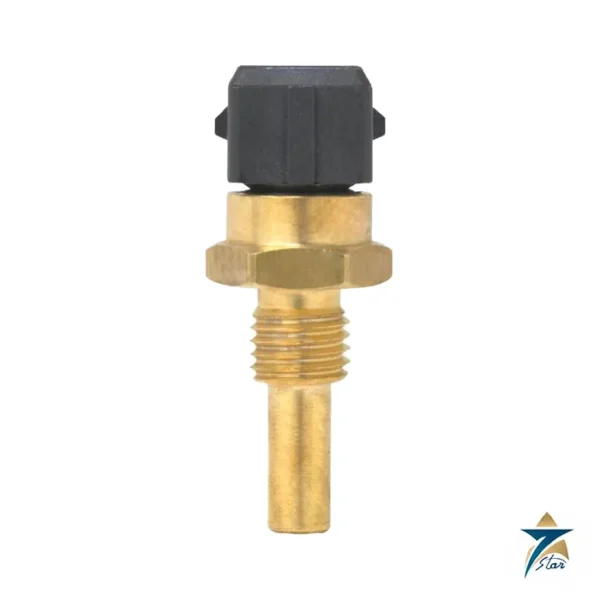
The WIKA TFS35 is a compact, screw-in bimetal temperature switch with a fixed switching point. A bimetal disc snaps over when the nominal switching temperature is reached and snaps back when the medium cools to the reset temperature, so the contact acts without any external supply. It is intended for switching voltages up to AC 48 V at 3 A, which covers warning lamps, small relays and control inputs on machines, cooling and heating circuits and mobile hydraulics. Seven Star LLC supplies the TFS35 in Oman and the GCC as an independent supplier in Muscat; the guide below explains the switching terms and the options that must be fixed before ordering.
How the switch works
Temperature sensing is carried out by the bimetal disc inside the stainless steel thermowell. At the nominal switching temperature (NST) the disc flips and the contact changes state. When the medium cools below the reset switching temperature (RST) the contact returns. WIKA states that the reset temperature is typically 15 … 40 K below the switching temperature. The NST is set at the factory in 5 K steps and cannot be changed afterwards, which makes it a safety-oriented, tamper-resistant limiter rather than an adjustable controller.
TFS35 technical specifications
| Parameter |
Specification |
| Manufacturer / part number |
WIKA / TFS35 (data sheet TV 35.01) |
| Type |
Bimetal temperature switch with fixed switching temperature |
| Nominal switching temperature (NST) |
50 … 155 °C [122 … 311 °F], in steps of 5 K, preset at delivery |
| Switch point accuracy |
±5 K |
| Reset switching temperature (RST) |
Typically 15 … 40 K below the switching temperature |
| Contact design |
Normally closed (NC) or normally open (NO) |
| Switching voltage and current |
Up to AC 48 V, 50/60 Hz, 3 A resistive load |
| Contact resistance |
Below 50 mΩ |
| Dielectric strength |
AC 1,500 V, 50 Hz between connections and housing |
| Thermowell material |
Stainless steel |
| Process connections |
G½ B, G½ A (ISO 1179-2), M14 x 1.5 (ISO 9974-2), ¼ NPT, ½ NPT; others on request |
| Insertion length U1 |
30, 40, 50, 80 or 100 mm |
| Ambient temperature at connector |
Rectangular EN 175301-803: -40 … +100 °C; AMP Junior Power Timer: -40 … +130 °C; M12 x 1: -40 … +90 °C |
| Auxiliary supply |
None required |
| Vibration |
Very high resistance, depending on thermowell and installation |
Normally closed or normally open
| Contact |
Normal state |
Typical task |
| NC (normally closed) |
Closed; opens at the switching temperature |
Break a circuit to shut down a machine on overheating |
| NO (normally open) |
Open; closes at the switching temperature |
Close a circuit to start a fan or warning lamp |
Pick the action by thinking about the failure mode. A circuit that must drop out to be safe should use an NC contact. After cooling below RST the contact returns, so the machine can restart; if you require a latched trip, the latch must be built into the control circuit, because the TFS35 itself resets automatically.
Reset temperature and the cooling check
A frequently overlooked point from the datasheet: to guarantee a safe reset at a low switching temperature, the difference between the measuring point and the ambient must be large enough for the switch to cool down below the RST. If the surroundings stay warm, the disc may never reset and the equipment may not restart. This matters in hot climates and engine bays, where the ambient may be close to the switching temperature.
Connector temperature and installation
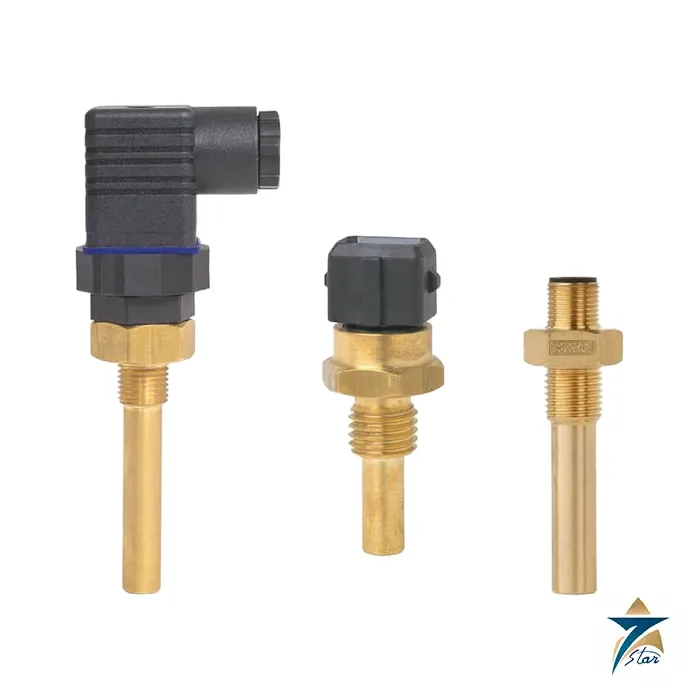
Because the installation length is short, the connector can heat up to an unacceptable level, and the datasheet states that this must be taken into account at the design stage. The temperature at the connector must remain inside the listed range of the connector. WIKA supplies mating connectors as a separate accessory on request. For measuring points above about 100 °C, choose the AMP Junior Power Timer connector, which allows the highest ambient.
- Select the thread and sealing method to suit the manifold or tank port
- Make sure the thermowell sits in the flowing medium and not in a dead leg
- Use a mating connector matched to the cable and rated for the switching current
- Keep the cable away from the hot surface and form a drip loop
- Test the switching point on a reference bath before relying on it as a protection function
Applications in Oman and the GCC
WIKA names machine building, cooling and heating circuits and mobile hydraulics. In regional use this includes over-temperature protection of hydraulic oil on rigs and cranes, engine coolant and gearbox oil on generator sets and compressors, and fan start thresholds on radiators and coolers. Hot ambient air and dust favour sealed connectors and a clear check of the reset condition.
TFS35 ordering checklist
- Nominal switching temperature in 5 K steps
- NC or NO contact
- Process thread and insertion length U1
- Connector type and mating connector
- Electrical load and ambient at the connector
- Medium and the temperature at which the machine should restart
Practical points when specifying the TFS35
The TFS35 is a limiter, so the specification is mainly about the numbers: the nominal switching temperature (50 … 155 °C in 5 K steps), the allowed tolerance of ±5 K, and the reset temperature that follows from the 15 … 40 K hysteresis. Work backwards from the equipment limit: if a hydraulic oil must not exceed 90 °C, a switch rated at 85 °C with ±5 K tolerance may already trip at 80 °C or as late as 90 °C. Give the maker or us the true limit and allow for the tolerance so that you do not trip too early in normal operation, nor too late to protect the equipment.
Electrical details also matter: the contact is for low-voltage control circuits up to AC 48 V and 3 A on a resistive load, with contact resistance below 50 mΩ. Use the switch to drive a relay or a PLC input rather than a motor directly. Sensing the TFS35 contact with a PLC also lets you detect the open-circuit state of a normally-closed loop as a wiring fault.
Information to send with an RFQ
Send the switching temperature, contact type, thread, insertion length, connector, medium, load and quantity. Since the switching temperature is fixed at the factory, an exact value in your RFQ is essential.
Documents and quotation
The WIKA data sheet TV 35.01 for the TFS35 is attached on this page. Send us the specification and quantity for a quotation from Muscat as an independent supplier.



















Reviews
There are no reviews yet.