WIKA TC84 sapphire-design thermocouple with safety chamber
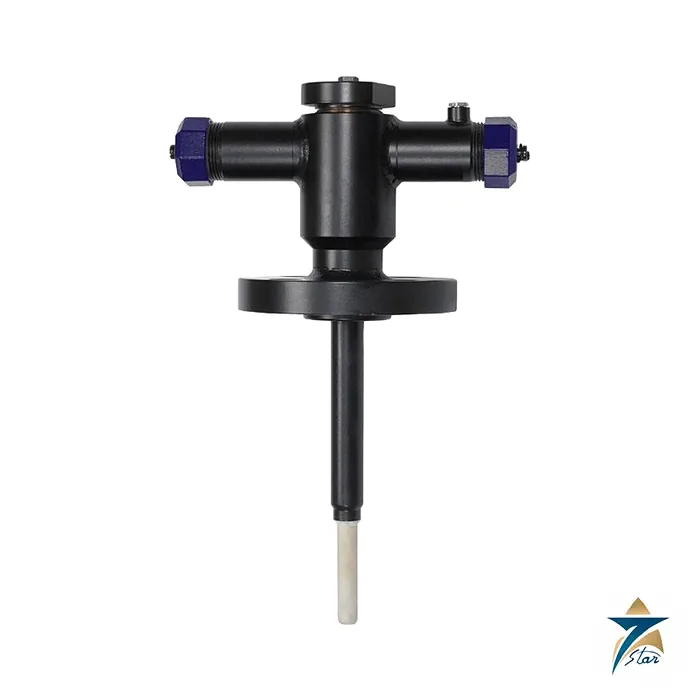
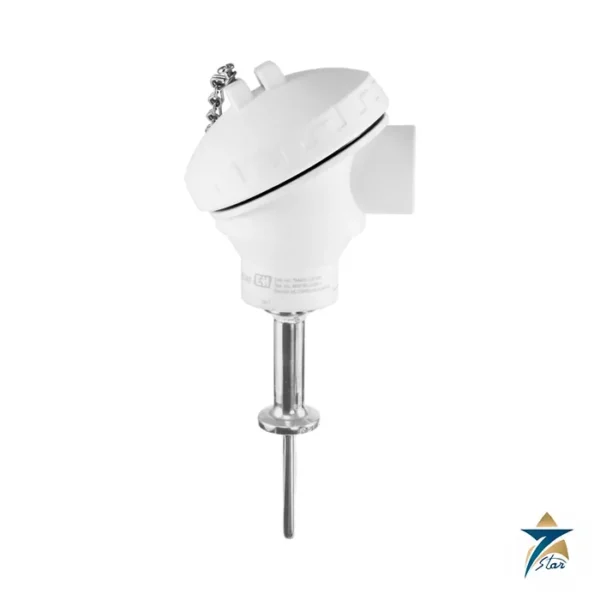
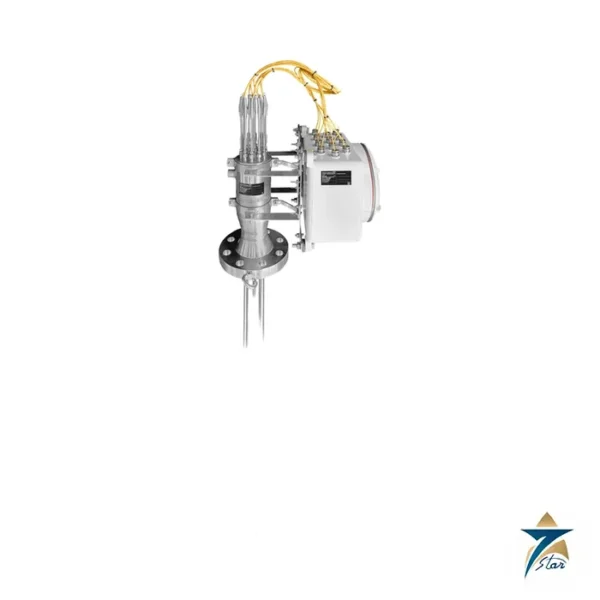
The WIKA TC84 is the high-pressure member of the sapphire thermocouple family. It is made for gasification and gas-to-liquids reactors, where temperatures reach 1,700 °C and pressures reach 65 bar, and where a leak of syngas would be dangerous. A sapphire protection tube shields the noble-metal thermocouple, a ceramic outer tube takes the mechanical and chemical load, and a double sealing system in a solid-machined connection housing prevents toxic gas from escaping. WIKA describes a service life about three times longer than with purely ceramic tubes and notes the design has been used in reactors worldwide since 1997 under the name T-FZV. Seven Star LLC supplies the TC84 in Oman and the GCC as an independent supplier in Muscat.
How the TC84 is built
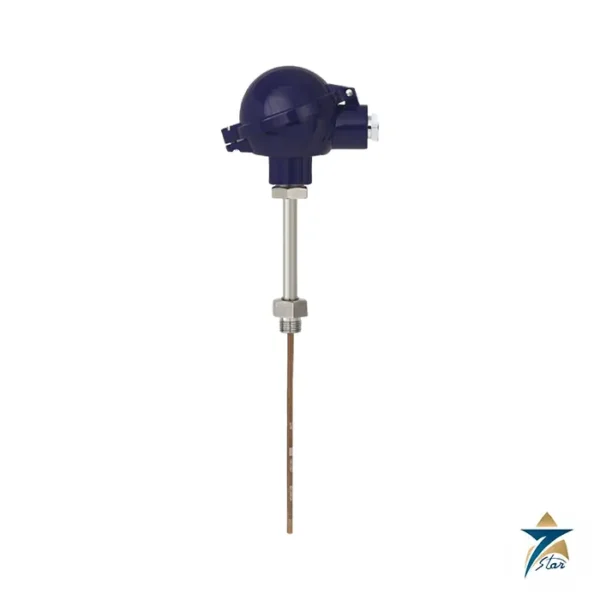
The sensor tip is double protected: a ceramic outer protection tube (15 mm diameter) guards against the harsh process, while an 8 mm sapphire measuring-insert tube inside protects the thermocouple wires from contamination by diffusion. The sealing chain has two levels. The primary seal, a special pressure-tight ceramic-to-metal junction between the sapphire and the metal tube, protects against media escaping at high pressure and temperature. The secondary seal in the connection housing is the safety net if the primary seal is disturbed. The housing, with its integral process flange, is machined from solid forged bar stock, and carbon-steel versions are powder-coated for corrosion protection.
TC84 technical specifications
| Parameter |
Specification |
| Manufacturer / part number |
WIKA / TC84 (data sheet TE 65.84) |
| Type |
Sapphire-design thermocouple with safety chamber for high-temperature, high-pressure service |
| Sensor types |
R, S, B (noble metal); maximum 1,600 °C for R and S, 1,700 °C for B |
| Process conditions |
Up to 1,700 °C [3,092 °F] and 65 bar [943 psi] |
| Metal support tube |
Ø 24 mm [0.95 in]; support tube length SL minimum 148 mm |
| Ceramic outer tube |
Ø 15 mm [0.59 in], 15 x 2 or 15 x 2.5 mm; C799 Tmax 1,600 °C; C610 Tmax 1,500 °C |
| Measuring-insert tube |
Sapphire, Ø 8 mm [0.32 in], Tmax 2,500 °C |
| Insertion length U |
Minimum 395 mm [15.6 in], maximum 1,200 mm [47.2 in] |
| Process flange |
EN 1092-1 DN40 … DN100, or ASME B16.5 compatible dimensions |
| Connection housing |
Forged bar stock, powder-coated for carbon steels |
| Sealing |
Double: primary pressure-tight junction plus secondary seal in the housing |
| Ambient temperature |
-40 … +80 °C (T1 … T6); -40 … +195 °C for T1 … T3 |
| Storage temperature |
-40 … +200 °C [-40 … +392 °F] |
| Calibration |
Factory certificate or DAkkS certificate; recommended interval 1 year |
| Certificates |
2.2 test report, 3.1 inspection certificate per EN 10204 |
What the safety chamber changes in practice
With a purge-based thermocouple, an interruption of the flushing gas can ruin the sensor or expose the operator to process gas. The TC84 does away with the purge system and with its associated piping, regulators and monitoring. Another benefit WIKA lists is repairability: the measuring insert can be replaced without scrapping the whole assembly, which brings down cost per cycle. The trade-off is that the unit is physically more substantial than a standard high-temperature thermocouple and needs a suitably rated flange nozzle on the reactor.
Operating limits and ambient conditions
Temperature limits can be set by the protection tube material, so always compare the process peak with the ceramic grade (C799 1,600 °C, C610 1,500 °C). The pressure limit is 65 bar. The ambient range for the connection housing depends on the temperature class: T1 … T6 allow -40 to +80 °C, while T1 … T3 allow up to +195 °C. The housing lists Ex ec (zone 2 gas) marking under ATEX and IECEx, with EAC and UAE ECAS options in the datasheet.
Installation and commissioning
- Check the nozzle flange class, facing and bolting against the TC84 flange before delivery
- Lift and install carefully: the sapphire and ceramic tubes are brittle
- Pre-heat the reactor on the planned curve; the thermocouple should not see thermal shock
- Test the secondary seal and housing before pressurising, using your site leak-test procedure
- Record the first-fit signal and compare with a reference so drift can be identified later
- Calibrate every year or as the process demands; WIKA suggests a one-year recommended interval
Applications in Oman and the GCC
The TC84 targets gasification reactors, gas-to-liquids reactors and sulphur recovery plants. Where these are planned or operated in the region, for example in gas-to-liquids and downstream gas projects, the need for high-pressure, gas-tight sensing is demanding because temperature control of the reactor protects both catalyst and refractory. The sealed design is helpful in sites where hazardous-area rules limit venting.
Comparing the TC82, TC83 and TC84
| Model |
Pressure |
Key feature |
| TC82 |
Max 1.5 bar |
Purge connection, ceramic or SiC |
| TC83 |
Low-pressure reactor service |
Sapphire inner tube without purge |
| TC84 |
Up to 65 bar |
Sapphire plus ceramic outer, double-seal safety chamber |
TC84 ordering checklist
- Thermocouple type, usually B for the highest temperatures, R or S otherwise
- Process temperature and pressure, including upset conditions
- Flange size, class and sealing face (EN 1092-1 or ASME B16.5)
- Support tube length SL and insertion length U
- Material of flange and support tube, thread of cable inlet
- Calibration, certificates and hazardous-area marking
Information to send with an RFQ
Send the reactor datasheet extract, gas composition, design pressure, nozzle drawing, flange rating, insertion length and certificate level, so we can match the specification before quoting.
Site conditions in Oman for the TC84
Field instruments in Oman are exposed to strong sun, high ambient temperature, wind-blown dust and, on coastal plants, salt in the air. When you specify the TC84, check the ambient and process temperature limits, the enclosure rating and the wetted and housing materials against the actual installation point, and consider sunshades for transmitters mounted in direct sunlight. Cable entries should be sealed with suitable glands so that dust and moisture cannot enter the housing.
Calibration and verification planning matters as much as selection. Record the range, configuration and tag data of each TC84 at commissioning, define a check interval that suits the criticality of the loop, and keep the certificates with the plant documentation so that audits and shutdown work can proceed without delay.
Documents and quotation
The WIKA data sheet TE 65.84 for the TC84 is attached on this page. Send us the specification and quantity for a quotation from Muscat as an independent supplier.
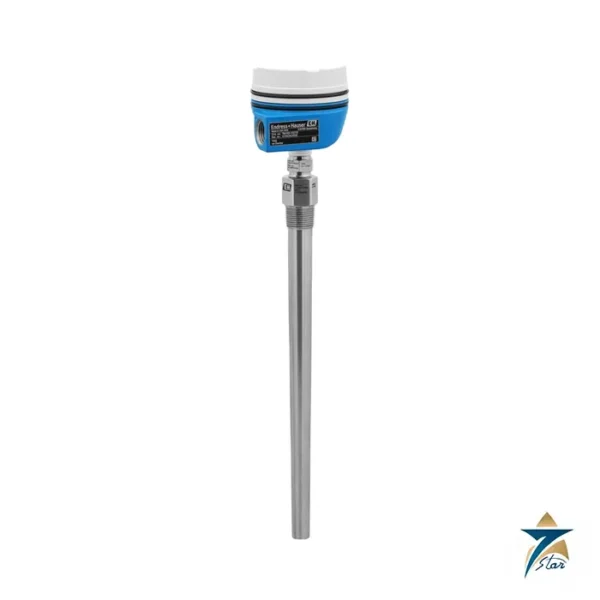
Other Models in the Wika Tc8x Range
Seven Star LLC supplies models from the Wika Tc8x range in Oman and the GCC. Compare the related models below and request a quote for the one that matches your application.




















Reviews
There are no reviews yet.