- Automation & ControlView all 2,896 products
- Automation Accessories
- AC Drives
- PLC & I/O Cards
- Industrial Communications
- Vibration Monitoring
- Controllers & Data Acquisition
- Isolator & Barrier
- Safety Switches & Guard Locking
- Motor Soft Starters
- CCTV & Security
- Encoders
- Pneumatic Cylinders
- HMI Displays
- Servo Drives
- Industrial Computers
- Machine Vision
- Automation Software
- Robotics
Brand: SICK
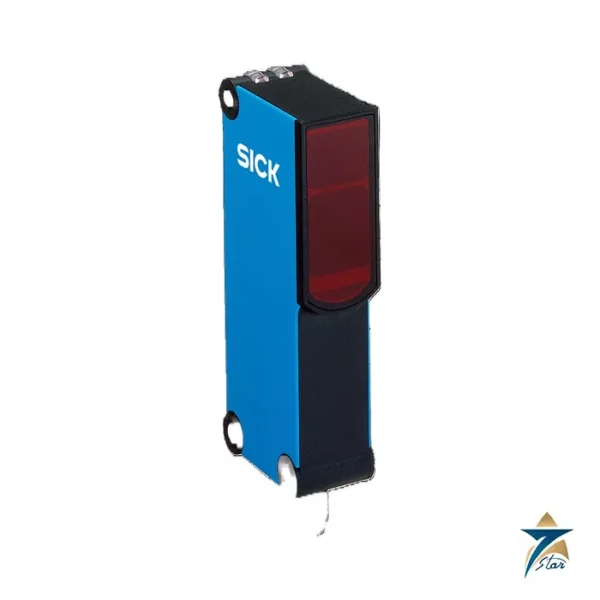
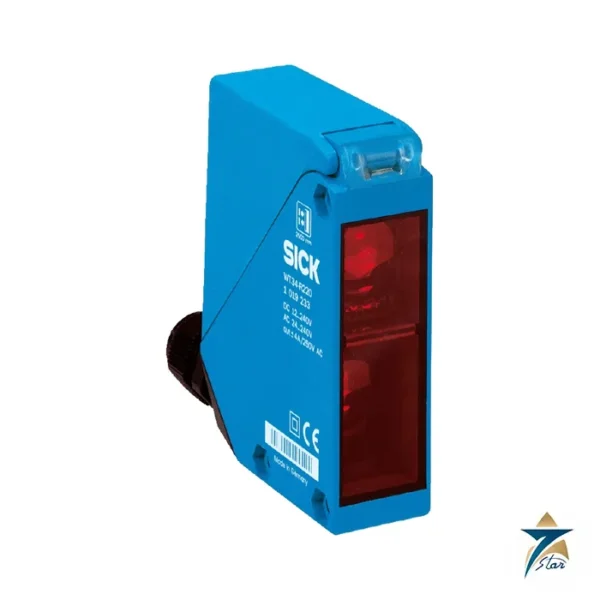
SICK WTB4-3P2161 Flat W4 Background Suppression Photoelectric Sensor
Description
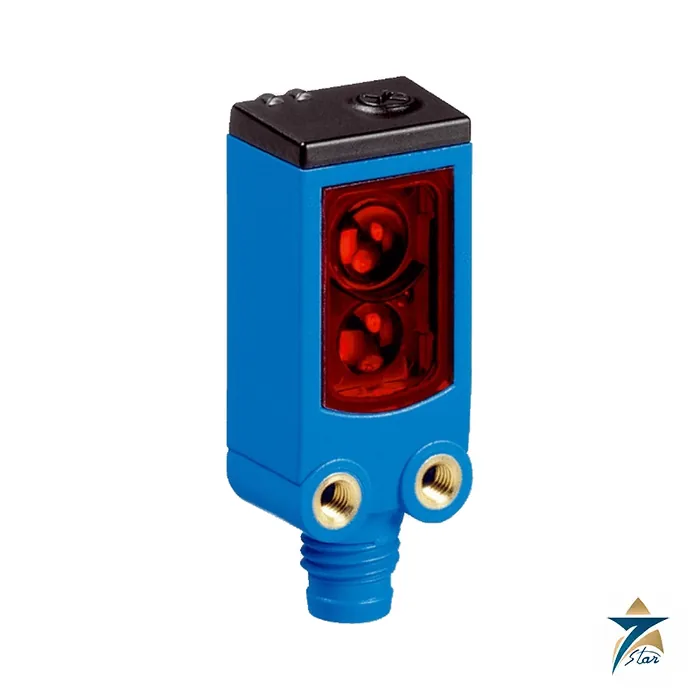
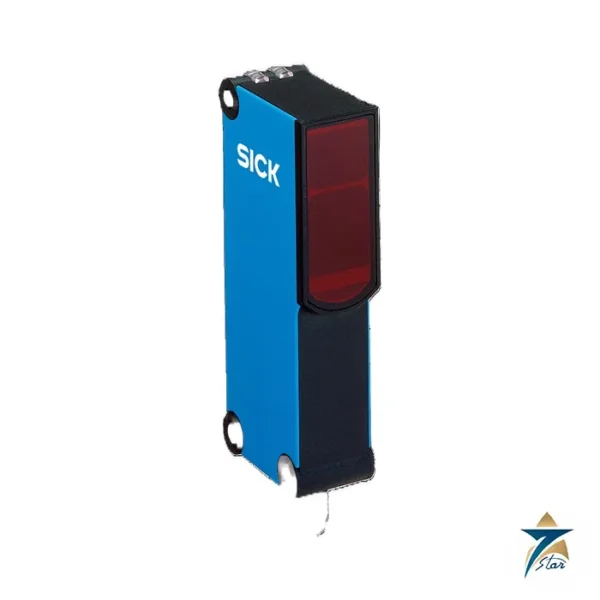
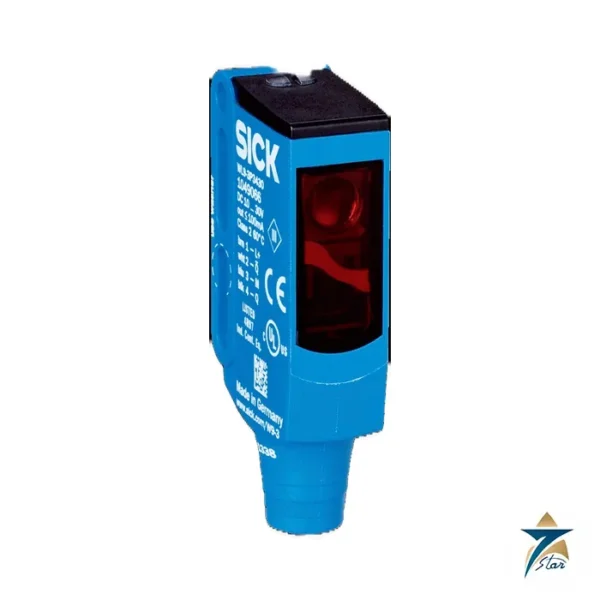
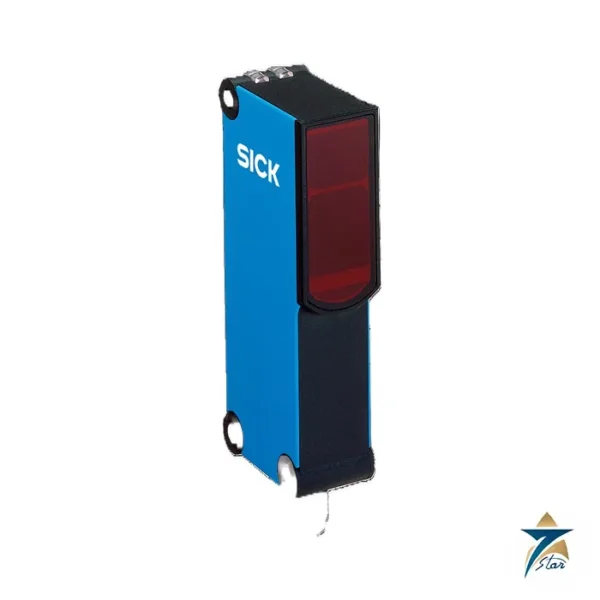
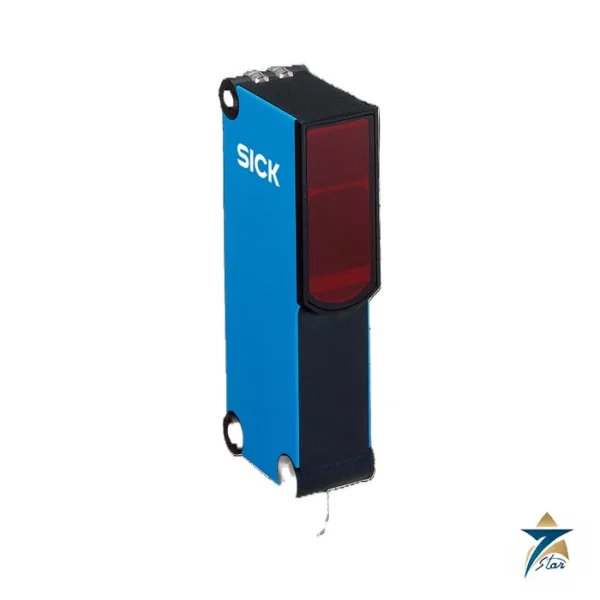
Meet the SICK WTB4-3P2161, the flat-profile W4 for small targets
Among the compact W4 photoelectric sensors from SICK, the WTB4-3P2161 (type part no. 1028099) is the one drawn for detecting small objects. The datasheet lists that as its special application. It is a background-suppression proximity sensor with a 15 mm to 150 mm working window, a maximum range of 4 mm to 150 mm and a 7 mm light spot at 50 mm.
Physically it is a flat device, 16 mm wide, 39.5 mm high and only 12 mm deep. That thin depth is the reason machine builders pick the WTB4-3P2161 for mounting behind covers, along thin sheet-metal guides and on the narrow side of a feeder bowl.
Feature list for WTB4-3P2161
- Visible red PinPoint LED at 650 nm, average LED life of 100,000 hours at 25 degrees Celsius
- Background suppression with a five-turn potentiometer for distance setting
- PNP output, light switching, maximum 100 mA, protection circuits A, C and D
- Response time below 0.5 ms and switching frequency 1,000 Hz
- ABS housing with PMMA front screen, 30 g, IP66 and IP67, -40 to +60 degrees Celsius operation
Datasheet values for WTB4-3P2161
| Parameter | Value |
|---|---|
| Type part no. | 1028099 |
| Principle | Photoelectric proximity sensor, background suppression |
| Sensing range | 15 mm to 150 mm (max. 4 mm to 150 mm) |
| Light source | PinPoint LED, red, 650 nm |
| Light spot | 7 mm diameter at 50 mm |
| Adjustment | Potentiometer, 5 turns |
| Supply voltage | 10 V DC to 30 V DC |
| Current consumption | 20 mA |
| Output | PNP, light switching, up to 100 mA |
| Response time | Below 0.5 ms, 1,000 Hz |
| Connection | M8 connector, 3-pin |
| Dimensions (W x H x D) | 16 x 39.5 x 12 mm |
| Housing / front screen | ABS / PMMA |
| Weight | 30 g |
| Enclosure rating | IP66, IP67 |
| Operating temperature | -40 to +60 degrees Celsius |
| MTTFD | 1,187 years |
WTB4-3P2161 compared with its W4 siblings
Three W4 types are easy to mix up on a purchase order. The WTB4-3P2161 works from 15 mm to 150 mm; the WTB4S-3P2161 works from 10 mm to 180 mm with a 6.5 mm spot at 150 mm and a 12.2 mm by 41.8 mm by 17.3 mm slim body; the WTB4SL-3P1161 is a Class 1 laser type with a 1 mm spot at 170 mm and 25 mm to 300 mm of range.
Choose the WTB4-3P2161 when the mounting depth is the limit (12 mm) and the target is within 150 mm. The MTTFD for the WTB4-3P2161 is quoted at 1,187 years, a little higher than the 1,078 years stated for the S variant.
Notice that the WTB4-3P2161 and the WTB4S-3P2161 share the same connector style, supply range, protection circuits and 1,000 Hz switching frequency, so a control cabinet designed around one will accept the other. What changes is mechanical: depth of 12 mm versus 17.3 mm, width of 16 mm versus 12.2 mm, and the reach of 150 mm versus 180 mm. In retrofit work, the footprint is the deciding factor, because bracket holes are not interchangeable between the two housings.
The ambient limits are the same wide window of -40 to +60 degrees Celsius for operation and -40 to +75 degrees Celsius for storage, a valuable property for devices installed in unconditioned sheds near ports.
Applications in Oman and the Gulf for the WTB4-3P2161
Think of blister packs, vial lines in pharmaceutical fill-finish, small electronic assemblies, label dispensers and cap sorters. Distribution centres in Sohar and Muscat use sensors of this size on sorter induction belts to count small parcels and polybags. Because the beam is a visible red dot, a service engineer can confirm alignment without a laser safety procedure, which is convenient on shift changes.
Selection checklist before ordering WTB4-3P2161
- Is the input PNP? The output of the WTB4-3P2161 is PNP only
- Does the target reflect well? The range figures assume 90 percent remission white
- Is an M8 three-pin cordset available at the site?
- Is the maximum object distance below 150 mm?
- Do you need dark switching? This type is light switching
The close limit of 15 mm means the WTB4-3P2161 cannot detect an object that is closer than that to the optics, so design the mounting with at least this clearance. For very glossy or transparent small items, test with real samples; background suppression helps with shiny backdrops but a mirror-like target tilted away from the sensor can lose its return signal.
Wiring and set-up of WTB4-3P2161
The connection diagram uses pin 1 brown for the positive supply, pin 3 blue for the negative supply and pin 4 black for the output Q. Switch on, place the target at the required distance and rotate the potentiometer until the LED indicates switching. Check that the background, such as a belt side wall, does not trigger the output. Fix the sensor firmly, because vibration can shift a teach-by-potentiometer setting.
Care and servicing of the WTB4-3P2161
Wipe the screen periodically. Check the M8 plug is seated. In dusty plants, add a regular cleaning round, since a coated screen reduces effective range. No internal parts are serviceable; a damaged unit is replaced as a whole.
Keep a spare unit and a printed note of the potentiometer position in the maintenance file; the five-turn control gives fine adjustment but no printed scale. The UL file number given in the datasheet is NRKH.E181493 for those who need to document approvals for insurance or inspection.
Supply information for WTB4-3P2161
Quote WTB4-3P2161 and part number 1028099 together. Seven Star LLC is an independent supplier serving Oman and the GCC and is not affiliated with the manufacturer. We can include matching M8 cables and bracket sets in the same quotation.
Documents and quotation
The WTB4-3P2161 datasheet is linked from this product page. Send the RFQ with the type code WTB4-3P2161, quantity and delivery location and we will confirm stock and lead time.
Datasheets & Documents
- Datasheet SICK WTB4-3P2161 Flat W4 Background Suppression Photoelectric Sensor Datasheet Download
Reviews (0)
How would you rate this product? Cancel reply
About brand
SICK is the German maker of industrial sensors: photoelectric and proximity sensors, safety laser scanners and light curtains, encoders, distance sensors, code readers and gas analysers. Erwin Sick, an optics engineer, founded it in Munich in 1946, and in 1952 it introduced its first marketable accident-prevention light curtain, which protected press operators by stopping the machine when a hand broke the light beam. The company moved to Waldkirch in the Black Forest in 1956 and is still headquartered there. It is a privately held company, and has been an Aktiengesellschaft (AG) since 1996.
SICK company profile
| Founded | 1946, Munich, Germany, by Erwin Sick (1909–1988) |
|---|---|
| Headquarters | Waldkirch, Baden-Württemberg, Germany (since 1956) |
| Ownership | Privately held; after the founder's death in 1988 his widow Gisela Sick became the main shareholder. Legal form SICK AG since 1996 |
| Size | More than 12,000 employees and group revenue of about EUR 2.3 billion (company figures for 2023) |
| First breakthrough | Accident-prevention light curtain for presses, shown in Hanover in 1952 |
| International growth | First foreign subsidiary in France in 1972, United States in 1976; today sales and service companies worldwide |
| Product families | Photoelectric, inductive, capacitive, magnetic and ultrasonic sensors; safety laser scanners, light curtains, safety controllers and relays; encoders and motor feedback systems; distance sensors and LiDAR; barcode and 2D code readers and machine vision; gas analysers, dust and flow measurement for process and emissions monitoring |
Milestones
- 1946: Erwin Sick receives a licence to run his engineering firm in Munich.
- 1952: The first marketable accident-prevention light curtain is presented in Hanover and goes into series production.
- 1956: The company moves to Waldkirch with 25 employees.
- 1972 and 1976: Subsidiaries are founded in France and the United States.
- 1996: SICK becomes an Aktiengesellschaft.
- Today: Sensors for factory and logistics automation, machine safety and process analysis, with a large share of revenue outside Germany.
Choosing a SICK sensor
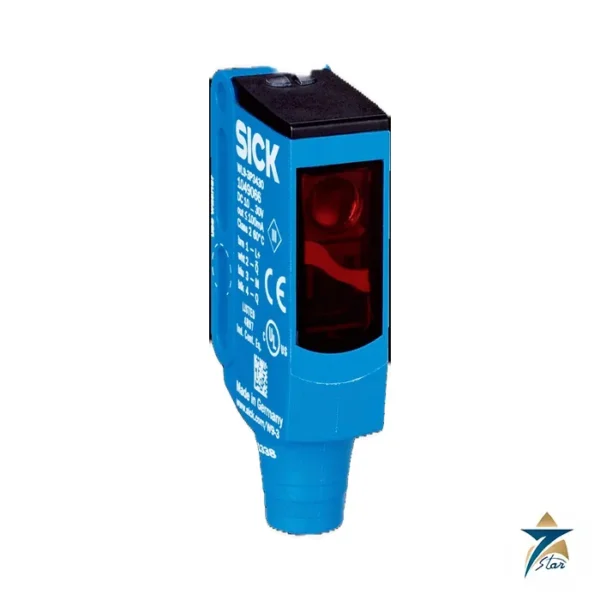
For object detection, the sensing principle comes first. A retro-reflective sensor (WL series) sends light to a reflector and switches when an object breaks the beam; it is reliable over long distances and easy to align. A sensor with background suppression (WTB series) detects an object at a set distance and ignores what is behind it, which suits conveyors with shiny or dark backgrounds. A through-beam pair (WS/WE) gives the longest range and the highest reliability in dust. For transparent bottles and film, use a model built for transparent objects (for example WL12G-3B or WL150-P420). The digits in the code also matter: "P" usually means a PNP output and "N" NPN, and the last digits set the connector or cable. For machine guarding, a safety laser scanner such as nanoScan3 or microScan3 protects an area, while a safety controller such as Flexi Soft combines several safety devices.
Where SICK products are used
In Oman and the GCC, SICK sensors are used in packaging and bottling lines, food and beverage plants, logistics and airport baggage handling, cement and steel plants, ports and cranes, automated warehouses, and on machines built by European OEMs. SICK safety scanners guard robots and automated guided vehicles, and its encoders give position feedback on motors, hoists and conveyors.
SICK products we list
| Family | Examples |
|---|---|
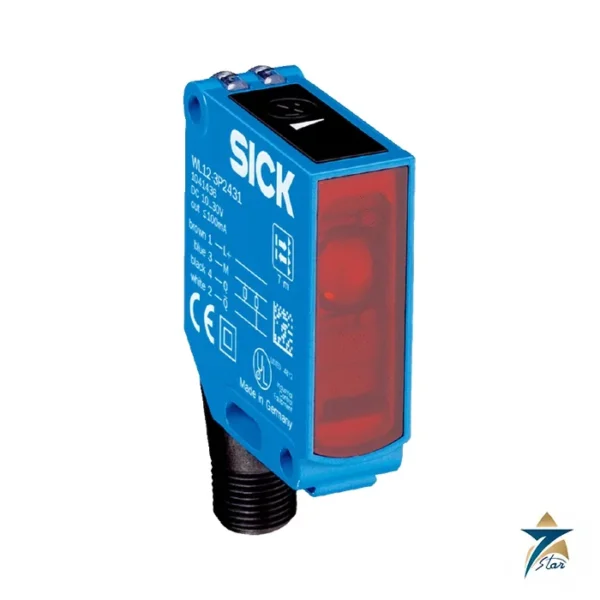
| Photoelectric sensors | WL12-3P2431, WTB12-3P2431, GTB6-P4211, VL18-4P3240, WL12G-3B2531, WS/WE100, KT5W contrast, W26 IO-Link |
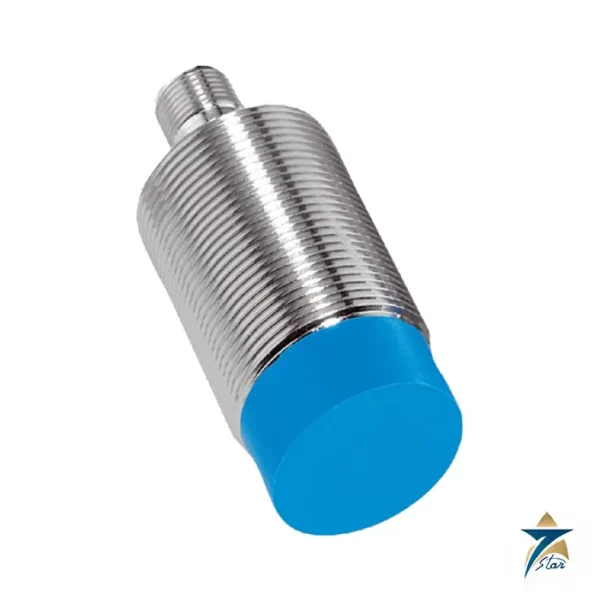
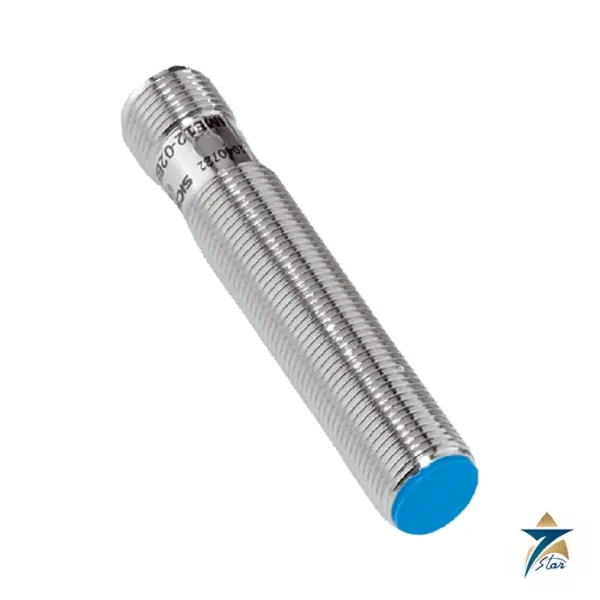
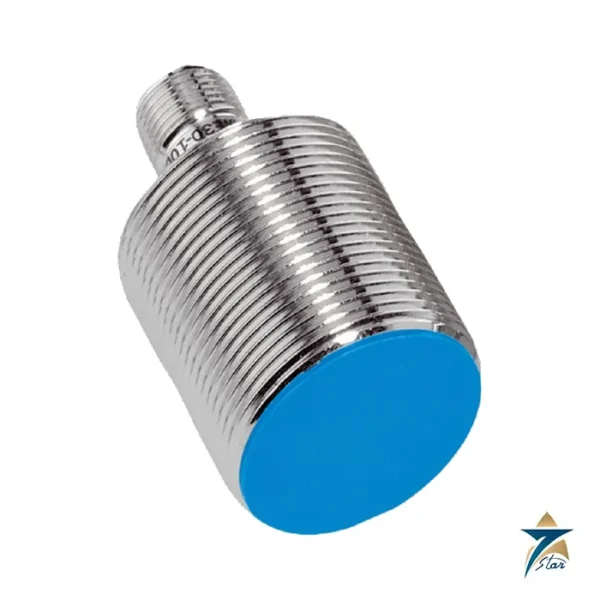
| Proximity, cylinder and ultrasonic sensors | IME12-08NPSZC0S, IME18-05BPSZC0S, MZT8, UM18 4-20 mA, UM30, UFN3 fork |
| Machine safety | nanoScan3, microScan3, S300 Professional, Flexi Soft FX3-CPU1, FX3-XTIO, ReLy OSSD |
| Encoders and motor feedback | DFS60B, AFM60 PROFINET, AFS60 SSI, ATM60 PROFIBUS, SRS50, EFS50 |
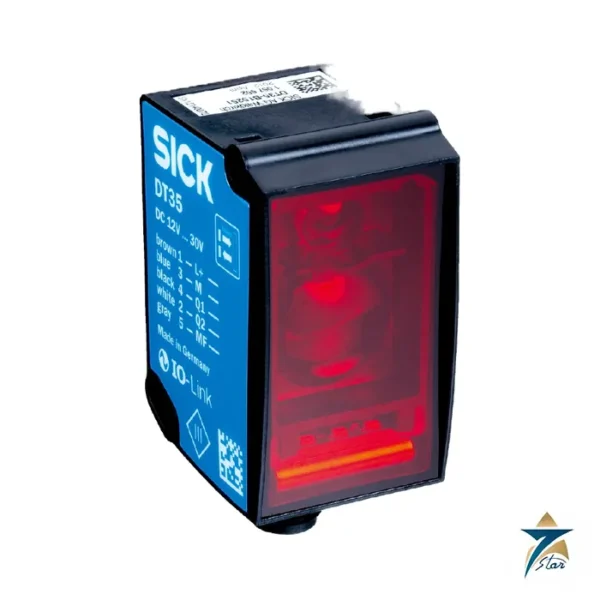
| Distance sensors and code readers | DT50, DL50, DT35, Lector632 |
Ordering SICK products: what we need
Send the type code and the 7-digit SICK part number from the label (for example WTB12-3P2431 together with its part number). For a replacement sensor, add the output (PNP or NPN), connection (M8, M12 or cable) and sensing distance. For encoders, add the interface (incremental, SSI, PROFIBUS, PROFINET), resolution and shaft type. For safety scanners, tell us the model and whether the existing configuration needs to be kept.
Frequently requested SICK models: SICK WTB4-3 Miniature Photoelectric Proximity Sensor, SICK IME18-08NPSZW2K Inductive Proximity Sensor, SICK DT35-B15251 Laser Distance Sensor, SICK microScan3 Safety Laser Scanner, SICK RZT7-03ZUS-KWB T-Slot Cylinder Sensor.
Facts checked against SICK's published company history and annual figures, October 2026.
Browse SICK products by category: Sensors & Transmitters.
FAQ
Questions about the SICK WTB4-3P2161 Flat W4 Background Suppression
Answers from our engineering team on installation, compatibility and integration.
01What is the sensing range of SICK WTB4-3P2161?
The working range is 15 mm to 150 mm and the maximum range 4 mm to 150 mm on a 90 percent remission target.
02What size is the WTB4-3P2161 housing?
It measures 16 mm wide, 39.5 mm high and 12 mm deep, a flat plastic ABS body weighing 30 g.
03Which wires does the WTB4-3P2161 connect?
Pin 1 brown is the supply plus, pin 3 blue the supply minus and pin 4 black the output Q on the M8 three-pin connector.
04What special application is listed for WTB4-3P2161?
The datasheet lists detecting small objects, supported by a 7 mm spot at 50 mm.
05What protection rating does WTB4-3P2161 have?
IP66 and IP67 with an operating temperature from -40 to +60 degrees Celsius.


Reviews
There are no reviews yet.