Brand:

SICK WL12C-3P2432A70 IO-Link Retro-Reflective Sensor

Description

Why the SICK WL12C-3P2432A70 stands apart

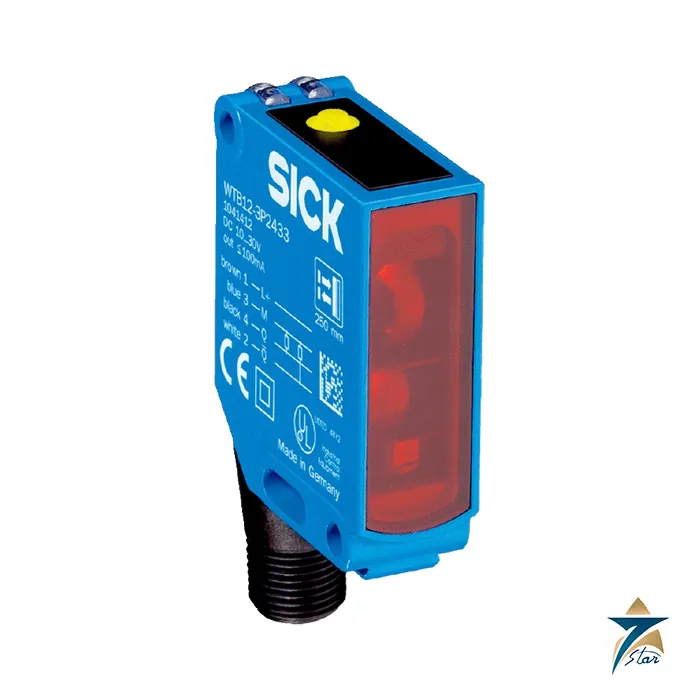
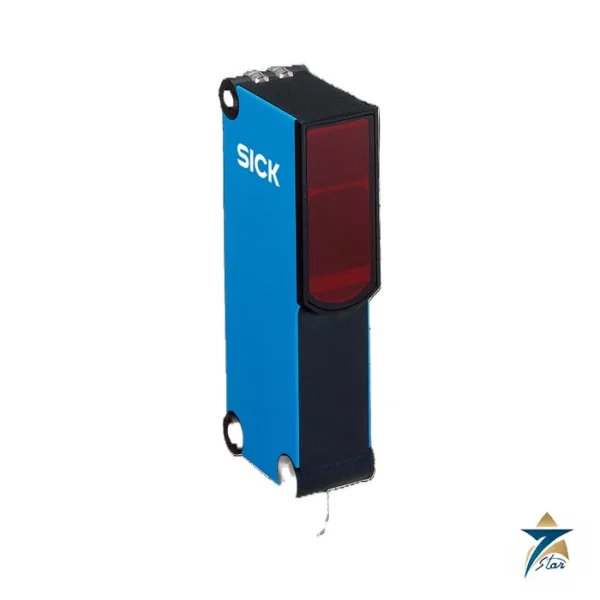
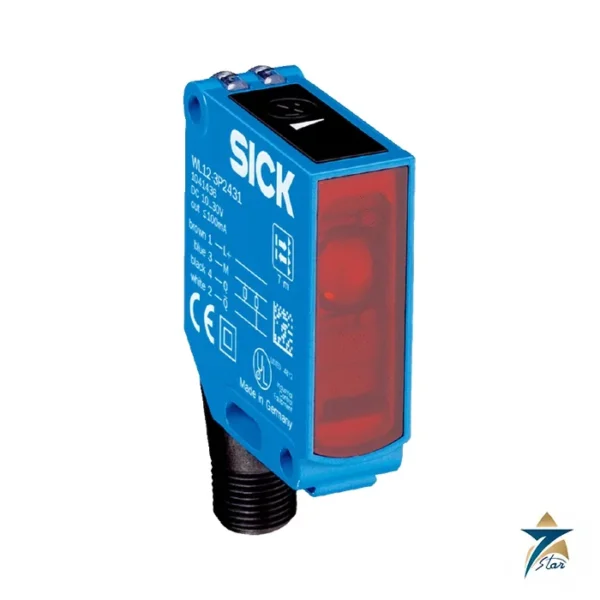
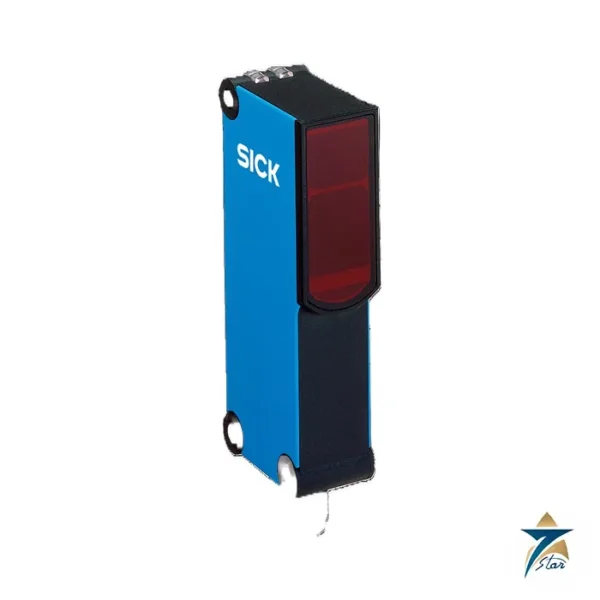
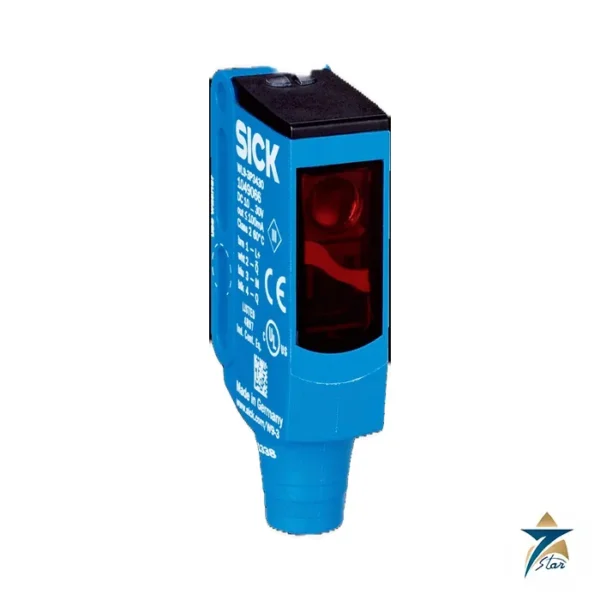
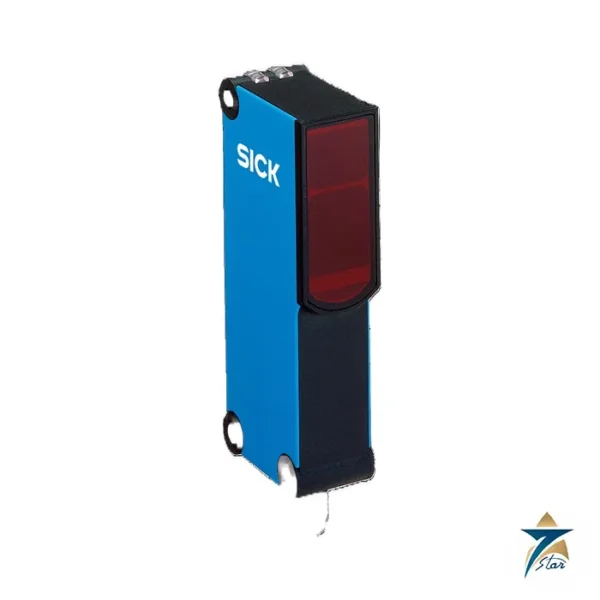
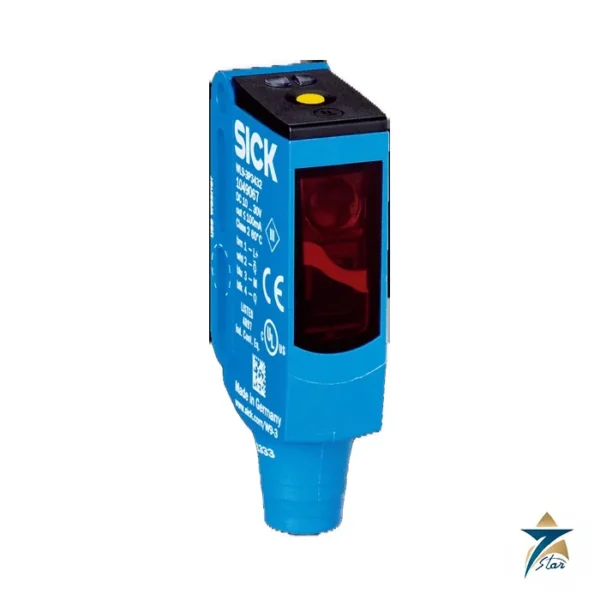
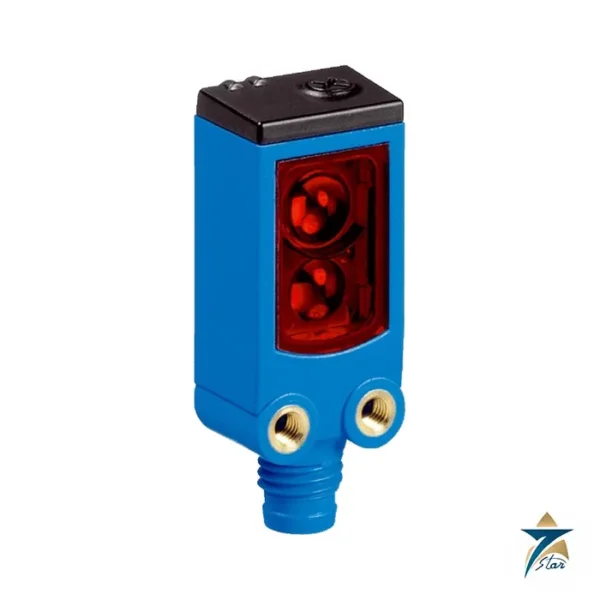
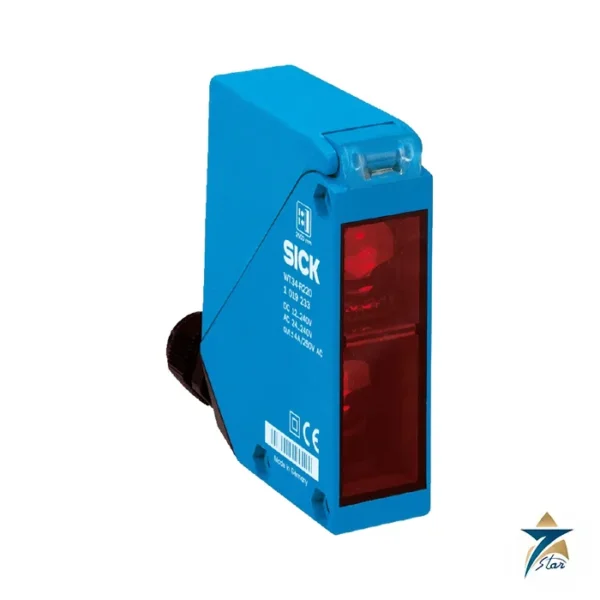
SICK built the WL12C-3P2432A70 (part number 1067775) as the smart member of the W12 retro-reflective sensors. On the outside it keeps the familiar 15.6 x 48.5 x 42 mm rectangle with an M12 4-pin connector, but inside it hosts an IO-Link V1.1 interface, a PinPoint LED and a single teach-in button. That combination lets a plant send range, contamination and switching states up to a controller instead of walking the line with a screwdriver.

For buyers in Oman and the wider Gulf, it is most relevant on automated lines where an IO-Link master is already fitted and where parameters have to be restored after a sensor swap without touching the device.

IO-Link behaviour of WL12C-3P2432A70

The communication block of the datasheet lists IO-Link V1.1 at COM2, 38.4 kBaud, with a cycle time of 2.3 ms and a 16-bit process data length. Bit 0 carries switching signal QL1, bit 1 carries QL2 and bits 2 to 15 carry the measuring value. VendorID is 26, DeviceID is 0x8000EF (decimal 8388847) and the sensor is compatible with master port type A. SIO mode is supported, so the same unit can be wired straight to a standard input.

  • Pin 2 can be an external input, teach-in input, sender-off input, detection output, logic output or device contamination alarm output
  • Smart Task name: time measurement plus debouncing
  • Timer functions: deactivated, switch-on delay, off delay, on and off delay, impulse (one shot); inverter available
  • Time measurement resolution 1 ms, maximum debounce time 30,000 ms

WL12C-3P2432A70 specification table

Parameter Value
Part number 1067775
Principle Retro-reflective, autocollimation, polarisation filter
Sensing range 0 to 4 m (max. 0 to 5 m), reflector PL80A
Light source PinPoint LED, visible red, 640 nm
Light spot Diameter 100 mm at 3 m, dispersion about 1.5 degrees
Adjustment IO-Link, single teach-in button
Supply 10 to 30 V DC, 30 mA without load
Output PNP, light or dark switching, up to 100 mA
Repeatability (response time) 100 microseconds
Response time on pin 2 200 to 300 microseconds
Switching frequency 1,500 Hz
MTTFD / mission time 891 years / 20 years
Housing Zinc die-cast metal, PMMA front screen
Weight 120 g
Enclosure rating IP66, IP67
Operating temperature Minus 40 to plus 60 C

How WL12C-3P2432A70 differs from other W12 variants

Compared with the potentiometer type WL12-3P2431S43, the WL12C-3P2432A70 trades a little reach for intelligence. Its typical range is 4 m instead of 5 m and the mean time to dangerous failure is stated as 891 years rather than 1,543 years, but you gain IO-Link, remote parameter storage and a contamination alarm that warns before the reflector or lens becomes unusable. The housing is zinc die-cast in both cases and the enclosure rating is IP66 and IP67 here, while the basic model also lists IP69K.

Where the IO-Link version pays off

Think of a high-speed carton diverter in a GCC distribution centre: with a contamination alarm on pin 2, maintenance receives a message days before the beam fails. In pharmaceutical packing, the time-measurement function can reject a pack whose beam interruption is shorter than expected, a typical debouncing job. On oil-field skid-mounted conveyors or desalination chemical-bag handling lines the sensor reports its own state through the master, so inspection rounds focus on the units that really need cleaning.

Wiring and selection hints

Pin 4 carries the switching output and the datasheet warns that it must not be connected to another output. Choose a type A master port, use a standard unshielded three- or four-wire M12 cable, and keep supply between 10 and 30 V DC. Add the PL80A reflector to the order because the range figures are valid only with it. If your controller has no IO-Link master, the SIO mode still gives a normal PNP signal.

Electrical limits are the same as for the rest of the W12 family: ripple below 5 Vpp, a short-circuit protected supply network of at most 8 A, protection class III and circuit protection against reverse polarity, interference and short circuits. Switching signal levels follow the PNP convention, high at supply minus 2.5 V and about 0 V when low. Because the unit offers both a light-switching and a dark-switching logic, plan the wiring and the PLC logic together so that a lost cable also drives the line to a safe state.

Setup and teaching

Mount the sensor, point the visible red spot at the reflector and press the teach button once to store the switching threshold; or write the threshold with the IO-Link engineering tool and clone it to spare devices. Because IO-Link data storage is available through the master, a replacement WL12C-3P2432A70 can be fitted and will inherit the parameters automatically.

Care and spare planning

Clean the PMMA front screen with a soft damp cloth and watch the contamination output. Keep one spare with the same type code on the shelf; IO-Link devices with a different DeviceID are not interchangeable in the master’s configuration. Seven Star LLC is an independent supplier serving Oman and the GCC and is not affiliated with the manufacturer.

A practical purchasing tip is to record the vendor ID 26 and the DeviceID in your asset list, so that the controls engineer can confirm quickly that the right IO-Link variant has arrived on site before the line is released for production. When several WL12C-3P2432A70 units share one master, label each cable with the port number; it saves time when a contamination alarm needs to be traced back to a physical sensor on a long conveyor.

Documents and quotation

The manufacturer datasheet for WL12C-3P2432A70 comes with this listing. Send an RFQ stating the part number, quantity and delivery point in Oman or the GCC, and our team will reply with availability and lead time.

Other Models in the Sick Wl12 Range

Seven Star LLC supplies models from the Sick Wl12 range in Oman and the GCC. Compare the related models below and request a quote for the one that matches your application.

ModelCategory
SICK WL12-3P2431S43 Retro-Reflective Photoelectric SensorInductive Proximity SensorsView details
SICK WL12C-3P2432A70 IO-Link Retro-Reflective SensorInductive Proximity SensorsYou are viewing this model
Datasheets & Documents
  • PDF Datasheet SICK WL12C-3P2432A70 IO-Link Retro-Reflective Sensor Datasheet Download
Reviews (0)

Reviews

There are no reviews yet.

How would you rate this product?

It takes about 10 seconds — just tap a star. Your email is never published.

About brand

SICK is the German maker of industrial sensors: photoelectric and proximity sensors, safety laser scanners and light curtains, encoders, distance sensors, code readers and gas analysers. Erwin Sick, an optics engineer, founded it in Munich in 1946, and in 1952 it introduced its first marketable accident-prevention light curtain, which protected press operators by stopping the machine when a hand broke the light beam. The company moved to Waldkirch in the Black Forest in 1956 and is still headquartered there. It is a privately held company, and has been an Aktiengesellschaft (AG) since 1996.

SICK company profile

Founded 1946, Munich, Germany, by Erwin Sick (1909–1988)
Headquarters Waldkirch, Baden-Württemberg, Germany (since 1956)
Ownership Privately held; after the founder's death in 1988 his widow Gisela Sick became the main shareholder. Legal form SICK AG since 1996
Size More than 12,000 employees and group revenue of about EUR 2.3 billion (company figures for 2023)
First breakthrough Accident-prevention light curtain for presses, shown in Hanover in 1952
International growth First foreign subsidiary in France in 1972, United States in 1976; today sales and service companies worldwide
Product families Photoelectric, inductive, capacitive, magnetic and ultrasonic sensors; safety laser scanners, light curtains, safety controllers and relays; encoders and motor feedback systems; distance sensors and LiDAR; barcode and 2D code readers and machine vision; gas analysers, dust and flow measurement for process and emissions monitoring

Milestones

  • 1946: Erwin Sick receives a licence to run his engineering firm in Munich.
  • 1952: The first marketable accident-prevention light curtain is presented in Hanover and goes into series production.
  • 1956: The company moves to Waldkirch with 25 employees.
  • 1972 and 1976: Subsidiaries are founded in France and the United States.
  • 1996: SICK becomes an Aktiengesellschaft.
  • Today: Sensors for factory and logistics automation, machine safety and process analysis, with a large share of revenue outside Germany.

Choosing a SICK sensor

For object detection, the sensing principle comes first. A retro-reflective sensor (WL series) sends light to a reflector and switches when an object breaks the beam; it is reliable over long distances and easy to align. A sensor with background suppression (WTB series) detects an object at a set distance and ignores what is behind it, which suits conveyors with shiny or dark backgrounds. A through-beam pair (WS/WE) gives the longest range and the highest reliability in dust. For transparent bottles and film, use a model built for transparent objects (for example WL12G-3B or WL150-P420). The digits in the code also matter: "P" usually means a PNP output and "N" NPN, and the last digits set the connector or cable. For machine guarding, a safety laser scanner such as nanoScan3 or microScan3 protects an area, while a safety controller such as Flexi Soft combines several safety devices.

Where SICK products are used

In Oman and the GCC, SICK sensors are used in packaging and bottling lines, food and beverage plants, logistics and airport baggage handling, cement and steel plants, ports and cranes, automated warehouses, and on machines built by European OEMs. SICK safety scanners guard robots and automated guided vehicles, and its encoders give position feedback on motors, hoists and conveyors.

SICK products we list

Family Examples
Photoelectric sensors WL12-3P2431, WTB12-3P2431, GTB6-P4211, VL18-4P3240, WL12G-3B2531, WS/WE100, KT5W contrast, W26 IO-Link
Proximity, cylinder and ultrasonic sensors IME12-08NPSZC0S, IME18-05BPSZC0S, MZT8, UM18 4-20 mA, UM30, UFN3 fork
Machine safety nanoScan3, microScan3, S300 Professional, Flexi Soft FX3-CPU1, FX3-XTIO, ReLy OSSD
Encoders and motor feedback DFS60B, AFM60 PROFINET, AFS60 SSI, ATM60 PROFIBUS, SRS50, EFS50
Distance sensors and code readers DT50, DL50, DT35, Lector632

Ordering SICK products: what we need

Send the type code and the 7-digit SICK part number from the label (for example WTB12-3P2431 together with its part number). For a replacement sensor, add the output (PNP or NPN), connection (M8, M12 or cable) and sensing distance. For encoders, add the interface (incremental, SSI, PROFIBUS, PROFINET), resolution and shaft type. For safety scanners, tell us the model and whether the existing configuration needs to be kept.

Frequently requested SICK models: SICK WTB4-3 Miniature Photoelectric Proximity Sensor, SICK IME18-08NPSZW2K Inductive Proximity Sensor, SICK DT35-B15251 Laser Distance Sensor, SICK microScan3 Safety Laser Scanner, SICK RZT7-03ZUS-KWB T-Slot Cylinder Sensor.

Facts checked against SICK's published company history and annual figures, October 2026.

FAQ

Questions about the SICK WL12C-3P2432A70 IO-Link Retro-Reflective Sensor

Answers from our engineering team on installation, compatibility and integration.

01What makes the SICK WL12C-3P2432A70 different from a plain W12 sensor?
It communicates over IO-Link V1.1 at COM2 38.4 kBaud, offers a single teach-in button and has Smart Task time measurement with debouncing.
02What range does WL12C-3P2432A70 achieve?
The datasheet gives 0 to 4 m typical and 0 to 5 m maximum with the PL80A reflector, using a PinPoint LED with a 100 mm spot at 3 m.
03Which process data does the WL12C-3P2432A70 send?
A 16-bit word where bit 0 is switching signal QL1, bit 1 is switching signal QL2 and bits 2 to 15 carry the measuring value; cycle time is 2.3 ms.
04Can WL12C-3P2432A70 run without an IO-Link master?
Yes, SIO mode is supported, so the PNP output on a 4-pin M12 connector can feed an ordinary PLC input with 10 to 30 V DC supply.
05What is the housing of the WL12C-3P2432A70 made of?
A zinc die-cast metal body with a PMMA front screen, 15.6 x 48.5 x 42 mm, 120 g, rated IP66 and IP67, from minus 40 to plus 60 degrees Celsius.