Promag W 300 electromagnetic flowmeter for water and wastewater lines
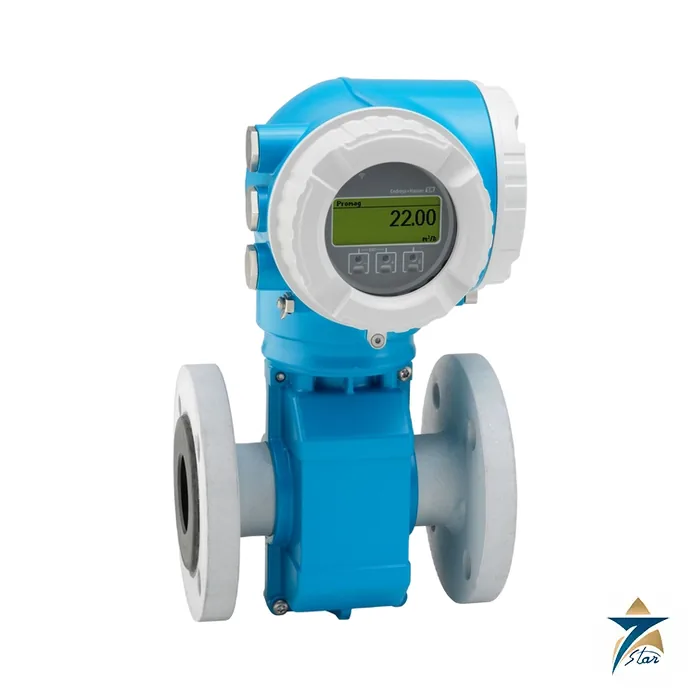
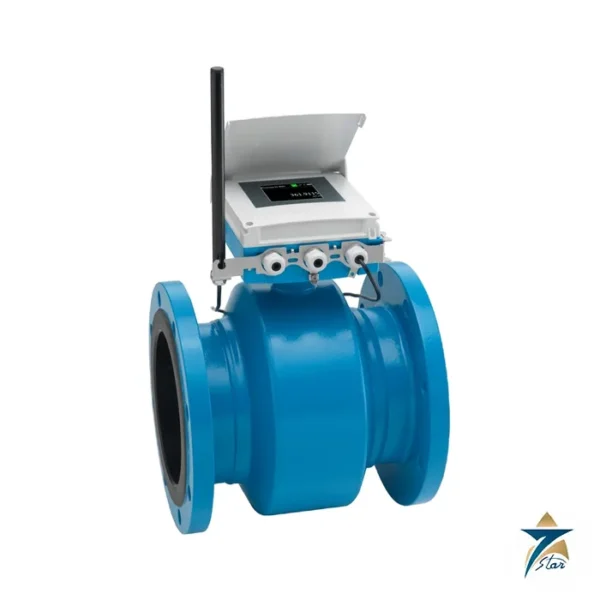
The Endress+Hauser Promag W 300 is an electromagnetic (magnetic-inductive) flowmeter built for water and wastewater duty. It measures volume flow in conductive liquids with no moving parts and no obstruction in the pipe, over nominal diameters from DN 25 to DN 3000 (1 to 120 in). Liners in PTFE, polyurethane or hard rubber and electrodes in 316L, Alloy C22 or tantalum let the meter be matched to raw water, treated water, sewage and sludge. Seven Star LLC supplies the Promag W 300 in Oman and the GCC as an independent supplier in Muscat.
Promag W 300 construction and name
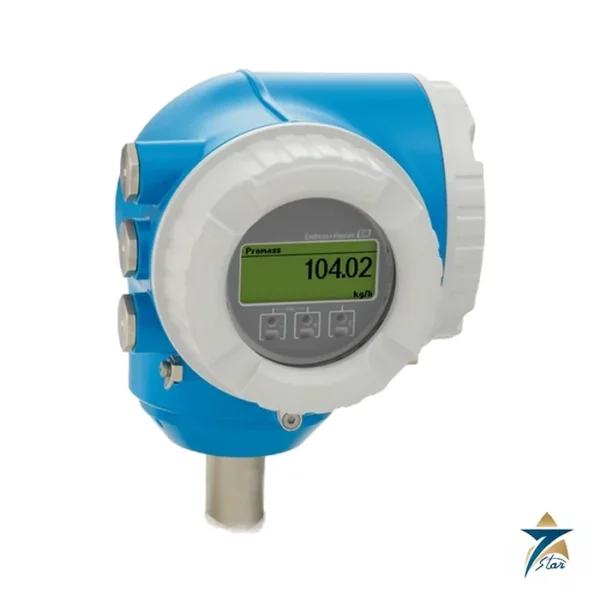
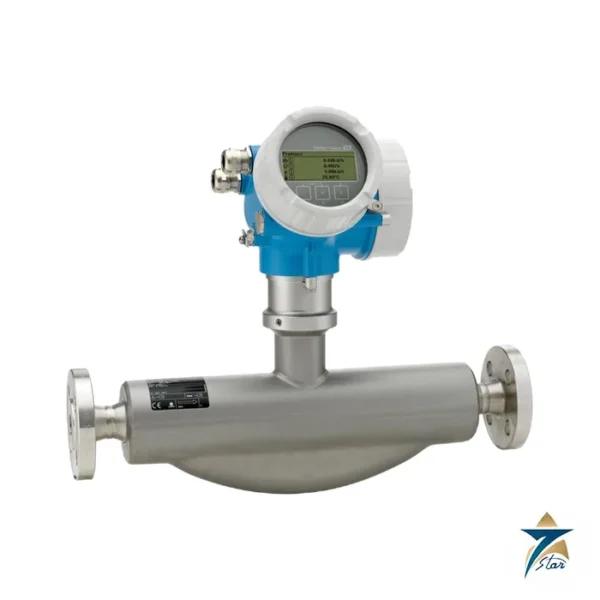
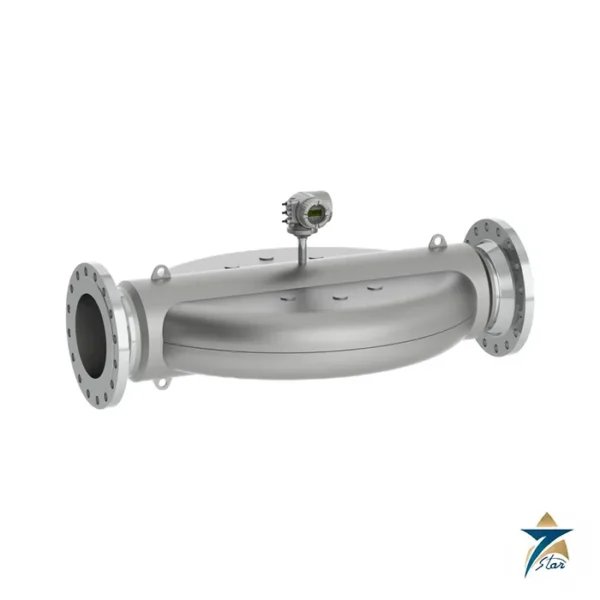
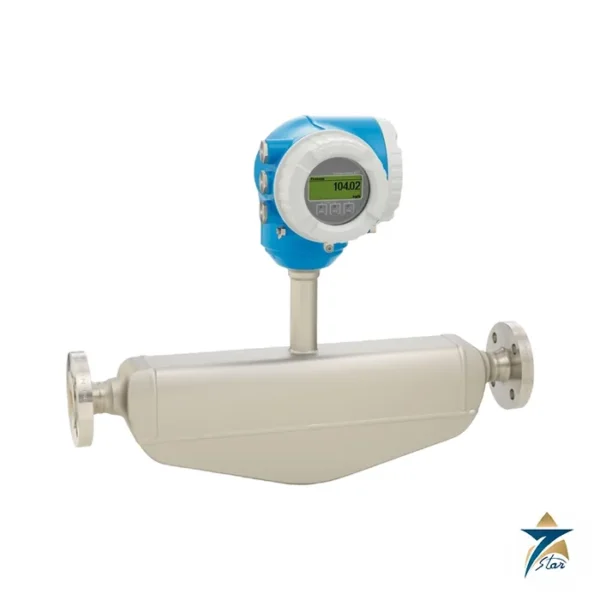
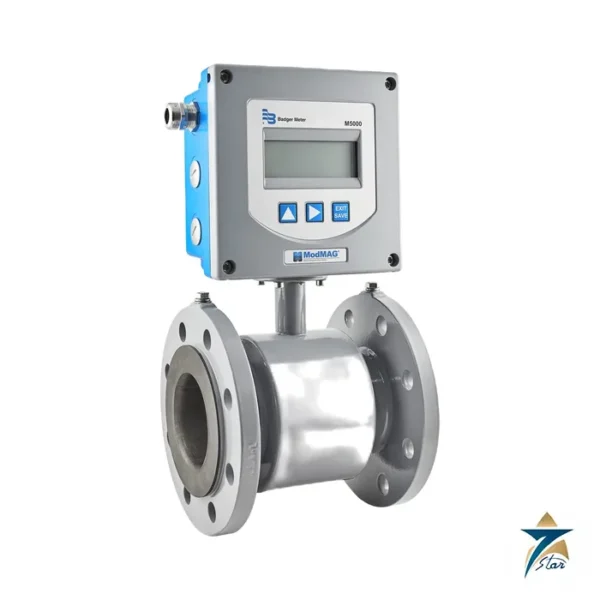
“Promag W” is the water-industry sensor family; “300” is the Proline 300 transmitter, a compact dual-compartment housing with up to three I/Os, a backlit display with touch control, and WLAN access. The Promag W 300 is delivered as a compact device in a coated aluminium housing, with a remote display optional. Sensors come with fixed flanges, lap-joint flanges or stamped-plate flanges: up to DN 300 in an aluminium half-shell housing or a fully welded carbon steel housing, and DN 350 to DN 3000 in a fully welded carbon steel housing. The device list includes versions with 0 x DN inlet and outlet runs, including a constricted measuring tube design.
Promag W 300 technical specifications
| Parameter |
Specification |
| Manufacturer / part number |
Endress+Hauser Promag W 300 (Proline Promag W 300, product root 5W3B) |
| Measuring principle |
Electromagnetic, bidirectional |
| Nominal diameters |
DN 25 to 3000 (1 to 120 in) |
| Typical measuring range |
v = 0.01 to 10 m/s (0.03 to 33 ft/s) at the specified accuracy; recommended full scale DN 25: 9 to 300 dm³/min; DN 150: 20 to 600 m³/h; DN 3000: 7 600 to 254 000 m³/h |
| Turndown |
Over 1000:1 |
| Volume flow accuracy |
±0.5 % of reading ± 1 mm/s standard; ±0.2 % of reading ± 2 mm/s optional (Flat Spec) |
| Repeatability |
Volume flow max. ±0.1 % of reading ± 0.5 mm/s; conductivity max. ±5 % of reading |
| Measured variables |
Volume flow, electrical conductivity; mass flow calculated |
| Minimum conductivity |
5 μS/cm for liquids in general |
| Liner and medium temperature |
Hard rubber (DN 50–3000): 0 to +80 °C; polyurethane (DN 25–1200): –20 to +50 °C; PTFE (DN 25–300): –20 to +90 °C |
| Electrodes |
1.4435 (316L), Alloy C22 (2.4602 / UNS N06022), tantalum |
| Process pressure |
Up to PN 40, Class 300, 20K, depending on size and flange |
| Process connections |
EN 1092-1, ASME B16.5, JIS B2220, AS 2129 Table E, AS 4087 PN 16, AWWA C207 Class D |
| Drinking water approvals |
ACS, KTW/W270, NSF 61, WRAS BS 6920 (depending on configuration) |
| Supply voltage |
DC 24 V ±20 % or AC 100 to 240 V (–15 to +10 %), 50/60 Hz; maximum 10 W |
| Ambient temperature |
Transmitter –40 to +60 °C; sensor with carbon steel connections –10 to +60 °C, stainless –40 to +60 °C |
| Ingress protection |
Transmitter IP66/67, Type 4X; IP68 (Type 6P) listed for the sensor; optional C5-M coated, fully welded sensor for corrosive environments |
How the Promag W 300 measures flow
A magnetic field is generated across the pipe, and a conductive liquid moving through it induces a voltage that is proportional to flow velocity. Two electrodes pick up this voltage, and the transmitter multiplies velocity by the pipe cross-section to give volume flow. The datasheet describes the measurement as virtually independent of pressure, density, temperature and viscosity. The transmitter also measures electrical conductivity, which can warn of changes in the water, and an empty-pipe detection function is available for lines that may run partly empty. Mass flow is listed as a calculated variable.
Where the Promag W 300 fits and what sits next to it
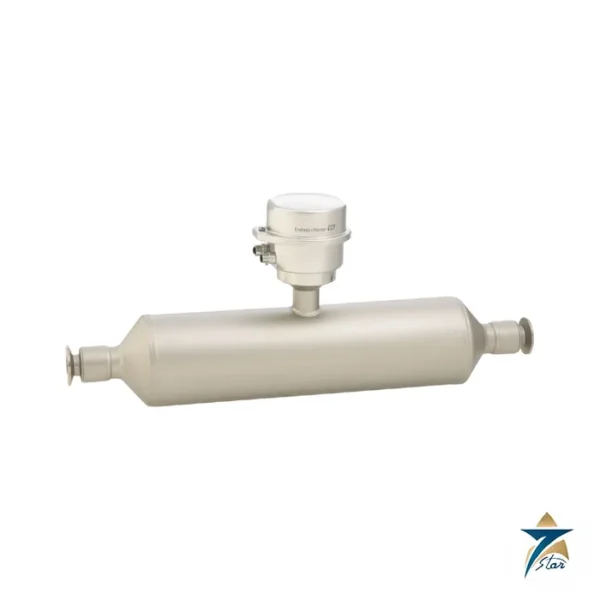
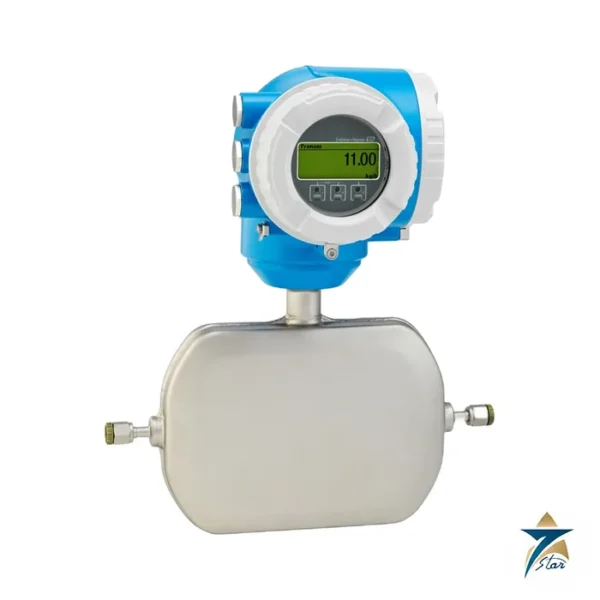
The Promag W 300 is the volume flow meter for conductive water-type liquids. When you need direct mass flow, density or fluids with low conductivity, the Coriolis models in the same Proline family, such as the Promass I 100, Promass Q 300 or Promass O 300, are the alternatives. For very large water lines in particular, the Promag W 300 avoids the weight and cost of a large Coriolis sensor.
The transmitter can be fitted with HART, PROFIBUS DP, PROFIBUS PA, Modbus RS485, EtherNet/IP, PROFINET and FOUNDATION Fieldbus communication, with current, pulse/frequency/switch, relay and status I/O. Drinking-water approvals and the PTFE, polyurethane and hard rubber liners are the main selection points for municipal and utility work.
Promag W 300 selection checklist
- Fluid: raw water, treated water, seawater-related, sewage or sludge; confirm minimum conductivity of 5 μS/cm and whether the fluid is abrasive.
- Liner: hard rubber for large lines up to +80 °C, polyurethane for abrasive duty up to +50 °C, PTFE for up to +90 °C on DN 25 to 300.
- Electrodes: 316L for general use, Alloy C22 or tantalum for aggressive media.
- Size and design: line size, full-bore or constricted tube, short or long installed length, and whether 0 x DN inlet runs are required.
- Flange standard and pressure class, and the carbon steel or stainless connection material.
- Accuracy: standard or the optional ±0.2 % Flat Spec.
- Electrical: power supply, outputs and fieldbus, and display type.
- Approvals: drinking-water, hazardous area, and cable entry type.
Installing and maintaining the Promag W 300
Do not mount the sensor at the highest point of the pipe, where gas collects, and avoid a downpipe that can run empty. Align the flow arrow with the line, and ideally keep the electrode plane horizontal so bubbles do not insulate the electrodes. Depending on the design option, inlet and outlet runs can be reduced or omitted entirely; for other designs follow the 5 x DN upstream and 2 x DN downstream guidance. The datasheet recommends installing upstream of valves and tees, and downstream of pumps.
Good grounding and potential equalization are essential in electromagnetic meters, so connect the reference or grounding rings as the installation guide describes. A sensor with a steel housing is recommended near strong power cables. Maintenance is light: there are no wear parts, so check cable glands and housing seals, and review diagnostics and conductivity trends. Heartbeat Technology options are available on the transmitter platform.
Promag W 300 applications in Oman and the GCC
The Promag W 300 fits the water cycle of the region: well-field and raw water intakes, desalination feed and product water, potable distribution networks, district cooling loops, sewage treatment plants and sludge lines, and industrial utility water in refineries, power stations and petrochemical sites. Large DN sizes up to DN 3000 match transmission mains, while PTFE-lined small sizes serve treated water. The rated –40 to +60 °C ambient window and IP66/67 transmitter suit hot, dusty and humid sites, and the optional C5-M coated welded sensor housing is for corrosive environments such as coastal installations.
Liner choices for the Promag W 300
| Liner |
Nominal diameter |
Medium temperature |
Typical use |
| Hard rubber |
DN 50 to 3000 |
0 to +80 °C |
Large water and wastewater mains |
| Polyurethane |
DN 25 to 1200 |
–20 to +50 °C |
Liquids with abrasive content |
| PTFE |
DN 25 to 300 |
–20 to +90 °C |
Liquids up to +90 °C |
What to send with a Promag W 300 RFQ
- Order code or nameplate photo of the unit being replaced
- Fluid, conductivity, temperature, pressure and expected flow range
- Line size, flange standard, class and installed length limit
- Liner, electrode and drinking-water approval requirements
- Power supply, outputs and fieldbus
- Delivery point in Oman or the GCC and date required
Documents and quotation
The Promag W 300 Technical Information file from Endress+Hauser is larger than we attach to a product page, so no datasheet is attached here. Send us the part number and we will confirm the available documents.
Send the order code or your line size, fluid and flow range, and Seven Star LLC will prepare a quotation for Oman and the GCC.





















Reviews
There are no reviews yet.