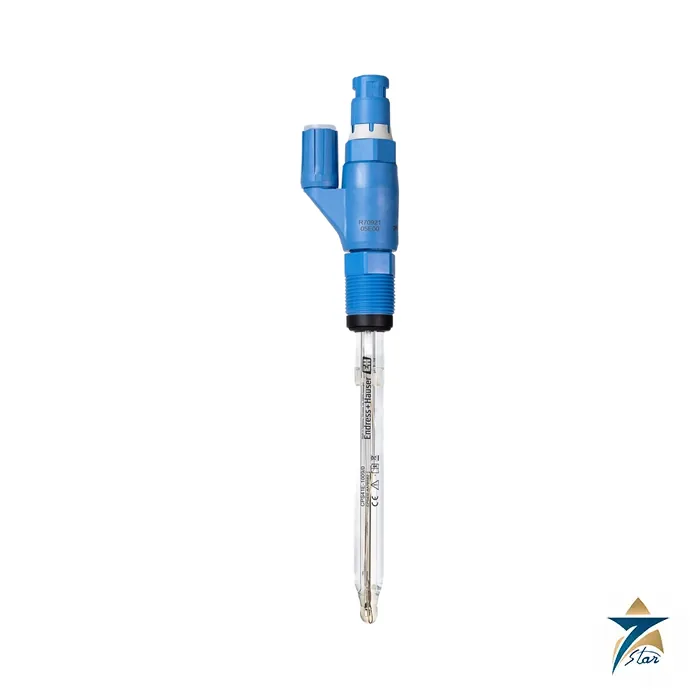
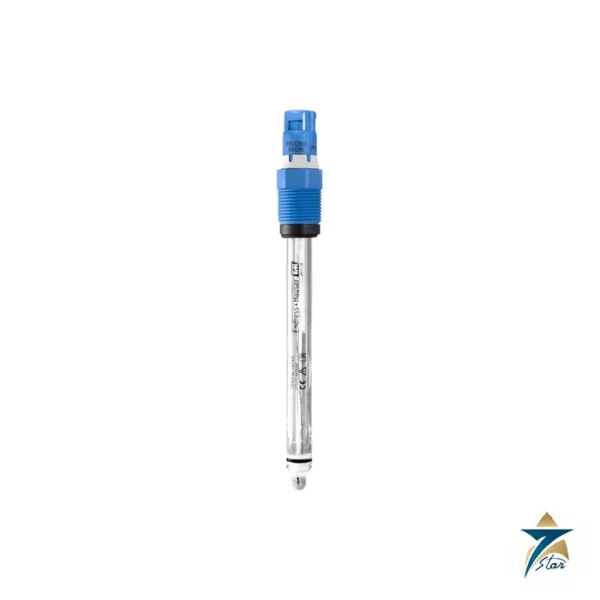
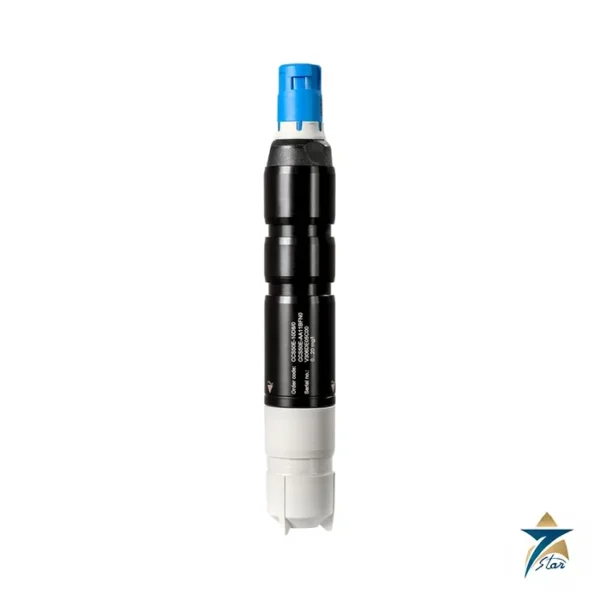
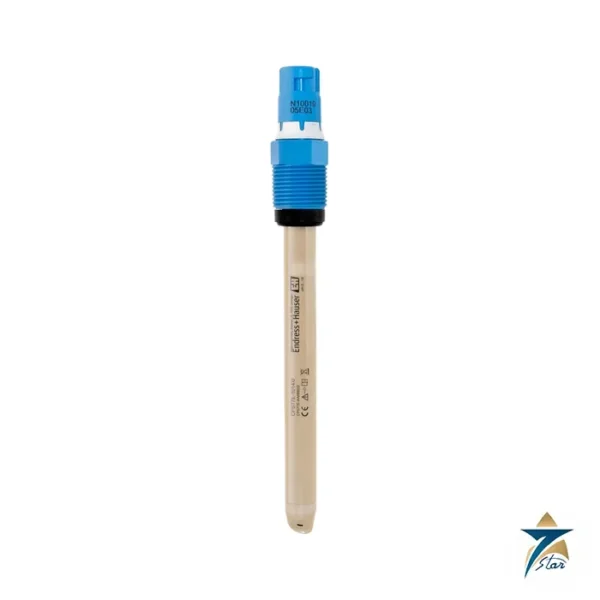
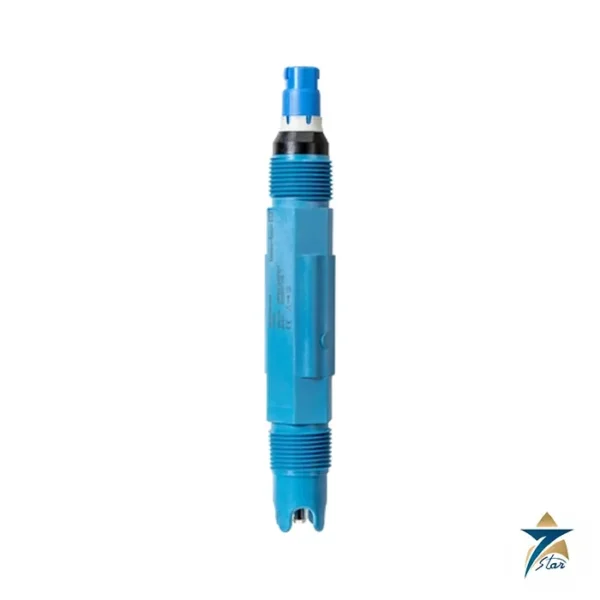
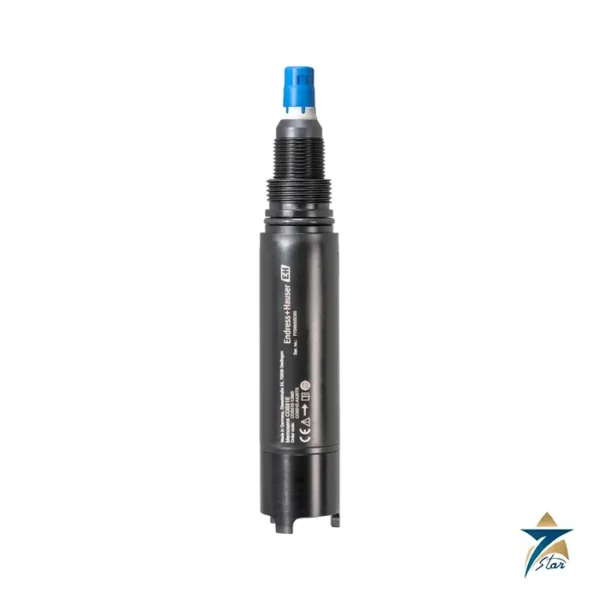
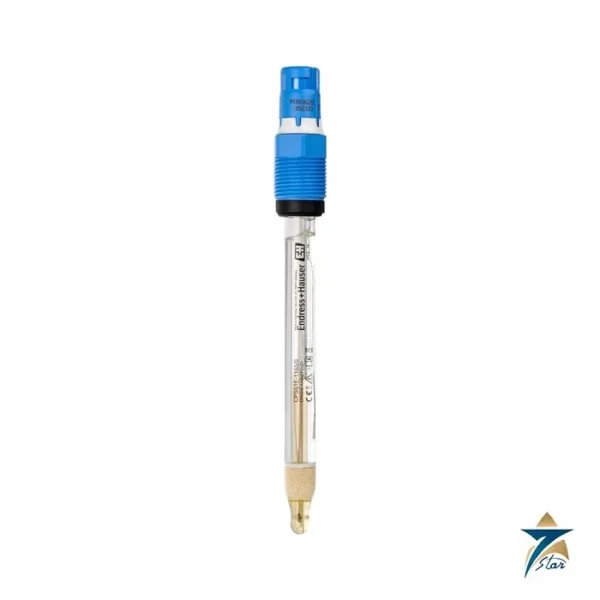
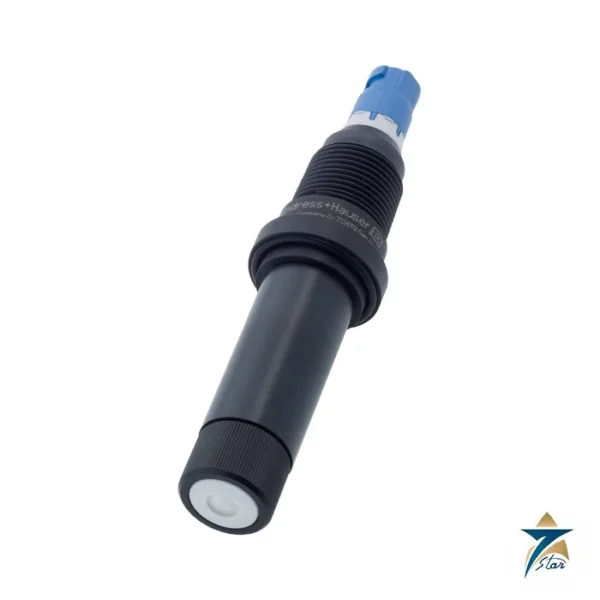
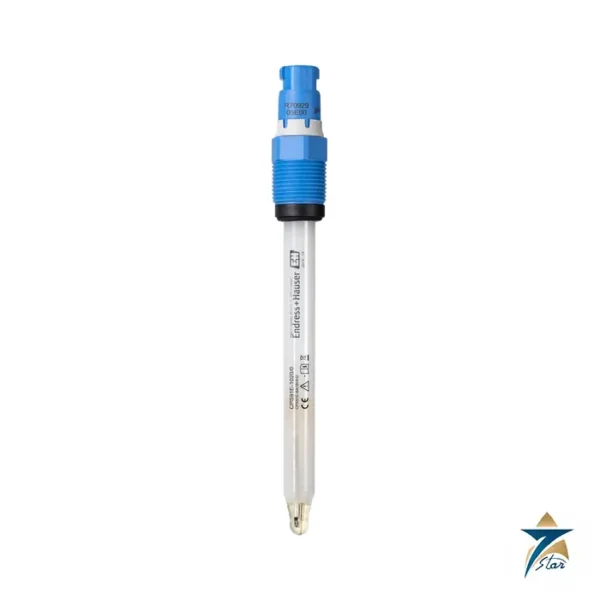
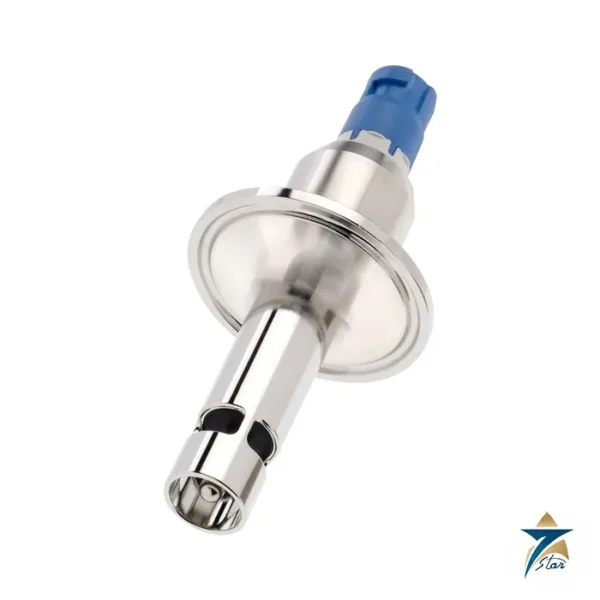
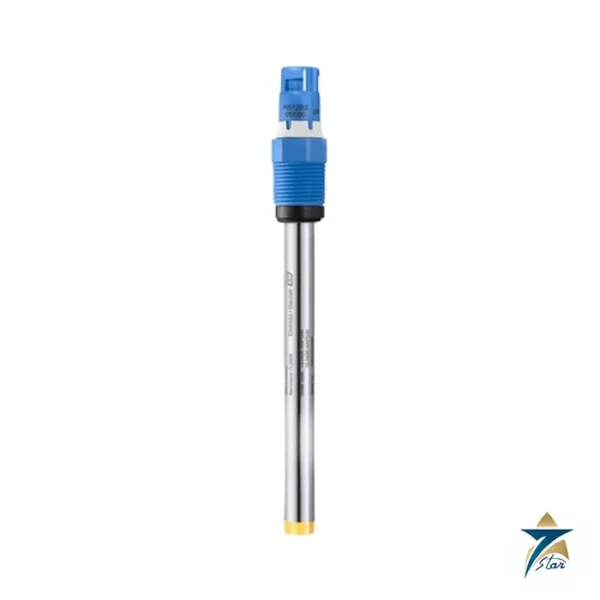
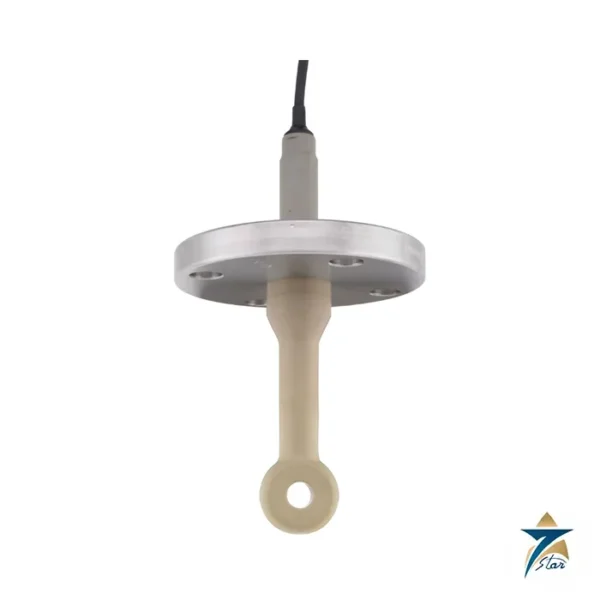
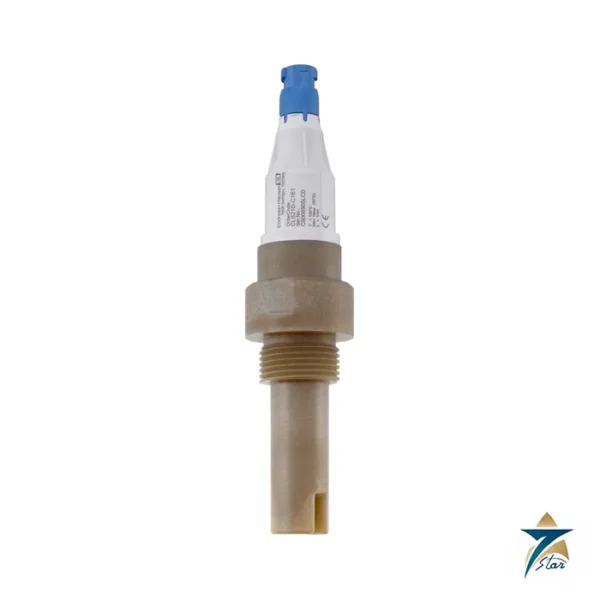
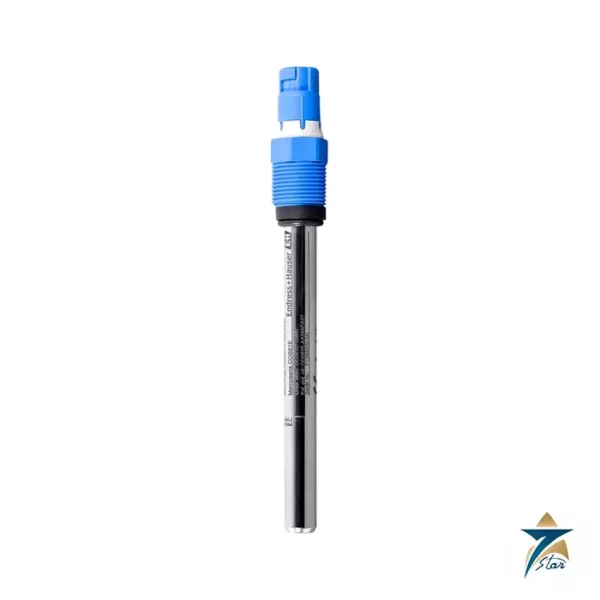
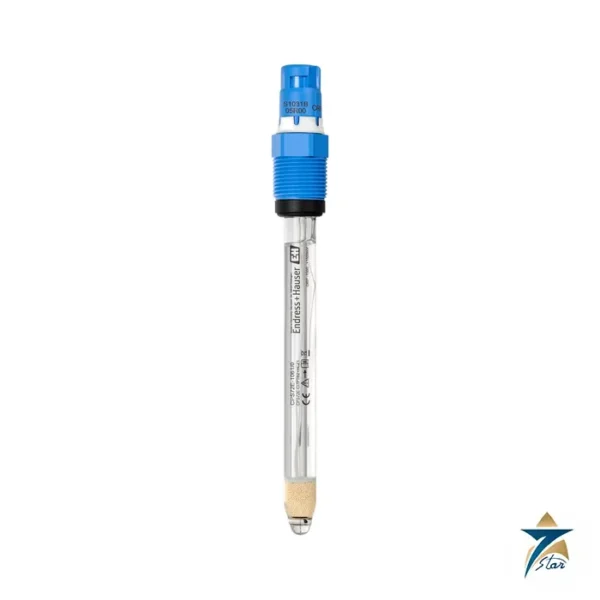
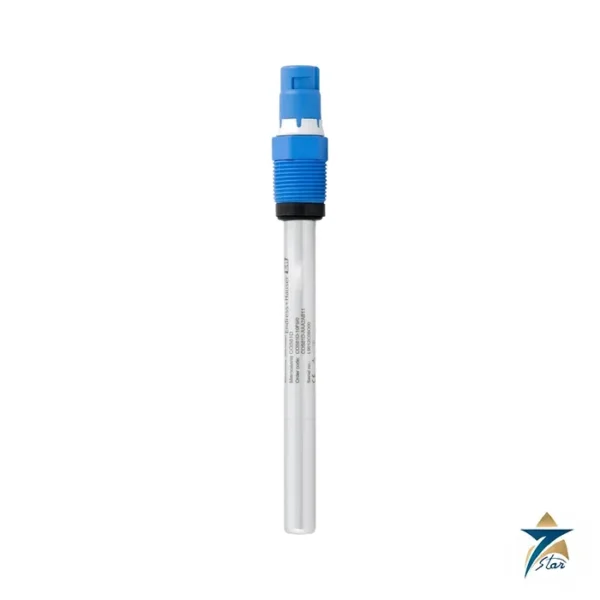
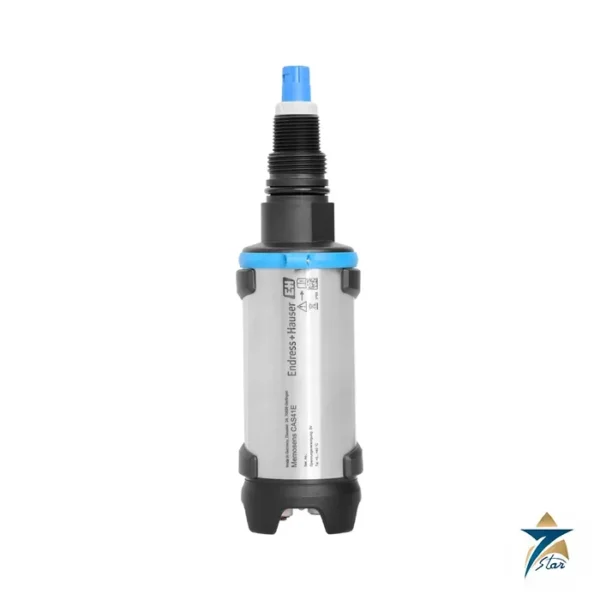
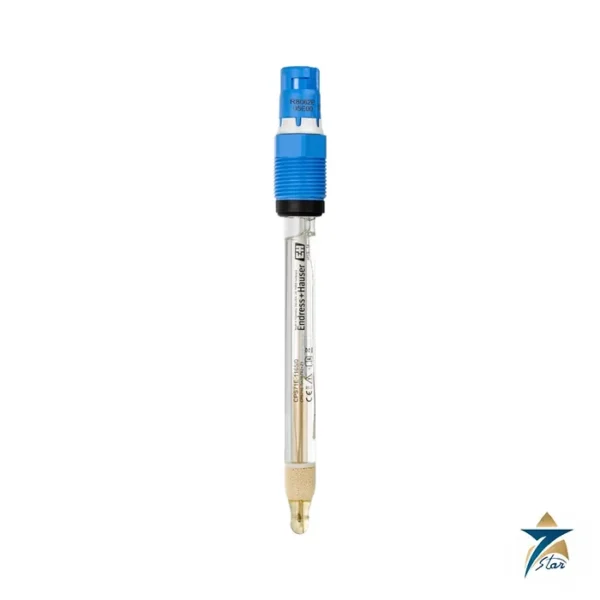
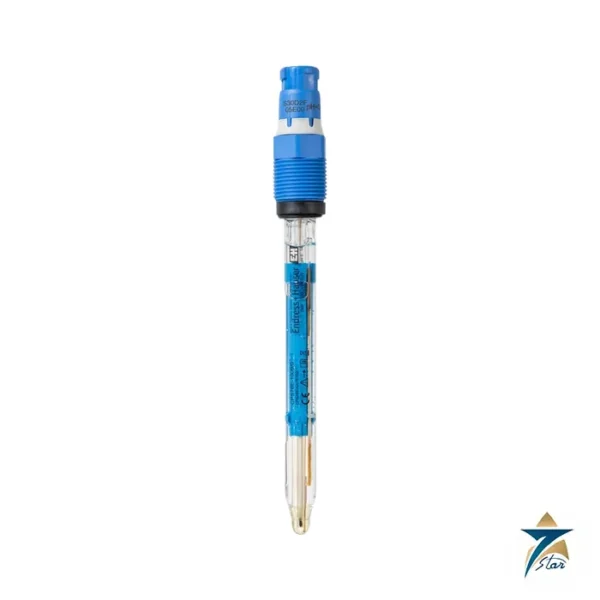
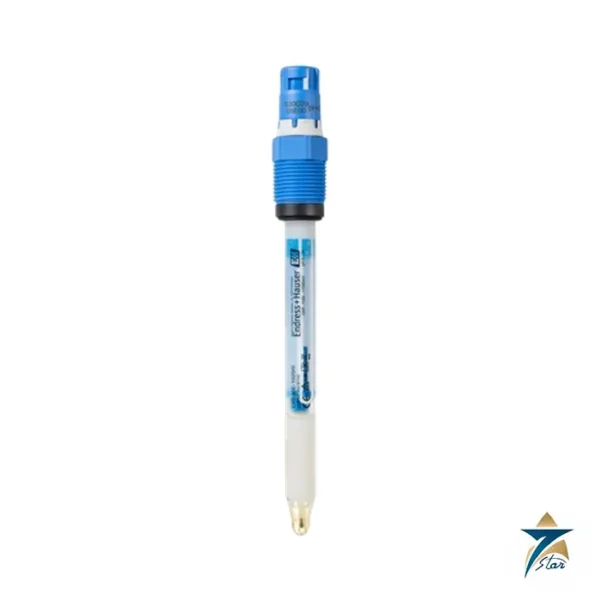
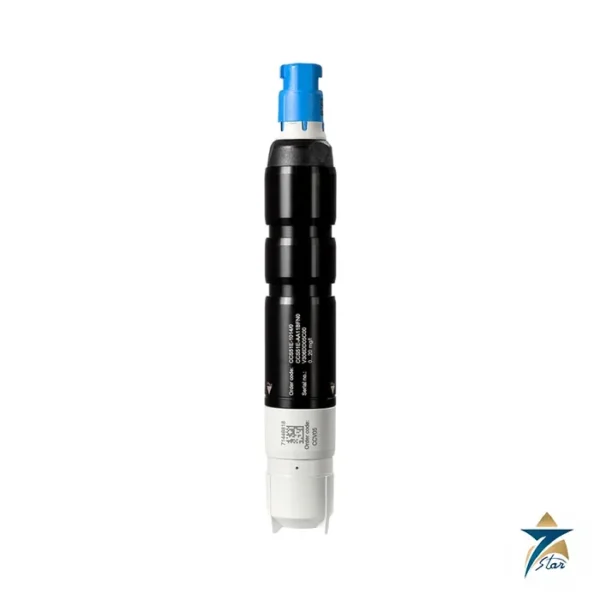
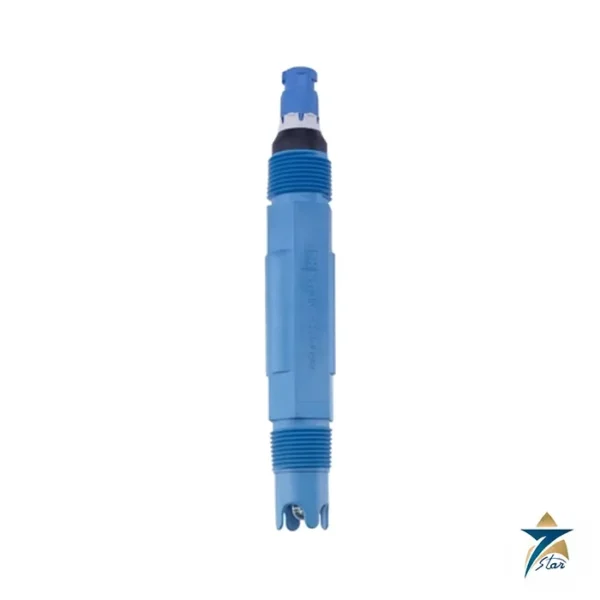
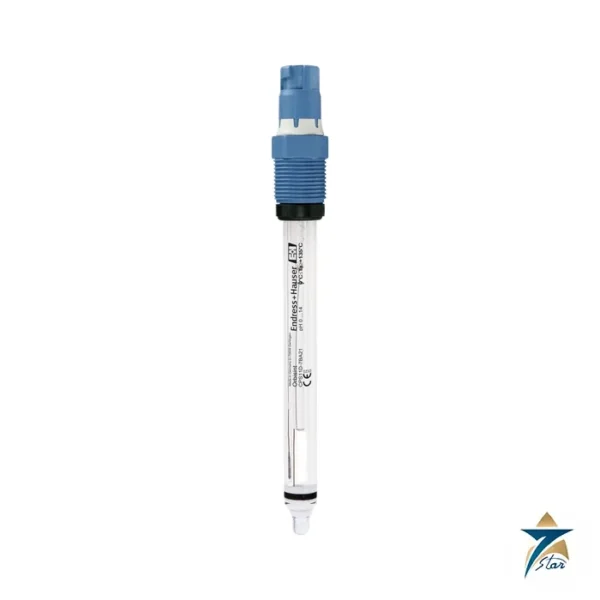
Endress+Hauser CPS41E Memosens pH Sensor, Liquid KCl

Description

Why Endress+Hauser CPS41E exists: pH where gel sensors struggle

Pure water, condensate and solvent-rich liquids give gel-filled pH sensors a hard time, because the junction potential becomes unstable when there are too few ions to carry current. Endress+Hauser CPS41E answers this with a liquid 3 M KCl bridge delivered through a ceramic junction at a specified flow rate. The extra electrolyte supply is the entire point: it guarantees ionic contact where the medium itself provides none.

The sensor belongs to the Memosens 2.0 generation, so a digital head stores calibration, number of calibrations, sterilizations, CIP count and sensor load. It is built on a separate reference capillary, which the datasheet calls poison-resistant, with an Ag/AgCl lead and an NTC 30K element for temperature compensation. Seven Star LLC is an independent supplier serving Oman and the GCC and is not affiliated with the manufacturer.

CPS41E technical specifications

Parameter Value
Application A pH range 1 to 12
Application A temperature minus 15 to 80 C
Application B pH range 0 to 14
Application B temperature 0 to 135 C (32 to 275 F)
Process pressure 0.8 to 11 bar absolute (11.6 to 159.5 psi)
Reference Ag/AgCl lead, liquid KCl 3 M bridging electrolyte
Junction Ceramic, zirconium dioxide; one or three junctions
Minimum conductivity SB 5 microsiemens per cm
Minimum conductivity SC 0.1 microsiemens per cm
Temperature sensor NTC 30K
Installed length 120, 225, 360, 425 mm
Weight 70, 90, 120, 130 g
Shaft diameter 12 mm
Materials Glass shaft types A and B, FKM O-ring, PPS-GF coupling
Process connection Pg 13.5
Head Memosens plug-in head with KCl hose connection, 16 bar relative
Ingress protection IP 68, 10 m, 25 C, 45 days, 1 M KCl
Ex marking ATEX II 1G Ex ia IIC T3/T4/T6 Ga

Features that matter on CPS41E in service

  • Works at conductivities down to 0.1 microsiemens per cm in the SC version.
  • KCl flow rate is specified, so electrolyte consumption can be budgeted per day.
  • With counterpressure applied it handles pressures up to 11 bar absolute.
  • Suitable for CIP and SIP duty.
  • Zone 0, Zone 1 and Zone 2 approvals including ATEX, IECEx, CSA C/US, NEPSI, Japan and INMETRO.

Counterpressure matters here: the datasheet gives a KCl supply pressure of 400 mbar or 800 mbar relative depending on the setup, and warns that process pressure above the counterpressure on the storage vessel can damage the sensor.

How CPS41E differs from other Memosens pH sensors

CPS91E is gel-filled, open aperture and never needs electrolyte; CPS41E is the opposite, trading a refill routine for low-conductivity accuracy. Its 135 C upper limit is also higher than the 110 C of CPS91E, but its 11 bar ceiling is lower than the 14 bar of CPS91E. Compared with CPS47E, the ISFET design, CPS41E keeps a glass membrane and therefore a pH 0 to 14 range only for application B, while application A is limited to pH 1 to 12 and minus 15 to 80 C.

Typical applications of CPS41E across Oman and the GCC

Power stations along the Gulf coast need pH in condensate and feedwater where a gel junction would drift; CPS41E suits those loops. Petrochemical and organic-chemical units use it for solvent streams and alcohol blends, and laboratories use it for reference measurements. Desalination post-treatment with very low ion content is another fit. In every case the common factor is conductivity too low or organic content too high for conventional gel sensors.

Selection and compatibility notes

Select SB when conductivity stays above 5 microsiemens per cm and SC with three junctions when it can fall toward 0.1. Remember that three junctions triple KCl use. Choose the installed length for the assembly: Dipfit CPA111 for immersion, Flowfit CPA250 for flow, Cleanfit CPA871 for retraction, Unifit CPA842 for fixed mounting, plus electrolyte vessel CPY7B. Pair with Liquiline CM42 or CM44 and cable CYK10 or CYK20.

Installing and commissioning CPS41E

Keep CPS41E at least 15 degrees above horizontal and never upside down. Hand-tighten at 3 Nm in Endress+Hauser assemblies after confirming a clean thread, O-ring and sealing face. Connect the KCl hose to the plug-in head, set the counterpressure per the datasheet and let the electrolyte reach the junction before trusting readings. Do not use the sensor below minus 15 C ambient.

Maintenance and KCl management for CPS41E

The routine job is electrolyte: refill the vessel before it runs dry and watch the consumption curve, which rises with temperature. Calibrate in the lab and swap in a pre-calibrated sensor to cut downtime. Because the head records sterilizations and CIP cycles, you can replace the sensor on evidence rather than on a calendar. Wear goggles and gloves when handling pressurised glass.

Quick answers about CPS41E

Buyers usually ask three things. First, can it run in pure water: yes, the SC version with three ceramic junctions is specified for 0.1 microsiemens per cm minimum, provided flow is minimized and pressure and temperature stay constant. Second, how much electrolyte does it use: the datasheet plots KCl consumption in millilitres per day against temperature and says three-junction versions consume three times as much. Third, can it take steam: it is listed as CIP and SIP suitable, with the head counting sterilizations so the history is visible at the transmitter.

A fourth, practical point is the plug-in head. It carries a hose connection for KCl refill and holds up to 16 bar relative, a figure that the datasheet backs with a TUV certificate quoting at least three times the safety pressure. That makes the CPS41E head mechanically stronger than the sensing glass it carries, which is why the datasheet repeats its warning about glass splinters and protective equipment.

Ordering notes for CPS41E

The code defines application (A or B), reference version, junction count, length and Ex approval. Quote the complete code in your RFQ; sister parts such as CPS91E and CPS47E are listed separately.

Documents and quotation

The Technical Information datasheet for CPS41E is attached to this page as a PDF. To request a quotation, send your RFQ with the exact CPS41E order code and the quantity you need, and we will reply with availability and lead time.

Other Models in the Memosens Ph Range

Seven Star LLC supplies models from the Memosens Ph range in Oman and the GCC. Compare the related models below and request a quote for the one that matches your application.

ModelCategory
Endress+Hauser CPF81E Memosens Compact pH SensorLiquid Analysis SensorsView details
Endress+Hauser CPS96E Memosens pH/ORP Sensor, Open JunctionLiquid Analysis SensorsView details
Endress+Hauser CPS47E Memosens ISFET pH SensorLiquid Analysis SensorsView details
Endress+Hauser CPS31D Memosens pH Sensor, Drinking WaterLiquid Analysis SensorsView details
Endress+Hauser CPS91E Memosens pH Sensor, Open ApertureLiquid Analysis SensorsView details
Endress+Hauser CPS41E Memosens pH Sensor, Liquid KClLiquid Analysis SensorsYou are viewing this model
Datasheets & Documents
  • PDF Datasheet Endress+Hauser CPS41E Memosens pH Sensor, Liquid KCl Datasheet Download
Reviews (0)

Reviews

There are no reviews yet.

How would you rate this product?

It takes about 10 seconds — just tap a star. Your email is never published.

About brand

Endress+Hauser makes process measurement instruments for flow, level, pressure, temperature and liquid analysis. Georg H. Endress and Ludwig Hauser started the business in Lörrach, Germany, on 1 February 1953, first selling level meters, and the Endress+Hauser name has been used since 1957. The group is headquartered in Reinach, Switzerland, and has been wholly owned by the Endress family since 1975.

Seven Star LLC is an independent supplier listing Endress+Hauser flowmeters, level and pressure transmitters, temperature assemblies and liquid analysis products for buyers in Oman and the GCC. Instruments are matched from the full order code on the nameplate.

Endress+Hauser company profile

Origin Founded in Lörrach, Germany, on 1 February 1953 by the Swiss engineer Georg H. Endress and Ludwig Hauser
Headquarters Endress+Hauser AG, Reinach (Basel-Landschaft), Switzerland
Ownership Family owned; the Endress family has been the sole shareholder since 1975, and a family charter commits the company to stay family owned
Size About 16,500 employees and sales of about EUR 3.7 billion (2023, as reported by the company)
Product families Proline flowmeters, Micropilot and Levelflex radar, Liquiphant switches, Cerabar and Deltabar pressure, iTEMP and iTHERM temperature, Liquiline and Memosens liquid analysis

Milestones

  • 1953: Georg H. Endress and Ludwig Hauser start the business in Lörrach on 1 February, first selling level meters.
  • 1957: The Endress+Hauser name comes into use.
  • 1975: The Endress family becomes sole shareholder.
  • 2023: About 16,500 employees and sales of about EUR 3.7 billion, as reported by the company.

Endress+Hauser product lines

Line Measuring principle Typical use
Promass F 300, Promass 80F, 83F/84F Coriolis mass flow Direct mass flow and density of liquids and gases, hydrocarbon transfer and chemical dosing
Promag P 300, P 500, H 300, W 400, W 10, 50P Electromagnetic flow Water, wastewater, slurries and other conductive liquids
Prowirl F 200, 72F Vortex flow Steam, gas and low-viscosity liquids
Prosonic Flow 92F, t-mass 65F Ultrasonic and thermal mass flow Water lines; compressed air and industrial gases
Micropilot FMR62, FMR67, FMR60, FMR10B, FMR20, FMR50, FMR52 Free-space radar level, 80 GHz and 26 GHz Tanks, process vessels, silos and open water channels
Levelflex FMP51, FMP50, FMP54, FMP55 Guided wave radar level Level and interface in vessels, separators and bypass chambers
Liquiphant FTL51, Prosonic S FMU90 Vibronic point level; ultrasonic level High and low level alarms, pump protection, open channel flow
Cerabar PMC71B, PMP51B, PMP71, Deltabar PMD78B, PMD75 Pressure and differential pressure Process pressure, hydrostatic level and DP flow
iTEMP TMT82, TMT162, iTHERM TM101, TR66, TR10 Temperature transmitters and thermometers RTD and thermocouple points with thermowells
Liquiline CM444, CM442, Memosens CPS11E, Stamolys reagents Liquid analysis pH, ORP, conductivity, dissolved oxygen and nutrient analysis in water treatment and process

Where Endress+Hauser instruments are used

In Oman and the GCC, Endress+Hauser instruments are common in oil and gas production and processing, refineries and petrochemicals, desalination and water networks, wastewater treatment, power plants and food and beverage plants. Coriolis meters measure hydrocarbon and chemical flows, electromagnetic meters cover water and wastewater, radar transmitters handle tank and silo level, and Liquiline analysers monitor water quality. Proline 300 and 500 flowmeters include Heartbeat Technology for in-situ verification, which reduces the need to remove a meter for checks.

Ordering Endress+Hauser instruments: what we need

The order code on the nameplate (for example PMP71-1QA1S11RDADU) defines every option: measuring range, process connection, materials, output, approvals and display. Send it with the serial number; Endress+Hauser can retrieve the original configuration from the serial number. For a new instrument add the medium, operating and design pressure and temperature, range, line size or tank geometry, process connection, wetted materials, output or protocol (4-20 mA HART, PROFIBUS, FOUNDATION Fieldbus, Modbus) and the hazardous-area approval required. Older models such as Promass 80/83 or Micropilot M are replaced by current Proline or 80 GHz Micropilot devices.

Facts checked against Endress+Hauser company history and product information, October 2026.

FAQ

Questions about the Endress+Hauser CPS41E Memosens pH Sensor, Liquid KCl

Answers from our engineering team on installation, compatibility and integration.

01Which media is Endress+Hauser CPS41E meant for?
It targets media with very low conductivity or a high share of organic solvents or alcohol, such as organic chemicals, power station water and laboratory measurements.
02What is the difference between SB and SC on the CPS41E?
SB needs at least 5 microsiemens per cm, while the SC reference with three ceramic junctions works down to 0.1 microsiemens per cm, both with minimized flow and constant pressure and temperature.
03Why is a KCl vessel needed with CPS41E?
The 3 M liquid KCl reference is consumed through the ceramic junction, so it is refilled from an electrolyte vessel such as CPY7B through the hose connection on the plug-in head.
04What process pressure may CPS41E see?
0.8 to 11 bar absolute, and with counterpressure applied it can be used up to 11 bar. Sensors with three junctions use three times as much KCl.
05Can CPS41E be sterilized or cleaned in place?
Yes, the datasheet lists it as suitable for cleaning in place (CIP) and sterilization in place (SIP), and the sensor counts sterilizations in its stored operating data.