WIKA TC90 high-pressure thermocouple for compressed gases and polymer lines
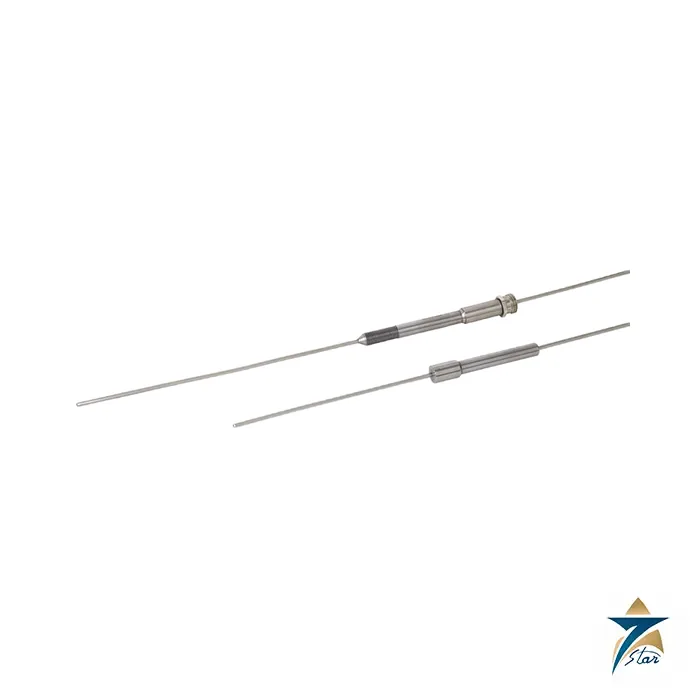
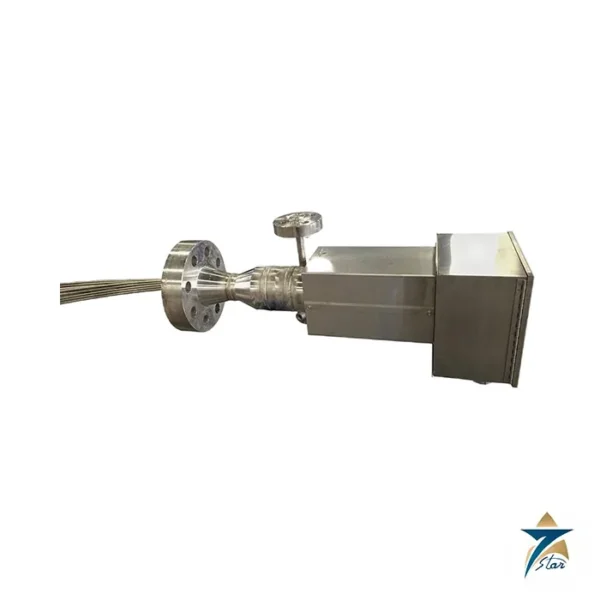
The WIKA TC90 is a thermocouple built to sit directly in a high-pressure medium without a thermowell. Its slim 2 mm probe is sealed into the vessel or line with metal-to-metal sealing, a high-pressure threaded connection or a lens-type sealing ring, so the pressure is contained by the sensor itself. It was developed for plastics production (LDPE and EVA), hydrogen refuelling stations, hydrogen test benches and other compressed-gas applications. Each TC90 is designed to the customer’s specification. Seven Star LLC supplies the TC90 in Oman and the GCC as an independent supplier in Muscat; this page explains the version codes and the information needed for a high-pressure quotation.
TC90 versions and what the suffix means
| Version |
Process connection |
Pressure and use |
| TC90-xxxx-A |
Sealing contour and thread (sealing bolt 58 degrees), with or without pressure ring and male nut, or with anti-vibration gland |
Up to 4,500 bar, high-pressure LDPE and EVA |
| TC90-xxxx-B |
Pressure flange; sealing bolt with radius and threads |
To customer specification |
| TC90-xxxx-C |
Lens-type sealing ring or sealing cone |
High-pressure lines using lens-ring fittings |
| TC90-xxxx-H |
Sealing cone without pressure ring, sealing bolt 58 degrees |
Medium pressure up to 1,550 bar, hydrogen |
| TC90-xxxx-S |
Sealing cone without pressure ring and male nut |
Hydraulics |
The datasheet adds that individual versions can be tested at pressures up to a maximum of 5,400 bar, and that the instrument is produced with special manufacturing processes, special test arrangements and material tests to safeguard quality.
TC90 technical specifications
| Parameter |
Specification |
| Manufacturer / part number |
WIKA / TC90 (data sheet TE 65.90) |
| Type |
High-pressure thermocouple, metal-to-metal sealing |
| Sensor types |
K, J, E, T and N per IEC 60584-1 or ASTM E230 |
| Probe diameter |
2.0 mm [0.08 in] standard; others on request (3.0 mm shown for the -A version) |
| Probe material |
Alloy 600 |
| Hot junction |
Grounded (welded to the bottom of the probe) |
| Type K ranges |
Class 2: -40 … +1,200 °C; Class 1: -40 … +1,000 °C |
| Process temperature, alloy 600 sheath |
Up to 1,200 °C [2,192 °F] in air; actual limit set by the process, pressure and fittings |
| Sealing bolt / sealing ring materials |
1.4545, 1.4571, 2.4816, 316/316L; others on request |
| Male nut materials |
1.4545, 1.4542, 1.4404, 1.4401 |
| Support tube materials |
1.4571 or 316L |
| Thread examples |
Male nut 9/16-18 UNF; pressure ring thread 1/4-28 UNF-LH or 3/8-24 UNF-LH |
| Storage temperature |
-40 … +80 °C [-40 … +176 °F] |
| Calibration |
Recommended interval one year, depending on use |
| Certificates |
EU declaration of conformity; EN 61326 emission and immunity |
Why the maximum pressure is not the maximum temperature
Although the thermocouple types can reach 1,200 °C, the datasheet says the usable maximum in a high-pressure measurement is limited by the process conditions: material strength drops with temperature, so the allowed pressure drops as the medium gets hotter. For a customer-specific quotation WIKA requires the type and temperature of the medium and the temperature at the process connection. The same data is needed for us to quote, because a TC90 cannot be selected from pressure alone.
Sealing systems explained
The sealing bolt with a 58° cone seats in a matching female cone in the process nozzle and is pulled tight by a male nut; the lens-type ring seals on a spherical contact line; and a pressure flange follows the customer’s drawing. Each system needs a counterpart on the process side that is made to the same standard, so the first question is always which fitting is already on the line. The datasheet instructs users to follow the specified tightening torques on every threaded connection, and to check that the anti-vibration gland is used where pulsating pressure is present.
Hydrogen and compressed-gas service
Hydrogen refuelling stations and hydrogen test benches need fast response and a sealed, compact sensor. The TC90 is listed with short response times and a compact design with short insertion lengths, suited to small pipes. Hydrogen service adds material requirements (embrittlement, approved alloys), which should be discussed with the plant’s hydrogen specification before the material is chosen.
Explosion protection
An overview table covers Ex i for gas and dust, Ex e, Ex t and Ex NI options, with details on the approvals page of the datasheet. As with all thermocouple loops, the approval is tied to the complete assembly and cable, so state the zone and gas group.
Installation notes
- Prepare the process nozzle to the same standard as the sealing system, and clean the sealing surfaces
- Fit mechanically first and connect the cable second, to avoid twisting the probe leads
- Tighten to the torque in the datasheet, and re-check after the first pressure cycle
- Use an anti-vibration gland where the process pulsates
- Pressure-test with the site procedure, and keep personnel clear of the line during testing
Applications in Oman and the GCC
High-pressure thermocouples are relevant to polyethylene and polymer plants at Gulf petrochemical complexes, gas compression and injection systems, and new hydrogen pilot projects and refuelling stations. In these cases the combination of small bore access and extreme pressure is the reason for choosing a TC90 over a thermowell-mounted thermometer.
TC90 ordering checklist
- Version suffix (A, B, C, H or S) and the process fitting standard
- Maximum working pressure and test pressure
- Medium, temperature at the probe tip and at the process connection
- Thermocouple type and class, probe diameter and insertion length
- Materials for sealing bolt, nut and support tube
- Cable or connector details, hazardous-area marking and calibration
Information to send with an RFQ
Send a drawing or description of the process nozzle, the data above and the quantity. We then confirm the specification and any lead-time questions before quoting.
Documents and quotation
The WIKA data sheet TE 65.90 for the TC90 is attached on this page. Send us the specification and quantity for a quotation from Muscat as an independent supplier.
Other Models in the Wika Tc9x Range
Seven Star LLC supplies models from the Wika Tc9x range in Oman and the GCC. Compare the related models below and request a quote for the one that matches your application.


















Reviews
There are no reviews yet.