Brand:

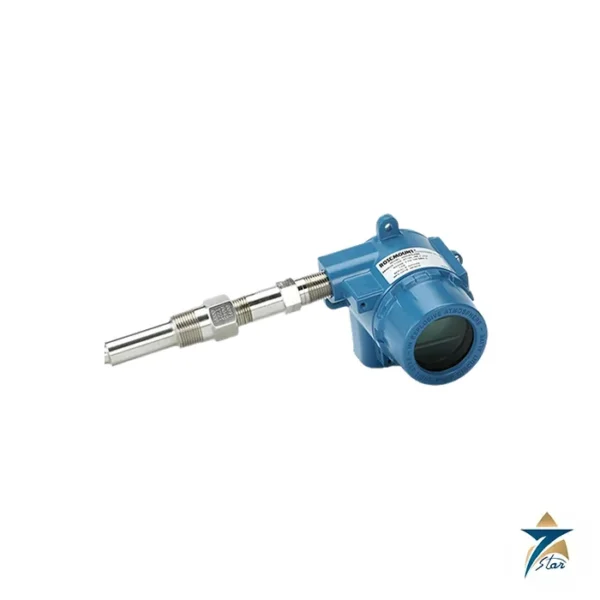
Yokogawa YTA110 Temperature Transmitter SIL 2

Description

Yokogawa YTA110 belongs to the YTA110, YTA310 and YTA320 family of field-mount temperature transmitters: a loop-powered, microprocessor-based unit that accepts thermocouples, 2-, 3- and 4-wire RTDs, ohm and millivolt signals and converts them into a 4 to 20 mA DC output. It is the single-sensor, entry model of the three field-mount types, and it is certified by TUV NORD for SIL 2 use in its standard configuration. The following summary comes from the manufacturer’s General Specifications GS 01C50B01-00EN (28th edition, June 2017).

YTA110 in plain terms

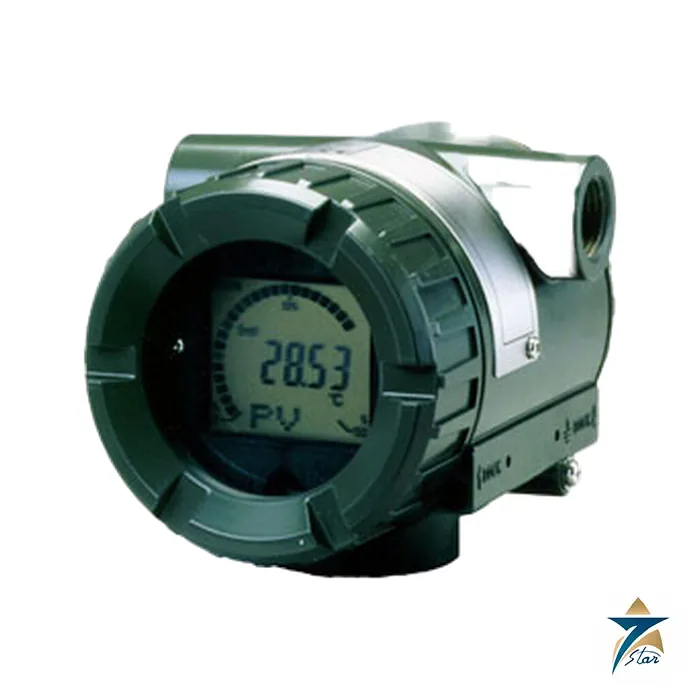
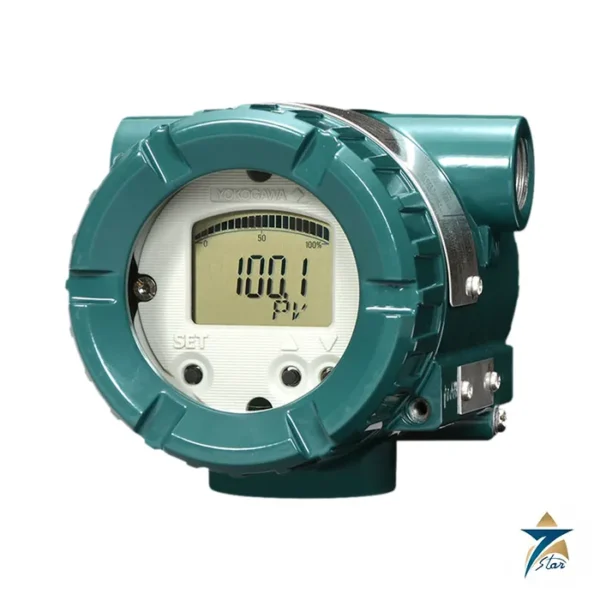
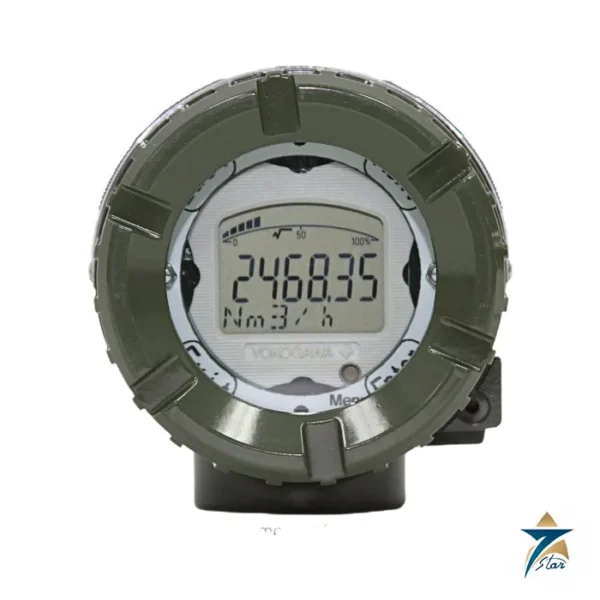
The YTA110 sits in a dual-compartment housing, so field wiring and electronics are separated by a wall. The housing is low-copper cast aluminium with a polyurethane baked finish in deep-sea moss green, or SCS14A stainless steel (equal to SUS316 cast stainless and ASTM CF-8M) when the E1 option is chosen. Protection is IP66/IP67 and NEMA4X, terminal screws are M4, and the optional integral LCD shows a 5-digit value with degrees C, K, degrees F, degrees R, percent or mV, together with a 0 to 100 percent bargraph.

Measurement performance of the YTA110

  • Accuracy is the greater of the combined A/D and D/A accuracy or plus/minus 0.1 percent of calibrated span
  • Pt100 over -200 to 850 degrees C has an A/D accuracy of plus/minus 0.14 degrees C, with D/A accuracy of plus/minus 0.02 percent of span
  • Type K thermocouple covers -200 to 1372 degrees C; accuracy is plus/minus 0.25 degrees C above -50 degrees C
  • Cold junction compensation accuracy for thermocouples is plus/minus 0.5 degrees C
  • Stability for RTD is plus/minus 0.1 percent of reading or 0.1 degrees C per 2 years, and the five-year figure is plus/minus 0.2 percent or 0.2 degrees C
  • Ambient temperature effect is plus/minus 0.1 percent of span per 10 degrees C change, or the coefficient divided by span if larger
  • Update time is about 0.5 second and turn-on time about 5 seconds; damping is selectable from 0 to 99 seconds

YTA110 specification table

Model YTA110 temperature transmitter, single sensor input
Input types T/C, 2-, 3- and 4-wire RTD, ohm, DC mV
Output Two-wire 4 to 20 mA DC, range 3.68 to 20.8 mA, BRAIN or HART superimposed
Output signal code -D (BRAIN) or -E (HART)
Supply voltage 10.5 to 42 V DC general and flameproof; 10.5 to 30 V DC intrinsically safe; 10.5 to 32 V DC with lightning protector /A
Load 0 to 1335 ohm for operation; 250 to 600 ohm for digital communication
Sensor burnout High 21.6 mA or low 3.6 mA, user-selectable
Ambient temperature -40 to 85 degrees C; -30 to 80 degrees C with integral indicator
Isolation Input, output and ground isolated to 500 V DC
Weight 1.2 kg without indicator and bracket; indicator 0.2 kg; horizontal bracket 0.3 kg; vertical bracket 1.0 kg
Electrical connection codes 0 = G1/2 female, 2 = 1/2 NPT female, 3 = Pg 13.5 female, 4 = M20 female
Safety SIL 2 single transmitter, SIL 3 with two transmitters (IEC 61508)
Pt100 range -200 to 850 degrees C; Pt200 and Pt500 same; JPt100 -200 to 500; Cu -70 to 150 degrees C
Thermocouple ranges B 100 to 1820; E -200 to 1000; J -200 to 1200; N -200 to 1300; R/S -50 to 1768; T -200 to 400 degrees C

Typical places to use the YTA110

A single-input transmitter like the YTA110 is the standard answer for bearing, skin, line and stack temperature points. Refineries and gas processing sites in Oman mount it on thermowells in pipelines and heat exchangers; power stations use it on lube-oil and cooling-water circuits; desalination plants place it on brine heater stages. The output-in-failure options help here: the default drive is up-scale at 110 percent (21.6 mA or more), while option /C1 or /C2 selects down-scale at minus 5 percent (3.2 mA or less) to match the plant alarm philosophy.

How YTA110 differs from YTA310 and YTA320

The YTA110 is limited to one sensor input and offers only the BRAIN (-D) and HART (-E) output codes. The YTA310 has the same single-input design but is listed together with the YTA320 in a separate datasheet, GS 01C50B02-00EN, and the dual-input YTA320 adds sensor backup, averaging, differential measurement and an optional FOUNDATION Fieldbus code (-F). Choose the YTA110 where one sensor and a standard loop are enough, and move to the YTA320 when a redundant RTD pair or delta-T is needed.

Installing and commissioning YTA110

Order a bracket code B or J for horizontal 2-inch pipe, or D or K for vertical 2-inch pipe, with J and K being SUS316; flat panel fixing needs customer bolts and nuts. Keep RTD lead resistance below 10 ohm per wire and thermocouple source resistance below 1 kilohm. Configure the sensor type, range and burnout direction with a BRAIN terminal or a HART communicator, then use the manual output function to force the loop to 4, 12 and 20 mA for checking the DCS. If sensor-specific Callender-van Dusen data are available, the sensor matching feature can sharpen total accuracy.

Maintenance and spares for YTA110

The transmitter records up to four errors in memory (loss of input, ambient temperature, EEPROM and CPU) which helps troubleshooting. A yearly loop check with a calibrator is typical. Keep the amplifier cover seal and the terminal O-rings in good condition so the IP66/IP67 rating is maintained.

Ordering YTA110

State the model YTA110, the output code, electrical connection, indicator and bracket codes, any option codes such as /A, /C2, /E1 or an approval code, and the quantity. Seven Star LLC is an independent supplier serving Oman and the GCC and is not affiliated with the manufacturer.

Documents and quotation

The manufacturer datasheet GS 01C50B01-00EN for the YTA110 is attached. Send your RFQ with part number YTA110, the code string and the quantity needed, and we will revert with availability.

Datasheets & Documents
  • PDF Datasheet Yokogawa YTA110 Temperature Transmitter SIL 2 Datasheet Download
Reviews (0)

Reviews

There are no reviews yet.

How would you rate this product?

It takes about 10 seconds — just tap a star. Your email is never published.

About brand

Yokogawa is the Japanese measurement and industrial automation company behind the DPharp EJA and EJX pressure transmitters, CENTUM distributed control systems and ProSafe-RS safety systems. Tamisuke Yokogawa set it up in 1915 as an electric meter research institute in Shibuya, Tokyo. It began selling electric meters in 1917, was incorporated as Yokogawa Electric Works in 1920, and has been Yokogawa Electric Corporation since 1986. In 1975 it released CENTUM, which it describes as the world's first distributed control system.

Seven Star LLC is an independent supplier in Muscat. We list Yokogawa transmitters, flowmeters, analysers, controllers, recorders and CENTUM and ProSafe spare modules, and supply them to oil and gas, power, water and process plants in Oman and the GCC by model code.

Yokogawa at a glance

Established 1915, Shibuya, Tokyo, by Tamisuke Yokogawa with Ichiro Yokogawa and Shin Aoki
Milestones Electric meters from 1917; incorporated in 1920; CENTUM DCS in 1975; renamed Yokogawa Electric Corporation in 1986
Headquarters Tokyo, Japan
Product families Pressure and temperature transmitters, magnetic, vortex and Coriolis flowmeters, liquid and gas analysers, controllers and recorders, CENTUM VP DCS, ProSafe-RS safety systems and STARDOM controllers

Yokogawa products we list

Family Models Typical use
Pressure and DP transmitters EJA110E, EJA430E, EJA530E, EJX110A, EJX530A, EJX910A multivariable Pressure, level and DP flow measurement in process plants
Temperature transmitters YTA610, YTA710 RTD and thermocouple signals converted to 4-20 mA, HART or fieldbus
Flowmeters ADMAG AXG, ADMAG AXW, ROTAMASS TI, VY vortex, VF701 Water and conductive liquids, mass flow of hydrocarbons, steam and gas
Analysers TDLS8000 laser gas analyser, FLXA402, FLXA21 DO, E7042UD zirconia cell, K9471DS cover Combustion O2, in-situ gas analysis, pH, conductivity and dissolved oxygen
Controllers and recorders UT35A/UT32A, UT32A-D, UT55A/UT52A, UT75A, UP35A/UP32A, UP55A, YS1700, GX10/GX20, GP10/GP20, GM10, µR20000 Single-loop control, furnace programs and data recording
Control and safety systems CP451-10 processor, ADV161, ADV551, node interface unit, ProSafe-RS, ProSafe-RS Lite, ProSafe-SLS, FCN-500 Spares and expansions for CENTUM DCS, safety systems and STARDOM
Battery packs S9129FA, S9185FA, S9548FA Memory backup batteries for DCS and controller modules

The EJA and EJX transmitters use Yokogawa's DPharp sensor: two silicon resonators whose vibration frequency changes with pressure, so the output is a digital frequency rather than an analogue strain signal. The model code describes the instrument completely. In EJA110E, "110" is a differential pressure transmitter, and the letters after the dash set the span, wetted materials, process connection, electrical output and approvals. When you replace a transmitter, sending the full code from the nameplate avoids a mismatch in range or materials.

Where Yokogawa products are used

In Oman and the GCC, Yokogawa transmitters, analysers and control systems are found in oil and gas production, gas processing and LNG, refineries and petrochemical plants, power and desalination stations, and water treatment. Many plants still run CENTUM CS 3000 and CENTUM VP systems that need spare I/O modules and batteries.

Ordering Yokogawa products: what we need

Send the full model and suffix code from the nameplate (for example EJA110E-JMS5J-912NN/KF22) and the style code. For DCS modules, add the module type and system version. For analysers, send the sensor type, measuring range and process conditions.

Facts checked against Yokogawa's corporate history, October 2026.

FAQ

Questions about the Yokogawa YTA110 Temperature Transmitter SIL 2

Answers from our engineering team on installation, compatibility and integration.

01What sensors can the Yokogawa YTA110 read?
The YTA110 accepts thermocouples, 2-, 3- and 4-wire RTDs, ohm inputs and DC millivolt signals. Input type is selected by the user through digital configuration.
02What is the accuracy of the YTA110 with a Pt100?
The A/D accuracy for Pt100 is plus/minus 0.14 degrees C and the D/A accuracy is plus/minus 0.02 percent of span; the total is the greater of this or plus/minus 0.1 percent of calibrated span.
03Is the YTA110 SIL certified?
Yes. It is certified by TUV NORD CERT to IEC 61508 for SIL 2 capability with a single transmitter and SIL 3 capability with dual transmitters, in its standard configuration.
04Which communication protocols does the YTA110 offer?
The output code -D gives 4 to 20 mA with BRAIN protocol and -E gives 4 to 20 mA with HART. Fieldbus is not offered on the YTA110.
05What supply voltage does the YTA110 need?
Between 10.5 and 42 V DC for general use and flameproof, 10.5 to 30 V DC for intrinsically safe types, with a minimum of 16.4 V DC when digital communication is used.