WIKA T15 digital temperature transmitter for resistance sensors
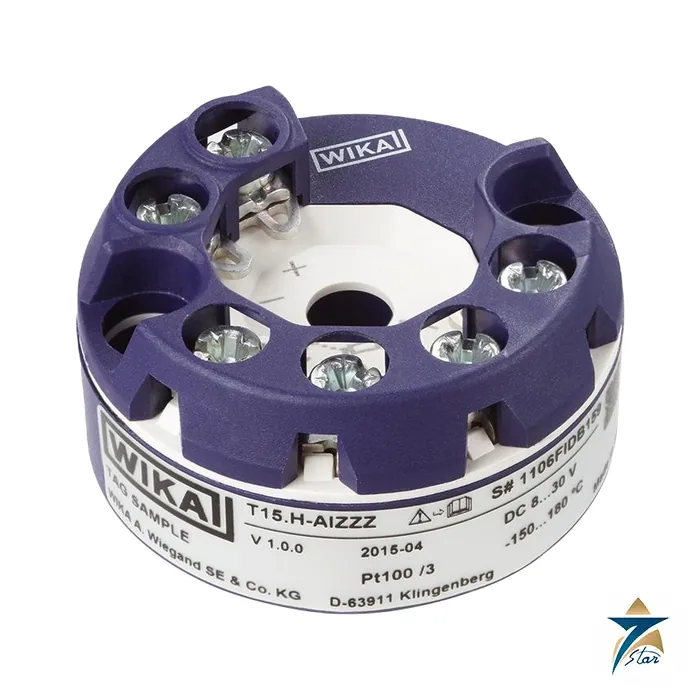
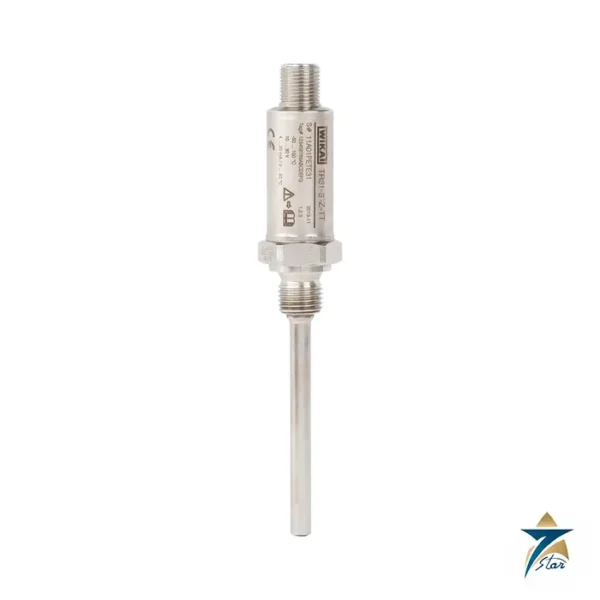
The WIKA T15 is a two-wire 4 … 20 mA temperature transmitter for Pt100 and Pt1000 sensors, built in a head-mounted version (T15.H) and a rail-mounted version (T15.R). It converts the sensor resistance into a linear current signal, monitors the sensor wires, and is configured with the free WIKAsoft-TT software through a quick connector. WIKA quotes an accuracy of better than 0.2 K or 0.1 % of span. Seven Star LLC supplies the T15 in Oman and the GCC as an independent supplier in Muscat; the sections below cover configuration, accuracy, approvals and how it combines with the WIKA thermometers on our site.
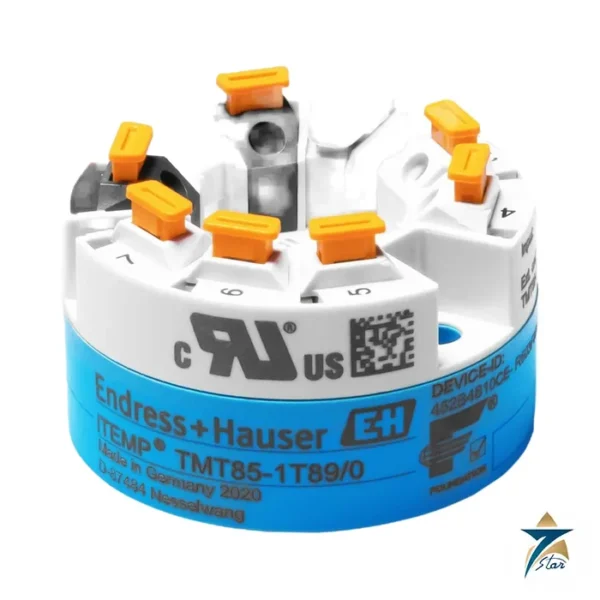
T15.H and T15.R
| Feature |
T15.H head-mounted |
T15.R rail-mounted |
| Mounting |
In a connection head, replacing the terminal block |
On a DIN rail in a cabinet |
| Housing material |
PBT plastic, glass-fibre reinforced |
Plastic |
| Weight |
Approx. 45 g |
Approx. 0.2 kg |
| Screwdriver |
Cross head (Pozidrive), size 2 |
Slotted, 3 x 0.5 mm |
| Tightening torque |
0.5 Nm |
0.5 Nm |
| Extended ambient option |
-50 or +105 °C as options (not for ATEX head version or rail version) |
Not available |
T15 technical specifications
| Parameter |
Specification |
| Manufacturer / part number |
WIKA / T15 (data sheet TE 15.01) |
| Type |
Digital temperature transmitter for resistance sensors, head or rail mounted |
| Input sensors |
Pt100 and Pt1000, -200 … +850 °C [-328 … +1,562 °F] per IEC 60751 |
| Potentiometer input |
Reed chains 0 … 100 %, total resistance 1 … 50 kΩ |
| Connection |
2-, 3- or 4-wire for one sensor |
| Minimum span |
10 K [50 °F] or 3.8 Ω, whichever is greater |
| Measuring current |
Max. 0.2 mA for Pt100 / Pt1000; max. 0.1 mA for reed chains |
| Output |
4 … 20 mA, two-wire, linear to temperature; NAMUR NE43 fault levels (downscale below 3.6 mA, upscale above 20.5 mA) |
| Auxiliary power UB |
DC 8 … 35 V |
| Load |
RA ≤ (UB – 8 V) / 0.0215 A |
| Accuracy |
Better than 0.2 K or 0.1 % of span (whichever is greater); potentiometer 0.2 % relative |
| Temperature coefficient |
≤ ±(0.1 K + 0.005 % of span) per 10 K ambient change |
| Long-term drift |
Below 0.1 % of span per year |
| Step response time |
Below 0.6 s (typically below 0.4 s) |
| Warm-up time |
About 4 minutes to full specification |
| Ambient temperature |
-40 … +85 °C [-40 … +185 °F] |
| Storage temperature |
-40 … +85 °C |
| Vibration |
IEC 60068-2-6, 10 … 2,000 Hz, 10 g, amplitude 0.75 mm |
Configuration with WIKAsoft-TT
With the PU-548 programming unit and the free WIKAsoft-TT software, the engineer sets sensor type, wiring, measuring range, error signalling, damping and a measuring-location description, and can apply a process adjustment. A line recorder function can display the temperature profile of the connected sensor. The factory default shown in the datasheet is a 3-wire connection, 0 … 150 °C, downscale on fault, with sensor-break and short-circuit monitoring configurable.
Supervision functions
The T15 monitors the resistance of the sensor wires, detects sensor break per NAMUR NE89, supervises the measuring range, and runs a cyclic self-test. The drag pointer records the internal electronics temperature, giving a comparison against the permitted ambient range. Output limits follow NAMUR NE43 so the control system can distinguish a real reading from a fault. A hardware property worth noting: the connection terminals are accessible from the outside, which simplifies loop checks.
Accuracy in a real loop
The datasheet specifies overall instrument accuracy as input error plus output error, and the total error must be built by adding all sources such as sensor tolerance (for example IEC 60751 class A or B), ambient influence and supply influence. WIKA also warns that high-frequency fields in the 80 … 400 MHz range can cause deviations up to 0.8 %, and transient interference can cause up to 1.5 %, so good cable routing and shielding matter in plants with radio transmitters and variable-speed drives.
Explosion-protected versions
The datasheet lists ATEX and IECEx marking for Ex ia in zone 0 (II 1G Ex ia IIC T6 … T4 Ga), Ex ic in zone 2, Ex ia dust in zone 20 (T135 °C Da) and Ex ec increased safety in zone 2, with additional US and Canadian zone markings and other national approvals. The loop connection values, power Pi and ambient range depend on temperature class T4 to T6, so the barrier or isolator must be matched to the values on the approval.
Using the T15 with WIKA thermometers
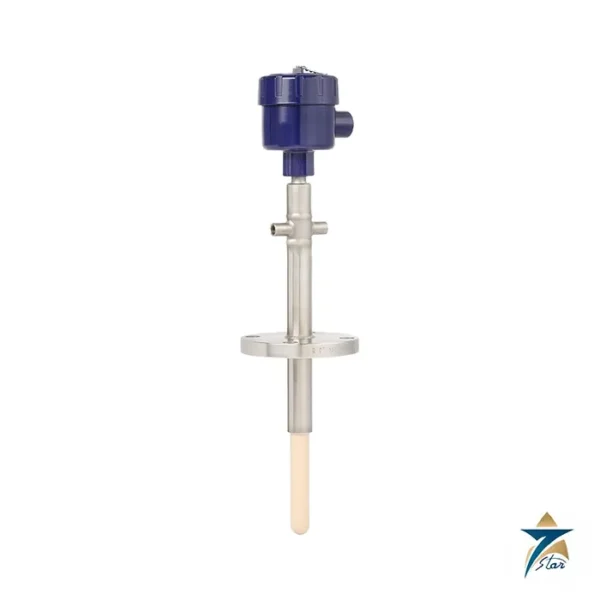
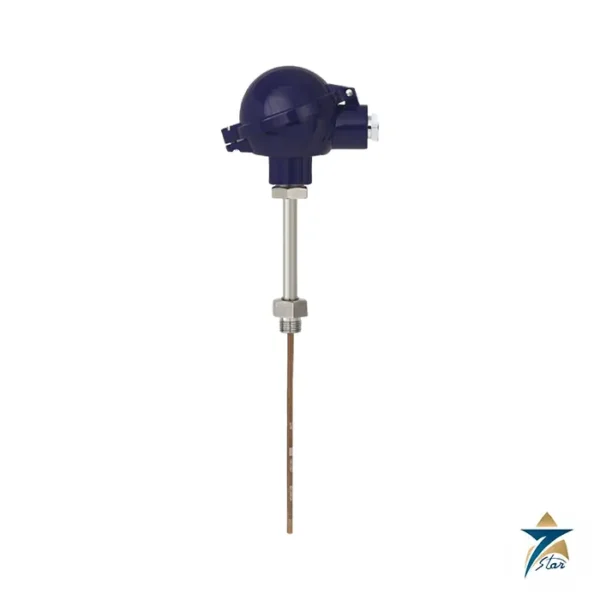
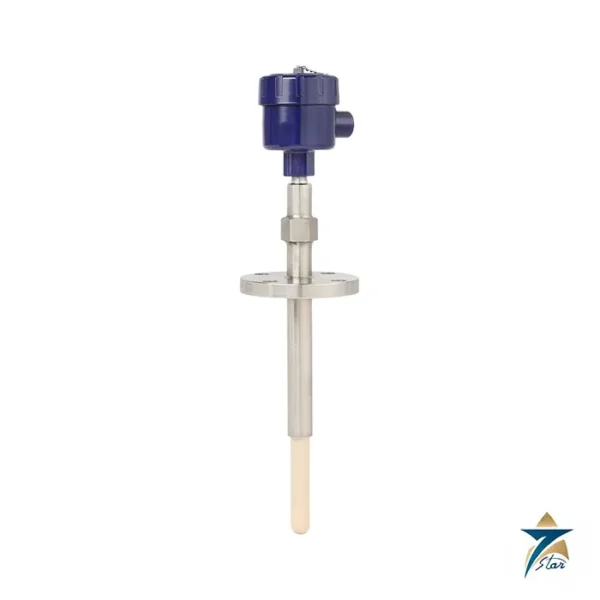
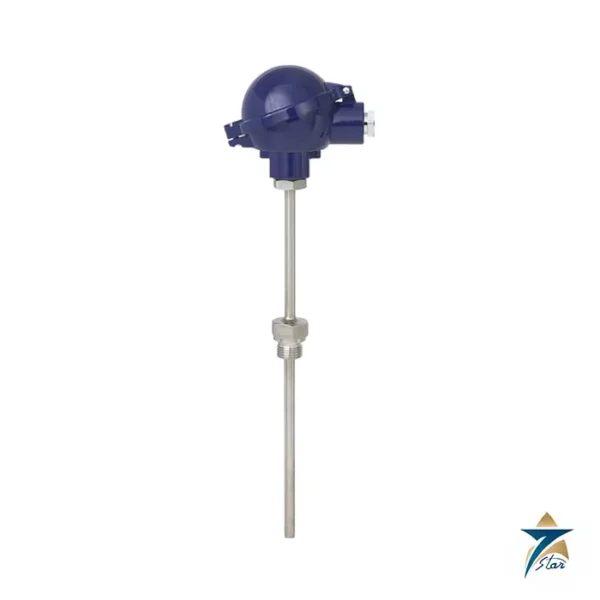
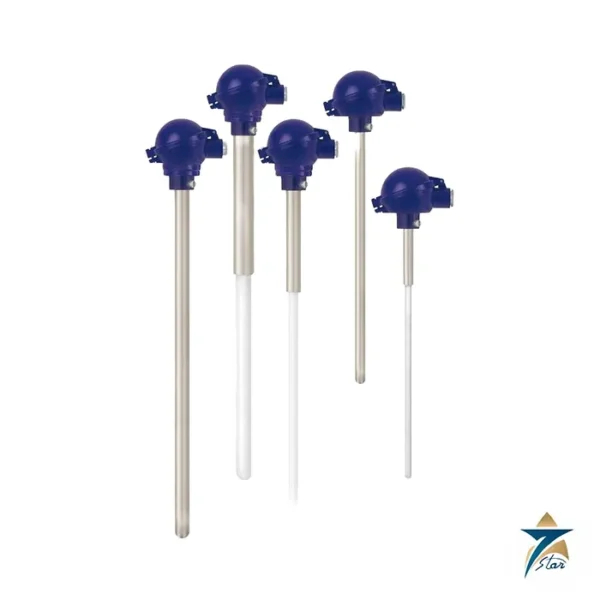
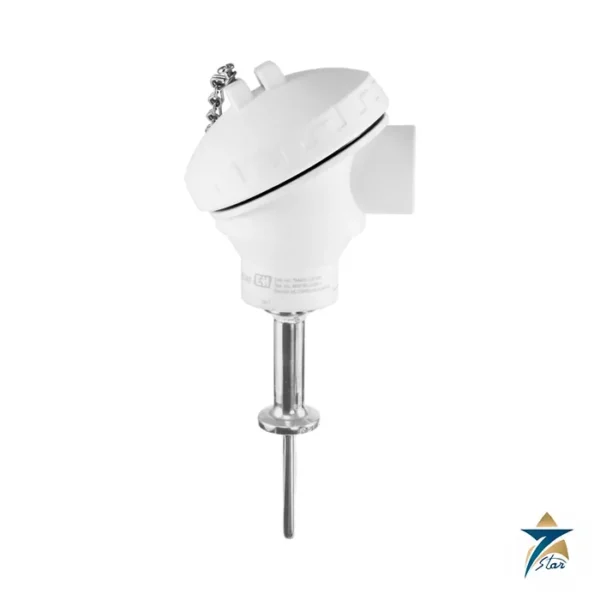
The T15 is the transmitter option on the TR10 series, TR60 and other head-mounted WIKA resistance thermometers, either on the insert in place of the terminal block or, preferably, inside the head cover. For thermocouple sensors, WIKA offers the T16 and T32. For a redundancy or SIL loop with TR10 thermometers, the T38 is the model the datasheets name, and the T15 is used where a simple 4 … 20 mA conversion is enough.
Installation and commissioning
- Choose the head or rail version to suit the sensor location and the ambient
- Wire the sensor per the terminal assignment table; do not mix 2-, 3- and 4-wire without reconfiguring
- Configure the range, damping and fault current before installation using the PU-548
- Check the loop supply: at least 8 V at the transmitter plus the load drop
- Verify the output with a simulator or dry-block after wiring
- Keep the transmitter inside its ambient limits; mount it in the head cover where possible
Applications in Oman and the GCC
WIKA lists machine building and plant construction, and the process industry. In regional plants, head transmitters let a temperature signal travel as 4 … 20 mA over long cables instead of sensitive sensor wiring, which suits big plants with long cable runs, hot-sun outdoor heads and electrical noise. Fitting the transmitter inside the head cover, away from the hot neck, helps its stability in summer conditions.
T15 ordering checklist
- Head-mounted (T15.H) or rail-mounted (T15.R)
- Sensor type, wiring and measuring range for factory configuration
- Explosion protection and approval requirements
- Extended ambient temperature option if applicable
- Programming unit PU-548 if site configuration is needed
- Combination with a WIKA thermometer, if supplied as a complete probe
Information to send with an RFQ
Send the sensor type, range, mounting style, hazardous-area details and quantity, plus the thermometer type if the transmitter is to be fitted to a probe.
Documents and quotation
The WIKA data sheet TE 15.01 for the T15 is attached on this page. Send us the specification and quantity for a quotation from Muscat as an independent supplier.



















Reviews
There are no reviews yet.