A headstock and tailstock pair for long revolving workpieces
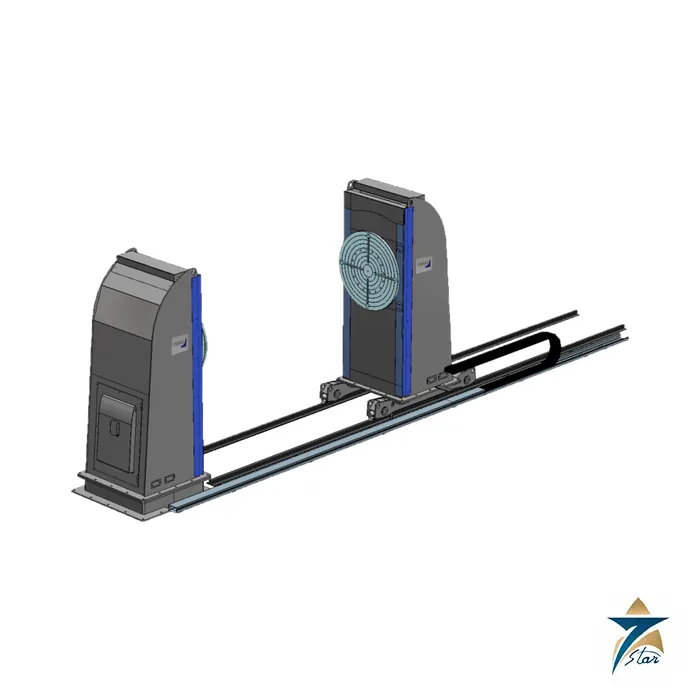
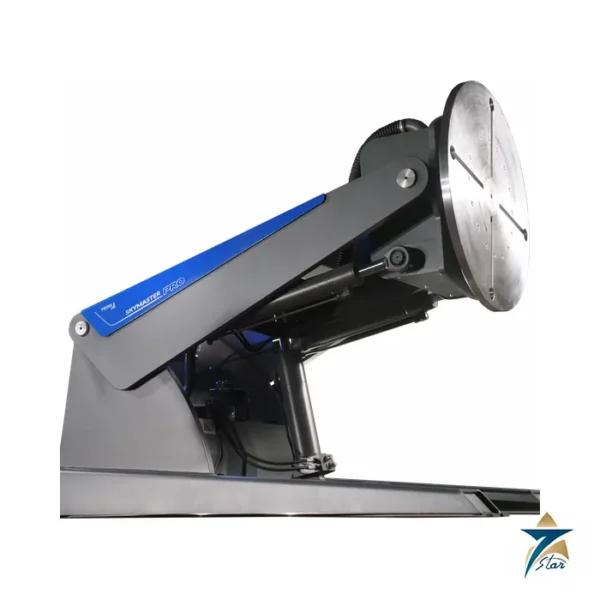
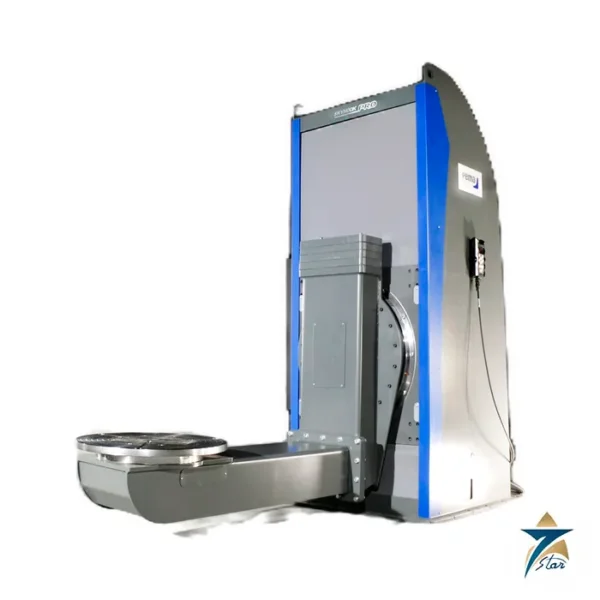
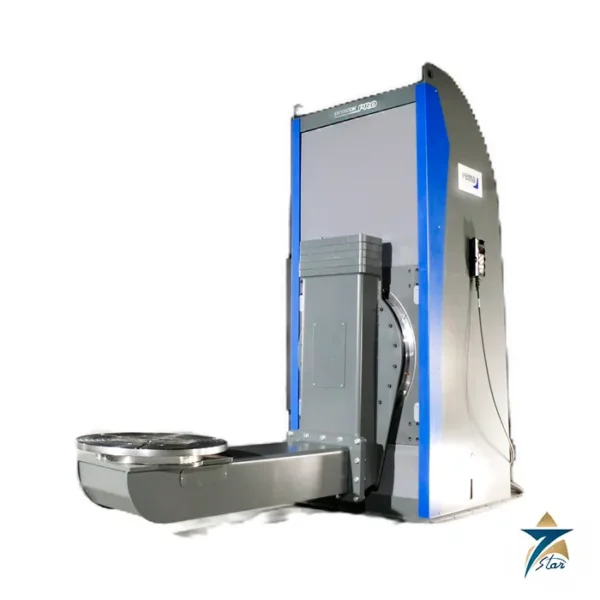
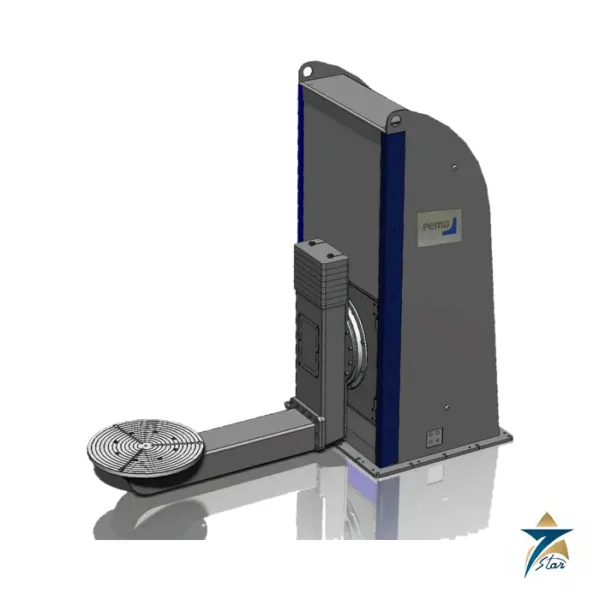
The Pemamek PEMA HPS 7000 and TPS 7000 pair is made for long workpieces that are best supported at both ends: wind towers, trailer frames, pipes, box beams and other elongated fabrications. The HPS headstock has motorised rotation and stepless hydraulically operated height adjustment, while the TPS tailstock has a free-rotating table plate with adjustable height. The headstock can also be used on its own, without the tailstock, when only one end needs support.
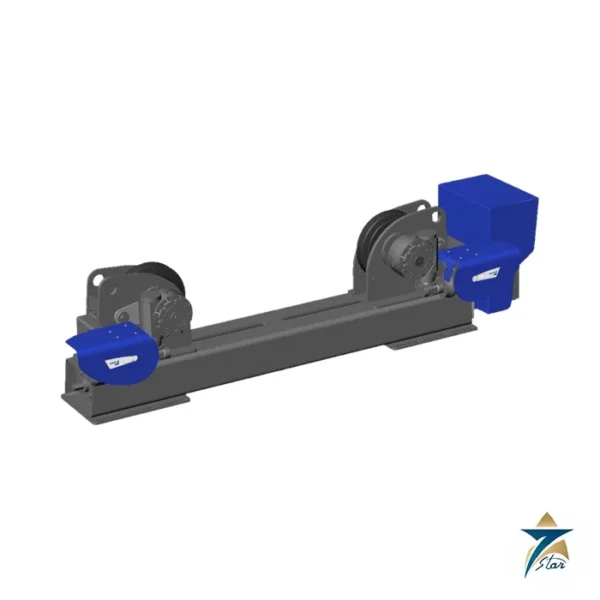
Pemamek states that the headstock and tailstock series covers loads from 3,500 to 40,000 kg. The 7000 size is rated 70,000 N per side, runs at 0.05 to 1 rpm, delivers 9,000 Nm of rotational torque and has 14,000 Nm of tilting torque listed. The table plate is 1,100 mm with four M20 DIN508 T-slots and the welding current rating is 1,400 A. Optional rail car units let tailstocks travel along a track so they can take different lengths of workpiece.
Technical specifications
| Parameter |
Specification |
| Series |
PEMA headstock and tailstock series, HPS 7000 and TPS 7000 |
| Maximum load |
70,000 N per side |
| Rotation speed (headstock) |
0.05-1 rpm |
| Maximum rotational torque |
9,000 Nm |
| Tilting torque |
14,000 Nm |
| Tilting axle height, adjustable, min-max |
850-1,650 mm |
| Table plate diameter and T-slots |
1,100 mm; 4 x M20 DIN508 |
| Maximum welding current |
1,400 A |
| Dimensions (H x L x W) |
2,500 x 1,190 x 1,160 mm; extension height 250 mm per product page |
| Mains supply |
3 x 400 V + N + PE, 50 Hz; 25 A; 12 m supply cable |
| Remote control |
Wired RC32H included |
| Optional accessories printed |
Rail car units for tailstocks, extension blocks for headstocks, foot pedal for start/stop of rotation, foot pedal for speed control, external control of rotation, wireless remote control |
How a headstock and tailstock are used
A long workpiece is lifted onto the two table plates; the headstock rotates and the tailstock follows on a free-turning plate, so no torsion is transmitted along the part from a one-sided drive. The user then rotates the part to put each longitudinal weld down-hand, typically with a fixed welding head or an operator on a platform. If the lengths vary, the rail car option lets the tailstock be moved and locked to suit.
Pemamek lists better productivity, improved quality and a durable design as the headline benefits: lifting and rotating the workpiece gives the welder a good and safe working position and consistent quality. Related products for similar use include the larger HPS 40000 and TPS 40000 pair in the same series. In practice the pair is set at the same axle height so the workpiece stays level, and the headstock height adjustment is stepless, which lets the operator match tubes or beams of different diameters without shimming. The wired RC32H remote controls rotation and height from a safe distance.
Foundation and installation in the workshop
A positioner pair carrying heavy fabrications needs a level, sound floor. Before delivery, check with the civil or plant engineer that the concrete at each station can take the combined weight of the unit and the workpiece, including the extra load on one side when the centre of gravity is off centre, and follow the Pemamek installation drawings for anchoring. Set out the headstock and tailstock on a common centreline so their table plates face each other squarely; a misaligned pair twists the workpiece as it turns. Bring the 3-phase supply to the station with suitable protection, route the supply cable and remote control lead where forklifts and falling spatter cannot damage them, and provide a dedicated welding return path so current does not pass through bearings or gears.
Commissioning and first lifts
Run both units without a load first: check the direction of rotation, the full speed range, the height adjustment of each unit and the stop functions on the RC32H. Then try a light, simple workpiece, confirming that it sits level and that the tailstock follows freely before moving to heavier parts. Train operators on fixing the workpiece to the table plates through the T-slots, on safe lifting practice with the overhead crane, and on keeping clear of the rotating part.
Heat, dust and spatter in GCC fabrication shops
Fabrication halls in Oman and the wider Gulf are often hot through much of the year, with dust drawn in through open doors and grinding dust produced inside. Hydraulic oil and motor components work harder in that heat, so keep ventilation around the units clear and check oil condition at the intervals set in the Pemamek manual. Grinding dust and weld spatter settle on the table plates, slide surfaces and cable entries; clean them regularly and shield the units from heavy spatter where possible. Shops near the coast should watch for corrosion on bare steel surfaces and wipe them with a light protective film during idle periods.
Planned maintenance
Make a simple routine part of shift handover: look for hydraulic leaks, listen for unusual noise from the drive, test the remote control and its stop function, and check that the cables are undamaged. At longer intervals, follow the manufacturer schedule for lubrication, hydraulic oil and filter changes, and inspection of the earth path and welding current connection. Report any jerky rotation or creeping height straight away, as both affect weld quality and safety with heavy parts. Keep a log for each pair so trends are visible and service can be planned around production.
Ordering and what to confirm before ordering
The datasheet names the model only; quotation is by specification. State the workpiece length, diameter and mass, the number of pairs, whether a rail car for the tailstock or an extension block for the headstock is required, the supply and the welding power source. Confirm that the load per side is within the 70,000 N rating when the centre of gravity is off centre.
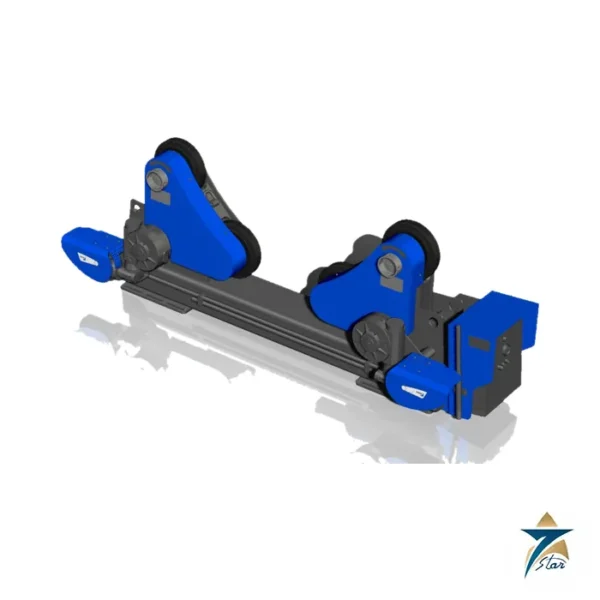
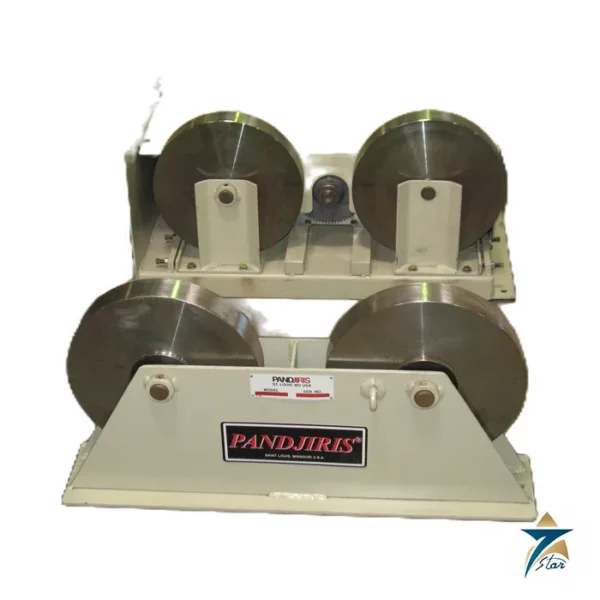
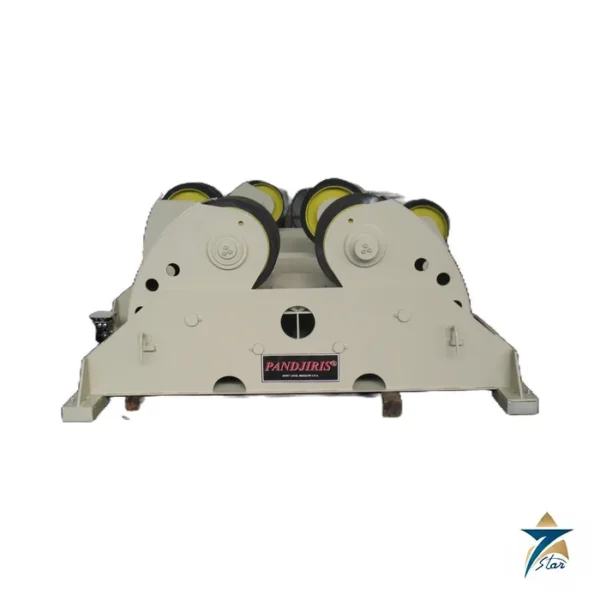
Where simple cylindrical rotation is enough, compare the Pandjiris MM-60/30-T turning roll, or browse all Welding Robots & Automation.


















Reviews
There are no reviews yet.