Brand:

Hochiki CSB-E Conventional Sounder Base 32 Tones

Description

Overview

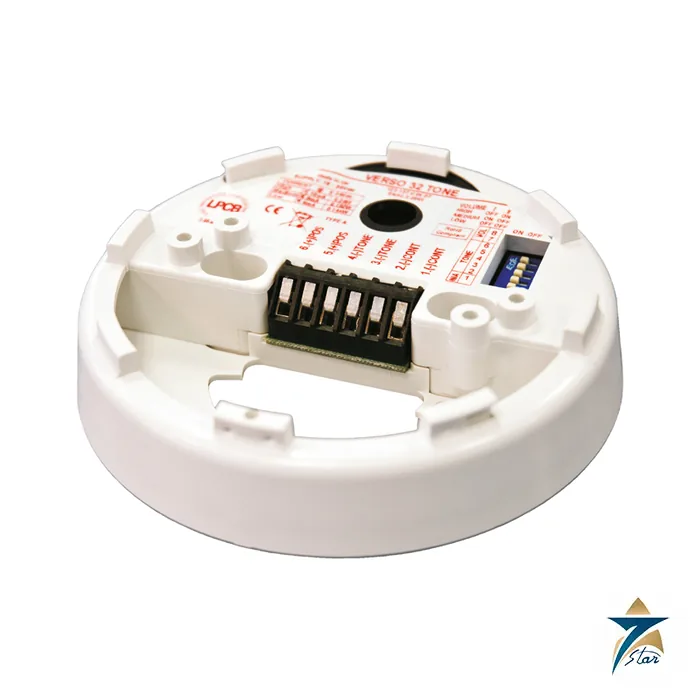
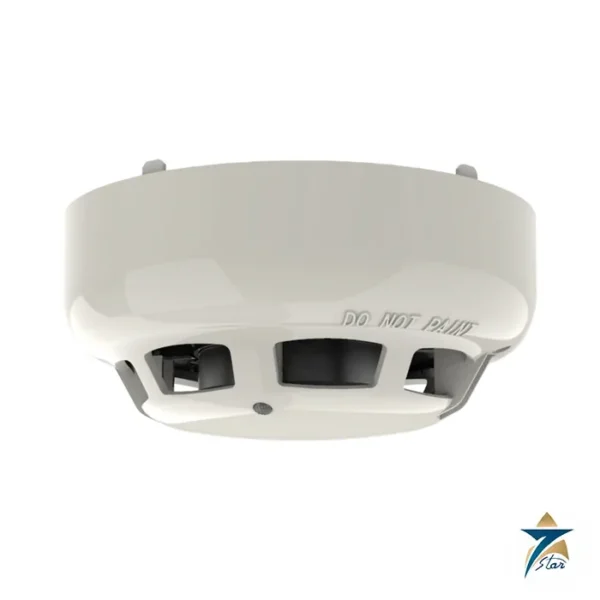
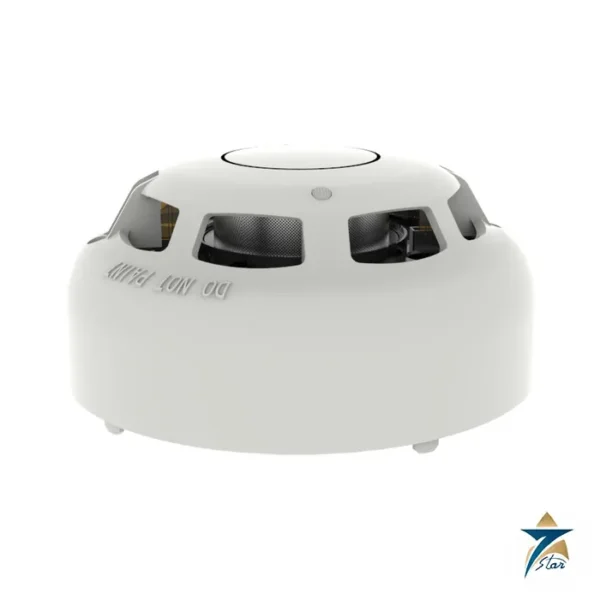
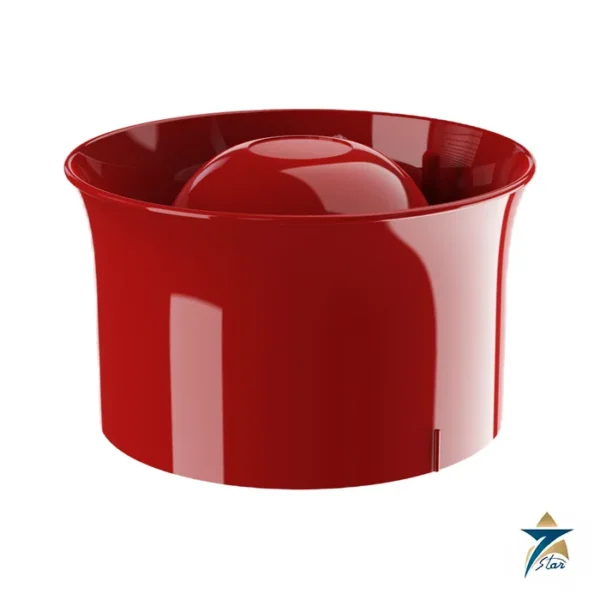
The Hochiki CSB-E is a conventional sounder base: a mounting base for CDX range detectors that also contains a sounder. Instead of installing a separate alarm horn next to each detector, the installer fits this base and the detector’s head twists into it, so that the room has audible warning with a minimal number of devices. Seven Star LLC is an independent supplier serving Oman and the GCC. This page summarises the Hochiki datasheet and explains how to select tones and volume.

How the CSB-E works

The unit is a platform-type sounder with improved electronics that give a very low current consumption for a high sound output, according to the datasheet. A DIL switch bank selects one of 32 tones and one of three volume levels called low, medium and high. At tone 1 the output at 1 metre is 86.2 dB(A) on low, 87.7 dB(A) on medium and 91.2 dB(A) on high, and the headline maximum is 93 dB(A). Current at 24 V DC is 5.7, 7 and 9.4 mA respectively, so even a full zone of sounder bases places a modest load on the panel. Frequency spans 440 to 2900 Hz.

Data for Hochiki CSB-E

Item Value
Device type conventional sounder base for CDX detectors
Ordering codes Hochiki CSB-E (ivory); Hochiki CSB-E(WHT) (white); CS-CAP lockable cap
Operating voltage 18 to 30 V DC
Number of tones 32, user selectable
Volume settings 3: low, medium, high
Sound output at 1 m, tone 1 86.2 / 87.7 / 91.2 dB(A)
Current at 24 V DC 5.7 / 7 / 9.4 mA
Operating frequency 440 to 2900 Hz
IP rating IP21C
Operating temperature minus 20 to plus 70 degrees C
Compatible CDX bases YBN-R/6, YBO-R/6PA, YBO-R/6R, YBO-R/6RN, YBO-R/6RS, YBN-R/6SK
Compatible CDX detectors SLR-E3N, DCD-AE3, DCD-CE3, DFJ-AE3, DFJ-CE3
Case material ABS, ivory or white
Weight and size 110 g; diameter 116 mm; height 25 mm
Fixing centres 48 to 74 mm
Approvals EN 54 Part 3 by LPCB and VdS on tones 1, 3, 11, 25 and 27

Tone and volume choices for the Hochiki CSB-E

Only some tones carry the EN 54-3 approval, namely tones 1, 3, 11, 25 and 27. A designer who must comply with a code should therefore pick one of those and then set volume so that the sound pressure at the bed head or work position meets the requirement, commonly 75 dB(A) in sleeping areas and 65 dB(A) or 5 dB above background elsewhere. The switch positions are set once during commissioning, and the lockable cap, article CS-CAP, prevents tampering. Where the building has several zones, using different tones for evacuation and alert signals avoids confusion.

Where it fits in Gulf buildings

Hotels, offices, residential blocks, schools and small industrial units in Oman and the GCC use conventional systems when the budget is limited or the building is small. In those cases, a sounder base is neat: it keeps the ceiling clear, reduces cabling and avoids a second device. Bedrooms, hospital wards and student housing benefit especially because the sound comes from the ceiling position above the occupant. Dusty or humid plant areas are less suitable because the protection rating is IP21C.

How CSB-E differs from a detector base

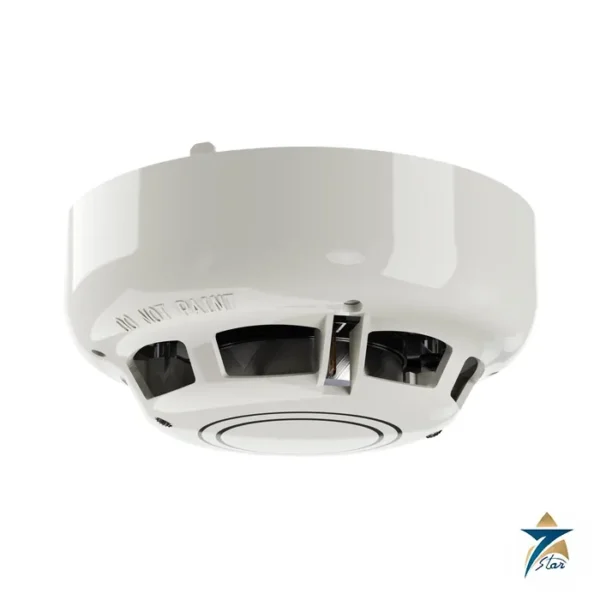
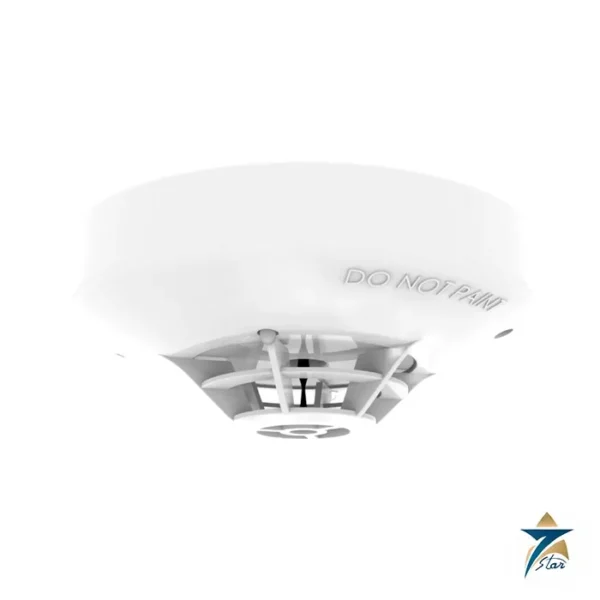
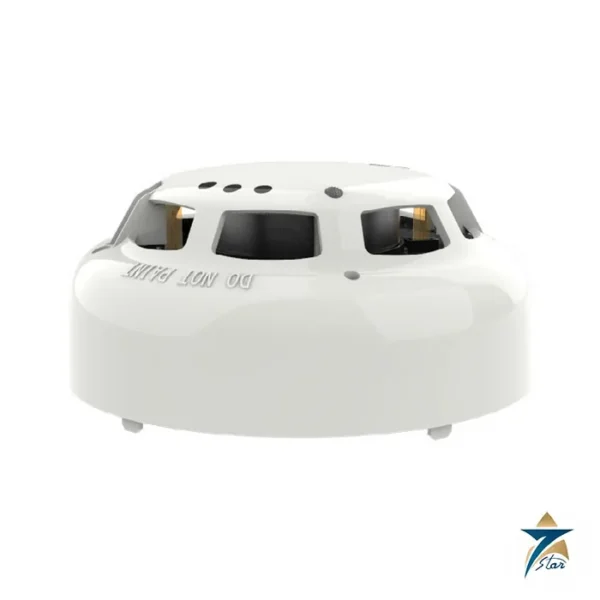
A plain base such as the YBN-R/6 only carries the detector and connects it to the zone wiring. The sounder base takes over the role of the base and adds the sounder, so it needs its own supply of 18 to 30 V DC. It is only 25 mm high, 116 mm across and weighs 110 g. Its compatible detectors are limited to the models listed, namely SLR-E3N, DCD-AE3, DCD-CE3, DFJ-AE3 and DFJ-CE3, mounted using an appropriate CDX base. Check that the chosen head and base appear in the list.

Matching sounder bases to occupancy types

Different buildings need different sounder strategies. In a hotel bedroom the sound must wake a sleeping person, which standards usually express as a minimum level at the pillow with the door closed, and a base mounted in the ceiling above the bed can meet that with the high volume setting. In an open office, a single tone at medium volume per detector zone may be sufficient. In a school, where children must hear the signal during a lesson or break, a distinctive tone is selected and tested in the noisiest room. After commissioning, test the actual sound pressure at the worst-case location with the doors closed, and raise the volume setting if the target is not met. Sound levels should be rechecked after major refurbishment because new partitions and soft furnishings change the acoustics.

Power and loading calculations

Because the base needs a separate supply within 18 to 30 V DC, add up the current of all sounders on a circuit at the chosen volume and compare it with the capacity of the panel’s sounder output or the power supply unit, including the battery standby calculation required by the code. At 9.4 mA on high volume, twenty bases draw less than 190 mA, which is modest, but the battery must still carry that load for the full standby period followed by the alarm period. Check the voltage at the far end of the cable run as well, so that the last sounder still receives at least 18 V when the batteries are partly discharged, and increase the cable size if the drop is too large.

Installation and testing

Fix the base on 48 to 74 mm centres, wire the supply and the zone connections according to the panel maker’s instructions, set the DIL switches for tone and volume, then fit the detector and the optional lockable cap. Operate the system to confirm that the sounders activate at the right level, measure sound pressure at critical points, and record the tone and volume settings on the as-built drawings. Re-test annually along with the detectors, and clean the grille without using liquids.

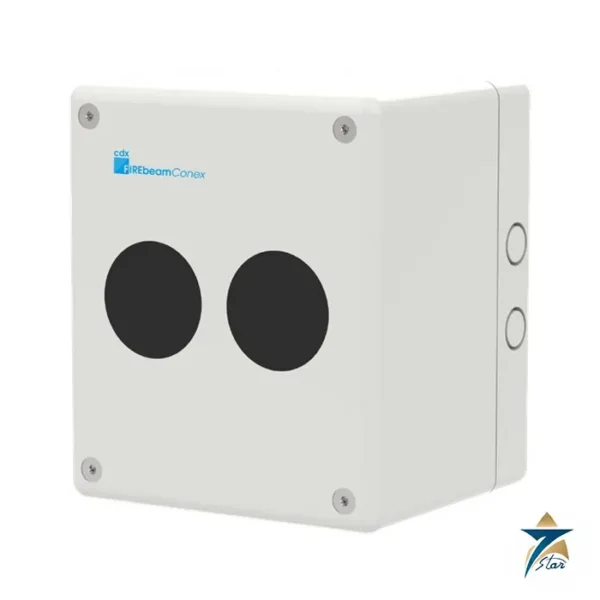
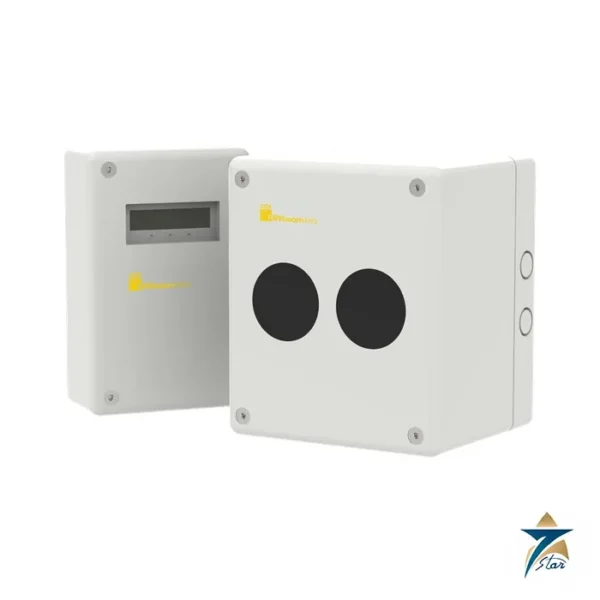
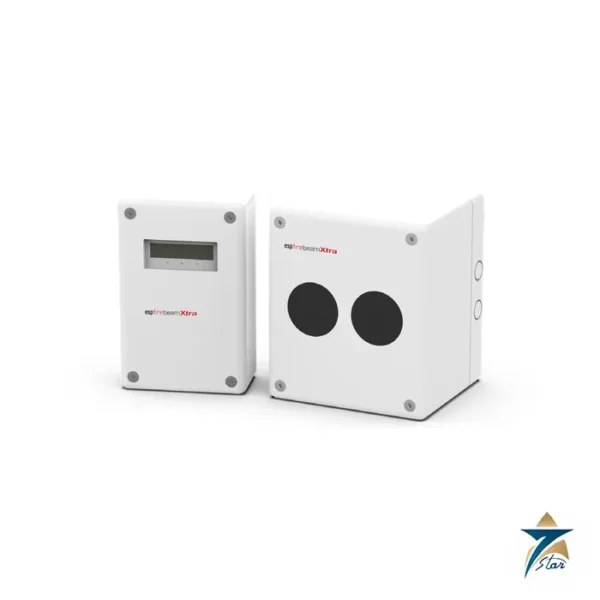
Related items you may also need: Hochiki ACD-EN Intelligent Multi Sensor | Hochiki CDX FIREbeam Conex Conventional Beam Smoke Detector | Hochiki CDX FIREbeam Xtra Conventional Beam Smoke Detector | All Hochiki products.

Checklist before ordering the Hochiki CSB-E

  • Before ordering the Hochiki CSB-E, compare the nameplate of the unit being replaced with the code shown on this page, character by character.
  • Our team confirms the Hochiki CSB-E code and lead time in writing before any order is placed.
  • The datasheet attached to this page is the reference for the Hochiki CSB-E dimensions, ratings and connections.
  • The Hochiki CSB-E is listed in our fire & gas detectors range and ships to sites across Oman and the GCC.
  • Spare quantities of the Hochiki CSB-E are worth planning for critical duty so that a failure does not stop production.

Documents and quotation

The Hochiki datasheet for the Hochiki CSB-E is attached to this page with the full specification. Send your RFQ with the model, colour, quantity, the detector types you plan to mount and your delivery location in Oman or the GCC.

Other Models in the CDX Range

Seven Star LLC supplies models from the CDX range in Oman and the GCC. Compare the related models below and request a quote for the one that matches your application.

ModelCategory
Hochiki DCD-AE3 Rate-of-Rise Heat Detector 60 CFire & Gas DetectorsView details
Hochiki DCD-CE3 Rate-of-Rise Heat Detector 90 CFire & Gas DetectorsView details
Hochiki DCD-1E-IS Intrinsically Safe Heat DetectorFire & Gas DetectorsView details
Hochiki CCP-E Conventional Manual Call PointFire & Gas DetectorsView details
Hochiki CSB-E Conventional Sounder Base 32 TonesFire & Gas DetectorsYou are viewing this model
Datasheets & Documents
  • PDF Datasheet Hochiki CSB-E Conventional Sounder Base 32 Tones Datasheet Download
Reviews (0)

Reviews

There are no reviews yet.

How would you rate this product?

It takes about 10 seconds — just tap a star. Your email is never published.

About brand

Hochiki is a Japanese fire detection company, established in Tokyo in 1918 as Japan's first fire alarm manufacturer, with leading insurance companies among its founders. It makes smoke and heat detectors, beam detectors, addressable fire alarm systems and emergency lighting. Hochiki America has operated in the US since 1972.

Seven Star LLC is an independent supplier in Muscat. We list Hochiki detectors for fire alarm contractors in Oman and the GCC.

Hochiki company profile

Founded 1918, Tokyo, Japan
Founders Members of Japan's insurance industry
US operations Since 1972
Systems Conventional and addressable fire detection
Product families ESP intelligent detectors and multi-sensors, FIREbeam beam detectors, CDX conventional detectors, control panels

Milestones

  • 1918: Hochiki is founded in Tokyo.
  • 1972: Hochiki America begins US operations.

Hochiki product series

The ACD-EN is an intelligent multi sensor detector for Hochiki addressable systems.

Beam smoke detectors include the CDX FIREbeam Conex and CDX FIREbeam Xtra conventional detectors and the ESP FIREbeam Xtra addressable detector.

Multi sensor detectors combine smoke and heat sensing to detect different fire types and reduce false alarms. Beam detectors send an infrared beam across an open space and alarm when smoke reduces the signal, covering large areas with fewer devices.

Detectors must match the panel protocol and be installed and tested to the local fire code.

Where Hochiki detectors are used

Offices, hotels, schools and hospitals, and large open spaces such as warehouses, atriums and halls where beam detectors cover long distances.

Hochiki products we list

Family Examples
Fire & Gas Detectors ACD-EN Intelligent Multi Sensor, CDX FIREbeam Conex Conventional Beam Smo…, ESP FIREbeam Xtra Addressable Beam Smoke…

Ordering Hochiki detectors: what we need

Send the part number, protocol (conventional or ESP addressable), the beam range and the panel in use.

Facts checked against IFSEC Global centenary coverage and Hochiki company profiles, October 2026.

FAQ

Questions about the Hochiki CSB-E Conventional Sounder Base 32 Tones

Answers from our engineering team on installation, compatibility and integration.

01How many tones does the Hochiki CSB-E have?
It has 32 user-selectable tones and three volume settings, chosen with a DIL switch bank; maximum output is 93 dB(A) at 1 metre.
02Which tones of the CSB-E are EN 54-3 approved?
The datasheet says the unit is approved to EN 54 Part 3 by LPCB and VdS on tones 1, 3, 11, 25 and 27.
03Which detectors can be fitted to the CSB-E?
SLR-E3N, DCD-AE3, DCD-CE3, DFJ-AE3 and DFJ-CE3, mounted using an appropriate CDX base.
04What is the current consumption of the CSB-E?
At 24 V DC it draws 5.7 mA on low, 7 mA on medium and 9.4 mA on high volume.
05Is there a lockable cap for the CSB-E?
Yes, the lockable cap is ordered as CS-CAP, and the sounder base itself comes as CSB-E in ivory or CSB-E(WHT) in white.