- Automation & ControlView all 3,076 products
- Automation Accessories
- AC Drives
- PLC & I/O Cards
- Industrial Communications
- Vibration Monitoring
- Isolator & Barrier
- Controllers & Data Acquisition
- Safety Switches & Guard Locking
- Motor Soft Starters
- Encoders
- CCTV & Security
- Pneumatic Cylinders
- HMI Displays
- Servo Drives
- Industrial Computers
- Machine Vision
- Automation Software
- Robotics
Brand: Hochiki
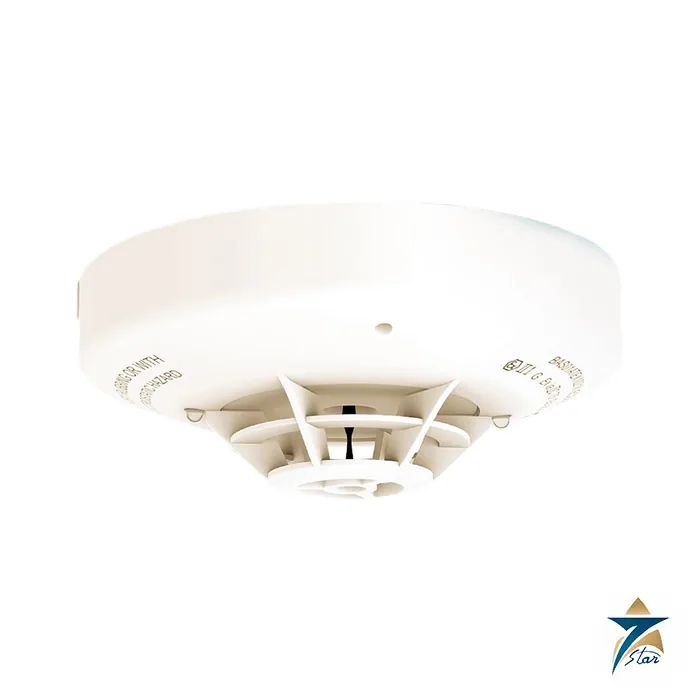
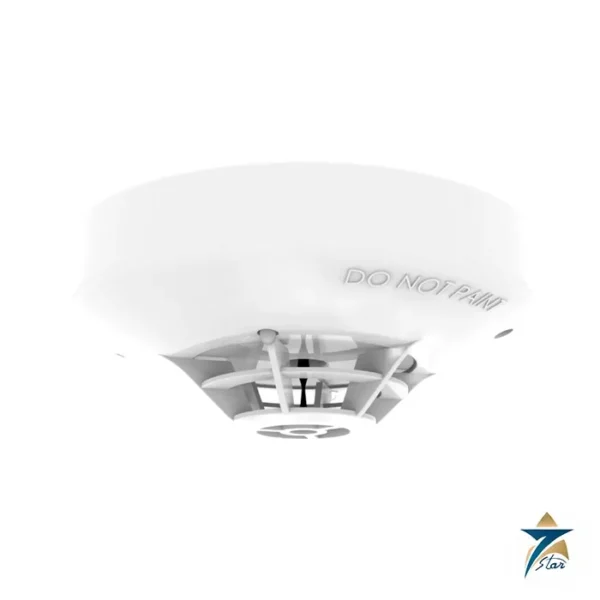
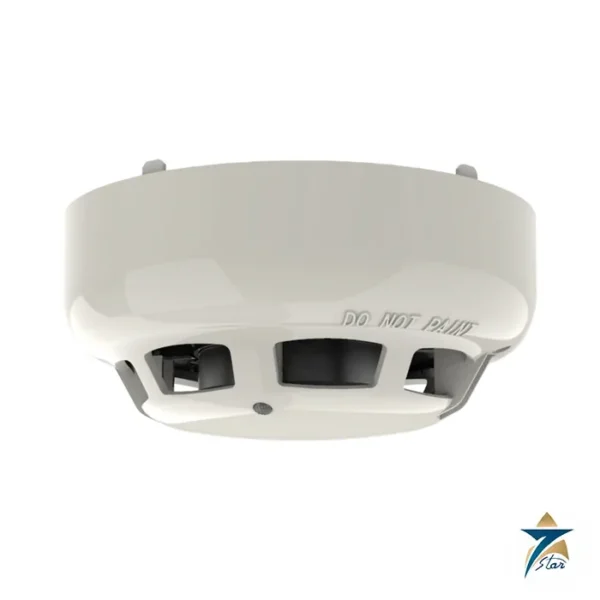
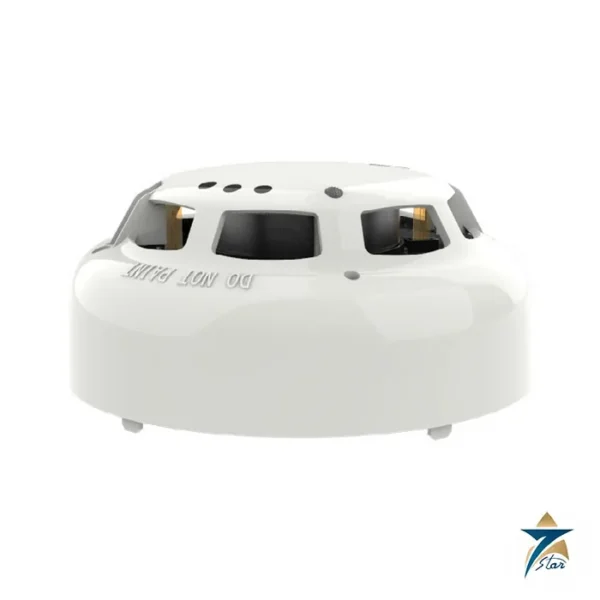
Hochiki DCD-1E-IS Intrinsically Safe Heat Detector
Description
Overview
The Hochiki DCD-1E-IS is an intrinsically safe conventional rate-of-rise heat detector with a 60 degree C fixed temperature element, designed for hazardous areas. It is the heat detector that sits in fuel stores, paint shops, solvent handling rooms and process areas where a standard detector’s electronics could become an ignition source. Seven Star LLC is an independent supplier serving Oman and the GCC. This summary follows the manufacturer’s datasheet and is aimed at engineers who must match the detector to a hazardous area classification and a safety barrier.
Intrinsic safety in a heat detector
Intrinsic safety limits the energy that can reach the detector so that no spark or hot surface can ignite a gas atmosphere, even under fault conditions. The datasheet gives the ATEX classification II 1 G Ex ia IIC T5 for an ambient range of minus 20 to plus 55 degrees C, under certificate BAS01ATEX1021X, and states that the unit is suitable for installation in areas at Category 1, including all lower categories. That makes it usable in Zone 0 locations, provided the associated barrier or panel interface is correctly selected. Another feature is the electronics-free mounting base: the compatible base, YBN-R/4(IS), only 8 mm high, contains no active components, which helps keep the energy stored in the circuit low.
Technical data of Hochiki DCD-1E-IS
| Item | Value |
|---|---|
| Detector type | intrinsically safe conventional rate-of-rise heat detector with 60 degrees C fixed element |
| Ordering codes | Hochiki DCD-1E-IS (ivory); Hochiki DCD-1E-IS(WHT) (white) |
| Operating voltage | 15 to 30 V DC |
| Quiescent current, typical | 50 microamps |
| Maximum current in alarm | 40 mA |
| Operating temperature | minus 10 to plus 55 degrees C |
| Storage temperature | minus 30 to plus 70 degrees C |
| Maximum humidity | 95 percent RH non-condensing at 40 degrees C |
| Ingress protection | IP63 |
| Case material | ABS, ivory or white |
| Weight and size | 97 g; diameter 100 mm; height 40 mm |
| Compatible base | YBN-R/4(IS), base height 8 mm |
| Base fixing centres | 48 to 74 mm |
| ATEX | BAS01ATEX1021X; II 1 G Ex ia IIC T5 (minus 20 to plus 55 degrees C ambient) |
| Approvals | LPCB, VdS and DNV |
Where the Hochiki DCD-1E-IS belongs in an Omani plant
Oil and gas facilities, fuel depots, chemical stores, pump rooms and marine installations are classed into hazardous zones, and any equipment installed there must be certified for the zone. The DNV approval listed in the datasheet signals suitability for marine and offshore use, while LPCB and VdS cover the fire detection performance. A rate-of-rise heat detector is the usual choice in a hazardous room where smoke detectors might be spoiled by process vapour, dust or humidity, and it avoids the risk of false alarms that lead to unnecessary shutdowns.
Differences from standard conventional heat detectors
Compared with the DCD-AE3, the Hochiki DCD-1E-IS accepts a narrower voltage range, 15 to 30 V DC against 9.5 to 30 V DC, because it is fed through an intrinsically safe interface. Standing current is about 50 microamps typical, and the operating range tops out at plus 55 degrees C, five degrees above the AE3. It uses a single base, the YBN-R/4(IS), rather than six, and the casing is ABS rather than polycarbonate. Both share the same 60 degree fixed temperature and the twin fire LEDs for 360 degree viewing.
Selecting the barrier and wiring
An intrinsically safe detector is part of a system, and the barrier or isolator that powers it determines whether the loop is safe. The designer must compare the entity parameters on the certificate with those of the barrier, add cable capacitance and inductance, and keep the intrinsically safe wiring separated and marked, normally with blue sheathing. The remote indicator output is also provided, and care is needed if it is used in a hazardous location. Make sure that the panel’s zone supervision works with the barrier chosen, and keep the barrier in the safe area or in a certified enclosure.
Installation and commissioning
Install the base, make the connections, record the loop details on the certification file, then fit the head. Check polarity and insulation resistance, confirm that the zone resistance and barrier output are in tolerance, and test the detector with an approved heat tester suited to the hazardous area. Hot work permits, gas tests and area authority rules apply during all of this. Do not paint the head or cover it.
Hazardous area documentation
Hazardous area projects are audited against paperwork as much as against hardware. The file for each intrinsically safe loop normally contains the area classification drawing, the equipment certificates, the barrier certificates, the loop calculation showing that cable parameters are within the barrier limits, and the inspection records. The detector’s certificate number, BAS01ATEX1021X, and its marking should appear on the register. Where the detector is installed in a Zone 1 or Zone 2 area rather than Zone 0, the same loop file still applies, and the designer can often simplify by using the same detector type in all zones for stock reasons. A short training session for maintenance staff on safe handling, permit rules and the meaning of the Ex marking prevents expensive mistakes during later work.
Inspection and spares
Inspections of hazardous area equipment follow the site standard, typically a visual check every year and a detailed check every few years. Look for damage to the casing, loosened bases, corrosion on terminals and signs that the head has been painted or covered. Replace any damaged unit rather than repair it, because repair would invalidate the certification. Keep spare heads with the same ordering code and document batch numbers.
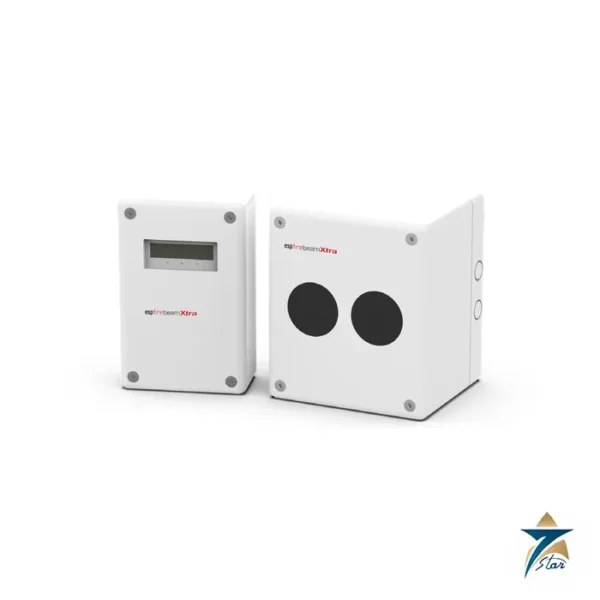
Related items you may also need: Hochiki ESP FIREbeam Xtra Addressable Beam Smoke Detector | Hochiki ACD-EN Intelligent Multi Sensor | Hochiki CDX FIREbeam Xtra Conventional Beam Smoke Detector | All Hochiki products.
Points to confirm for the Hochiki DCD-1E-IS
- If the Hochiki DCD-1E-IS is a like-for-like replacement, read the full code from the installed nameplate and compare it with this page.
- For each Hochiki DCD-1E-IS request we confirm the exact code and lead time in writing.
- Dimensions, ratings and connection data for the Hochiki DCD-1E-IS are in the datasheet attached to this page.
- The Hochiki DCD-1E-IS belongs to our fire & gas detectors range and can be delivered to Muscat, Sohar, Duqm and other GCC locations.
Documents and quotation
The Hochiki datasheet for the Hochiki DCD-1E-IS, including the ATEX classification and base details, is attached to this page. Please send your RFQ with the model, colour, quantity, the barrier you plan to use and your delivery location in Oman or the GCC.
Other Models in the CDX Range
Seven Star LLC supplies models from the CDX range in Oman and the GCC. Compare the related models below and request a quote for the one that matches your application.
| Model | Category | |
|---|---|---|
| Hochiki DCD-AE3 Rate-of-Rise Heat Detector 60 C | Fire & Gas Detectors | View details |
| Hochiki DCD-CE3 Rate-of-Rise Heat Detector 90 C | Fire & Gas Detectors | View details |
| Hochiki DCD-1E-IS Intrinsically Safe Heat Detector | Fire & Gas Detectors | You are viewing this model |
Datasheets & Documents
- Datasheet Hochiki DCD-1E-IS Intrinsically Safe Heat Detector Datasheet Download
Reviews (0)
How would you rate this product? Cancel reply
About brand
Hochiki is a Japanese fire detection company, established in Tokyo in 1918 as Japan's first fire alarm manufacturer, with leading insurance companies among its founders. It makes smoke and heat detectors, beam detectors, addressable fire alarm systems and emergency lighting. Hochiki America has operated in the US since 1972.
Seven Star LLC is an independent supplier in Muscat. We list Hochiki detectors for fire alarm contractors in Oman and the GCC.
Hochiki company profile
| Founded | 1918, Tokyo, Japan |
|---|---|
| Founders | Members of Japan's insurance industry |
| US operations | Since 1972 |
| Systems | Conventional and addressable fire detection |
| Product families | ESP intelligent detectors and multi-sensors, FIREbeam beam detectors, CDX conventional detectors, control panels |
Milestones
- 1918: Hochiki is founded in Tokyo.
- 1972: Hochiki America begins US operations.
Hochiki product series
The ACD-EN is an intelligent multi sensor detector for Hochiki addressable systems.
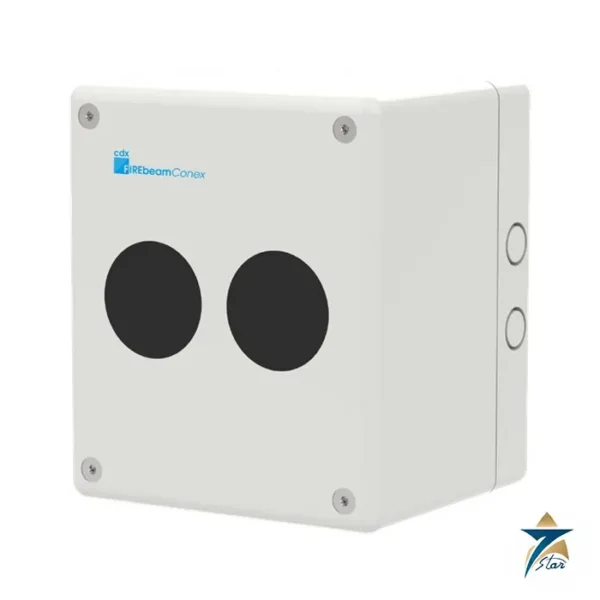
Beam smoke detectors include the CDX FIREbeam Conex and CDX FIREbeam Xtra conventional detectors and the ESP FIREbeam Xtra addressable detector.
Multi sensor detectors combine smoke and heat sensing to detect different fire types and reduce false alarms. Beam detectors send an infrared beam across an open space and alarm when smoke reduces the signal, covering large areas with fewer devices.
Detectors must match the panel protocol and be installed and tested to the local fire code.
Where Hochiki detectors are used
Offices, hotels, schools and hospitals, and large open spaces such as warehouses, atriums and halls where beam detectors cover long distances.
Hochiki products we list
| Family | Examples |
|---|---|
| Fire & Gas Detectors | ACD-EN Intelligent Multi Sensor, CDX FIREbeam Conex Conventional Beam Smo…, ESP FIREbeam Xtra Addressable Beam Smoke… |
Ordering Hochiki detectors: what we need
Send the part number, protocol (conventional or ESP addressable), the beam range and the panel in use.
Facts checked against IFSEC Global centenary coverage and Hochiki company profiles, October 2026.
Browse Hochiki products by category: Fire & Gas Detectors.
FAQ
Questions about the Hochiki DCD-1E-IS Intrinsically Safe Heat Detector
Answers from our engineering team on installation, compatibility and integration.
01What ATEX classification does the Hochiki DCD-1E-IS carry?
The datasheet gives II 1 G Ex ia IIC T5 for minus 20 to plus 55 degrees C ambient, under certificate BAS01ATEX1021X, suitable for Category 1 areas.
02Which base is used with the DCD-1E-IS?
The compatible base is the YBN-R/4(IS), an electronics-free base with a height of 8 mm and fixing centres of 48 to 74 mm.
03What supply voltage does the DCD-1E-IS need?
It operates from 15 to 30 V DC with a typical quiescent current of 50 microamps and a maximum alarm current of 40 mA.
04What fixed temperature does the DCD-1E-IS have?
It is a rate-of-rise heat detector with a 60 degrees C fixed temperature element.
05What approvals does the DCD-1E-IS hold besides ATEX?
The datasheet lists LPCB, VdS and DNV approvals.


Reviews
There are no reviews yet.