A conventional-zone beam detector with a separate controller
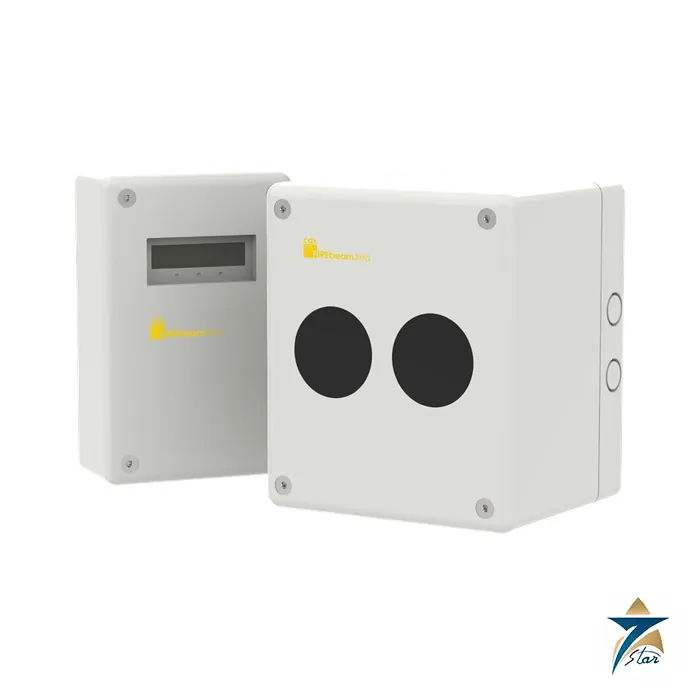
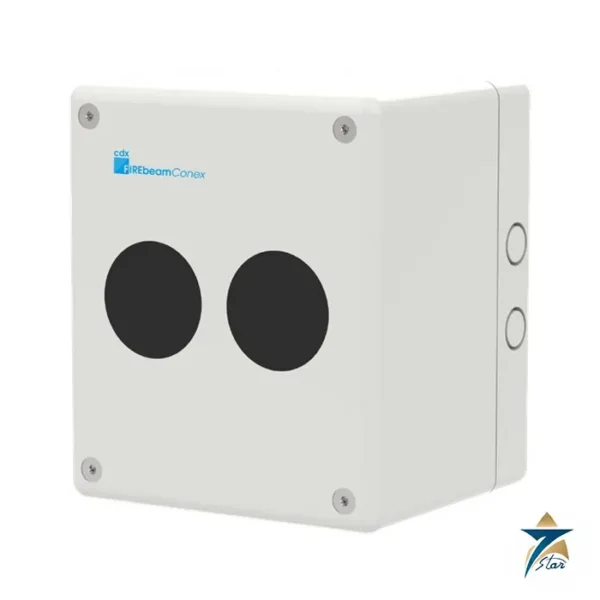
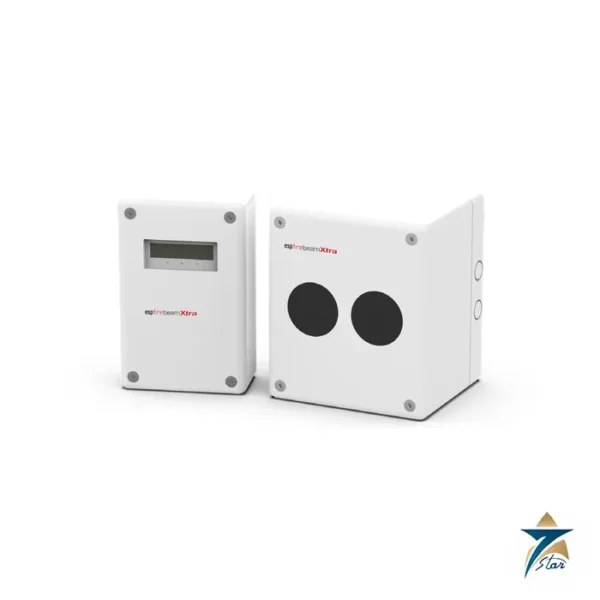
The Hochiki CDX FIREbeam Xtra is the conventional version of the FIREbeam Xtra reflective beam smoke detector. It is approved to EN 54-12, covers 7 to 70 m with one reflector, and reaches 140 m or 160 m with the medium and long range kits. It is for projects where the panel has conventional zones rather than an addressable loop.
A controller unit supplied with the head allows commissioning, monitoring and maintenance from ground level. The head aligns itself to the centre of the reflector during commissioning and keeps correcting for building movement afterwards, while the datasheet notes the reflector is static and does not self-align.
Technical specifications
| Parameter |
Specification |
| Ordering codes |
CDX FIREbeam Xtra: beam head including controller and 1 reflector, 7 to 70 m; 70KIT140: 70 to 140 m; 140KIT160: 140 to 160 m |
| Supply voltage |
12 to 30 VDC |
| Supply current |
3.5 mA constant in all operational states; 17 mA in fast commissioning |
| Operating temperature |
-10 to +55 C |
| Operating humidity |
10 to 95 percent RH, non-condensing |
| Ingress protection |
IP65 when suitably mounted and terminated |
| Optical wavelength |
870 nm |
| Maximum angular alignment |
+/- 5 degrees |
| Maximum misalignment |
Beam head +/- 0.4 degrees; reflector +/- 2 degrees (static) |
| Alarm sensitivity |
25 to 50 percent (1.25 to 3 dB) in 1 percent steps; default 35 percent (1.87 dB) |
| Dimensions |
Beam head H 180 x W 155 x D 137 mm; controller H 185 x W 120 x D 62 mm |
| Approval |
EN 54-12 |
Choosing between the Xtra and Conex conventional beams
Both conventional models share the 7 to 70 m base range and the 140 and 160 m extension kits. The Xtra uses a wired controller for commissioning, while the Conex is set up by app over Bluetooth with no controller. The Xtra datasheet gives a 12 to 30 VDC supply and 3.5 mA constant current, against 5.5 mA for the Conex.
Accessories listed include REP-CONT replacement controller, anti-condensation window and reflector kits, FB-BRACKET wall bracket, a unistrut adapter and SHORTRM for up to 20 m. Weights in the datasheet are labelled in grams but read 1.1 and 0.55, so they are omitted.
Before requesting a quotation
Provide the beam length, mounting heights and the fire panel conventional zone details. Confirm whether the project needs the anti-condensation options. The datasheet carries a revision mark (ISS3, May 2026 on the file supplied) and Hochiki asks users to check online for the current version.
Design and selection checks
Beam detectors are usually chosen for large open spaces such as warehouses, factory halls, atriums and hangars, where many point detectors would be needed and where the ceiling is hard to reach. Start from the fire protection design for the building: the applicable code determines the mounting height below the roof, the maximum lateral coverage either side of the beam and the spacing between beams. Measure the actual distance between the chosen head and reflector positions and select the standard reflector or one of the extension kits so that the path falls inside the stated range. Check that the conventional zone input of the fire panel can supply the beam within the voltage range in the table and that the zone wiring design follows the panel manufacturer’s rules.
Look along the planned beam path for anything that could block it, now or later: racking that may be raised, cranes, hoists, signs, lighting and doors. A beam that is periodically obstructed will cause faults and possibly unwanted alarms.
Mounting and installation
Fix both the beam head and the reflector to solid structure, such as a building column or structural wall, rather than to cladding or light framing that moves with wind and temperature. Even though the head corrects for gradual building movement, a rigid mounting reduces the load on that function and keeps the system stable. Install the controller at a height where it can be reached comfortably, in a location that maintenance staff can access without special lifting equipment, and run the interconnecting cable as described in the Hochiki installation instructions. Terminate cables carefully to keep the stated ingress protection.
Commissioning from the controller
Use the controller to start the alignment routine and let the head centre itself on the reflector. Once alignment is complete, set the alarm sensitivity to suit the length of the beam and the environment, keeping in mind that dusty or steamy areas may need a different setting from a clean storage hall. Carry out the functional test described in the Hochiki documentation, such as covering the reflector with a test filter or obstruction as instructed, and confirm that the panel shows the correct fire and fault conditions on the right zone. Record the settings and test results in the fire alarm commissioning file.
Heat, dust and humidity in Oman and the GCC
Warehouses and industrial halls in the region can become very hot under the roof in summer, so check that the temperature at the mounting height stays within the operating range. Airborne dust in unconditioned buildings gradually settles on the head window and reflector and can affect the signal; schedule periodic cleaning and re-checking from the controller. Where large temperature swings or humid coastal air could cause condensation on the optics, consider the anti-condensation window and reflector kits listed on this page. Follow the maintenance intervals in the local fire code and the manufacturer’s instructions.
Related Hochiki products: Hochiki CDX FIREbeam Conex Conventional Beam Smoke Detector, Hochiki ESP FIREbeam Xtra Addressable Beam Smoke Detector and Hochiki ACD-EN Intelligent Multi Sensor.
Documents and quotation
The manufacturer datasheet for the CDX FIREbeam Xtra is attached to this page as a PDF (document type: datasheet) so the figures above can be checked against the source. For a quotation, send the full model or ordering code, quantity, any options such as modules or accessories, and the delivery location through the RFQ form. Seven Star LLC is an independent supplier in Muscat; availability and lead time are confirmed per request. More Hochiki equipment is listed under this category, and the Hochiki brand page shows the rest of the range on this site.





























Reviews
There are no reviews yet.