- Automation & ControlView all 3,069 products
- Automation Accessories
- AC Drives
- PLC & I/O Cards
- Industrial Communications
- Vibration Monitoring
- Isolator & Barrier
- Controllers & Data Acquisition
- Safety Switches & Guard Locking
- Motor Soft Starters
- Encoders
- CCTV & Security
- Pneumatic Cylinders
- HMI Displays
- Servo Drives
- Industrial Computers
- Machine Vision
- Automation Software
- Robotics
Brand: Hochiki
Hochiki DCD-CE3 Rate-of-Rise Heat Detector 90 C
Description
Overview
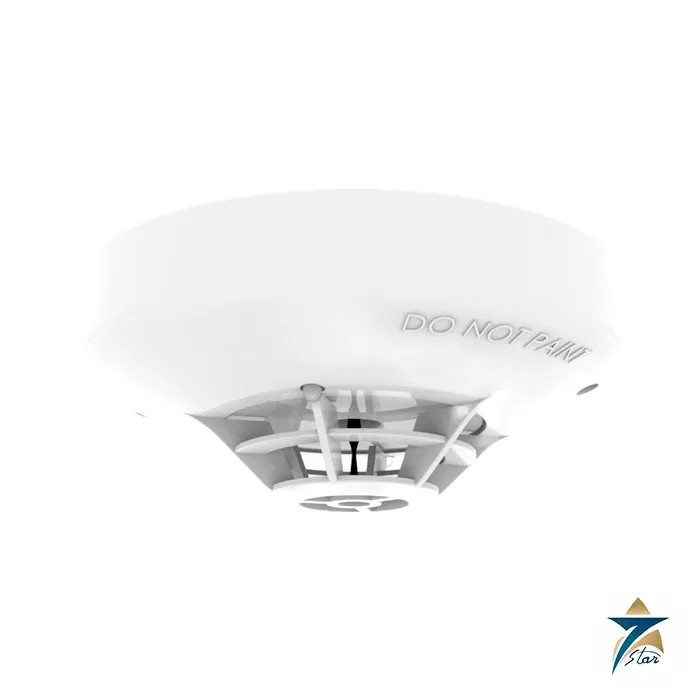
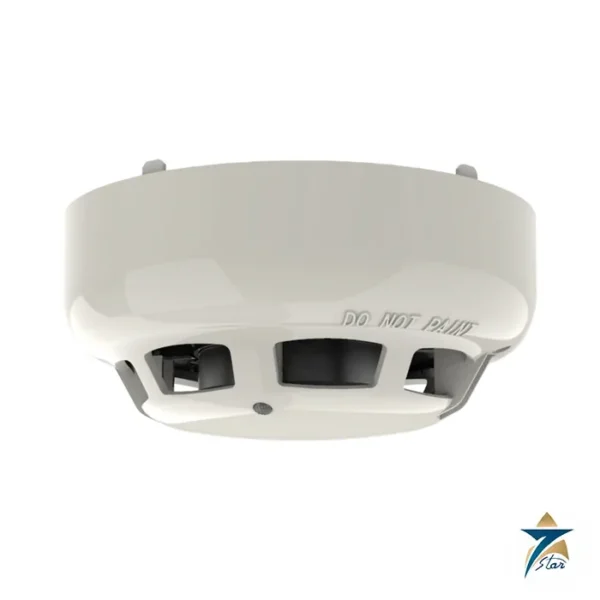
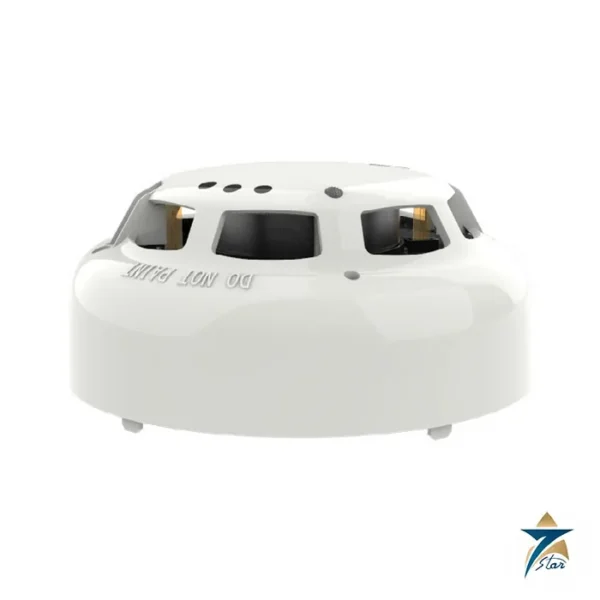
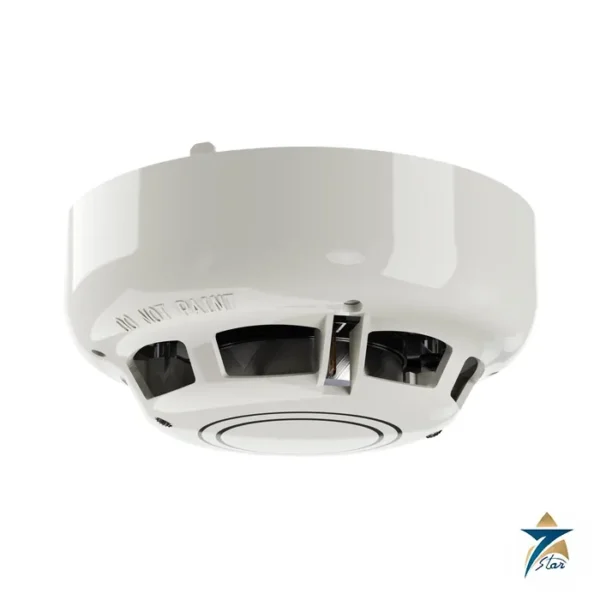
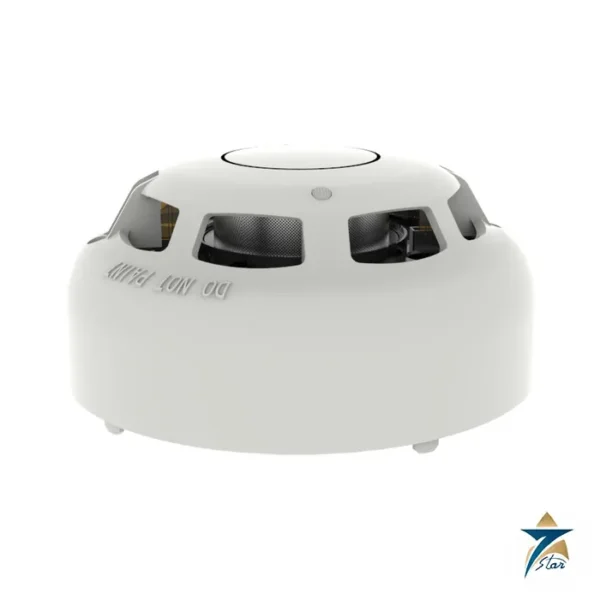
The Hochiki DCD-CE3 is the higher-temperature version of Hochiki’s conventional combined heat detector. It still reacts to a rapid rise in temperature, but its fixed temperature element is set at 90 degrees C, so it tolerates warmer rooms without false alarms. Seven Star LLC is an independent supplier serving Oman and the GCC. What follows is drawn from the single-page Hochiki datasheet for the detector.
Why a 90 degree element
A heat detector must sit above the highest temperature the room reaches in normal service and still respond fast enough in a fire. In a boiler house, a bakery, a roof void or a plant room that reaches 45 degrees C on a summer afternoon, a 60 degree element leaves little margin. The Hochiki DCD-CE3 uses the same thermistor and linearising circuit as its sibling but trips at a fixed 90 degrees C, while the rate-of-rise function still gives early warning when temperature climbs quickly. Under EN 54-5:2017 the detector is assessed for Category C and CR, and LPCB lists the approval; the VdS number G204045 applies only when the YBN-R/6SK base is used.
Specification of Hochiki DCD-CE3
| Item | Value |
|---|---|
| Detector type | combined rate of rise and 90 degrees C fixed temperature heat detector |
| Ordering codes | Hochiki DCD-CE3 (ivory); Hochiki DCD-CE3(WHT) (white) |
| Operating voltage | 9.5 to 30 V DC |
| Quiescent current | 35 microamps |
| Maximum current in alarm, typical | 40 mA |
| Remote indicator drive | 20 mA maximum, 9.5 to 14 mA typical |
| IP rating | IP63 |
| Maximum humidity | 95 percent RH non-condensing at 40 degrees C |
| Operating temperature | minus 10 to plus 50 degrees C |
| Storage temperature | minus 30 to plus 70 degrees C |
| Case material | polycarbonate, ivory or white |
| Compatible bases | YBN-R/6, YBN-R/6SK, YBO-R/6R, YBO-R/6RS, YBO-R/6RN, YBO-R/6PA |
| Base fixing centres | 48 to 74 mm |
| Weight and size | 76 g; diameter 100 mm, height 38 mm |
| Approvals | EN 54-5:2017 Category C and CR, LPCB; VdS G204045 for the YBN-R/6SK base only |
Applications for the Hochiki DCD-CE3 in hot Gulf environments
Summer temperatures in Oman push roof spaces and unconditioned plant rooms well past the comfort range. Kitchens, laundries, generator rooms, boiler rooms and covered car parks are all places where a smoke detector may be disturbed by steam, exhaust or dust. The datasheet also recommends this detector wherever smoke detectors are unsuitable owing to steam or cooking fumes. The 90 degree element lets the designer cover these spaces with a conventional point heat detector and avoid constant false alarms.
How DCD-CE3 differs from the DCD-AE3
Both models have the same electrical data: 9.5 to 30 V DC, 35 microamps standing current, 40 mA in alarm, IP63, a body of 100 mm diameter and 38 mm height and a weight of 76 g. Both accept the YBN-R/6, YBN-R/6SK, YBO-R/6R, YBO-R/6RS, YBO-R/6RN and YBO-R/6PA bases. The practical difference is the fixed temperature, 90 degrees against 60 degrees C, and the approval wording: Category C and CR of EN 54-5:2017 here, Class A1 and A1R for the AE3. Never swap them in a drawing without checking the room temperature.
Fixed element or rate of rise, which one acts first
The two mechanisms in this detector complement each other. In a quickly growing fire the temperature climbs by several degrees per minute and the rate-of-rise circuit operates long before the air reaches 90 degrees C. In a slow smouldering situation, where heat builds gradually, the rate-of-rise function never sees a steep slope, so the fixed element is the safeguard that finally raises the alarm. Because the fixed point is high, the response in a slow fire is later than for the 60 degree model, which is the trade-off for being allowed into hot rooms. A designer who needs early warning in a hot room should consider adding smoke or flame detection in addition to the heat detector, or lowering the temperature of the space.
Installation notes
Mount the detector on a base fixed to the ceiling on 48 to 74 mm centres, wire the zone and the optional remote indicator on the third terminal, and then twist the head into the base. Space detectors according to the local design code for the ceiling height and area, and keep them away from direct heat sources such as heaters, ovens or hot air outlets that could trigger them without a fire. Do not paint the head. The twin LEDs are visible from any direction.
Choosing the colour and base
Heat detectors are often chosen last in a design and then forgotten until commissioning, which is why the base and colour deserve attention at the order stage. The detector is supplied in ivory and in white under separate codes, and the colour makes no difference to performance. The base matters more. The standard bases mount flat on a ceiling, while others accommodate a sounder, a relay or a locking feature, and the YBN-R/6SK is the one that carries the VdS approval for this model. Decide the base type early because the base is wired first and the head is fitted last, often after the ceiling has been painted. Specify the base and head together on purchase orders so that the delivery is complete when the electricians arrive on site, and mention the zone type if the panel supplier needs to check compatibility.
Maintenance
Functional testing uses a heat source designed for detector testing, never a naked flame. Inspect the dome for contamination during each service round, clean the exterior with a dry cloth, and replace units that are damaged or have seen a fire. Record the ordering code in the maintenance log, since white and ivory versions are ordered separately, and note that the VdS approval applies to a particular base. Where a detector has been exposed to very high temperatures without a fire, for example during a hot work incident, replace it, because the thermistor may have drifted.
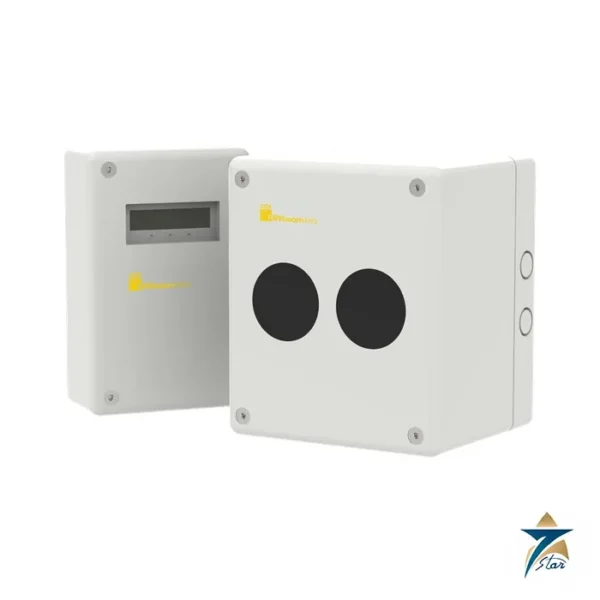
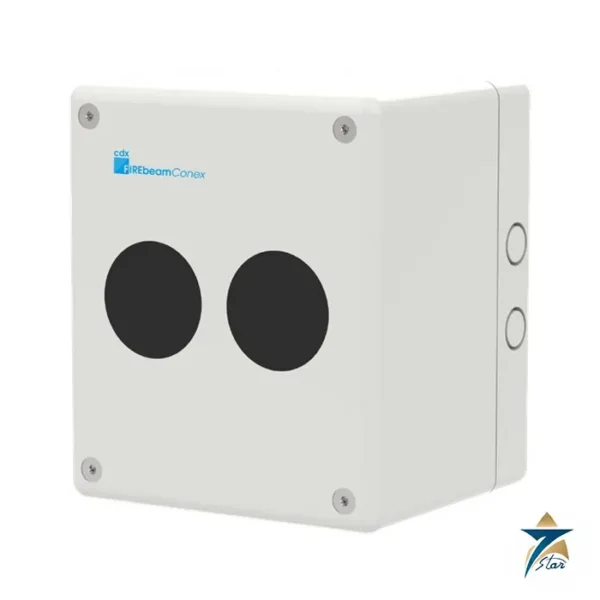
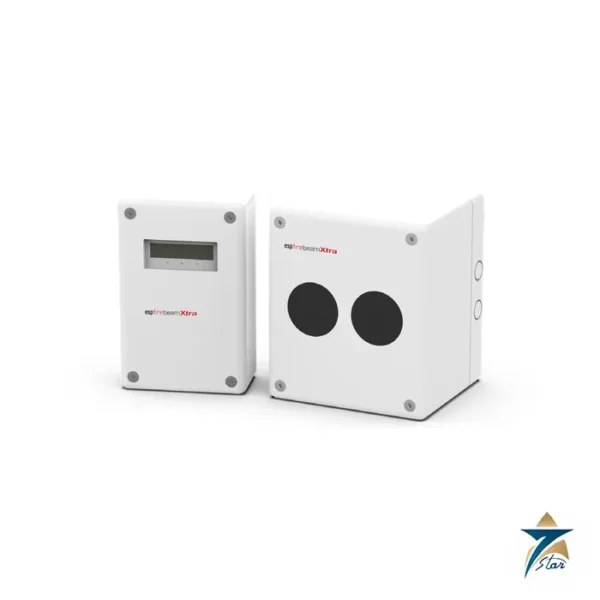
Related items you may also need: Hochiki ESP FIREbeam Xtra Addressable Beam Smoke Detector | Hochiki CDX FIREbeam Xtra Conventional Beam Smoke Detector | Hochiki ACD-EN Intelligent Multi Sensor | All Hochiki products.
Before you order the Hochiki DCD-CE3
- To avoid a wrong delivery, compare the code on the nameplate of the installed unit with the Hochiki DCD-CE3 code on this page.
- The quotation for the Hochiki DCD-CE3 states the confirmed code and the lead time to site.
- The attached manufacturer datasheet covers the Hochiki DCD-CE3 ratings, dimensions and installation details.
- Delivery of the Hochiki DCD-CE3 is arranged to project sites in Oman and across the GCC, alongside the rest of our fire & gas detectors range.
Documents and quotation
The Hochiki datasheet for the Hochiki DCD-CE3 is attached to this page and lists specification, bases and approval notes. Please send your RFQ with the model, ivory or white colour, quantity and delivery location in Oman or the GCC.
Other Models in the CDX Range
Seven Star LLC supplies models from the CDX range in Oman and the GCC. Compare the related models below and request a quote for the one that matches your application.
| Model | Category | |
|---|---|---|
| Hochiki DCD-AE3 Rate-of-Rise Heat Detector 60 C | Fire & Gas Detectors | View details |
| Hochiki DCD-CE3 Rate-of-Rise Heat Detector 90 C | Fire & Gas Detectors | You are viewing this model |
Datasheets & Documents
- Datasheet Hochiki DCD-CE3 Rate-of-Rise Heat Detector 90 C Datasheet Download
Reviews (0)
How would you rate this product? Cancel reply
About brand
Hochiki is a Japanese fire detection company, established in Tokyo in 1918 as Japan's first fire alarm manufacturer, with leading insurance companies among its founders. It makes smoke and heat detectors, beam detectors, addressable fire alarm systems and emergency lighting. Hochiki America has operated in the US since 1972.
Seven Star LLC is an independent supplier in Muscat. We list Hochiki detectors for fire alarm contractors in Oman and the GCC.
Hochiki company profile
| Founded | 1918, Tokyo, Japan |
|---|---|
| Founders | Members of Japan's insurance industry |
| US operations | Since 1972 |
| Systems | Conventional and addressable fire detection |
| Product families | ESP intelligent detectors and multi-sensors, FIREbeam beam detectors, CDX conventional detectors, control panels |
Milestones
- 1918: Hochiki is founded in Tokyo.
- 1972: Hochiki America begins US operations.
Hochiki product series
The ACD-EN is an intelligent multi sensor detector for Hochiki addressable systems.
Beam smoke detectors include the CDX FIREbeam Conex and CDX FIREbeam Xtra conventional detectors and the ESP FIREbeam Xtra addressable detector.
Multi sensor detectors combine smoke and heat sensing to detect different fire types and reduce false alarms. Beam detectors send an infrared beam across an open space and alarm when smoke reduces the signal, covering large areas with fewer devices.
Detectors must match the panel protocol and be installed and tested to the local fire code.
Where Hochiki detectors are used
Offices, hotels, schools and hospitals, and large open spaces such as warehouses, atriums and halls where beam detectors cover long distances.
Hochiki products we list
| Family | Examples |
|---|---|
| Fire & Gas Detectors | ACD-EN Intelligent Multi Sensor, CDX FIREbeam Conex Conventional Beam Smo…, ESP FIREbeam Xtra Addressable Beam Smoke… |
Ordering Hochiki detectors: what we need
Send the part number, protocol (conventional or ESP addressable), the beam range and the panel in use.
Facts checked against IFSEC Global centenary coverage and Hochiki company profiles, October 2026.
Browse Hochiki products by category: Fire & Gas Detectors.
FAQ
Questions about the Hochiki DCD-CE3 Rate-of-Rise Heat Detector 90 C
Answers from our engineering team on installation, compatibility and integration.
01What is the fixed temperature of the Hochiki DCD-CE3?
The DCD-CE3 has a 90 degrees C fixed temperature element combined with rate-of-rise detection, assessed to EN 54-5:2017 Category C and CR by LPCB.
02How does the DCD-CE3 differ from the DCD-AE3?
They share electrical data and bases, but the CE3 trips at 90 degrees C while the AE3 trips at 60 degrees C, so the CE3 suits warmer rooms.
03Does the VdS approval apply to all bases for the DCD-CE3?
No. The datasheet states that VdS G204045 applies only when the detector is fitted on the YBN-R/6SK base.
04What are the ordering codes for the DCD-CE3?
DCD-CE3 is ivory and DCD-CE3(WHT) is white.
05What current does the DCD-CE3 draw?
Quiescent current is 35 microamps and maximum current in alarm is typically 40 mA, with a 20 mA maximum remote indicator drive.


Reviews
There are no reviews yet.