General Monitors S4000CH Intelligent Combustible Gas Detector

Description

Overview

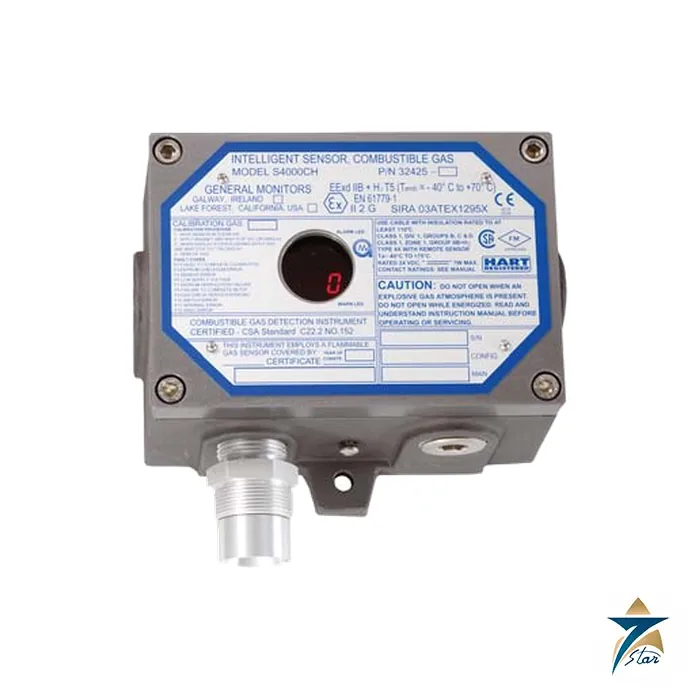
The General Monitors S4000CH is an intelligent sensor for combustible gas detection from General Monitors, now part of MSA Safety. It is a microprocessor-based transmitter designed to work with General Monitors catalytic bead sensors and to monitor combustible gases and vapours within the lower explosive limit (LEL). The unit processes the sensor signal at the point of measurement, shows the gas concentration on a local display and provides analog, relay and digital outputs to the fire and gas system. Its one-person calibration, event history and remaining sensor life indication were designed to make routine maintenance on large plants faster and more reliable.

Seven Star LLC supplies the General Monitors S4000CH, replacement catalytic bead sensors and accessories to oil and gas operators, refineries and fire and gas contractors in the Sultanate of Oman and across the GCC, with engineering support in Muscat. The detector is installed widely on existing facilities in the region, and we support both spares and new detector loops.

Measurement Principle

A catalytic bead sensor contains a heated active element that oxidises combustible gas on its surface and a matched reference element that does not. As general engineering knowledge, the heat released by combustion raises the temperature and resistance of the active element, and the resulting bridge imbalance is proportional to the gas concentration up to the LEL. The General Monitors S4000CH uses a continuous diffusion, low temperature catalytic bead sensor, and the transmitter converts the bridge signal into a 4–20 mA output proportional to 0 to 100% LEL, with 4 mA at zero and an over-range band of 20 to 22 mA.

For the General Monitors S4000CH, the datasheet gives an accuracy of ±3% LEL up to 50% LEL and ±5% LEL at or above 51% LEL, a zero drift of less than 5% of full scale per year, and response times of T50 below 10 s and T90 below 30 s with 100% LEL methane applied. Sensor life is three to five years. Calibration of the General Monitors S4000CH is virtually automatic: the technician activates the magnetic switch and applies gas, and the unit completes the calibration without a second person in the control room. The detector is also compatible with the Automatic Remote Gas Calibrator for fully automatic calibration.

Engineering Design of the General Monitors S4000CH

All electronics of the General Monitors S4000CH sit in an explosion-proof housing of marine aluminium or stainless steel, 161 mm long, 86 mm high and 104 mm wide, with mounting holes 127 mm apart. The aluminium version weighs 2.5 kg and the stainless steel version 6.4 kg. A three-digit LED display continuously shows gas concentration in normal operation and in gas check mode, calibration prompts in calibration mode, codes in setup mode and eight fault codes, while separate warning and alarm LEDs indicate status. A standard sensor works from −55 to +93 °C, and a high temperature sensor extends this to +200 °C.

The General Monitors S4000CH has four operating modes. In normal mode the alarms are active and the display and current output follow the gas concentration. Gas check mode lets the user apply gas and check the response while alarm outputs are inhibited. Calibration mode calibrates the unit, and setup mode allows the user to review or change the calibration level, energised or de-energised relays, latching or non-latching relays, relay alarm set points and the baud rate, data format and address of each Modbus channel. Setup can be entered with the magnetic switch or by HART or Modbus command.

Key Features

The features and benefits of the General Monitors S4000CH listed in the datasheet are:

  • Compatibility with the Automatic Remote Gas Calibrator, allowing fully automatic calibration.
  • Event logging that stores fault, gas check, calibration and alarm event history.
  • HART and dual redundant Modbus communication for complete status and control capability in the control room.
  • An industry standard 4–20 mA output for remote alarm and fault indication.
  • Optional warning, alarm and fault relays rated 8 A at 250 VAC or 30 VDC for local alarm capability.
  • Calibration, calibration check and setup modes that simplify operation and maintenance.
  • Remaining sensor life indication that reduces downtime by estimating when a sensor should be replaced.
  • CSA, FM and ATEX approvals, HART registration and SIL 2/3 suitability.

Industrial Applications

Catalytic combustible gas detection remains the reference method for many hydrocarbon gases and vapours, including those for which infrared detection is less suitable, such as hydrogen; the S4000CH carries a CSA/FM classification for Group B and IIB+H2. In Oman the General Monitors S4000CH is used around compressors, separators and pump skids at oil and gas production stations, in refinery and petrochemical process units in Sohar and Duqm, at fuel depots and loading racks, in battery rooms and hydrogen generation areas, and in gas turbine enclosures at power plants. General Monitors S4000CH configurations with relays suit stand-alone local alarm duties, while Modbus and HART versions connect to plant-wide fire and gas systems.

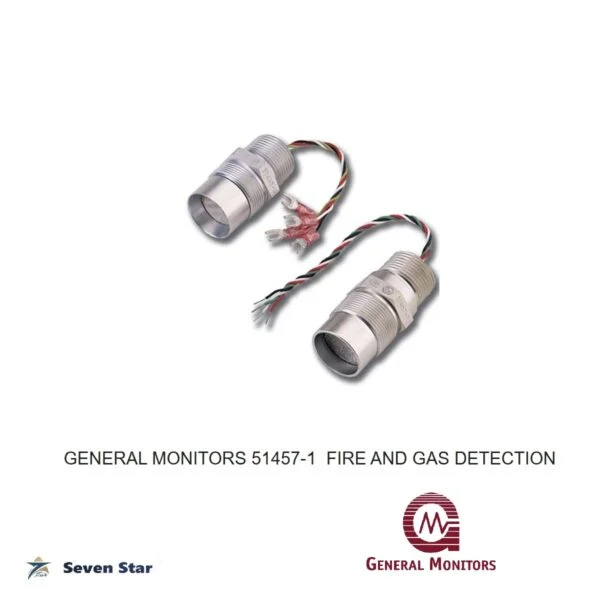
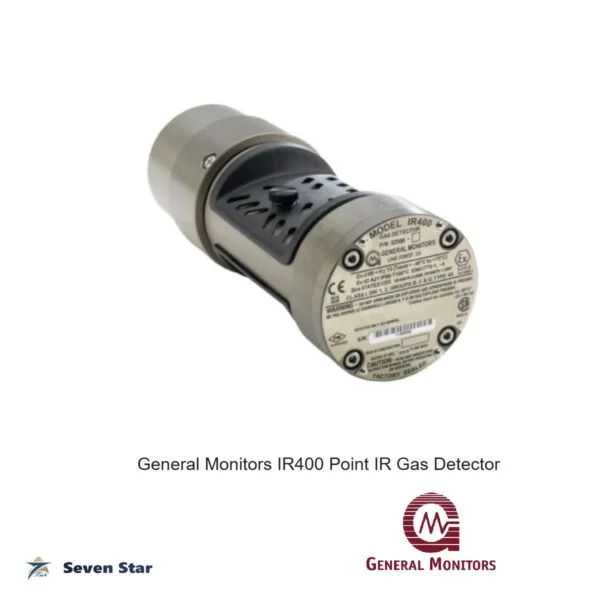
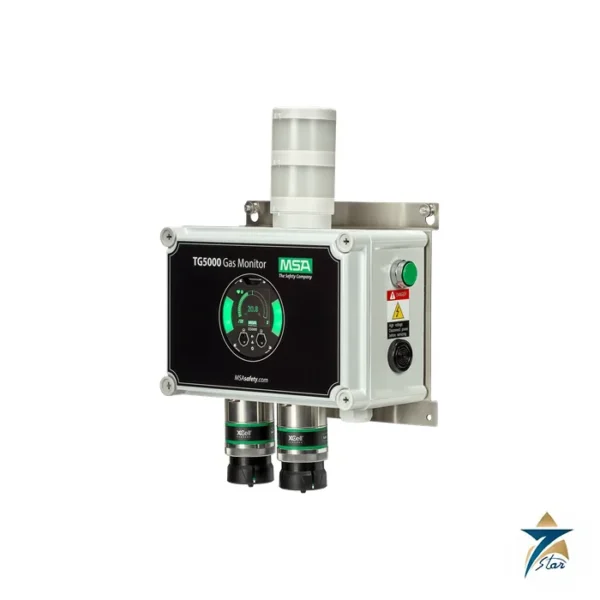
Seven Star LLC supplies the General Monitors S4000CH for new projects and maintenance programmes. Sites using infrared point detection may also run the General Monitors IR400-0-01-1-2-0-1-0 Point IR Gas Detector, toxic gas loops often use the General Monitors 51457-1 H2S Gas Sensor, and for a newer combined platform customers look at the General Monitors TG5000 Toxic and Combustible Gas Monitor.

Technical Specifications

The following data for the General Monitors S4000CH is taken from the manufacturer’s datasheet attached on this page.

Parameter Specification
Model General Monitors Model S4000CH intelligent sensor for combustible gas
Sensor type Continuous diffusion, low temperature catalytic bead
Measuring range 0 – 100% LEL
Accuracy ±3% LEL up to 50% LEL; ±5% LEL from 51% LEL
Response time T50 below 10 s, T90 below 30 s (100% LEL methane)
Zero drift Less than 5% of full scale per year
Sensor life 3 to 5 years
Input power 24 VDC nominal, 20 to 36 VDC, 250 mA max.
Analog signal 0 – 20 mA (650 Ω max.); 4 – 20 mA for 0 – 100% LEL; 20 – 22 mA over-range
Relays (optional) 3 × SPDT warning, alarm, fault; 8 A at 250 VAC / 30 VDC
Communication Dual redundant Modbus RTU (2400 – 19200 BPS); HART 6
Electronics temperature −40 to +75 °C
Classification CSA/FM Class I Div 1 Groups B, C, D; Class I Zone 1 IIB+H2 T6 Type 4X; ATEX II 2 G EEx d IIB+H2 T5 IP66
Dimensions and weight 161 × 86 × 104 mm; 2.5 kg aluminium, 6.4 kg stainless steel
Standard configuration S4000CH-1-0-01-1 (4–20 mA, standard aluminium sensor and housing)

How to Order

For a quotation on the General Monitors S4000CH or replacement sensors, send Seven Star LLC the configuration code, housing material and quantity. Our Muscat team will confirm compatibility, share the attached datasheet and support delivery to your site in Oman or anywhere in the GCC.

Datasheets & Documents
  • PDF Datasheet General Monitors Model S4000CH datasheet (publication DS-S4000CH-C0811e, manufacturer) Download
Reviews (0)

Reviews

There are no reviews yet.

How would you rate this product?

It takes about 10 seconds — just tap a star. Your email is never published.

About brand

General Monitors makes fixed gas and flame detection systems for hazardous industrial sites. Four aerospace engineers founded the company in 1961 in El Segundo, California, to build hydrogen gas monitors for the US space program. It later moved to Costa Mesa and, in 1991, to Lake Forest, California. MSA Safety acquired General Monitors in October 2010, and its detectors are now sold as part of the MSA fixed gas and flame detection range.

Seven Star LLC is an independent supplier listing General Monitors gas detectors, flame detectors, ultrasonic leak detectors and replacement sensors for buyers in Oman and the GCC. Detectors and sensors are matched from the full model code on the label.

General Monitors company profile

Origin Founded in 1961 in El Segundo, California, by four aerospace engineers making hydrogen detection equipment for the US space program
Location Lake Forest, California, USA (since 1991)
Ownership Part of MSA Safety since 14 October 2010
Product families Catalytic and infrared point gas detectors, open-path infrared detectors, toxic gas sensors, multi-spectrum infrared and UV/IR flame detectors, ultrasonic gas leak detectors
Typical duty Combustible gas, H2S and fire detection on wellheads, gas plants, refineries, offshore platforms and terminals

Milestones

  • 1961: Four aerospace engineers found the company in El Segundo, California, making hydrogen detectors for the US space program.
  • 1991: The company moves to Lake Forest, California.
  • 2010: General Monitors becomes part of MSA Safety on 14 October.

General Monitors detectors and sensors

Model Type Typical use
S4000CH Catalytic bead combustible gas detector Point detection of flammable gases and vapours, including hydrogen
IR400 Point infrared hydrocarbon gas detector Methane and hydrocarbon detection without catalyst poisoning, and in inert atmospheres
IR5500 Open-path infrared gas detector Perimeter and line-of-sight monitoring across process areas and fence lines
TG5000, 51457-1 H2S sensor General-purpose gas monitor; H2S replacement sensor (0-100 ppm) TG5000 for combustible, toxic or oxygen monitoring in wastewater, utility and light industrial sites; 51457-1 for H2S detectors
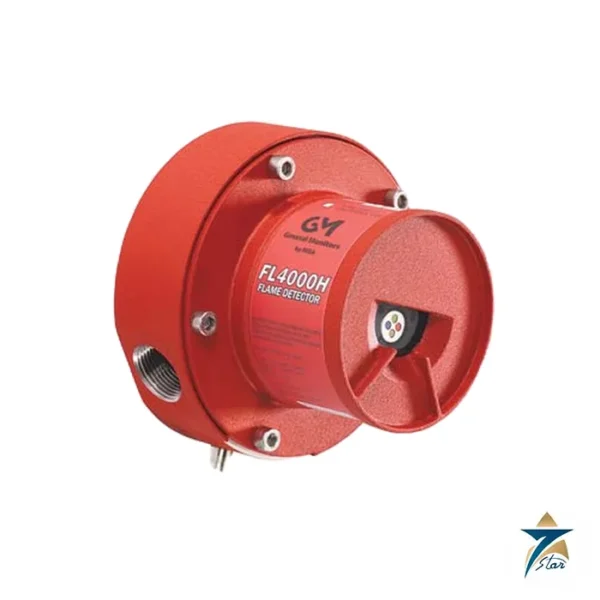
FL4000H, FL5000 Multi-spectrum infrared (MSIR) flame detectors Hydrocarbon fire detection with resistance to false alarms from sunlight and hot work
FL500 UV/IR flame detector Hydrocarbon fire detection in compressor houses, pump rooms and loading areas
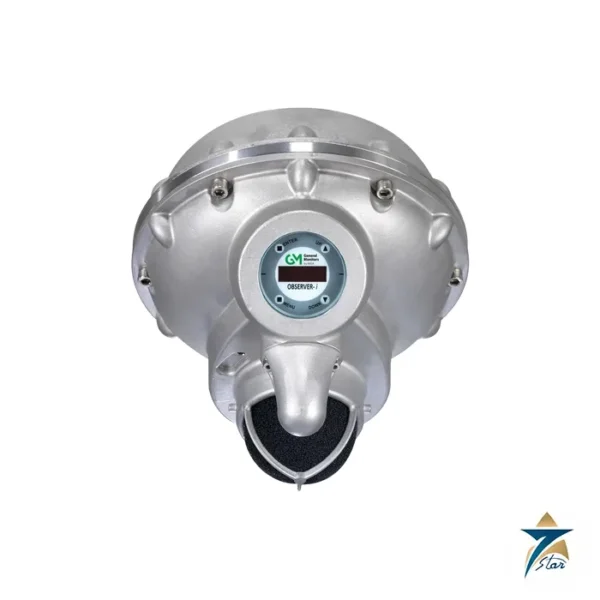
Observer-i Ultrasonic gas leak detector Detects the sound of pressurised gas leaks, including where wind disperses the gas before it reaches a point detector

Where General Monitors detectors are used

Gas and flame detectors form the field layer of a fire and gas system. In Oman and the GCC they are installed on wellpads and gathering stations, gas processing and sulphur recovery units, refineries, LNG plants, tank farms, loading terminals, offshore platforms and power stations. A typical layout combines point detectors near leak sources, open-path detectors across process areas, ultrasonic detectors on high-pressure gas equipment and flame detectors covering fire zones.

Ordering General Monitors equipment: what we need

Send the full model code from the detector label, which defines gas type, range, output, housing material, thread and approvals, plus the serial number. For replacement sensors give the detector model and the gas and range of the installed sensor. For a new detector add the gas or fire hazard, area classification, output required (4-20 mA, HART, Modbus or relays), mounting and the certification needed on site, such as ATEX or IECEx.

Facts checked against MSA Safety and General Monitors company information, October 2026.

FAQ

Questions about the General Monitors S4000CH Intelligent Combustible

Answers from our engineering team on installation, compatibility and integration.

01What gases does the General Monitors S4000CH detect?
It monitors combustible gases and vapours within the lower explosive limit using a General Monitors catalytic bead sensor, with a 0 to 100% LEL measuring range.
02How is the S4000CH calibrated?
It supports one-person calibration: the technician activates the magnetic switch and applies gas, and the unit calibrates itself. It is also compatible with the Automatic Remote Gas Calibrator.
03What outputs does the S4000CH offer?
A 4-20 mA signal proportional to 0-100% LEL, optional warning, alarm and fault relays, and dual redundant Modbus RTU or HART communication.
04How long does the catalytic sensor last?
The datasheet gives a sensor life of three to five years, and the transmitter provides a remaining sensor life indication to help plan replacement.
05Does Seven Star LLC supply the General Monitors S4000CH in Oman?
Yes. Seven Star LLC supplies the S4000CH and its replacement sensors to customers in Oman and the GCC, with engineering support in Muscat.