- Automation & ControlView all 3,079 products
- Automation Accessories
- AC Drives
- PLC & I/O Cards
- Industrial Communications
- Vibration Monitoring
- Isolator & Barrier
- Controllers & Data Acquisition
- Safety Switches & Guard Locking
- Motor Soft Starters
- Encoders
- CCTV & Security
- Pneumatic Cylinders
- HMI Displays
- Servo Drives
- Industrial Computers
- Machine Vision
- Automation Software
- Robotics
Brand: General Monitors
General Monitors FL500 UV/IR Flame Detector
Description
Overview
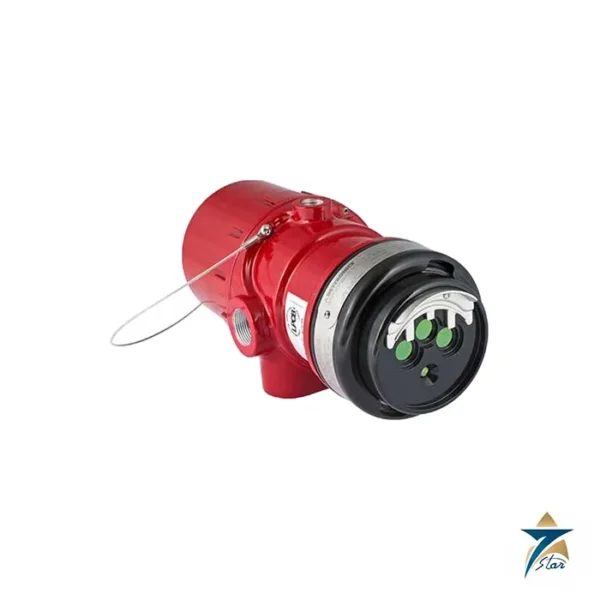
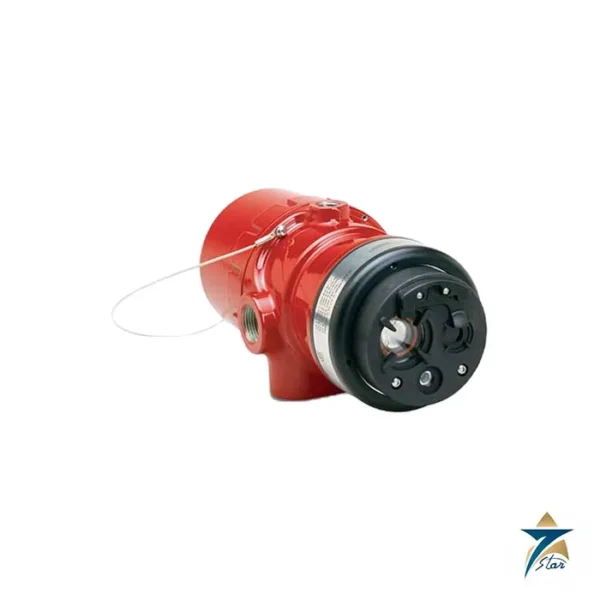
The General Monitors FL500 is a compact ultraviolet / infrared (UV/IR) flame detector from MSA for indoor and outdoor hazardous areas. It combines a UV phototube for fast response with an IR detector that watches for the flicker of a flame, and it raises an alarm only when both sensors see radiation in the correct combination and intensity. This dual confirmation gives quick detection of hydrocarbon fires with better immunity to arc welding, lightning, hot objects and other single-band radiation sources. A separate FL500-H2 model is optimised for hydrogen flames, and MSA notes that the two models are not interchangeable.
Seven Star LLC supplies the General Monitors FL500 to oil and gas, power and petrochemical customers in Oman and the GCC, with engineering support in Muscat. The detector is a practical choice for compressor shelters, pump skids, turbine enclosures, loading racks and chemical storage areas where a UV/IR detector with a stainless steel housing, a wide field of view and several output options fits both new projects and replacement of older flame detectors.
Detection Principle
The UV channel of the General Monitors FL500 responds to radiation between 185 and 260 nm, a band emitted strongly by flames but largely absent from sunlight at ground level. The IR channel is centred on 4.35 microns, the emission band of hot carbon dioxide produced by burning hydrocarbons. A flicker discrimination circuit in the IR path uses the natural modulation of a flame to activate the IR channel, which helps reject steady hot surfaces. If the detector sees only UV, for example from welding, or only IR, such as a large modulating hot object, no alarm is generated.
Signals from both detectors go to a microcomputer that runs the fire decision algorithm and drives the outputs: a 4-20 mA analog signal with distinct levels for ready, IR, UV, alarm low and alarm high, an immediate Alarm Low relay, a time-delayed Alarm High relay, RS-485 Modbus RTU and HART 7. Every two minutes the Continuous Optical Path Monitoring (COPM) self-check tests the optical path and the electronics, and reports a fault if the window is blocked or a circuit has failed.
Engineering Design of the General Monitors FL500
The General Monitors FL500 housing is 316 stainless steel with a powder coat finish, 114 mm in diameter and 140 mm long, and the detector weighs about 4.0 kg with its stainless steel mounting bracket. It is certified Ex db IIC T5 Gb and Ex tb IIIC T100 °C Db (II 2 G D) and rated IP66/IP67, with North American approval for Class I Division 1 Groups B, C, D (Group A for FM). Cable entry is 2 × 3/4 in NPT or 2 × M25, and wiring is simplified compared with earlier designs.
Three front LEDs show normal, fault and alarm status. DIP switches set the sensitivity (high, medium or low), the Alarm High time delay (2, 4, 8 or 10 seconds) and the relay modes (latching or non-latching, energised or de-energised). The detector runs on 20 to 36 V DC with a maximum of 3 W. MSA lists FM performance approval on seven fuels, compliance with EN54-10 under the Construction Products Regulation and suitability for SIL 3 applications, and the detector can be tested with the TL105 test lamp, which simulates the flicker of a fire.
Key Features
From the MSA data sheet and operating manual, the main features of the General Monitors FL500 are:
- UV/IR detection gives fast response with increased false alarm immunity for indoor and outdoor use.
- The field of view reaches up to 130 degrees, measured as a conical angle.
- n-heptane fires are detected at 90 ft (27 m) in 6 seconds, or at 60 ft (18 m) in under 3 seconds.
- The COPM self-check runs every two minutes to verify the optics and the electronics.
- 4-20 mA source or sink output, alarm and fault relays, Modbus RTU and HART 7 are standard on the base configuration.
- A 316 stainless steel housing with three status LEDs keeps the footprint small.
- FM performance approval covers heptane, hydrogen, methane, methanol, propane, ethane and butane.
- Field testing without an open flame is possible with the TL105 test lamp.
Industrial Applications
UV/IR flame detectors such as the General Monitors FL500 are used to protect gas compressor packages, turbine and generator enclosures, fuel and LPG loading facilities, pump rooms, tank farms, chemical process units and warehouses for flammable liquids. In Oman these hazards appear at upstream production stations, gas plants, power and desalination plants with gas turbines, and the refinery, petrochemical and storage terminals in Sohar, Duqm and Muscat. The wide operating range of -55 °C to +85 °C copes with the heat load of an outdoor skid in the Omani summer.
Seven Star LLC supplies the General Monitors FL500 as part of complete MSA fire and gas packages. For long-range or heavily contaminated areas where a multi-spectrum IR detector is preferred, the General Monitors FL5000 MSIR flame detector is an alternative, and gas detection on the same skid can use the General Monitors IR400 point IR gas detector or the MSA General Monitors S5000 gas monitor. We can help select the right General Monitors FL500 sensitivity and delay settings for your fire and gas cause and effect.
Technical Specifications
The General Monitors FL500 specifications below are taken from the MSA data sheet 1466-18-MC (06.2024) and the FL500 operating manual.
| Parameter | Specification |
|---|---|
| Model | General Monitors FL500 UV/IR flame detector (standard configuration FL500-5-5-1-2-1-1-1-1) |
| Spectral response | UV 185 to 260 nm; IR 4.35 microns |
| Field of view | Up to 130 degrees conical |
| Response (n-heptane) | 90 ft in 6.0 s; 60 ft in under 3.0 s |
| Other fuels | Methane 80 ft, propane 60 ft, ethane 60 ft, butane 55 ft, methanol 40 ft |
| Input power | 20 to 36 V DC, 200 mA max. (3 W max.) |
| Analog output | 0-20 mA source or sink: 4 mA ready, 16 mA alarm low, 20 mA alarm high |
| Relays | Alarm low, alarm high and fault; 5 A at 250 V AC / 30 V DC |
| Digital communication | RS-485 Modbus RTU, HART 7 |
| Hazardous area marking | Ex db IIC T5 Gb; Ex tb IIIC T100 °C Db; Class I Div 1 Groups A*, B, C, D |
| Approvals | CSA, FM, ATEX, IECEx, CE; EN54-10 (CPR); SIL 3 suitable |
| Ingress protection | IP66 / IP67 |
| Housing | 316 stainless steel, powder coated; 114 mm diameter × 140 mm |
| Weight | 4.0 kg (9 lb) |
| Cable entry | 2 × 3/4 in NPT or 2 × M25 |
| Operating temperature | -55 °C to +85 °C, 0-95% RH non-condensing |
How to Order
To order the General Monitors FL500, send Seven Star LLC an RFQ with the model (FL500 or FL500-H2), output configuration, cable entry and quantity, and add TL105 test lamps if required. Our instrumentation division will confirm availability and lead time, and you can download the General Monitors FL500 data sheet and operating manual from this page. Seven Star LLC supplies MSA flame and gas detection products to operators and contractors in Oman and the GCC, with engineering support from Muscat.
Datasheets & Documents
Reviews (0)
How would you rate this product? Cancel reply
About brand
General Monitors makes fixed gas and flame detection systems for hazardous industrial sites. Four aerospace engineers founded the company in 1961 in El Segundo, California, to build hydrogen gas monitors for the US space program. It later moved to Costa Mesa and, in 1991, to Lake Forest, California. MSA Safety acquired General Monitors in October 2010, and its detectors are now sold as part of the MSA fixed gas and flame detection range.
Seven Star LLC is an independent supplier listing General Monitors gas detectors, flame detectors, ultrasonic leak detectors and replacement sensors for buyers in Oman and the GCC. Detectors and sensors are matched from the full model code on the label.
General Monitors company profile
| Origin | Founded in 1961 in El Segundo, California, by four aerospace engineers making hydrogen detection equipment for the US space program |
|---|---|
| Location | Lake Forest, California, USA (since 1991) |
| Ownership | Part of MSA Safety since 14 October 2010 |
| Product families | Catalytic and infrared point gas detectors, open-path infrared detectors, toxic gas sensors, multi-spectrum infrared and UV/IR flame detectors, ultrasonic gas leak detectors |
| Typical duty | Combustible gas, H2S and fire detection on wellheads, gas plants, refineries, offshore platforms and terminals |
Milestones
- 1961: Four aerospace engineers found the company in El Segundo, California, making hydrogen detectors for the US space program.
- 1991: The company moves to Lake Forest, California.
- 2010: General Monitors becomes part of MSA Safety on 14 October.
General Monitors detectors and sensors
| Model | Type | Typical use |
|---|---|---|
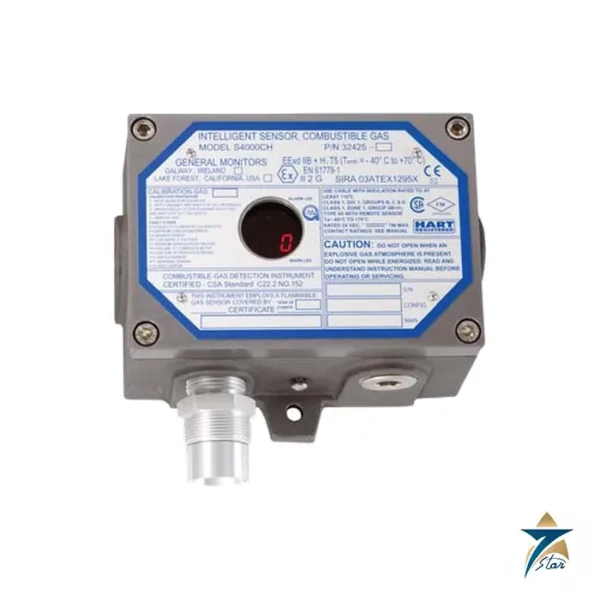
| S4000CH | Catalytic bead combustible gas detector | Point detection of flammable gases and vapours, including hydrogen |
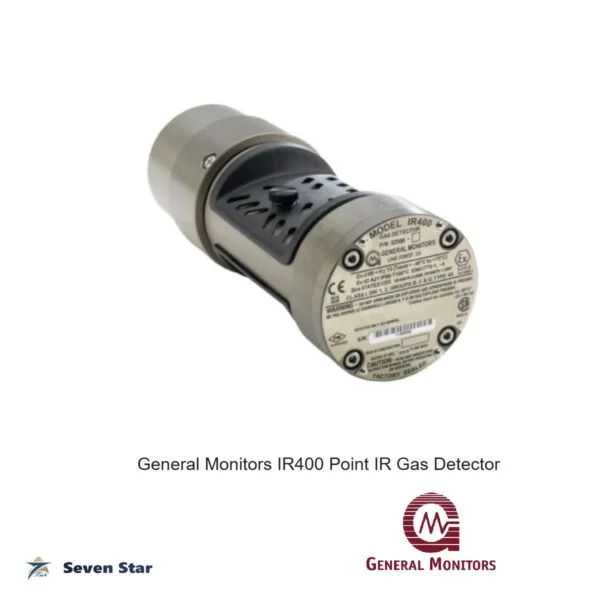
| IR400 | Point infrared hydrocarbon gas detector | Methane and hydrocarbon detection without catalyst poisoning, and in inert atmospheres |
| IR5500 | Open-path infrared gas detector | Perimeter and line-of-sight monitoring across process areas and fence lines |
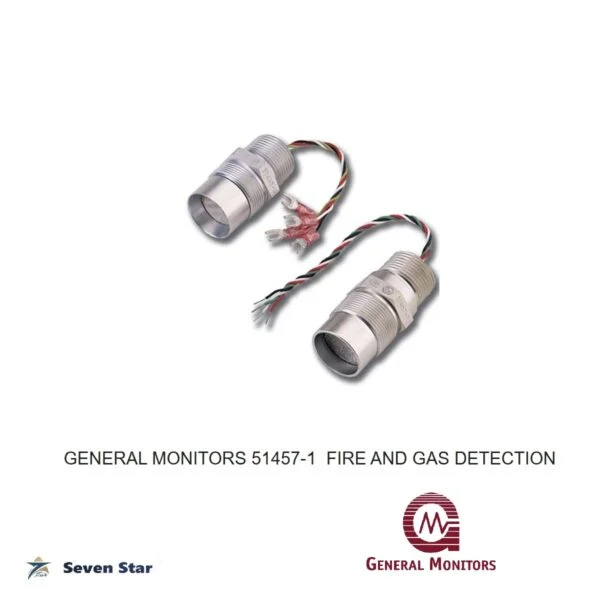
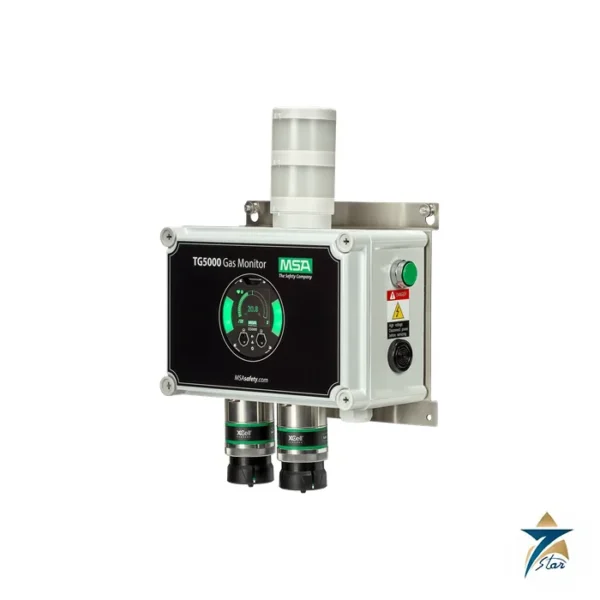
| TG5000, 51457-1 H2S sensor | General-purpose gas monitor; H2S replacement sensor (0-100 ppm) | TG5000 for combustible, toxic or oxygen monitoring in wastewater, utility and light industrial sites; 51457-1 for H2S detectors |
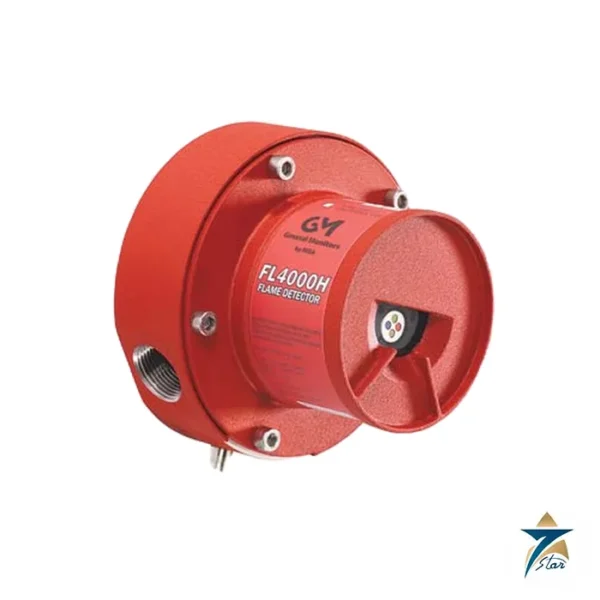
| FL4000H, FL5000 | Multi-spectrum infrared (MSIR) flame detectors | Hydrocarbon fire detection with resistance to false alarms from sunlight and hot work |
| FL500 | UV/IR flame detector | Hydrocarbon fire detection in compressor houses, pump rooms and loading areas |
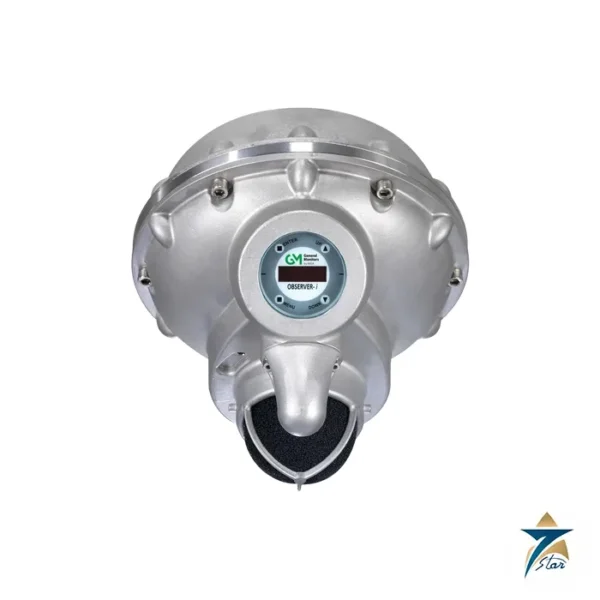
| Observer-i | Ultrasonic gas leak detector | Detects the sound of pressurised gas leaks, including where wind disperses the gas before it reaches a point detector |
Where General Monitors detectors are used
Gas and flame detectors form the field layer of a fire and gas system. In Oman and the GCC they are installed on wellpads and gathering stations, gas processing and sulphur recovery units, refineries, LNG plants, tank farms, loading terminals, offshore platforms and power stations. A typical layout combines point detectors near leak sources, open-path detectors across process areas, ultrasonic detectors on high-pressure gas equipment and flame detectors covering fire zones.
Ordering General Monitors equipment: what we need
Send the full model code from the detector label, which defines gas type, range, output, housing material, thread and approvals, plus the serial number. For replacement sensors give the detector model and the gas and range of the installed sensor. For a new detector add the gas or fire hazard, area classification, output required (4-20 mA, HART, Modbus or relays), mounting and the certification needed on site, such as ATEX or IECEx.
Facts checked against MSA Safety and General Monitors company information, October 2026.
Browse General Monitors products by category: Fire & Gas Detectors.
FAQ
Questions about the General Monitors FL500 UV/IR Flame Detector
Answers from our engineering team on installation, compatibility and integration.
01How does the General Monitors FL500 avoid false alarms?
It requires both its UV and IR sensors to see radiation in the correct combination and intensity before it signals a fire. Single-band sources such as arc welding or modulating hot objects therefore do not cause an alarm, and the IR flicker circuit helps reject steady heat sources.
02What is the difference between the FL500 and the FL500-H2?
The FL500 UV/IR is optimised for hydrocarbon flames, while the FL500-H2 is optimised for hydrogen flames, which emit little visible light. MSA states that the two models are not interchangeable, so the fuel hazard must be confirmed before ordering.
03What outputs does the General Monitors FL500 provide?
The standard configuration offers a 4-20 mA source or sink signal with defined levels for ready, IR, UV and alarm states, alarm and fault relays, RS-485 Modbus RTU and HART 7. It can connect directly to a fire and gas PLC or to the General Monitors FL802 controller.
04How is the detector tested in the field?
The COPM self-check tests the optics and electronics every two minutes, and technicians can perform a functional test with the TL105 test lamp, which simulates a flickering fire. This avoids the need for an open flame in a hazardous area.
05Does Seven Star LLC supply the General Monitors FL500 in Oman?
Yes. Seven Star LLC supplies the General Monitors FL500 and FL500-H2 with accessories to customers in Oman and the GCC, with engineering support in Muscat. Send an RFQ with the required configuration for a quotation.


Reviews
There are no reviews yet.