Fisher 249 displacer sensor: caged and cageless variants for DLC and 2500 level instruments
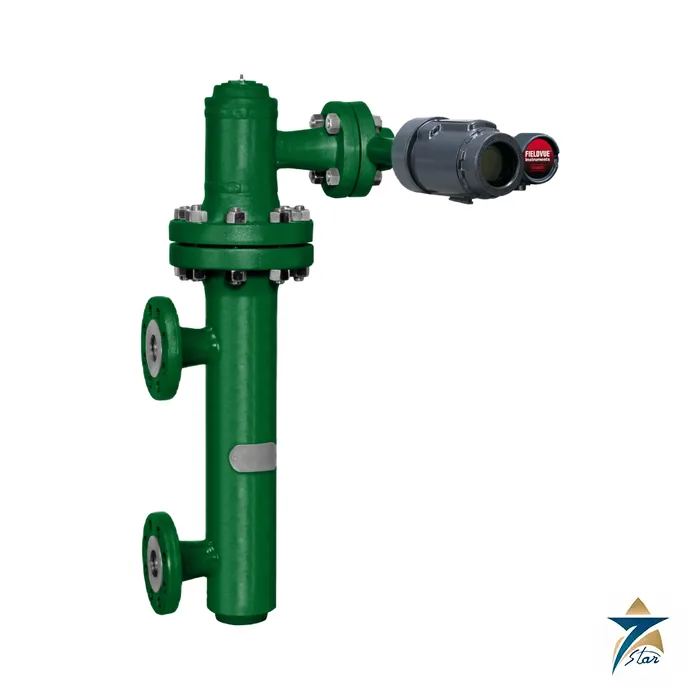
The 249 is the displacer sensor family that Fisher uses with its level instruments. A displacer hangs from a torque tube; as liquid level, interface level or specific gravity changes, the buoyant force on the displacer changes and the torque tube rotates. A FIELDVUE DLC3010 or DLC3020f digital level controller, or a pneumatic 2500 controller/transmitter, reads that rotation. The letters after 249 describe the mounting and pressure rating, so 249 is better thought of as a series than a single part: caged sensors (249, 249B, 249BF, 249C, 249K, 249L), top-mounted cageless sensors (249BP, 249CP, 249P), side-mounted cageless sensors (249VS) and the wafer-body 249W for use in a customer-supplied cage.
249 sensor ratings, connections and displacer lengths
| Sensor type |
Typical rating and connection |
| 249 |
CL125 or 250; PN 10/40 or 63/100; NPS 1-1/2 or 2; screwed or flanged; cast iron |
| 249B / 249BF |
CL600 (BF) or CL150, 300, 600; NPS 1-1/2 or 2; WCC or carbon steel |
| 249C |
CL150, 300 or 600; NPS 1-1/2 or 2; CF8M (316 stainless) |
| 249K |
CL1500; NPS 1-1/2 or 2; steel |
| 249L |
CL2500; ring-type joint flanged; steel |
| 249BP / 249CP / 249P |
Top-mounted cageless; NPS 3, 4, 6 or 8; ratings to CL2500 depending on type |
| 249VS |
Side-mounted cageless; NPS 4; CL125 to CL1500 flanged or butt weld; LCC, WCC or CF8M |
| 249W |
Wafer body for customer-supplied cage; NPS 3 or 4, CL150, 300, 600; WCC, LCC or CF8M |
Standard displacer lengths are 356 mm (14 in.) or 813 mm (32 in.) for the caged and top-mounted types, while side-mounted cageless sensors extend through 1219, 1524, 1829, 2134, 2438, 2743 and 3048 mm (48 to 120 in.). Standard trim is 316 stainless steel, bolting is B7 studs with 2H nuts, displacers are 304 stainless as standard (316 for the 249C and 249CP) and torque tubes are N05500 as standard (316 on the 249C and 249CP). Other materials such as N10276, N04400 and N06600 are available on request.
How a 249 sensor measures level, interface and density
The sensing element is Archimedes’ principle applied to a displacer. A displacer of known volume and weight is suspended on a rod connected to a torque tube. When the vessel liquid covers more of the displacer, buoyancy rises, the net weight on the torque tube falls and the tube twists less. The rotation at the driver bearing is carried through the torque tube shaft to the instrument head. In the DLC3010, a magnet on the lever moves past a Hall-effect sensor and the signal becomes a 4 to 20 mA output with HART, while the DLC3020f uses FOUNDATION fieldbus. Because the same geometry responds to specific gravity as well as to depth, the sensor can measure liquid level, interface between two liquids of different gravity, or density. Choosing displacer diameter and length sets the span.
Where 249 sensors fit: DLC3010, DLC3020f, 2500 and related Fisher level instruments
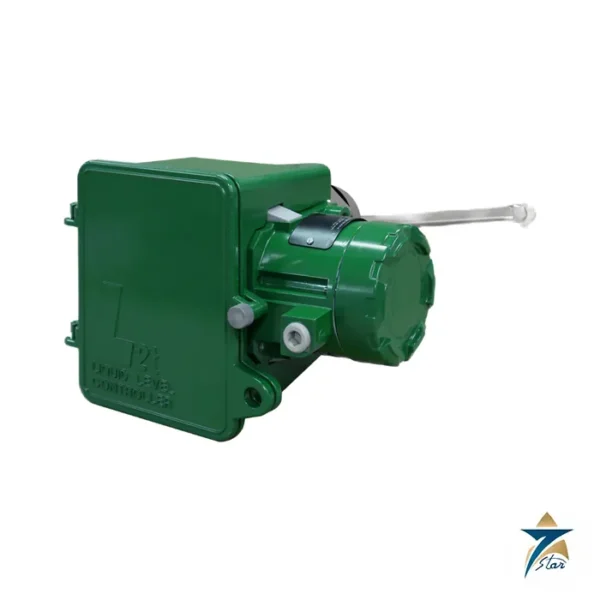
The bulletin states that 249 sensors can be mounted on either DLC3010/DLC3020f digital instruments or on 2500 controllers/transmitters. The 249W combined with a DLC3010 digital level controller gives a wafer body that mounts between NPS 3 or 4 raised-face flanges in a customer-supplied cage, rated CL150, 300 and 600. Fisher also lists mountings for Masoneilan, Yamatake and Foxboro/Eckhardt sensors. Related instruments in the same bulletin are the L2 and L2e liquid level controllers and the 2100 and 2100E level switches used for high and low level shutdown in oil and gas field processing. This page covers the sensor itself, so state which head will be fitted when enquiring.
249 sensor selection and ordering checklist
- Measured variable: level, interface level or specific gravity.
- Measuring span, and therefore displacer length (356 mm to 3048 mm).
- Vessel connection: top-mounted, side-mounted, caged, or customer cage with 249W.
- Pressure class and flange standard, from CL125 up to CL2500 or PN equivalents.
- Body and cage material compatible with the fluid and NACE needs (cast iron, WCC, CF8M, LCC, carbon steel).
- Displacer and torque tube material, and torque tube wall thickness (thin, standard or heavy) against maximum unbuoyed displacer weight.
- Process temperature and fluid specific gravity range.
- Head instrument: DLC3010, DLC3020f or 2500.
Installation, calibration and maintenance
Mount the cage or flange so that the displacer hangs free of the vessel wall, internals and agitation, and so the cage connections stay full of the process fluid. Tune out turbulence with damping in the digital head rather than by obstructing the connections. Calibration for level can be done with the instrument re-ranged without a fluid reference, while density duty needs a known liquid. Inspect the displacer for build-up, coating or corrosion at turnarounds, because added weight shifts the zero. A weight-based dry calibration with a known displacer weight can verify the torque tube. Keep spare displacers, torque tube assemblies and gaskets for critical separators.
Typical 249 sensor applications in Oman and the GCC
Displacer sensors are standard on oil and gas production separators, scrubbers, knock-out drums, glycol contactors and condensate vessels, where interface level between oil and water matters. In power and desalination plants they are used on heater drains, deaerators and brine or condensate tanks. Choose stainless steel or alloy wetted parts where produced water carries chlorides or H2S, and check pressure class against the highest vessel design pressure and the hydrotest value.
249 body material summary
| Sensor type |
Standard cage / body material |
| 249 |
Cast iron |
| 249B, 249BP |
WCC steel |
| 249BF |
Carbon steel |
| 249C, 249CP |
CF8M (316 stainless) |
| 249K, 249L, 249P |
Steel / carbon steel |
| 249VS |
LCC, WCC or CF8M |
| 249W |
WCC or CF8M (NPS 3); LCC or CF8M (NPS 4) |
Information to send with a 249 enquiry
- Sensor type or mounting and connection details.
- Pressure class, temperature and fluid gravity.
- Measured variable and required measuring length.
- Wetted material requirements including NACE.
- Head instrument and communications protocol.
- Quantity and destination.
Documents and quotation for the 249 sensor
The manufacturer level instruments bulletin, which contains the 249 sensor tables and the related instrument data, is attached on this page. Seven Star LLC is an independent supplier in Muscat.
Send the 249 type, rating and displacer length and we will confirm availability and quote.




















Reviews
There are no reviews yet.