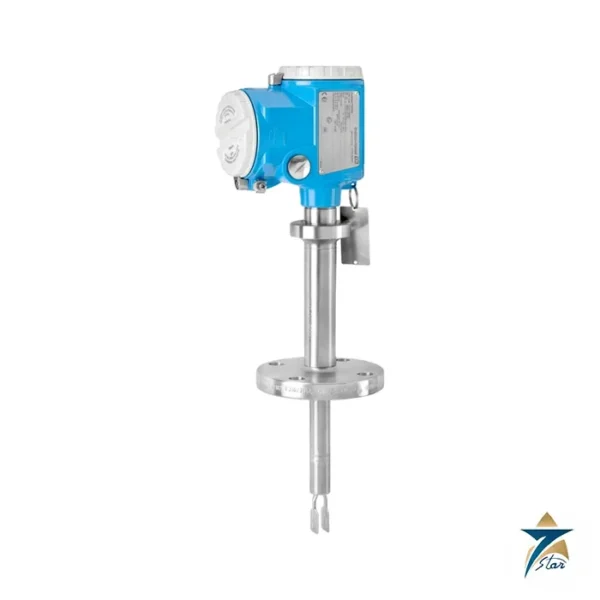
Endress+Hauser FTE20 Soliswitch rotary paddle level switch for bulk solids
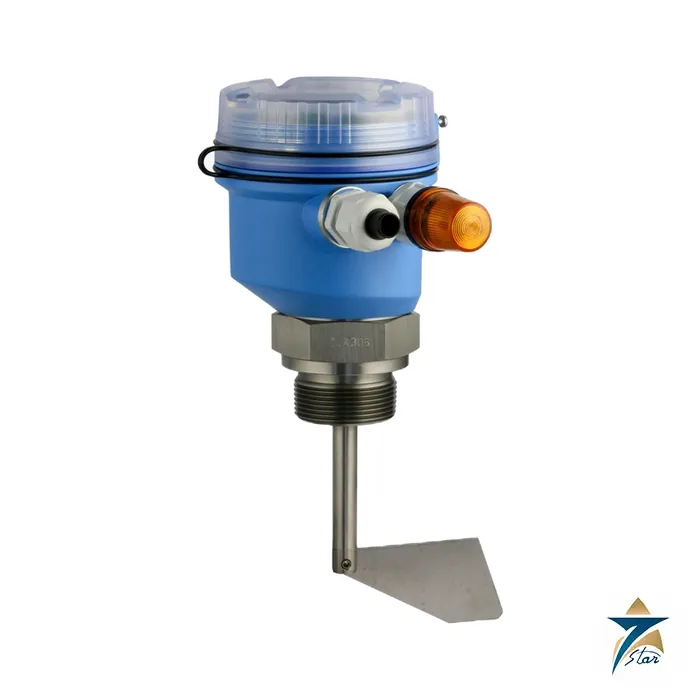
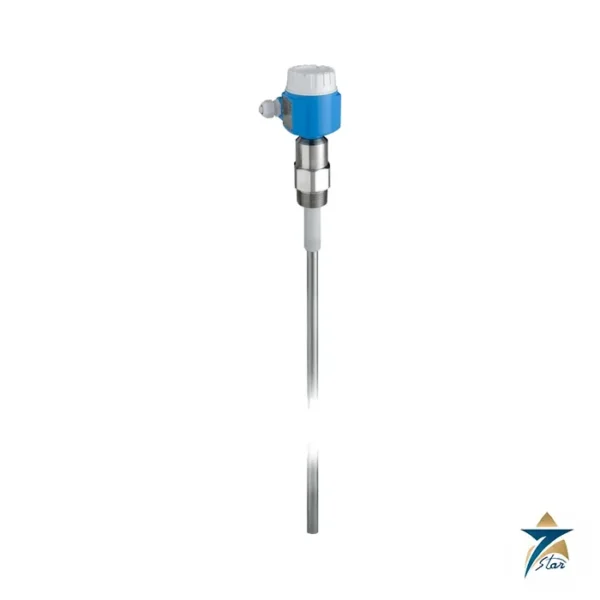
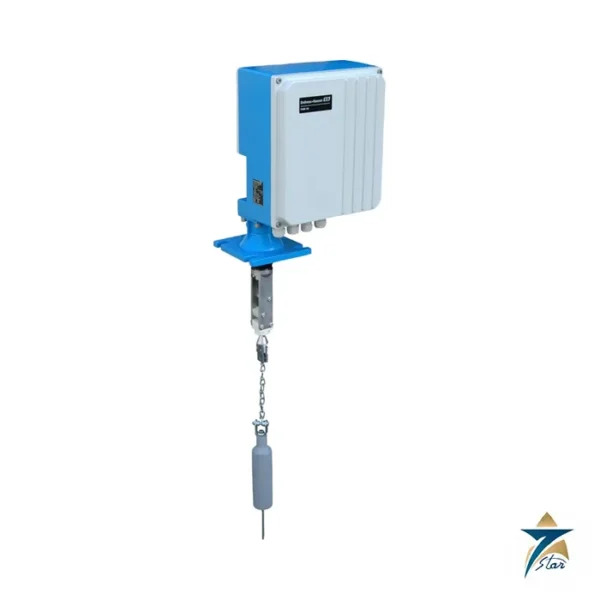
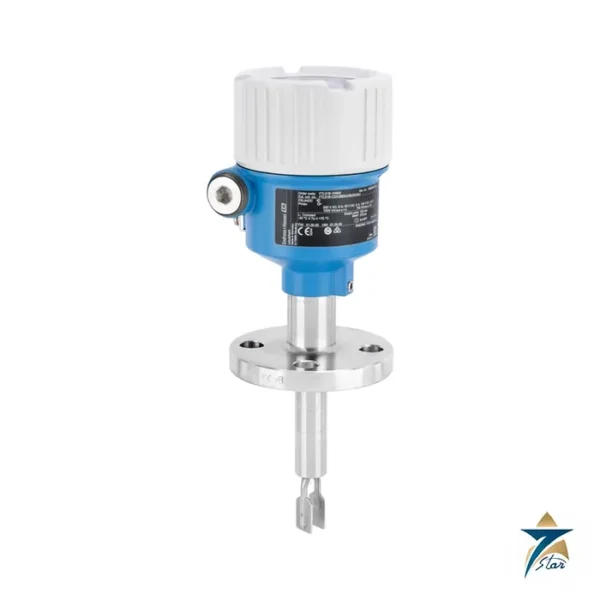
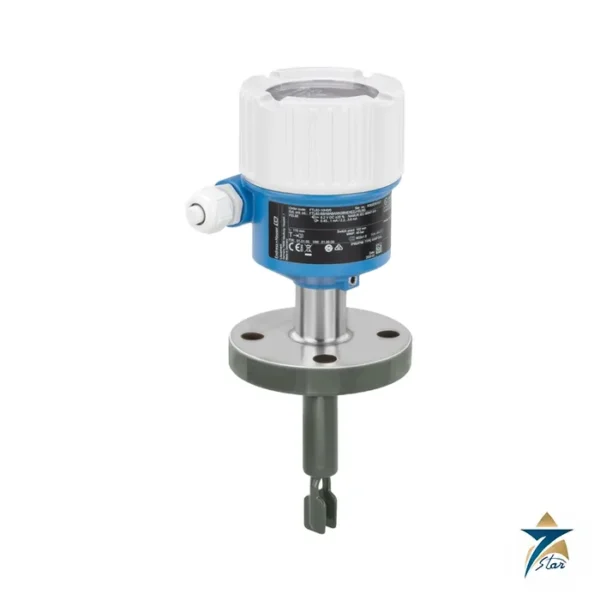
The Endress+Hauser FTE20 Soliswitch is a rotary paddle point level switch for dry bulk solids in silos and hoppers. A small synchronous motor turns a paddle on a shaft; when bulk material covers the paddle and stops it, the motor housing pivots and operates a floating change-over contact. The contact is used as a full alarm, an empty or refill alarm, or a demand signal for a feeder. The FTE20 combines a polycarbonate housing, a compact build and optional rotation monitoring, which keeps it economical while still suited to dust-hazard areas. Seven Star LLC supplies FTE20 switches in Oman and the GCC as an independent supplier in Muscat.
Because the unit is a switch, it answers one question only: is the product at this height or not. For continuous level in a silo the FMM50 Silopilot or a radar or radiometric transmitter is the right tool, while the FTE20 provides the independent high-level or low-level alarm on the same vessel.
Reading the FTE20 version
- Shaft length: 75 to 600 mm, with a reinforced shaft available at 300 to 600 mm.
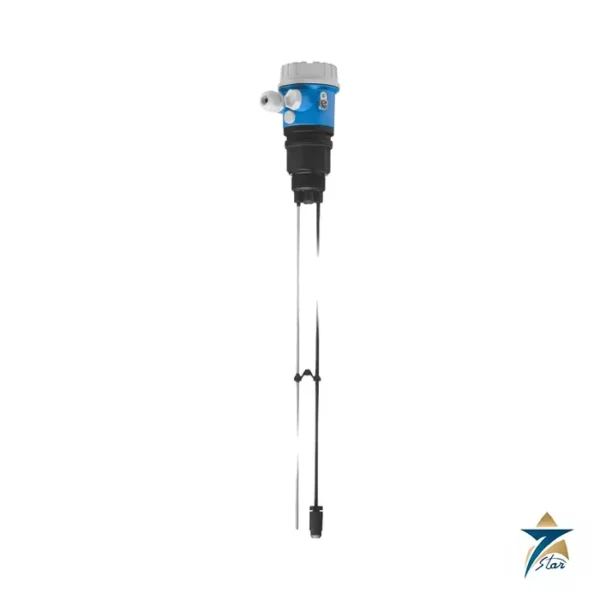
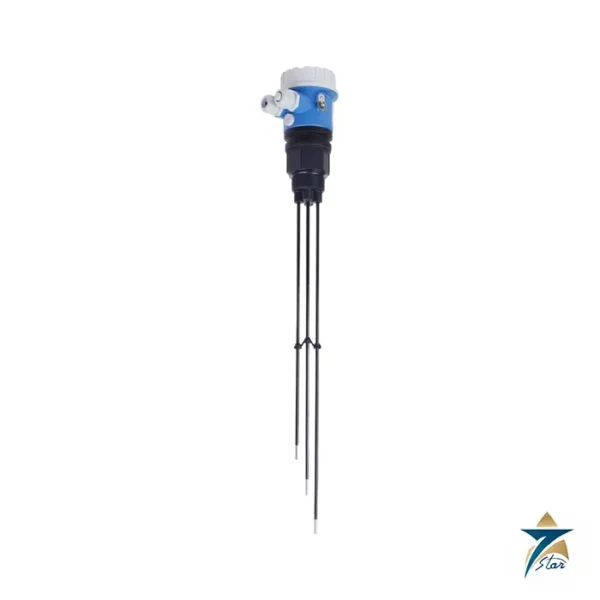
- Rope extension: shortenable rope up to about 2,000 mm for deep installation.
- Paddle: standard or hinged rotary paddle.
- Process connection: NPT 1¼ in, NPT 1½ in or G 1½ in, in stainless steel or PBT, plus an optional flanged adapter.
- Supply: 24 VDC, 24 VAC, 115 VAC or 230 VAC.
- Options: signal lamp and automatic rotation monitoring.
FTE20 technical specifications
| Parameter |
Specification |
| Manufacturer / part number |
Endress+Hauser / FTE20 |
| Measuring principle |
Rotary paddle driven by a synchronous motor with slip clutch |
| Output |
One floating change-over contact (SPDT) |
| Switching capacity |
250 VAC, 6(2) A per EN 61058; 125 to 250 VAC, 5 A per UL 1054; 24 VDC, 3 A; minimum 300 mW |
| Switching time |
20 degrees of paddle standstill, about 3.5 s |
| Supply voltage |
24 VDC ±15 %, 24 VAC ±10 %, 115 VAC ±10 %, 230 VAC ±10 % |
| Power consumption |
Max. 3.5 VA |
| Shaft speed |
1 rpm |
| Minimum bulk density |
80 g/l, three sensitivity stages (low, medium default, high) |
| Maximum grain size |
50 mm |
| Medium temperature |
–20 to +80 °C |
| Process pressure |
Up to 1.5 bar overpressure; operating pressure 0.5 to 2.5 bar abs |
| Ambient temperature |
–20 to +60 °C |
| Ingress protection |
IP66 |
| Shaft / paddle material |
1.4305 (303) shaft, 1.4301 (304) paddle, 1.4401 (316) rope |
| Housing |
Polycarbonate, two M20 x 1.5 cable glands |
| Life |
500,000 switching operations (mechanical) |
How the FTE20 switches
The shaft and paddle are driven through a reduction gear by a synchronous motor, with a slip clutch absorbing shock loads. While the paddle turns freely in air, the contact sits in its rest position. When product builds up and blocks the paddle, the motor moves from rest to the switch position. That movement operates two contacts: one for the external level signal and one that cuts power to the motor so the drive is not stressed. When the product falls away, the motor returns and the paddle starts turning again.
A reflector disk and an LED behind a sight opening allow you to see from outside whether the shaft is turning. The optional automatic rotation monitoring detects a blocked shaft or a failed drive and flashes the LED. Line-break and short-circuit monitoring can be added with a 1 kΩ/10 kΩ resistive coupling element and a NAMUR repeater such as the RLN22.
Where to mount the FTE20
The datasheet allows mounting vertically from above, at an angle from above, from the side (with a protective cover against falling solids) and from below, in which case the unit must be protected from shock loads. Typical use is as a full switch in the roof or a refill switch in the silo cone. Orientations to avoid are in the direction of solids flow, on a coupling that is too long, and horizontally with shafts longer than 300 mm (600 mm for the reinforced shaft). Side load is limited to 60 N on a normal shaft and 1,500 N on the reinforced shaft or rope.
For sleeve lengths above 40 mm only the hinged paddle can be used, since the paddle must pass the sleeve without force. A weather protection cover is available as an accessory when mounted in a silo roof, because the unit must be shielded from direct sunshine.
FTE20 selection and ordering checklist
- Bulk material, bulk density (minimum 80 g/l) and maximum lump size (50 mm).
- Mounting position and the shaft or rope length needed to reach the switching height.
- Whether a reinforced shaft is needed for side loads from flowing material.
- Standard or hinged paddle, depending on the sleeve length.
- Thread type: NPT 1¼, NPT 1½ or G 1½, and metal or plastic process connection.
- Supply voltage and whether the signal lamp, rotation monitoring or line monitoring is wanted.
- Hazardous-area approval for combustible dust, as certifications are listed per version.
- Weather protection cover for outdoor roof mounting.
Commissioning and maintenance of the FTE20
Connect the supply and the change-over contact to the spring terminals (0.2 to 2.5 mm²), seal unused cable entries with an IP65 blind plug, and use a power protection element of 10 A or less. The switching point is adapted to the product weight in three stages by an operating element accessible from the top, even while operating. Choose a more sensitive stage for light powders and a less sensitive one for heavy granules.
Maintenance is basic: check the rotation indicator during rounds, inspect the paddle and shaft seal for wear and build-up, and test the switching function after any silo clean-out. Keep a spare unit or a drive with the same supply voltage for critical silos.
Typical FTE20 applications in Oman and the GCC
The FTE20 is used on cement and lime silos, plaster and gypsum, sand, grain and animal feed, plastics granulate, wood chips and powders in packaging or mixing plants across Oman and the GCC. Heat and fine dust are handled by the IP66 enclosure, although medium temperature must stay below 80 °C, so hot clinker or ash duties need another sensor type. For liquids, use a vibrating fork or float switch instead.
Information to send with an FTE20 RFQ
- Bulk material and bulk density.
- Silo type, mounting position and nozzle or sleeve length.
- Required shaft or rope length.
- Supply voltage and options.
- Hazardous-area classification for dust.
- Quantity for full, empty and demand duties.
Documents and quotation
The official Technical Information for the Soliswitch FTE20 (TI01047F) is attached on this page as a datasheet.
Send the FTE20 details above and Seven Star LLC will prepare a quotation for Oman and the GCC.


















Reviews
There are no reviews yet.