Endress+Hauser FMP56 Levelflex guided radar for bulk solids silos
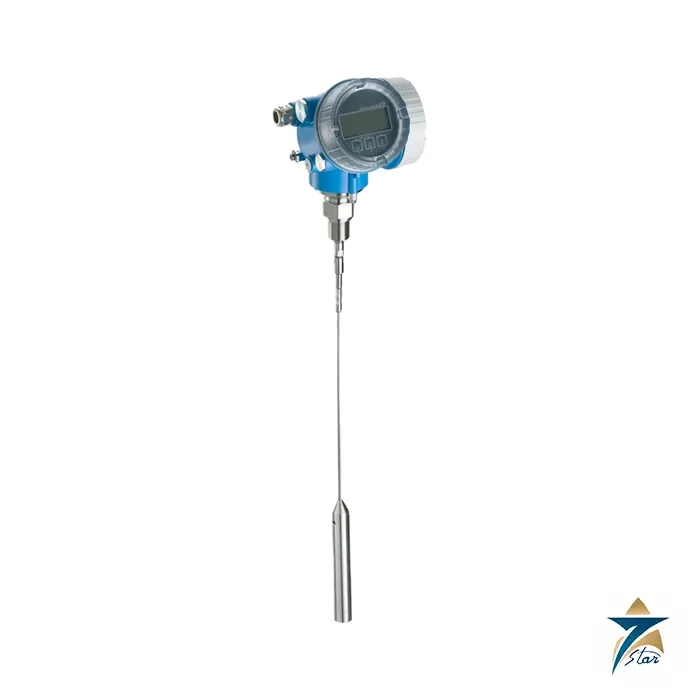
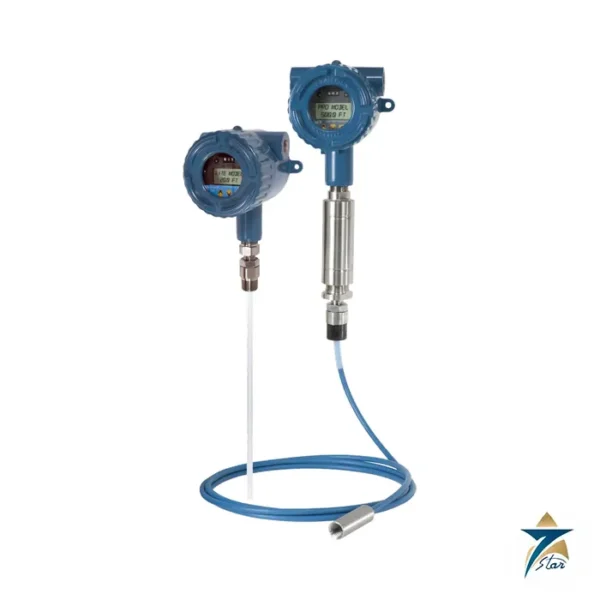
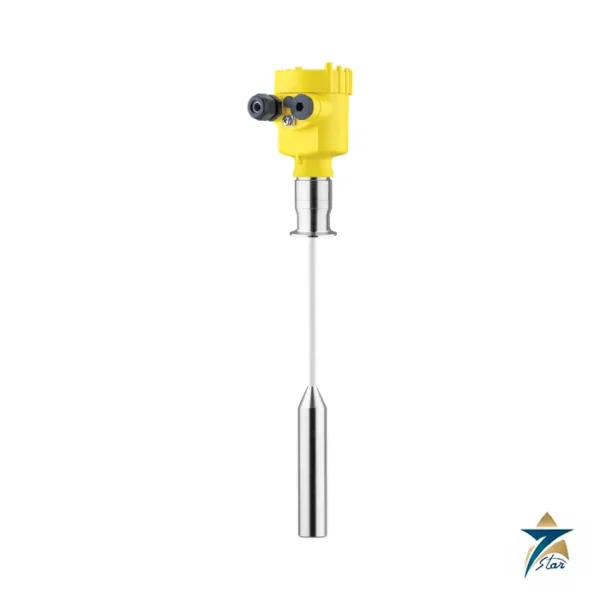
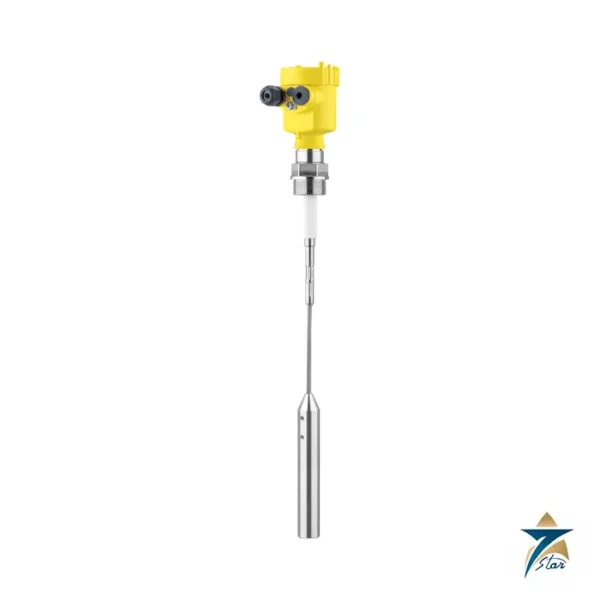
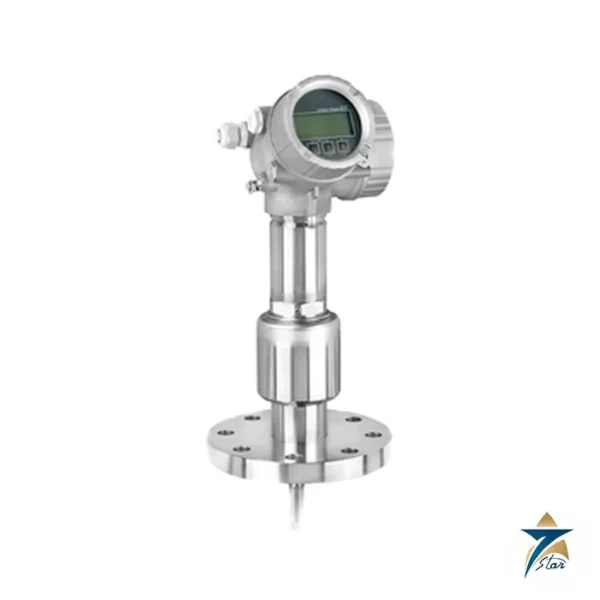
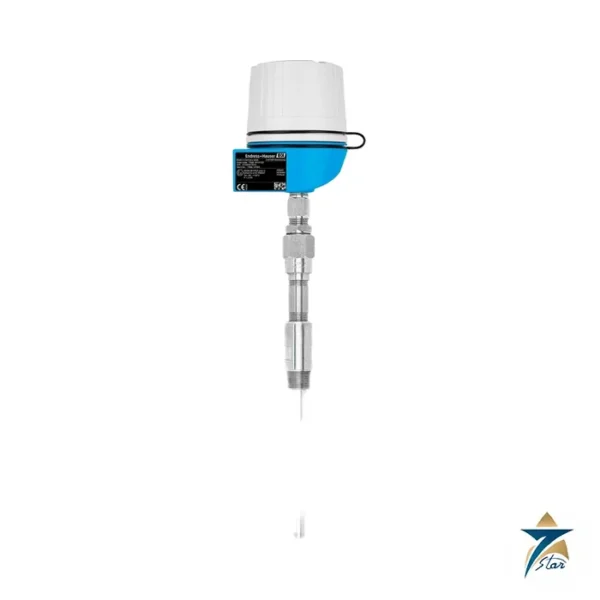
The Endress+Hauser FMP56 is the basic Levelflex guided-wave radar for continuous level measurement in bulk solids such as cement, grain, flour, plastic granulate, sand and salt. The FMP56 is a rope-probe device: a stainless steel or polyamide-coated rope hangs into the silo, microwave pulses run along it, and the reflection from the material surface gives the distance. Its role in the range is that of the economical, compact bulk-solids version, with a maximum probe length of 12 m and a tensile loading capacity of 12 kN, while the larger FMP57 handles longer ropes and higher loads. Seven Star LLC supplies the FMP56 in Oman and the GCC as an independent supplier in Muscat and prepares the quotation from your silo and material data.
Guided radar copes with dust, filling noise and steep or narrow silos where ultrasonic and free-space radar can struggle, because the measuring signal stays on the rope. That is why the FMP56 is used in tall and narrow vessels, in dusty atmospheres and where obstacles block free-space beams.
FMP56 technical specifications
| Parameter |
Specification |
| Manufacturer / part number |
Endress+Hauser / FMP56 (Levelflex, guided-wave radar for bulk solids) |
| Measuring principle |
Guided-wave radar with multi-echo tracking |
| Probe |
Rope probe with centering rod: 4 mm 316L, or 6 mm PA-coated steel |
| Maximum probe length |
12 m (40 ft); typical measuring range 12 m (39 ft) depending on material group |
| Tensile loading capacity |
12 kN; maximum breaking load 20 kN |
| Accuracy (digital) |
±2 mm up to 15 m measuring distance; non-repeatability 1 mm or better |
| Minimum dielectric constant |
Relative permittivity 1.6 or higher (rod and rope probes) |
| Process temperature |
–40 to +120 °C with EPDM O-ring; –30 to +120 °C with FKM |
| Process pressure |
–1 to 16 bar (–14.5 to 232 psi), reduced by some connections |
| Process connections |
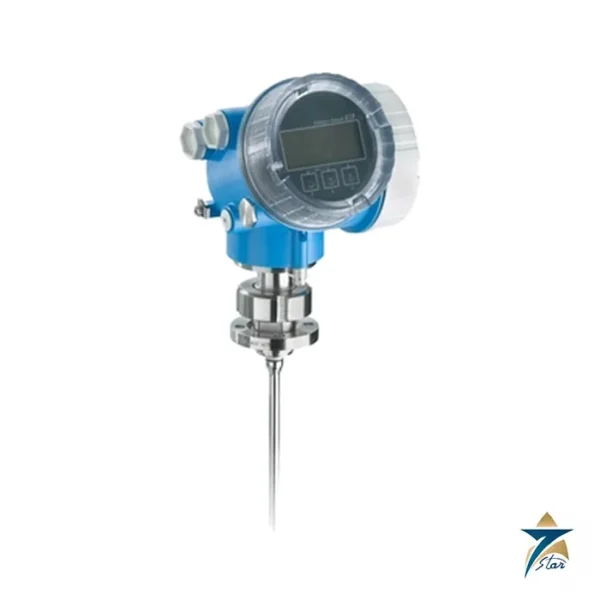
Thread ISO 228 G ¾ or ANSI MNPT ¾, or flanges |
| Communication |
2-wire 4–20 mA HART; PROFIBUS PA; FOUNDATION Fieldbus; Bluetooth for commissioning |
| Supply (HART) |
11.5 to 35 V DC at the terminals (non-Ex) |
| Ambient temperature |
–40 to +80 °C; local display –20 to +70 °C; derating applies with G ¾ thread at high process temperature |
| Protection |
IP66/NEMA 4X; IP68/NEMA 6P with housing closed |
| Functional safety |
SIL 2 as per IEC 61508, SIL 3 with homogeneous redundancy |
How the FMP56 measures solids level
The electronics emit a fast pulse that travels along the rope. At the material surface the change in dielectric constant reflects part of the pulse back, and the transit time is converted to distance. Level is the empty distance minus the measured distance, and linearization with up to 32 points converts it to volume or mass in cones or irregular silos. Multi-echo tracking follows echoes over time so that fixed obstacles in the silo and short-term disturbances during filling do not fool the reading.
Measuring range depends on the material group. Materials with a low dielectric constant such as plastic powder reflect less energy than coal dust or metal powders, and buildup on the rope can shorten the usable range. The technical information therefore lists ranges by group, and for very loose or loosened material the lower group applies.
FMP56 rope probe measuring range by material
| Material group |
Relative permittivity |
Typical bulk solids |
Bare rope |
PA-coated rope |
| 2 |
1.6 to 1.9 |
Plastic granulate, white lime, sugar |
12 m |
12 m |
| 3 |
1.9 to 2.5 |
Portland cement, plaster / flour |
12 m / – |
– / 12 m |
| 4 |
2.5 to 4.0 |
Grain, seeds / ground stones, sand |
– / 12 m |
12 m |
| 5 |
4.0 to 7.0 |
Moist stones and ores, salt |
12 m |
12 m |
| 6 |
above 7.0 |
Metal powder, carbon black, coal dust |
12 m |
12 m |
Group 1 materials such as plastic powder are listed at 12 m with a bare rope, with a stated restriction for strongly damping media like wheat bran or silicic acid.
Where the FMP56 fits among Levelflex models
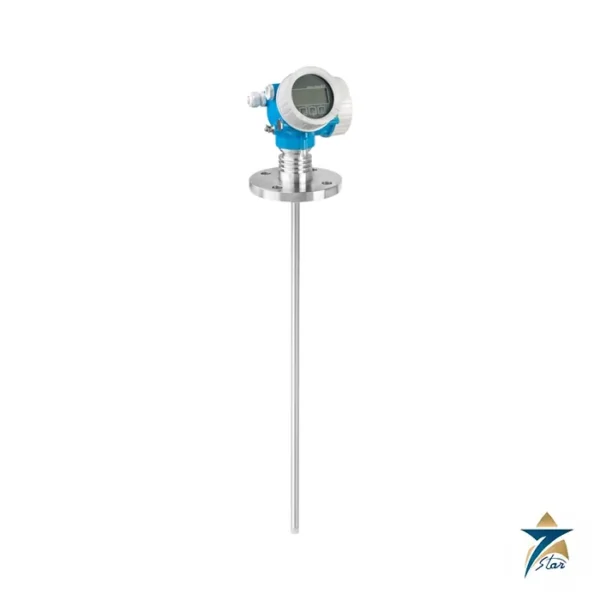
The FMP56 shares a technical information document with the FMP57. The FMP57 adds rod probes up to 4 m, ropes up to 45 m, higher tensile ratings up to 30 kN and process temperatures up to +185 °C with FFKM seals, so it suits large silos. The FMP56 is the right pick for ropes within 12 m and process temperatures up to 120 °C. For liquids, the FMP52 (corrosive liquids) and FMP53 (hygienic liquids) are listed separately by Seven Star LLC. Because the FMP56 is a bulk-solids device, do not select it for liquids.
It uses the same transmitter generation: Bluetooth and the SmartBlue app for wireless setup, HistoROM data memory, an RFID tag for easy identification and Heartbeat Technology for diagnostics and verification. Output options match the family: HART, PROFIBUS PA and FOUNDATION Fieldbus.
FMP56 selection and ordering checklist
- Material, bulk density and dielectric constant, plus likelihood of buildup or dust.
- Silo height and diameter: required rope length up to 12 m.
- Bare 316L rope or PA-coated rope; PA coating is recommended for milled products such as cereal, wheat and flour.
- Silo roof load: allow for the 12 kN tensile loading and 20 kN breaking load of the rope.
- Nozzle size and the process connection: G ¾ or NPT ¾ thread, or flange.
- Process temperature and pressure, with attention to the thread derating curve for G ¾ or NPT ¾ connections.
- Communication, display and Bluetooth options.
- Hazardous-area classification, since dust-explosive materials are common, and any SIL requirement.
Installation, commissioning and maintenance of the FMP56
For bulk solids the mounting position matters: choose a nozzle position that keeps the rope away from the filling stream and from silo internals, and let the rope hang freely. Because the rope is under tensile load as material settles, check that the roof and nozzle are designed for the pulling force and the breaking load, and use the rigid centering rod section at the top as supplied.
During commissioning, enter the silo empty distance and full span, select the material group, and view the echo curve to confirm the surface echo and mask known interferences. In service, check the rope for wear and buildup during planned silo inspections, and review diagnostics that follow NAMUR NE 107. Keep a spare rope and seal set for silos where abrasion is expected.
Typical FMP56 applications in Oman and the GCC
Bulk-solids handling is widespread in the region: cement and clinker silos, aggregate and sand storage, grain and flour at mills and port terminals, salt, fertilizer and plastic granulate at petrochemical sites. The FMP56 is typically used where dust, tall narrow silos or internal obstacles make free-space radar less suitable. The device works from –40 to +80 °C ambient, with an IP66/IP68 housing suitable for dusty, hot sites, though the transmitter should be shaded and the process temperature must remain within the O-ring limit of 120 °C.
Information to send with an FMP56 RFQ
- Quantity and exact model: Endress+Hauser FMP56, with the order code if available.
- Bulk material, density, particle size and moisture.
- Silo height, diameter, roof nozzle and obstacles.
- Rope type and length, process connection and temperature.
- Output, power and hazardous-area (dust) classification.
- Delivery location and schedule.
Documents and quotation
The Endress+Hauser technical information for the FMP56, which also covers the FMP57, is attached on this page as a datasheet with ranges, loads and approvals.
Send your silo and material data and we will confirm the rope selection, lead time and documents for the FMP56 supplied to your project in Oman or the GCC.




























Reviews
There are no reviews yet.