Endress+Hauser FTL51B Liquiphant vibronic point level switch for liquids
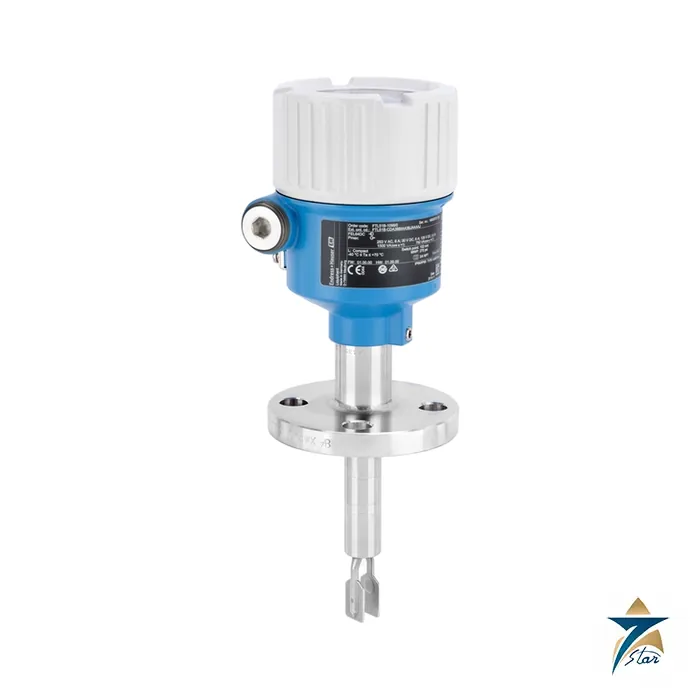
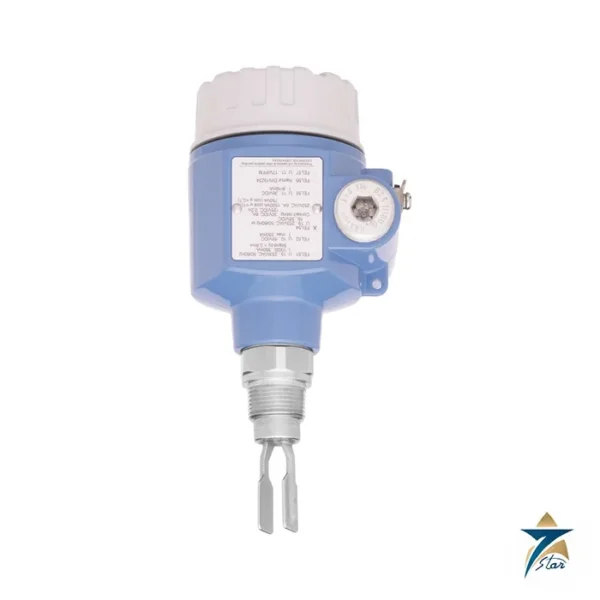
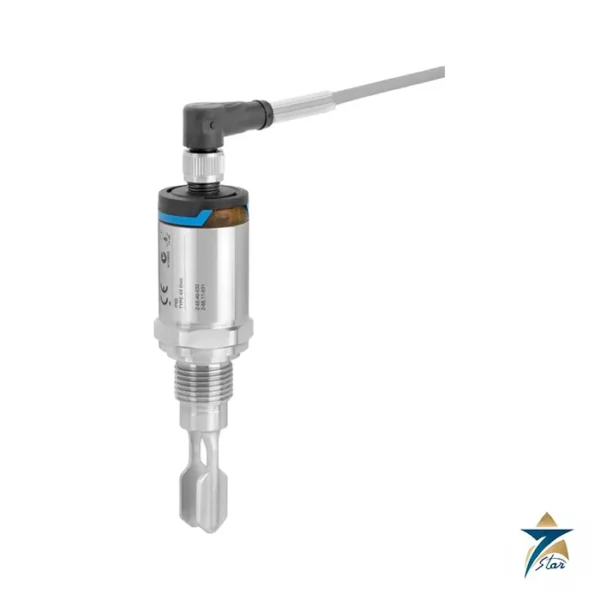
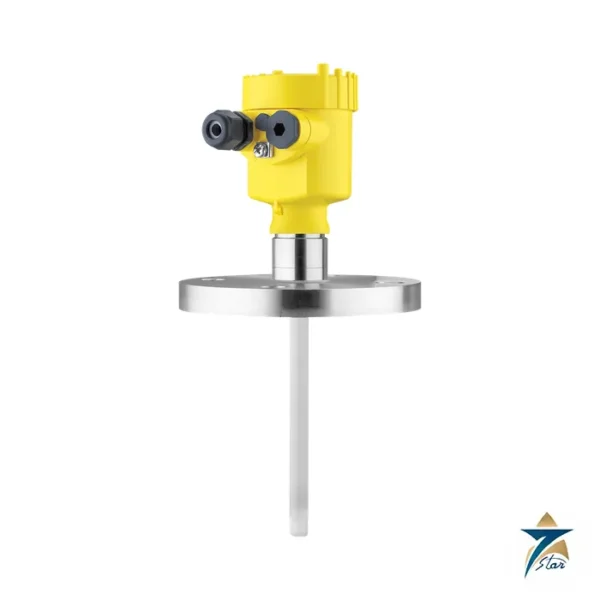
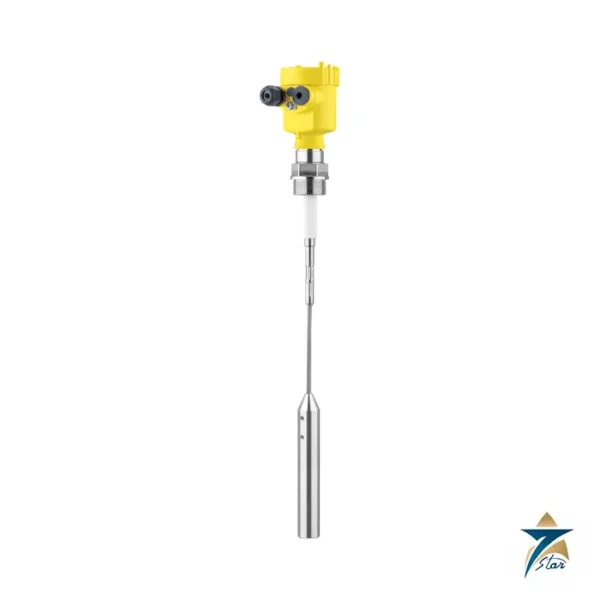
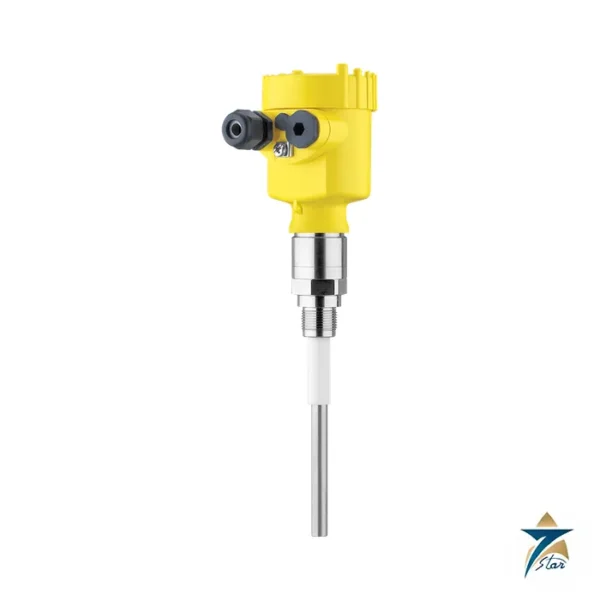
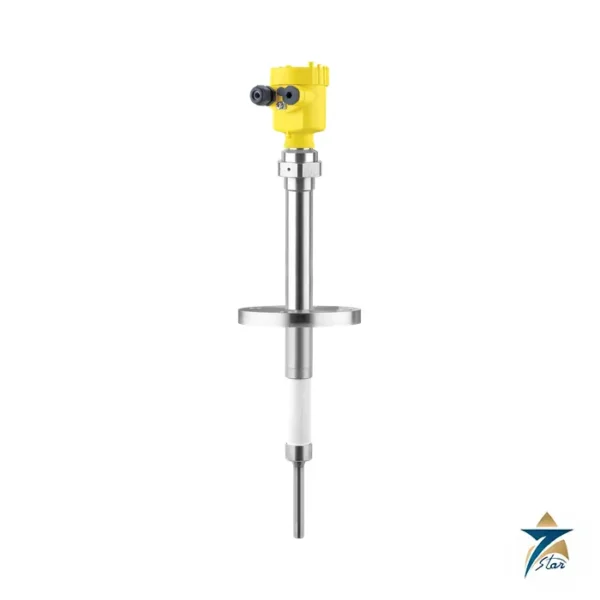
The Endress+Hauser FTL51B is a compact vibronic level switch from the Liquiphant range. A small tuning fork at the tip of the probe is kept oscillating, and the electronics decide from the oscillation whether the fork is in air or in liquid. The FTL51B is intended for minimum or maximum detection in process tanks, storage tanks and pipework, and it can be specified for hazardous areas. Seven Star LLC supplies the FTL51B in Oman and the GCC as an independent supplier in Muscat.
The name FTL51B identifies the standard stainless steel version of the family: process temperature from –50 to +150 °C, pressure up to 100 bar on selected probe designs, viscosity up to 10,000 mPa·s and a sensor length of up to 6 m with a pipe extension. The exact device is not fixed by the model name alone. Housing, electronic insert, process connection, probe length, materials and approvals are chosen in the manufacturer’s product configurator and end up in the order code printed on the nameplate.
FTL51B technical specifications
| Parameter |
Specification |
| Manufacturer / part number |
Endress+Hauser / FTL51B (Liquiphant vibronic level switch) |
| Measuring principle |
Vibronic tuning fork, point level for liquids |
| Process temperature |
–50 to +150 °C (–58 to +302 °F) |
| Process pressure |
–1 to +64 bar at up to 150 °C; optionally up to 100 bar for pipe extension and short pipe designs |
| Medium density |
Above 0.7 g/cm³ as delivered; 0.5 g/cm³ selectable by DIP switch; 0.4 g/cm³ as a fixed option |
| Viscosity / solids |
Up to 10,000 mPa·s; particle size up to 5 mm |
| Sensor length |
Compact, short pipe or pipe extension, up to 6 m (20 ft); 316L extensions from 117 mm to 6,000 mm, Alloy C22 from 148 mm to 3,000 mm |
| Switch-point accuracy |
Maximum error ±1 mm at reference conditions; hysteresis typically 2.5 mm |
| Wetted materials |
316L (1.4404 or 1.4435) for connection and extension; fork 316L (1.4435); optional Alloy C22 (2.4602) |
| Ambient temperature |
–40 to +70 °C; optional –50 or –60 °C with restricted life and performance |
| Switching delay |
0.5 s covered / 1.0 s uncovered as standard; 0.25 s, 1.5 s and 5.0 s settings can be ordered |
| Enclosure |
IP66/68, NEMA Type 4X/6P with the usual cable entries |
| Functional safety |
IEC 61508: overfill and dry-run protection up to SIL 2, SIL 3 with homogeneous redundancy |
| Wireless service |
Optional Bluetooth module, SmartBlue app, Heartbeat Technology; optional LED module |
| Basic weight |
0.65 kg for compact version with plastic housing and G ¾ thread |
How the FTL51B detects the liquid level
The fork of the FTL51B vibrates at its natural frequency while it is in air. When liquid covers the fork the frequency drops, and the electronic insert turns that frequency change into a switching signal. Because the evaluation is based on frequency and not on a float position, flow, turbulence, air bubbles, foam, vibration, solids content and buildup do not normally disturb the function, which is why the instrument is often used as a replacement for float switches.
In maximum mode the device switches to demand when the fork is covered, for example for overfill protection. In minimum mode it switches to demand when the fork is uncovered, for example to stop a pump before it runs dry. In both modes the healthy state is defined as OK status, and a fault is signalled the same way as a demand, which supports fail-safe wiring. The switch point lies within roughly 4 to 13 mm of the fork tip, depending on mounting orientation, and the minimum clearance between the fork and a tank or pipe wall is 10 mm.
Electronic inserts available for the FTL51B
Output behaviour depends on the electronic insert chosen when the FTL51B is ordered. The datasheet lists these variants:
| Insert |
Output type |
Key data |
| FEL61 |
2-wire AC, switches the load directly |
19 to 253 V AC, load 10 to 350 mA, residual current up to 3.8 mA when blocked |
| FEL62 |
3-wire DC PNP for PLC inputs |
10 to 55 V DC, load up to 350 mA, power up to 0.5 W |
| FEL64 / FEL64 DC |
Relay with two potential-free changeover contacts |
Universal AC/DC supply or DC supply version |
| FEL67 |
PFM signal for separate switching unit |
Two-wire cable, current pulses superimposed on supply |
| FEL68 |
NAMUR 2-wire, 2.2 mA / 1.0 mA edge |
For an isolating switch amplifier such as a Nivotester |
Low-temperature versions of the inserts are available and are marked LT. The 2-wire AC and DC-PNP inserts have a test button, and the DC-PNP insert can also be tested with an optional magnet through the closed housing, so a functional test is possible without changing the level.
Where the FTL51B fits in the Liquiphant range
The FTL51B is the general-purpose member of a family that also includes the FTL62 with a corrosion-resistant coating for aggressive media, the FTL64 for high pressure and temperatures up to 280 °C, and the FailSafe models FTL80, FTL81 and FTL85 with a 4–20 mA live signal for SIL 3 loops. Choose the FTL51B when stainless steel wetted parts are acceptable, the process stays inside 150 °C and the safety function does not need the FailSafe evaluation. Typical partners on the control side are PLC digital inputs, relay modules and Nivotester switching units, depending on the insert fitted.
FTL51B selection and ordering checklist
- Mode of operation: minimum or maximum detection, and the safe state your logic expects.
- Medium: liquid type, density (0.7, 0.5 or 0.4 g/cm³ setting), viscosity and any solids or buildup.
- Process conditions: temperature, operating pressure and whether vacuum duty applies.
- Mounting: tank top, side or bottom entry, nozzle length, and probe length including any pipe extension.
- Process connection: G ¾ or G 1 thread, R or NPT thread, Tri-Clamp, or EN, ASME or JIS flange.
- Wetted material: 316L or Alloy C22 for corrosive liquids.
- Electronic insert and cable entry (M20, G ½ or NPT ½), with housing in plastic, aluminum or 316L.
- Options: temperature spacer, pressure-tight feedthrough, Bluetooth or LED module, switching delay, SIL or WHG approval.
- Hazardous area approval and gas group, plus any marine or CRN requirement.
Installation, commissioning and maintenance of the FTL51B
Mount the FTL51B in any orientation up to a pipe length of about 500 mm. Longer probes should be fitted vertically from above, and probes longer than 1,600 mm need support when marine approval applies. For low-viscosity liquids below 2,000 mPa·s the fork may sit inside a short installation socket. For viscous liquids between 2,000 and 10,000 mPa·s the fork must project freely into the vessel, with the socket deburred, and the marking on the thread or flange should be used to align the fork so the liquid drains away. Keep the socket short to avoid buildup.
After wiring, check the density setting, the MIN or MAX switch and the switching delay. Run a functional test with the test button or magnet. During operation, the Heartbeat function reads the oscillation frequency in air and warns of corrosion when the frequency rises, or of buildup when it falls. Keep one spare electronic insert of the correct type on site, because the insert can be exchanged without removing the probe. Protect the housing from direct sun with the optional cover in hot regions.
FTL51B applications in Oman and the GCC
In Oman and the wider GCC the FTL51B is a common choice for diesel and lube-oil day tanks, condensate and slop tanks, seal oil and cooling-water drums, chemical dosing tanks and desalination plant sumps. Ambient temperatures above 50 °C and strong sunshine make a shaded or covered housing sensible, while coastal humidity favors stainless steel housings and sealed cable glands. As a pump dry-run or high-level alarm switch it is often installed alongside a continuous transmitter so that the safety function stays independent of the measurement.
Information to send with an RFQ for the FTL51B
- Full order code or nameplate photo of the existing FTL51B, if this is a replacement.
- Tag number, mode (MIN or MAX) and the density and viscosity of the liquid.
- Process temperature, pressure and probe length needed.
- Process connection type, size, rating and flange standard.
- Electronic insert, supply voltage, housing material and cable entry.
- Hazardous area classification, SIL or overfill approval and certificates required (such as 3.1 material).
- Quantity and required delivery location in Oman or the GCC.
Documents and quotation
A datasheet (Technical Information) for the Endress+Hauser FTL51B is attached on this page for checking the options above. Approvals and the order code always apply to the exact configuration, so please confirm them against your own order code.
To receive a quotation, send the FTL51B order code or the details in the checklist above to Seven Star LLC, and we will reply with availability and lead time for Oman and the GCC.





















Reviews
There are no reviews yet.