Endress+Hauser FMX167 Waterpilot Ceramic Level Probe

Description

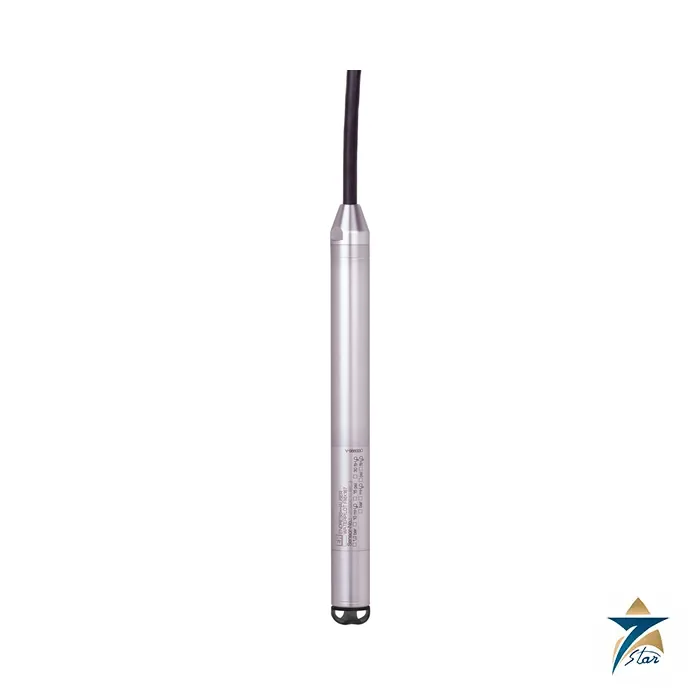
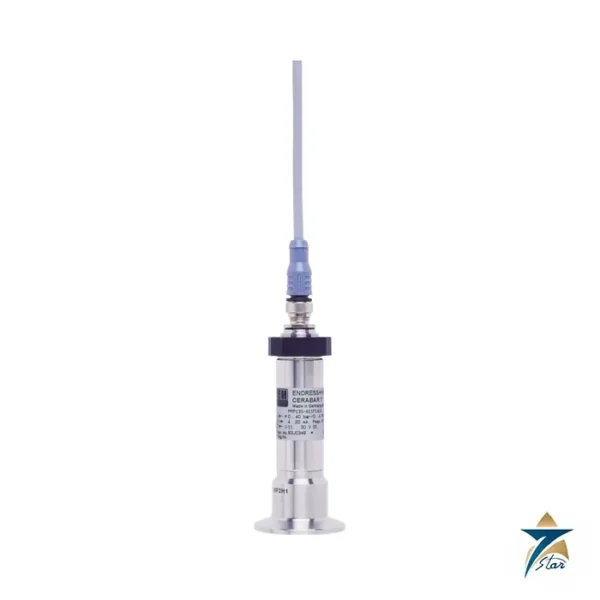
Endress+Hauser FMX167 Waterpilot ceramic probe

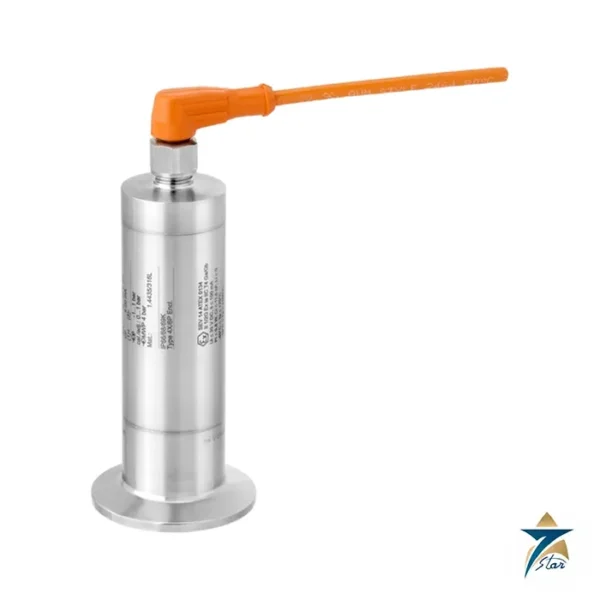
The Endress+Hauser FMX167 Waterpilot is a reliable, robust level probe with a ceramic measuring cell, described in Technical Information TI00351P (issue 15.15). It measures hydrostatic pressure and therefore level in water, wastewater and saltwater. A dry ceramic cell turns the deflection of a ceramic diaphragm into a capacitance change; the electronics are completely potted and a two-filter pressure compensation arrangement makes the sensor immune to temperature change and condensation, which is what is meant by the datasheet’s wording of a climate-proofed sensor.

Three versions exist. The standard stainless steel probe has a 22 mm outer diameter and suits drinking water and narrow boreholes. The heavy-duty stainless steel probe has a 42 mm diameter and a flush, easy-clean membrane for wastewater and sewage works. The corrosion-resistant 29 mm version has plastic insulation and targets saltwater, particularly ship ballast tanks.

FMX167 benefits

  • High mechanical resistance to overload and aggressive media thanks to the ceramic cell.
  • Long-term stability of 0.1 percent of URL per year, maximum error 0.2 percent.
  • Nine fixed pressure ranges on the 22 mm version, from 1 mH2O to 200 mH2O.
  • Extension cable in PE, PUR or FEP, with FKM seals.
  • Optional integrated Pt100 and a TMT181 head transmitter for a second 4 to 20 mA temperature signal.
  • Approvals include ATEX II 2 G, FM and CSA; a drinking-water approval is an option.

FMX167 data

Parameter Value
Versions 22 mm stainless; 42 mm stainless flush diaphragm; 29 mm plastic insulated
Output 4 to 20 mA, 2-wire; supply 10 to 30 V DC
Measured error plus or minus 0.2 percent of upper range value
Long-term stability 0.1 percent of URL per year; Pt100 with TMT181 0.1 K per year
Overload 40 bar (600 psi) or 25 bar (375 psi), depending on the version
Process temperature, 22 and 42 mm minus 10 to plus 70 degrees Celsius
Process temperature, 29 mm 0 to plus 50 degrees Celsius
Thermal effect, 0 to 30 C 0.4 percent of URL typical (0.5 percent for the 0.1 and 0.6 bar cells)
Temperature coefficient 0.15 percent per 10 K of URL (0.3 percent for small cells)
Extension cable temperature PE minus 30 to plus 70; FEP and PUR minus 40 to plus 70 degrees Celsius
Cable bending radius more than 120 mm
Cable length tolerance less than 5 m plus or minus 17.5 mm; more than 5 m plus or minus 0.2 percent
Pt100 accuracy class B per DIN EN 60751
Terminal box IP66, IP67 with GORE-TEX filter

How FMX167 differs from FMX11

The FMX11 is a compact fresh-water probe with five ranges to 20 mH2O, a TPE cable and 0.35 percent accuracy. The FMX167 doubles the range choice, reaches 200 mH2O, achieves 0.2 percent, and adds three body versions for different media. It also allows PE, PUR and FEP cables for wastewater and chemically harsher duty, an optional temperature channel and hazardous-area approvals, which the FMX11 does not list. The 42 mm and 29 mm versions give up the finest ranges: the 42 mm version has seven ranges to 4 bar.

FMX167 use in Oman and GCC facilities

The FMX167 is used in deep wells and boreholes, sewage pump stations and treatment plants, seawater intakes and ballast or bilge tanks aboard vessels. In Oman, the 22 mm version suits narrow desalination feed wells, the 42 mm version suits wastewater wet wells, and the 29 mm version suits brine and ballast service.

Selecting the FMX167 version and range

Start with the medium. Drinking water and clean groundwater point to the 22 mm stainless steel probe, optionally with the drinking-water approval that the datasheet marks as not suitable for hazardous areas. Wastewater, sludge and solids point to the 42 mm heavy-duty probe with the flush diaphragm, which is easy to clean. Saltwater and ballast tanks point to the 29 mm probe with plastic insulation, whose process and ambient temperature range is 0 to 50 degrees Celsius.

Then choose the range. On the 22 mm probe the nine ranges start at 0.1 bar (1 mH2O) and rise to 20 bar (200 mH2O), so a 30 m deep borehole needs the 4 bar cell at least, and the cable length must add the distance from the water surface to the housing. Because the thermal effect is larger on the 0.1 bar and 0.6 bar cells (0.5 percent in the typical 0 to 30 degrees Celsius window against 0.4 percent for others), prefer a cell with some margin in cold water duties. State the approvals you need in the RFQ; ATEX II 2 G, FM and CSA are listed for the standard versions.

Installing the FMX167

Suspend the probe at a point free from flow and turbulence, or in a guide tube whose inner diameter is at least 1 mm larger than the probe. An optional additional weight is available for the 22 mm and 29 mm versions to keep the cable straight. End the cable in the terminal box with the GORE-TEX filter and respect the bending radius over 120 mm. If you add the Pt100 and the TMT181, remember that the wiring diagram differs from the plain level version, and check the datasheet notes for the 29 mm version.

Maintaining the FMX167

Rinse the diaphragm periodically; on the 42 mm flush version, the easy-clean surface can be wiped. Keep the protective cap when the probe is stored and compare the reading with a manual measurement after cleaning.

Documents and quotation

The Technical Information TI00351P for FMX167 is attached as the datasheet. Seven Star LLC is an independent supplier serving Oman and the GCC and is not affiliated with the manufacturer. Please send FMX167, version, range and cable length with your RFQ.

Typical Questions From Maintenance Teams

Maintenance engineers replacing a Endress+Hauser FMX167 usually ask whether the new unit is a direct fit, whether settings can be copied from the old one, and whether any accessories must be ordered separately. The answer depends on the exact order code and the generation of the installed pressure transmitters, so the nameplate details are the best starting point. Send them with your request and we will check the match, point out any differences in connections or options, and list the parts needed so that the job can be finished in one visit.

Other Models in the Eh Waterpilot Range

Seven Star LLC supplies models from the Eh Waterpilot range in Oman and the GCC. Compare the related models below and request a quote for the one that matches your application.

ModelCategory
Endress+Hauser FMX21 Waterpilot Hydrostatic Level ProbeHydrostatic & DP Level TransmittersView details
Endress+Hauser FMX11 Waterpilot Compact Level ProbePressure TransmittersView details
Endress+Hauser FMX167 Waterpilot Ceramic Level ProbePressure TransmittersYou are viewing this model
Datasheets & Documents
  • PDF Datasheet Endress+Hauser FMX167 Waterpilot Ceramic Level Probe Datasheet Download
Reviews (0)

Reviews

There are no reviews yet.

How would you rate this product?

It takes about 10 seconds — just tap a star. Your email is never published.

About brand

Endress+Hauser makes process measurement instruments for flow, level, pressure, temperature and liquid analysis. Georg H. Endress and Ludwig Hauser started the business in Lörrach, Germany, on 1 February 1953, first selling level meters, and the Endress+Hauser name has been used since 1957. The group is headquartered in Reinach, Switzerland, and has been wholly owned by the Endress family since 1975.

Seven Star LLC is an independent supplier listing Endress+Hauser flowmeters, level and pressure transmitters, temperature assemblies and liquid analysis products for buyers in Oman and the GCC. Instruments are matched from the full order code on the nameplate.

Endress+Hauser company profile

Origin Founded in Lörrach, Germany, on 1 February 1953 by the Swiss engineer Georg H. Endress and Ludwig Hauser
Headquarters Endress+Hauser AG, Reinach (Basel-Landschaft), Switzerland
Ownership Family owned; the Endress family has been the sole shareholder since 1975, and a family charter commits the company to stay family owned
Size About 16,500 employees and sales of about EUR 3.7 billion (2023, as reported by the company)
Product families Proline flowmeters, Micropilot and Levelflex radar, Liquiphant switches, Cerabar and Deltabar pressure, iTEMP and iTHERM temperature, Liquiline and Memosens liquid analysis

Milestones

  • 1953: Georg H. Endress and Ludwig Hauser start the business in Lörrach on 1 February, first selling level meters.
  • 1957: The Endress+Hauser name comes into use.
  • 1975: The Endress family becomes sole shareholder.
  • 2023: About 16,500 employees and sales of about EUR 3.7 billion, as reported by the company.

Endress+Hauser product lines

Line Measuring principle Typical use
Promass F 300, Promass 80F, 83F/84F Coriolis mass flow Direct mass flow and density of liquids and gases, hydrocarbon transfer and chemical dosing
Promag P 300, P 500, H 300, W 400, W 10, 50P Electromagnetic flow Water, wastewater, slurries and other conductive liquids
Prowirl F 200, 72F Vortex flow Steam, gas and low-viscosity liquids
Prosonic Flow 92F, t-mass 65F Ultrasonic and thermal mass flow Water lines; compressed air and industrial gases
Micropilot FMR62, FMR67, FMR60, FMR10B, FMR20, FMR50, FMR52 Free-space radar level, 80 GHz and 26 GHz Tanks, process vessels, silos and open water channels
Levelflex FMP51, FMP50, FMP54, FMP55 Guided wave radar level Level and interface in vessels, separators and bypass chambers
Liquiphant FTL51, Prosonic S FMU90 Vibronic point level; ultrasonic level High and low level alarms, pump protection, open channel flow
Cerabar PMC71B, PMP51B, PMP71, Deltabar PMD78B, PMD75 Pressure and differential pressure Process pressure, hydrostatic level and DP flow
iTEMP TMT82, TMT162, iTHERM TM101, TR66, TR10 Temperature transmitters and thermometers RTD and thermocouple points with thermowells
Liquiline CM444, CM442, Memosens CPS11E, Stamolys reagents Liquid analysis pH, ORP, conductivity, dissolved oxygen and nutrient analysis in water treatment and process

Where Endress+Hauser instruments are used

In Oman and the GCC, Endress+Hauser instruments are common in oil and gas production and processing, refineries and petrochemicals, desalination and water networks, wastewater treatment, power plants and food and beverage plants. Coriolis meters measure hydrocarbon and chemical flows, electromagnetic meters cover water and wastewater, radar transmitters handle tank and silo level, and Liquiline analysers monitor water quality. Proline 300 and 500 flowmeters include Heartbeat Technology for in-situ verification, which reduces the need to remove a meter for checks.

Ordering Endress+Hauser instruments: what we need

The order code on the nameplate (for example PMP71-1QA1S11RDADU) defines every option: measuring range, process connection, materials, output, approvals and display. Send it with the serial number; Endress+Hauser can retrieve the original configuration from the serial number. For a new instrument add the medium, operating and design pressure and temperature, range, line size or tank geometry, process connection, wetted materials, output or protocol (4-20 mA HART, PROFIBUS, FOUNDATION Fieldbus, Modbus) and the hazardous-area approval required. Older models such as Promass 80/83 or Micropilot M are replaced by current Proline or 80 GHz Micropilot devices.

Facts checked against Endress+Hauser company history and product information, October 2026.

FAQ

Questions about the Endress+Hauser FMX167 Waterpilot Ceramic Level Probe

Answers from our engineering team on installation, compatibility and integration.

01Which versions of the FMX167 exist?
Three: stainless steel 22 mm for drinking water and narrow boreholes, stainless steel 42 mm heavy duty with a flush process diaphragm for wastewater, and 29 mm plastic-insulated for saltwater and ship ballast tanks.
02What ranges does the FMX167 cover?
Nine fixed ranges from 0 to 0.1 bar up to 0 to 20 bar (1 to 200 mH2O) on the 22 mm version, seven ranges up to 4 bar on the 42 mm version, plus customer-specific calibrations.
03What is the FMX167 accuracy?
The maximum measured error is plus or minus 0.2 percent of upper range value, with long-term stability of 0.1 percent of URL per year.
04Can the FMX167 measure temperature?
Optionally yes: an integrated Pt100 can be ordered, with a Class B accuracy per DIN EN 60751, and a TMT181 head transmitter converts it to 4 to 20 mA.
05What should my FMX167 RFQ include?
Send FMX167, the outer diameter version, range, cable material and length, approvals such as drinking water or ATEX, and the quantity.