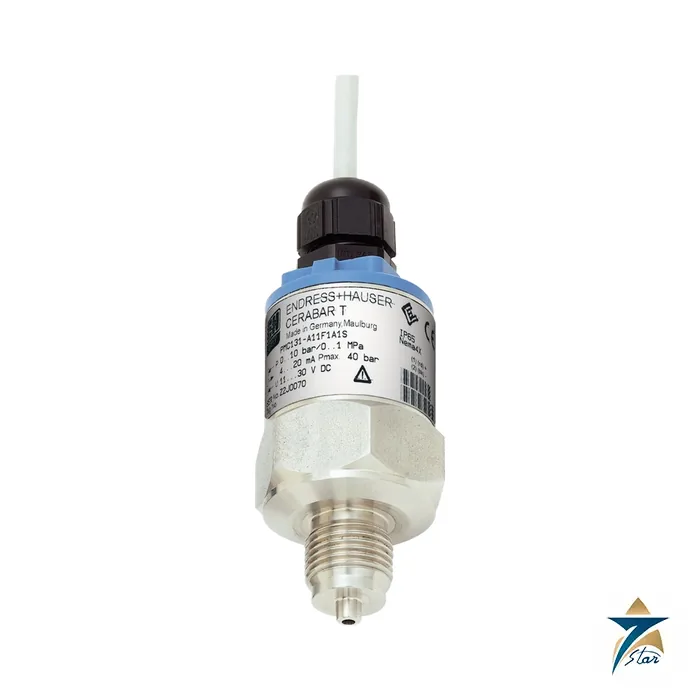
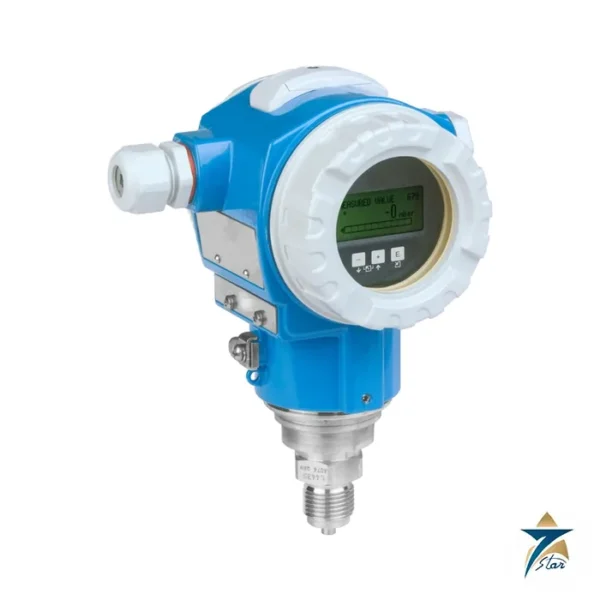
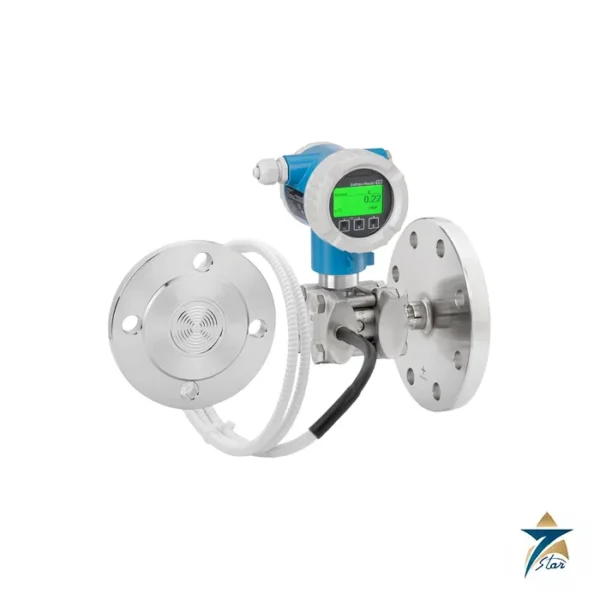
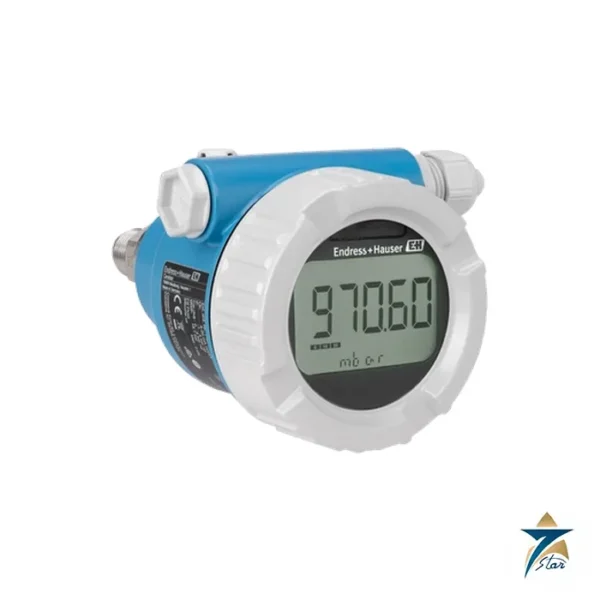
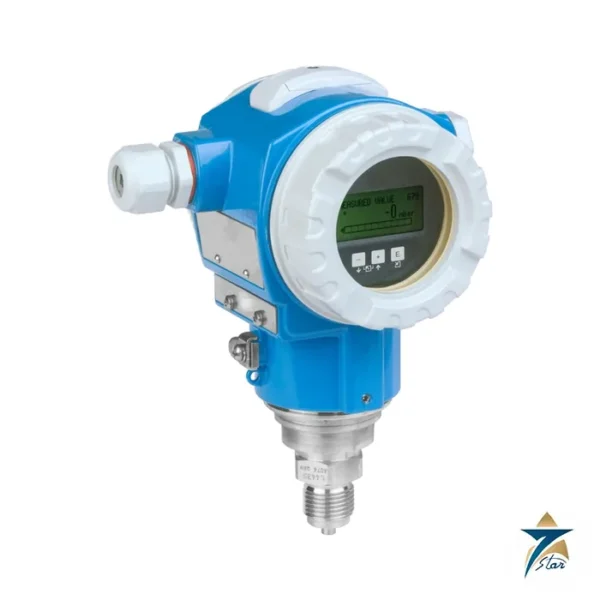
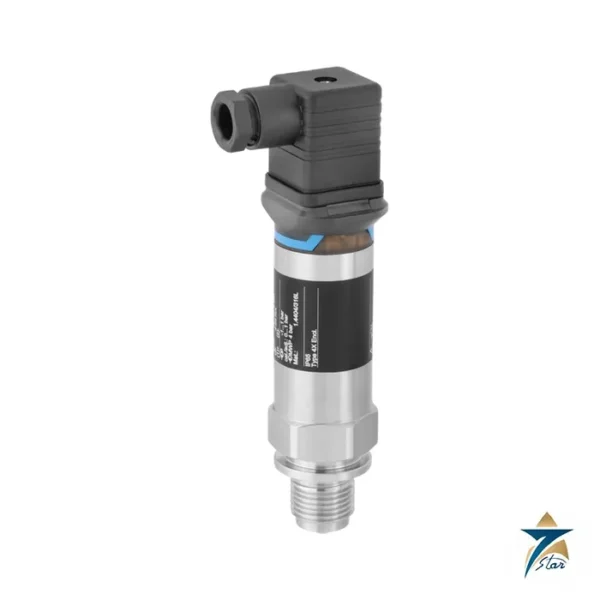
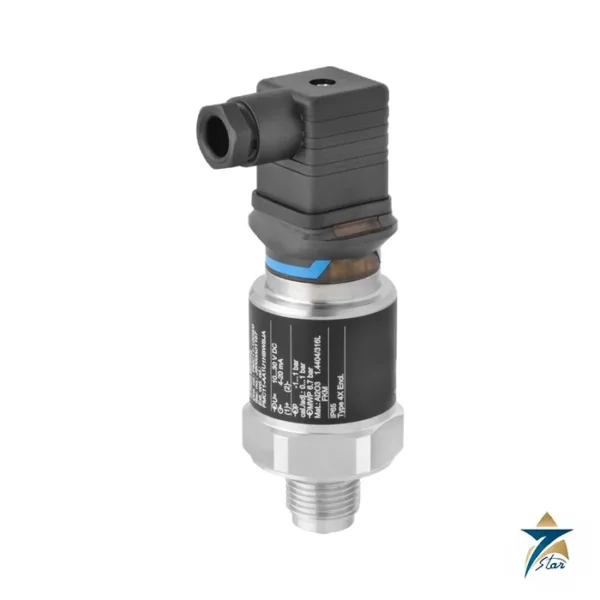
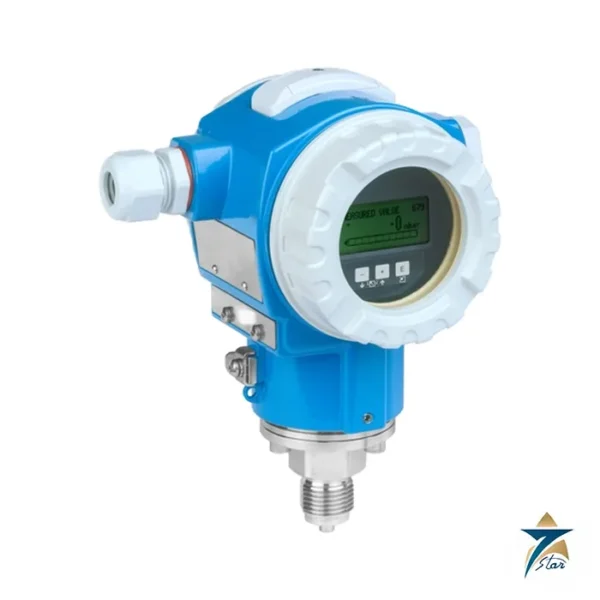
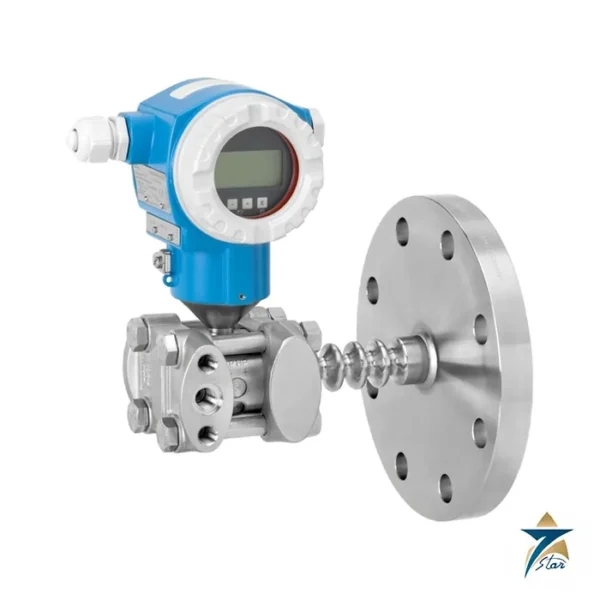
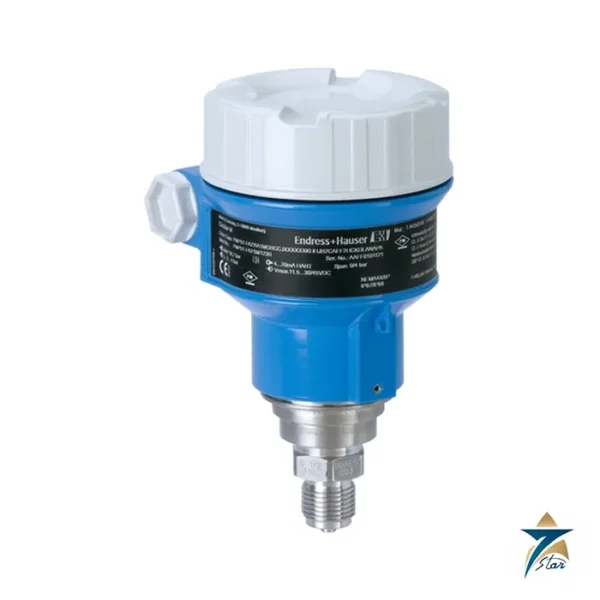
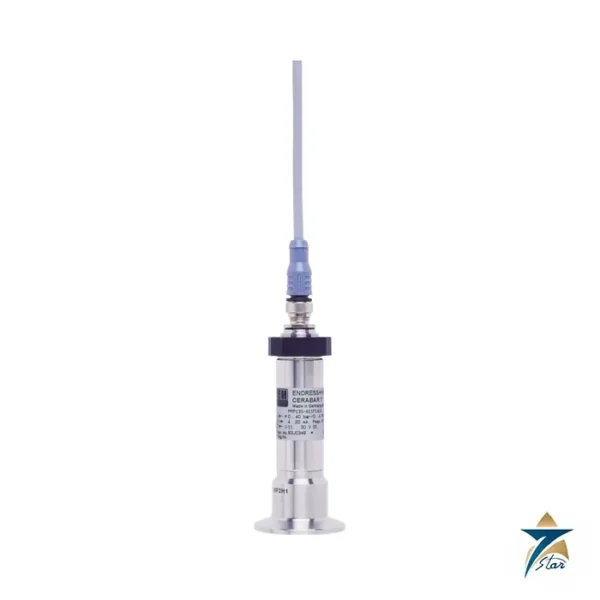
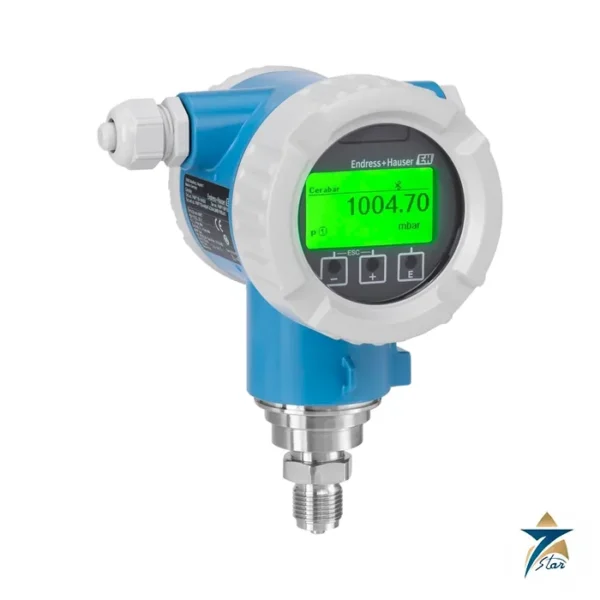
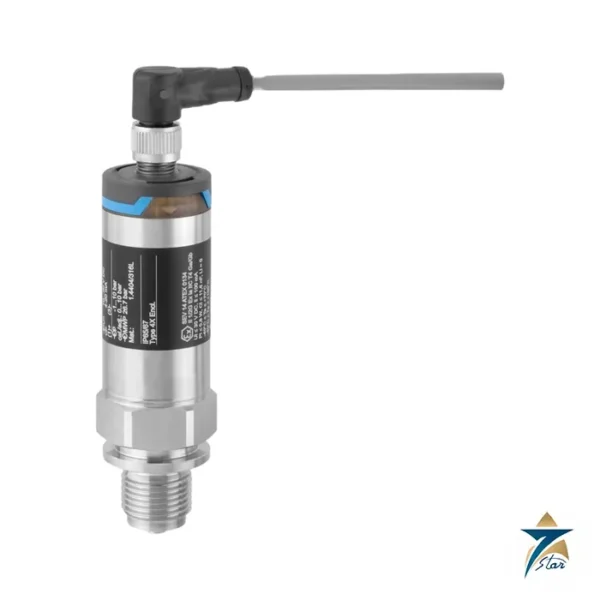
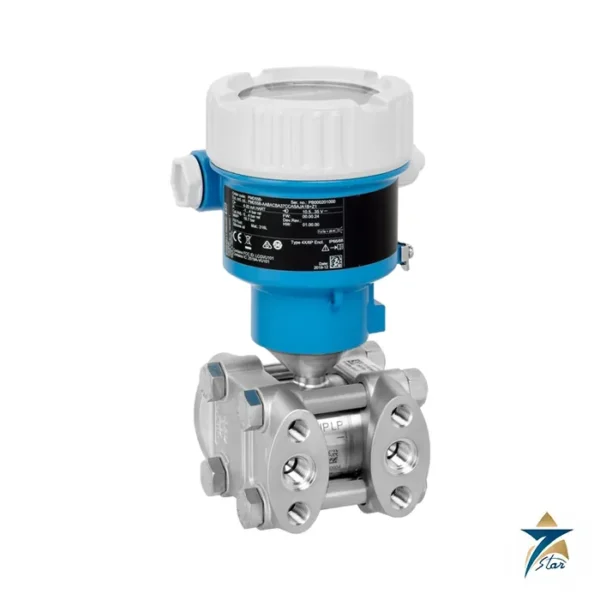
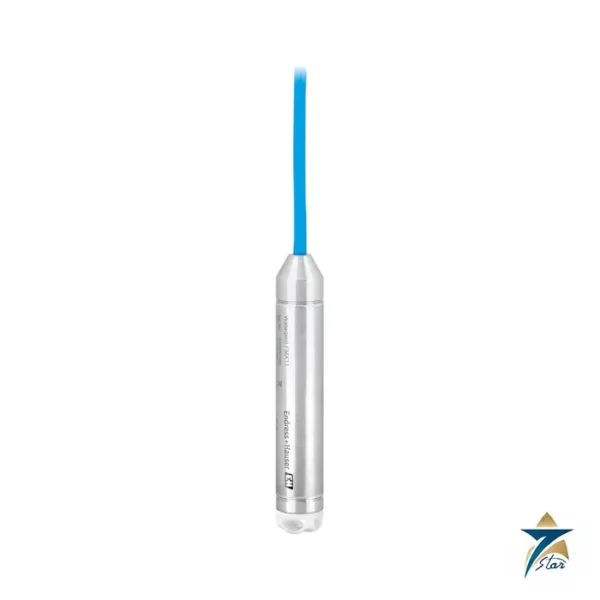
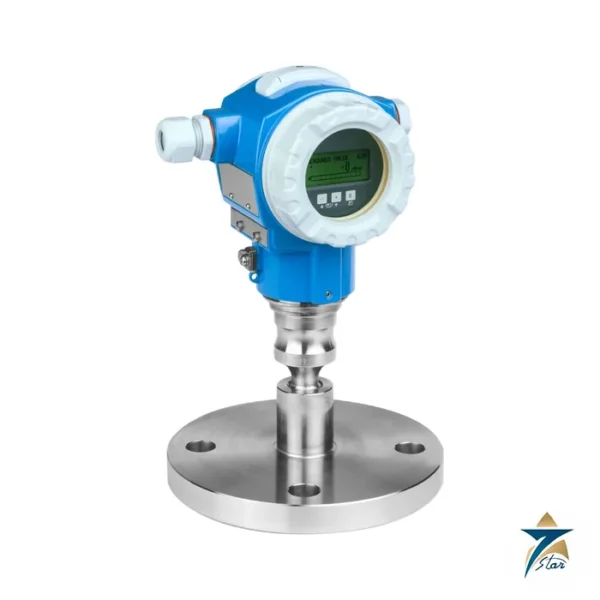
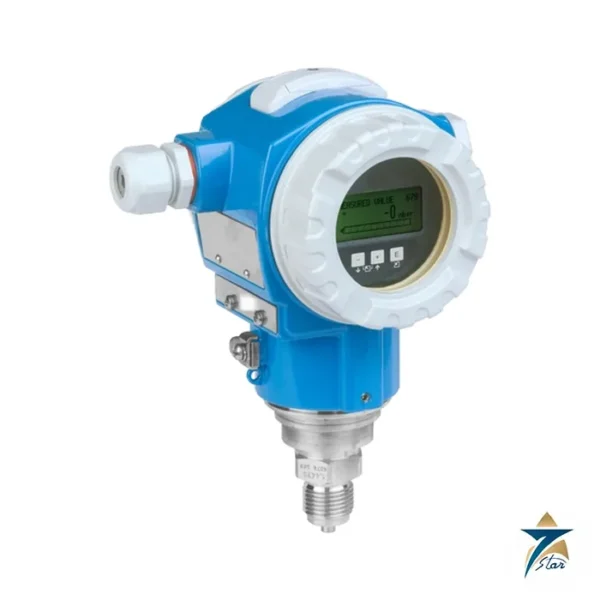
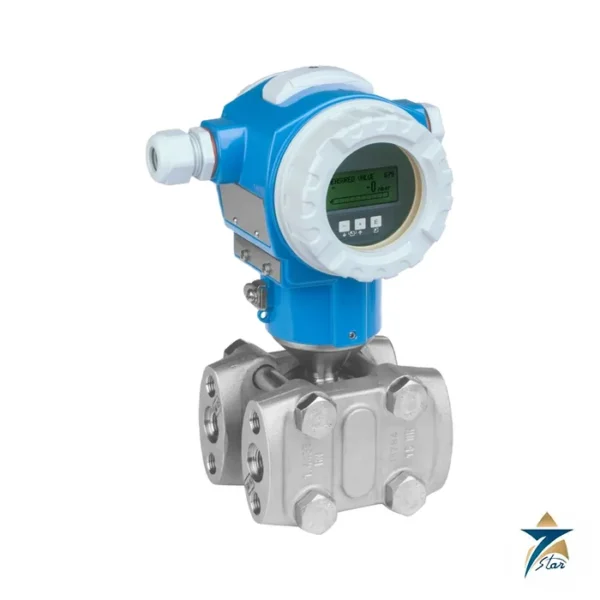
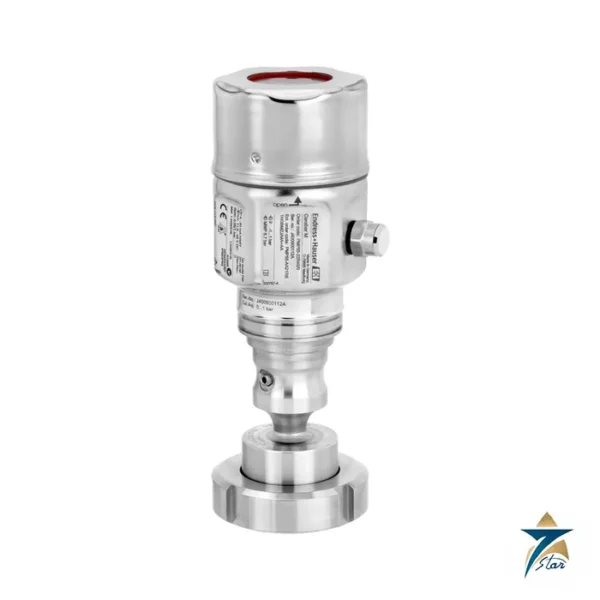
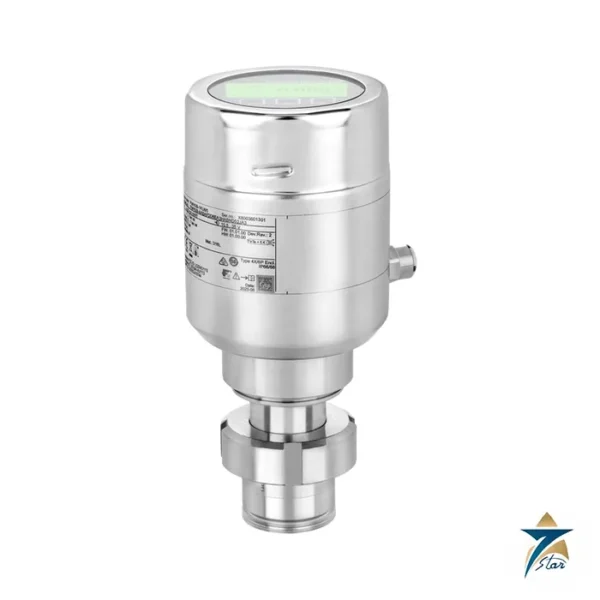
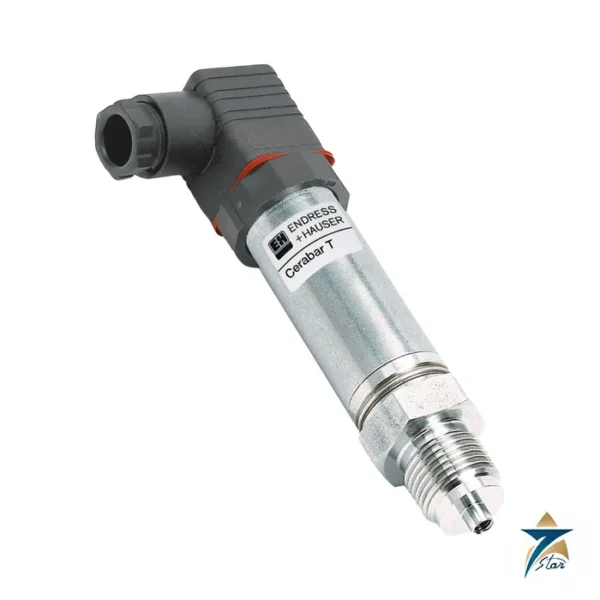
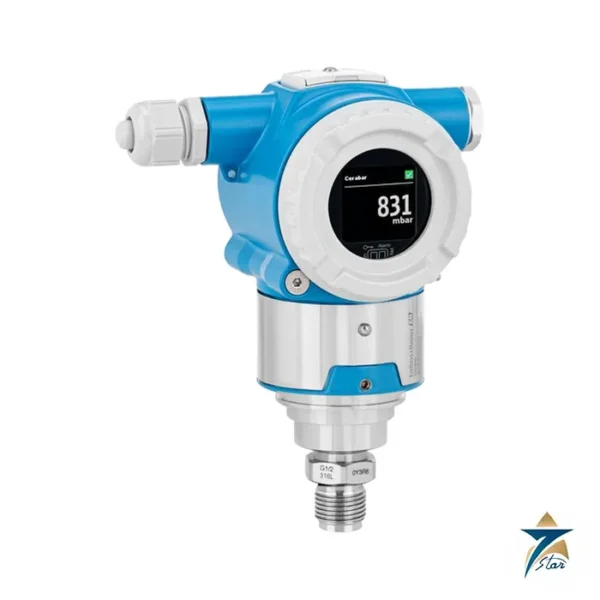
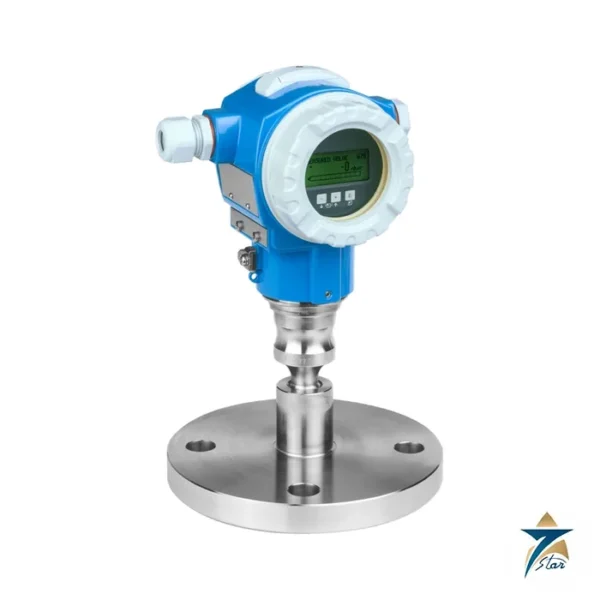
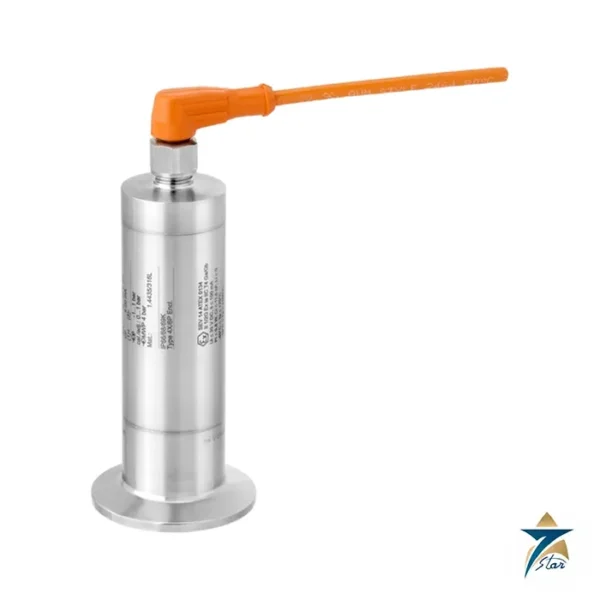
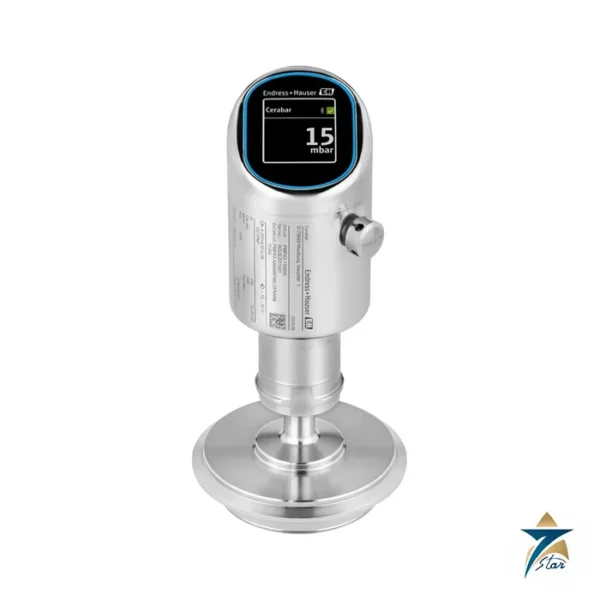
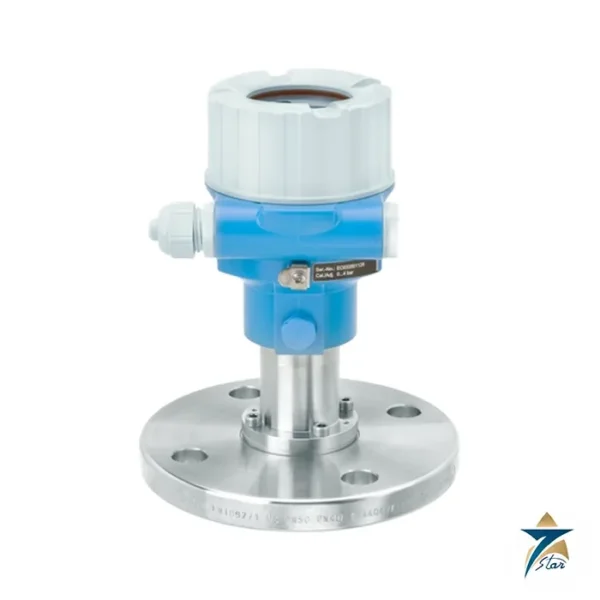
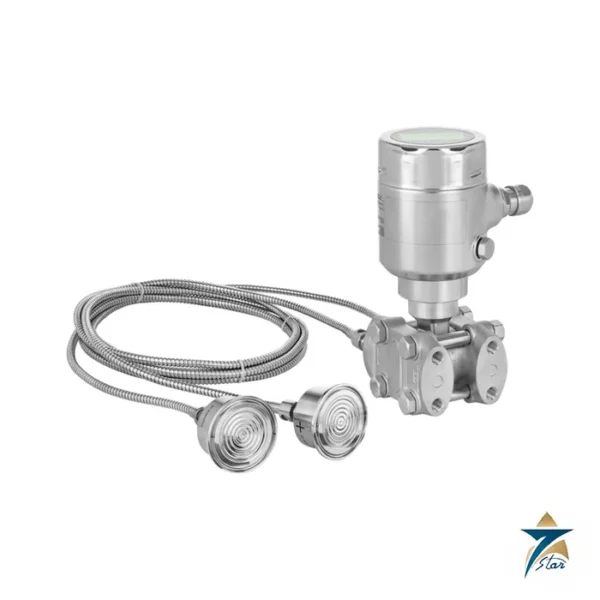
Endress+Hauser PMC131 Cerabar T Ceramic Pressure Transducer

Description

Endress+Hauser PMC131 ceramic Cerabar T

The Endress+Hauser PMC131 is the ceramic member of the Cerabar T pressure transducer family, described in Technical Information TI00415P. A dry capacitive Ceraphire sensor measures gauge pressure from vacuum up to 40 bar (600 psi). The ceramic diaphragm deflects slightly under pressure and the capacitance change between the electrodes is converted to a 4 to 20 mA signal, so no fill fluid is needed and the sensor tolerates vacuum. Extremely high stability, comparable with metal Alloy, is claimed for the ultrapure ceramic.

As a small transducer with a plug or cable and a threaded connection, the PMC131 targets measuring points where corrosion, abrasion or vacuum would shorten the life of a steel diaphragm.

PMC131 characteristics

  • Ceraphire ceramic sensor, corrosion proof and abrasion proof, extremely overload resistant.
  • Gauge ranges from minus 1 to 0 bar to 0 to 40 bar.
  • Two-wire 4 to 20 mA output with a load of (supply voltage minus 11 V) divided by 0.02 A.
  • Supply of 12 to 30 V DC.
  • Rise time T90 of 20 ms.
  • Cable version IP 68 (1 m water column for 24 hours), plug versions IP 65.

PMC131 data table

Parameter Value
Measuring principle capacitive, dry ceramic cell, Ceraphire 99.9 percent Al2O3
Measuring ranges minus 1 to 0 bar up to 0 to 40 bar (600 psi)
Output 4 to 20 mA, 2-wire
Supply 12 to 30 V DC
Reference accuracy 0.5 percent of nominal value multiplied by turn down
Long-term stability 0.15 percent of URL per year
Rise time T90 20 ms
Process temperature minus 20 to plus 100 degrees Celsius
Ambient temperature minus 20 to plus 85 degrees Celsius
Storage temperature minus 50 to plus 100 degrees Celsius
Thermal zero change, 20 to 85 C typically 1.5 percent of nominal value
Thermal span change typically 0.8 percent of nominal value for 0.4 to 40 bar
Weight about 0.32 kg
Vibration class 4M5 per DIN EN 60721-3

How PMC131 differs from PMP131

Both transducers share the Cerabar T housing and electrical options. The PMP131 swaps the ceramic cell for a piezoresistive 316L cell, reaching 400 bar, responding in 2 to 5 ms and offering voltage and switch outputs, but its process temperature stops at plus 70 degrees Celsius instead of plus 100, and it lacks the ceramic’s resistance to abrasive media. The PMC131 offers only the current output, with a slower 20 ms response, but handles vacuum, and in the datasheet several small ranges list a vacuum resistance of a few hundred millibar absolute rather than zero.

Note that the accuracy basis differs: the PMC131 is quoted as 0.5 percent of the nominal value times the turn down, so a heavily turned-down range loses accuracy, while the PMP131 is quoted flatly at 0.5 percent of URL.

PMC131 in Oman and GCC plants

The PMC131 is used on vacuum lines, chemical dosing, seawater and brine lines where chlorides attack metals, and on food and beverage lines because the ceramic is acceptable for foodstuff contact. It also fits OEM skids for water treatment and air compressors, where a compact 4-20 mA signal is enough.

PMC131 mounting and wiring

Choose among G 1/2, 1/2 NPT, G 1/4 or M20 threads, then the plug (DIN 43650/A or M12) or cable of 5 m or 25 m. Seals are NBR or FKM depending on the version, so confirm compatibility with your medium. Do not clean the ceramic face with sharp tools, and route the cable with a drip loop.

Choosing PMC131 range, thread and seal

Cerabar T uses nominal-value ranges that are finely graduated: for example, a nominal 10 bar cell can be set at the factory to 0 to 6 bar, a turn down of 10 to 6, and the datasheet states that extended specifications apply to customer-specific ranges. Because the accuracy is quoted as a percentage of nominal value multiplied by turn down, keep the span close to the nominal value of the cell. Seal choices include NBR flat seals and o-rings and FKM o-rings on the connector, so check media compatibility, and the thread may be G 1/2, 1/2 NPT, G 1/4 or M20 x 1.5. Vacuum resistance is zero millibar absolute on most ranges, with the exceptions listed in the datasheet for the lowest spans such as 0 to 100 mbar.

Servicing the PMC131

Check the zero when the line is vented, compare with a reference gauge each year, and replace the transducer if the zero shift exceeds your tolerance. Drift is quoted at 0.15 percent of URL a year, so a stable ceramic cell rarely needs adjustment. Before replacing a unit, note the nominal value on the label, the set span, the thread and the connector type, because the Cerabar T label shows the version code that defines all of them. Keep the ordered cable length in mind as well, since a 25 m cable cannot be shortened in the field without a proper junction. For hazardous areas, the datasheet lists versions marked ATEX II 3 G for zone 2 use, so tell us the classification when you ask for the PMC131, and remember that the PMC131 has no SIL assessment, which the datasheet gives only for the PMP131 and PMP135 current-output electronics.

Documents and quotation

The Technical Information TI00415P for PMC131 is attached as the datasheet. Seven Star LLC is an independent supplier serving Oman and the GCC and is not affiliated with the manufacturer. Please send PMC131, quantity, range and connection with your RFQ.

Spares and Lifecycle Considerations

For critical service, many plants hold one Endress+Hauser PMC131 as an operational spare rather than waiting for a failure. When you plan spares, look at how many identical pressure transmitters units are installed, how long a replacement would take to arrive, and the cost of an unplanned stop. Store spare units in their original packaging in a dry, temperature-controlled area and record the part number and serial number in your maintenance system. We can quote single units or a small spares package and confirm the lead time for each item in writing.

Delivery to Sites in Oman and the GCC

Delivery of the Endress+Hauser PMC131 is arranged to suit the site, whether that is a plant in Sohar or Duqm, an oilfield location in the interior, or a project elsewhere in the GCC. Tell us the delivery point, any site access or gate-pass requirements, and the person who will receive the goods. Goods are packed to protect sensitive pressure transmitters equipment during road or air transport, and shipping details are shared once the order is dispatched so that your stores team can plan receipt and inspection.

Other Models in the Eh Cerabar T Range

Seven Star LLC supplies models from the Eh Cerabar T range in Oman and the GCC. Compare the related models below and request a quote for the one that matches your application.

ModelCategory
Endress+Hauser PMC131 Cerabar T Ceramic Pressure TransducerPressure TransmittersYou are viewing this model
Endress+Hauser PMP131 Cerabar T Compact Pressure TransducerPressure TransmittersView details
Datasheets & Documents
  • PDF Datasheet Endress+Hauser PMC131 Cerabar T Ceramic Pressure Transducer Datasheet Download
Reviews (0)

Reviews

There are no reviews yet.

How would you rate this product?

It takes about 10 seconds — just tap a star. Your email is never published.

About brand

Endress+Hauser makes process measurement instruments for flow, level, pressure, temperature and liquid analysis. Georg H. Endress and Ludwig Hauser started the business in Lörrach, Germany, on 1 February 1953, first selling level meters, and the Endress+Hauser name has been used since 1957. The group is headquartered in Reinach, Switzerland, and has been wholly owned by the Endress family since 1975.

Seven Star LLC is an independent supplier listing Endress+Hauser flowmeters, level and pressure transmitters, temperature assemblies and liquid analysis products for buyers in Oman and the GCC. Instruments are matched from the full order code on the nameplate.

Endress+Hauser company profile

Origin Founded in Lörrach, Germany, on 1 February 1953 by the Swiss engineer Georg H. Endress and Ludwig Hauser
Headquarters Endress+Hauser AG, Reinach (Basel-Landschaft), Switzerland
Ownership Family owned; the Endress family has been the sole shareholder since 1975, and a family charter commits the company to stay family owned
Size About 16,500 employees and sales of about EUR 3.7 billion (2023, as reported by the company)
Product families Proline flowmeters, Micropilot and Levelflex radar, Liquiphant switches, Cerabar and Deltabar pressure, iTEMP and iTHERM temperature, Liquiline and Memosens liquid analysis

Milestones

  • 1953: Georg H. Endress and Ludwig Hauser start the business in Lörrach on 1 February, first selling level meters.
  • 1957: The Endress+Hauser name comes into use.
  • 1975: The Endress family becomes sole shareholder.
  • 2023: About 16,500 employees and sales of about EUR 3.7 billion, as reported by the company.

Endress+Hauser product lines

Line Measuring principle Typical use
Promass F 300, Promass 80F, 83F/84F Coriolis mass flow Direct mass flow and density of liquids and gases, hydrocarbon transfer and chemical dosing
Promag P 300, P 500, H 300, W 400, W 10, 50P Electromagnetic flow Water, wastewater, slurries and other conductive liquids
Prowirl F 200, 72F Vortex flow Steam, gas and low-viscosity liquids
Prosonic Flow 92F, t-mass 65F Ultrasonic and thermal mass flow Water lines; compressed air and industrial gases
Micropilot FMR62, FMR67, FMR60, FMR10B, FMR20, FMR50, FMR52 Free-space radar level, 80 GHz and 26 GHz Tanks, process vessels, silos and open water channels
Levelflex FMP51, FMP50, FMP54, FMP55 Guided wave radar level Level and interface in vessels, separators and bypass chambers
Liquiphant FTL51, Prosonic S FMU90 Vibronic point level; ultrasonic level High and low level alarms, pump protection, open channel flow
Cerabar PMC71B, PMP51B, PMP71, Deltabar PMD78B, PMD75 Pressure and differential pressure Process pressure, hydrostatic level and DP flow
iTEMP TMT82, TMT162, iTHERM TM101, TR66, TR10 Temperature transmitters and thermometers RTD and thermocouple points with thermowells
Liquiline CM444, CM442, Memosens CPS11E, Stamolys reagents Liquid analysis pH, ORP, conductivity, dissolved oxygen and nutrient analysis in water treatment and process

Where Endress+Hauser instruments are used

In Oman and the GCC, Endress+Hauser instruments are common in oil and gas production and processing, refineries and petrochemicals, desalination and water networks, wastewater treatment, power plants and food and beverage plants. Coriolis meters measure hydrocarbon and chemical flows, electromagnetic meters cover water and wastewater, radar transmitters handle tank and silo level, and Liquiline analysers monitor water quality. Proline 300 and 500 flowmeters include Heartbeat Technology for in-situ verification, which reduces the need to remove a meter for checks.

Ordering Endress+Hauser instruments: what we need

The order code on the nameplate (for example PMP71-1QA1S11RDADU) defines every option: measuring range, process connection, materials, output, approvals and display. Send it with the serial number; Endress+Hauser can retrieve the original configuration from the serial number. For a new instrument add the medium, operating and design pressure and temperature, range, line size or tank geometry, process connection, wetted materials, output or protocol (4-20 mA HART, PROFIBUS, FOUNDATION Fieldbus, Modbus) and the hazardous-area approval required. Older models such as Promass 80/83 or Micropilot M are replaced by current Proline or 80 GHz Micropilot devices.

Facts checked against Endress+Hauser company history and product information, October 2026.

FAQ

Questions about the Endress+Hauser PMC131 Cerabar T Ceramic Pressure

Answers from our engineering team on installation, compatibility and integration.

01What sensor does the PMC131 use?
A dry capacitive ceramic sensor made of ultrapure 99.9 percent Ceraphire aluminium oxide, which needs no fill fluid and is vacuum proof.
02What measuring ranges does the PMC131 have?
Gauge ranges from minus 1 to 0 bar up to 0 to 40 bar (600 psi), with finely graduated spans and customer-specific ranges on request.
03What is the PMC131 process temperature?
Minus 20 to plus 100 degrees Celsius, with an ambient range of minus 20 to plus 85 degrees Celsius.
04Is the PMC131 safe with food contact?
The datasheet states that the US FDA has no objections to aluminium oxide ceramic as a surface in contact with foodstuffs, based on supplier certificates.
05How do I request a PMC131 quote?
Send PMC131 with the exact range or span, thread, electrical connection, seal material and quantity in your RFQ to Seven Star LLC.