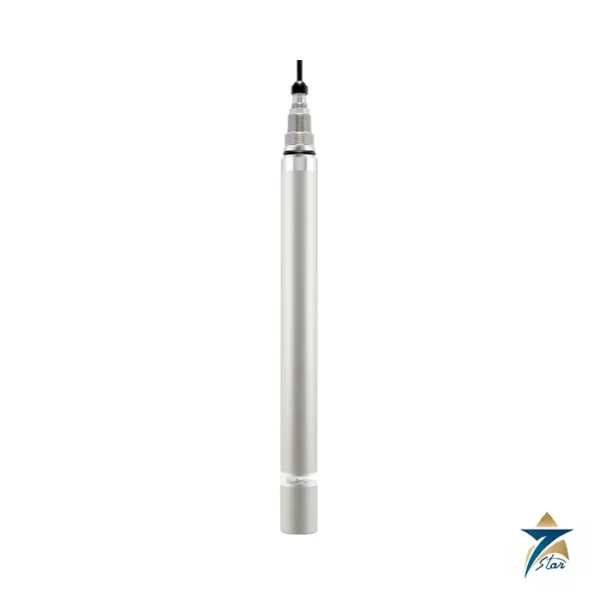
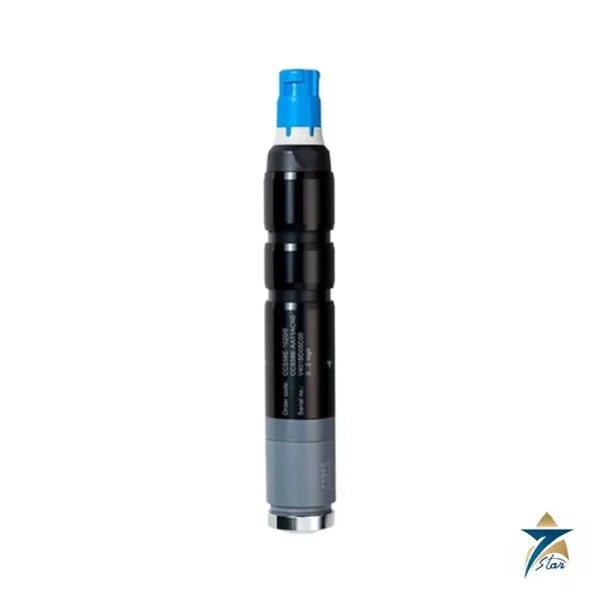
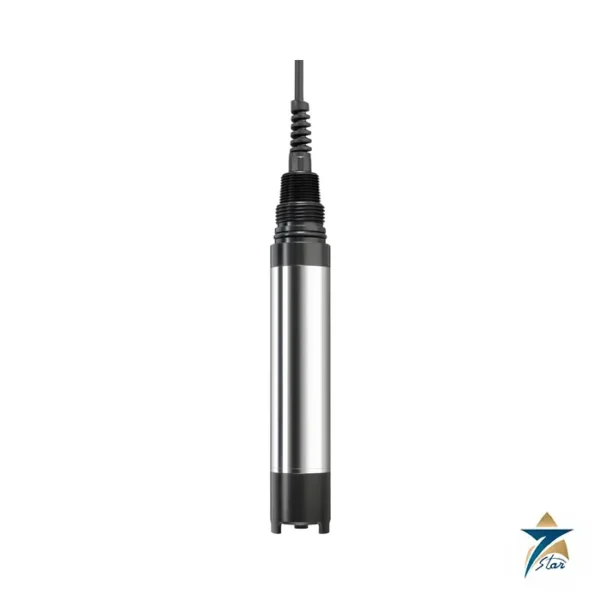
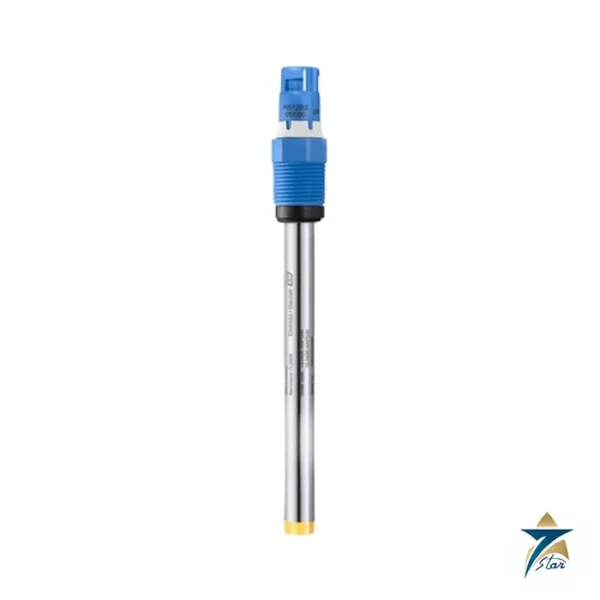
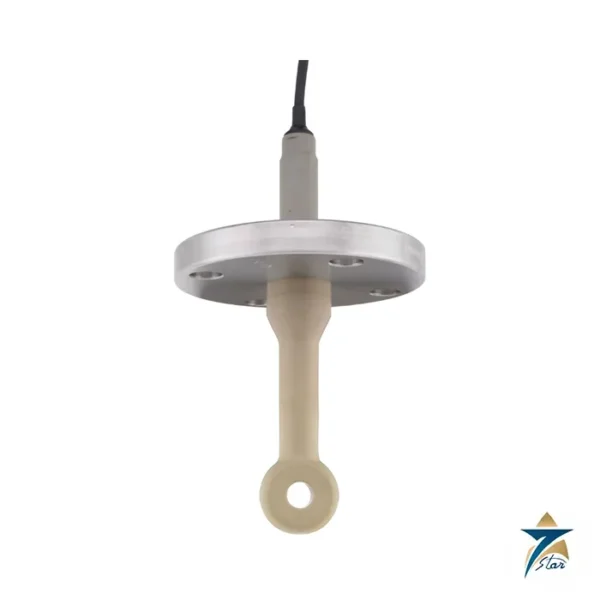
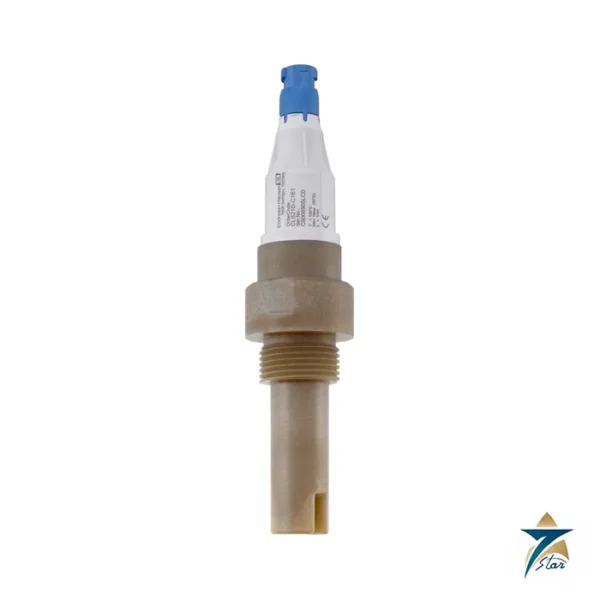
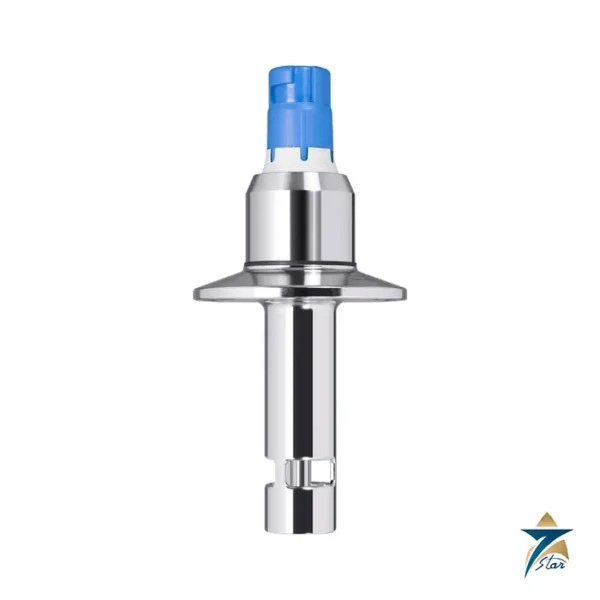
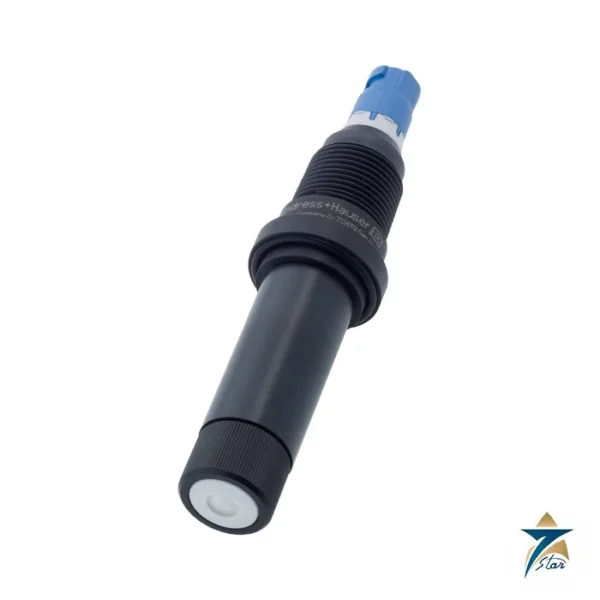
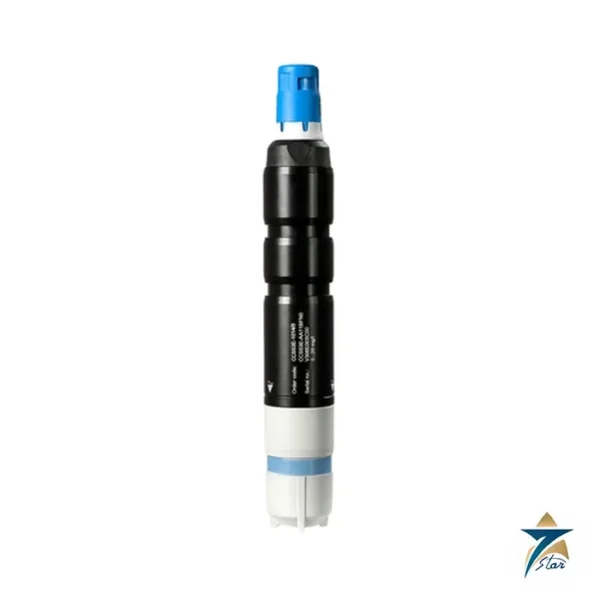
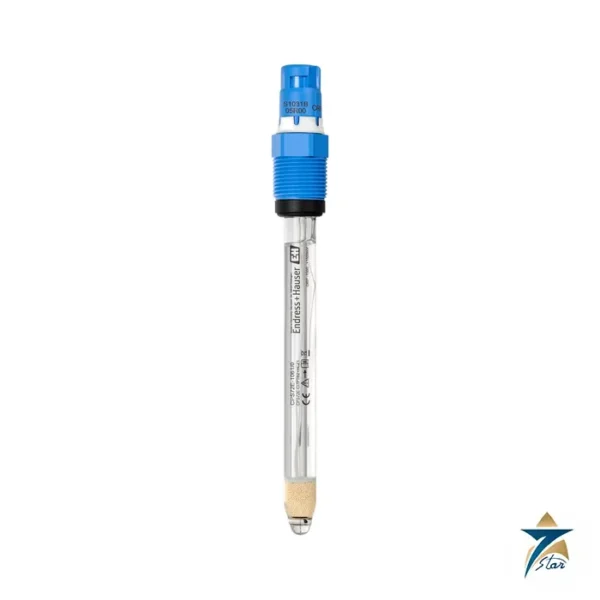
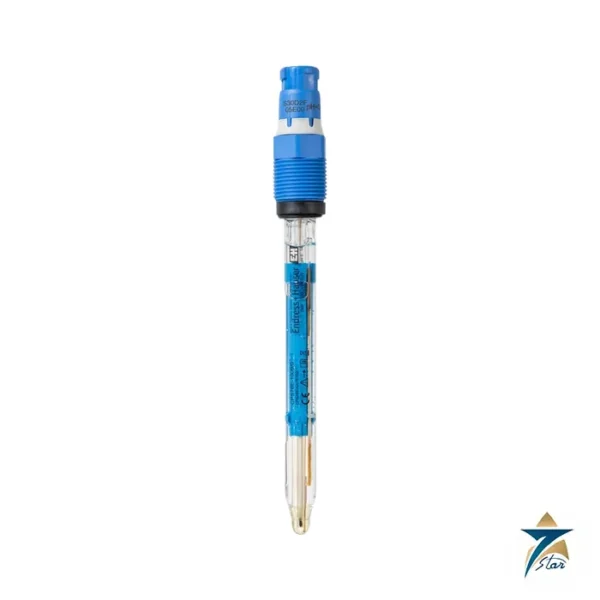
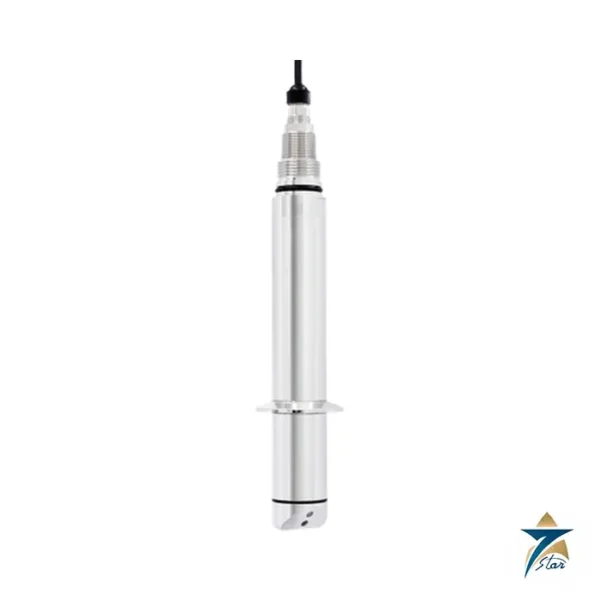
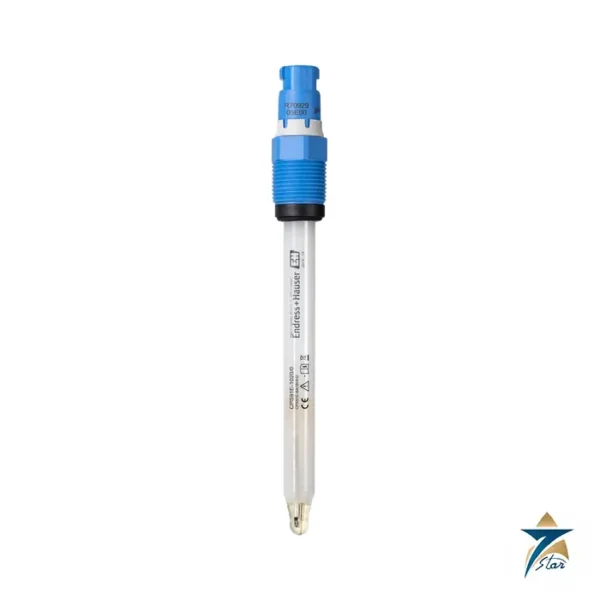
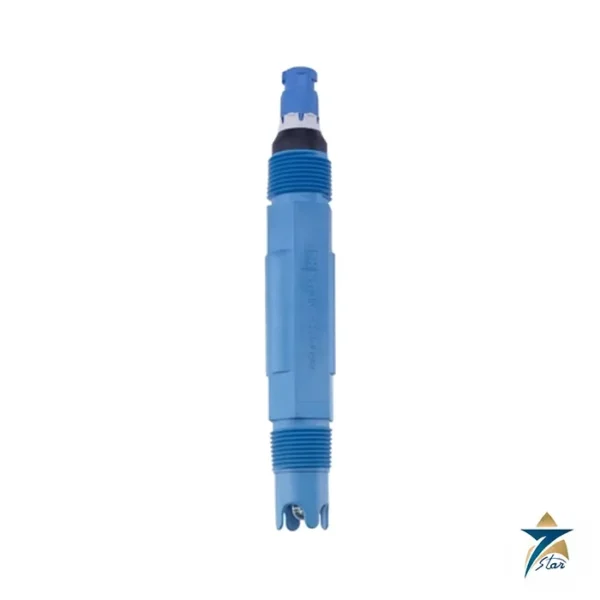
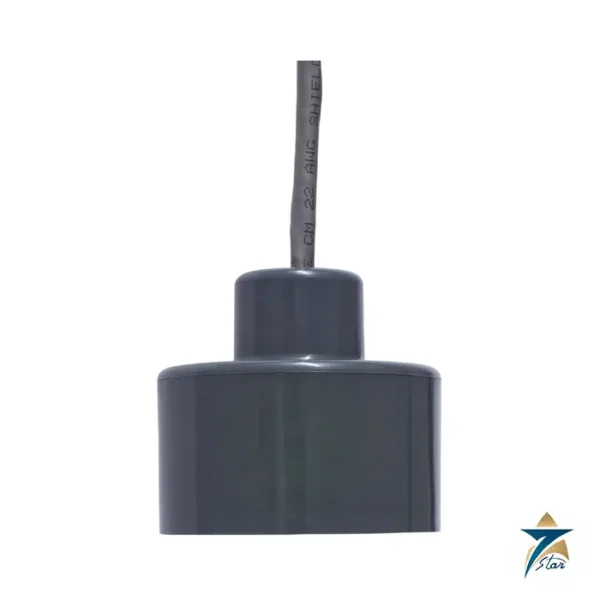
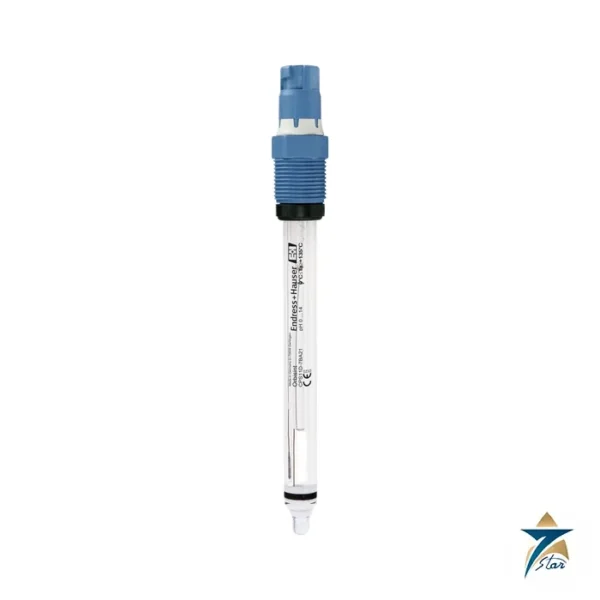
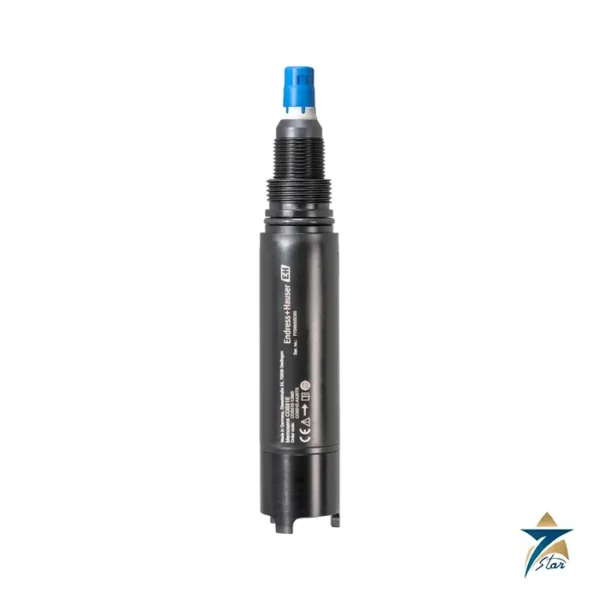
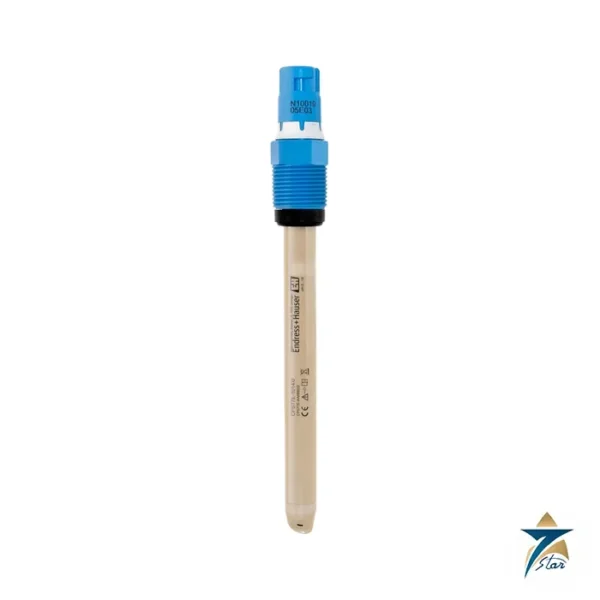
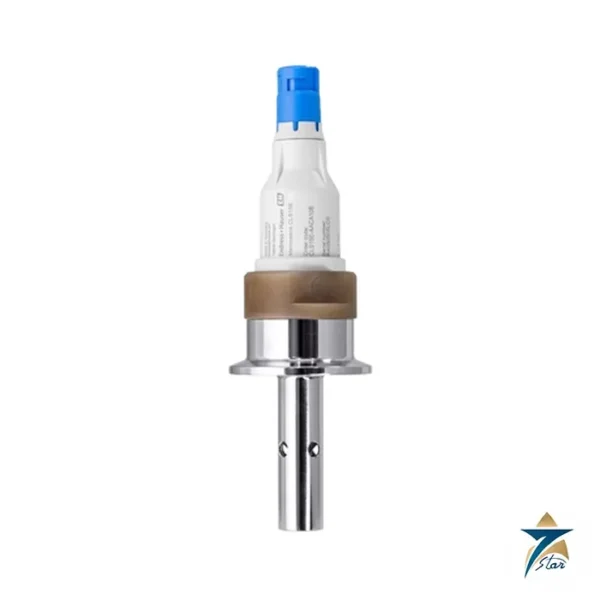
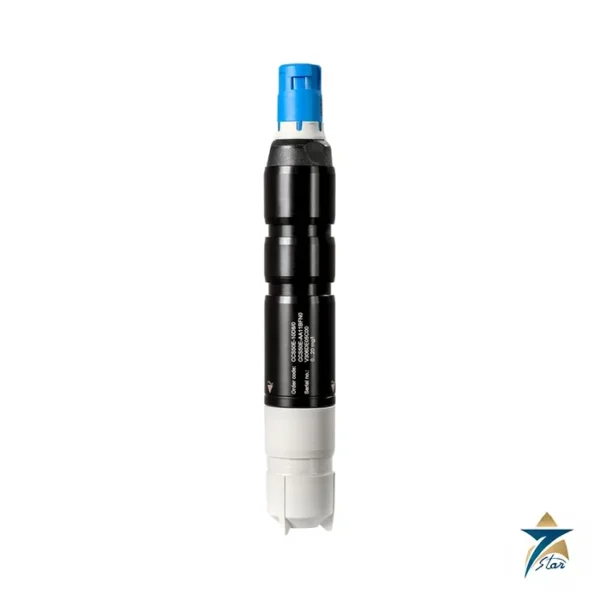
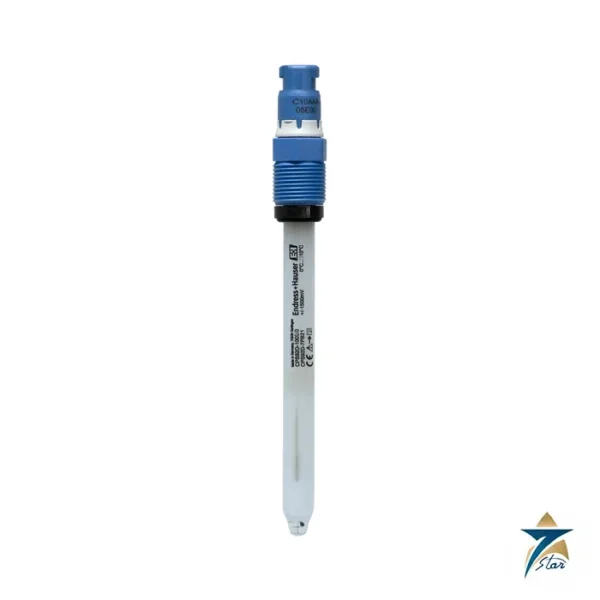
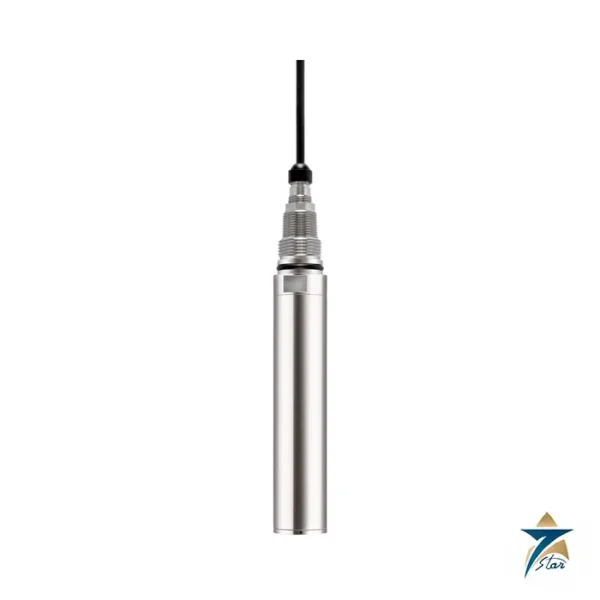
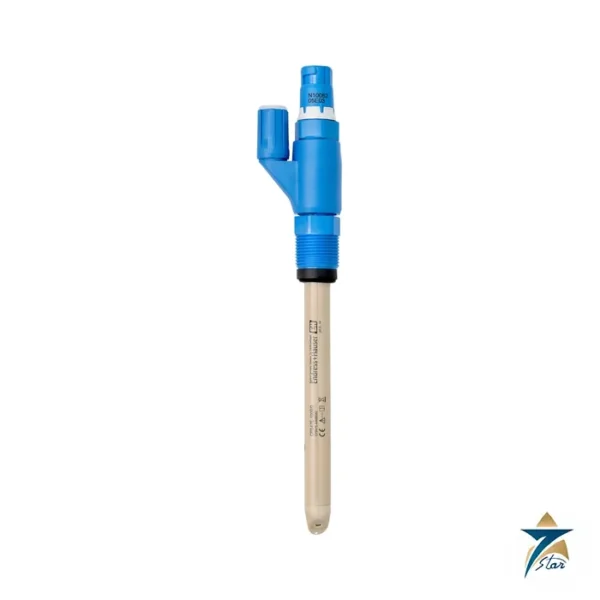
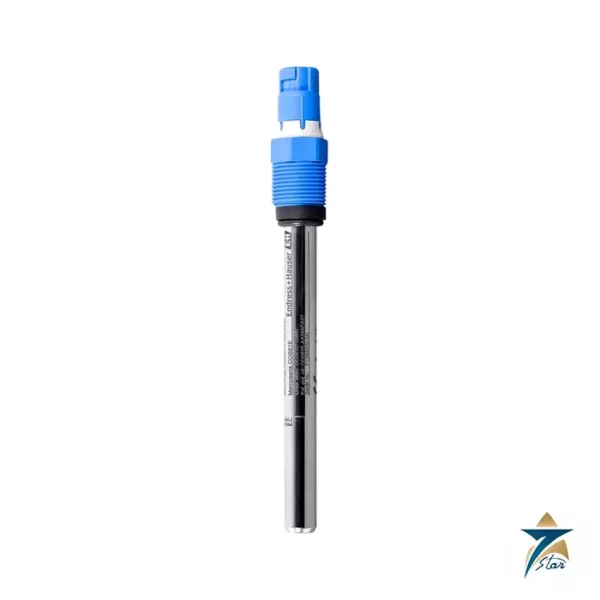
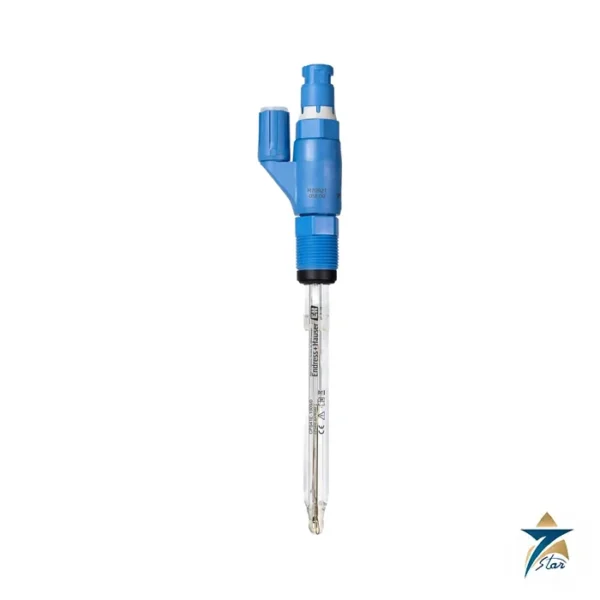
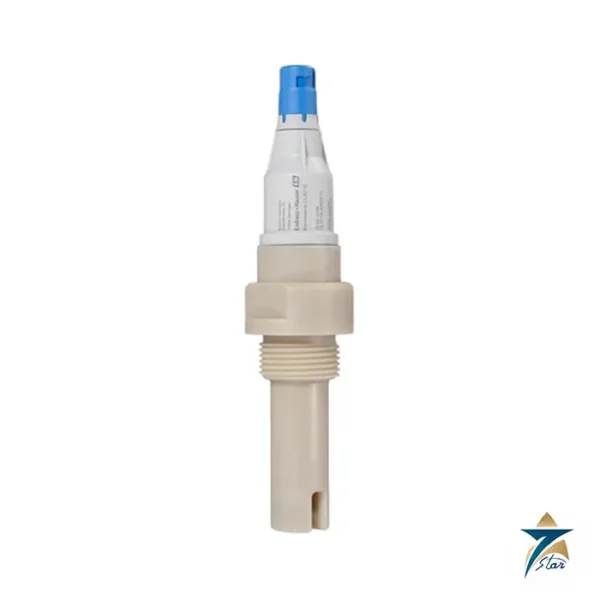
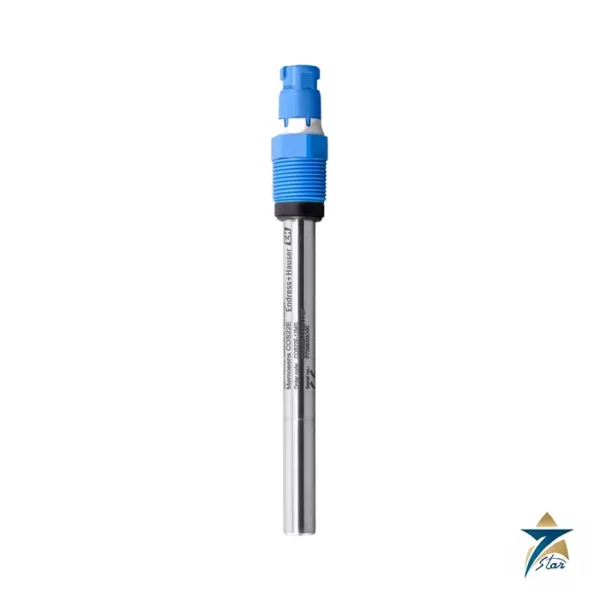
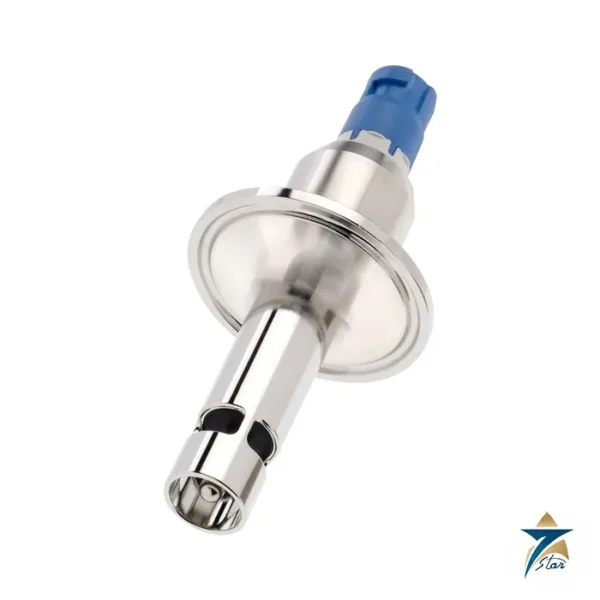
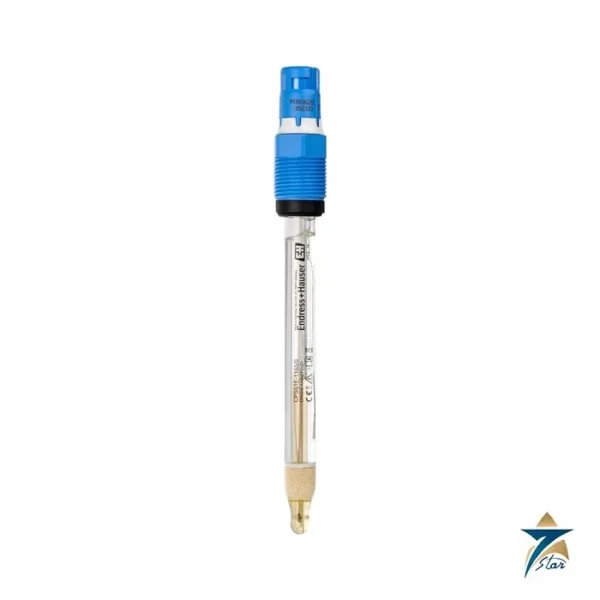
Endress+Hauser CUS71E Memosens Ultrasonic Interface Sensor

Description

CUS71E reads the sludge blanket with ultrasound

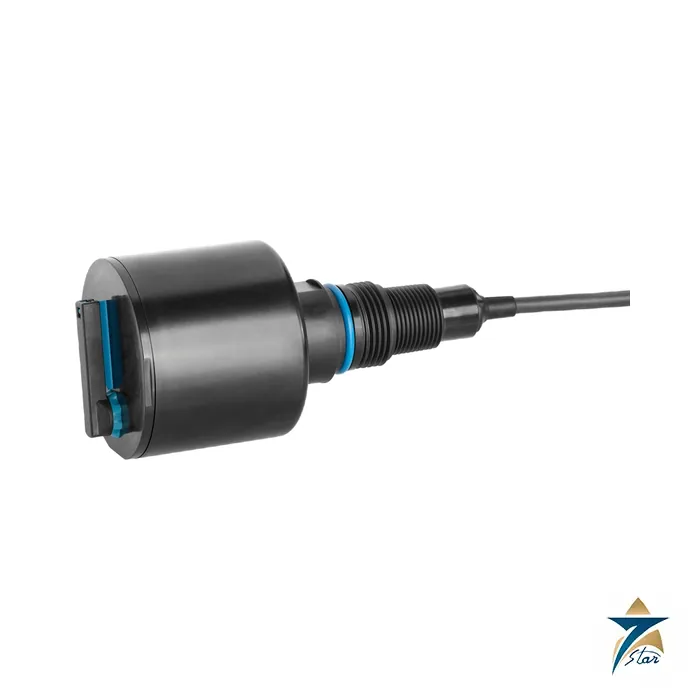
Memosens CUS71E from Endress+Hauser is an ultrasonic interface sensor. A piezoceramic element runs at roughly 670 kHz and emits a narrow beam with a 6 degree angle; the echo from the water and sediment boundary is timed and converted to distance using the speed of sound. The sensor reports interface, basin depth, temperature and a sedimentation factor.

The listed applications are wastewater treatment plants, drinking water plants, mining and hydroelectric power stations. Seven Star LLC is an independent supplier serving Oman and the GCC and is not affiliated with the manufacturer.

CUS71E specification table

Parameter Value
Measured variables Interface, basin depth, temperature, sedimentation factor
Measuring range Specified 0.3 to 10 m; extended 0.3 to 30 m
Measurement error 0.1 m or 2 percent in the 0.3 to 10 m range at 20 degrees C and 1013 hPa
Resolution 15 mm in the specified range
Frequency and beam About 670 kHz, 6 degree beam angle
Supply 24 VDC (minus 15 percent, plus 20 percent), 3 W
Cable length Up to 100 m; extension with CYK11 and junction box
Process temperature / pressure 5 to 80 degrees C, 0 to 1 bar
Storage Minus 25 to 70 degrees C, 10 to 100 percent humidity
Protection IP 68 (1.83 m, 24 h), IP 66, Type 6P
Altitude Up to 3000 m
Materials PPS GF40 housing and wiper arm; EPDM or silicone wiper blade; EPDM seals; stainless steel 1.4571 shaft and screw
Process connection G 1 and NPT 3/4 inch
Certificates EAC, EN IEC 61010-1, CAN/US general purpose; Drinking Water Directive (EU) 2020/2184 declaration depending on version

Why the sedimentation factor matters

Beyond a simple blanket level, CUS71E provides a sedimentation factor as a quality indicator for dosing control. The datasheet connects it with lower consumption of precipitation chemicals without compromising stability. Integrated temperature and medium compensation prevent hot or saline media from distorting the distance reading, and a commissioning wizard guides setup even where conditions are unknown.

How CUS71E differs from other sludge and turbidity sensors

CUS71E is an ultrasonic interface sensor, so it answers a different question from the optical turbidity sensors CUS51D and CUS52D: not how cloudy the water is at the sensor, but where the sediment boundary sits beneath it. The E datasheet describes a 0.3 to 10 m specified range that can be extended to 0.3 to 30 m, integrated cleaning with a wiper option, temperature and medium compensation, a commissioning wizard and the sedimentation factor. It is rated only for 5 to 80 degrees C and 0 to 1 bar, so it belongs in open basins and clarifiers, not in pressurised pipelines. A separate part number, CUS71D, exists in the same product group and is listed independently.

Installing CUS71E in a basin

  • Pick a common fixed reference point, preferably the water surface, for immersion depth and basin depth.
  • Keep 50 cm from the basin edge, as the beam tapers conically.
  • Do not allow pipes or wall projections in the measuring path; skimmers may enter only briefly.
  • Install the sensor vertically, parallel to the wall, at least 20 cm below the surface and at least 30 cm from the upper interface; never deeper than 10 m.
  • Avoid air bubbles, turbulence, high floating solids and foam such as at inlets.
  • In hazardous zones, operate the sensor only with the sensor protector fitted.

Typical sites for CUS71E in Oman and the GCC

The sensor targets wastewater treatment plants, drinking water plants, mining and hydroelectric stations. In the GCC the obvious fits are secondary and tertiary clarifiers at municipal sewage plants in Muscat and Salalah, sludge thickeners, sedimentation basins at water treatment works and settling ponds at mining and aggregates sites. Controlling the sludge blanket level lets the operator time sludge withdrawal and avoid carry-over of solids to the next stage, while the sedimentation factor can help tune coagulant or flocculant dosing.

Because the measuring range extends to 30 m, deeper tanks and cooling or storage lagoons can also be profiled, although the datasheet still limits immersion to 10 m below the surface. A weather cover keeps direct sun and splashing off the cabling, and the sensor protector shields the head from the skimmer blade.

Cleaning and care of CUS71E

Fouling on an ultrasonic face attenuates the echo, so the integrated wiper, available in EPDM or silicone blade materials, keeps the face clean automatically. The datasheet gives a micro-environment fouling degree of 2 and a macro-environment pollution degree of 4, which reflects typical wastewater duty. Check the wiper blade and splash protection cap at routine plant rounds, confirm that the sensor protector is intact, and inspect the seals for EPDM wear before restarting a basin after maintenance.

Assemblies and transmitters for CUS71E

The measuring system is the sensor, a Liquiline CM44x or CM44xR multichannel transmitter and a fixed or pivoting Flexdip CYA112 immersion tube; optional parts are the CYY101 weather cover and the CYH112 holder with cross clamp or pendulum holder. In circular clarifiers the sensor sits within the guarded walkway range, avoiding the floor rake and surface skimmer.

CUS71E questions answered briefly

What does Endress+Hauser CUS71E measure? The interface between water and sediment, plus basin depth, temperature and a sedimentation factor used as a process indicator.

What measuring range does CUS71E specify? Specified 0.3 to 10 m, with an extended range of 0.3 to 30 m; the measurement error is 0.1 m or 2 percent in the specified range.

How is the CUS71E powered and connected? 24 VDC, 3 W, through an M12 plug or sensor cable to a Liquiline CM44x or CM44xR input, with a maximum cable length of 100 m.

Is there a wiper on CUS71E? Integrated cleaning is offered; weight is 260 g without wiper, 345 g with wiper and 965 g with wiper and sensor protector.

What process limits does CUS71E have? 5 to 80 degrees C and 0 to 1 bar, with G 1 or NPT 3/4 inch process connection.

Documents and quotation

The datasheet for CUS71E is attached to this page. Send an RFQ with CUS71E, the wiper and sensor protector options, cable length and the quantity, and we will prepare a quotation.

Datasheets & Documents
  • PDF Datasheet Endress+Hauser CUS71E Memosens Ultrasonic Interface Sensor Datasheet Download
Reviews (0)

Reviews

There are no reviews yet.

How would you rate this product?

It takes about 10 seconds — just tap a star. Your email is never published.

About brand

Endress+Hauser makes process measurement instruments for flow, level, pressure, temperature and liquid analysis. Georg H. Endress and Ludwig Hauser started the business in Lörrach, Germany, on 1 February 1953, first selling level meters, and the Endress+Hauser name has been used since 1957. The group is headquartered in Reinach, Switzerland, and has been wholly owned by the Endress family since 1975.

Seven Star LLC is an independent supplier listing Endress+Hauser flowmeters, level and pressure transmitters, temperature assemblies and liquid analysis products for buyers in Oman and the GCC. Instruments are matched from the full order code on the nameplate.

Endress+Hauser company profile

Origin Founded in Lörrach, Germany, on 1 February 1953 by the Swiss engineer Georg H. Endress and Ludwig Hauser
Headquarters Endress+Hauser AG, Reinach (Basel-Landschaft), Switzerland
Ownership Family owned; the Endress family has been the sole shareholder since 1975, and a family charter commits the company to stay family owned
Size About 16,500 employees and sales of about EUR 3.7 billion (2023, as reported by the company)
Product families Proline flowmeters, Micropilot and Levelflex radar, Liquiphant switches, Cerabar and Deltabar pressure, iTEMP and iTHERM temperature, Liquiline and Memosens liquid analysis

Milestones

  • 1953: Georg H. Endress and Ludwig Hauser start the business in Lörrach on 1 February, first selling level meters.
  • 1957: The Endress+Hauser name comes into use.
  • 1975: The Endress family becomes sole shareholder.
  • 2023: About 16,500 employees and sales of about EUR 3.7 billion, as reported by the company.

Endress+Hauser product lines

Line Measuring principle Typical use
Promass F 300, Promass 80F, 83F/84F Coriolis mass flow Direct mass flow and density of liquids and gases, hydrocarbon transfer and chemical dosing
Promag P 300, P 500, H 300, W 400, W 10, 50P Electromagnetic flow Water, wastewater, slurries and other conductive liquids
Prowirl F 200, 72F Vortex flow Steam, gas and low-viscosity liquids
Prosonic Flow 92F, t-mass 65F Ultrasonic and thermal mass flow Water lines; compressed air and industrial gases
Micropilot FMR62, FMR67, FMR60, FMR10B, FMR20, FMR50, FMR52 Free-space radar level, 80 GHz and 26 GHz Tanks, process vessels, silos and open water channels
Levelflex FMP51, FMP50, FMP54, FMP55 Guided wave radar level Level and interface in vessels, separators and bypass chambers
Liquiphant FTL51, Prosonic S FMU90 Vibronic point level; ultrasonic level High and low level alarms, pump protection, open channel flow
Cerabar PMC71B, PMP51B, PMP71, Deltabar PMD78B, PMD75 Pressure and differential pressure Process pressure, hydrostatic level and DP flow
iTEMP TMT82, TMT162, iTHERM TM101, TR66, TR10 Temperature transmitters and thermometers RTD and thermocouple points with thermowells
Liquiline CM444, CM442, Memosens CPS11E, Stamolys reagents Liquid analysis pH, ORP, conductivity, dissolved oxygen and nutrient analysis in water treatment and process

Where Endress+Hauser instruments are used

In Oman and the GCC, Endress+Hauser instruments are common in oil and gas production and processing, refineries and petrochemicals, desalination and water networks, wastewater treatment, power plants and food and beverage plants. Coriolis meters measure hydrocarbon and chemical flows, electromagnetic meters cover water and wastewater, radar transmitters handle tank and silo level, and Liquiline analysers monitor water quality. Proline 300 and 500 flowmeters include Heartbeat Technology for in-situ verification, which reduces the need to remove a meter for checks.

Ordering Endress+Hauser instruments: what we need

The order code on the nameplate (for example PMP71-1QA1S11RDADU) defines every option: measuring range, process connection, materials, output, approvals and display. Send it with the serial number; Endress+Hauser can retrieve the original configuration from the serial number. For a new instrument add the medium, operating and design pressure and temperature, range, line size or tank geometry, process connection, wetted materials, output or protocol (4-20 mA HART, PROFIBUS, FOUNDATION Fieldbus, Modbus) and the hazardous-area approval required. Older models such as Promass 80/83 or Micropilot M are replaced by current Proline or 80 GHz Micropilot devices.

Facts checked against Endress+Hauser company history and product information, October 2026.

FAQ

Questions about the Endress+Hauser CUS71E Memosens Ultrasonic Interface

Answers from our engineering team on installation, compatibility and integration.

01What does Endress+Hauser CUS71E measure?
The interface between water and sediment, plus basin depth, temperature and a sedimentation factor used as a process indicator.
02What measuring range does CUS71E specify?
Specified 0.3 to 10 m, with an extended range of 0.3 to 30 m; the measurement error is 0.1 m or 2 percent in the specified range.
03How is the CUS71E powered and connected?
24 VDC, 3 W, through an M12 plug or sensor cable to a Liquiline CM44x or CM44xR input, with a maximum cable length of 100 m.
04Is there a wiper on CUS71E?
Integrated cleaning is offered; weight is 260 g without wiper, 345 g with wiper and 965 g with wiper and sensor protector.
05What process limits does CUS71E have?
5 to 80 degrees C and 0 to 1 bar, with G 1 or NPT 3/4 inch process connection.