Brand:

SICK IME18-20NNSZC0K M18 Inductive Sensor, 20 mm Triple Range

Description

SICK IME18-20NNSZC0K: range in a small thread

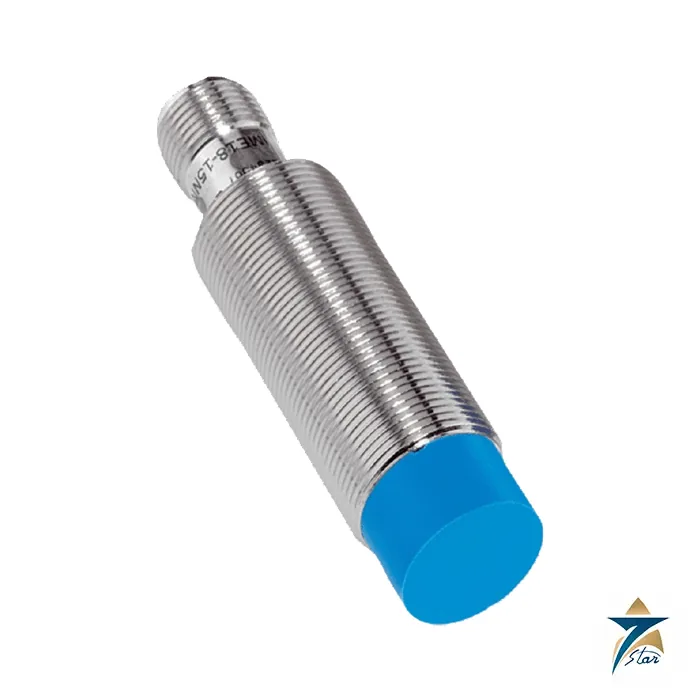
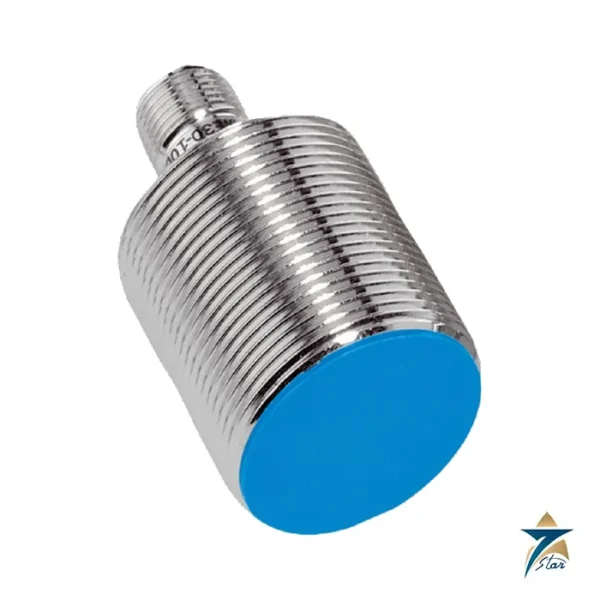
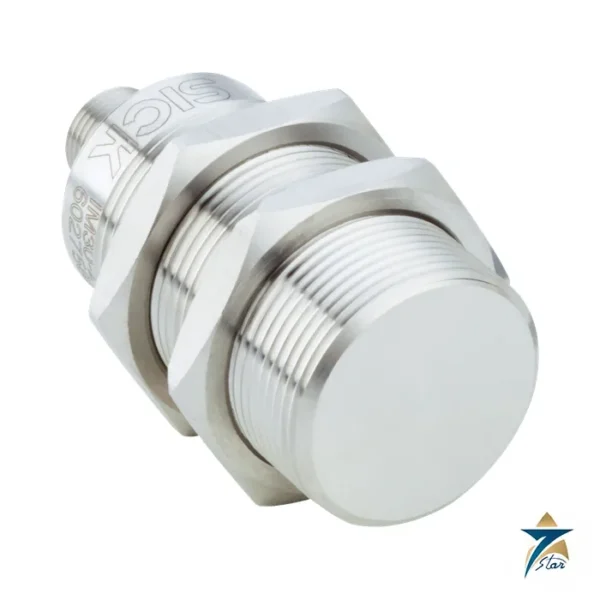
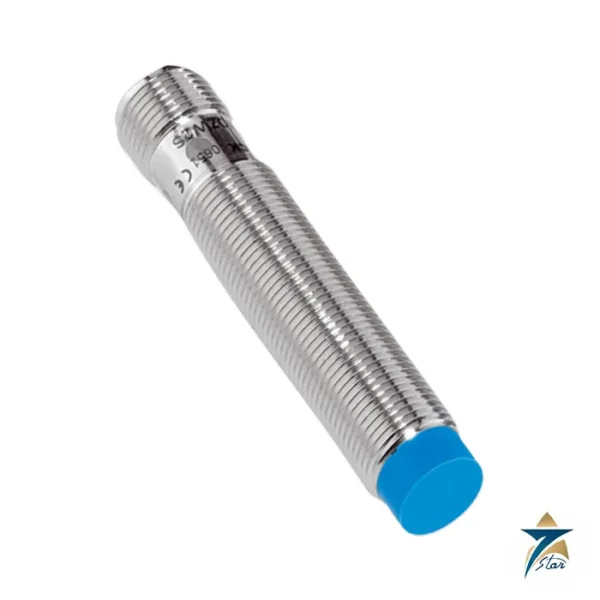
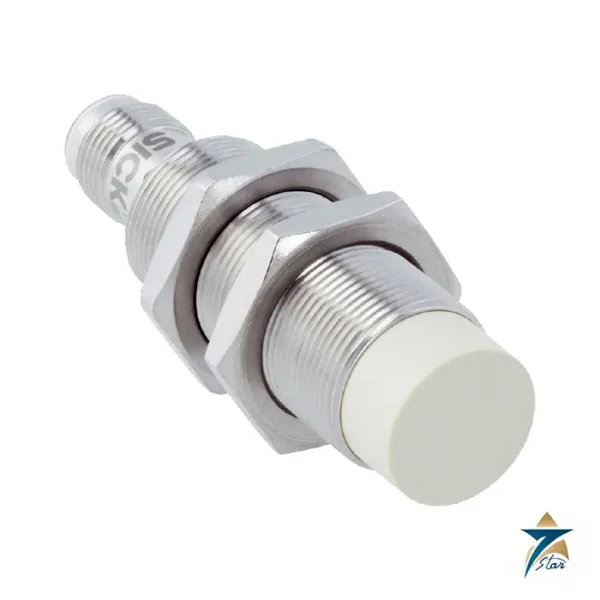
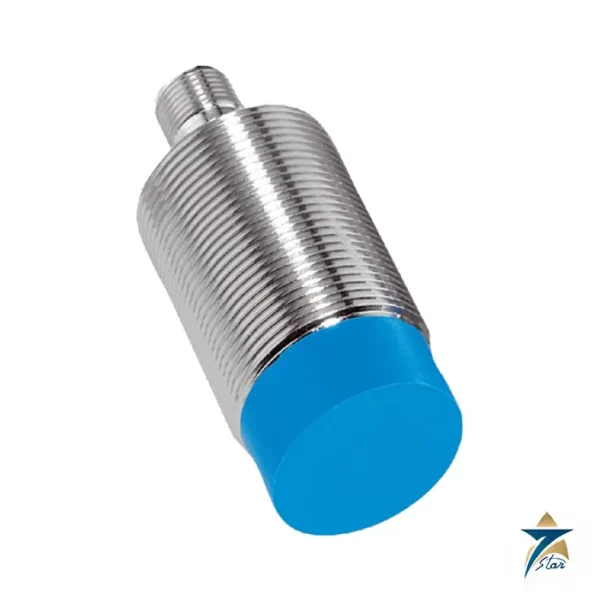
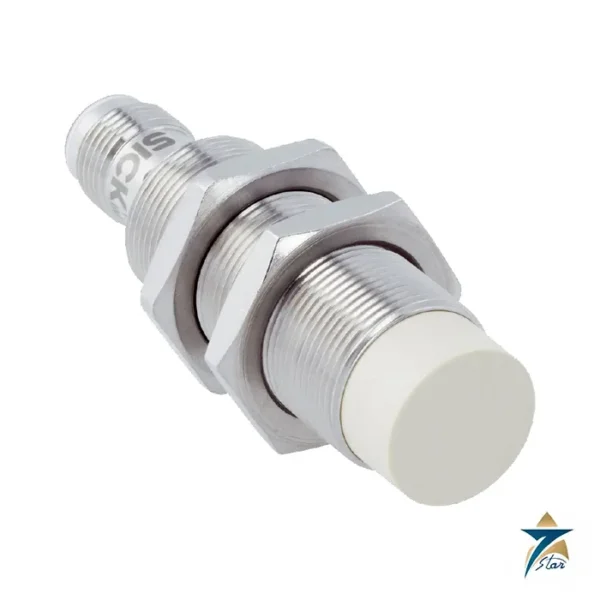
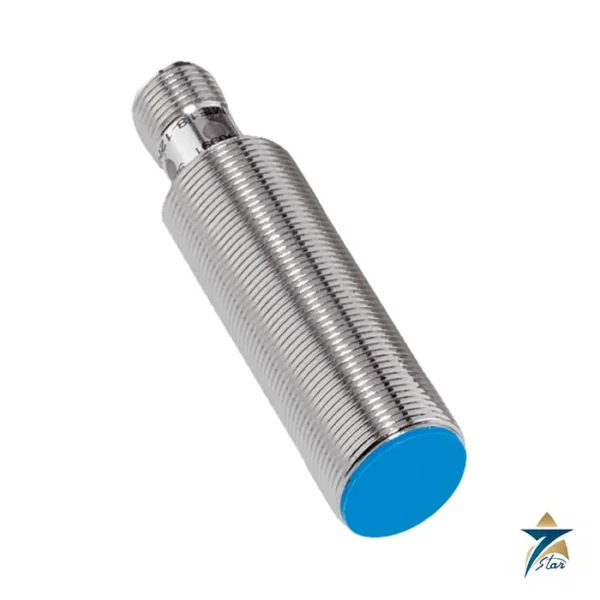
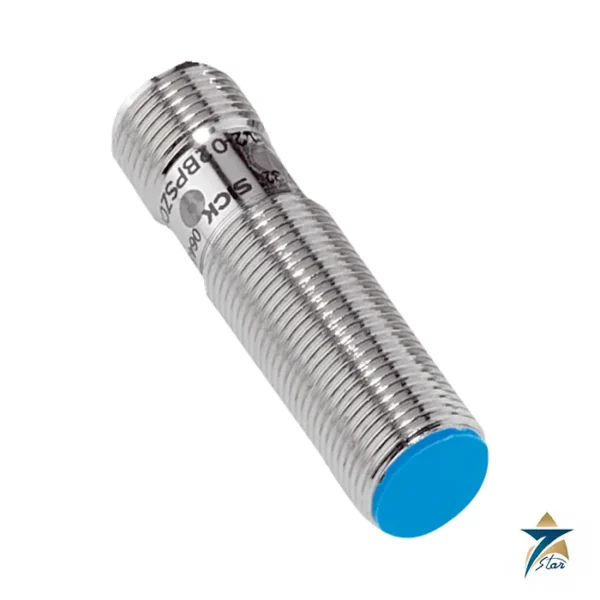
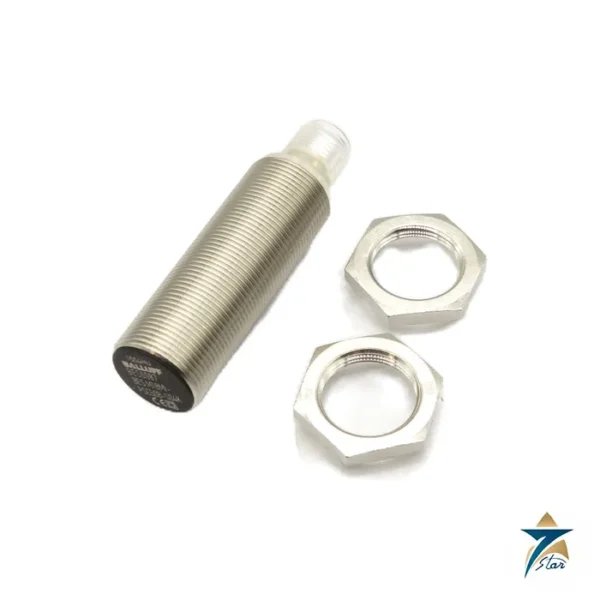
A 20 mm detection distance from an M18 housing is unusual; the SICK IME18-20NNSZC0K (part number 1071271) achieves it as a triple-range type, with a nominal Sn of 20 mm and a safe sensing range Sa of 16.2 mm. It is a short-body, non-flush sensor, 50 mm long with a 23 mm thread, an NPN normally-open output and an M12 4-pin plug.

Plants use such sensors to increase mounting tolerance: with a larger gap, thermal growth or loose guide rails do not cause collisions between target and sensor face.

Trade-offs of a long range

Longer range comes with lower speed and a larger tolerance window. The datasheet gives 200 Hz switching frequency, reproducibility of up to 5 percent and hysteresis between 1 and 15 percent, compared with 1,000 Hz and up to 2 percent for the standard-range IME18 codes. The time delay before availability is up to 100 ms and the temperature drift is plus or minus 10 percent. These figures suit slow or medium-speed detection such as pallet carriers, doors and cylinders.

  • Sn 20 mm, Sa 16.2 mm, non-flush
  • Reduction factors: stainless about 0.78, aluminium about 0.43, copper about 0.37, brass about 0.4
  • Tightening torque up to 30 Nm
  • Short-circuit and power-up pulse protection

IME18-20NNSZC0K data table

Parameter Value
Part number 1071271
Thread / design M18 x 1, short body
Special feature Triple sensing range
Sn / Sa 20 mm / 16.2 mm
Installation Non-flush
Supply 10 V DC to 30 V DC
Output NPN, normally open, DC 3-wire
Switching frequency 200 Hz
Connection Male connector M12, 4-pin
Housing length / thread 50 mm / 23 mm
Tightening torque Up to 30 Nm
Material Brass nickel-plated, sensing face PA 66
Enclosure rating IP67
Operating temperature Minus 25 to plus 75 C
MTTFD 1,735 years

How IME18-20NNSZC0K differs from other IME18 variants

In this group the IME18-20NNSZC0K stands out for range, 20 mm against 8 mm for the IME18-08NPSZW2K and 12 mm for the IME18-12NPSZC0S. Its output is NPN, theirs PNP, its frequency is 200 Hz, theirs 1,000 Hz, and its maximum tightening torque is 30 Nm, against 40 Nm. Pick it when the gap must be generous and the process is slow.

Typical use cases

Examples include level-dependent flag detection on process skids, pallet or tray detection where the mechanical position is imprecise, and position feedback for guard doors on packaging machines. Gulf outdoor installations that suffer from thermal movement of long steel structures benefit from the extra clearance.

Selection checks

Confirm that the controller input accepts NPN signals and that a 200 Hz limit fits the target speed. When the target is aluminium or copper, expect only about 40 percent of the steel range, which is still 8 mm or so. Check that no other steel is within the sensing field behind the target.

Setup

Fit with brass nuts at no more than 30 Nm, set a working gap well within Sa, check switching with the real target and confirm that the output stays stable during the full thermal range of the machine.

Because the sensing field is large, neighbouring metal such as brackets and guards can influence the switching point, so verify with the sensor fully installed and not only on the bench. Keep two adjacent sensors of the same type apart by a safe distance and record the mounting dimensions for the maintenance file.

Care

There are no wear parts; inspect the sensing face and connector. Seven Star LLC is an independent supplier serving Oman and the GCC and is not affiliated with the manufacturer.

As with all long-range inductive sensors, make sure the sensor is not fitted close to strong electromagnetic sources such as welders and big frequency converters. The datasheet confirms EMC according to EN 60947-5-2 and protection against short circuits and power-up pulses, but good cable routing is still the best defence. For documentation keep the safe sensing range, 16.2 mm, as the design value instead of the nominal 20 mm; this avoids a wrong gap calculation by a later maintenance engineer who only reads the type designation.

A final purchasing note: because this sensor uses NPN logic and a long range, it is often chosen as a replacement for older M18 or M30 devices with similar reach. Before substituting, compare the old sensor’s output polarity, housing length, thread, connector and switching distance with the data of the IME18-20NNSZC0K. Our team can help check these points if you send the nameplate details or a photograph, and we will tell you which of them match and which differ before an order is confirmed.

Questions buyers ask about IME18-20NNSZC0K

What is the triple sensing range feature of SICK IME18-20NNSZC0K? The datasheet lists a nominal range Sn of 20 mm from an M18 housing, much more than the 8 mm or 12 mm of standard M18 sensors, with Sa of 16.2 mm.

What output does IME18-20NNSZC0K have? NPN, normally open, in a DC 3-wire circuit through a 4-pin M12 male connector.

How fast is IME18-20NNSZC0K? Switching frequency is 200 Hz; reproducibility is up to 5 percent and hysteresis 1 to 15 percent.

What are the dimensions of IME18-20NNSZC0K? M18 x 1, short body, 50 mm long with a 23 mm thread, brass nickel-plated and 30 Nm maximum tightening torque.

What metals reduce the range of IME18-20NNSZC0K? Stainless steel about 0.78, aluminium about 0.43, copper about 0.37 and brass about 0.4 of the St37 steel distance.

Documents and quotation

The manufacturer datasheet for IME18-20NNSZC0K comes with this listing. Send an RFQ with the part number IME18-20NNSZC0K, quantity and delivery location in Oman or the GCC for availability and lead time.

Datasheets & Documents
  • PDF Datasheet SICK IME18-20NNSZC0K M18 Inductive Sensor, 20 mm Triple Range Datasheet Download
Reviews (0)

Reviews

There are no reviews yet.

How would you rate this product?

It takes about 10 seconds — just tap a star. Your email is never published.

About brand

SICK is the German maker of industrial sensors: photoelectric and proximity sensors, safety laser scanners and light curtains, encoders, distance sensors, code readers and gas analysers. Erwin Sick, an optics engineer, founded it in Munich in 1946, and in 1952 it introduced its first marketable accident-prevention light curtain, which protected press operators by stopping the machine when a hand broke the light beam. The company moved to Waldkirch in the Black Forest in 1956 and is still headquartered there. It is a privately held company, and has been an Aktiengesellschaft (AG) since 1996.

SICK company profile

Founded 1946, Munich, Germany, by Erwin Sick (1909–1988)
Headquarters Waldkirch, Baden-Württemberg, Germany (since 1956)
Ownership Privately held; after the founder's death in 1988 his widow Gisela Sick became the main shareholder. Legal form SICK AG since 1996
Size More than 12,000 employees and group revenue of about EUR 2.3 billion (company figures for 2023)
First breakthrough Accident-prevention light curtain for presses, shown in Hanover in 1952
International growth First foreign subsidiary in France in 1972, United States in 1976; today sales and service companies worldwide
Product families Photoelectric, inductive, capacitive, magnetic and ultrasonic sensors; safety laser scanners, light curtains, safety controllers and relays; encoders and motor feedback systems; distance sensors and LiDAR; barcode and 2D code readers and machine vision; gas analysers, dust and flow measurement for process and emissions monitoring

Milestones

  • 1946: Erwin Sick receives a licence to run his engineering firm in Munich.
  • 1952: The first marketable accident-prevention light curtain is presented in Hanover and goes into series production.
  • 1956: The company moves to Waldkirch with 25 employees.
  • 1972 and 1976: Subsidiaries are founded in France and the United States.
  • 1996: SICK becomes an Aktiengesellschaft.
  • Today: Sensors for factory and logistics automation, machine safety and process analysis, with a large share of revenue outside Germany.

Choosing a SICK sensor

For object detection, the sensing principle comes first. A retro-reflective sensor (WL series) sends light to a reflector and switches when an object breaks the beam; it is reliable over long distances and easy to align. A sensor with background suppression (WTB series) detects an object at a set distance and ignores what is behind it, which suits conveyors with shiny or dark backgrounds. A through-beam pair (WS/WE) gives the longest range and the highest reliability in dust. For transparent bottles and film, use a model built for transparent objects (for example WL12G-3B or WL150-P420). The digits in the code also matter: "P" usually means a PNP output and "N" NPN, and the last digits set the connector or cable. For machine guarding, a safety laser scanner such as nanoScan3 or microScan3 protects an area, while a safety controller such as Flexi Soft combines several safety devices.

Where SICK products are used

In Oman and the GCC, SICK sensors are used in packaging and bottling lines, food and beverage plants, logistics and airport baggage handling, cement and steel plants, ports and cranes, automated warehouses, and on machines built by European OEMs. SICK safety scanners guard robots and automated guided vehicles, and its encoders give position feedback on motors, hoists and conveyors.

SICK products we list

Family Examples
Photoelectric sensors WL12-3P2431, WTB12-3P2431, GTB6-P4211, VL18-4P3240, WL12G-3B2531, WS/WE100, KT5W contrast, W26 IO-Link
Proximity, cylinder and ultrasonic sensors IME12-08NPSZC0S, IME18-05BPSZC0S, MZT8, UM18 4-20 mA, UM30, UFN3 fork
Machine safety nanoScan3, microScan3, S300 Professional, Flexi Soft FX3-CPU1, FX3-XTIO, ReLy OSSD
Encoders and motor feedback DFS60B, AFM60 PROFINET, AFS60 SSI, ATM60 PROFIBUS, SRS50, EFS50
Distance sensors and code readers DT50, DL50, DT35, Lector632

Ordering SICK products: what we need

Send the type code and the 7-digit SICK part number from the label (for example WTB12-3P2431 together with its part number). For a replacement sensor, add the output (PNP or NPN), connection (M8, M12 or cable) and sensing distance. For encoders, add the interface (incremental, SSI, PROFIBUS, PROFINET), resolution and shaft type. For safety scanners, tell us the model and whether the existing configuration needs to be kept.

Frequently requested SICK models: SICK RT-P3231 ZoneControl Background Suppression Sensor.

Facts checked against SICK's published company history and annual figures, October 2026.

FAQ

Questions about the SICK IME18-20NNSZC0K M18 Inductive Sensor, 20 mm

Answers from our engineering team on installation, compatibility and integration.

01What is the triple sensing range feature of SICK IME18-20NNSZC0K?
The datasheet lists a nominal range Sn of 20 mm from an M18 housing, much more than the 8 mm or 12 mm of standard M18 sensors, with Sa of 16.2 mm.
02What output does IME18-20NNSZC0K have?
NPN, normally open, in a DC 3-wire circuit through a 4-pin M12 male connector.
03How fast is IME18-20NNSZC0K?
Switching frequency is 200 Hz; reproducibility is up to 5 percent and hysteresis 1 to 15 percent.
04What are the dimensions of IME18-20NNSZC0K?
M18 x 1, short body, 50 mm long with a 23 mm thread, brass nickel-plated and 30 Nm maximum tightening torque.
05What metals reduce the range of IME18-20NNSZC0K?
Stainless steel about 0.78, aluminium about 0.43, copper about 0.37 and brass about 0.4 of the St37 steel distance.