- Automation & ControlView all 2,895 products
- Automation Accessories
- AC Drives
- PLC & I/O Cards
- Industrial Communications
- Vibration Monitoring
- Controllers & Data Acquisition
- Isolator & Barrier
- Safety Switches & Guard Locking
- Motor Soft Starters
- CCTV & Security
- Encoders
- Pneumatic Cylinders
- HMI Displays
- Servo Drives
- Industrial Computers
- Machine Vision
- Automation Software
- Robotics
Brand: Yokogawa
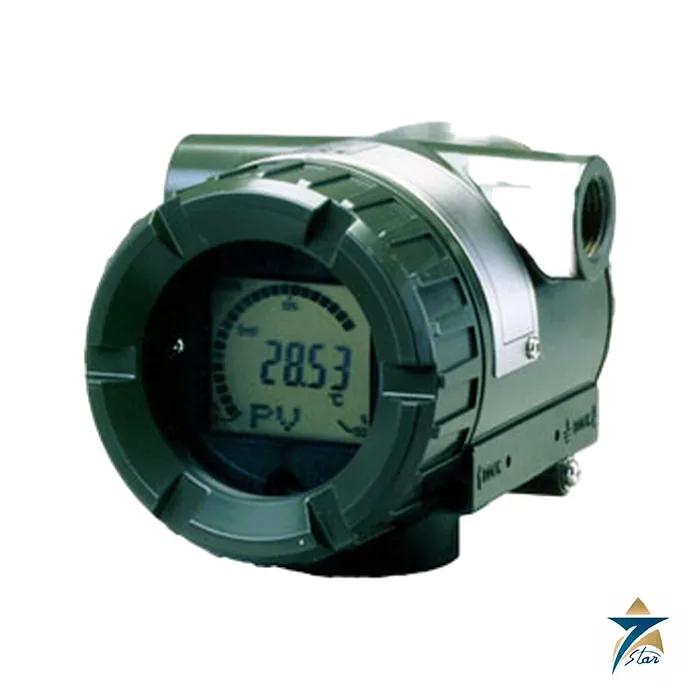
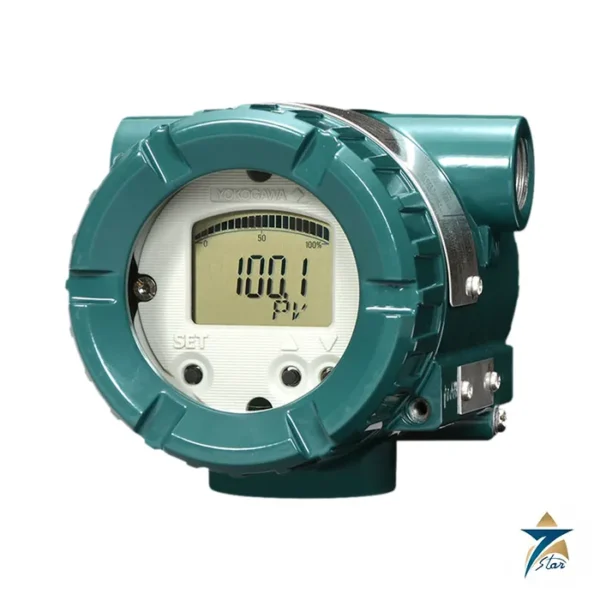
Yokogawa YTA320 Dual-Input Temperature Transmitter
Description
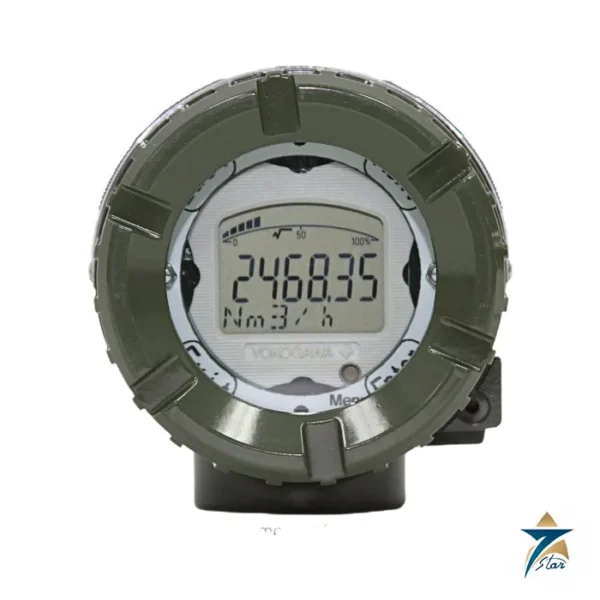
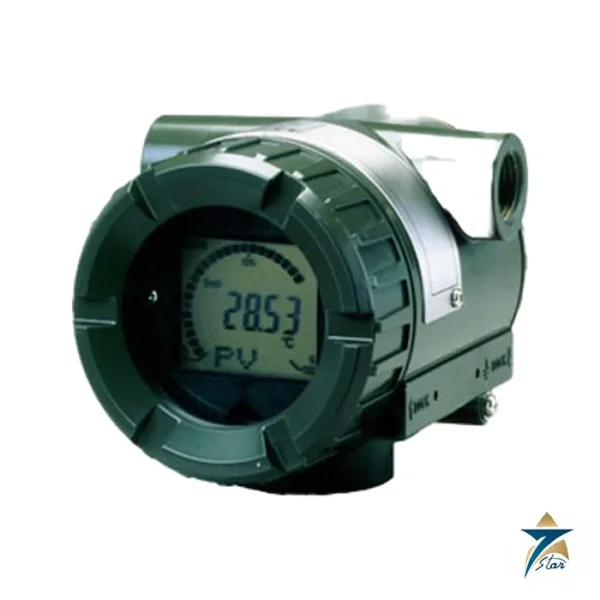
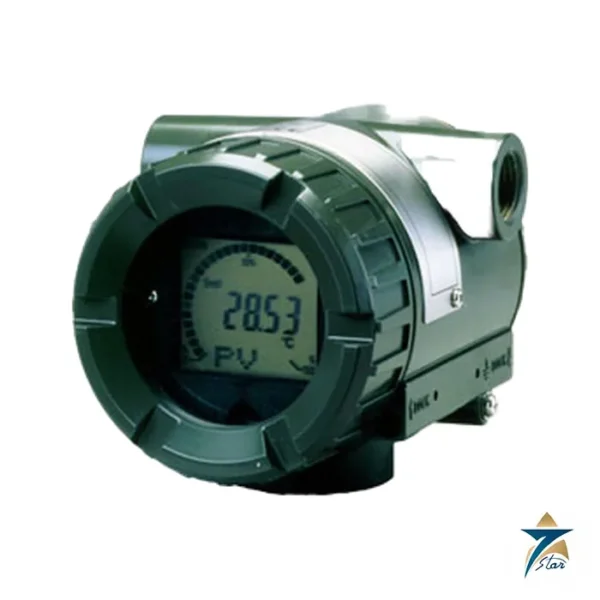
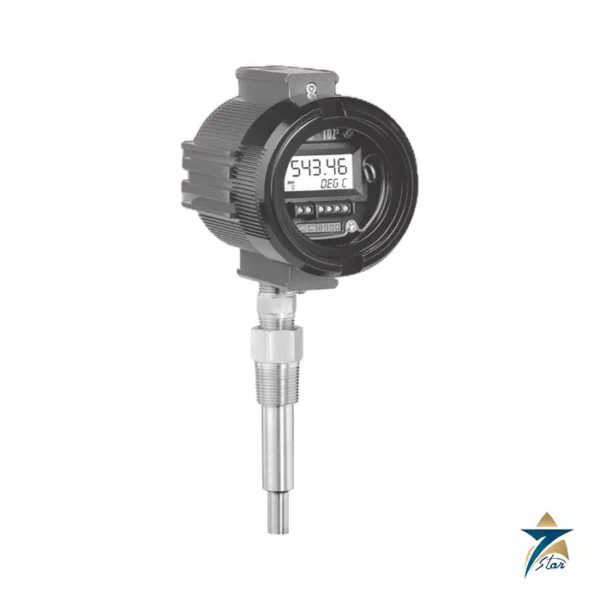
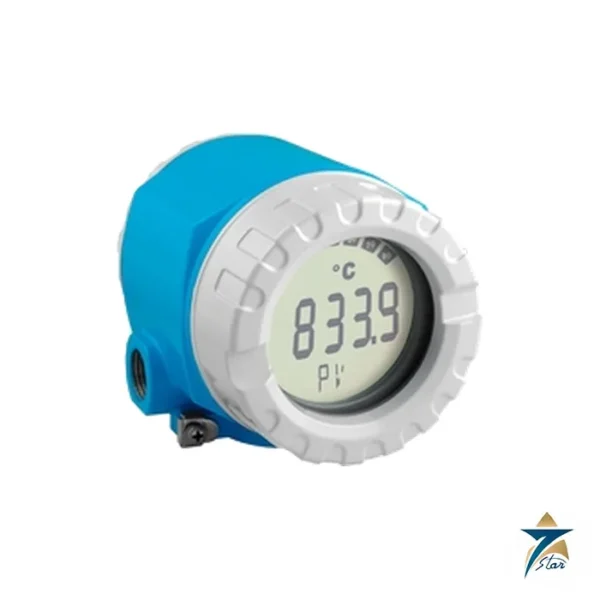
The Yokogawa YTA320 is the dual-input member of the field-mount YTA family, a loop-powered transmitter that reads two thermocouple, RTD, ohm or millivolt sensors at once. Two channels let one device handle backup, averaging and differential temperature, three duties that otherwise need two transmitters and extra DCS logic. The facts below are from the manufacturer’s General Specifications GS 01C50B02-00EN, and from GS 01C50T02-00EN for the fieldbus type.
YTA320 dual-sensor functions explained
Sensor backup with YTA320: set the YTA320 so that Sensor 2 takes over automatically when Sensor 1 fails. The switch is made without bumping the output signal, which keeps a controller from reacting to the failure.
Average and differential temperature with YTA320: the analog output can be set to Sensor 1, Sensor 2, the average of both, the differential temperature or the terminal temperature. Up to three of these values can be shown on the LCD or read by communication. Differential output is used for heat-exchanger delta-T and for detecting sensor drift.
Specifications of the YTA320
| Model | YTA320 temperature transmitter with dual sensor input |
|---|---|
| Output signal codes | -D BRAIN; -E HART; -F FOUNDATION Fieldbus (YTA320 only) |
| Update time | About 0.5 second single sensor; 0.8 second for dual sensors |
| Output | 4 to 20 mA, 3.68 to 20.8 mA range, protocol superimposed |
| Supply voltage | 10.5 to 42 V DC; 9 to 32 V DC lightning-protected fieldbus type |
| Isolation | 500 V DC input/output/ground |
| Cold junction accuracy | Plus/minus 0.5 degrees C |
| Ambient limits | -40 to 85 degrees C; -30 to 80 degrees C with indicator |
| EMC | EN61326-1 Class A, EN61326-2-3, EN61326-2-5 for fieldbus |
| SIL | Certified SIL 2 (single) and SIL 3 (dual) except fieldbus type |
| Protection | IP66/IP67, NEMA4X |
| Housing weight | 1.2 kg without indicator and bracket |
| Power supply effect | Plus/minus 0.005 percent of calibration span per volt |
| Position effect | None |
Why YTA320 reduces plant hardware
- One transmitter replaces two for redundant measurement on critical bearings and reactor skins
- The differential feature gives delta-T across exchangers using a single HART address
- Fieldbus code -F integrates with FOUNDATION Fieldbus segments in new projects, with its own datasheet
- Sensor matching with RTD coefficients lifts accuracy in custody and heat-balance points
- HART configuration with the same BT200 or communicator as the other YTA models
Applications for the YTA320 in the Gulf
Typical Omani uses include LNG and gas compression train bearing temperatures, where a backup RTD protects against false trips, and steam or hot-oil systems where the difference between inlet and outlet decides heat duty. Desalination and chemical plants use it on reactors with two thermowell points.
How YTA320 differs from YTA310 and YTA110
The YTA320 doubles the input count, extends output choices to Sensor 2, average and differential temperature, and adds the -F output code, compared with the single-sensor YTA310 and YTA110. In exchange, its update time lengthens to 0.8 second when two sensors are scanned. SIL 2 certification excludes the fieldbus type.
Commissioning the YTA320
Choose both sensor types independently, then define the primary and backup roles and the output assignment. For a HART unit connect a communicator across the loop with at least 250 ohm; for the fieldbus type follow the separate datasheet. Test backup by lifting Sensor 1 and confirming the output holds.
YTA320 range and accuracy data
Both channels of the YTA320 share a sensor library. Thermocouple ranges are B 100 to 1820, E -200 to 1000, J -200 to 1200, K -200 to 1372, N -200 to 1300, R and S -50 to 1768, T -200 to 400, W3 and W5 0 to 2300, L -200 to 900 and U -200 to 600 degrees C. RTD ranges are Pt100, Pt200 and Pt500 to 850 degrees C, JPt100 -200 to 500 degrees C and Cu -70 to 150 degrees C, with millivolt input of -10 to 100 mV and ohm input up to 2000 ohm. Accuracy is the A/D accuracy over span plus the D/A accuracy, or plus/minus 0.1 percent of calibrated span, whichever is larger; for the fieldbus type only the A/D accuracy applies. Thermocouple use adds the cold junction compensation accuracy of 0.5 degrees C. The recommended minimum span is 25 degrees C for thermocouples and 10 degrees C for RTDs.
Housing, options and approvals for YTA320
The YTA320 uses a dual-compartment low-copper aluminium housing painted deep-sea moss green, with SCS14A stainless steel available through option E1. Electrical entries are G1/2, 1/2 NPT, Pg 13.5 or M20 female, selected by connection code 0, 2, 3 or 4. The integral indicator is code D and brackets are SUS304 or SUS316 for horizontal or vertical pipes. Lightning protection (A), NAMUR NE43 limits (C2 and C3), down-scale failure (C1), Fahrenheit units (D2), SUS316 exterior parts (HC) and special paint options are all listed in the suffix table. For the HART version, option CA allows a descriptor of up to 16 characters to be written at the factory.
The loop resistance limit is 0 to 1335 ohm for operation and 250 to 600 ohm for BRAIN or HART communication, with a minimum terminal voltage of 16.4 V DC for digital communication. Intrinsically safe, Type n and non-incendive uses are limited to 30 V DC. Communication distance for BRAIN reaches 2 km on CEV cable, with loop capacitance up to 0.22 microfarad and inductance up to 3.3 mH. Because the dual unit may be wired to remote RTDs, keep lead resistance under 10 ohm per wire.
Maintenance and ordering
Check both sensor wiring runs, since a failed primary may go unnoticed while the backup carries the loop. Give the model YTA320, output code, connection and bracket codes, options and quantity when requesting a quote. Seven Star LLC is an independent supplier serving Oman and the GCC and is not affiliated with the manufacturer.
Documents and quotation
The manufacturer datasheet GS 01C50B02-00EN for the YTA320 is attached. Send an RFQ stating part number YTA320 with the code and quantity.
Other Models in the Yokogawa Yta Field Range
Seven Star LLC supplies models from the Yokogawa Yta Field range in Oman and the GCC. Compare the related models below and request a quote for the one that matches your application.
| Model | Category | |
|---|---|---|
| Yokogawa YTA110 Temperature Transmitter SIL 2 | Temperature Transmitters | View details |
| Yokogawa YTA310 Single-Input Temperature Transmitter | Temperature Transmitters | View details |
| Yokogawa YTA320 Dual-Input Temperature Transmitter | Temperature Transmitters | You are viewing this model |
Datasheets & Documents
- Datasheet Yokogawa YTA320 Dual-Input Temperature Transmitter Datasheet Download
Reviews (0)
How would you rate this product? Cancel reply
About brand
Yokogawa is the Japanese measurement and industrial automation company behind the DPharp EJA and EJX pressure transmitters, CENTUM distributed control systems and ProSafe-RS safety systems. Tamisuke Yokogawa set it up in 1915 as an electric meter research institute in Shibuya, Tokyo. It began selling electric meters in 1917, was incorporated as Yokogawa Electric Works in 1920, and has been Yokogawa Electric Corporation since 1986. In 1975 it released CENTUM, which it describes as the world's first distributed control system.
Seven Star LLC is an independent supplier in Muscat. We list Yokogawa transmitters, flowmeters, analysers, controllers, recorders and CENTUM and ProSafe spare modules, and supply them to oil and gas, power, water and process plants in Oman and the GCC by model code.
Yokogawa at a glance
| Established | 1915, Shibuya, Tokyo, by Tamisuke Yokogawa with Ichiro Yokogawa and Shin Aoki |
|---|---|
| Milestones | Electric meters from 1917; incorporated in 1920; CENTUM DCS in 1975; renamed Yokogawa Electric Corporation in 1986 |
| Headquarters | Tokyo, Japan |
| Product families | Pressure and temperature transmitters, magnetic, vortex and Coriolis flowmeters, liquid and gas analysers, controllers and recorders, CENTUM VP DCS, ProSafe-RS safety systems and STARDOM controllers |
Yokogawa products we list
| Family | Models | Typical use |
|---|---|---|
| Pressure and DP transmitters | EJA110E, EJA430E, EJA530E, EJX110A, EJX530A, EJX910A multivariable | Pressure, level and DP flow measurement in process plants |
| Temperature transmitters | YTA610, YTA710 | RTD and thermocouple signals converted to 4-20 mA, HART or fieldbus |
| Flowmeters | ADMAG AXG, ADMAG AXW, ROTAMASS TI, VY vortex, VF701 | Water and conductive liquids, mass flow of hydrocarbons, steam and gas |
| Analysers | TDLS8000 laser gas analyser, FLXA402, FLXA21 DO, E7042UD zirconia cell, K9471DS cover | Combustion O2, in-situ gas analysis, pH, conductivity and dissolved oxygen |
| Controllers and recorders | UT35A/UT32A, UT32A-D, UT55A/UT52A, UT75A, UP35A/UP32A, UP55A, YS1700, GX10/GX20, GP10/GP20, GM10, µR20000 | Single-loop control, furnace programs and data recording |
| Control and safety systems | CP451-10 processor, ADV161, ADV551, node interface unit, ProSafe-RS, ProSafe-RS Lite, ProSafe-SLS, FCN-500 | Spares and expansions for CENTUM DCS, safety systems and STARDOM |
| Battery packs | S9129FA, S9185FA, S9548FA | Memory backup batteries for DCS and controller modules |
The EJA and EJX transmitters use Yokogawa's DPharp sensor: two silicon resonators whose vibration frequency changes with pressure, so the output is a digital frequency rather than an analogue strain signal. The model code describes the instrument completely. In EJA110E, "110" is a differential pressure transmitter, and the letters after the dash set the span, wetted materials, process connection, electrical output and approvals. When you replace a transmitter, sending the full code from the nameplate avoids a mismatch in range or materials.
Where Yokogawa products are used
In Oman and the GCC, Yokogawa transmitters, analysers and control systems are found in oil and gas production, gas processing and LNG, refineries and petrochemical plants, power and desalination stations, and water treatment. Many plants still run CENTUM CS 3000 and CENTUM VP systems that need spare I/O modules and batteries.
Ordering Yokogawa products: what we need
Send the full model and suffix code from the nameplate (for example EJA110E-JMS5J-912NN/KF22) and the style code. For DCS modules, add the module type and system version. For analysers, send the sensor type, measuring range and process conditions.
Facts checked against Yokogawa's corporate history, October 2026.
Browse Yokogawa products by category: PLC & I/O Cards, Flowmeters, Pressure Instrumentation, Automation Accessories, Temperature Instrumentation.
FAQ
Questions about the Yokogawa YTA320 Dual-Input Temperature Transmitter
Answers from our engineering team on installation, compatibility and integration.
01How many sensors can the Yokogawa YTA320 connect?
The YTA320 is a dual-input transmitter, so two thermocouple, RTD, ohm or millivolt sensors can be connected, selectable independently.
02What is sensor backup on the YTA320?
If Sensor 1 fails, the YTA320 switches automatically to Sensor 2 without bumping the output signal, so the control system does not see a disturbance.
03Does the YTA320 support FOUNDATION Fieldbus?
Yes, the -F output code is available only on the YTA320. The fieldbus type has its own datasheet GS 01C50T02-00EN and is not covered by the SIL certification.
04What outputs can the YTA320 be set to?
Sensor 1, Sensor 2, the average of both, the differential temperature or the terminal temperature can be assigned, with up to three values displayed.
05How fast is the YTA320 update time?
Update time is approximately 0.5 second for a single sensor and 0.8 second when both sensors are used.


Reviews
There are no reviews yet.