- Automation & ControlView all 3,156 products
- Automation Accessories
- AC Drives
- PLC & I/O Cards
- Industrial Communications
- Vibration Monitoring
- Controllers & Data Acquisition
- Isolator & Barrier
- Safety Switches & Guard Locking
- Encoders
- Motor Soft Starters
- CCTV & Security
- Pneumatic Cylinders
- HMI Displays
- Servo Drives
- Industrial Computers
- Machine Vision
- Automation Software
- Robotics
Brand: SICK
SICK DBS36E-S3EK01024 Incremental Encoder, 1024 PPR, 6 mm Shaft
Description
Overview
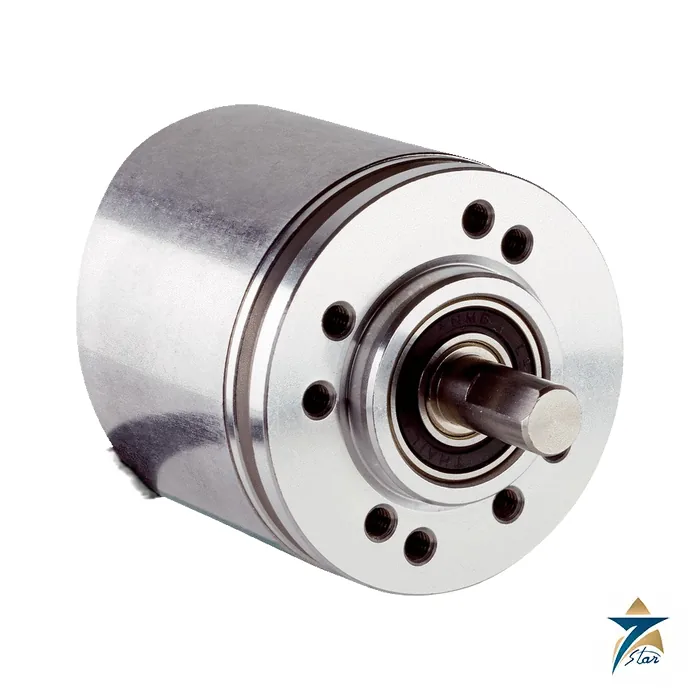
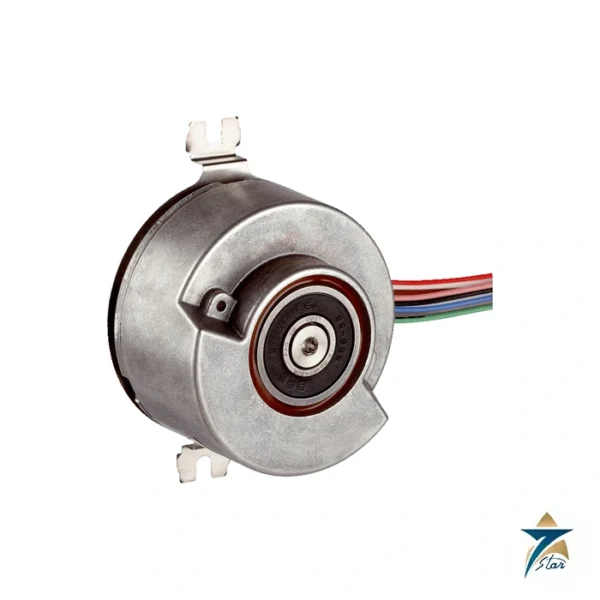
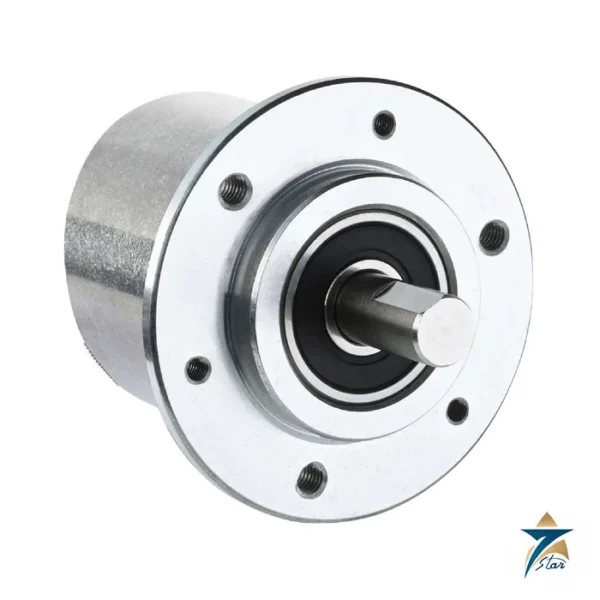
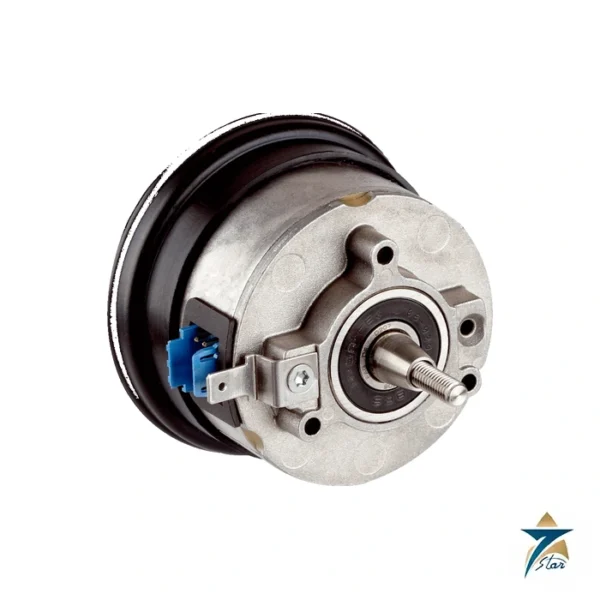
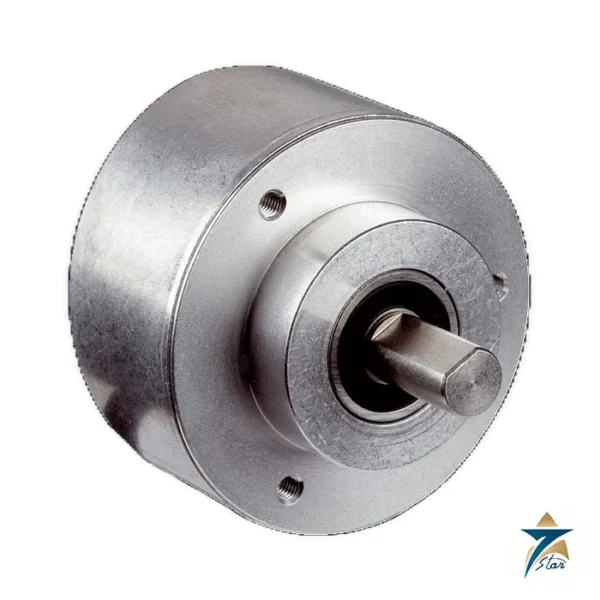
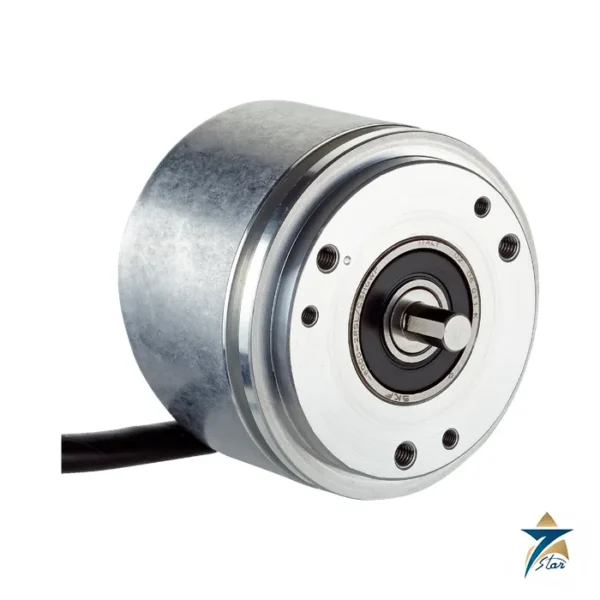
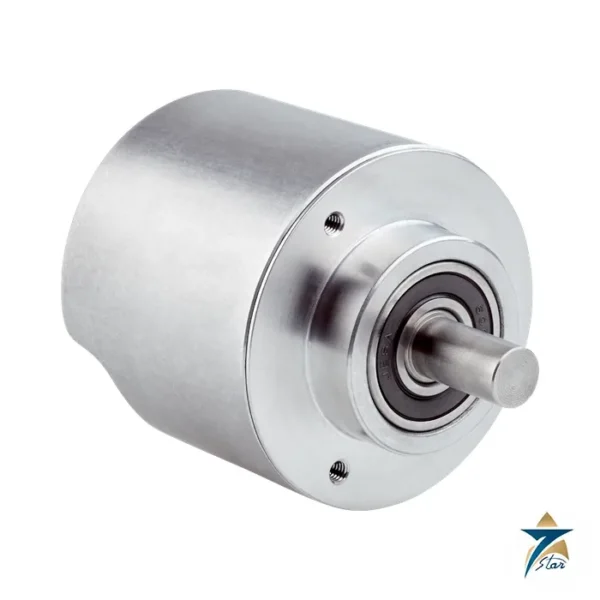
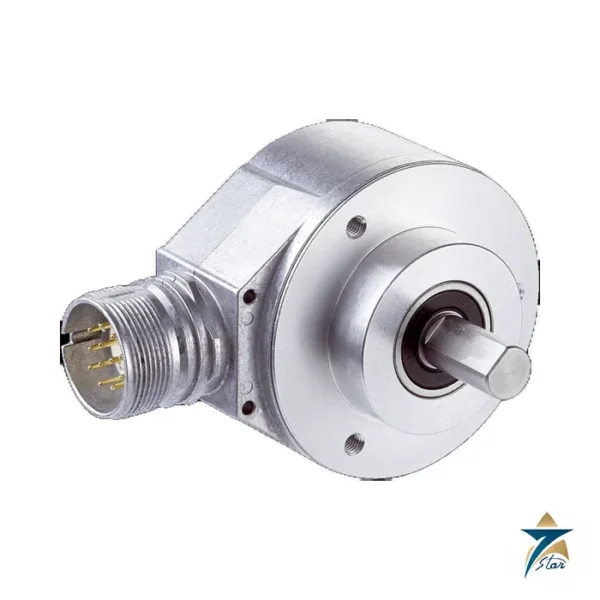
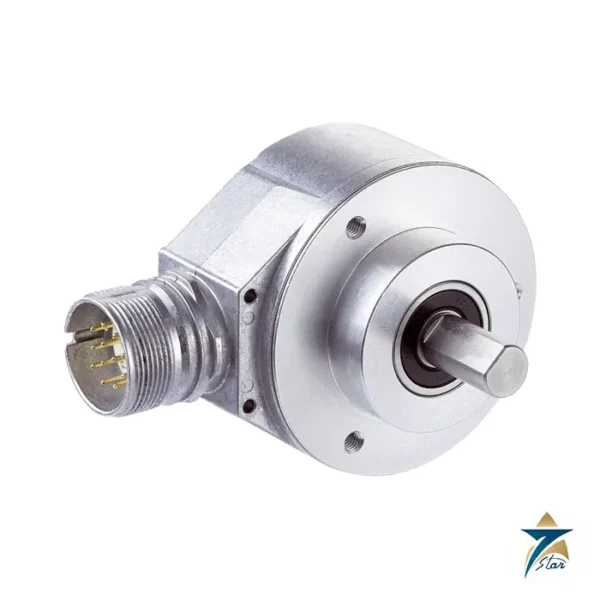
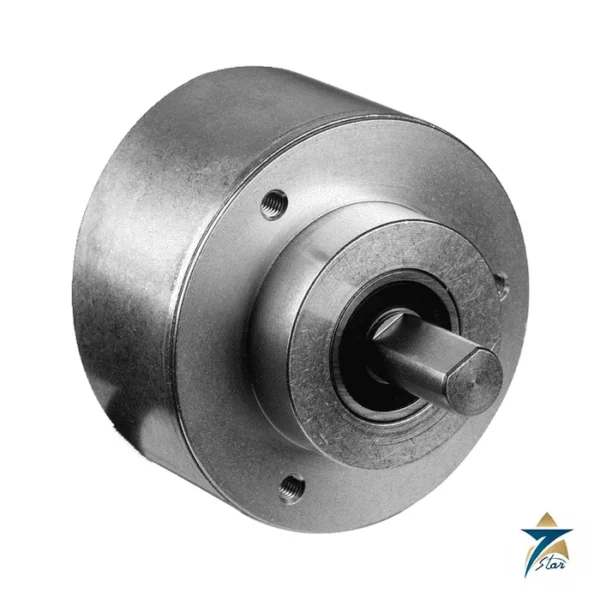
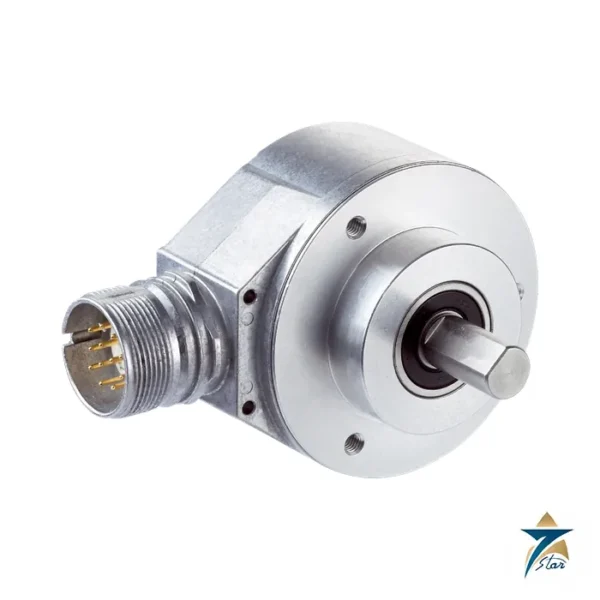
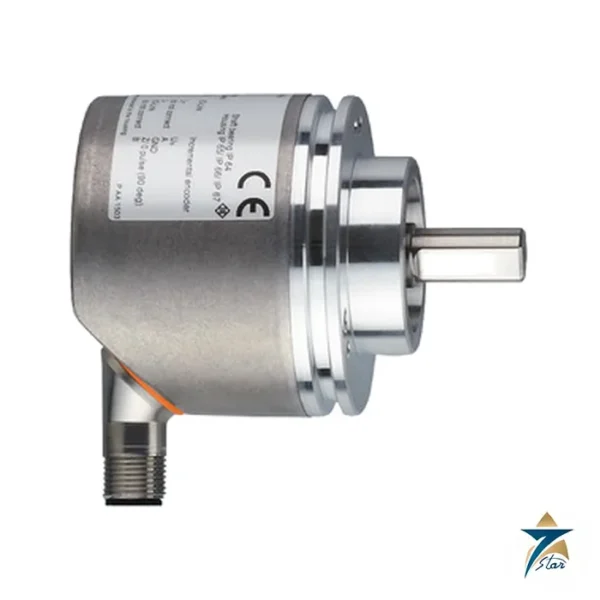
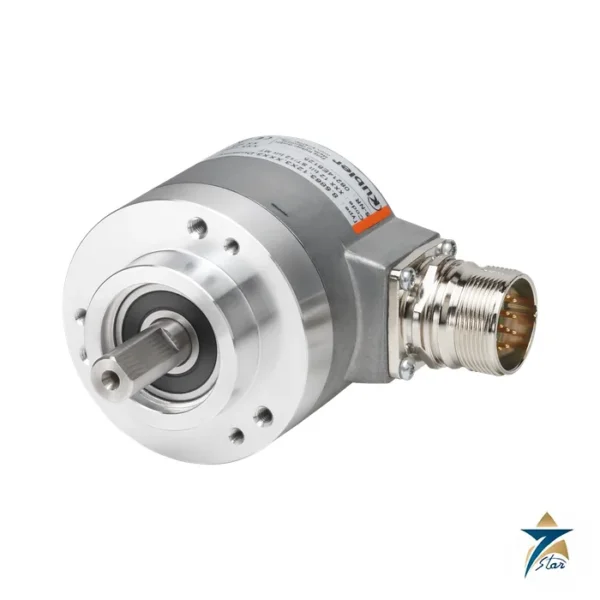
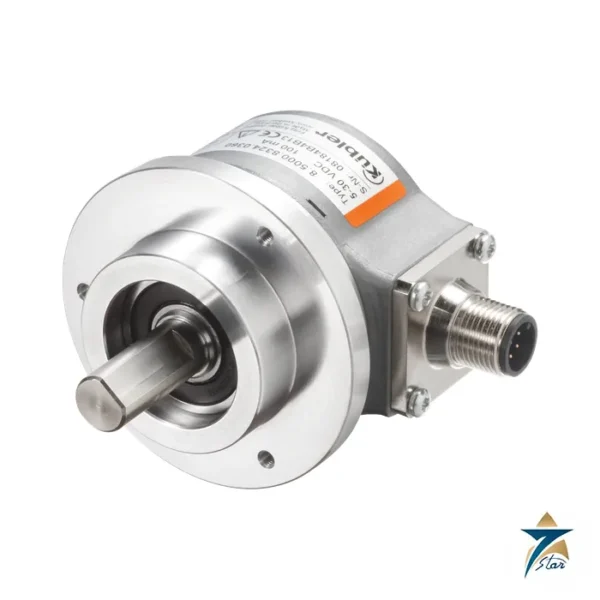
The SICK DBS36E-S3EK01024 is a small incremental encoder from the DBS36 / DBS50 family. With a body of only 36 mm diameter, a 6 mm solid shaft with flat and a face mount flange, it gives 1,024 pulses per revolution on a six-channel HTL push-pull output and leaves the housing through a fixed 1.5 m eight-wire cable. It is the type to choose when a compact motor, a small gearbox or a light-duty measuring wheel needs speed or position feedback and there is little room for a larger encoder.
Despite the modest size, the data sheet shows a wide supply window from 7 V to 30 V DC, a low power consumption of 0.5 W or less without load and an initialization time of under 3 ms. The wide window means the same encoder runs from a 12 V or 24 V control supply, which simplifies stocking for service teams.
Seven Star LLC is an independent supplier serving Oman and the GCC. All statements here come from the manufacturer data sheet for part number 1060545.
Signal characteristics of the DBS36E-S3EK01024
The HTL push-pull stage pulls each output actively towards the supply or to ground, which gives steep edges and good noise immunity over longer cables than an open-collector output. Six channels carry A, B and the reference track along with inverted signals. The reference pulse occurs once per revolution at 90 degrees electrical and is gated with A and B. Output frequency reaches 300 kHz, each channel can deliver 30 mA and the duty cycle is 0.5 with a tolerance of 5 percent.
Accuracy is expressed relative to the pulse count: the measuring step deviation is plus or minus 18 degrees divided by the pulses per revolution and the error limit is plus or minus 54 degrees divided by the pulses per revolution. For 1,024 pulses these give small absolute angles that suit speed control and moderate positioning. Reverse polarity protection and output short-circuit protection are included, but the short-circuit rating holds only if the supply and ground are connected correctly.
Technical specifications of the SICK DBS36E-S3EK01024
| Parameter | Value |
|---|---|
| Type / part number | DBS36E-S3EK01024 / 1060545 |
| Pulses per revolution | 1,024 |
| Output | Incremental, HTL / push-pull, 6-channel |
| Reference signal | 1 pulse, 90 degrees electrical, gated with A and B |
| Duty cycle | 0.5 plus or minus 5 percent |
| Supply voltage | 7 V to 30 V |
| Power consumption | 0.5 W or less without load |
| Load current | up to 30 mA per channel |
| Output frequency | up to 300 kHz |
| Initialization time | less than 3 ms |
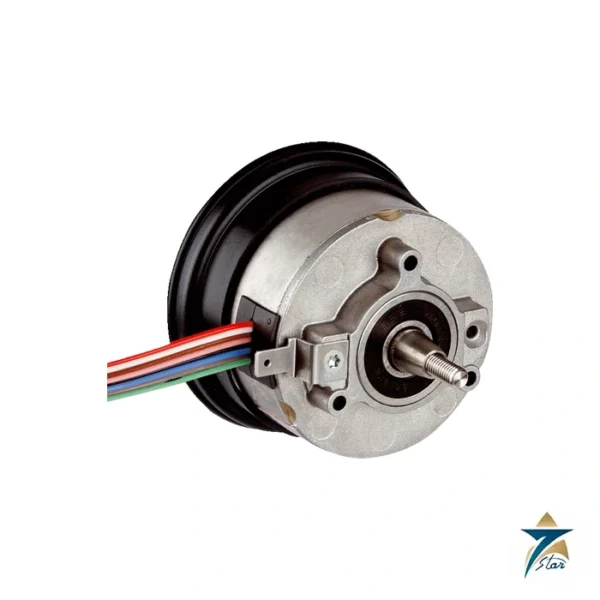
| Connection | Cable, 8-wire, universal, 1.5 m, PVC |
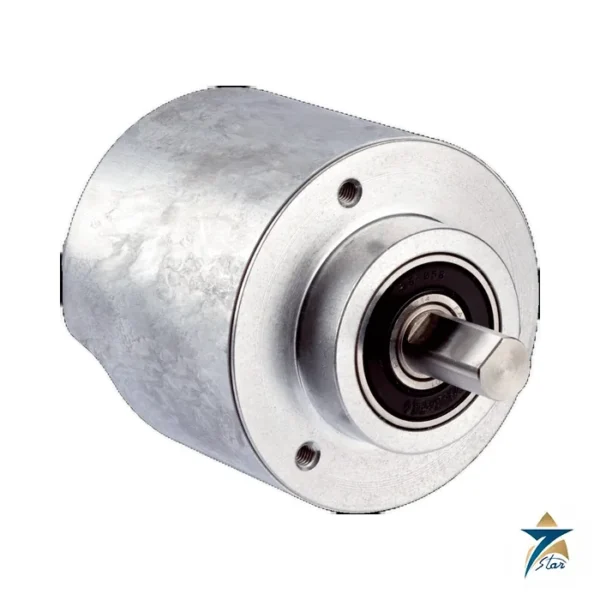
| Mechanical design | Solid shaft, face mount flange |
| Shaft diameter / length | 6 mm with flat / 12 mm |
| Weight | approximately 150 g with cable |
| Shaft material | Stainless steel |
| Flange and housing | Aluminum |
| Start-up torque | about 0.5 Ncm at 20 degrees Celsius |
| Operating torque | 0.4 Ncm at 20 degrees Celsius |
| Permissible shaft load | 40 N radial, 20 N axial |
| Operating speed | 6,000 per minute (8,000 maximum, not permanent) |
| Moment of inertia | 0.6 gcm2 |
| Bearing lifetime | 2 x 10 to the 9th revolutions |
| Enclosure rating | IP65 |
| Operating temperature | minus 20 to plus 85 degrees Celsius (minus 35 to plus 95 on request) |
| Shock / vibration | 100 g, 6 ms / 20 g, 10 Hz to 2,000 Hz |
| MTTFD | 600 years |
How DBS36E-S3EK01024 differs from other DBS36 variants
The DBS36 / DBS50 family has solid-shaft, hollow-shaft and different connection forms, each with its own code. The SICK DBS36E-S3EK01024 is the 6 mm solid-shaft flange version with an HTL output and a cable. A version with a TTL output would run only from about 5 V and give a differential signal. Versions with 8 mm shafts, different flange types or plug connectors differ in mounting dimensions and cannot replace this code without drilling or adapters.
The permissible shaft load is much lower than that of the larger DFS60: 40 N radial and 20 N axial. That limit alone excludes direct belt or gear drive on the shaft, so a flexible coupling is essential.
Typical applications in Oman and the GCC
Small motors on dosing pumps, mixers, fans, textile and packaging machines, labelling heads and small conveyors benefit from this encoder. In laboratories and test benches it measures the speed of rotating specimens, and on pipe-handling or valve-test equipment it can supply simple angle feedback.
The IP65 housing handles dust and spray, and the operating range up to plus 85 degrees Celsius covers hot enclosures. Where ambient temperatures exceed that, the data sheet mentions a wider range from minus 35 to plus 95 degrees Celsius on request.
Mounting and wiring of the DBS36E-S3EK01024 encoder
Use a flexible coupling matched to the 6 mm shaft and keep the shaft free of axial pre-load. Bolt the flange on the machine face with equal torque on the screws and route the 1.5 m universal cable radially or axially without sharp bends. Supply power within 7 V to 30 V; because the unit has reverse polarity protection, a wiring error is tolerated, but check that the supply and ground are correct for the short-circuit rating to apply.
Land the six signal wires on a receiver compatible with HTL levels and keep the cable away from power conductors. If the cable has to be extended, use shielded twisted-pair and ground the shield at the controller.
Service and maintenance of SICK DBS36E-S3EK01024
The bearing is designed for 2 x 10 to the 9th revolutions. At 6,000 revolutions per minute continuous operation this gives a service interval measured in years, but heat and shock reduce it. Account for self-heating of 3.3 K per 1,000 rpm when judging the temperature range, and avoid running at the maximum speed of 8,000 per minute for long periods because the signal quality drops.
During a service stop, check the coupling, the flange fixing and the cable jacket. Keep the part number 1060545 in the equipment record so the same pulse count and signal level are reordered.
Related items you may also need: SICK KTS-WB9114114IZZZZ KTS Contrast Sensor | SICK TR4-SBM10PB TR4 Direct Safety Switch | SICK WL12-3P2431 Retro-Reflective Photoelectric Sensor, 5 m | All SICK products.
Documents and quotation
The manufacturer data sheet for the SICK DBS36E-S3EK01024 is attached to this page and includes the dimension drawing and ordering data.
Send your RFQ with the part number DBS36E-S3EK01024, the quantity and the delivery location in Oman or the GCC. Seven Star LLC will confirm availability of the SICK DBS36E-S3EK01024 and can add couplings or cable extensions to the same quotation.
Datasheets & Documents
- Datasheet SICK DBS36E-S3EK01024 Incremental Encoder, 1024 PPR, 6 mm Shaft Datasheet Download
Reviews (0)
How would you rate this product? Cancel reply
About brand
SICK is the German maker of industrial sensors: photoelectric and proximity sensors, safety laser scanners and light curtains, encoders, distance sensors, code readers and gas analysers. Erwin Sick, an optics engineer, founded it in Munich in 1946, and in 1952 it introduced its first marketable accident-prevention light curtain, which protected press operators by stopping the machine when a hand broke the light beam. The company moved to Waldkirch in the Black Forest in 1956 and is still headquartered there. It is a privately held company, and has been an Aktiengesellschaft (AG) since 1996.
SICK company profile
| Founded | 1946, Munich, Germany, by Erwin Sick (1909–1988) |
|---|---|
| Headquarters | Waldkirch, Baden-Württemberg, Germany (since 1956) |
| Ownership | Privately held; after the founder's death in 1988 his widow Gisela Sick became the main shareholder. Legal form SICK AG since 1996 |
| Size | More than 12,000 employees and group revenue of about EUR 2.3 billion (company figures for 2023) |
| First breakthrough | Accident-prevention light curtain for presses, shown in Hanover in 1952 |
| International growth | First foreign subsidiary in France in 1972, United States in 1976; today sales and service companies worldwide |
| Product families | Photoelectric, inductive, capacitive, magnetic and ultrasonic sensors; safety laser scanners, light curtains, safety controllers and relays; encoders and motor feedback systems; distance sensors and LiDAR; barcode and 2D code readers and machine vision; gas analysers, dust and flow measurement for process and emissions monitoring |
Milestones
- 1946: Erwin Sick receives a licence to run his engineering firm in Munich.
- 1952: The first marketable accident-prevention light curtain is presented in Hanover and goes into series production.
- 1956: The company moves to Waldkirch with 25 employees.
- 1972 and 1976: Subsidiaries are founded in France and the United States.
- 1996: SICK becomes an Aktiengesellschaft.
- Today: Sensors for factory and logistics automation, machine safety and process analysis, with a large share of revenue outside Germany.
Choosing a SICK sensor
For object detection, the sensing principle comes first. A retro-reflective sensor (WL series) sends light to a reflector and switches when an object breaks the beam; it is reliable over long distances and easy to align. A sensor with background suppression (WTB series) detects an object at a set distance and ignores what is behind it, which suits conveyors with shiny or dark backgrounds. A through-beam pair (WS/WE) gives the longest range and the highest reliability in dust. For transparent bottles and film, use a model built for transparent objects (for example WL12G-3B or WL150-P420). The digits in the code also matter: "P" usually means a PNP output and "N" NPN, and the last digits set the connector or cable. For machine guarding, a safety laser scanner such as nanoScan3 or microScan3 protects an area, while a safety controller such as Flexi Soft combines several safety devices.
Where SICK products are used
In Oman and the GCC, SICK sensors are used in packaging and bottling lines, food and beverage plants, logistics and airport baggage handling, cement and steel plants, ports and cranes, automated warehouses, and on machines built by European OEMs. SICK safety scanners guard robots and automated guided vehicles, and its encoders give position feedback on motors, hoists and conveyors.
SICK products we list
| Family | Examples |
|---|---|
| Photoelectric sensors | WL12-3P2431, WTB12-3P2431, GTB6-P4211, VL18-4P3240, WL12G-3B2531, WS/WE100, KT5W contrast, W26 IO-Link |
| Proximity, cylinder and ultrasonic sensors | IME12-08NPSZC0S, IME18-05BPSZC0S, MZT8, UM18 4-20 mA, UM30, UFN3 fork |
| Machine safety | nanoScan3, microScan3, S300 Professional, Flexi Soft FX3-CPU1, FX3-XTIO, ReLy OSSD |
| Encoders and motor feedback | DFS60B, AFM60 PROFINET, AFS60 SSI, ATM60 PROFIBUS, SRS50, EFS50 |
| Distance sensors and code readers | DT50, DL50, DT35, Lector632 |
Ordering SICK products: what we need
Send the type code and the 7-digit SICK part number from the label (for example WTB12-3P2431 together with its part number). For a replacement sensor, add the output (PNP or NPN), connection (M8, M12 or cable) and sensing distance. For encoders, add the interface (incremental, SSI, PROFIBUS, PROFINET), resolution and shaft type. For safety scanners, tell us the model and whether the existing configuration needs to be kept.
Frequently requested SICK models: SICK WTB4-3 Miniature Photoelectric Proximity Sensor, SICK IME18-08NPSZW2K Inductive Proximity Sensor, SICK DT35-B15251 Laser Distance Sensor, SICK microScan3 Safety Laser Scanner, SICK RZT7-03ZUS-KWB T-Slot Cylinder Sensor.
Facts checked against SICK's published company history and annual figures, October 2026.
Browse SICK products by category: Sensors & Transmitters.
FAQ
Questions about the SICK DBS36E-S3EK01024 Incremental Encoder, 1024
Answers from our engineering team on installation, compatibility and integration.
01What is the pulse count of the DBS36E-S3EK01024?
It outputs 1,024 pulses per revolution on a six-channel HTL push-pull signal with one reference pulse per turn.
02What shaft does the DBS36E-S3EK01024 have?
It has a 6 mm solid stainless steel shaft with flat, 12 mm long, on an aluminum face mount flange.
03What supply voltage can the DBS36E-S3EK01024 use?
The supply range is 7 V to 30 V DC with power consumption of 0.5 W or less without load.
04What shaft load does the DBS36E-S3EK01024 allow?
The permissible load is 40 N radial and 20 N axial, so a flexible coupling should be used.
05What temperature range applies to the DBS36E-S3EK01024?
Operation is specified from minus 20 to plus 85 degrees Celsius, with minus 35 to plus 95 degrees Celsius available on request, in an IP65 housing.


Reviews
There are no reviews yet.