Endress+Hauser DTT31 Flowphant T flow switch for liquids
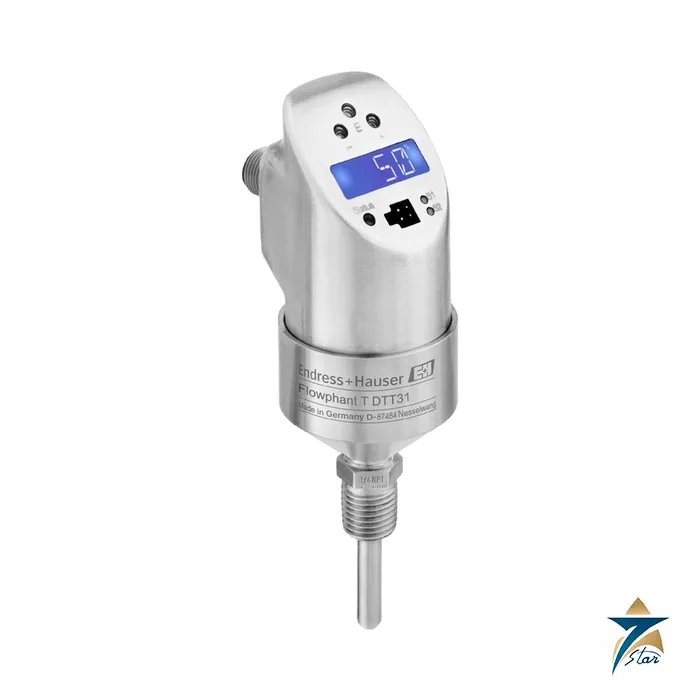
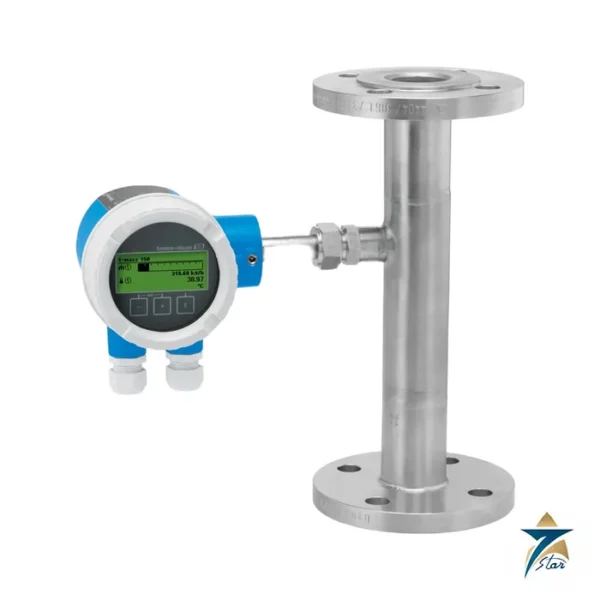
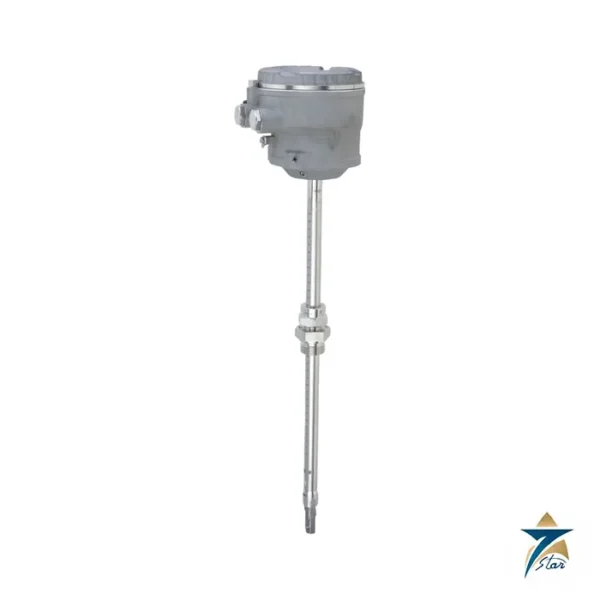
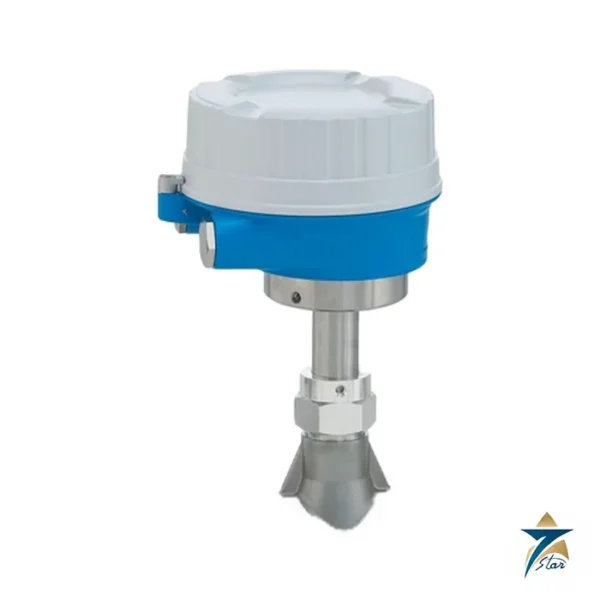
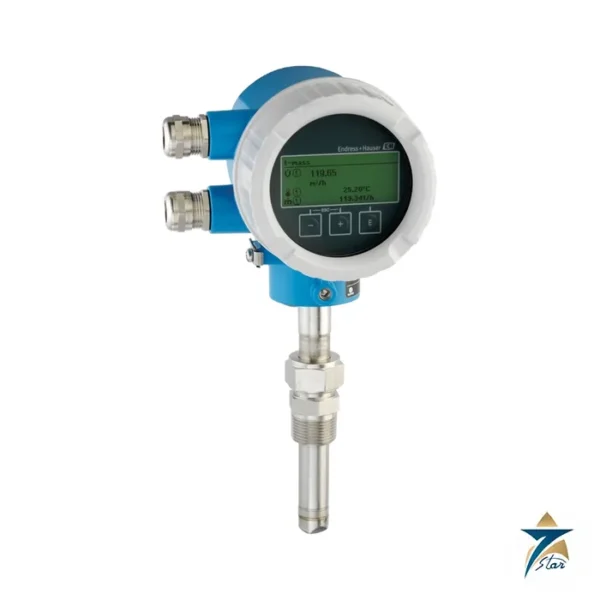
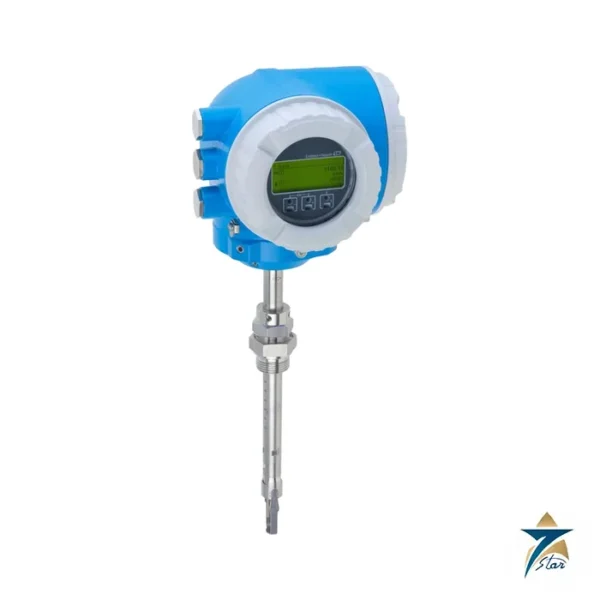
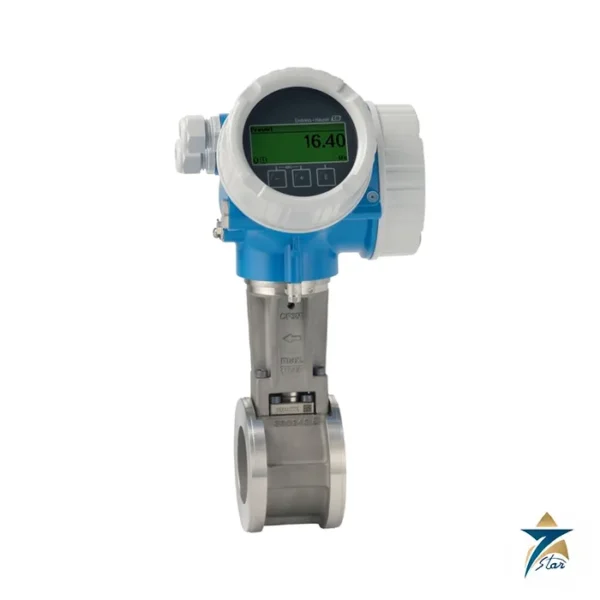
The Endress+Hauser DTT31 is the Flowphant T flow switch in its industrial version: a compact insertion-style thermal device that monitors the relative mass flow of water, water-like liquids and low-viscosity oils. A heated temperature sensor is cooled by the passing liquid, and the DTT31 turns the amount of cooling into a switch signal and, optionally, an analogue 4 to 20 mA signal. It has practically no pressure loss because the probe is a small insertion rod, and it carries its own digital display so the flow value and settings are visible at the device. Seven Star LLC supplies the DTT31 in Oman and the GCC as an independent supplier in Muscat.
The same technical information also covers the hygienic DTT35 variant; this page concerns the industrial DTT31, whose process connections are compression fittings and G 1/2 or G 1/4 threads.
DTT31 technical specifications
| Parameter |
Specification |
| Manufacturer / part number |
Endress+Hauser / Flowphant T DTT31 |
| Measuring principle |
Calorimetric (thermal) flow measurement |
| Flow measuring range |
0.03 to 3 m/s |
| Temperature measuring range |
−20 to +85 °C |
| Process pressure |
Up to 100 bar |
| Medium suitability |
Viscosity 0.184 to 20 mPa·s; thermal conductivity 29 to 688 mW/m·K |
| Outputs |
1 or 2 PNP switch outputs; or 1 PNP plus 4 to 20 mA active |
| Supply voltage |
18 to 30 VDC |
| Ambient temperature |
−40 to +85 °C |
| Degree of protection |
IP65 or IP66 depending on the connector |
| Wetted material |
AISI 316L |
| Display |
Integrated LED/LCD display, housing rotatable 310 degrees |
How the DTT31 detects flow
The measurement is calorimetric. A heated sensor loses heat to the liquid by forced convection, and the amount of heat removed depends on the flow velocity and on the difference between sensor and liquid temperature (King's law). A second sensor tracks liquid temperature so the device can compensate it. The higher the velocity or mass flow, the stronger the cooling, and the electronics compare the cooling with the limit you have set. The DTT31 therefore reports relative flow in per cent of the set measuring range, which is what the analogue output carries, and it also reports temperature.
The datasheet specifies suitability for media with viscosity from 0.184 to 20 mPa·s and thermal conductivity from 29 to 688 mW/m·K; an aqueous 20 % monoethylene glycol solution at 20 °C is given as an example within that range.
Output, range and electrical data of the DTT31
The flow measuring range is 0.03 to 3 m/s and the temperature measuring range is −20 to +85 °C. Outputs are short-circuit-proof DC versions: one PNP switch output for flow, two PNP outputs configurable for flow or temperature, or one PNP switch output together with one active 4 to 20 mA output for flow or temperature. The analogue alarm follows NAMUR NE43 (3.8 mA under range, 20.5 mA over range). Supply voltage is 18 to 30 VDC with reverse-polarity protection, and the device tolerates up to 34 VDC without damage. Connection is by M12 plug or valve connector, with IP65 or IP66 depending on the plug. Ambient temperature is −40 to +85 °C and operating altitude up to 4 000 m.
Installing the DTT31 correctly
Insertion depth and orientation decide whether a thermal switch is reliable, so follow the installation chapter: the tip must sit in the flow stream, away from the pipe wall, and the pipe must stay filled. Respect the inlet and outlet runs given there, and avoid mounting where air or gas collects. In horizontal pipes the manufacturer shows preferred mounting positions, and the housing top can be turned 310 degrees with a rotatable display so the reading stays legible after installation.
Wetted parts are AISI 316L with an EPDM O-ring between housing and sensor module, so check compatibility with corrosion inhibitors, glycols and cleaning agents in your circuit.
Setup and commissioning
Commissioning is done on the local display and keys: set the minimum flow switch point, the optional second switch point or analogue range, and the switching delay. FieldCare configuration software can store the device settings for later replacement. Teach the switch points while the pipe is flowing at the real operating condition, because thermal devices depend on fluid properties; repeat the adjustment if the cooling-water chemistry or glycol content changes.
DTT31 applications in Oman and the GCC
The DTT31 is widely used to protect equipment that must not run without cooling or lubrication: closed-loop cooling water to pump bearings and seals, compressor and turbine lube-oil lines, chilled-water branches to air handlers, and leak monitoring in process lines. In the Gulf the high ambient temperature and hard water raise the risk of scaling on heated sensors, so schedule periodic cleaning and verify the switch point after maintenance. Marine approval is listed in the benefits, which suits offshore and shipboard cooling circuits.
DTT31 and related flow switches
| Model |
Use |
| DTT31 |
Industrial water and low-viscosity oil, threaded or compression fitting |
| DTT35 |
Hygienic liquid processes, 3-A and EHEDG-oriented connections |
For gas flow, a thermal mass meter such as the t-mass series is the usual alternative.
Information to send with a DTT31 RFQ
- Medium, viscosity and temperature range
- Pipe size, flow velocity and mounting orientation
- Switch output type and whether a 4 to 20 mA output is needed
- Process connection thread or compression fitting
- Supply voltage, connector and cable length
- Marine approval requirement and quantity
Documents and quotation
A copy of the manufacturer technical information for the DTT31 is attached on this page so you can check ranges, connections and ordering codes against your specification. The document also describes the hygienic DTT35, which is not covered by this page.
Send the full order code or the process data (fluid, temperature, pressure, line size or tank data, output and approvals) and Seven Star LLC will prepare a quotation and confirm lead time. We are an independent supplier in Muscat and do not represent the manufacturer.


















Reviews
There are no reviews yet.