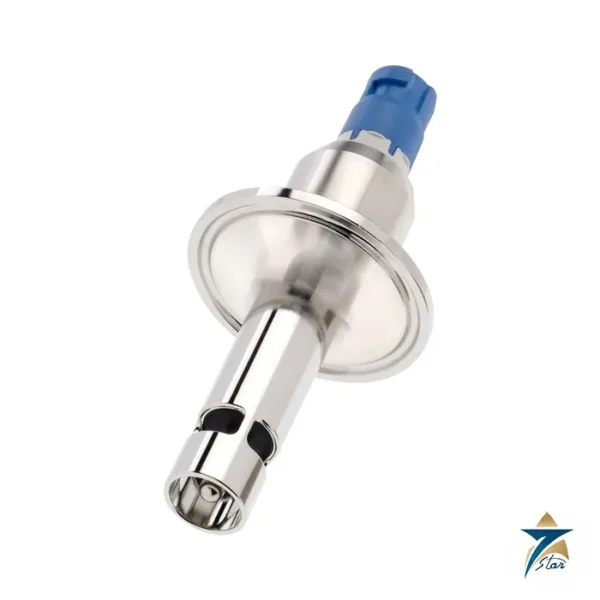
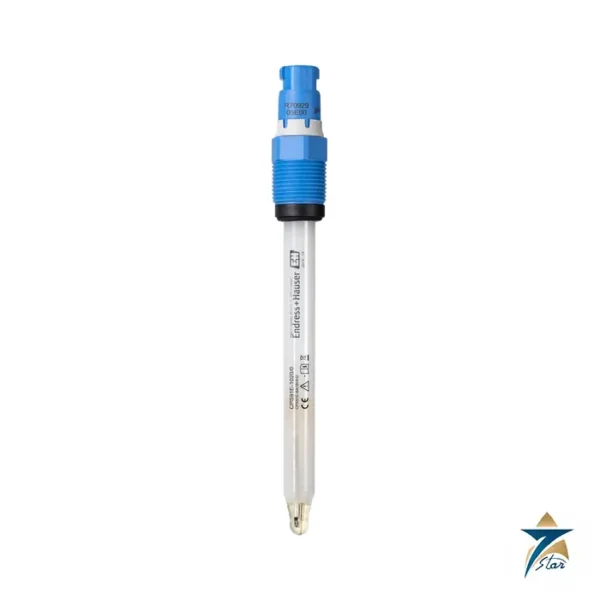
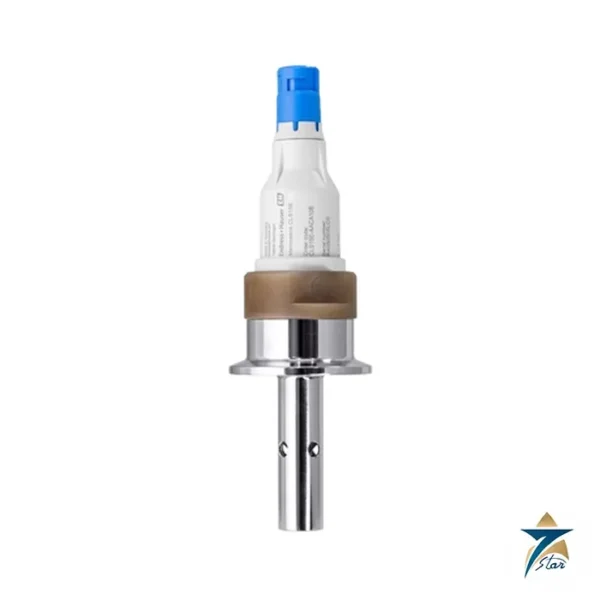
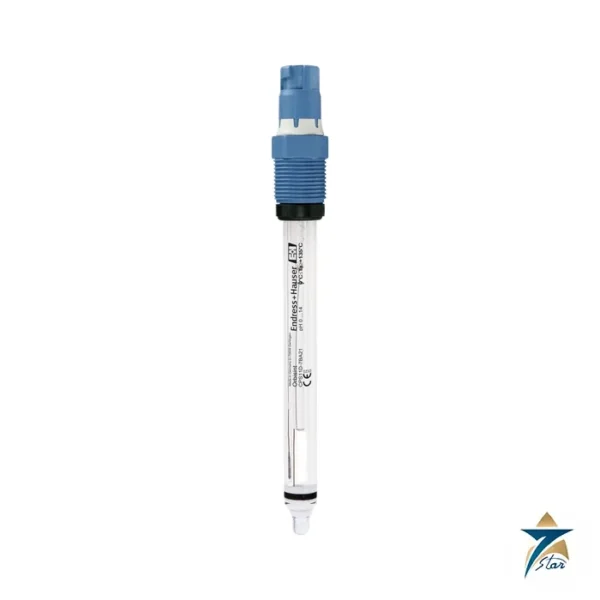
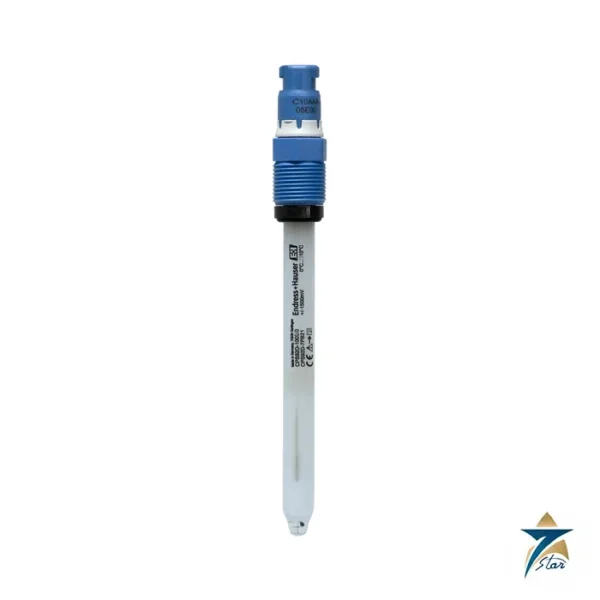
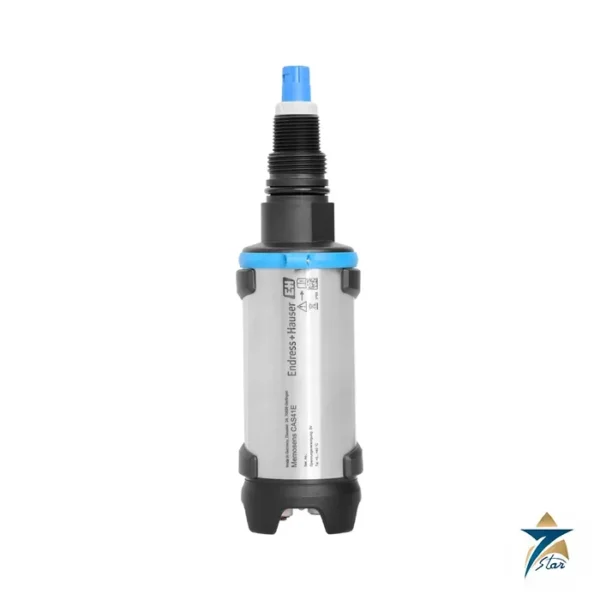
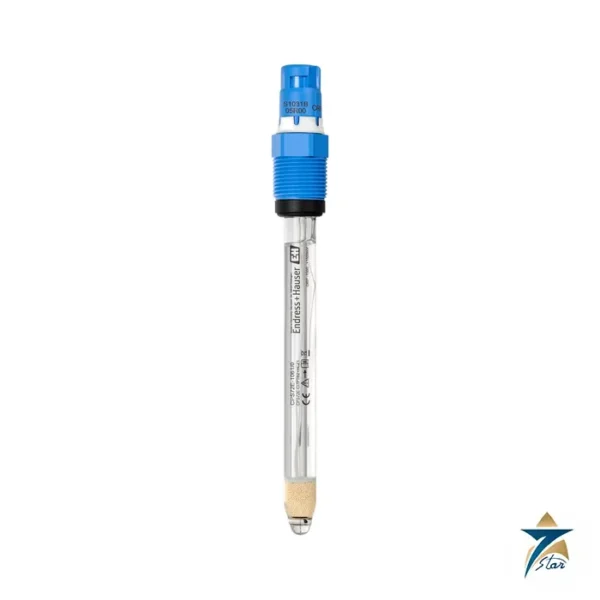
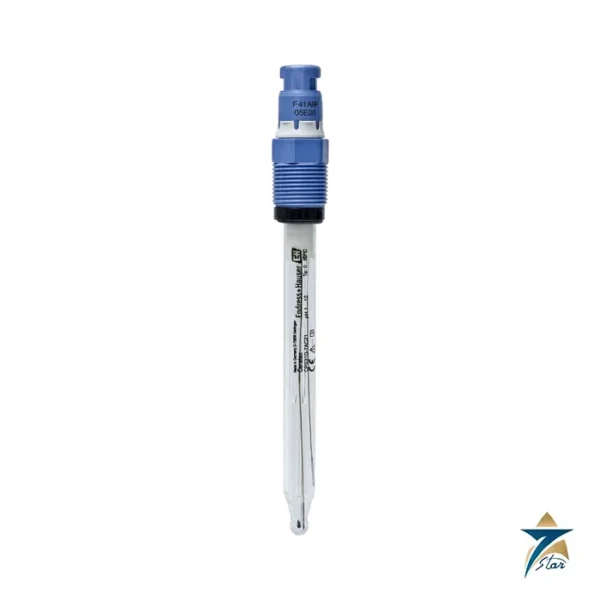
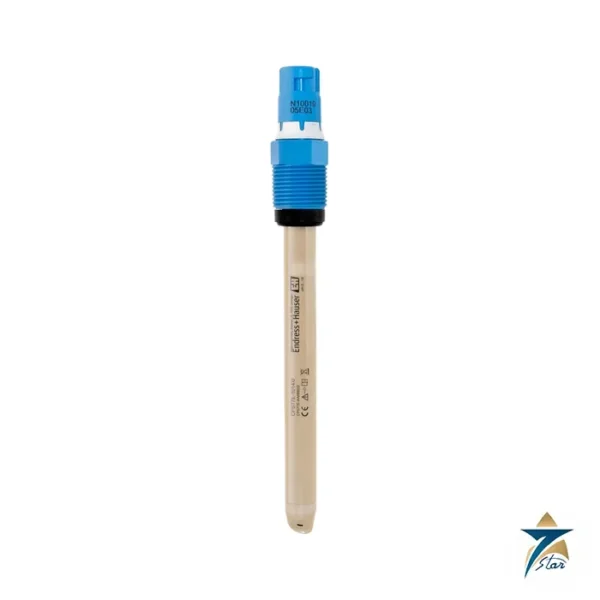
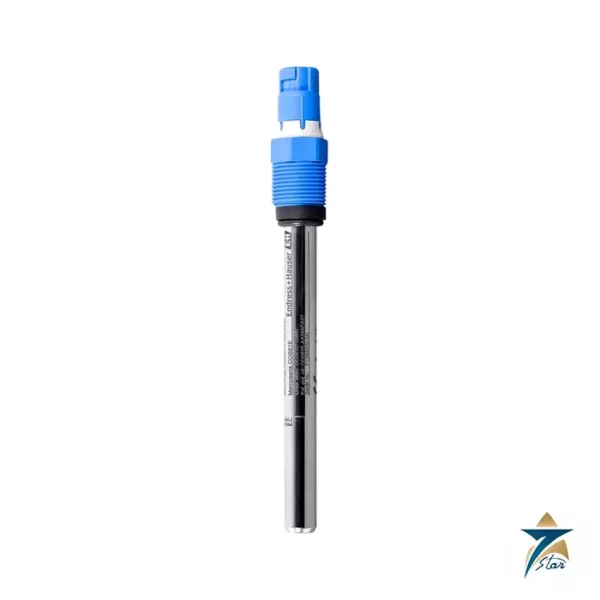
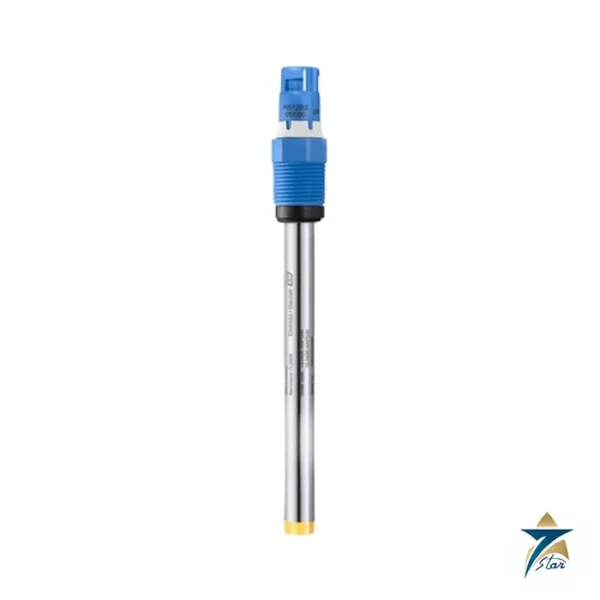
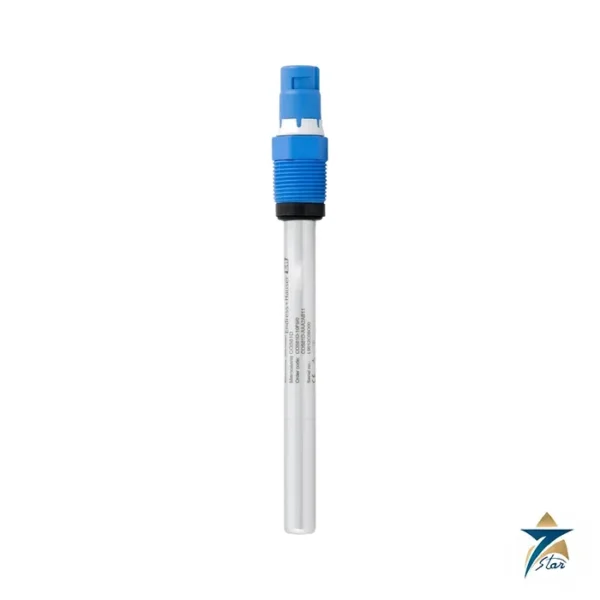
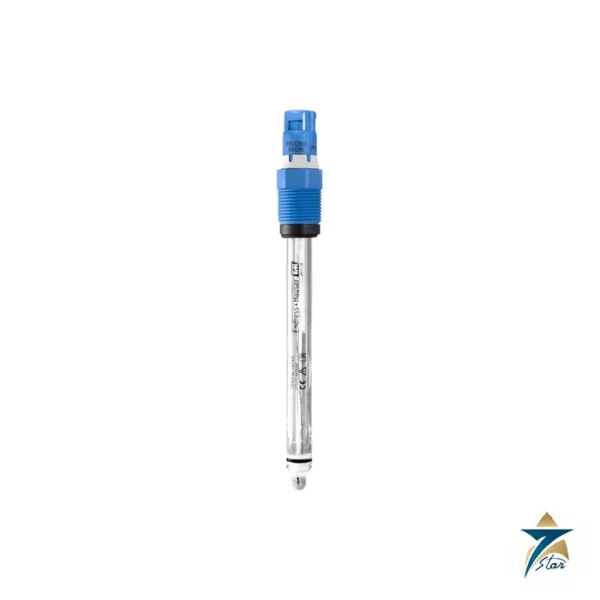
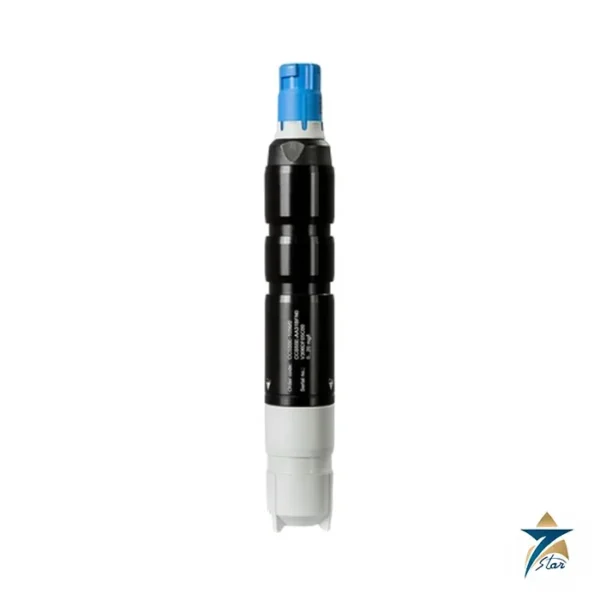
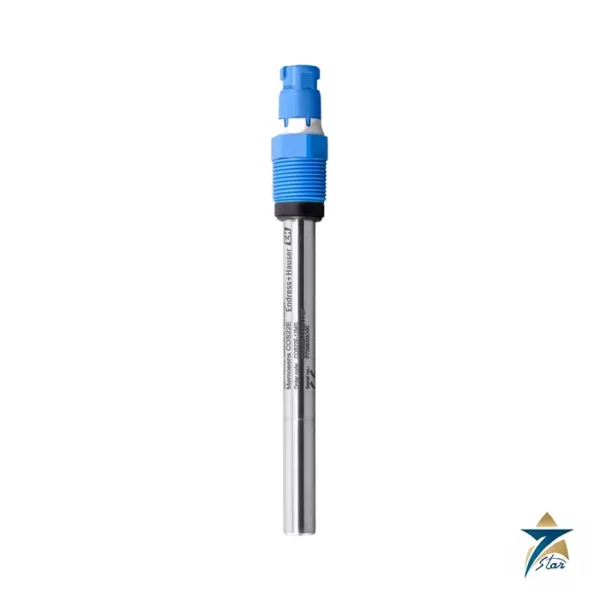
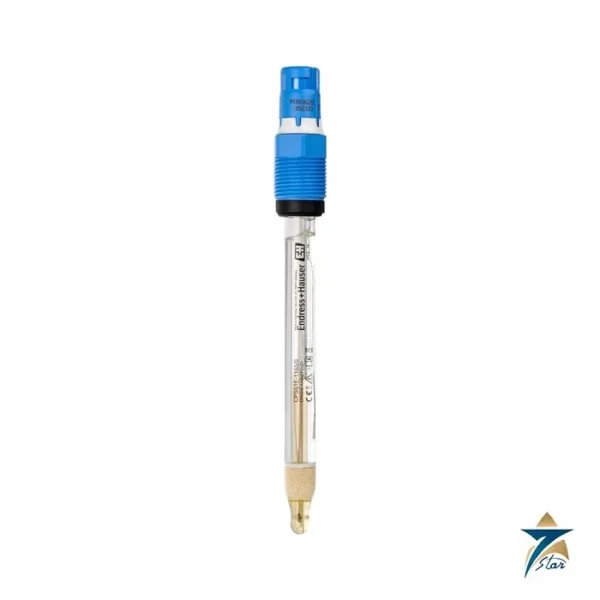
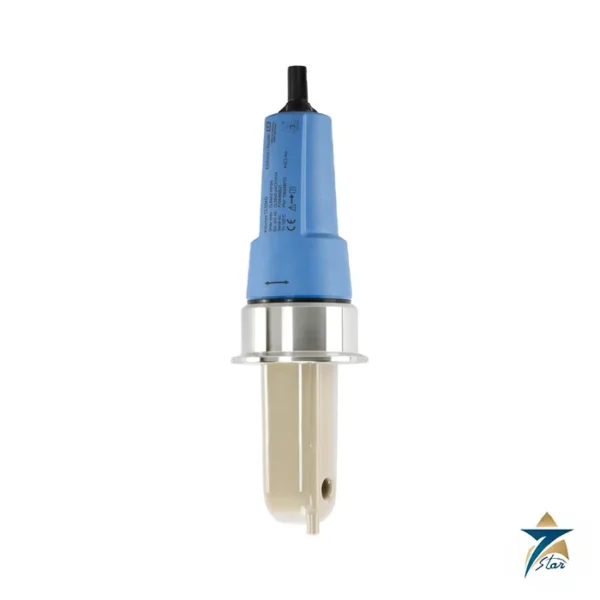
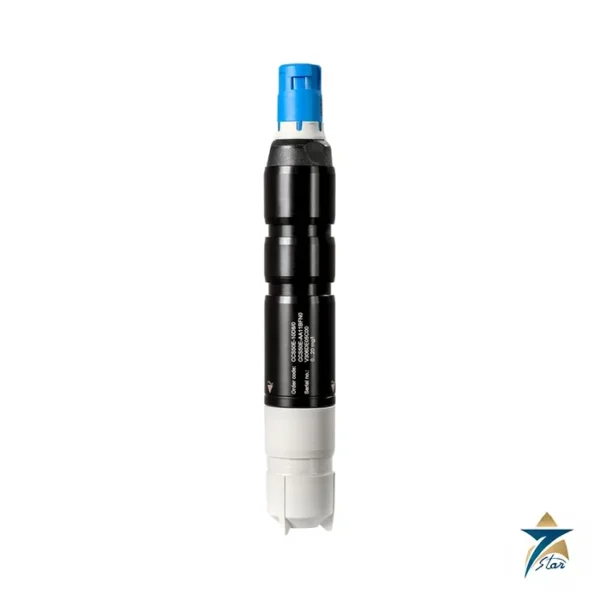
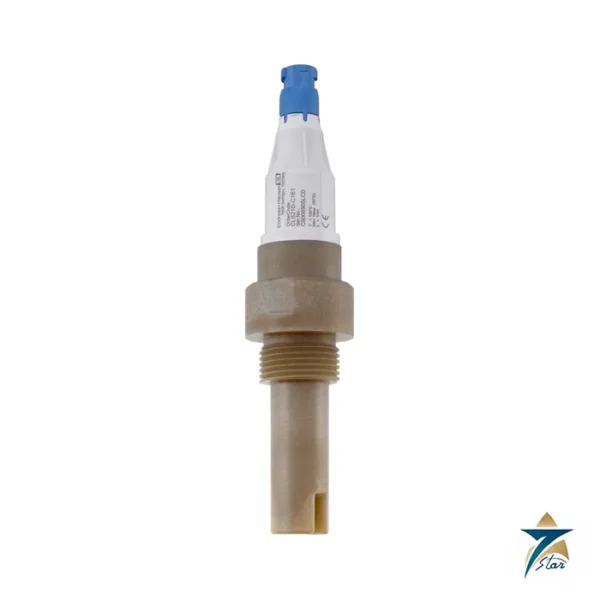
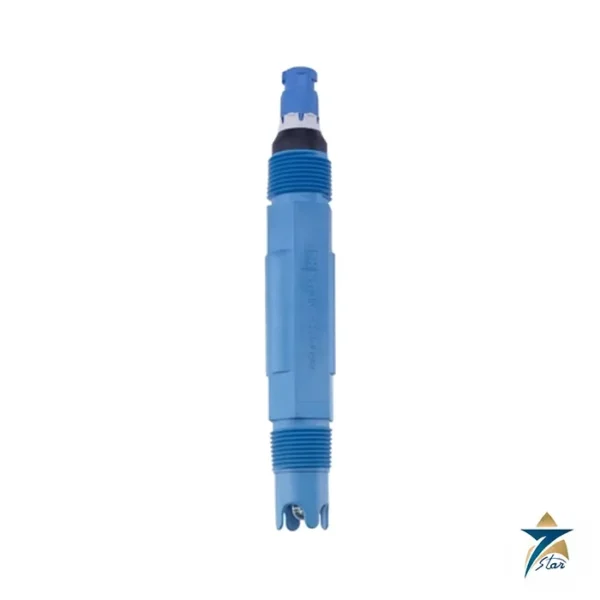
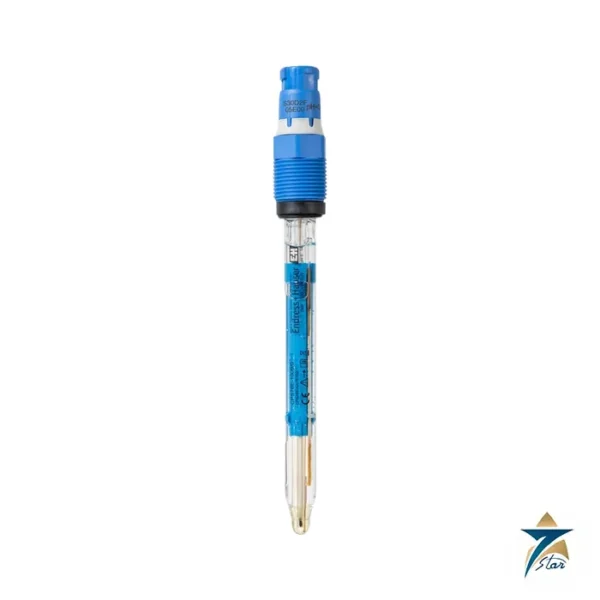
Endress+Hauser CLL47E Memosens 4-Electrode Conductivity Sensor

Description

CLL47E: four electrodes for very different samples

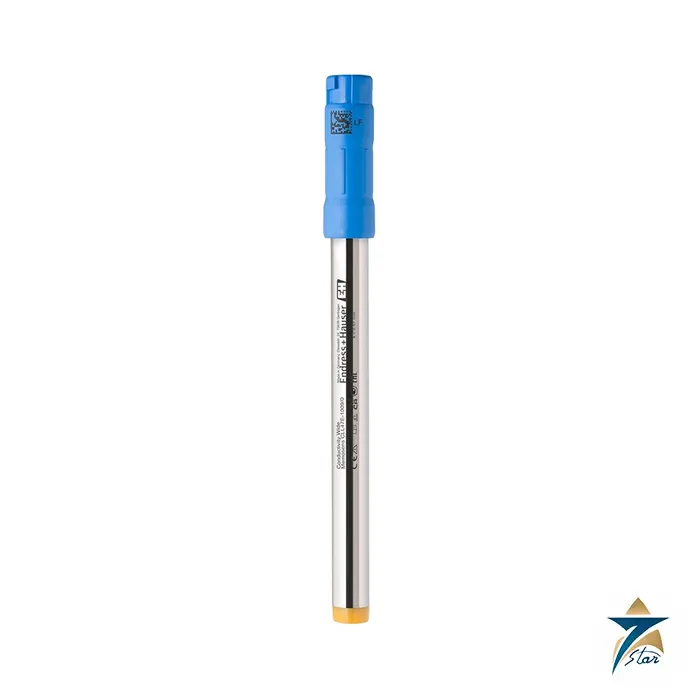
Endress+Hauser CLL47E is the conductivity member of the Memosens 2.0 laboratory range. Where a two-electrode cell must be swapped when the sample jumps from ultrapure rinse water to brine, the CLL47E keeps working because its four-electrode cell covers 5 uS/cm to 200 mS/cm. An alternating current is driven through the outer electrode pair while the two inner electrodes measure the voltage, which suppresses polarisation effects at the live electrodes.

Seven Star LLC is an independent supplier serving Oman and the GCC and is not affiliated with the manufacturer. We handle requests for CLL47E from plant laboratories checking desalination permeate, cooling water, boiler condensate and chemical dosing tanks.

Measured values and accuracy of CLL47E

Parameter Value
Conductivity range 5 uS/cm to 200 mS/cm (relative to water at 25 degrees C)
Temperature range 0 to 100 degrees C
Cell constant k = 0.57 per cm
Temperature compensation Pt1000, Class A to IEC 60751
Factory calibration Individual, about 50 uS/cm against NIST or PTB traceable reference; certificate supplied
Cell constant uncertainty 1.0 percent
Error 5 uS/cm to 1 mS/cm Up to 2 percent of reading
Error 1 to 200 mS/cm Up to 4 percent of reading
Temperature error Up to 1.0 K from 0 to 100 degrees C
Repeatability Up to 0.5 percent of reading; temperature up to 0.5 K
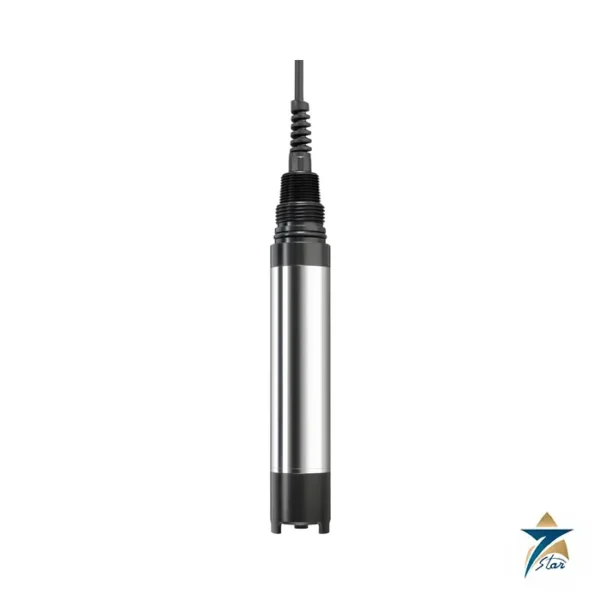
Dimensions and weight Length 120 mm, diameter 11.9 mm, maximum 0.06 kg
Protection IP 68 / NEMA type 6P, 1.9 m water column, 20 degrees C, 24 h
Ambient / storage Minus 20 to 60 degrees C / minus 25 to 80 degrees C, humidity 5 to 95 percent
Materials Platinum and zirconium oxide ceramic; stainless steel 1.4435 (AISI 316L)

Design details that help in a busy lab

The surfaces are mechanically polished, so sticky or viscous samples rinse off easily. The sensor holds its own calibration data, application ranges and commissioning date, and passes them to the handheld through a non-contact inductive link. Because the cell constant is certified at the factory, a user can start measuring without a full calibration when a standard solution is not at hand, although the handheld can record a field adjustment.

How CLL47E differs from other conductivity sensors

Contacting four-electrode CLL47E is the lab version. The CLS15E, CLS16E and CLS21E in the same brand are process sensors with different ranges and pressure ratings, and they are installed in pipes with a Memosens cable. CLL47E has no pressure specification at all; instead it gives 0 to 100 degrees C, a 316L body only 11.9 mm wide and an outdoor-use condition set. Its broad 5 uS/cm to 200 mS/cm window is the reason to buy it instead of a single-range process cell.

Working outdoors and with the handheld

The datasheet allows brief field dips: use cable CYK10-A052 with the spacer so the sensor cannot be lost, limit each dip to 30 minutes and two dips a week, stay within 5 m depth and keep the medium at 50 degrees C or below. Accessories listed include the laboratory cable CYK20, the 3 m CYK10-A032 cable with M12 plug, five CLY11 NIST-referenced calibration solutions from 74 uS/cm to 107 mS/cm, the CML18 handheld and Memobase Plus.

Typical lab and field jobs for CLL47E in Oman and the GCC

A single CLL47E can follow a sample series that starts with desalination permeate in the low microsiemens range, passes through cooling water and brackish groundwater in the millisiemens region and ends with brine or concentrated chemical solution near the 200 mS/cm ceiling. That is why plant laboratories at desalination, power and petrochemical sites in the GCC choose a four-electrode cell: one probe, one calibration record, no range changes. Its polished 316L body is also easy to wipe clean when switching between dosing chemicals or viscous slurry samples, which the datasheet names as a design benefit.

Care of CLL47E

Because a four-electrode cell is calibrated individually, keep the manufacturer certificate with the probe and file it with the laboratory quality records. Rinse the probe after each sample, and keep it dry between uses within the storage range. Check against a CLY11 solution close to your expected sample conductivity when results look doubtful, and record the adjustment in Memobase Plus.

CLL47E questions answered briefly

How wide is the measuring range of Endress+Hauser CLL47E? Conductivity from 5 uS/cm to 200 mS/cm referred to water at 25 degrees C, together with temperature from 0 to 100 degrees C.

What is the cell constant of CLL47E and how accurate is it? k = 0.57 per cm, individually measured in about 50 uS/cm with a certificate; the uncertainty in determining the constant is 1.0 percent.

What measured error does CLL47E have? Up to 2 percent of reading between 5 uS/cm and 1 mS/cm and up to 4 percent of reading between 1 and 200 mS/cm; temperature error up to 1.0 K.

Can CLL47E be used outdoors? Only under conditions given in the datasheet: CYK10-A052 cable with spacer, maximum 30 minutes, twice per week, 5 m insertion depth and medium up to 50 degrees C.

What materials touch the sample on CLL47E? Platinum and zirconium oxide ceramic for the sensor element and stainless steel 1.4435 (AISI 316L) for the body.

Documents and quotation

The datasheet for CLL47E accompanies this page. Please send an RFQ stating the part number CLL47E, the quantity and any accessories such as the CYK20 or CYK10 cable or CLY11 calibration solutions that should ship together. We will reply with a quotation and lead time, and we can confirm that the handheld you plan to use is Memosens 2.0 capable before the order is placed.

Typical Questions From Maintenance Teams

Maintenance engineers replacing a Endress+Hauser CLL47E usually ask whether the new unit is a direct fit, whether settings can be copied from the old one, and whether any accessories must be ordered separately. The answer depends on the exact order code and the generation of the installed liquid analysis sensors, so the nameplate details are the best starting point. Send them with your request and we will check the match, point out any differences in connections or options, and list the parts needed so that the job can be finished in one visit.

Datasheets & Documents
  • PDF Datasheet Endress+Hauser CLL47E Memosens 4-Electrode Conductivity Sensor Datasheet Download
Reviews (0)

Reviews

There are no reviews yet.

How would you rate this product?

It takes about 10 seconds — just tap a star. Your email is never published.

About brand

Endress+Hauser makes process measurement instruments for flow, level, pressure, temperature and liquid analysis. Georg H. Endress and Ludwig Hauser started the business in Lörrach, Germany, on 1 February 1953, first selling level meters, and the Endress+Hauser name has been used since 1957. The group is headquartered in Reinach, Switzerland, and has been wholly owned by the Endress family since 1975.

Seven Star LLC is an independent supplier listing Endress+Hauser flowmeters, level and pressure transmitters, temperature assemblies and liquid analysis products for buyers in Oman and the GCC. Instruments are matched from the full order code on the nameplate.

Endress+Hauser company profile

Origin Founded in Lörrach, Germany, on 1 February 1953 by the Swiss engineer Georg H. Endress and Ludwig Hauser
Headquarters Endress+Hauser AG, Reinach (Basel-Landschaft), Switzerland
Ownership Family owned; the Endress family has been the sole shareholder since 1975, and a family charter commits the company to stay family owned
Size About 16,500 employees and sales of about EUR 3.7 billion (2023, as reported by the company)
Product families Proline flowmeters, Micropilot and Levelflex radar, Liquiphant switches, Cerabar and Deltabar pressure, iTEMP and iTHERM temperature, Liquiline and Memosens liquid analysis

Milestones

  • 1953: Georg H. Endress and Ludwig Hauser start the business in Lörrach on 1 February, first selling level meters.
  • 1957: The Endress+Hauser name comes into use.
  • 1975: The Endress family becomes sole shareholder.
  • 2023: About 16,500 employees and sales of about EUR 3.7 billion, as reported by the company.

Endress+Hauser product lines

Line Measuring principle Typical use
Promass F 300, Promass 80F, 83F/84F Coriolis mass flow Direct mass flow and density of liquids and gases, hydrocarbon transfer and chemical dosing
Promag P 300, P 500, H 300, W 400, W 10, 50P Electromagnetic flow Water, wastewater, slurries and other conductive liquids
Prowirl F 200, 72F Vortex flow Steam, gas and low-viscosity liquids
Prosonic Flow 92F, t-mass 65F Ultrasonic and thermal mass flow Water lines; compressed air and industrial gases
Micropilot FMR62, FMR67, FMR60, FMR10B, FMR20, FMR50, FMR52 Free-space radar level, 80 GHz and 26 GHz Tanks, process vessels, silos and open water channels
Levelflex FMP51, FMP50, FMP54, FMP55 Guided wave radar level Level and interface in vessels, separators and bypass chambers
Liquiphant FTL51, Prosonic S FMU90 Vibronic point level; ultrasonic level High and low level alarms, pump protection, open channel flow
Cerabar PMC71B, PMP51B, PMP71, Deltabar PMD78B, PMD75 Pressure and differential pressure Process pressure, hydrostatic level and DP flow
iTEMP TMT82, TMT162, iTHERM TM101, TR66, TR10 Temperature transmitters and thermometers RTD and thermocouple points with thermowells
Liquiline CM444, CM442, Memosens CPS11E, Stamolys reagents Liquid analysis pH, ORP, conductivity, dissolved oxygen and nutrient analysis in water treatment and process

Where Endress+Hauser instruments are used

In Oman and the GCC, Endress+Hauser instruments are common in oil and gas production and processing, refineries and petrochemicals, desalination and water networks, wastewater treatment, power plants and food and beverage plants. Coriolis meters measure hydrocarbon and chemical flows, electromagnetic meters cover water and wastewater, radar transmitters handle tank and silo level, and Liquiline analysers monitor water quality. Proline 300 and 500 flowmeters include Heartbeat Technology for in-situ verification, which reduces the need to remove a meter for checks.

Ordering Endress+Hauser instruments: what we need

The order code on the nameplate (for example PMP71-1QA1S11RDADU) defines every option: measuring range, process connection, materials, output, approvals and display. Send it with the serial number; Endress+Hauser can retrieve the original configuration from the serial number. For a new instrument add the medium, operating and design pressure and temperature, range, line size or tank geometry, process connection, wetted materials, output or protocol (4-20 mA HART, PROFIBUS, FOUNDATION Fieldbus, Modbus) and the hazardous-area approval required. Older models such as Promass 80/83 or Micropilot M are replaced by current Proline or 80 GHz Micropilot devices.

Facts checked against Endress+Hauser company history and product information, October 2026.

FAQ

Questions about the Endress+Hauser CLL47E Memosens 4-Electrode

Answers from our engineering team on installation, compatibility and integration.

01How wide is the measuring range of Endress+Hauser CLL47E?
Conductivity from 5 uS/cm to 200 mS/cm referred to water at 25 degrees C, together with temperature from 0 to 100 degrees C.
02What is the cell constant of CLL47E and how accurate is it?
k = 0.57 per cm, individually measured in about 50 uS/cm with a certificate; the uncertainty in determining the constant is 1.0 percent.
03What measured error does CLL47E have?
Up to 2 percent of reading between 5 uS/cm and 1 mS/cm and up to 4 percent of reading between 1 and 200 mS/cm; temperature error up to 1.0 K.
04Can CLL47E be used outdoors?
Only under conditions given in the datasheet: CYK10-A052 cable with spacer, maximum 30 minutes, twice per week, 5 m insertion depth and medium up to 50 degrees C.
05What materials touch the sample on CLL47E?
Platinum and zirconium oxide ceramic for the sensor element and stainless steel 1.4435 (AISI 316L) for the body.