
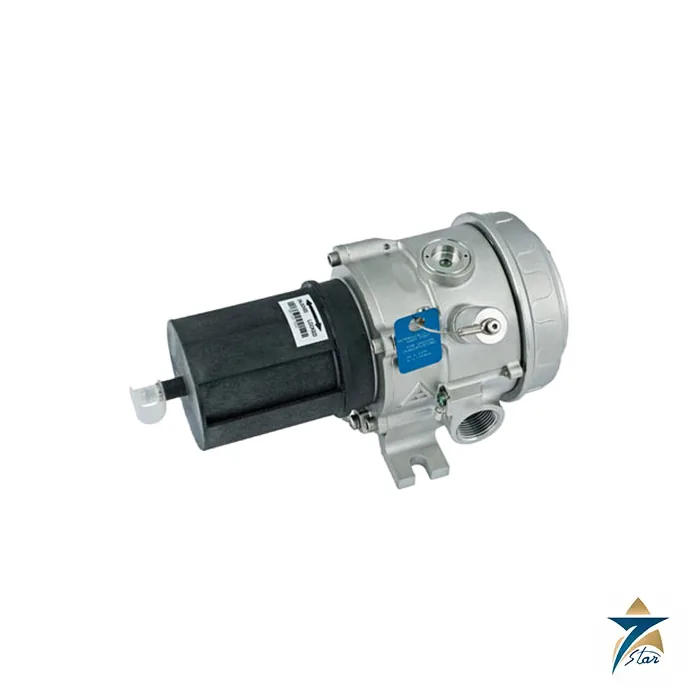
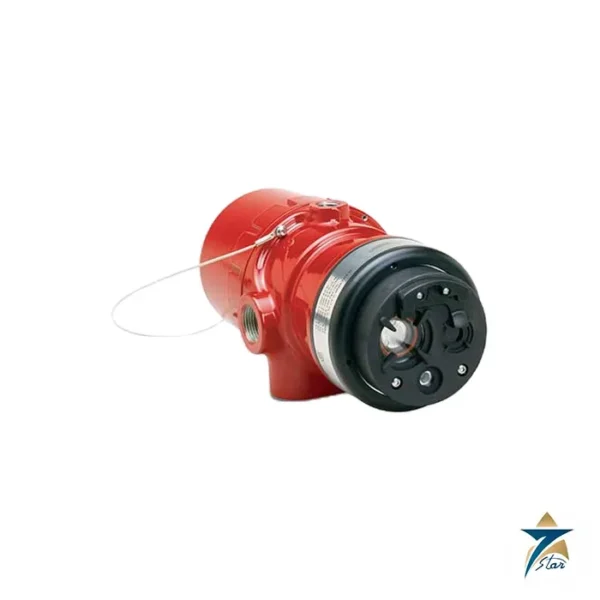
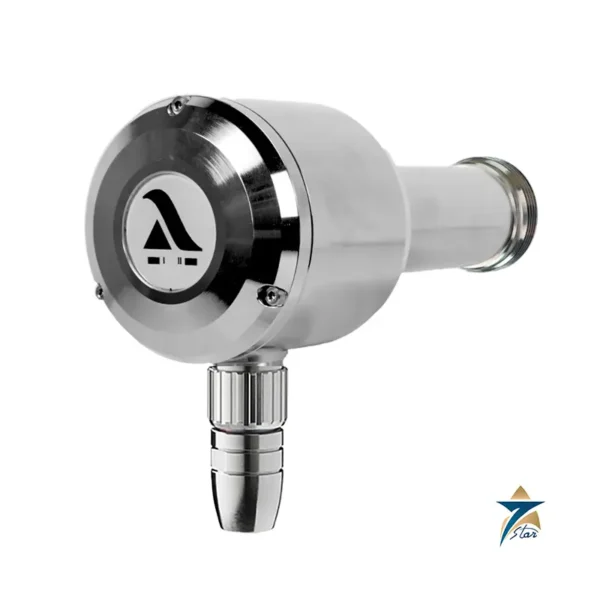
The Det-Tronics PIRECL, sold under the PointWatch Eclipse name, is a diffusion-based point infrared detector for continuous monitoring of flammable hydrocarbon gases and vapours from 0 to 100 percent of the lower flammable limit (LFL). Det-Tronics describes it as its most rugged stainless steel point IR gas detector, and it has been widely adopted on onshore and offshore oil and gas facilities. The Det-Tronics PIRECL is performance certified to methane, propane, ethylene and butane, ships factory set and calibrated to one of those four gases, and can be configured for many other hydrocarbons. It carries FM, CSA, ATEX, IECEx, DNV and INMETRO approvals, and safety-certified models are certified SIL 2 to IEC 61508 by exida.
Seven Star LLC supplies the Det-Tronics PIRECL to upstream producers, gas processors, refineries and storage terminals in Oman and the GCC as a trusted supplier, with engineering support in Muscat. We help instrument and safety engineers select the calibration gas, output package and accessories for each tag, and we keep spare baffles and display options available for maintenance teams.
Hydrocarbon molecules absorb infrared light at wavelengths linked to their carbon-hydrogen bonds. A point IR detector draws ambient air by diffusion into an optical path, shines an infrared source through it and measures how much energy reaches the detector at a gas-sensitive wavelength compared with a reference wavelength that hydrocarbons do not absorb. The ratio between the two signals rises as gas concentration increases, and the electronics convert it into a linear reading in percent LFL. Because the measurement depends on optical absorption rather than a chemical reaction, the sensing element is not consumed, cannot be poisoned by silicones or sulfur compounds, and is not damaged by constant background gas or by high concentrations.
The practical result is a detector that does not need routine calibration and fails safe: the Det-Tronics PIRECL performs all critical self-diagnostic tests once per second and reports blocked optics or internal faults on its outputs. Response is fast. When the Det-Tronics PIRECL is tested to EN 60079-29-1 with methane and the baffle fitted, its standard response version reaches T50 in about 4.5 seconds and T90 in about 7.1 seconds, while the faster response option reaches T90 in about 1.5 seconds without the hydrophobic filter. Accuracy is ±3 percent LFL from 0 to 50 percent LFL and ±5 percent from 51 to 100 percent LFL.
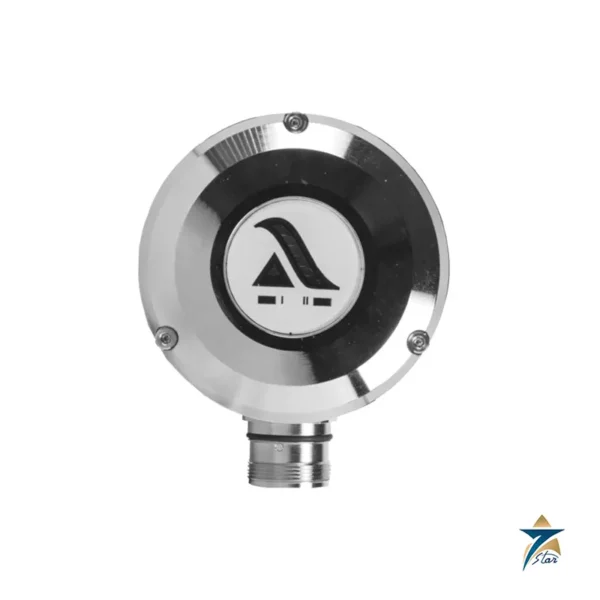
The Det-Tronics PIRECL body is cast 316 stainless steel (CF8M) with two conduit entries, 3/4 inch NPT or 25 mm, and an integral wiring compartment that removes the need for a separate junction box. A tethered weather protection baffle with twist-lock fitting shields the optics, and an optional hydrophobic filter works with the heated sapphire optics to reduce nuisance faults from rain, spray and condensation. The unit measures roughly 23.6 by 13.2 by 11.7 cm and weighs about 4.8 kg. Certification covers Class I Division 1 and 2 and Zones 1 and 2, with Ex db eb IIC or Ex db IIC protection and an optional intrinsically safe [ib] HART port.
Standard outputs on the Det-Tronics PIRECL are an isolated or non-isolated 4–20 mA current loop with HART and an RS-485 port supporting Modbus and ASCII. An optional relay board adds two programmable alarm relays and one fault relay, so the detector can switch local beacons or shutdown valves without extra hardware. Dedicated EQP models connect straight onto the Eagle Quantum Premier network, and a FlexVu UD10, UD20 or UD30 universal display can be fitted remotely for one-person calibration where the detector is mounted out of reach.
The design points that make the Det-Tronics PIRECL popular with plant operators include:
Point IR detectors are the workhorse of combustible gas protection, and the Det-Tronics PIRECL is typically installed around wellheads and manifolds, compressor and pump skids, separator and slug catcher areas, gas turbine enclosures, tank farms, truck and jetty loading points, and inside HVAC air intakes using the duct mounting kit. In Oman these locations span oil and gas concession facilities in the interior, gas processing plants feeding the national grid, refineries and petrochemical complexes in Sohar and Duqm, LNG trains in Sur, and fuel storage and power generation sites around Muscat and Salalah. Its stainless construction suits salt-laden coastal air and high ambient temperatures.
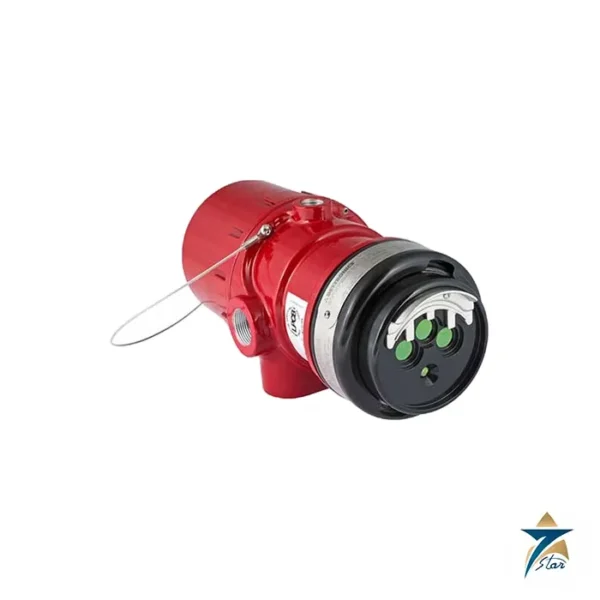
Many projects place the Det-Tronics PIRECL alongside open path detectors and flame detectors, all reporting to a single fire and gas controller. Seven Star LLC supplies Det-Tronics PIRECL detectors calibrated to the required gas, together with baffles, filters, duct mounting kits and HART communicators, and our engineers support configuration and commissioning questions for clients throughout Oman and the GCC.
The Det-Tronics PIRECL data below is taken from specification data sheet 90-1138; refer to instruction manual 95-8526 for other gases and performance standards.
| Parameter | Specification |
|---|---|
| Model | PointWatch Eclipse PIRECL Infrared Hydrocarbon Gas Detector |
| Detection range | 0 to 100% LFL standard (other ranges configurable) |
| Certified gases | Methane, propane, ethylene, butane (factory calibrated to one) |
| Response (methane, baffle fitted) | Standard: T50 4.5 s, T90 7.1 s; fast response: T50 1.0 s, T90 1.5 s (without filter) |
| Accuracy | ±3% LFL (0–50% LFL); ±5% LFL (51–100% LFL) |
| Alarm setpoints | Low and high alarm 5 to 60% LFL (EQP low alarm 5 to 40% LFL) |
| Input voltage | 24 Vdc nominal, 18 to 32 Vdc |
| Power consumption | 4.0 W nominal at 24 Vdc; 7.5 W max at 24 Vdc; 10 W max at 32 Vdc |
| Outputs | 4–20 mA with HART; RS-485 Modbus and ASCII; optional 2 alarm + 1 fault relays |
| Warm-up | 2 minutes to normal mode; 1 hour recommended |
| Operating temperature | –55°C to +75°C |
| Humidity | 0 to 99% RH (Det-Tronics verified) |
| Housing | 316 stainless steel (CF8M cast); IP66/IP67 |
| Conduit entries | Two, 3/4 inch NPT or 25 mm |
| Hazardous area | Ex db eb IIC T4…T5 or Ex db IIC T4…T5, optional [ib] HART port; Class I Div. 1 Groups B, C and D |
| Approvals | FM, CSA, ATEX, IECEx, DNV/MED, INMETRO; SIL 2 (IEC 61508) |
| Weight and size | 4.8 kg; 23.62 × 13.21 × 11.68 cm |
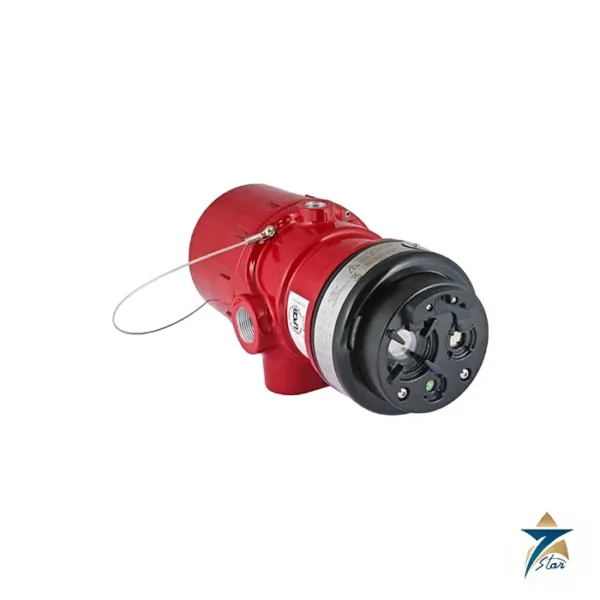
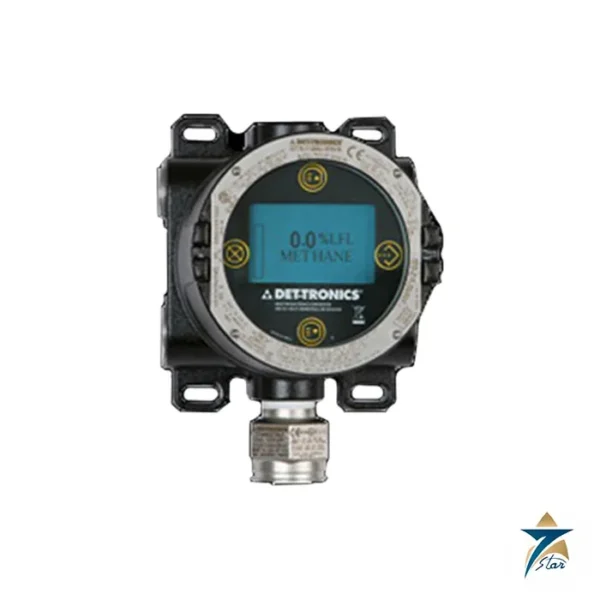
Comparable point infrared detectors in our catalogue include the Dräger PIR 7000 point infrared gas detector, the Honeywell Sensepoint XCD IR flammable detector and the Sieger Optima Plus gas detector.
For system integration, see the Det-Tronics Eagle Quantum Premier controller.
To request a formal quotation for the Det-Tronics PIRECL, confirm current availability and lead time or download the technical datasheet, contact the instrumentation division at Seven Star LLC. Let us know the calibration gas, conduit thread, output and relay options and any accessories, and our engineers in Muscat will confirm Det-Tronics PIRECL availability and lead time for delivery anywhere in Oman and the GCC.
Browse Det-Tronics products by category: Fire & Gas Detector.
Choose the option that best fits your needs to get the fastest response from our team.
Automatically fill the RFQ form with this product's details for a faster process.
Manually enter multiple part numbers, specific brands, or custom requirements.










Reviews
There are no reviews yet.