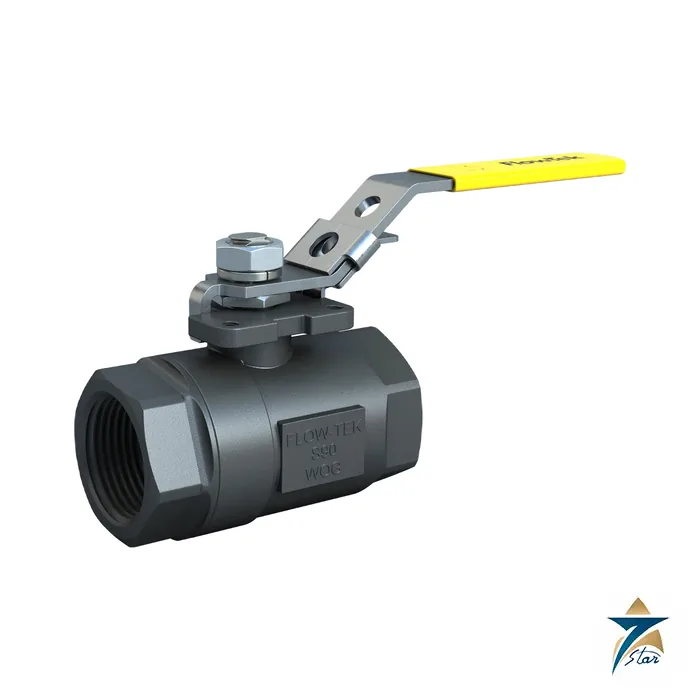
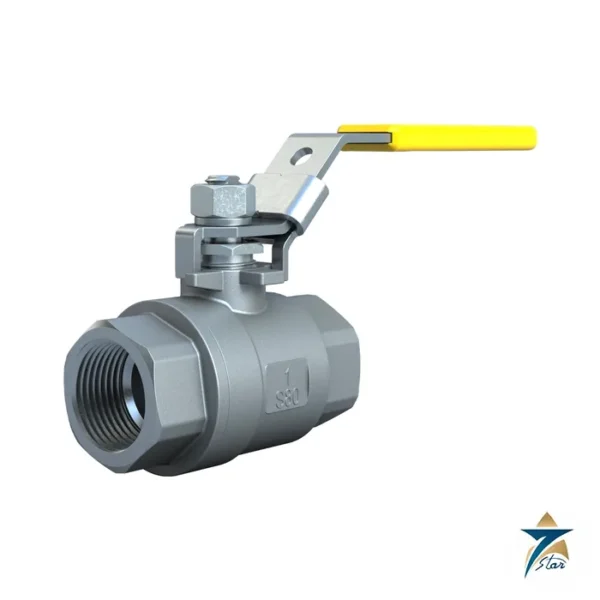
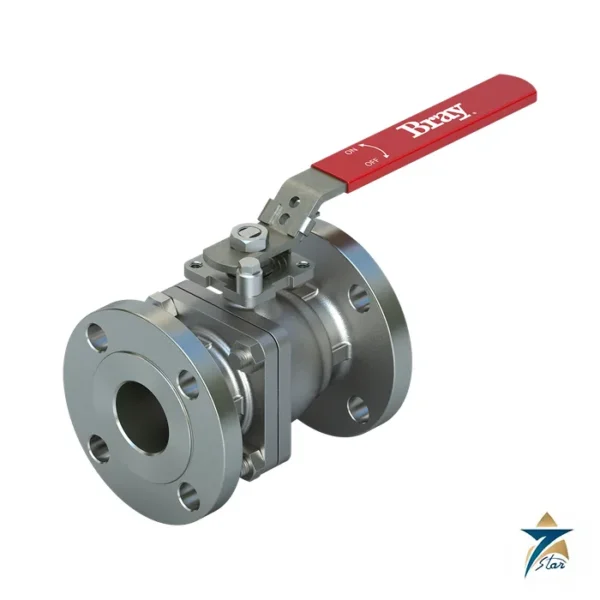
Bray Flow-Tek Series S70/S90 two-piece threaded high pressure ball valve
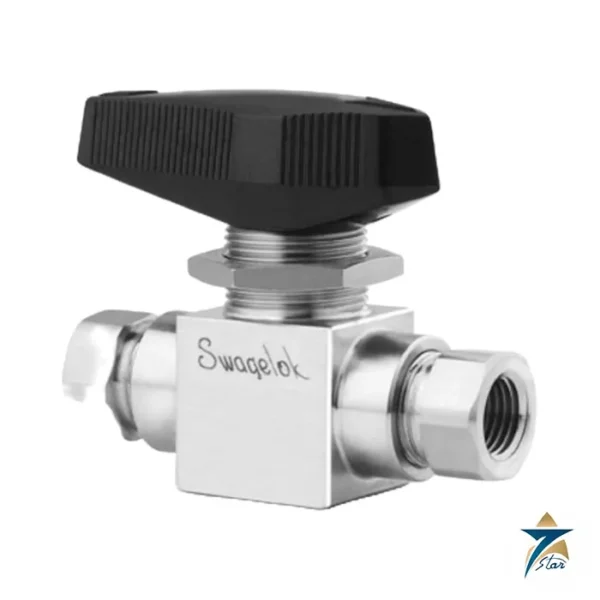
The Series S70 and S90 are two-piece, standard port, threaded ball valves from Bray’s Flow-Tek line, built for high working pressure in a small valve. They are rated up to 2000 psi WOG (137.9 bar) in the smaller sizes, with sizes from 1/4 in. to 3 in. (8 mm to 80 mm), and share the same design with different body materials: the Series S70 is the 316 stainless steel version (ASTM A351 Gr CF8M) and the Series S90 is the carbon steel version (ASTM A216 Gr WCB). Because the pair is bought together, we describe the family as S70/S90. Seven Star LLC supplies Bray valves in Oman and the GCC as an independent supplier in Muscat.
S70/S90 technical specifications
| Parameter |
Specification |
| Manufacturer / part number |
Bray Flow-Tek / Series S70 (stainless) and S90 (carbon steel) |
| Size range |
1/4 in. to 3 in. (8 mm to 80 mm) |
| Pressure rating |
1/4 to 1 in.: 2000 psi WOG (137.9 bar); 1-1/4 to 2 in.: 1500 psi WOG (103.4 bar); 2-1/2 to 3 in.: 1000 psi WOG (68.9 bar) |
| Steam rating |
150 psi WSP (10.3 bar) |
| Temperature range |
S70: -50°F to +450°F (-46°C to +232°C); S90: -20°F to +450°F (-29°C to +232°C) |
| Body and end cap |
S70: ASTM A351 Gr CF8M; S90: ASTM A216 Gr WCB |
| Ball |
ASTM A351 Gr CF8M (both); hard chromium plated per website |
| Stem |
Type 316 stainless steel, internal bottom entry, blowout proof |
| Seats, body seal, packing |
RTFE / RPTFE |
| Port |
Standard port |
| End connection |
Threaded NPT |
| Standards |
Design and test to MSS SP-110 (and MSS SP-72 listed on the website) |
| Vacuum service |
Up to 29 in. Hg gauge |
| Handle |
Stainless steel safety latch handle with locking device; anti-static device fitted |
S70 versus S90: stainless or carbon steel body
The only difference in the bill of materials between the two is the body and end cap, and the stem material noted in the brochure. S70 uses investment cast stainless steel, solution annealed, which can be used down to -50°F and resists corrosion in water, chemicals and coastal air. S90 uses cast carbon steel, normalized and black phosphate coated, with a lower limit of -20°F, and is a lower-cost choice for hydrocarbon, hydraulic and utility lines in carbon steel pipework. The ball is stainless steel in both, so the trim is the same.
The pairing matters for spare parts. Seats, body seal, thrust washer and packing are common, so a repair kit for one body material can serve the other in the same size. Plants that run both stainless and carbon steel piping often standardise on one family to reduce the number of different spare kits.
How the high-pressure two-piece design works
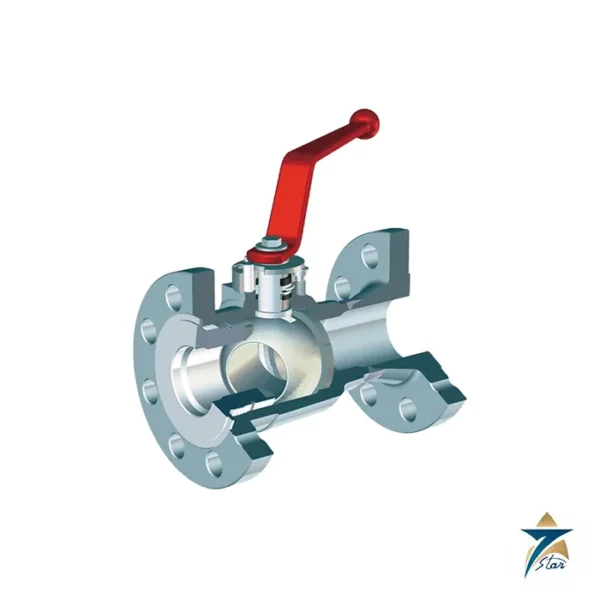
The valve body is made in two pieces: the main body, containing the ball, seats and stem, and an end cap screwed into it. The threaded closure is manufactured to close tolerances so that the joint stays sealed at pressures up to 2000 psi in the small sizes. The stem enters from the bottom and has a shoulder, so line pressure pushes it against the body instead of out of it. An adjustable packing gland compensates for wear, and an anti-static device bonds the ball and stem to the body to bleed static charge during flow of dry gases or hydrocarbons.
Standard port means the bore is smaller than the nominal pipe size, so the Cv is lower than in the full port S80 of the same size and the pressure drop is higher. The brochure gives flow coefficient, dimensions and weight per size. In long pipelines or where flow is critical, a full port valve should be checked instead.
Pressure rating by size, and why it falls
| Size |
Rating (WOG) |
| 1/4 in. to 1 in. |
2000 psi (137.9 bar) |
| 1-1/4 in. to 2 in. |
1500 psi (103.4 bar) |
| 2-1/2 in. to 3 in. |
1000 psi (68.9 bar) |
The reduction in pressure rating by size is a normal feature of threaded valves, since the end cap thread and body wall carry a larger load as the bore grows. These are cold working pressure ratings; at 450°F the RTFE seat limits the allowable pressure, and the pressure-temperature curve in the brochure must be consulted for hot services.
Selection and ordering checklist for S70/S90
- Body material: S70 stainless steel or S90 carbon steel, including minimum temperature.
- Size and thread: 1/4 to 3 in. with NPT end connections.
- Working pressure at the maximum temperature, including pressure peaks and hydrotest.
- Media compatibility with RTFE seats and packing and the ball material.
- Need for standard or full port: if low pressure drop is needed, compare the S80 full port valve.
- Locking device and handle position requirements.
Installation and maintenance of S70/S90 valves
Use a sealant suitable for the medium on the pipe threads and tighten the valve using the wrench flats nearest the joint. Support the line, because high-pressure small bore lines vibrate. Do not use the valve to throttle; leave it open or closed so that the RTFE seats do not erode. During maintenance shutdowns, the valve is normally replaced rather than opened, as both ends are threaded into the line, but repair kits with seats, seals and packing can be used when the valve is removed. Check the gland nut after the first heating cycle, and test the handle lock.
Typical S70/S90 applications in Oman and the GCC
Instrument impulse lines, hydraulic power units, chemical injection, compressed air and gas headers on oil and gas sites often use small-bore valves at high pressure. S70 stainless valves are common in coastal and offshore-type conditions where carbon steel corrodes, and S90 carbon steel valves serve dry utility and lubrication systems. Thread sealant and vibration are the usual causes of leakage in the field, so supervise the installation on high-pressure lines.
Information to send with an S70/S90 RFQ
- Series (S70 or S90), size, quantity and thread.
- Medium, pressure and temperature.
- Vacuum, steam or oxygen service flags.
- Certificates or cleaning required.
Documents and quotation
The Bray Flow-Tek Series S70/S90 brochure is attached on this page with dimensions, materials and pressure-temperature data.
Send the series, size and pressure data and Seven Star LLC will confirm the S70/S90 configuration and quote supply to Oman and the GCC.


























Reviews
There are no reviews yet.