Fully lined butterfly valve for corrosive chemicals
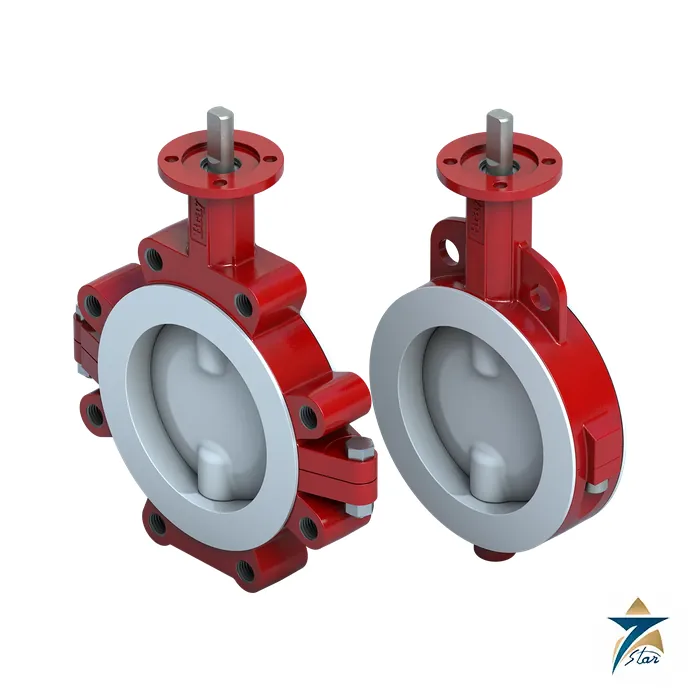
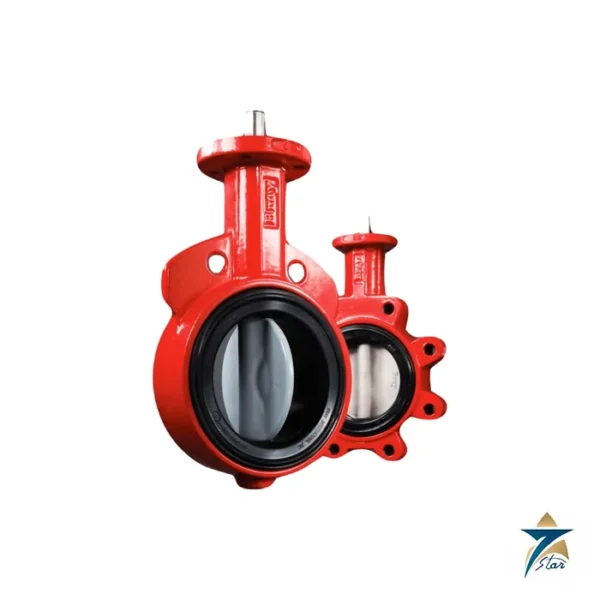
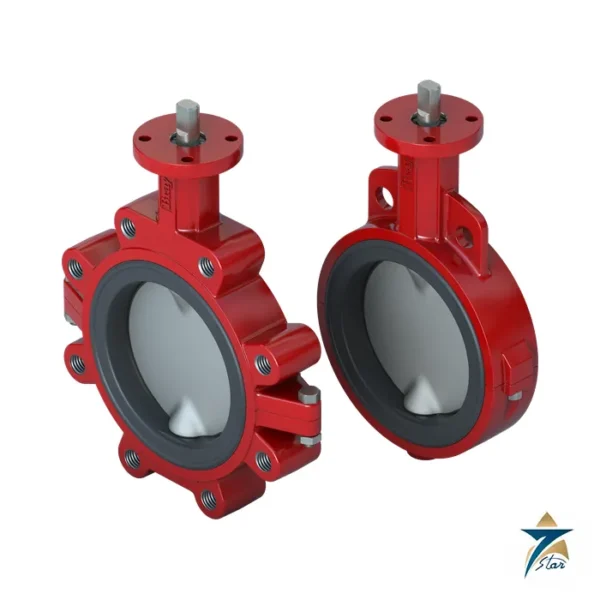
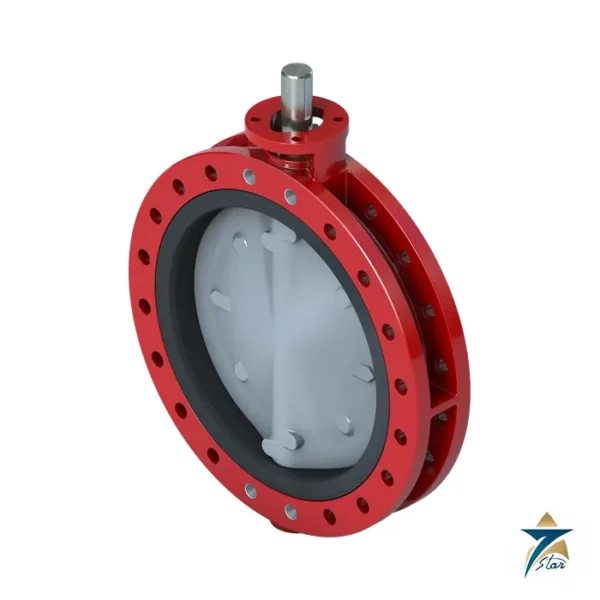
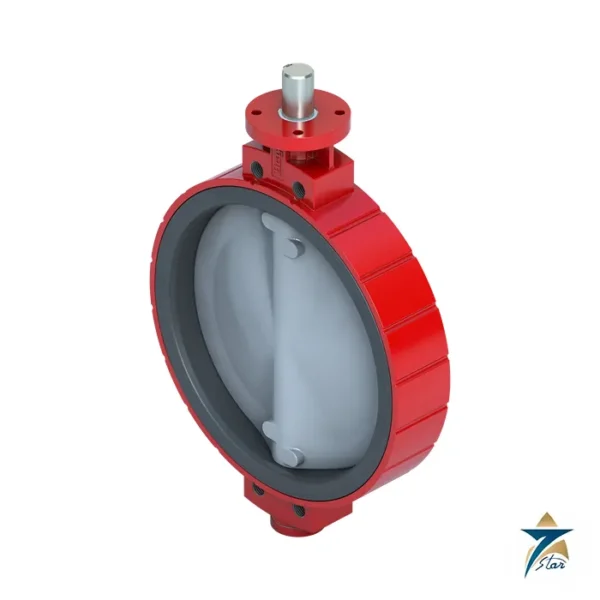
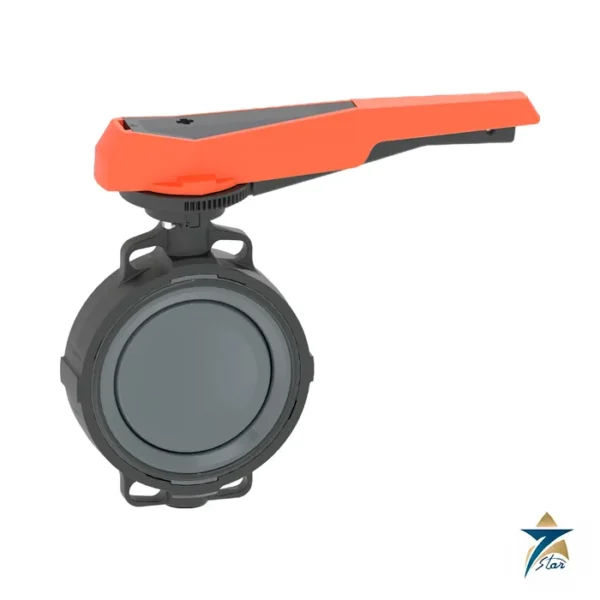
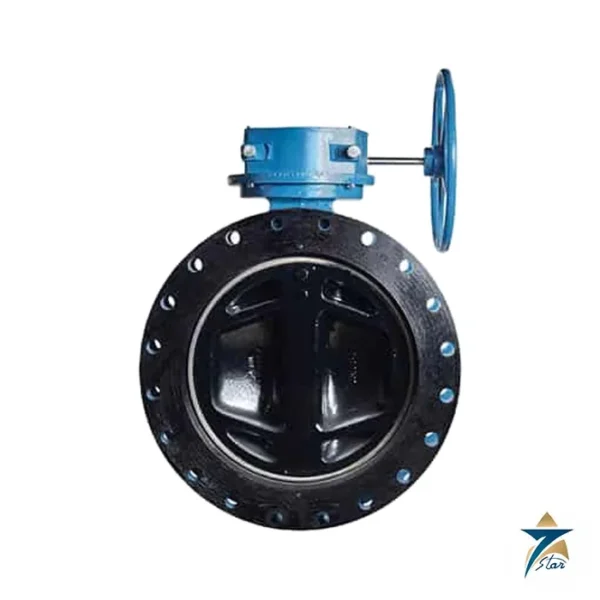
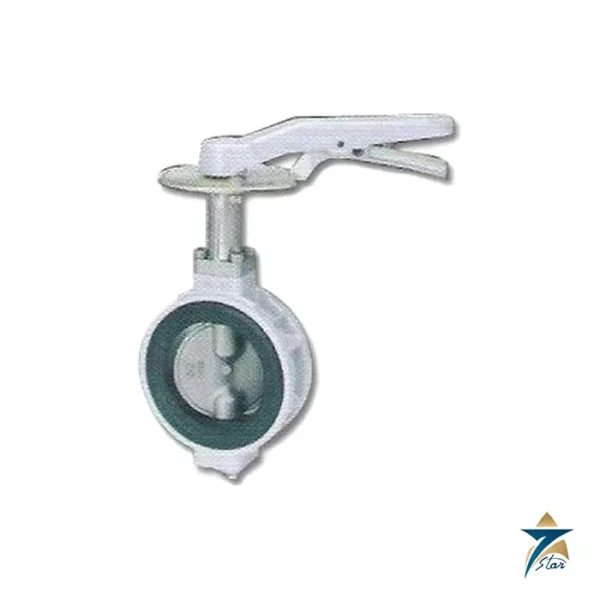
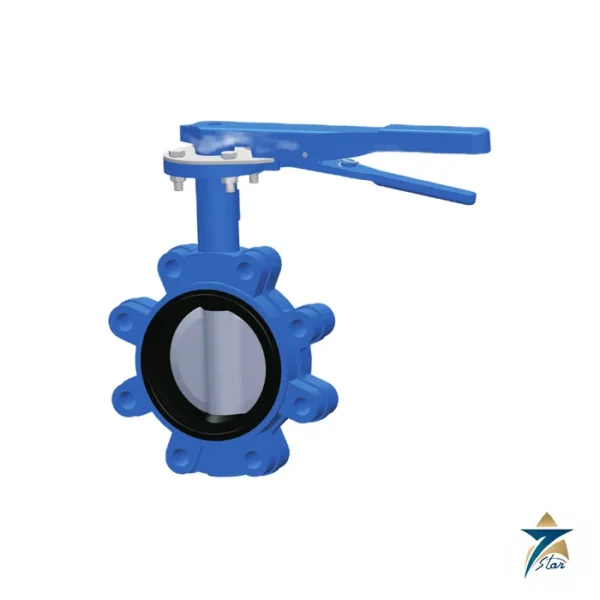
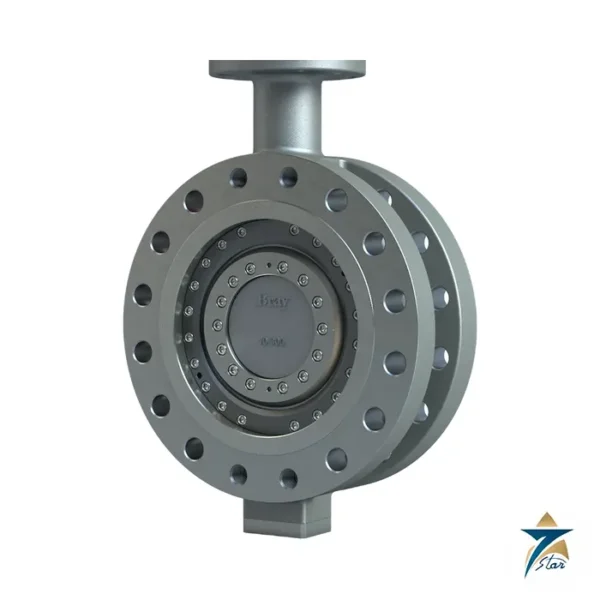
The Bray Series 22/23 is a resilient seated butterfly valve for chemical duty, with a stainless steel disc that can be encapsulated in PTFE, PFA or UHMWPE and an isostatically molded PTFE seat. Series 22 is the wafer body, Series 23 the lug body, and the 24 inch size is supplied double flanged. Bray rates all sizes from NPS 2 to 24 (DN 50 to 600) at 150 psi (10.3 bar) for bidirectional bubble-tight shutoff with downstream flanges fitted.
The design goal is that only the disc and seat touch the process: a secondary seal capsule of virgin PTFE with an internal energizer isolates body and stem from the line medium, and reinforced PTFE gaskets between the body halves remove an external leak path. Bray notes high Cv values and a seat geometry that lowers seating and unseating torque, so smaller actuators can be used.
Technical specifications
| Parameter |
Specification |
| Size range |
NPS 2 to 24 (DN 50 to 600); 24 inch double flanged |
| Body style |
Two-piece wafer (Series 22) or lug (Series 23) |
| Pressure, bidirectional |
150 psi (10.3 bar), downstream flanges fitted |
| Dead-end service, lug |
NPS 2-12: 75 psi (5.2 bar); NPS 14-24: 50 psi (3.4 bar) |
| Body rating |
150 psi (10.3 bar) |
| Flange drilling |
ASME Class 150 or DIN 3840 |
| Body material |
Ductile iron (standard), stainless steel, carbon steel; polyester coated |
| Disc options |
PTFE, PFA or UHMWPE molded over stainless steel; Hastelloy; titanium |
| Disc thickness |
1/8 inch (3 mm) minimum PTFE or PFA |
| Stems |
17-4 PH stainless steel, upper and lower |
| Seat |
PTFE (standard), conductive PTFE or UHMWPE |
| Seat energizer |
Silicone (standard) or FKM |
| Seal capsule |
Virgin PTFE with internal energizer |
| Body seal |
Reinforced PTFE gasket |
| Bearing |
PTFE-impregnated steel |
| Upper stem seal |
BUNA-N (standard) or FKM |
| Velocity limits (on/off) |
Fluids 30 ft/s (9 m/s); gases 175 ft/s (54 m/s) |
| Actuator mounting |
ISO 5211 top flange; no brackets; neck for 2 inch insulation |
Source: Bray brochure B-1050 and recommended specification sheet RR-06-22-12. Valves are pressure tested to 110 percent of rated pressure.
Seat and disc materials by temperature
Seat choice sets temperature and chemical resistance. Bray prints virgin PTFE from 0 to 400 deg F (-18 to 204 deg C), conductive PTFE for areas where electrostatic discharge protection is important, and UHMWPE from 0 to 185 deg F (-18 to 85 deg C) for abrasive chemical duty because its high molecular weight repels solids. Conductive seats and discs have a minimum 1/8 inch (3 mm) conductive PTFE thickness.
Options include a tapped port in the body neck below the stem seal for fugitive emissions detection and a grounding cable to protect against static build-up. The blowout-proof stem is shouldered and pressed into the disc during assembly, so no external disc screws or pins are present.
Choosing the 22/23 over the 20/21
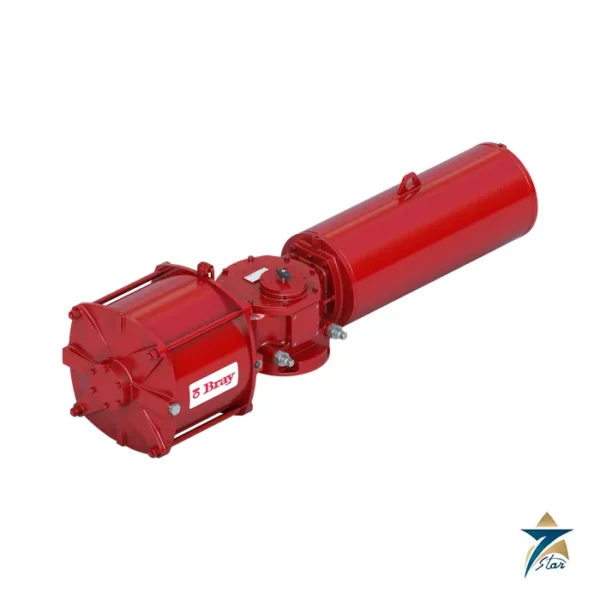
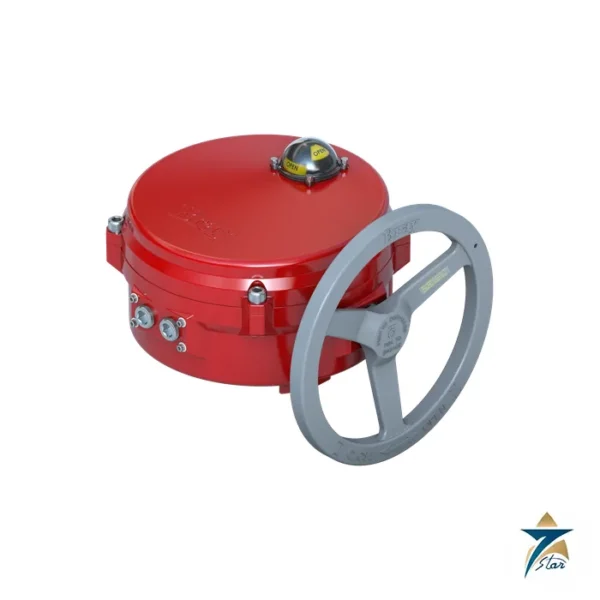
The Series 20/21 resilient seated valve covers sanitary and general chemical work with elastomer seats and an optional PTFE-lined EPDM seat. Move to the 22/23 when the medium is aggressive enough that the whole wetted surface needs to be PTFE or PFA. Actuation options are handle, gear operator, pneumatic or electric actuators, directly mounted per ISO 5211. Please confirm the medium, concentration, temperature, drilling standard, whether a conductive or UHMWPE seat is needed, and the actuator.
| Series |
Body |
Size and rating |
| 22/23 (this page) |
Wafer / lug, PTFE-lined disc and seat |
NPS 2-24, 150 psi |
| 20/21 |
Wafer / lug, elastomer seat |
NPS 1-20, 150 psi |
| 30/31 |
Wafer / lug |
NPS 2-12 175 psi; 14-20 150 psi |
| 3A/3AH |
Double flanged |
NPS 2-20, 175 or 250 psi |
How the Bray Series 22/23 works
A quarter-turn stem rotates a disc inside the valve body. With the disc across the line, the disc edge presses against the seat and shuts off the flow. With the disc turned in line with the flow, the fluid passes the disc. The PTFE disc coating and seat are the only parts that touch the fluid.
Where the Series 22/23 is used
- Corrosive chemical lines
- Acid and caustic service
- Chemical process plants
- Water treatment chemical dosing
- On-off and throttling duty
Selection checklist for the Series 22/23
- Line size, NPS 2 to 24
- Wafer or lug body
- Disc coating, PTFE, PFA or UHMWPE
- Seat material
- Process temperature
- Pressure and dead-end use
- Flange drilling
- Actuator mounting
Installation, commissioning and maintenance notes for the Series 22/23
Fit the valve between pipe flanges with the disc slightly open. Centre the valve and tighten the bolts evenly. Do not weld near the valve. Cycle the valve to check the stroke. Inspect the seat during planned shutdowns.
Requesting a quotation for the Bray Series 22/23
Please send the line size, the fluid, the temperature and the actuator type. Seven Star LLC serves industrial customers in Oman and the GCC and replies with a quotation based on the information provided.
Series 22/23 valve type
It is a resilient seated butterfly valve for chemical duty.
Series 22/23 body styles
Series 22 is the wafer body and Series 23 is the lug body.
Series 22/23 size range
The sizes run from NPS 2 to 24.
Series 22/23 pressure rating
The pressure rating is 150 psi (10.3 bar).
Series 22/23 shutoff
Shutoff is bidirectional and bubble-tight.
Series 22/23 disc
The disc is stainless steel encapsulated in PTFE, PFA or UHMWPE.
Series 22/23 seat
The seat is isostatically molded PTFE.
Series 22/23 seal capsule
A virgin PTFE capsule isolates the stem and body from the fluid.
Series 22/23 body material
The body is ductile iron as standard.
Series 22/23 stem
The stem is 17-4 PH stainless steel.
Series 22/23 flange drilling
The drilling is ASME Class 150 or DIN 3840.
Series 22/23 actuator mounting
The top flange follows ISO 5211 and needs no brackets.
Series 22/23 velocity limit
For on-off duty the fluid limit is 30 ft/s.
Valve records for the Series 22/23
Record the valve tag, the seat material and each inspection.
Choosing the right Series 22/23 seat
Choose the seat material from the fluid and the temperature.
Documents and quotation
The Bray brochure B-1050 covers the whole resilient seated range, including the 22/23, and is attached as the datasheet. The Bray page also lists a technical manual, a safety manual, an installation manual, a weights and dimensions sheet and a recommended specification.
See the wider range of control and isolation valves on our catalogue, or send the model name and order number for a quotation.



Reviews
There are no reviews yet.