Bray Series M1 severe service metal seated ball valve
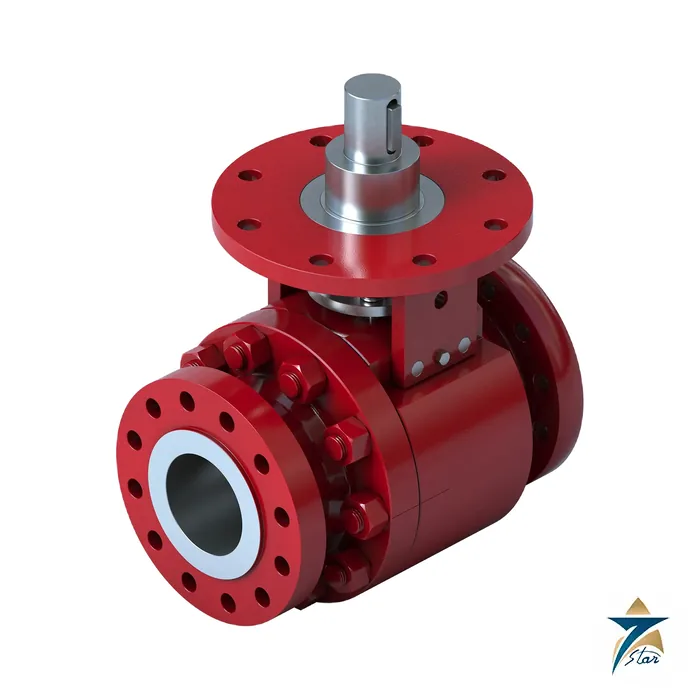
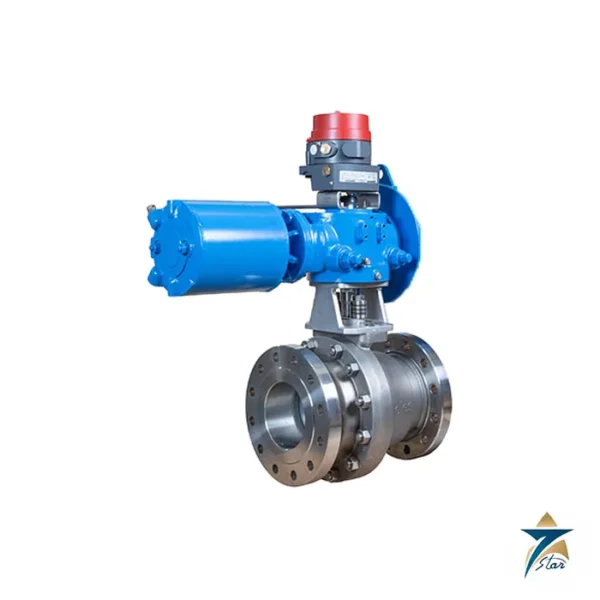
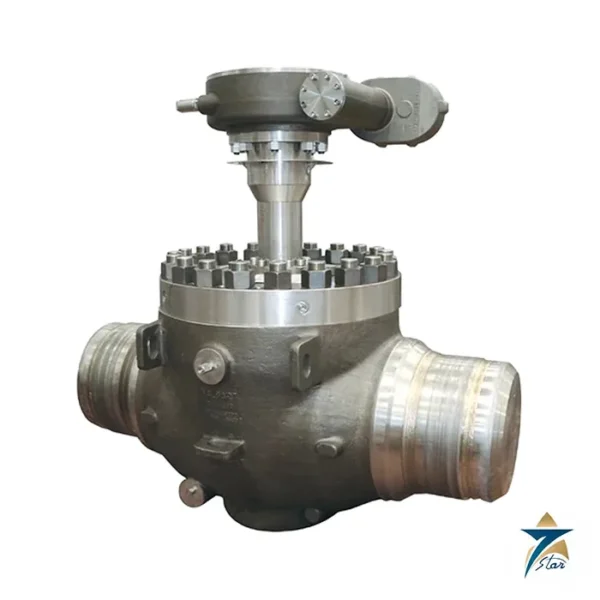
The Bray Series M1 is an engineered-to-order, metal seated ball valve for the services where soft-seated valves fail: very high temperature, high pressure, abrasive slurries, erosive or fouling media, and lethal or critical isolation. Valves are made in sizes from NPS 1/2 to 36 (DN 15 to DN 900) and in ASME classes from 150 to 4500, with a standard design temperature up to 1100°F (593°C). Every M1 is built to the process conditions of the order, so the model code, seat system and coatings are selected with Bray engineering rather than picked from a catalog list. Seven Star LLC supplies Bray valves in Oman and the GCC as an independent supplier in Muscat.
M1 technical specifications
| Parameter |
Specification |
| Manufacturer / part number |
Bray / Series M1 severe service metal seated ball valve |
| Size range |
NPS 1/2 to 36 (DN 15 to DN 900); larger on request |
| Pressure class |
ASME Class 150 to 4500; EN 1092 PN10 to PN720; higher on request |
| Temperature |
Standard design up to 1100°F (593°C); higher on request |
| Body construction |
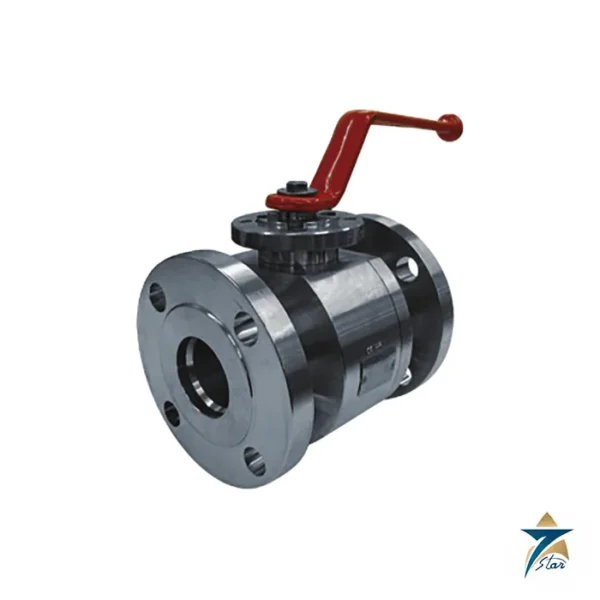
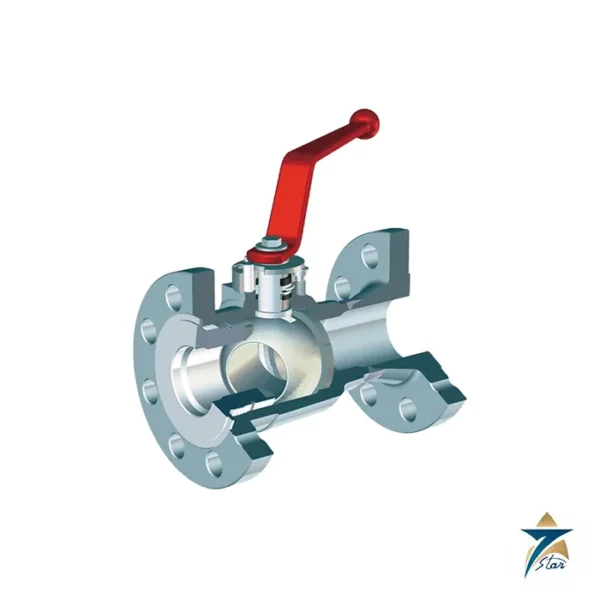
Split body, two-piece or three-piece, forged or cast |
| Forged body materials |
A105 carbon steel, A182 F316 stainless steel, A182 F9, F11, F22, F91 alloy steel; options include F347/F347H, titanium, Hastelloy, Monel, duplex |
| Cast body materials |
A216 WCB, A351 CF8M, A217 C12 alloy steel; option A351 CF8C |
| Ball and seats |
410 or 316 stainless steel; options include Inconel, Incoloy, titanium, duplex, 17-4 PH |
| Coatings |
HVOF chromium carbide and tungsten carbide, plasma and laser-clad coatings, metallic ceramics and others, selected per service |
| Stem |
A638 Gr 660 standard; options include Inconel, titanium, 17-4 PH, duplex |
| Packing |
Graphite standard; PTFE or PEEK optional; live-loaded with Inconel 718 Belleville washers |
| End connections |
Raised face and ring-type joint flange, butt weld, socket weld, hubs (Grayloc) |
| Design and testing |
ASME B16.34, API 608, PED; MSS SP-61, API 598, FCI 70-2, ISO 15848-2; face-to-face ASME B16.10 long pattern |
| Certifications |
API 607, API 641, ISO 15848-1 and -2, CRN, PED, PE(S)R, TR CU per Bray listing |
How the M1 seals without soft seats
A metal seated ball valve seals by lapping the ball and seat surfaces to a very close fit, and the M1 mate-laps the ball and seat in a full 360° pattern. The wide sealing surface lowers contact stress during operation, and thermal spray hard coatings are applied to the ball and seat to resist erosion and galling. A large seat spring energizes the seats, which gives a tight seal at low pressure and compensates for thermal expansion of seat and ball during heat-up and cool-down. A locking ring holds the seat stable and gives a uniform load around the seat ring.
The result is a valve that can see steam, hot hydrocarbons or slurry for years without the seat swelling, melting or being cut. The trade-off is operating torque and cost: a metal seated valve needs a larger actuator than a soft-seated one, and the order should state the required leak class, because tight shutoff to FCI 70-2 classes demands tighter manufacturing than industrial isolation duty.
M1 sealing models R100, R200, M100 and M120
Bray offers M1 in application-specific sealing models. The table summarises them as listed by Bray; contact the supplier for derating data.
| Model |
Sealing |
Typical service |
| R100 |
Unidirectional, full rating in the preferred flow direction; solids-resistant seat for low to high temperature |
Light to medium catalyst slurry, saturated and superheated steam, general hydrocarbons, services over 450°F (232°C) |
| R200 |
Unidirectional; solids-proof seat for low to high temperature |
Heavy catalyst slurry, fouling hydrocarbons, coking |
| M100 |
Bidirectional, solids-resistant seat for low temperature |
Slurry transport, erosive and abrasive services, pressure acid leaching and pressure oxidation under 450°F (232°C) |
| M120 |
Double-block-and-bleed system, low temperature |
Slurry transport, erosive and abrasive services |
Drive train and emissions features of the M1
The M1 body includes a heavy mounting flange that carries large actuators without brackets, and an outer stem bushing and bushing retainer keep the stem concentric so actuator side loads do not reach the packing. The stem is a blowout-proof one-piece design of a corrosion-resistant super alloy, and drive keys sit in-line with the ball bore. Zero-emission live-loaded graphite packing with Belleville washers keeps compression constant through pressure and temperature swings, and the valve is qualified to API 641 and ISO 15848 fugitive emission standards. Wall thickness exceeds ASME B16.34 minimum requirements so a corrosion allowance is built in.
Where the M1 fits in refinery, power and process plants
The brochure lists duties by industry. In refining, these include delayed coker isolation, catalyst handling and slurry isolation on fluid catalytic crackers, steam stripping and letdown stations. In power generation they include main steam stop, boiler drains, attemperator spray block, turbine bypass and startup vents. Mining services cover high-pressure slurry pipelines, pressure acid leach and autoclave isolation. Chemical and petrochemical uses include polyethylene, polypropylene and ethane cracking. For ordinary isolation on clean liquids and gases, a soft-seated valve such as the Series F15/F30 is more economical, and the M1 is the answer when those fail.
Selection and ordering checklist for M1
- Size, ASME class or EN pressure rating, and end connection with face-to-face.
- Design pressure and temperature, normal and upset, plus thermal shock risk.
- Medium description: solids content and size, erosion, corrosion, cavitation or flashing, and velocity.
- Required shutoff class and fugitive emissions standard.
- Sealing model (R100, R200, M100 or M120) and flow direction.
- Actuator and accessories, and fire-safe and certification requirements.
Installation and maintenance of Series M1 valves
Metal seated valves are installed with the preferred flow direction marked on the body: this direction matters for unidirectional models, and reversing it can reduce sealing performance. Keep the line clean, flush before commissioning, and cycle the valve during warm-up so that the seat spring and coatings settle under thermal expansion. Because torque is higher, check actuator sizing at the maximum differential pressure, with a safety margin, and verify the stroke time with the process owner. Keep graphite packing gland torque within the maker’s values, since over-tightening raises stem friction. Spares are order-specific, so record the order number and drawing for each valve.
M1 applications in Oman and the GCC
Refineries, gas processing, power stations and desalination plants across the region run high-temperature steam, hot hydrocarbons and abrasive fluids, and these are the conditions for which the M1 was designed. Regional plants also deal with fine sand in process water and slurries, which attack soft seats. For turnarounds, plan lead times early because each valve is built to order, and give the engineering department the process data as one package.
Information to send with an M1 RFQ
- Datasheet or process conditions, with line size and rating.
- Body and trim materials, coating preference and sealing model.
- Leak class, fire-test and fugitive emission requirements.
- Actuator data, quantity and delivery schedule.
Documents and quotation
The Bray Series M1 brochure is attached on this page with features, models, materials and specifications.
Send the process data and rating and Seven Star LLC will request the correct M1 configuration and quote supply to Oman and the GCC.


























Reviews
There are no reviews yet.