Brand:

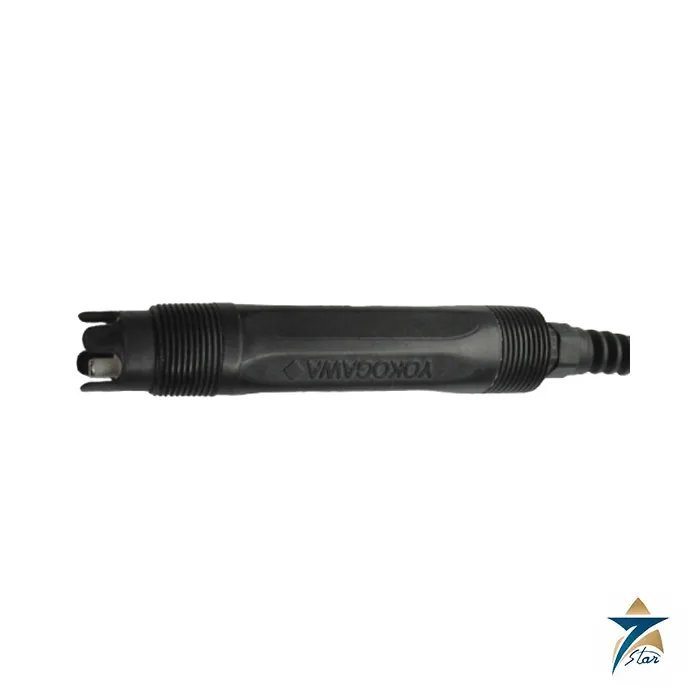
Yokogawa FU20-05-T1-NPT Wide Body pH/ORP Sensor, Dome

Description

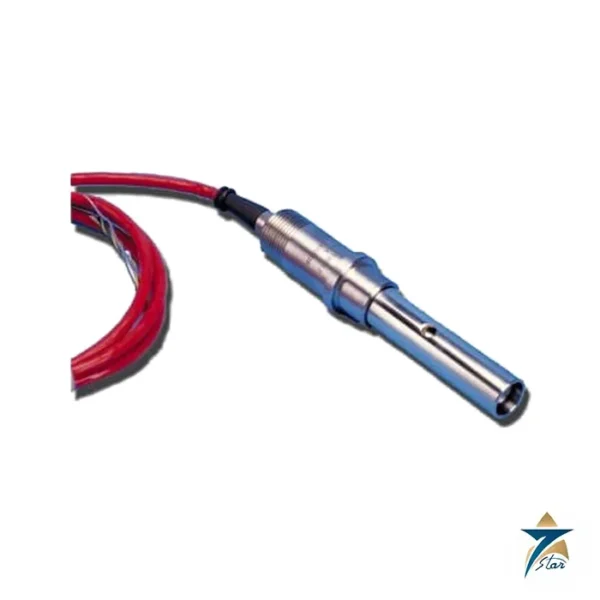
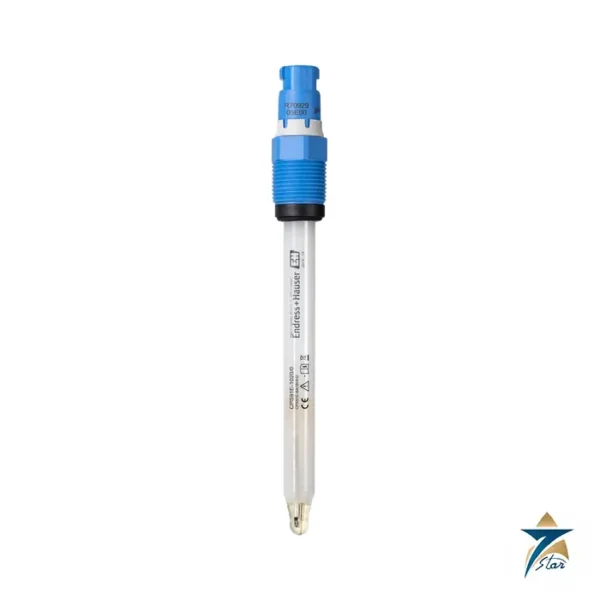
Yokogawa FU20-05-T1-NPT: the workhorse wide-body pH sensor

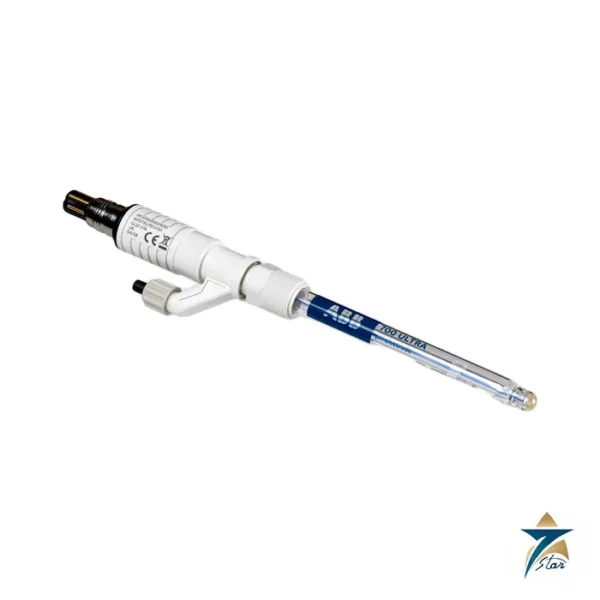
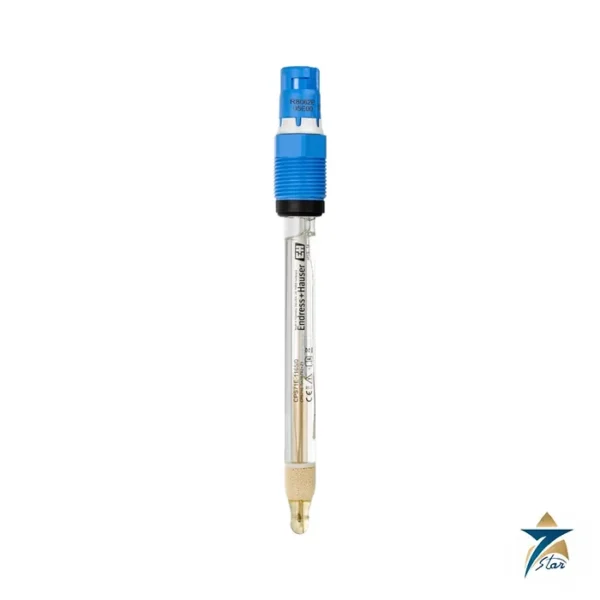
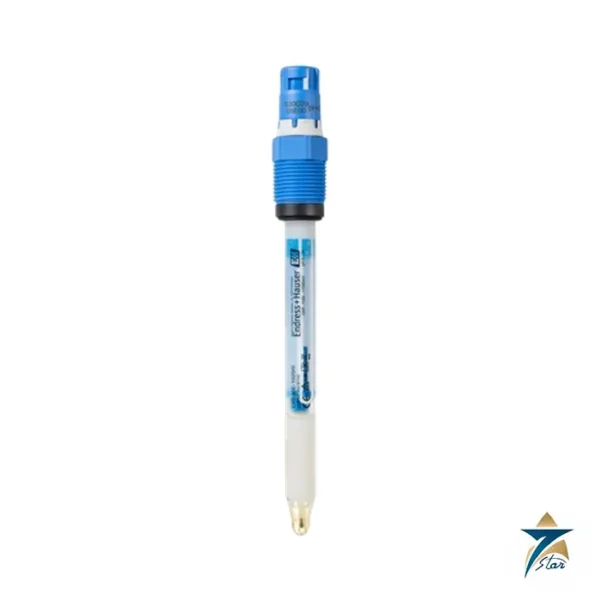
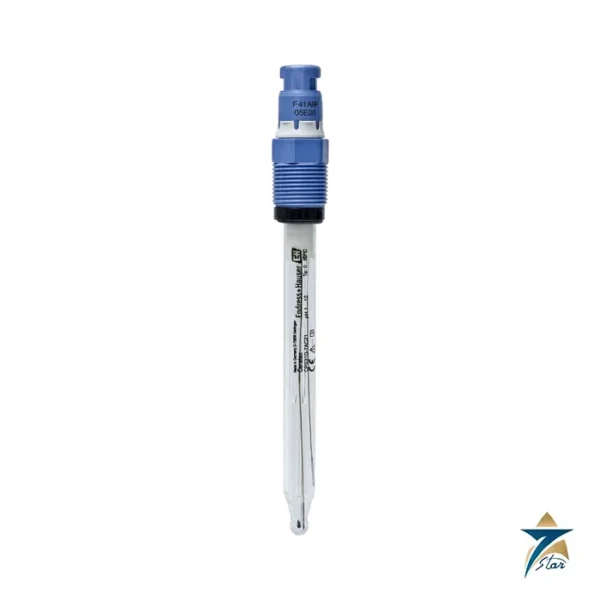
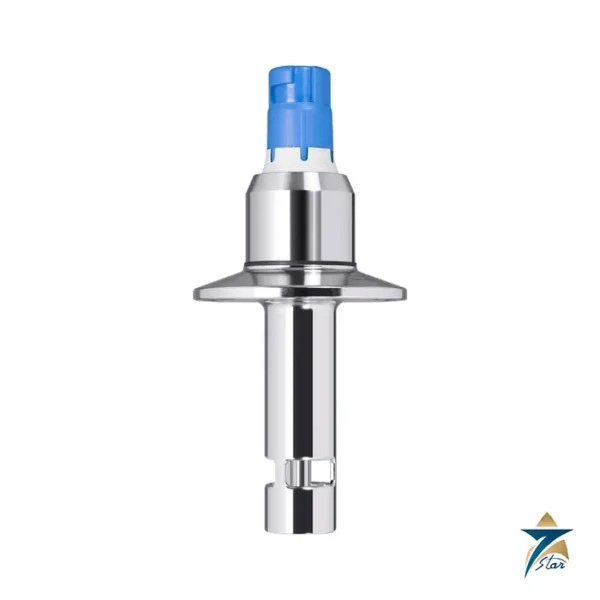
Most pH loops in water and wastewater plants do not need exotic hardware; they need a sensor that survives, reads well and is easy to replace. Yokogawa FU20-05-T1-NPT is described in its own datasheet as the sensor of choice for general purpose applications, and the manufacturer expects it to be an excellent choice in about 90 percent of the known applications. It is a combination sensor built into one unbreakable 26 mm diameter body of glass-filled PPS (Ryton type), with a built-in 3/4 inch tapered thread.

The order string reads as follows: FU20 is the model, 05 is a 5 m fixed cable, T1 selects the Pt1000 temperature element, and NPT stands for the dome-shaped sensing tip.

Seven Star LLC is an independent supplier serving Oman and the GCC and is not affiliated with the manufacturer.

What is inside the wide body

  • pH glass electrode in G-glass.
  • Silver chloride reference system with saturated KCl, polymerised to extend life, and a porous PTFE reference junction to resist fouling.
  • Solid platinum earthing pin that also gives the platinum ORP electrode function for simultaneous pH and ORP.
  • Pt1000 temperature element to IEC 751 for compensation and indication.
  • Coaxial cable with 4 extra leads and thermoplastic rubber sheath.

FU20-05-T1-NPT technical data

Parameter Value
Body material PPS 40GF glass filled
Earthing pin Solid platinum
Reference Ag/AgCl, saturated KCl, porous PTFE junction
Isothermal point pH 7
Glass impedance Nominal 200 megohm (dome shape)
Junction resistance 1 to 10 kilohm
Asymmetry potential 8 plus or minus 15 mV
Slope More than 96 percent of theoretical
pH step response Under 15 s for 90 percent (7 to 4)
Temperature step response Under 1 min for 90 percent (dome)
pH range 0 to 14 (2 to 12 recommended at high temperature)
Temperature -10 to 105 C
Pressure 0 to 10 bar (145 psig)
Conductivity More than 50 uS/cm
Storage -10 to 50 C

How FU20-05-T1-NPT differs from other FU20 versions

Two choices differentiate FU20 codes. The tip: NPT is the dome, with a nominal 200 megohm glass impedance and faster temperature response (under 1 minute), while FSM is the flat surface tip at about 700 megohm and 1.5 minutes. The cable: 03, 05, 10 or 20 m, or the Variopin connector choice. FU20-05-T1-NPT has the dome tip and a 5 m cable, which makes it the quick-response general choice. Compared with FU24 the FU20 has no bellows pressure compensation, and compared with PH20 the body is PPS rather than PVDF.

Why the four-in-one design saves work

Traditional pH measurement needs a glass electrode, a separate reference, a temperature probe and sometimes a separate earth electrode. Each additional probe means another hole in the tank wall, another cable and another calibration. FU20-05-T1-NPT puts all of them in one cylinder, so a single 3/4 inch mounting point serves the pH, the reference, the temperature compensation and a platinum ORP reading. The platinum earthing pin does double duty: it grounds the solution to remove stray potentials from pumps and mixers, and it gives an ORP value alongside pH, which is valuable on processes such as chlorination or cyanide destruction where redox potential is monitored together with pH.

The reference system is the part that fails first in most plants, so the design effort has gone there. The saturated KCl is polymerised, which slows loss of electrolyte, and the double junction with an Ag+ trap described in the datasheet protects the reference element in chemically hostile liquids. The porous PTFE junction resists coating. Together they mean fewer unexpected recalibrations between maintenance rounds.

Because the body is moulded from PPS 40GF it is mechanically tough: dropping it during a replacement does not break it as it would a glass-body electrode. That is helpful in a plant where sensors are pulled out frequently for cleaning.

Where it works in Oman and the GCC

Common uses are neutralisation tanks, cooling-water pH control, swimming pool and potable water treatment, wastewater inlet monitoring, textile and food process waters. The dome tip is a good general choice because it responds quickly and survives normal handling. The conductivity must be above 50 uS/cm, so for demineralised or boiler feedwater a dedicated high-purity sensor is required.

Mounting and adapters

The built-in 3/4 inch tapered thread allows direct mounting. For 1 inch pipe thread, order the adapters /NSS (316L, NPT), /NTI (titanium, NPT), /BSS (316L, BSP) or /BTI (titanium, BSP); /FPS gives an adapter for F*40 Noryl fittings and the FD40 fittings use K1523DD. The cleaning option /HCNF adds a Hastelloy cleaning system. Spare part numbers are given in the datasheet, for example K1547PK for the 1 inch NPT stainless adapter.

Installation and commissioning

Use a mounting position where the glass is always wet and the sensor is angled at least a few degrees from horizontal so that trapped air does not cover the junction. Connect the cable to a compatible converter and run a two-point calibration with buffers at pH 7 and pH 4 or 10. Check the slope: a value under 96 percent of theoretical suggests an ageing glass. Do not use the sensor in solutions below 50 uS/cm.

Maintenance

Clean the glass and the PTFE junction with a soft cloth and a mild acid or detergent as the contamination demands, and recalibrate. Replace the sensor when slope or response time degrades. The datasheet states a Quality Certificate is delivered with the sensor, so keep it with the loop file.

Documents and quotation

The datasheet for FU20-05-T1-NPT is attached. Send your RFQ to Seven Star LLC with the part number FU20-05-T1-NPT, quantity and delivery location. If you need Variopin connector instead of the fixed cable, tell us so the exact code can be confirmed.

Datasheets & Documents
  • PDF Datasheet Yokogawa FU20-05-T1-NPT Wide Body pH/ORP Sensor, Dome Datasheet Download
Reviews (0)

Reviews

There are no reviews yet.

How would you rate this product?

It takes about 10 seconds — just tap a star. Your email is never published.

About brand

Yokogawa is the Japanese measurement and industrial automation company behind the DPharp EJA and EJX pressure transmitters, CENTUM distributed control systems and ProSafe-RS safety systems. Tamisuke Yokogawa set it up in 1915 as an electric meter research institute in Shibuya, Tokyo. It began selling electric meters in 1917, was incorporated as Yokogawa Electric Works in 1920, and has been Yokogawa Electric Corporation since 1986. In 1975 it released CENTUM, which it describes as the world's first distributed control system.

Seven Star LLC is an independent supplier in Muscat. We list Yokogawa transmitters, flowmeters, analysers, controllers, recorders and CENTUM and ProSafe spare modules, and supply them to oil and gas, power, water and process plants in Oman and the GCC by model code.

Yokogawa at a glance

Established 1915, Shibuya, Tokyo, by Tamisuke Yokogawa with Ichiro Yokogawa and Shin Aoki
Milestones Electric meters from 1917; incorporated in 1920; CENTUM DCS in 1975; renamed Yokogawa Electric Corporation in 1986
Headquarters Tokyo, Japan
Product families Pressure and temperature transmitters, magnetic, vortex and Coriolis flowmeters, liquid and gas analysers, controllers and recorders, CENTUM VP DCS, ProSafe-RS safety systems and STARDOM controllers

Yokogawa products we list

Family Models Typical use
Pressure and DP transmitters EJA110E, EJA430E, EJA530E, EJX110A, EJX530A, EJX910A multivariable Pressure, level and DP flow measurement in process plants
Temperature transmitters YTA610, YTA710 RTD and thermocouple signals converted to 4-20 mA, HART or fieldbus
Flowmeters ADMAG AXG, ADMAG AXW, ROTAMASS TI, VY vortex, VF701 Water and conductive liquids, mass flow of hydrocarbons, steam and gas
Analysers TDLS8000 laser gas analyser, FLXA402, FLXA21 DO, E7042UD zirconia cell, K9471DS cover Combustion O2, in-situ gas analysis, pH, conductivity and dissolved oxygen
Controllers and recorders UT35A/UT32A, UT32A-D, UT55A/UT52A, UT75A, UP35A/UP32A, UP55A, YS1700, GX10/GX20, GP10/GP20, GM10, µR20000 Single-loop control, furnace programs and data recording
Control and safety systems CP451-10 processor, ADV161, ADV551, node interface unit, ProSafe-RS, ProSafe-RS Lite, ProSafe-SLS, FCN-500 Spares and expansions for CENTUM DCS, safety systems and STARDOM
Battery packs S9129FA, S9185FA, S9548FA Memory backup batteries for DCS and controller modules

The EJA and EJX transmitters use Yokogawa's DPharp sensor: two silicon resonators whose vibration frequency changes with pressure, so the output is a digital frequency rather than an analogue strain signal. The model code describes the instrument completely. In EJA110E, "110" is a differential pressure transmitter, and the letters after the dash set the span, wetted materials, process connection, electrical output and approvals. When you replace a transmitter, sending the full code from the nameplate avoids a mismatch in range or materials.

Where Yokogawa products are used

In Oman and the GCC, Yokogawa transmitters, analysers and control systems are found in oil and gas production, gas processing and LNG, refineries and petrochemical plants, power and desalination stations, and water treatment. Many plants still run CENTUM CS 3000 and CENTUM VP systems that need spare I/O modules and batteries.

Ordering Yokogawa products: what we need

Send the full model and suffix code from the nameplate (for example EJA110E-JMS5J-912NN/KF22) and the style code. For DCS modules, add the module type and system version. For analysers, send the sensor type, measuring range and process conditions.

Facts checked against Yokogawa's corporate history, October 2026.

FAQ

Questions about the Yokogawa FU20-05-T1-NPT Wide Body pH/ORP Sensor,

Answers from our engineering team on installation, compatibility and integration.

01What does FU20-05-T1-NPT combine in one body?
Four elements: a pH glass electrode, an Ag/AgCl reference with saturated KCl, a platinum electrode for ORP and earthing, and a Pt1000 temperature sensor, all in a 26 mm PPS 40GF body.
02What is the NPT in FU20-05-T1-NPT?
It is the dome-shaped sensor tip model, with a nominal glass impedance of 200 megohm, as opposed to the flat surface FSM model which has about 700 megohm.
03What process limits does FU20-05-T1-NPT have?
pH 0 to 14 (practically 2 to 12 at high temperature), -10 to 105 C, 0 to 10 bar, and a minimum conductivity of more than 50 uS/cm.
04How quickly does FU20-05-T1-NPT respond?
A pH step from 7 to 4 reaches 90 percent in under 15 seconds, a 10 C temperature step takes under 1 minute for the dome, and stabilisation to 0.02 pH per 10 s takes under 2 minutes.
05Which adapters can FU20 use?
The datasheet lists 1 inch NPT or BSP adapters in stainless steel 316L or titanium (/NSS, /NTI, /BSS, /BTI), an F*40 Noryl adapter (/FPS) and a Hastelloy cleaning system (/HCNF).