- Automation & ControlView all 2,895 products
- Automation Accessories
- AC Drives
- PLC & I/O Cards
- Industrial Communications
- Vibration Monitoring
- Controllers & Data Acquisition
- Isolator & Barrier
- Safety Switches & Guard Locking
- Motor Soft Starters
- CCTV & Security
- Encoders
- Pneumatic Cylinders
- HMI Displays
- Servo Drives
- Industrial Computers
- Machine Vision
- Automation Software
- Robotics
Brand: Endress+Hauser (E & H)
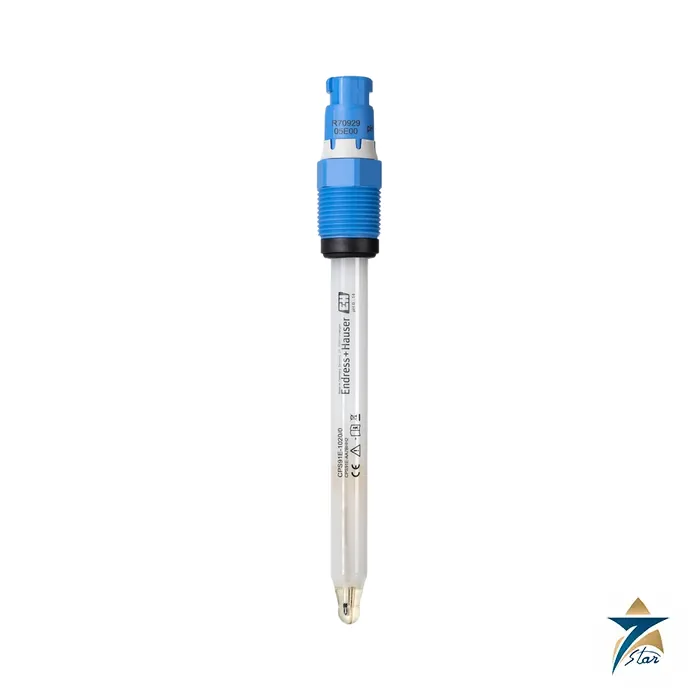
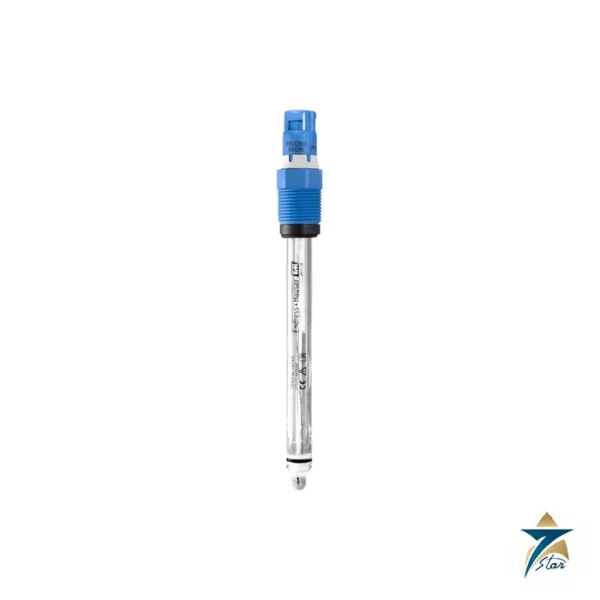
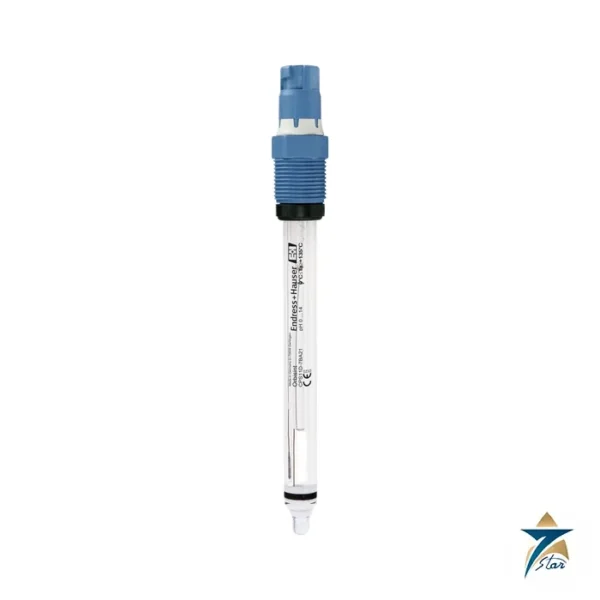
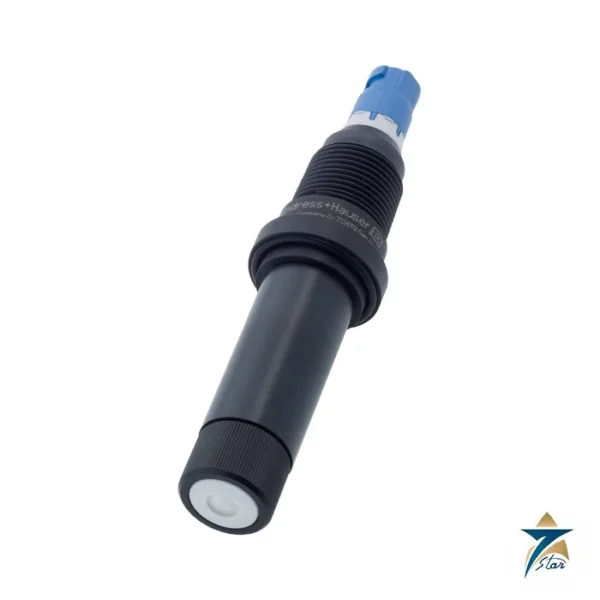
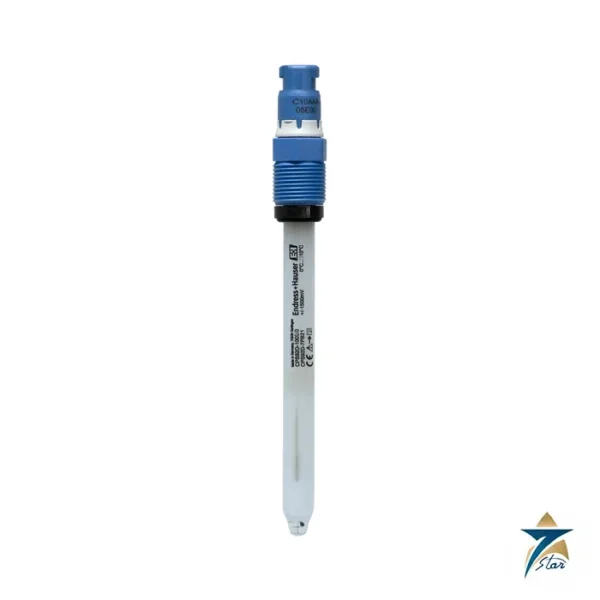
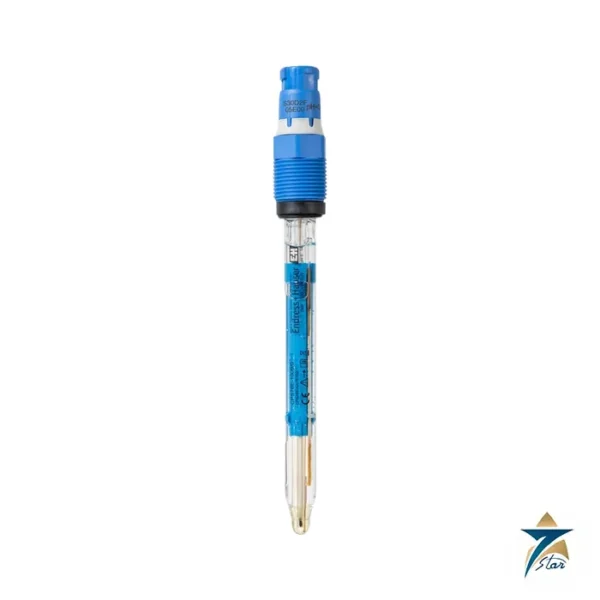
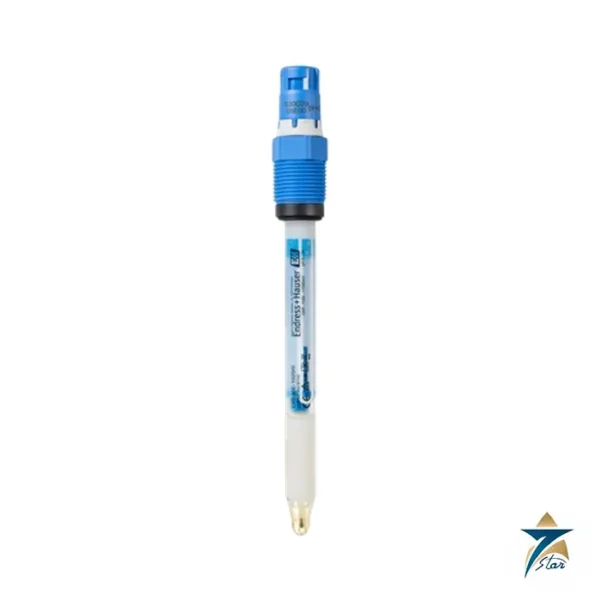
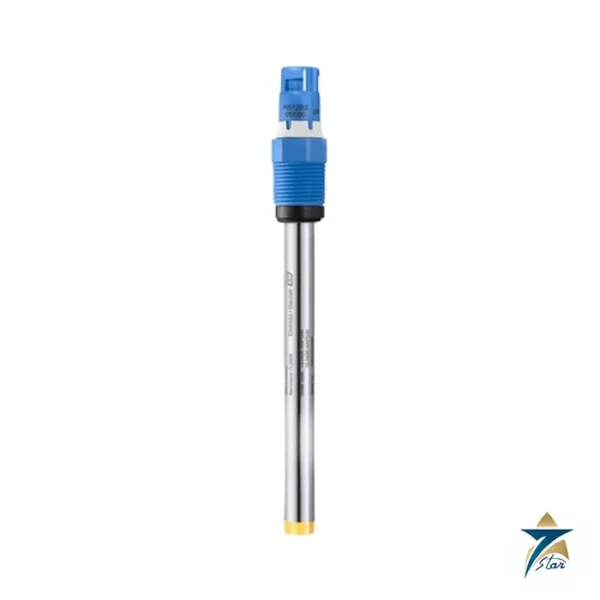
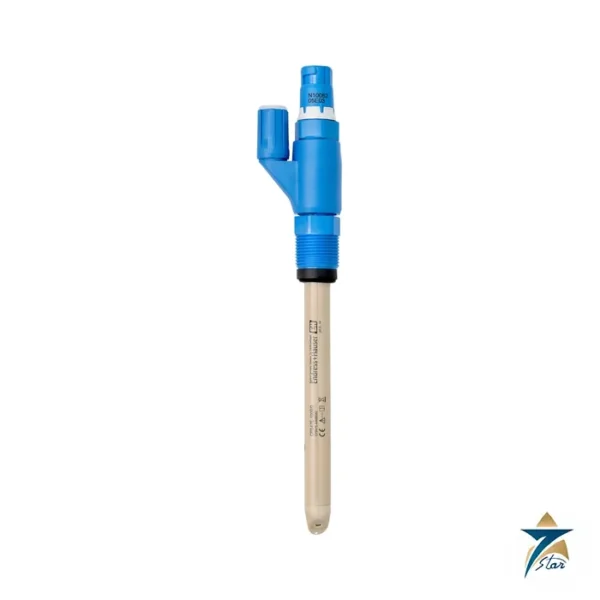
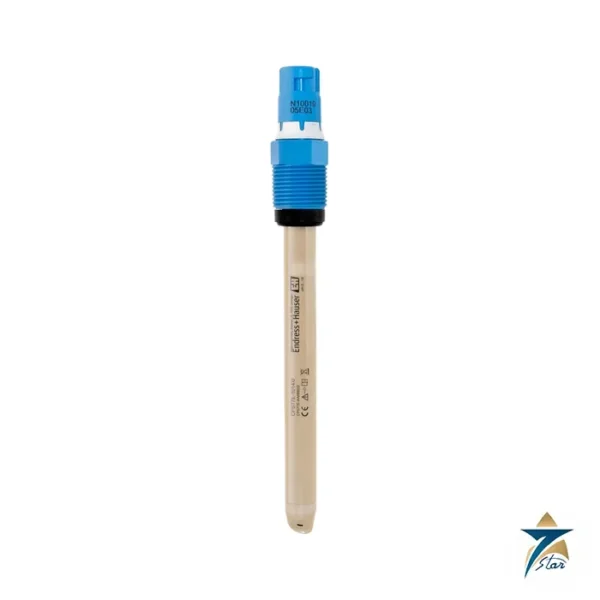
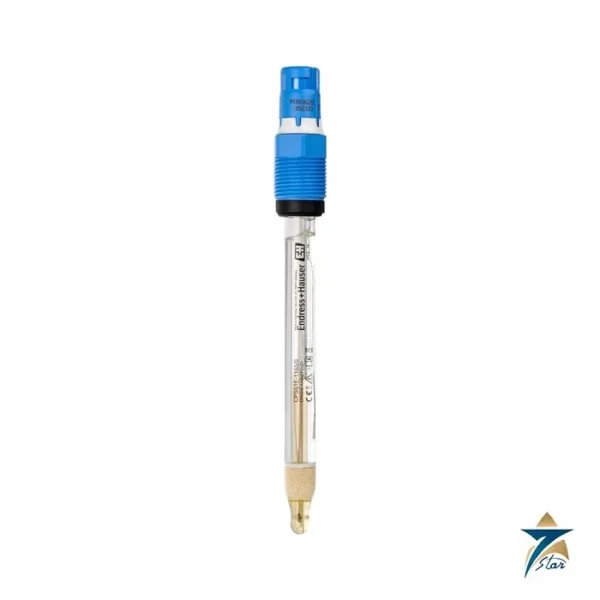
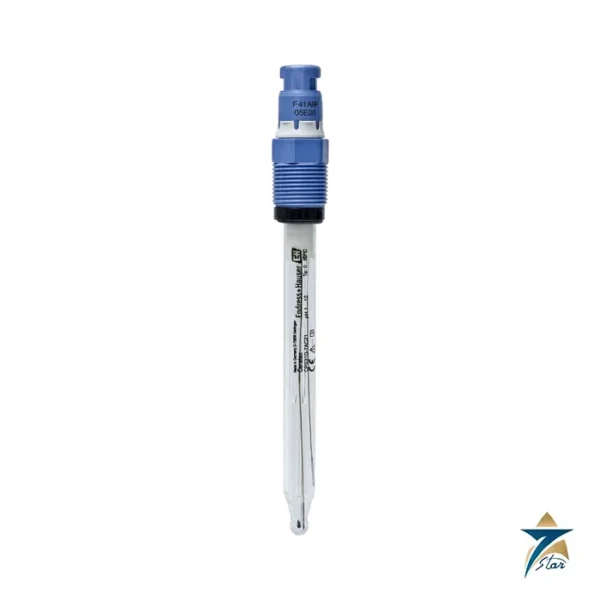
Endress+Hauser CPS91E Memosens pH Sensor, Open Aperture
Description
Endress+Hauser CPS91E Memosens pH sensor in heavily polluted media
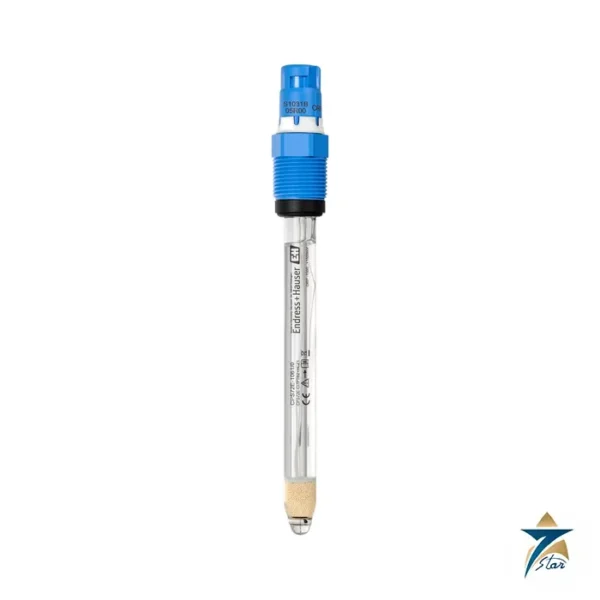
Endress+Hauser CPS91E is a digital Memosens 2.0 pH sensor built for the media that wreck ordinary electrodes: slurries, emulsions, precipitating reactions and process liquors that carry solids. Instead of a ceramic diaphragm that can plug, the CPS91E exposes its gel-filled reference through an open aperture, and the stabilized bridging gel keeps the electrical path alive while the surface fouls. The datasheet positions it for chemical processes, the pulp and paper industry, flue gas cleaning and any contaminated medium.
The measuring principle is the classic glass membrane: H+ ions accumulate on the outer glass layer, an electrochemical potential forms, and an integrated Ag/AgCl reference closes the circuit. The measured voltage is converted to pH with the Nernst equation, while an integrated NTC 30K temperature element supplies compensation. What differs from analog electrodes is that the signal is digitised inside the plug-in head and passed inductively across the connector.
Seven Star LLC lists CPS91E as a hard-to-find process spare for operators in Oman and the wider GCC. Seven Star LLC is an independent supplier serving Oman and the GCC and is not affiliated with the manufacturer.
Key features of CPS91E at a glance
- Open aperture design for solids-laden, emulsified or precipitating process media.
- Gel filling with stabilized bridging electrolyte, so no refilling and low routine attention.
- Not affected by fluctuations in process pressure or temperature.
- Optional TH poison-resistant reference with improved ion trap.
- Integrated NTC 30K temperature sensor.
- Hazardous-area versions with ATEX, IECEx, CSA C/US, NEPSI, Japan Ex and INMETRO approvals for Zone 0, 1 and 2.
- Calibration data, sensor load and operating hours stored in the sensor itself.
CPS91E technical specifications
| Parameter | Value |
|---|---|
| Measured variables | pH value, temperature |
| pH range (application B) | 0 to 14 |
| Temperature measuring range | 0 to 110 C (32 to 230 F) |
| Process pressure | 0.8 to 14 bar absolute (11.6 to 203 psi) |
| Minimum conductivity | 500 microsiemens per cm, minimized flow, constant pressure and temperature |
| Reference system | HH: Ag/AgCl, stabilized bridging gel. TH: same with ion trap |
| Temperature element | NTC 30K |
| Installed lengths | 120, 225, 360, 425 mm |
| Shaft diameter | 12 mm (0.47 in) |
| Weights | 40, 60, 90, 100 g respectively |
| Glass membrane | Type B |
| Materials | Glass shaft, FKM O-ring, PPS glass-fibre reinforced coupling, ceramic metal oxide nameplate, Ag/AgCl lead |
| Process connection | Pg 13.5 |
| Plug-in head pressure resistance | 16 bar relative |
| Ingress protection | IP 68 (10 m water column, 25 C, 45 days, 1 M KCl) |
| Storage temperature | 0 to 50 C |
| Ex marking | ATEX II 1G Ex ia IIC T4/T6 Ga |
How CPS91E differs from other Memosens pH sensors
Among the Memosens pH family, CPS91E is the dirt specialist. Compare it with CPS41E, which uses a liquid 3 M KCl electrolyte and ceramic junction to reach conductivities as low as 0.1 microsiemens per cm and a 135 C upper temperature: the CPS91E trades that low-conductivity ability for a 500 microsiemens per cm minimum and a 110 C ceiling, but gains an aperture that does not clog.
It also differs from the CPS47E ISFET sensor, which is break-resistant and quicker than glass but is not built for abrasive flow. The CPS91E keeps a conventional glass membrane (type B), so the usual rules about breakage, goggles and gloves under pressure still apply. Pressure capability of 14 bar absolute is higher than the 11 bar of CPS41E.
Typical applications for CPS91E in Oman and the GCC
In the Gulf the typical call for the CPS91E comes from process lines where slurries cannot be avoided: scrubber loops in flue-gas desulphurisation at power and desalination plants, neutralisation tanks in chemical and fertiliser works, pulp-style stock chests, and effluent treatment skids that mix lime or ferric chloride. In oil and gas facilities it suits produced-water and caustic-treatment tanks, where emulsified hydrocarbons would block a fine junction. Utilities running gypsum or ash slurries use it where cleaning intervals matter more than glass speed.
Selection and compatibility notes for CPS91E
Choose HH when the medium is clean of electrode poisons and TH when sulphide or heavy-metal ions are expected. The sensor needs a Memosens transmitter such as Liquiline CM42 or CM44x; data transmission to an analog pH transmitter is not possible. Compatible assemblies named in the datasheet include immersion Dipfit CPA111, flow Flowfit CPA250, retractable Cleanfit CPA871 and permanent Unifit CPA842. Pick the installed length for the assembly insertion depth, and order the Ex variant only where the area classification requires it.
Installing and commissioning CPS91E
Never mount the sensor upside down; keep at least 15 degrees from horizontal, because a smaller angle lets an air bubble form and break contact between glass and reference lead. Before screwing in, check that the assembly thread, O-rings and sealing surface are clean and undamaged, then tighten by hand to 3 Nm in Endress+Hauser assemblies. Remove the moistening cap only at the point of installation. Ambient temperature must not fall below minus 15 C.
Maintenance and handling
Because the gel cannot be refilled, service life is governed by the electrolyte and the glass. Calibrate in the laboratory, store the sensor at 0 to 50 C with the cap fitted, and rely on the stored sensor load and hours of operation under extreme conditions to plan replacement. When rapid heating is applied to a pressurised sensor used at reduced pressure, a sudden rupture and glass splinters are possible, so protective goggles and gloves are required during handling.
Related products and ordering notes for CPS91E
Related lines from the same maker include CPS41E, CPS47E and the CPS31D drinking-water sensor, plus cables CYK10 and CYK20 and the Memobase Plus CYZ71D software. When you quote, state the full order code including reference system (HH or TH), length and hazardous-area approval, because those choices are encoded in the sensor you receive.
Documents and quotation
The Technical Information datasheet for CPS91E is available on this page. Send us your RFQ with the CPS91E order code and quantity and we will respond with availability and lead time.
Other Models in the Memosens Ph Range
Seven Star LLC supplies models from the Memosens Ph range in Oman and the GCC. Compare the related models below and request a quote for the one that matches your application.
| Model | Category | |
|---|---|---|
| Endress+Hauser CPF81E Memosens Compact pH Sensor | Liquid Analysis Sensors | View details |
| Endress+Hauser CPS96E Memosens pH/ORP Sensor, Open Junction | Liquid Analysis Sensors | View details |
| Endress+Hauser CPS47E Memosens ISFET pH Sensor | Liquid Analysis Sensors | View details |
| Endress+Hauser CPS31D Memosens pH Sensor, Drinking Water | Liquid Analysis Sensors | View details |
| Endress+Hauser CPS91E Memosens pH Sensor, Open Aperture | Liquid Analysis Sensors | You are viewing this model |
| Endress+Hauser CPS41E Memosens pH Sensor, Liquid KCl | Liquid Analysis Sensors | View details |
Datasheets & Documents
- Datasheet Endress+Hauser CPS91E Memosens pH Sensor, Open Aperture Datasheet Download
Reviews (0)
How would you rate this product? Cancel reply
About brand
Endress+Hauser makes process measurement instruments for flow, level, pressure, temperature and liquid analysis. Georg H. Endress and Ludwig Hauser started the business in Lörrach, Germany, on 1 February 1953, first selling level meters, and the Endress+Hauser name has been used since 1957. The group is headquartered in Reinach, Switzerland, and has been wholly owned by the Endress family since 1975.
Seven Star LLC is an independent supplier listing Endress+Hauser flowmeters, level and pressure transmitters, temperature assemblies and liquid analysis products for buyers in Oman and the GCC. Instruments are matched from the full order code on the nameplate.
Endress+Hauser company profile
| Origin | Founded in Lörrach, Germany, on 1 February 1953 by the Swiss engineer Georg H. Endress and Ludwig Hauser |
|---|---|
| Headquarters | Endress+Hauser AG, Reinach (Basel-Landschaft), Switzerland |
| Ownership | Family owned; the Endress family has been the sole shareholder since 1975, and a family charter commits the company to stay family owned |
| Size | About 16,500 employees and sales of about EUR 3.7 billion (2023, as reported by the company) |
| Product families | Proline flowmeters, Micropilot and Levelflex radar, Liquiphant switches, Cerabar and Deltabar pressure, iTEMP and iTHERM temperature, Liquiline and Memosens liquid analysis |
Milestones
- 1953: Georg H. Endress and Ludwig Hauser start the business in Lörrach on 1 February, first selling level meters.
- 1957: The Endress+Hauser name comes into use.
- 1975: The Endress family becomes sole shareholder.
- 2023: About 16,500 employees and sales of about EUR 3.7 billion, as reported by the company.
Endress+Hauser product lines
| Line | Measuring principle | Typical use |
|---|---|---|
| Promass F 300, Promass 80F, 83F/84F | Coriolis mass flow | Direct mass flow and density of liquids and gases, hydrocarbon transfer and chemical dosing |
| Promag P 300, P 500, H 300, W 400, W 10, 50P | Electromagnetic flow | Water, wastewater, slurries and other conductive liquids |
| Prowirl F 200, 72F | Vortex flow | Steam, gas and low-viscosity liquids |
| Prosonic Flow 92F, t-mass 65F | Ultrasonic and thermal mass flow | Water lines; compressed air and industrial gases |
| Micropilot FMR62, FMR67, FMR60, FMR10B, FMR20, FMR50, FMR52 | Free-space radar level, 80 GHz and 26 GHz | Tanks, process vessels, silos and open water channels |
| Levelflex FMP51, FMP50, FMP54, FMP55 | Guided wave radar level | Level and interface in vessels, separators and bypass chambers |
| Liquiphant FTL51, Prosonic S FMU90 | Vibronic point level; ultrasonic level | High and low level alarms, pump protection, open channel flow |
| Cerabar PMC71B, PMP51B, PMP71, Deltabar PMD78B, PMD75 | Pressure and differential pressure | Process pressure, hydrostatic level and DP flow |
| iTEMP TMT82, TMT162, iTHERM TM101, TR66, TR10 | Temperature transmitters and thermometers | RTD and thermocouple points with thermowells |
| Liquiline CM444, CM442, Memosens CPS11E, Stamolys reagents | Liquid analysis | pH, ORP, conductivity, dissolved oxygen and nutrient analysis in water treatment and process |
Where Endress+Hauser instruments are used
In Oman and the GCC, Endress+Hauser instruments are common in oil and gas production and processing, refineries and petrochemicals, desalination and water networks, wastewater treatment, power plants and food and beverage plants. Coriolis meters measure hydrocarbon and chemical flows, electromagnetic meters cover water and wastewater, radar transmitters handle tank and silo level, and Liquiline analysers monitor water quality. Proline 300 and 500 flowmeters include Heartbeat Technology for in-situ verification, which reduces the need to remove a meter for checks.
Ordering Endress+Hauser instruments: what we need
The order code on the nameplate (for example PMP71-1QA1S11RDADU) defines every option: measuring range, process connection, materials, output, approvals and display. Send it with the serial number; Endress+Hauser can retrieve the original configuration from the serial number. For a new instrument add the medium, operating and design pressure and temperature, range, line size or tank geometry, process connection, wetted materials, output or protocol (4-20 mA HART, PROFIBUS, FOUNDATION Fieldbus, Modbus) and the hazardous-area approval required. Older models such as Promass 80/83 or Micropilot M are replaced by current Proline or 80 GHz Micropilot devices.
Facts checked against Endress+Hauser company history and product information, October 2026.
Browse Endress+Hauser products by category: Flowmeters, Level Transmitter, Pressure Instrumentation, Temperature, Liquid Analysis Sensors, Liquid Analytical Systems.
FAQ
Questions about the Endress+Hauser CPS91E Memosens pH Sensor, Open
Answers from our engineering team on installation, compatibility and integration.
01Why does Endress+Hauser CPS91E have an open aperture instead of a junction?
The open aperture is a free channel to the gel reference rather than a fine ceramic or PTFE junction, so solids, emulsions and precipitates have no pore to block in the first place.
02What temperature and pressure limits apply to the CPS91E?
The datasheet gives 0 to 110 degrees C for the process and 0.8 to 14 bar absolute, with a minimum conductivity of 500 microsiemens per cm and minimized flow with constant pressure and temperature.
03What does the TH option on the CPS91E change?
The TH reference system adds an ion trap to the stabilized bridging gel, which slows poisoning of the Ag/AgCl lead by substances such as sulphide in flue-gas and chemical applications.
04How is the CPS91E connected to a transmitter?
Through a Memosens data cable CYK10 or CYK20 to a Memosens-ready transmitter such as Liquiline CM42 or CM44x. The plug-in head couples inductively, so there is no bare contact to corrode.
05Which installed lengths does the CPS91E come in?
120, 225, 360 and 425 mm, with weights of 40, 60, 90 and 100 g and a 12 mm shaft diameter, all with a Pg 13.5 thread for assemblies.


Reviews
There are no reviews yet.