- Automation & ControlView all 2,810 products
- Automation Accessories
- AC Drives
- PLC & I/O Cards
- Industrial Communications
- Vibration Monitoring
- Controllers & Data Acquisition
- Isolator & Barrier
- Safety Switches & Guard Locking
- Motor Soft Starters
- CCTV & Security
- Encoders
- Pneumatic Cylinders
- HMI Displays
- Servo Drives
- Industrial Computers
- Machine Vision
- Automation Software
- Robotics
Brand: Endress+Hauser (E & H)
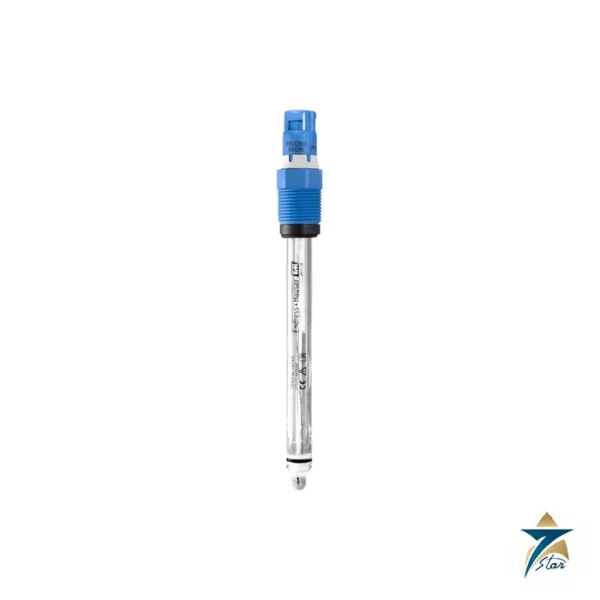
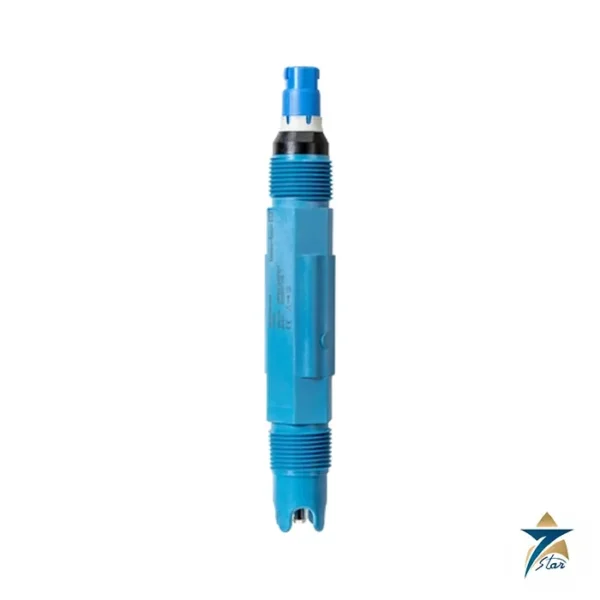
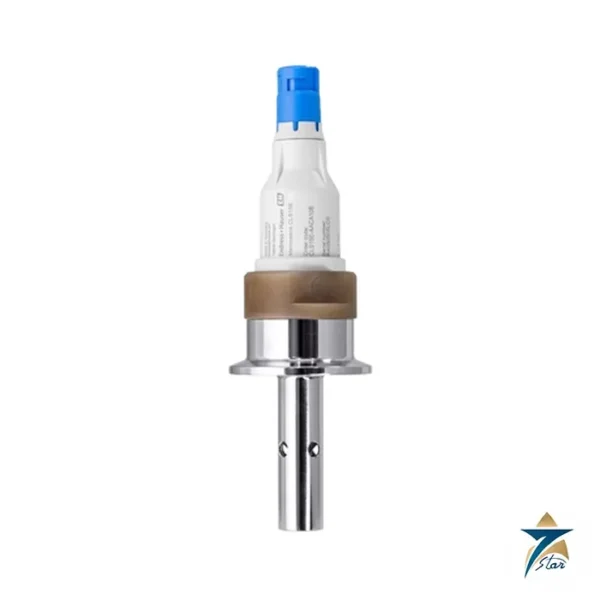
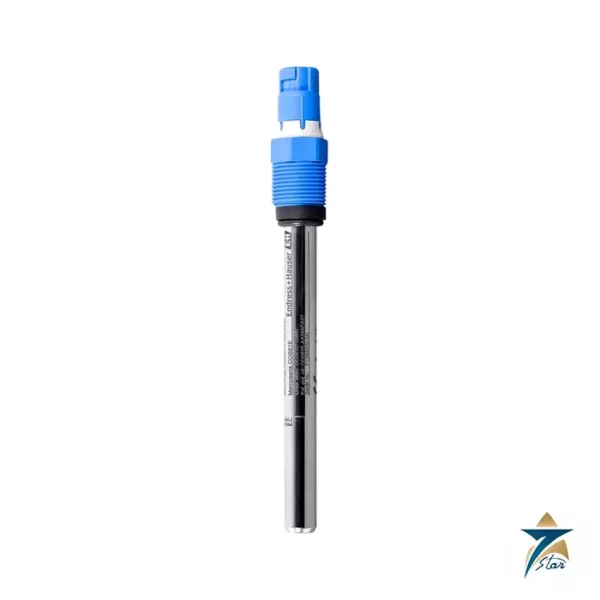
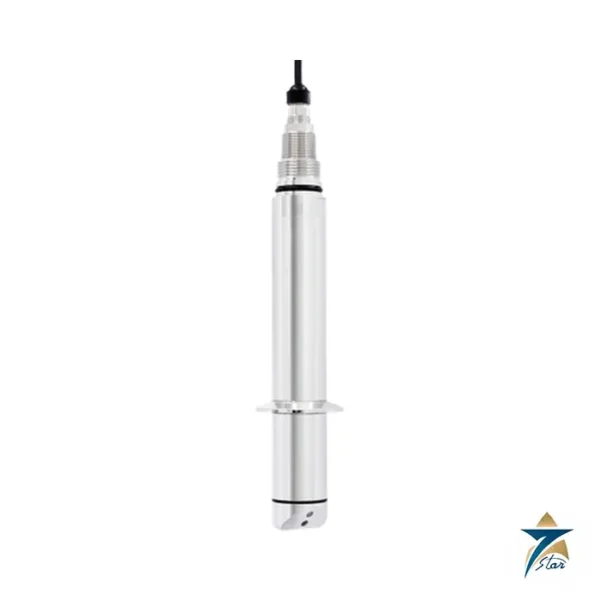
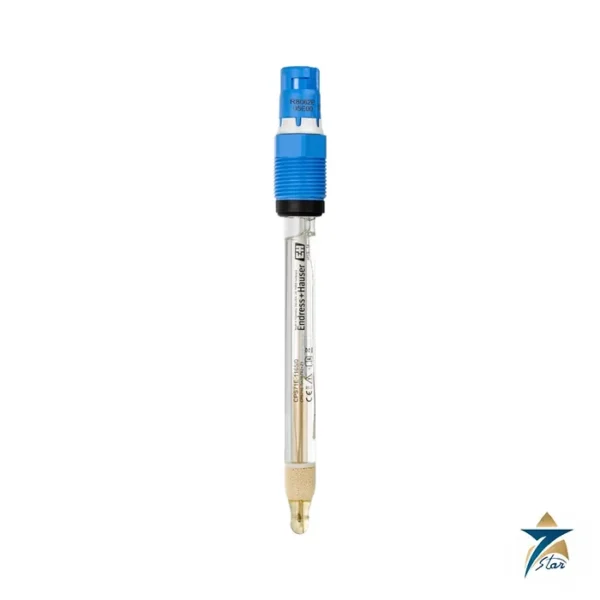
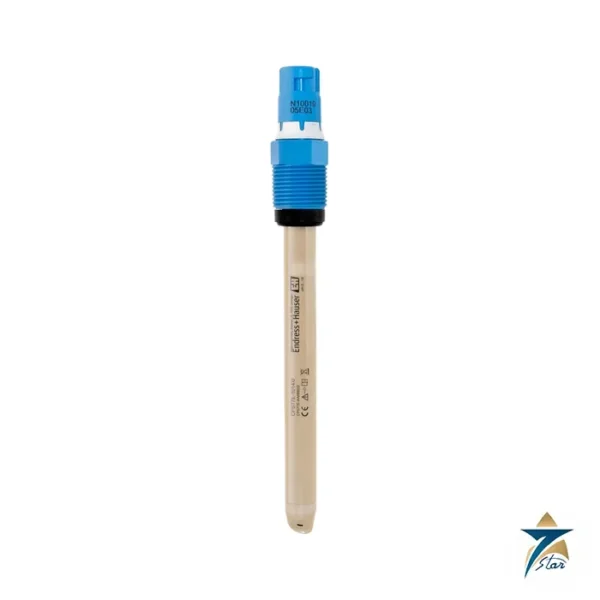
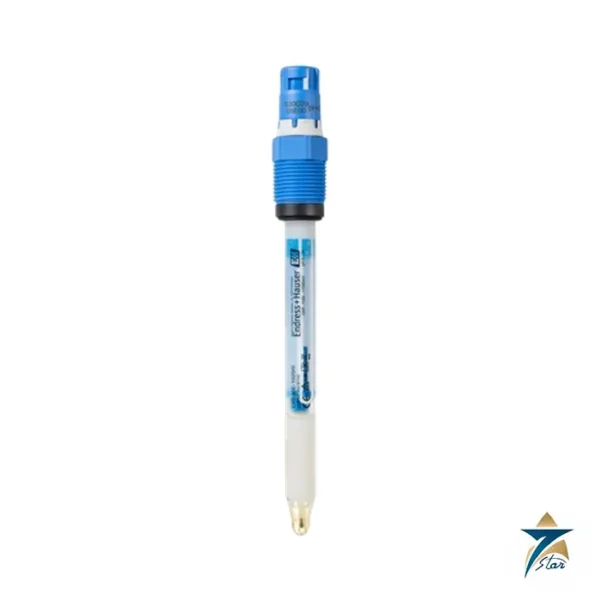
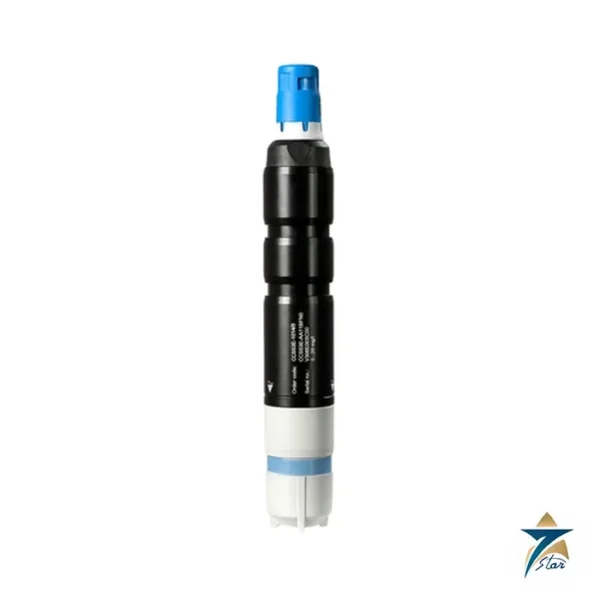
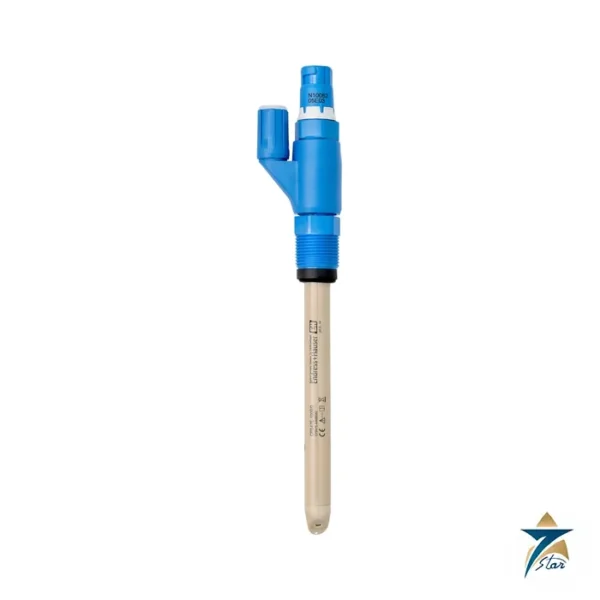
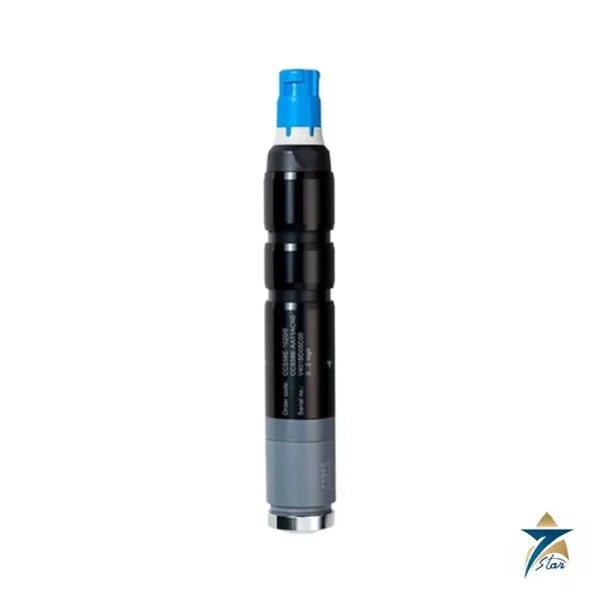
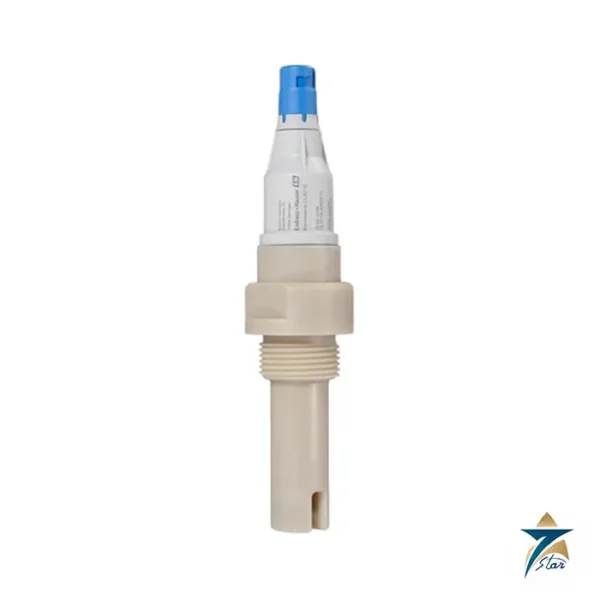
Endress+Hauser CLS50D Indumax Inductive Conductivity Sensor
Description
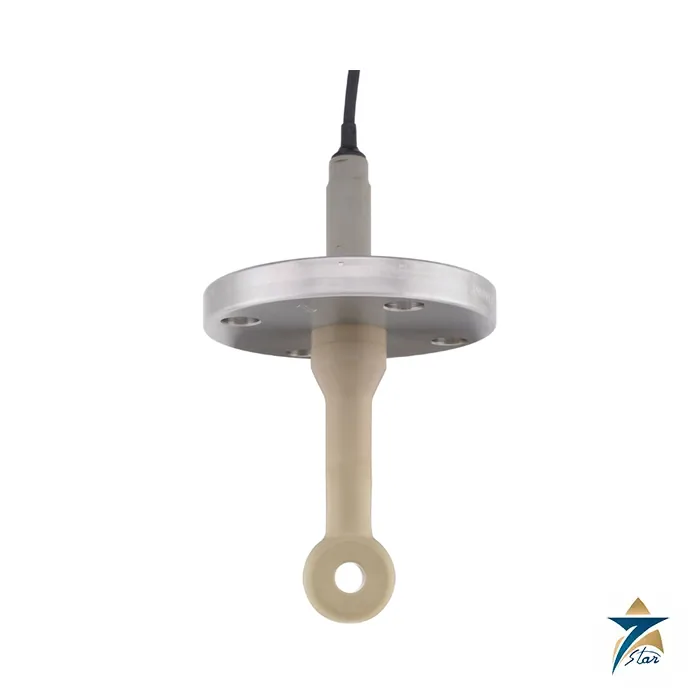
Endress+Hauser CLS50D Indumax for aggressive chemical process liquids
Endress+Hauser CLS50D is the chemical-industry member of the Indumax inductive family. Its wetted surface is either PFA, which sheds dirt and resists almost every acid and base, or PEEK for liquids that run as hot as 180 C. Because the sensor has two coils and no electrodes, a six-decade span from 2 microsiemens per cm to 2000 mS/cm fits into a single device, from dilute process water to concentrated acid and caustic.
It is used in concentration control of acids and bases, quality monitoring of products in tanks and pipes, and phase separation between product streams. The digital CLS50D runs with Liquiline CM44x or CM44xR and Liquiline M CM42; the Ex approval is Ex ia IIC T4/T6. Seven Star LLC is an independent supplier serving Oman and the GCC and is not affiliated with the manufacturer.
CLS50D technical specifications
| Parameter | Value |
|---|---|
| Conductivity range | 2 microsiemens per cm to 2000 mS/cm, uncompensated |
| Temperature range | minus 20 to 180 C (minus 4 to 350 F) |
| Cell constant | k = 1.98 per cm |
| Temperature element | Pt1000 class A (CLS50D); Pt100 class A (CLS50) |
| Conductivity response | t95 of 2 s or less |
| Temperature response | t90 of 7 min (PEEK) or 11 min (PFA), maximum |
| Measurement error to 100 C | plus or minus (5 microsiemens per cm + 0.5 % of reading) |
| Measurement error above 100 C | plus or minus (10 microsiemens per cm + 0.5 % of reading) |
| Repeatability | 0.2 % of reading |
| Wetted materials | PFA or PEEK |
| Seals | Viton, Chemraz or EPDM depending on version |
| Weight | approx. 0.65 kg (1.43 lb) |
| Ambient temperature | CLS50D minus 10 to 60 C |
| Storage temperature | minus 20 to 80 C |
| Ingress protection | IP 68 / NEMA 6 with the correct seal fitted |
| Ex marking | Ex ia IIC T4/T6; hazardous-area versions up to 125 C |
| Cable extension | CYK11, 100 m total (not in Ex areas) |
How CLS50D differs from CLS54D and the Condumax family
CLS54D is the hygienic cousin with cell constant 6.3 per cm in virgin PEEK, process limit 125 C and a lower recommended limit of 100 microsiemens per cm. CLS50D reaches both ends: 2 microsiemens per cm at the bottom and 180 C at the top. Its constant of 1.98 per cm applies to its larger flow opening. Process coupling options also differ: CLS50D offers thread G3/4 and NPT 1 inch, lap-joint flanges in PP-GF or PVDF (EN 1092 DN50 PN10, ANSI 2 inch 150 lb, JIS 10K 50A) and fixed stainless flanges (EN 1092-1 DN50 PN16 and PN40, ANSI 2 inch 300 lb, JIS 10K 50A), where CLS54D offers hygienic couplings. Contact-conductivity cells such as CLS21D measure only up to 20 mS/cm.
Applications for CLS50D in Oman and the GCC
Gulf petrochemical, fertiliser and chlor-alkali style plants run caustic, acid and brine lines that destroy metal electrodes; CLS50D reads concentration in them without wearing out. It also separates product from rinse water in transfer lines, monitors regenerant strength in demineralisation plants, and watches cooling-water chemistry at utilities. High-temperature PEEK versions handle hot liquors.
Selecting the right CLS50D version
The order code decides the wetted plastic, seal, connection and approval. Use PFA where the liquor is chemically aggressive and dirt-prone, PEEK where temperature goes up to 180 C. Check the process-connection table for the pressure rating: the datasheet quotes maximum 41 bar depending on the connection, and hazardous-area versions are rated only up to 125 C.
Installing and commissioning CLS50D
Align the sensor so the medium flows through its opening, immerse the head completely and keep at least 15 mm to the wall from DN 80. If wall distance is smaller, enter the installation factor in the transmitter: it rises above 1 for electrically insulating pipes and falls below 1 for conductive ones. The digital sensor needs no air set; analog CLS50 does, to cancel residual coupling in cable and coils.
Materials and process connections of CLS50D in detail
The sensor body is PEEK or PFA depending on version, with a radial seal in Viton or Chemraz and EPDM variants selected by the order code. Mounting parts follow the connection code: for the 1B and 1C versions the housing is PEEK GF30, for 1D to 1G it is 1.4571 stainless steel (AISI 316Ti), and for the flanged versions 3, 4, 5, 6 and 8 and P it is 1.4404 (AISI 316L), while version 7 uses 1.4435 (AISI 316L). A GYLON sealing disk of ceramic-filled PTFE is used with flanges, and lap-joint flanges are glass-fibre reinforced polypropylene or PVDF.
Only the version with process connection P offers the full list of thread G3/4, NPT 1 inch, lap-joint flange EN 1092 DN50 PN10, ANSI 2 inch 150 lb, JIS 10K 50A, and flange EN 1092-1 DN50 PN16 or PN40, ANSI 2 inch 300 lb and JIS 10K 50A. Four to eight flange holes of 18 or 19 mm diameter with M16 screws appear in the flange table, so check the pipe counter-flange before ordering.
Quick answers about CLS50D
Does it need calibration? The digital sensor is adjusted at the factory and needs no on-site compensation; install it and, if needed, enter the installation factor. How fast is the temperature reading? It is slow, up to 7 minutes in PEEK and 11 minutes in PFA for t90, so the conductivity compensation lags in fast thermal transients. What is the maximum cable? 100 m for CLS50D with CYK11. Is it approved for gas atmospheres? Yes, Ex ia IIC T4/T6, though hazardous-area versions are limited to 125 C and cable extension is not allowed there.
Maintenance of CLS50D
PFA resists fouling, so routine work is rinsing the opening. Inspect the radial seal at every service, because the datasheet ties IP 68 to a correct seal. Use stored operating hours and maximum temperature to judge ageing.
Documents and quotation
The Technical Information datasheet for CLS50D is attached to this page as a PDF. To request a quotation, send your RFQ with the exact CLS50D order code and the quantity you need, and we will reply with availability and lead time.
Datasheets & Documents
- Datasheet Endress+Hauser CLS50D Indumax Inductive Conductivity Sensor Datasheet Download
Reviews (0)
How would you rate this product? Cancel reply
About brand
Endress+Hauser makes process measurement instruments for flow, level, pressure, temperature and liquid analysis. Georg H. Endress and Ludwig Hauser started the business in Lörrach, Germany, on 1 February 1953, first selling level meters, and the Endress+Hauser name has been used since 1957. The group is headquartered in Reinach, Switzerland, and has been wholly owned by the Endress family since 1975.
Seven Star LLC is an independent supplier listing Endress+Hauser flowmeters, level and pressure transmitters, temperature assemblies and liquid analysis products for buyers in Oman and the GCC. Instruments are matched from the full order code on the nameplate.
Endress+Hauser company profile
| Origin | Founded in Lörrach, Germany, on 1 February 1953 by the Swiss engineer Georg H. Endress and Ludwig Hauser |
|---|---|
| Headquarters | Endress+Hauser AG, Reinach (Basel-Landschaft), Switzerland |
| Ownership | Family owned; the Endress family has been the sole shareholder since 1975, and a family charter commits the company to stay family owned |
| Size | About 16,500 employees and sales of about EUR 3.7 billion (2023, as reported by the company) |
| Product families | Proline flowmeters, Micropilot and Levelflex radar, Liquiphant switches, Cerabar and Deltabar pressure, iTEMP and iTHERM temperature, Liquiline and Memosens liquid analysis |
Milestones
- 1953: Georg H. Endress and Ludwig Hauser start the business in Lörrach on 1 February, first selling level meters.
- 1957: The Endress+Hauser name comes into use.
- 1975: The Endress family becomes sole shareholder.
- 2023: About 16,500 employees and sales of about EUR 3.7 billion, as reported by the company.
Endress+Hauser product lines
| Line | Measuring principle | Typical use |
|---|---|---|
| Promass F 300, Promass 80F, 83F/84F | Coriolis mass flow | Direct mass flow and density of liquids and gases, hydrocarbon transfer and chemical dosing |
| Promag P 300, P 500, H 300, W 400, W 10, 50P | Electromagnetic flow | Water, wastewater, slurries and other conductive liquids |
| Prowirl F 200, 72F | Vortex flow | Steam, gas and low-viscosity liquids |
| Prosonic Flow 92F, t-mass 65F | Ultrasonic and thermal mass flow | Water lines; compressed air and industrial gases |
| Micropilot FMR62, FMR67, FMR60, FMR10B, FMR20, FMR50, FMR52 | Free-space radar level, 80 GHz and 26 GHz | Tanks, process vessels, silos and open water channels |
| Levelflex FMP51, FMP50, FMP54, FMP55 | Guided wave radar level | Level and interface in vessels, separators and bypass chambers |
| Liquiphant FTL51, Prosonic S FMU90 | Vibronic point level; ultrasonic level | High and low level alarms, pump protection, open channel flow |
| Cerabar PMC71B, PMP51B, PMP71, Deltabar PMD78B, PMD75 | Pressure and differential pressure | Process pressure, hydrostatic level and DP flow |
| iTEMP TMT82, TMT162, iTHERM TM101, TR66, TR10 | Temperature transmitters and thermometers | RTD and thermocouple points with thermowells |
| Liquiline CM444, CM442, Memosens CPS11E, Stamolys reagents | Liquid analysis | pH, ORP, conductivity, dissolved oxygen and nutrient analysis in water treatment and process |
Where Endress+Hauser instruments are used
In Oman and the GCC, Endress+Hauser instruments are common in oil and gas production and processing, refineries and petrochemicals, desalination and water networks, wastewater treatment, power plants and food and beverage plants. Coriolis meters measure hydrocarbon and chemical flows, electromagnetic meters cover water and wastewater, radar transmitters handle tank and silo level, and Liquiline analysers monitor water quality. Proline 300 and 500 flowmeters include Heartbeat Technology for in-situ verification, which reduces the need to remove a meter for checks.
Ordering Endress+Hauser instruments: what we need
The order code on the nameplate (for example PMP71-1QA1S11RDADU) defines every option: measuring range, process connection, materials, output, approvals and display. Send it with the serial number; Endress+Hauser can retrieve the original configuration from the serial number. For a new instrument add the medium, operating and design pressure and temperature, range, line size or tank geometry, process connection, wetted materials, output or protocol (4-20 mA HART, PROFIBUS, FOUNDATION Fieldbus, Modbus) and the hazardous-area approval required. Older models such as Promass 80/83 or Micropilot M are replaced by current Proline or 80 GHz Micropilot devices.
Facts checked against Endress+Hauser company history and product information, October 2026.
Browse Endress+Hauser products by category: Flowmeters, Level Transmitter, Pressure Instrumentation, Temperature, Liquid Analysis Sensors, Liquid Analytical Systems.
FAQ
Questions about the Endress+Hauser CLS50D Indumax Inductive
Answers from our engineering team on installation, compatibility and integration.
01What range does Endress+Hauser CLS50D measure?
2 microsiemens per cm to 2000 mS/cm uncompensated, a six-decade span, with temperature from minus 20 to 180 C in the PEEK version.
02What is the difference between CLS50D and CLS50?
CLS50D is the digital Memosens version with a Pt1000 class A element, factory adjusted so no air set is needed. CLS50 is analog with a Pt100 and needs an air set before installation.
03Which wetted materials can I choose on CLS50D?
PFA or PEEK, with Viton or Chemraz sensor seals depending on the version, and PEEK, stainless steel or PVDF mounting parts depending on the process connection code.
04What is the smallest pipe for CLS50D?
The datasheet says it can be installed in pipes of DN 80 and larger, and the installation factor can be ignored from DN 80 when wall distance exceeds 15 mm.
05How long can the CLS50D cable be?
The fixed cable can be extended with CYK11 to a total of 100 m, but not in hazardous areas; the analog CLS50 extension with CLK6 is limited to 55 m.


Reviews
There are no reviews yet.